As organizations continue to expand their digital systems, managing user information, business applications, and operational data has become increasingly complex. Many enterprises now operate dozens of independent systems for customer management, production operations, service platforms, communication tools, and administrative processes. Although these systems improve individual business functions, they often create isolated data environments that limit collaboration and efficiency.
An industry information platform provides a new approach to solving these challenges. By integrating fragmented systems, unified user resources, and shared data capabilities, it helps organizations build a connected digital foundation that supports efficient management, intelligent decision-making, and continuous business innovation.
Unlike traditional standalone software applications, a modern information platform focuses on capability sharing. It connects different business systems through standardized interfaces, data services, and unified management mechanisms, allowing organizations to reuse existing resources instead of repeatedly building separate systems.
The Growing Need for Connected Digital Operations
Digital transformation has changed how organizations collect, process, and use information. In the past, different departments often deployed independent applications according to their own requirements. Customer service teams managed user records, production departments managed operational information, security teams used separate monitoring systems, and administrative departments maintained independent databases.
This approach can solve short-term business needs, but as organizations grow, isolated systems gradually become a major challenge.
Common problems include:
Repeated user information management across different systems
Difficulty sharing data between departments
High maintenance costs caused by duplicated functions
Limited ability to analyze business information together
Slow response when new services need to be developed
For large enterprises, industrial facilities, government organizations, and public service providers, information fragmentation directly affects operational efficiency. A department may have complete information within its own system but lack visibility into related data from other business areas.
The development of information middle platforms addresses this issue by creating a shared capability layer between basic infrastructure and business applications.
Moving Beyond Traditional System Silos
Traditional information systems are usually designed around specific business functions. Each system has its own database, user management structure, and application logic. While this design allows independent operation, it makes cross-system collaboration more difficult.
An information platform changes this structure by separating common capabilities from individual applications.
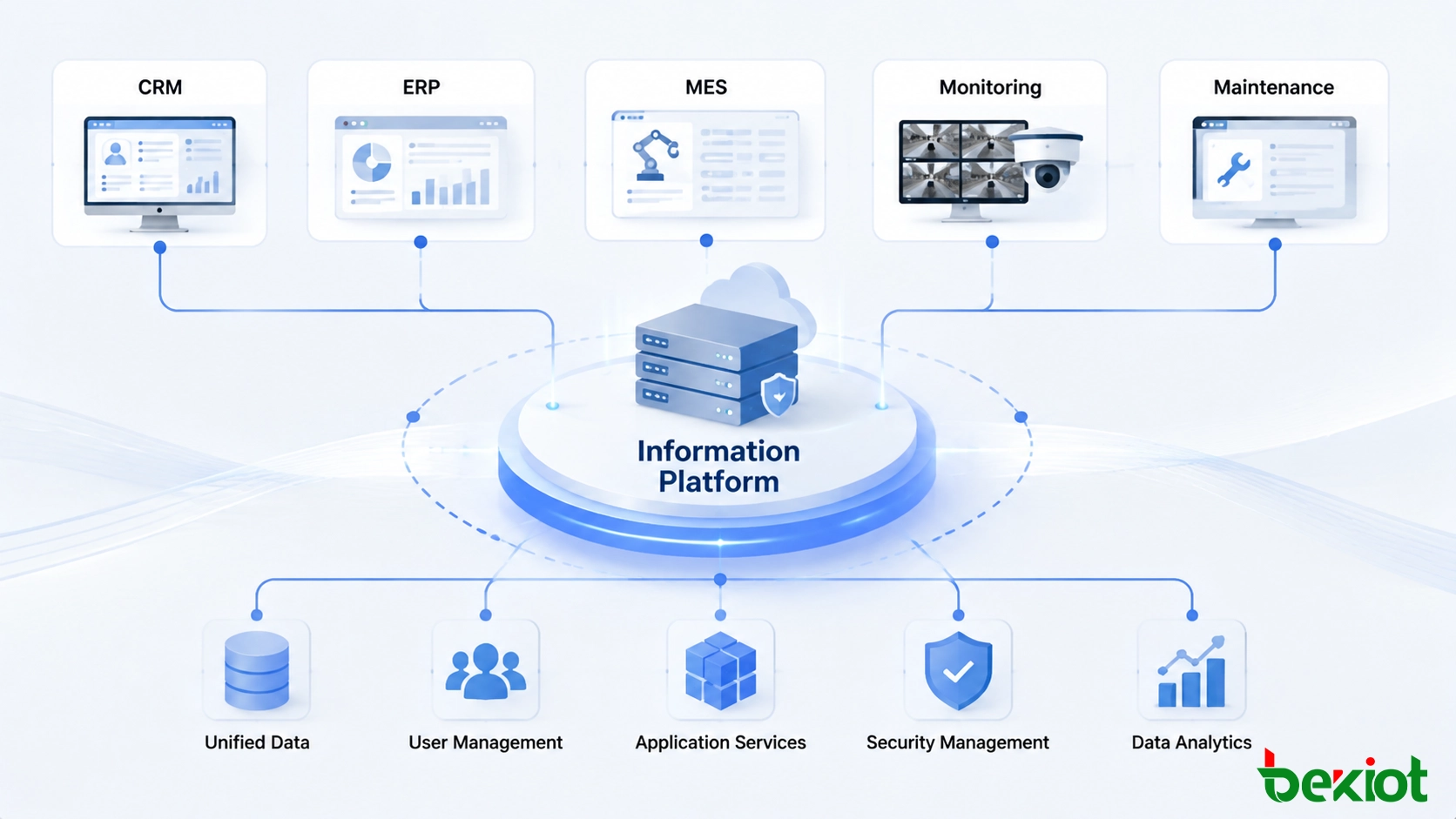
Instead of every business system independently managing users, permissions, and data services, the platform provides reusable shared resources that different applications can access according to requirements.
Typical shared capabilities include:
Unified user identity management
Common data exchange services
Standardized API interfaces
Business capability sharing
Centralized operation monitoring
Through this architecture, organizations can reduce repeated construction and improve communication between different business systems.
For example, a large industrial enterprise may have production management, security monitoring, equipment maintenance, and emergency response systems. Instead of allowing each system to operate independently, an information platform can connect these applications and provide unified access to relevant data.
Building a Unified Data and Service Foundation
Data is one of the most important resources in modern organizations. However, valuable information often exists in different formats and locations across multiple systems. Without effective integration, data cannot fully support management decisions.
An information platform creates a unified data foundation by collecting, organizing, and sharing information from different business environments.
The platform can support:
Data aggregation from multiple systems
Unified data standards
Cross-department information sharing
Real-time business status monitoring
Historical data analysis
With a unified data architecture, managers can obtain a more complete view of business operations instead of relying on isolated reports from individual departments.
Creating Flexible Connections Between Business Applications
Modern enterprises rarely rely on a single application system. Different business areas require specialized tools to support daily operations, but these systems need to exchange information efficiently to create greater value.
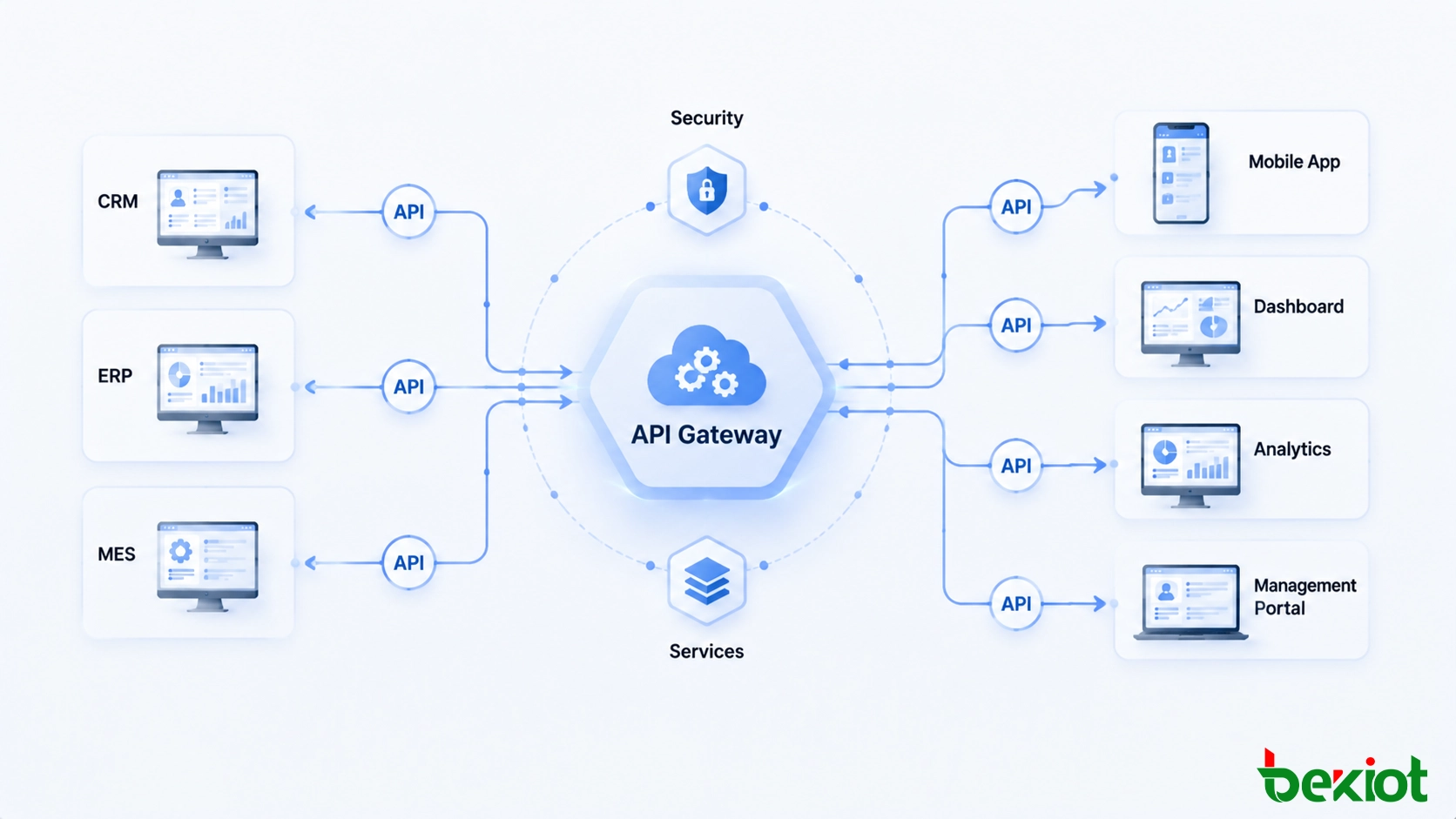
An information platform provides a connection layer that allows different applications to communicate through standardized services and interfaces.
Through API-based integration and service-oriented architecture, organizations can connect:
Customer management systems
Operational management platforms
Communication and collaboration systems
Monitoring and security applications
Data analysis platforms
Enterprise management tools
This approach reduces the dependency between individual systems. When a new application needs to be introduced, organizations do not need to rebuild the entire information structure. Instead, the new system can access existing capabilities through unified services.
For example, when an organization launches a new digital service, user identity information, permission control, notification functions, and data resources can be provided through the platform instead of being developed repeatedly in every application.
This capability significantly improves development efficiency and allows organizations to respond faster to changing business requirements.
Supporting Intelligent Management Through Data Integration
The value of an information platform is not only system connection. A deeper goal is to transform scattered information into useful operational insights.
When data from different departments can be collected and analyzed together, organizations gain better visibility into business conditions.
Examples include:
Understanding customer service trends through unified service records
Analyzing production efficiency through operational data integration
Improving emergency response through connected information resources
Optimizing management decisions through real-time business indicators
Combined with technologies such as artificial intelligence, cloud computing, and big data analytics, information platforms can further support intelligent applications.
AI models can analyze historical information, identify operational patterns, and provide decision support. Cloud technologies provide flexible computing and storage capabilities, allowing organizations to expand digital services according to business growth.
This creates a cycle where data improves management, management generates better data, and the platform continuously enhances organizational capabilities.
Applications Across Different Industries
Information platform construction is becoming increasingly important in industries where multiple departments, systems, and operational processes must work together.
Industrial and Manufacturing Environments
Manufacturing organizations often operate production systems, equipment management platforms, safety systems, and enterprise applications simultaneously.
An integrated information platform helps connect production data, equipment status, personnel information, and management processes. This improves coordination between production, maintenance, safety, and management teams.
Energy and Infrastructure Operations
Energy facilities and infrastructure projects usually involve complex operational environments with large amounts of data generated from different systems.
A unified information architecture helps integrate monitoring information, operational records, service management, and emergency resources, supporting more efficient decision-making and coordinated operations.
Government and Public Services
Public service organizations often need to coordinate information across multiple departments. Separate systems can create barriers when handling public services, administrative processes, and emergency situations.
An information platform enables more efficient data sharing while maintaining proper access control and security management.
Large Enterprise Groups
Large enterprises with multiple branches or business units often face challenges caused by different systems and management models.
A unified platform can provide shared digital capabilities while allowing individual departments to maintain their specific business applications.
Key Factors for Successful Platform Construction
Building an effective information platform requires more than connecting existing systems. Organizations need to consider architecture design, data standards, security, and future expansion.
Clear Business Objectives
A successful platform should start with real business requirements. Organizations need to identify which processes require integration, which data resources should be shared, and what management improvements are expected.
Standardized Data Management
Different systems often use different data structures. Establishing unified data standards is essential for accurate information exchange and analysis.
Reliable Security Control
Because information platforms connect multiple systems, security management is critical. Identity authentication, permission control, data protection, and access monitoring should be included in the overall design.
Scalable Architecture
Digital requirements continue to change. A flexible platform architecture allows organizations to add new applications, services, and technologies without major reconstruction.
The Future Direction of Enterprise Information Platforms
As digital transformation continues to develop, information platforms are evolving from simple system integration tools into core digital infrastructure for organizations. Future platforms will focus more on intelligent services, real-time data capabilities, and deeper business collaboration.
Several trends are shaping the next generation of information platform development.
Deeper Integration of Artificial Intelligence
Artificial intelligence will become an important capability within information platforms. By analyzing large volumes of operational data, AI technologies can help organizations identify patterns, predict risks, and improve decision-making.
For example, intelligent analysis can support equipment maintenance prediction, customer behavior analysis, operational optimization, and automated service processes.
More Open and Flexible Service Architecture
Future information platforms will increasingly adopt open architectures that allow easier connection with new applications and emerging technologies.
Through standardized interfaces and reusable services, organizations can continuously expand their digital capabilities without rebuilding the entire system.
Stronger Data Value Transformation
Data will become more than a record of business activities. It will become an important resource for improving efficiency, creating new services, and supporting strategic decisions.
By establishing unified data management and analysis capabilities, organizations can transform fragmented information into actionable knowledge.
Greater Support for Multi-Scenario Operations
Modern organizations operate across different locations, departments, and business environments. Information platforms will increasingly support distributed collaboration and unified management across multiple scenarios.
This capability is especially valuable for large enterprises, industrial groups, public organizations, and infrastructure operators that require coordination between different teams and systems.

Building a More Connected Digital Foundation
The purpose of an information platform is not simply to combine existing software systems. Its deeper value is creating a shared digital foundation that enables organizations to operate more efficiently.
By connecting users, data, applications, and business capabilities, organizations can reduce information barriers and improve collaboration between different departments.
A well-designed platform helps enterprises move from isolated digital applications toward integrated digital ecosystems. It provides the flexibility required for future innovation while supporting current operational needs.
As industries continue to adopt cloud computing, artificial intelligence, automation, and data-driven management methods, information platforms will become an increasingly important part of enterprise digital transformation strategies.
Conclusion
Industry information platform construction has become a key approach for organizations facing complex digital environments. Traditional independent systems often create data barriers, repeated development, and inefficient collaboration. A unified information platform addresses these challenges by providing shared data capabilities, application integration, and reusable digital services.
Through standardized interfaces, unified user management, and connected business capabilities, organizations can improve operational efficiency while creating a foundation for future digital development.
For enterprises, industrial facilities, public organizations, and large operational networks, building an integrated information platform is not only a technology upgrade but also an important step toward smarter and more efficient management.
FAQ
What is the main purpose of an enterprise information platform?
The main purpose is to connect different business systems, share digital capabilities, and provide a unified foundation for data management and application development.
How is an information platform different from traditional software systems?
Traditional software usually focuses on a specific business function, while an information platform focuses on providing shared capabilities that multiple systems can use.
Can organizations build an information platform without replacing existing systems?
Yes. Most platform approaches are designed to integrate existing applications and improve collaboration without requiring complete system replacement.
What industries benefit most from information platform construction?
Industries with complex operations and multiple information systems, such as manufacturing, energy, transportation, government services, and large enterprise groups, can benefit significantly.
Why is data standardization important in platform construction?
Data standardization ensures that information from different systems can be accurately exchanged, analyzed, and reused across business processes.