


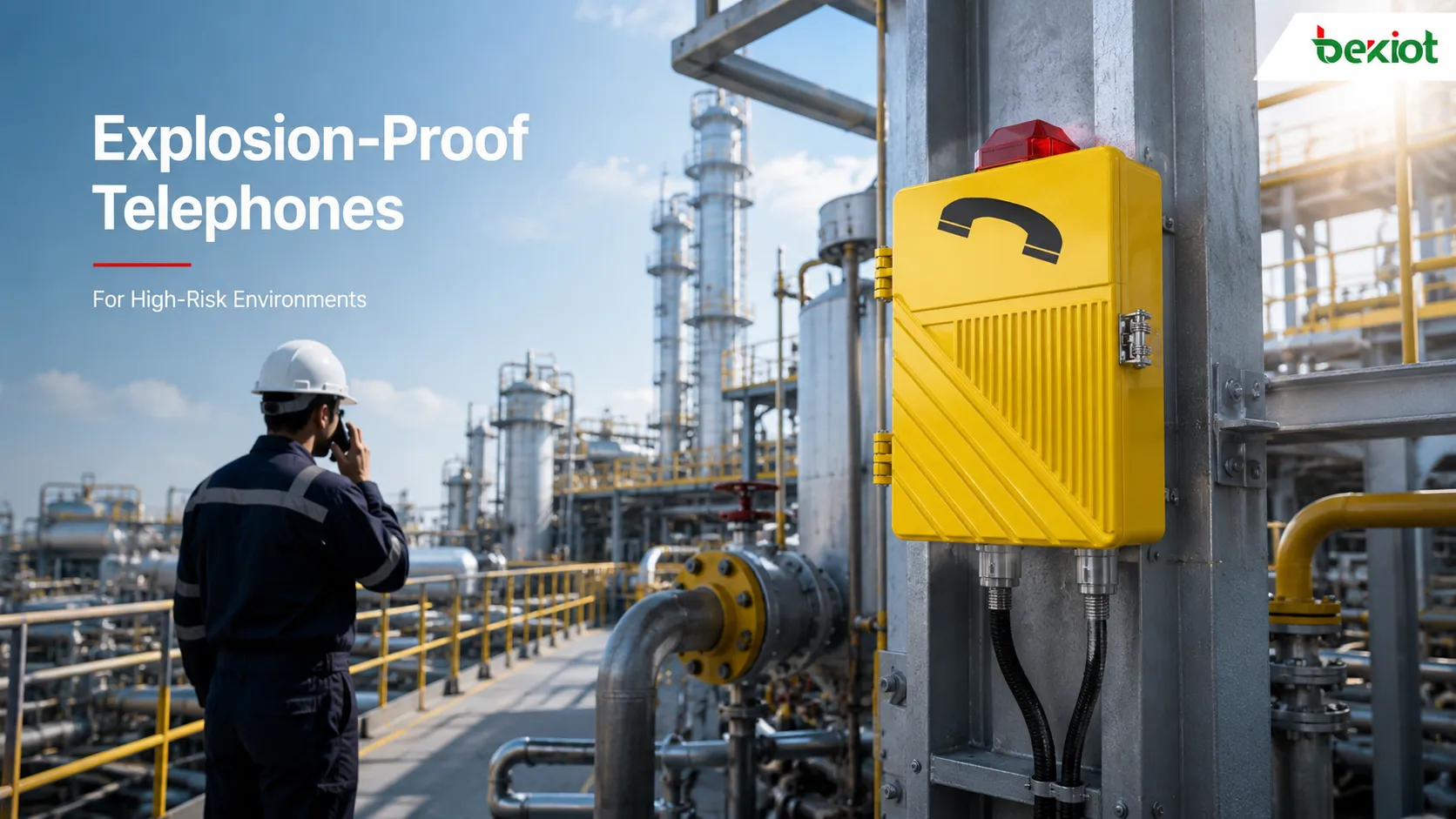
A high-risk workplace does not wait for perfect conditions before communication is needed. A worker may need to report a gas smell beside a tank area, confirm an abnormal sound near a conveyor, call the control room from a tunnel section, or request help from an offshore platform during bad weather. In these places, a telephone is not just a calling tool. It is a safety access point.
Explosion-proof telephones are suitable for these environments because they are designed around risk instead of comfort alone. Ordinary telephones are usually built for offices, homes, reception desks, and general indoor use. Explosion-proof telephones are built for areas where flammable gas, vapor, combustible dust, moisture, corrosion, impact, noise, and strict safety management may be present.
Their suitability comes from a combination of factors: controlled ignition risk, protected enclosure structure, stable cable entry, rugged handset design, clear voice performance, reliable field installation, emergency calling, and integration with dispatch or alarm systems. In high-risk work areas, these details decide whether communication remains available when people need it most.
Risk Defines the Communication Need
The first reason explosion-proof telephones are suitable for high-risk environments is that they match the real purpose of communication in these areas. In an office, communication usually supports coordination and convenience. In a refinery, mine, tunnel, chemical workshop, fuel depot, or offshore platform, communication may support incident reporting, evacuation, emergency repair, and safety confirmation.
High-risk environments often contain several hazards at the same time. A chemical site may have flammable vapor, corrosive air, cleaning water, and outdoor exposure. A coal handling area may have combustible dust, vibration, and machine noise. A tunnel may have moisture, echo, limited visibility, and restricted access. A power plant may include high noise, remote equipment rooms, and emergency operation points.
In such places, ordinary communication methods can be uncertain. Mobile phones may be restricted, wireless coverage may be unstable, radios may be busy, and office telephones may be too far away from the field. A fixed explosion-proof telephone gives workers a known communication point. It is visible, installed at a planned location, and connected to the control room or dispatch center.
This fixed-point value is especially important during incidents. If a call comes from a specific telephone, the operator can often identify the approximate location immediately. The message does not depend only on what the caller says. The device location itself becomes part of the emergency information.
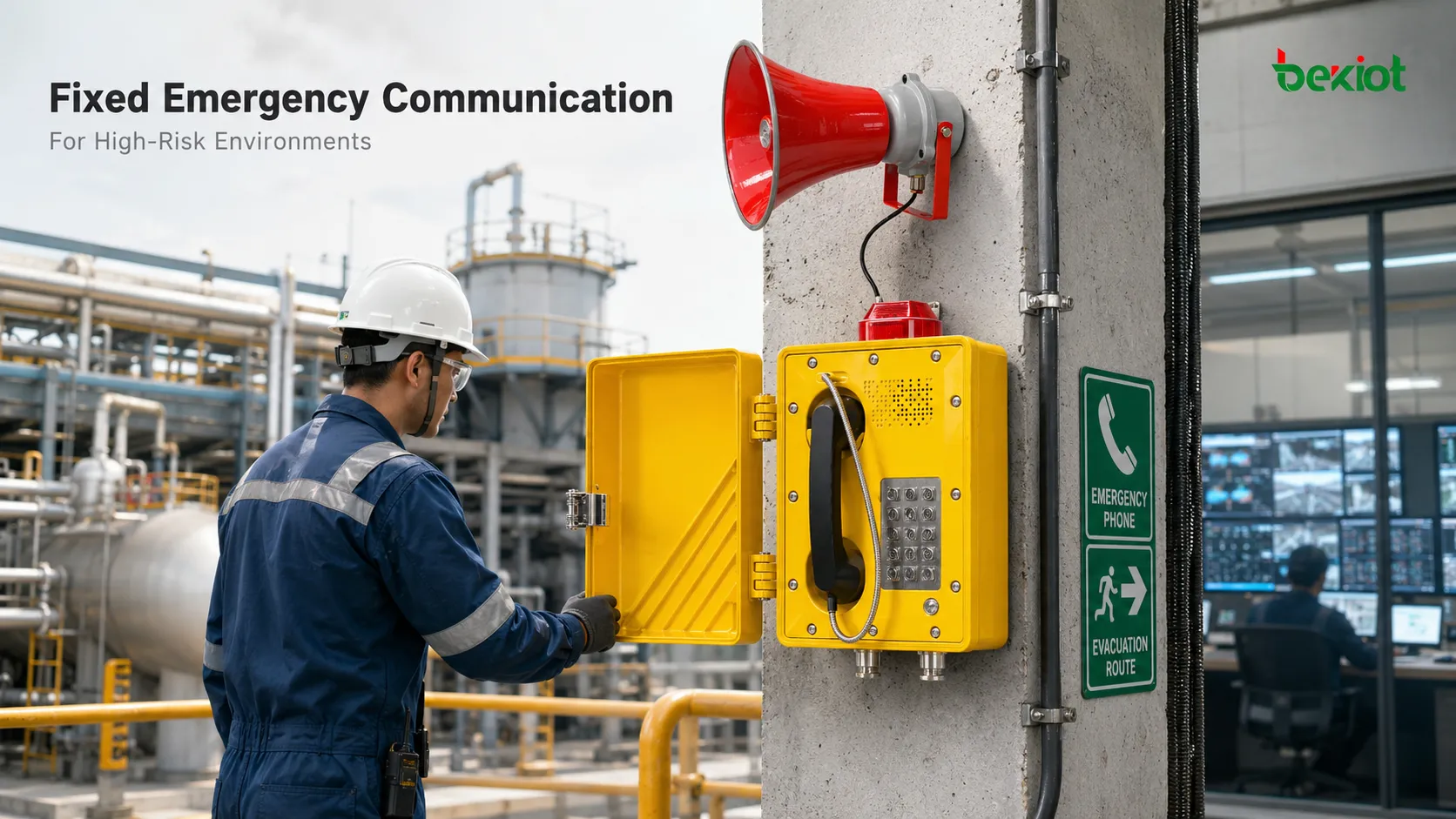
Safety Design Controls Ignition
The main difference between an explosion-proof telephone and an ordinary telephone is not only the appearance. The real difference is safety design. In hazardous areas, communication equipment must avoid becoming an ignition source. Sparks, arcs, overheated components, static discharge, unsuitable cable entry, or damaged electrical parts may create risk when flammable gas or combustible dust is present.
An explosion-proof telephone is designed to manage these risks through its enclosure, circuit layout, cable gland, grounding structure, material selection, sealing method, and mechanical protection. Depending on the product design and application requirement, different explosion-protection methods may be used. The common engineering goal is to prevent internal or external electrical activity from igniting the surrounding atmosphere.
Safety design must be understood as a complete system. A strong enclosure alone is not enough. The cable entry must remain protected. The handset and cord must match the field environment. The button area should stay safe after repeated operation. The circuit must control electrical energy and abnormal heating. The installation method must preserve the designed protection.
This is why explosion-proof telephones are not usually selected by appearance or price alone. They are selected according to site risk, hazardous-area classification, environmental exposure, certification requirements, and installation conditions. The correct product helps a project meet both communication and safety expectations.
Becke Telcom can be lightly considered in projects where industrial sites need explosion-proof voice access that supports hazardous-area operation and field communication. The product should still be selected according to the actual site condition, not simply because the enclosure looks rugged.
Rugged Structure Supports Field Use
High-risk workplaces are rarely gentle to equipment. Telephones may be exposed to dust, rain, cleaning water, vibration, corrosion, temperature changes, sunlight, oil mist, impact, and rough handling. A device installed near a production line, tunnel wall, mine roadway, or outdoor loading area may need to operate for years without constant attention.
Explosion-proof telephones are suitable for these conditions because their structure is designed for durability. A rugged enclosure protects internal circuits. A stronger handset withstands repeated use. Industrial buttons resist wear. Cable glands protect wiring. Sealed joints reduce the risk of moisture and dust entering the device. Mounting structures keep the equipment stable under vibration or impact.
Durability is not only about preventing visible damage. It also protects communication quality. A loose terminal can create intermittent calls. A cracked handset cord can reduce audio stability. A blocked microphone opening can make speech unclear. A corroded cable entry can create long-term fault risk. Rugged design helps reduce these problems.
In remote or hard-to-access areas, structural reliability becomes even more important. A telephone in a tunnel section, underground pump room, tank farm corner, or offshore working deck cannot be treated like an office desk phone. Maintenance may require permits, shutdown windows, safety approval, or special access. Durable equipment reduces unnecessary service visits.
Clear Voice Improves Response
A high-risk environment is often noisy. Compressors, pumps, ventilation fans, conveyors, crushers, vehicles, alarms, wind, rain, and echo can all make speech difficult to understand. A call that connects but cannot be understood is not useful enough for safety work.
Explosion-proof telephones are suitable for these environments because their audio design is usually focused on practical intelligibility. A close-talk handset can place the microphone near the user’s mouth. This helps the speech signal stand out from background noise. A stronger receiver or speaker can help the field user hear the control room clearly. The handset shape, microphone opening, receiver tuning, and enclosure design all influence real communication quality.
Voice clarity matters during both routine and emergency communication. During routine work, clearer calls reduce repeated instructions and improve coordination. During emergencies, clearer calls can reduce hesitation. A worker may need to report a location, equipment number, gas alarm, valve status, route condition, or injury situation. The control room must understand quickly.
Audio performance should be tested under real site conditions. A telephone may sound clear during installation when machines are stopped, but perform differently during normal operation. Testing should include both directions of communication: field user to control room, and control room to field user.
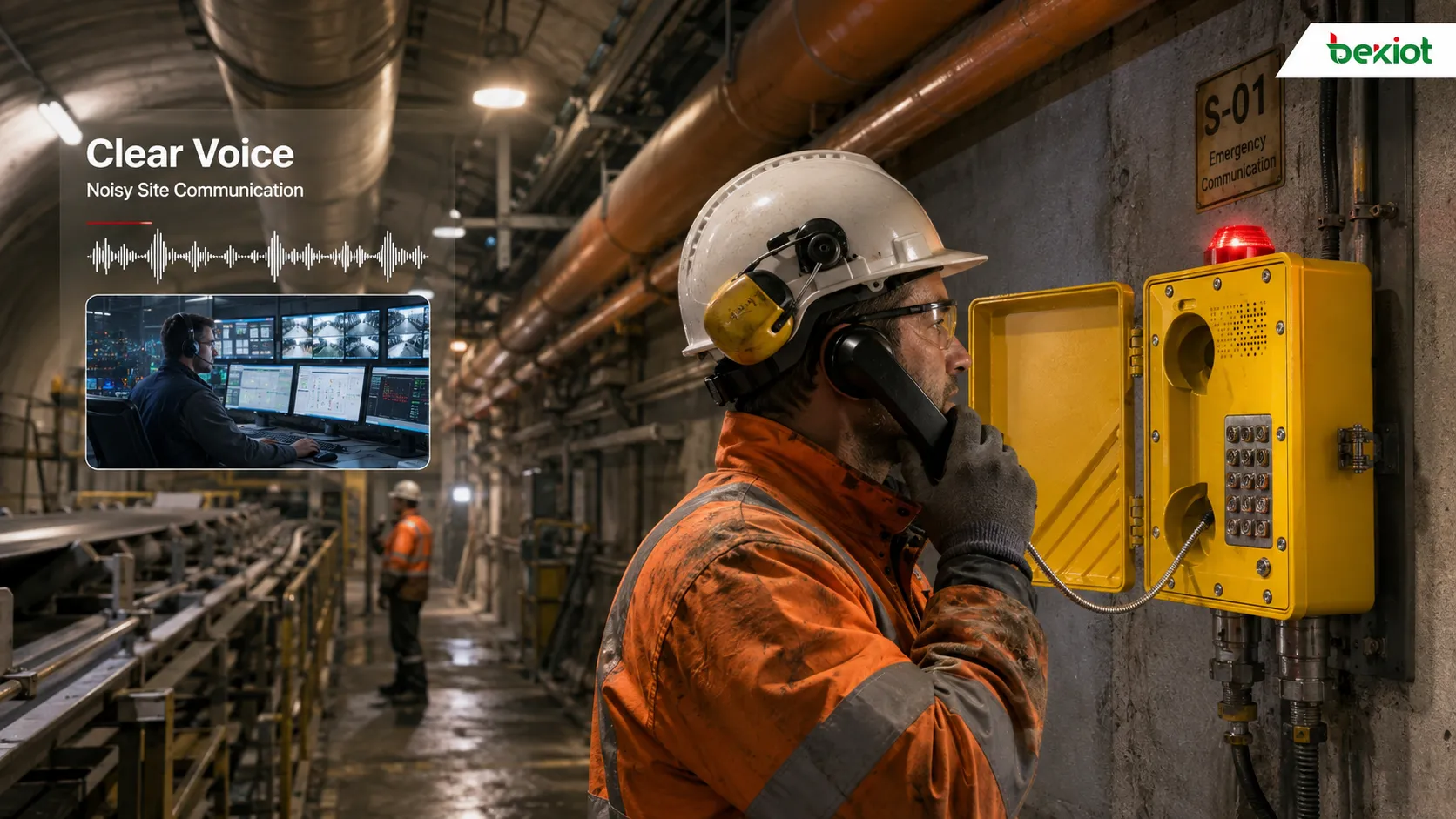
Fixed Access Helps Emergencies
Explosion-proof telephones are especially suitable for emergency communication because they are fixed, visible, and location-based. In many high-risk sites, emergency communication should not depend only on a worker’s personal device. A fixed telephone can be installed at planned points along routes, near equipment rooms, beside entrances, inside refuge areas, or close to hazardous work zones.
During an incident, the worker does not need to search for a contact number or choose a radio channel. The telephone can be configured for hotline calling, speed dialing, direct control room access, or dispatch connection. This reduces operation steps and helps the user contact the right person faster.
Fixed access also helps emergency teams. If a call comes from a known telephone point, the control room can associate it with a location. This supports faster dispatch, easier verification, and better coordination. In some systems, the call point can be displayed on a dispatch platform, recorded, or linked with an alarm event.
For evacuation and rescue planning, explosion-proof telephones can be installed at strategic positions. Examples include refuge chambers, emergency exits, tunnel cross passages, underground substations, pump rooms, chemical process entrances, loading areas, and outdoor hazardous zones. Their location should follow real emergency routes, not only convenient wiring paths.
System Integration Adds Value
Modern explosion-proof telephones are often part of a larger communication system. They may connect to an IP PBX, SIP server, analog exchange, dispatch platform, public address system, recording server, alarm system, video platform, or emergency management system. This integration makes the device more useful than a standalone telephone.
In a dispatch system, calls from explosion-proof telephones can be routed to specific operators, displayed with location names, recorded for review, or included in incident workflows. In a public address system, the control room may use related equipment to broadcast instructions to a zone after receiving a field report. In an alarm-linked system, a telephone point may support two-way confirmation after an alarm is triggered.
Integration also supports operation management. Routine calls can be logged. Faults can be reported. Maintenance teams can test telephone points regularly. In some IP-based systems, registration status and online state may help operators identify whether a field device is available. This is valuable for large sites with many communication points.
System integration must be planned carefully. The telephone interface, protocol, cable route, power supply, network security, routing rules, and call priority should match the project architecture. A high-quality field telephone cannot deliver full value if the platform, network, or dispatch workflow is poorly designed.
Typical High-Risk Applications
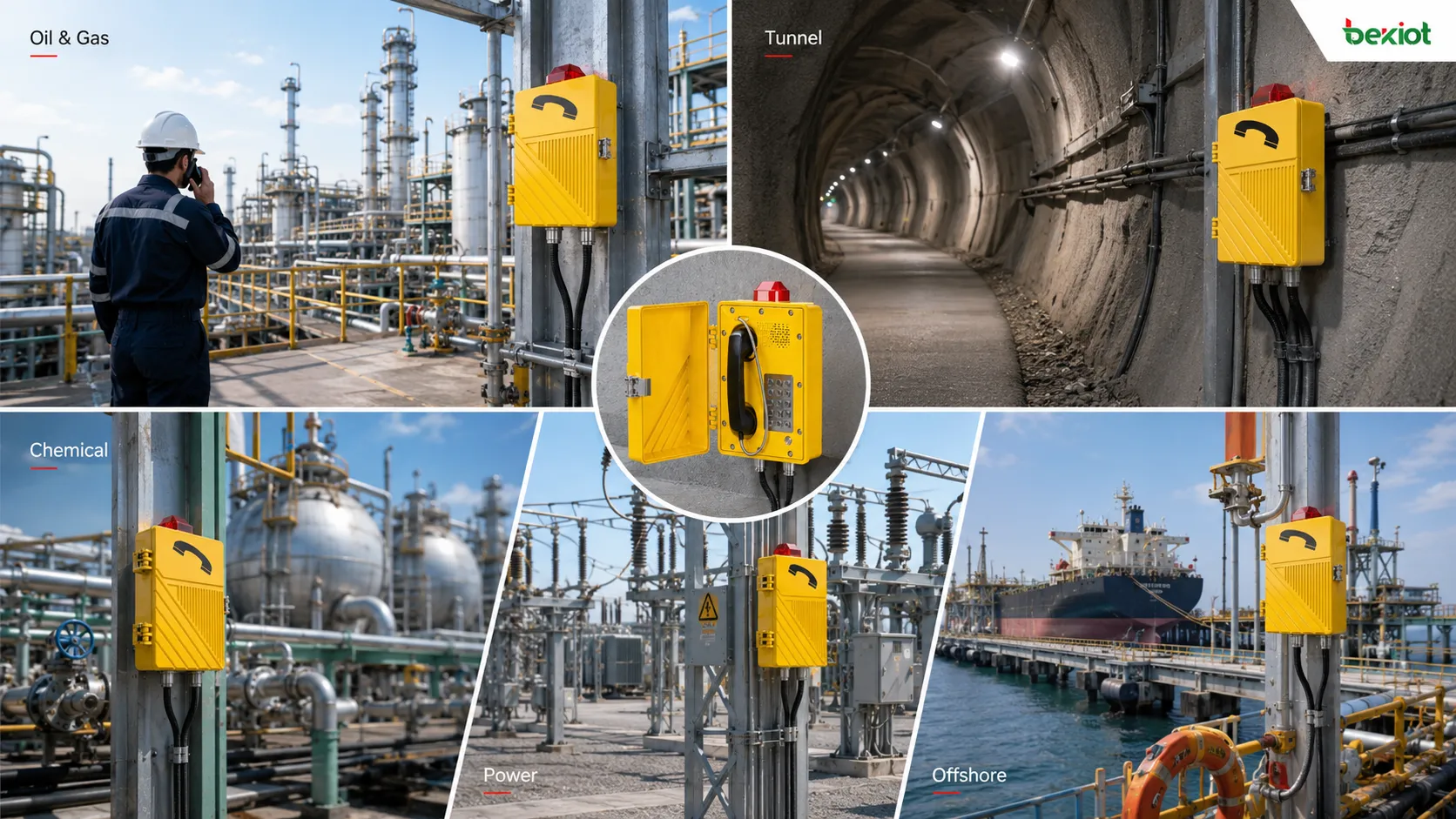
Explosion-proof telephones are commonly used in oil and gas facilities. Refineries, tank farms, LNG stations, fuel depots, compressor stations, pipeline stations, loading platforms, and drilling areas may all require protected communication points. These places may involve flammable gas or vapor, outdoor exposure, noise, and emergency coordination needs.
Chemical and pharmaceutical facilities are also major application areas. Process workshops, solvent storage rooms, clean production areas with hazardous substances, paint rooms, chemical warehouses, and wastewater treatment sections may require equipment that matches both explosion-proof and environmental protection needs. Communication points help workers report abnormalities and coordinate operations safely.
Mines and dusty industrial sites create another large group of applications. Coal mines, metal mines, conveyor transfer points, crushing stations, underground pump rooms, refuge areas, cement plants, grain processing facilities, and powder handling zones may all require rugged and protected telephones. Dust, moisture, vibration, and limited wireless coverage make fixed communication valuable.
Tunnels, energy facilities, and infrastructure sites also benefit from explosion-proof or industrial protected telephones. Road tunnels, railway tunnels, metro areas, utility corridors, power plants, substations, offshore platforms, port terminals, and large public facilities may use them for emergency calling, maintenance communication, and control room coordination.
Selection Should Follow Site Reality
The suitability of an explosion-proof telephone depends on correct selection. Buyers should begin with the working environment. Is there flammable gas, vapor, mist, or combustible dust? Is the area outdoors or indoors? Is there water spray, cleaning, corrosion, heavy dust, impact, vibration, or extreme temperature? Is the telephone used for routine contact, emergency reporting, or both?
The protection level should match the site. Hazardous-area requirements, enclosure protection, corrosion resistance, cable entry, mechanical strength, and operating temperature should be reviewed together. A product may be rugged, but still not suitable if it does not match the hazardous classification or installation requirements.
Communication interface also matters. Some sites use analog lines because of existing wiring. Others use SIP or IP-based platforms for centralized management, recording, and dispatch integration. Some need hotline calling. Others need keypad dialing, speaker output, status indication, or alarm linkage. The telephone should fit the site’s communication architecture.
Voice performance should not be ignored. The device should be tested where it will be used, not only in a quiet office. If the site is noisy, the handset, receiver volume, microphone pickup, and platform audio settings should be verified. If the telephone is for emergency use, the call destination and response process should also be tested.
Maintenance Keeps Protection Valid
Explosion-proof telephones remain suitable for high-risk environments only when their protective structure is maintained. A damaged enclosure, loose cable gland, cracked handset cord, missing screw, blocked microphone opening, corroded terminal, or unauthorized modification may reduce safety or communication performance.
Maintenance teams should inspect the enclosure, door or cover, seals, cable entries, grounding, handset, keypad, hook switch, speaker, microphone, labels, mounting bolts, and call function. In dusty or corrosive environments, cleaning and inspection should be more frequent. In outdoor areas, water exposure and material aging should be checked.
Replacement parts should match the original design. A casual substitution of a cable gland, cord, gasket, handset, or cover may affect the explosion-proof structure. Field modifications should be controlled and documented. In hazardous-area equipment, small changes can have large consequences.
Regular call testing is also necessary. Some emergency telephones may remain unused for long periods, but they must work immediately when needed. Testing should confirm call routing, voice clarity, operator response, location identification, and system logs where applicable.
Final Notes
Explosion-proof telephones are suitable for high-risk working environments because they are designed around the realities of hazardous industrial communication. They help control ignition risk, protect internal circuits, withstand harsh conditions, provide clear voice access, support emergency calling, and integrate with dispatch or alarm systems.
Their value is strongest in places where ordinary telephones are unsafe, unreliable, or difficult to use. Oil and gas facilities, chemical plants, mines, tunnels, energy sites, offshore platforms, ports, dusty workshops, and industrial emergency points all need communication equipment that can remain safe and usable under pressure.
For projects that need fixed hazardous-area voice communication, Becke Telcom provides explosion-proof telephone solutions for field calling, emergency reporting, dispatch connection, and industrial safety communication. The final model should be selected according to site classification, environmental exposure, system interface, installation position, audio requirement, and long-term maintenance plan.
FAQ
Why are explosion-proof telephones used in hazardous areas?
They are used because their structure, enclosure, circuit design, and installation method are intended to reduce ignition risk while providing reliable field voice communication.
Can ordinary telephones replace explosion-proof telephones?
Ordinary telephones should not replace explosion-proof telephones in hazardous areas unless the site requirements clearly allow it. They are not designed for explosive atmospheres or harsh industrial protection needs.
Do explosion-proof telephones only support emergency calls?
No. They can support routine operation, maintenance coordination, dispatch contact, inspection reporting, and emergency communication. Regular use can also help confirm that the device remains functional.
What environments commonly require them?
Common environments include refineries, chemical plants, fuel depots, mines, tunnels, offshore platforms, power plants, dusty workshops, transport infrastructure, and hazardous production zones.
What should be checked during installation?
Installation should check hazardous-area suitability, mounting position, cable entry, grounding, enclosure condition, call routing, voice clarity, platform connection, and emergency response process.







