


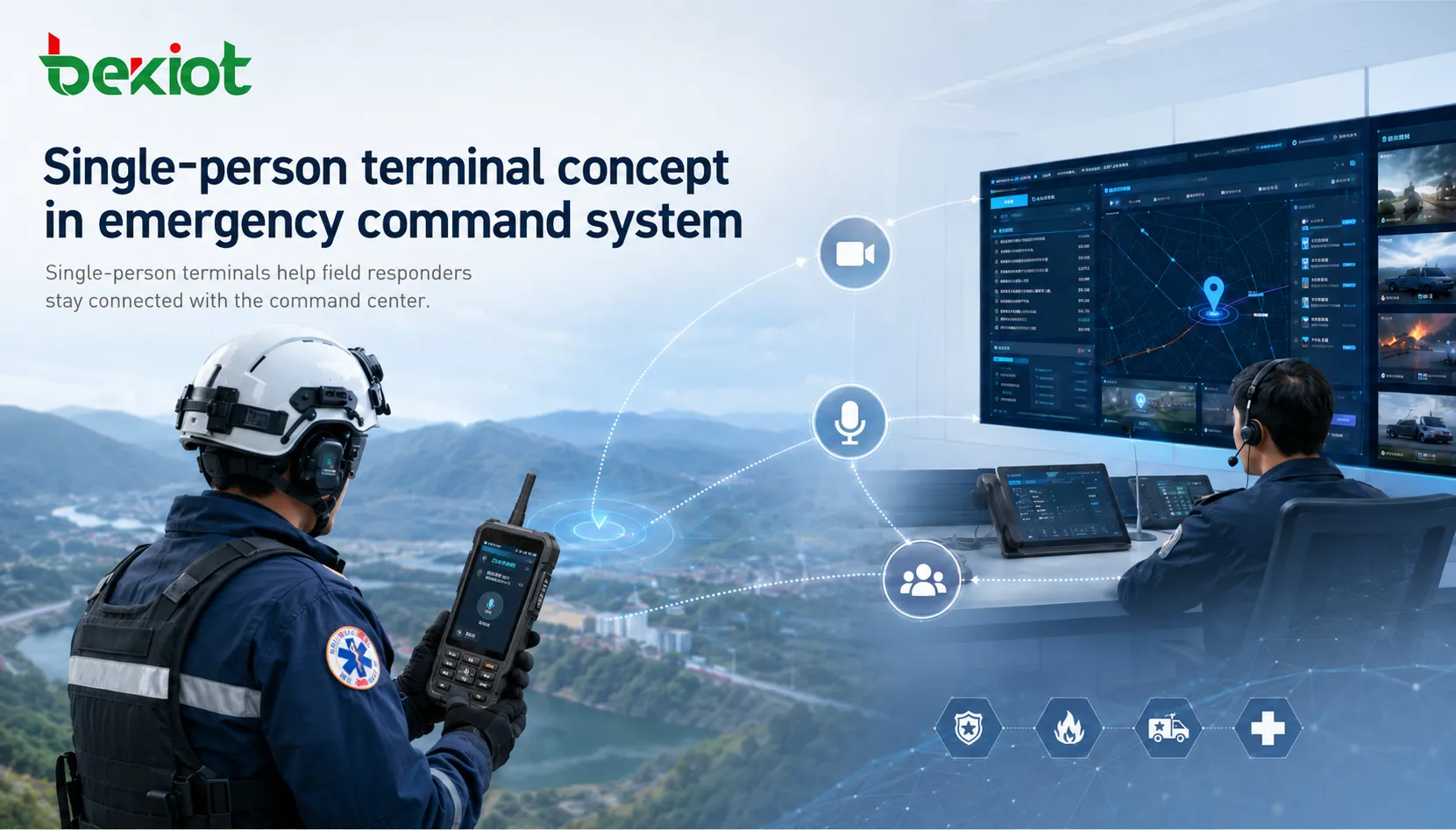
In emergency command projects, the term single-person terminal often appears in system requirements, field deployment plans, and equipment lists. It does not refer to one fixed product model. Instead, it describes a category of portable communication equipment carried by field personnel, emergency responders, patrol teams, rescue workers, or on-site operators. Its value is to turn each person in the field into a connected command node that can communicate, report location, share video, and access emergency dispatch services in real time.
The concept comes from military-style individual equipment, where a single soldier may carry protection gear, food supplies, helmets, radios, navigation tools, and intelligent devices. In emergency command systems, this idea is adapted for public safety, disaster response, industrial rescue, transportation, campus security, utilities, and other field operations. The focus is not combat capability, but communication, coordination, positioning, video transmission, and command response.
For organizations building a modern emergency communication platform, single-person terminals help solve a practical problem: the command center cannot make accurate decisions if it cannot reach the people closest to the incident. By connecting field users, command consoles, radio systems, mobile networks, video resources, and GIS platforms, these terminals make emergency response more visible, traceable, and coordinated.
From Individual Equipment to Connected Field Operations
A single-person terminal is designed for one person to carry and operate independently. In a modern emergency command system, it becomes the mobile extension of the command platform. Field users can join dispatch groups, receive instructions, upload on-site information, report emergencies, and maintain communication with the control center.
In practical deployments, this type of terminal is usually used in environments where fixed communication infrastructure is limited, where personnel are moving across large areas, or where the command center needs direct visibility into what is happening on site. The terminal may rely on public 4G/5G networks, private broadband networks, wireless ad hoc networks, or a combination of multiple communication methods.
Compared with traditional handheld communication tools, a single-person terminal is more closely connected with the software platform behind it. It can be assigned to users, groups, departments, tasks, locations, and emergency plans. This makes it useful not only during major incidents, but also in daily patrol, security duty, production inspection, facility maintenance, and emergency preparedness drills.
Two Common Types Used in Emergency Projects
In most emergency command projects, single-person terminals can be divided into two main categories. The first type is the rugged smart terminal based on mobile networks. The second type is the wireless ad hoc network terminal used to build temporary broadband communication on site.
These two categories solve different problems. Rugged smart terminals focus on application access, voice dispatch, video calling, positioning, and message interaction. Wireless ad hoc terminals focus on building a temporary field network when normal communication conditions are weak, damaged, congested, or unavailable.
In some projects, the two types are deployed together. Smart terminals are used by most field personnel for daily command communication, while wireless ad hoc terminals are prepared for complex scenes such as disaster rescue, large-area emergency response, underground spaces, mountain areas, tunnels, industrial sites, and temporary command posts.
Rugged Smart Terminals for Mobile Dispatch
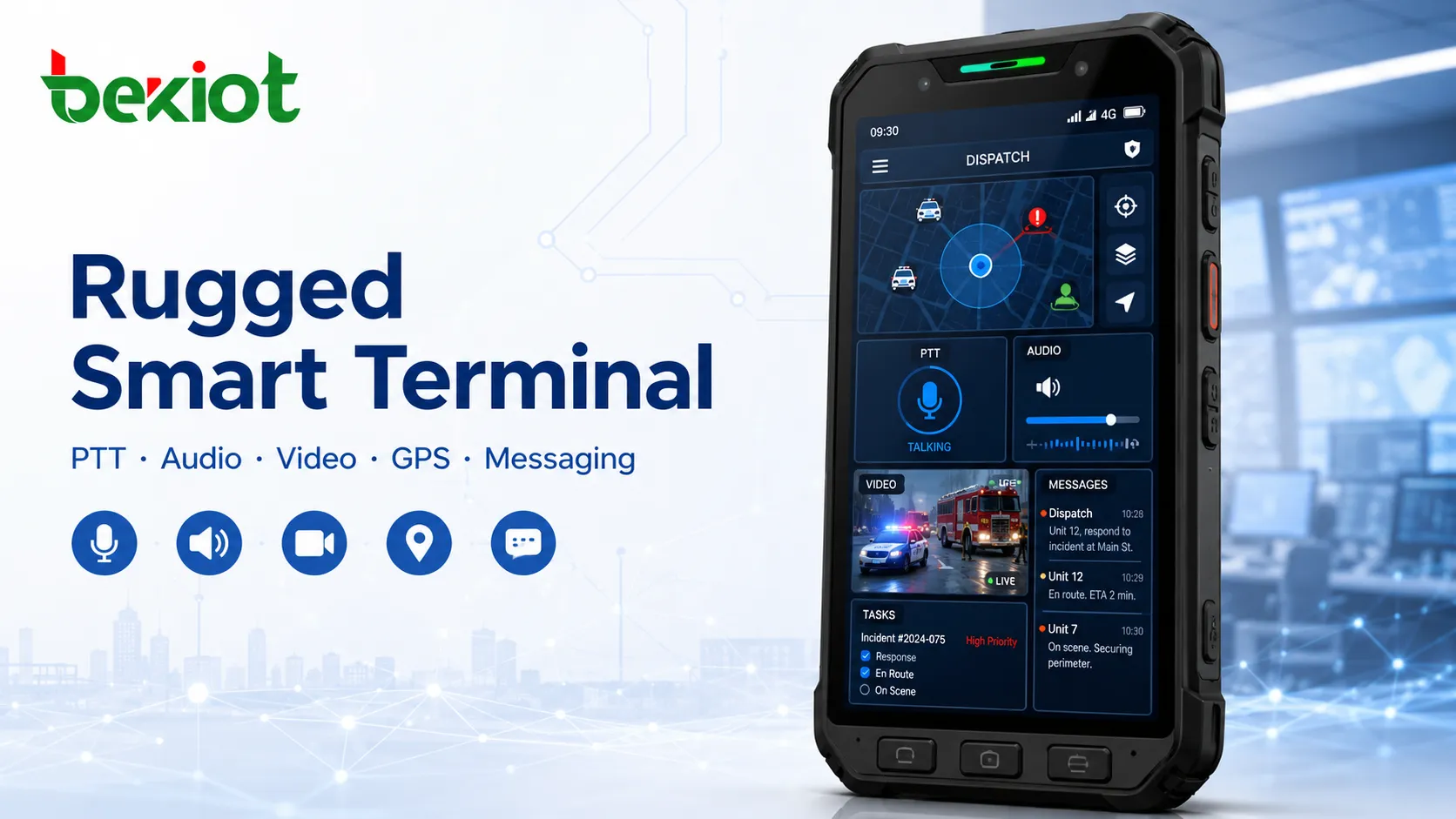
A rugged smart terminal is usually a handheld or portable device built for field use. It often supports 4G/5G communication, runs on an Android-based system, and can install emergency command applications. Through the command application, field personnel can access push-to-talk, audio calls, video calls, location reporting, message delivery, and task coordination.
This type of terminal is widely used because it is easy to carry, simple to operate, and suitable for daily emergency duty, patrol, inspection, rescue coordination, and mobile command tasks. For many projects, when people mention a single-person terminal, they are referring to this type of smart communication device.
The key value is that the device allows a single responder to stay connected with the command center without relying only on traditional telephone calls or separate radio systems. Voice, video, location, and dispatch information can be integrated into one operational interface.
In real field operations, this integration is important. A dispatcher may need to call one person, broadcast to a group, check the location of nearby staff, request live video, or review historical communication records after the event. A properly integrated terminal helps turn these actions into a continuous workflow rather than several disconnected tools.
Temporary Broadband Access at the Incident Scene
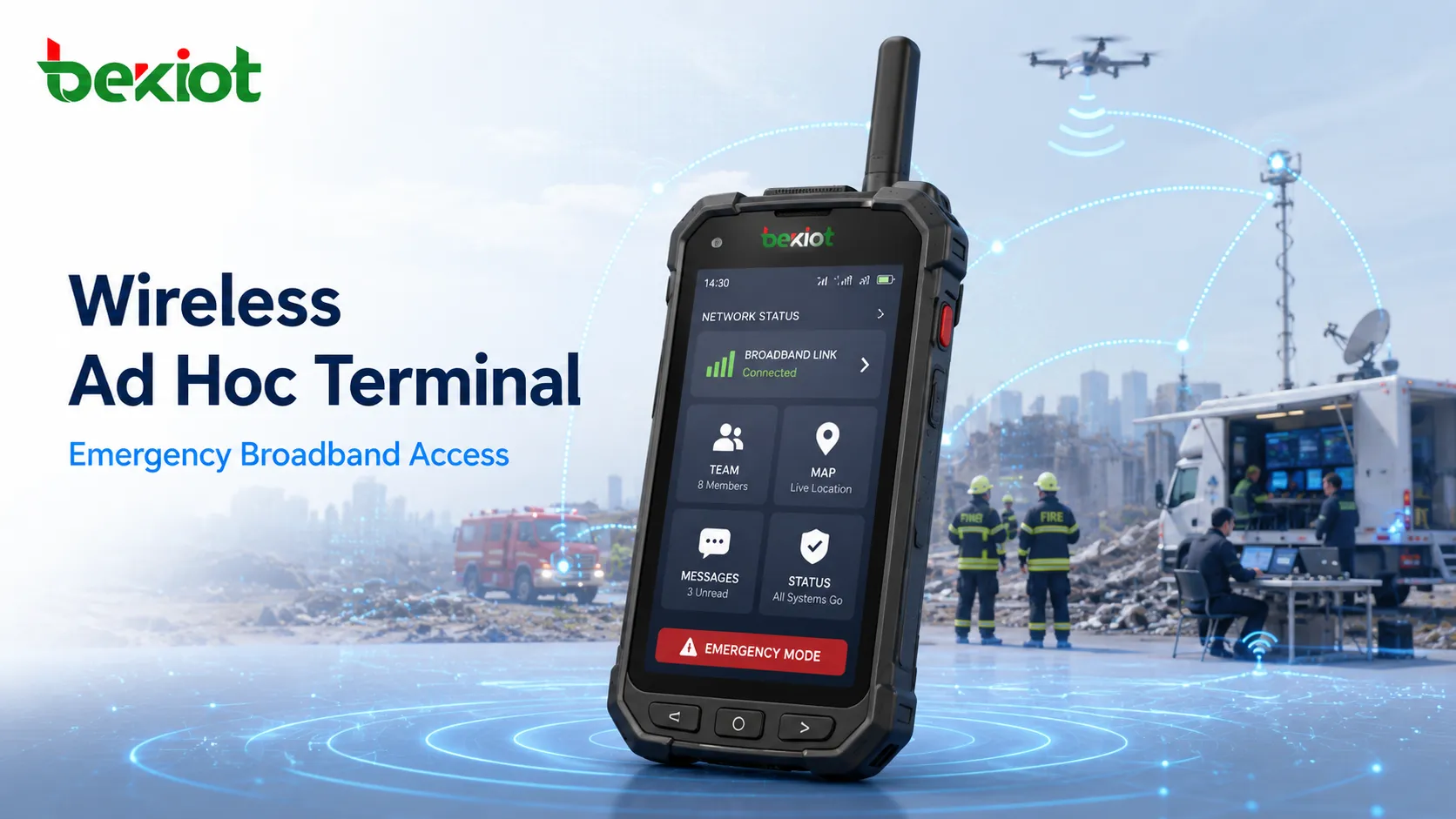
In emergency response, the incident scene may not always have stable network coverage. Natural disasters, infrastructure failures, remote locations, underground spaces, large industrial sites, or crowded public events may all create communication blind spots. This is where wireless ad hoc network terminals become important.
A wireless ad hoc network system can usually include vehicle-mounted radios, airborne nodes, backpack radio stations, and portable single-person terminals. The single-person terminal can automatically join the field network and act as an access node. It helps create a temporary broadband emergency network quickly, without depending entirely on fixed infrastructure.
Once the on-site network is established, smart terminals, laptops, portable video units, body cameras, helmet cameras, and other field devices can connect to the command system. This allows the command center to receive voice, video, image, and data from the scene more reliably.
This capability is especially useful when the first response team arrives before full communication support is available. Instead of waiting for fixed lines, base stations, or large command vehicles, responders can quickly form a field communication environment and transmit key information back to the command center.
Why Field Terminals Matter to Command Platforms
The purpose of a command platform is not only to display information in a control room. It must connect people, devices, and events across the whole response process. Single-person terminals help close the gap between the command center and the front line.
With these terminals, dispatchers can communicate with individual responders or groups, track personnel location, receive video from the field, organize emergency tasks, and keep a record of field communication. This improves response speed, situational awareness, and command execution.
In practical system design, single-person terminals are often used together with dispatch consoles, radio gateways, video access systems, GIS maps, recording systems, emergency plans, and unified communication platforms. When integrated properly, they become part of a complete emergency communication workflow rather than isolated handheld devices.
A mature command system should also support role-based permissions, group management, call recording, event logs, task records, and post-incident review. These functions allow managers to understand who received instructions, who responded, what information was reported, and how the response process was executed.
Typical Application Scenarios
Single-person terminals are suitable for many command and dispatch scenarios. In public safety, they help patrol teams and emergency responders communicate with command centers. In industrial parks, they support maintenance, security, and emergency rescue. In transportation, they can be used for road rescue, tunnel operations, traffic control, and field inspection.
They are also valuable in campuses, hospitals, energy facilities, large venues, construction sites, and remote operation areas. Wherever field personnel need fast communication, live reporting, location visibility, and coordinated dispatch, single-person terminals can become an important part of the emergency command solution.
For example, in a large industrial park, security teams may use the terminal for routine patrol and emergency reporting. In a tunnel or highway scenario, maintenance workers may use it to report faults, request support, and send live images. In campus or hospital security, it can support rapid notification, multi-person coordination, and traceable emergency handling.
RoIP Integration for Wider Communication Coverage
For projects that need to connect traditional radio systems with IP-based dispatch platforms, a RoIP solution can help bridge radio voice, network communication, command consoles, and remote users. It allows radio communication to be extended over IP networks, making it easier to integrate radio dispatch with modern emergency command systems.
A RoIP-based deployment can be used together with single-person terminals, dispatch platforms, gateways, and field communication devices. This is especially useful when an organization wants to preserve existing radio resources while expanding communication coverage through IP networks.
In this architecture, radio users, mobile app users, dispatch console operators, and remote command users can be connected through one communication workflow. This helps reduce information silos and allows different teams to communicate even when they are using different terminal types.
Recommended Product Page: RoIP Communication Solution
Deployment Considerations
When selecting single-person terminals for an emergency command project, the decision should be based on the actual communication environment. If the site has stable 4G/5G coverage, rugged smart terminals may be suitable for most daily dispatch tasks. If the site may lose network coverage or requires temporary broadband access, wireless ad hoc terminals should be considered.
The command platform should also support unified access for voice, video, location, messaging, and device management. A terminal alone cannot build an efficient emergency response system. The real value comes from system-level integration, including dispatch control, group communication, video transmission, location display, event recording, and post-event review.
Project teams should also evaluate battery life, device durability, network compatibility, user permissions, dispatch integration, data security, and maintenance requirements. For outdoor or industrial scenarios, waterproof, dustproof, shock-resistant, and long-duration operation features may directly affect field reliability.
Conclusion
A single-person terminal in an emergency command system is best understood as a portable field communication node. It helps individual responders connect to the command platform and perform voice communication, video interaction, positioning, messaging, and on-site reporting.
In real projects, the two most common forms are rugged smart terminals based on 4G/5G networks and wireless ad hoc terminals used for temporary broadband networking. Together, they improve communication reliability, field visibility, and emergency response efficiency. For organizations building modern emergency command platforms, these terminals are not optional accessories, but essential tools for connecting the front line with the command center.
FAQ
What should be considered before choosing a single-person terminal?
The main considerations include communication coverage, working environment, battery life, dispatch platform compatibility, video capability, positioning accuracy, device durability, and whether temporary networking is required at the incident scene.
Does every emergency command project need wireless ad hoc terminals?
Not always. If the project mainly covers areas with stable mobile network access, rugged smart terminals may be enough. Wireless ad hoc terminals are more suitable for complex environments where public networks may be weak, damaged, or unavailable.
Can single-person terminals support command recording and review?
Yes, when connected to a command platform, communication records, call logs, location tracks, task records, and video evidence can be stored for later review, management analysis, and emergency response evaluation.
How does RoIP help emergency communication projects?
RoIP helps connect traditional radio communication with IP-based dispatch systems. It allows radio users, dispatch consoles, mobile users, and remote command centers to communicate through a more unified system architecture.
Are these terminals only used during major emergencies?
No. They can also be used for daily patrol, maintenance, safety inspection, public service support, facility management, and emergency drills. Daily use helps teams become familiar with the system before critical events happen.







