


Emergency sites, industrial incidents, rescue operations, temporary command posts, and multi-agency field deployments often involve different radio systems working at the same time. Teams may arrive with analog radios, public network PTT terminals, PDT, DMR, TETRA, aviation radios, shortwave radios, or several channels of the same radio standard. These devices are not naturally connected, and changing channels or reprogramming radios during an emergency is usually impractical.
To solve this problem, many projects use gateway equipment to connect different radios together. However, basic interconnection is not the same as command and dispatch. A real field communication solution should not only make radios talk to each other, but also help operators create temporary groups, separate groups after a task, connect to remote command centers, and manage communication in a fast and visual way.
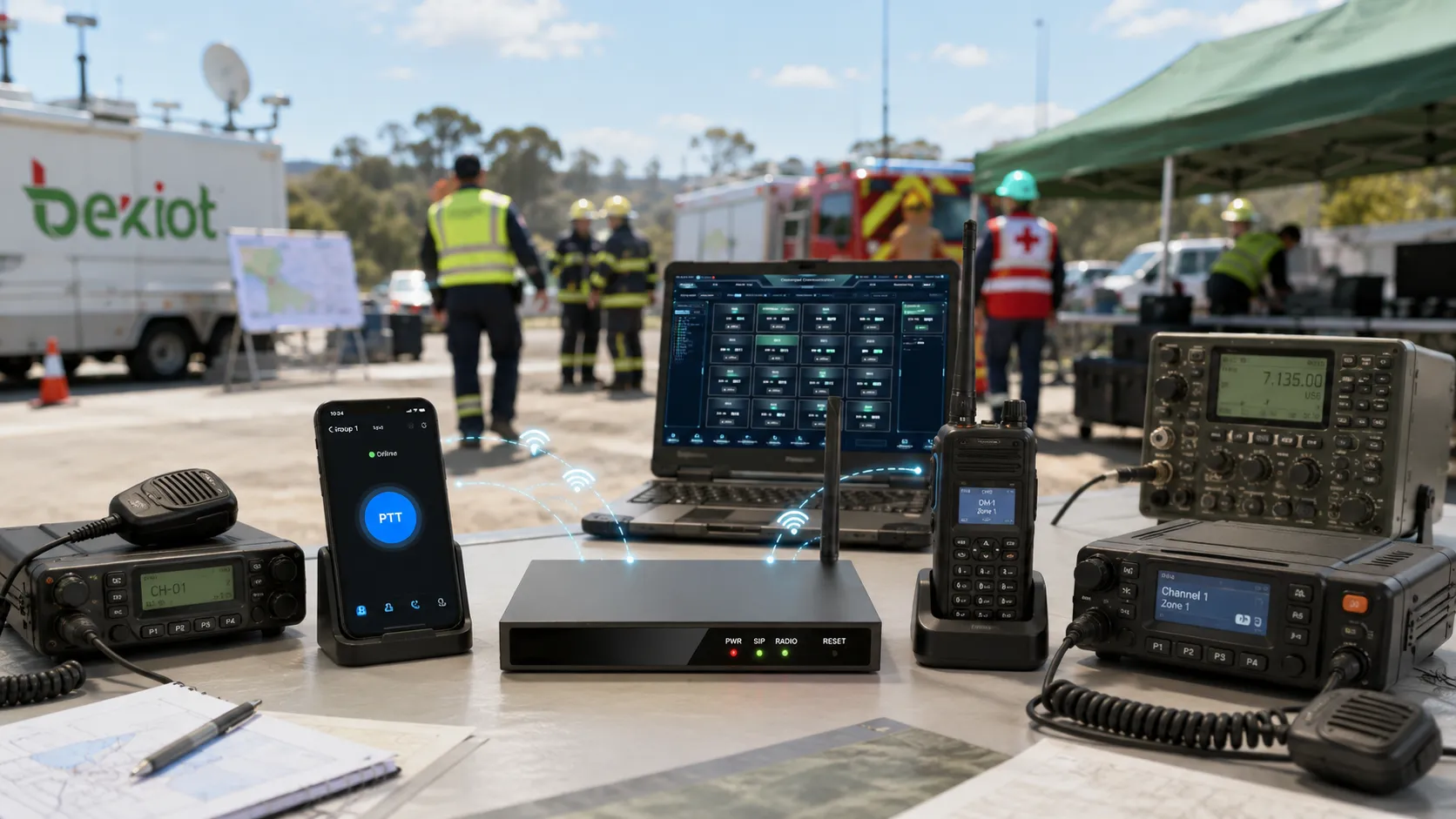
The Real Challenge Is Not Only Making Radios Talk
In traditional field communication, each radio group usually works inside its own channel, frequency plan, or network system. A public safety team may use one standard, an industrial response team may use another, and aviation or shortwave communication may exist as a separate layer. Even when all devices are radios, they may still be unable to communicate directly.
In non-urgent situations, engineers may adjust frequencies, modify channel plans, or reconfigure radio parameters. In emergency response, this is rarely realistic. Field personnel need immediate communication, and the command team must be able to connect or separate communication groups quickly according to the task.
Where Basic Interconnection Falls Short
A conventional radio interoperability gateway can connect multiple radio devices and place them into a shared communication group. This is useful when the goal is simple cross-system communication. For example, it can help users from different radio standards hear and speak to each other through a bridged path.
However, many basic gateways are designed mainly for interconnection. Their function is often single-purpose: connect radios together. They may not provide strong dispatch management, visual group control, temporary join and leave operation, or flexible handling of radios that use the same standard but different channels.
Limited control in changing field conditions
Emergency communication is dynamic. A rescue group may need to join one command group for ten minutes and then return to its original channel. Two teams may need to be connected for a specific task and separated immediately after the instruction is completed.
If the equipment only keeps radios connected in a fixed way, the system may become inconvenient. Operators may still need manual changes, extra coordination, or radio-side adjustments. This reduces efficiency and increases the risk of communication confusion.
Same standard does not always mean easy communication
Even radios using the same standard may operate on different channels, groups, or network settings. A simple gateway may not solve operational grouping problems well. The system needs a practical way for dispatchers to decide who should talk to whom, when they should be connected, and when the temporary bridge should end.
A Portable Console Adds Dispatch Management
A portable voice dispatch console is designed for more than basic interconnection. It can access different radio types or multiple channels of the same radio system, then allow the dispatcher to switch, combine, or separate communication groups according to field requirements.
The key value is operational flexibility. Radios can be placed into one temporary group only when needed. After the task is completed, they can be separated again. This gives the command operator a more practical control method without requiring field users to reconfigure their radios.
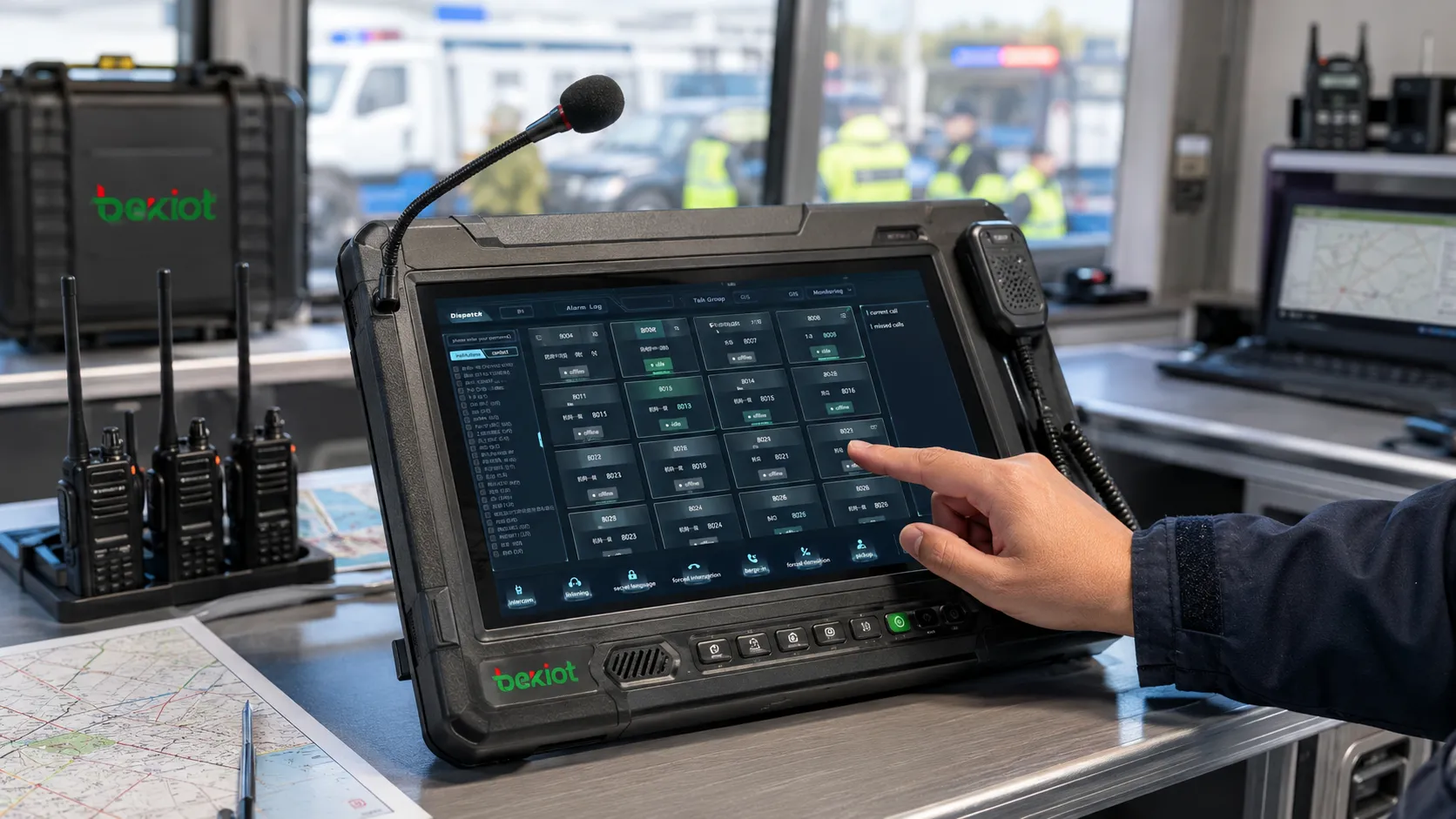
One-touch grouping for field coordination
In a field command post, operators need fast and intuitive control. A small touch panel can make group operation easier than manual channel changes or complex software steps. Dispatchers can select terminals, create communication groups, connect two teams, and separate them after the instruction is delivered.
This is especially useful when different agencies, contractors, emergency teams, and technical personnel work together but do not need permanent interconnection. The system supports temporary coordination while keeping each original radio group independent when cross-group communication is not required.
No extra computer for basic operation
Portable field systems should be easy to deploy. In many emergency sites, space, power, time, and network conditions are limited. A compact console that can complete dispatch operation without an additional computer helps reduce deployment complexity.
Simple one-touch operation also lowers the training requirement. In high-pressure scenarios, operators need a clear interface, direct control, and fewer unnecessary steps.
Multi-Standard Access Supports Complex Rescue Scenarios
A practical field dispatch solution should support broad communication access. Typical systems may need to connect analog radios, public network PTT terminals, PDT, DMR, TETRA, aviation radios, shortwave radios, and other radio sources. The goal is not only to support many device types, but also to organize them into useful communication workflows.
This is important because emergency sites often involve public safety, transportation, aviation, industrial response, utility maintenance, medical rescue, logistics support, and command personnel. Each group may bring its own communication equipment. A dispatch-centered architecture helps them work together without forcing every team to replace its existing devices.
Remote Links Extend the Command Chain
Field communication does not stop at the local site. A portable dispatch system may also need to connect with a remote command center, higher-level authority, expert support team, or emergency coordination platform. For this reason, external network links, telephone links, satellite phone access, or SIP-based server connection can become important.
When local radio communication is connected with IP dispatch, SIP platforms, or remote command networks, the field command post can report status, request support, and receive instructions more effectively. This turns radio bridging into a wider command communication solution.
From local radio bridge to command platform integration
Radio integration can be combined with SIP servers, recording systems, GIS platforms, alarm systems, and command center software. This allows voice communication to be recorded, managed, and linked with operational data.
For emergency management, this is valuable because communication history, dispatch decisions, group activity, and command instructions may need to be reviewed after the event. A gateway or console that supports IP integration can provide better long-term value than a closed standalone bridge.
Why Portability Matters in Emergency Deployment
Traditional command equipment can be large, heavy, and slow to deploy. In mobile rescue, temporary command posts, field vehicles, disaster sites, and outdoor operations, the equipment should be compact enough to carry and quick enough to activate.
A lightweight design is a practical advantage. The source article highlights a portable voice dispatch console with a weight of only 1.8 kilograms. This kind of weight class is suitable for field use because it does not add heavy burden to rescue personnel while still providing local dispatch control.
Portability should not only mean small size. It should also include fast startup, simple wiring, clear interface, easy power connection, and the ability to operate without complex support equipment.
Recommended Architecture for Field Interoperability
A complete solution can be designed with radio terminals, RoIP gateways, a portable voice dispatch console, SIP dispatch server, recording module, public network PTT platform, satellite phone link, and remote command center connection. The exact architecture depends on project scale, radio types, mobility requirements, and command workflow.
For fixed sites, a gateway-based design may be enough when the communication groups are stable. For emergency field operations, a portable dispatch console is more suitable when groups must be created and separated frequently. For large projects, both can be used together: RoIP gateways provide network bridging, while the dispatch console provides operator control.
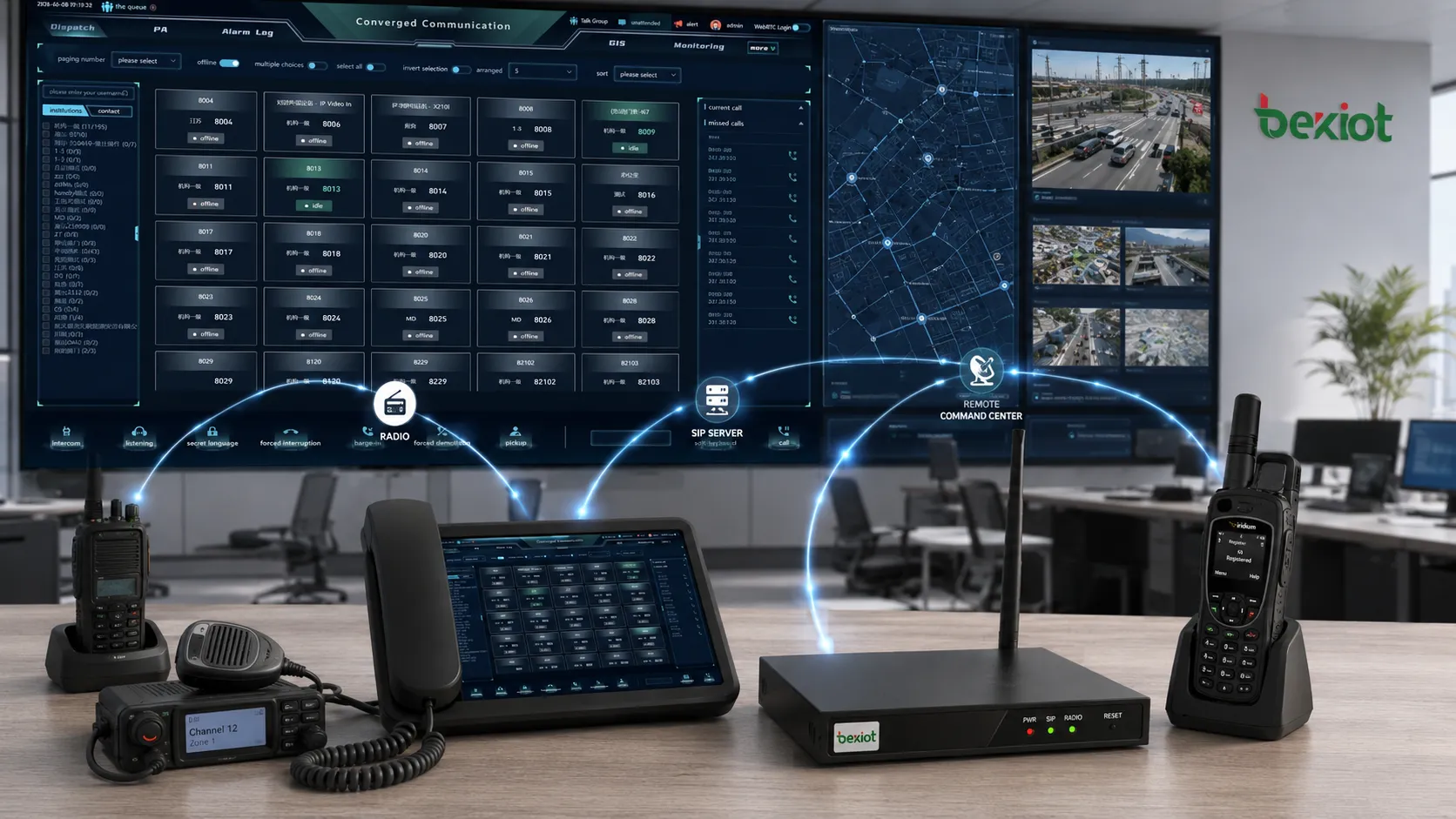
Related Product for RoIP Integration
For projects that need to connect radio systems with IP dispatch platforms, SIP communication, recording, and command systems, a RoIP solution can provide the bridge between field radios and modern communication networks.
Related product solution: Becke RoIP Gateway
When selecting a RoIP solution, project teams should review radio interface compatibility, PTT control method, audio quality, SIP support, channel capacity, field deployment requirements, and long-term maintenance needs.
Selection Guidance for Project Teams
The choice between a basic interoperability gateway and a voice dispatch console depends on how the system will be used. If the requirement is fixed, stable, and mainly focused on connecting several radio systems together, a gateway may be sufficient.
If the project requires temporary group formation, frequent joining and leaving, multi-channel control, field command operation, touch-based dispatch, remote command links, and portable deployment, a voice dispatch console or a gateway-plus-console architecture will be more suitable.
Key questions before design
Project teams should confirm how many radio types need access, whether the groups are fixed or temporary, whether same-standard radios operate on different channels, whether remote command center connection is required, and whether the field team can carry additional computers or large equipment.
They should also test audio levels, PTT trigger, squelch detection, talk group behavior, power supply, portability, user interface operation, and recovery after disconnection. These details often decide whether a system works well during real emergency response.
Operational Value for Emergency and Industrial Users
A good radio interoperability solution does more than connect devices. It improves command efficiency, reduces manual radio operation, supports multi-agency coordination, and helps teams respond faster when the communication environment is complex.
For emergency response, the ability to connect and separate groups with one-touch control can reduce confusion. For industrial and public safety users, RoIP and SIP integration can connect legacy radio assets with modern dispatch platforms. For system integrators, a clear architecture helps reduce custom development and makes project delivery more predictable.
The best solution is not always the most complex one. It is the solution that fits the field workflow, supports the right radio systems, and gives dispatchers the control they need when every minute matters.
FAQ
Can a radio interoperability gateway work without a dispatch console?
Yes. In simple scenarios, a gateway can connect several radio systems or channels without a separate console. However, projects that require flexible group control, temporary task grouping, and visual operation usually benefit from a dispatch console.
When should a portable solution be chosen instead of a fixed system?
A portable solution is suitable for temporary command posts, rescue sites, field operations, event security, mobile emergency vehicles, and scenarios where communication equipment must be moved and deployed quickly.
Does RoIP integration require replacing existing radios?
Usually no. RoIP integration is often used to protect existing radio investment by connecting current radios or base stations to IP-based dispatch and communication systems.
What should be tested before emergency deployment?
Teams should test radio compatibility, audio clarity, PTT control, group switching, power supply, remote link stability, operator workflow, and backup communication paths before using the system in critical operations.
Is one-touch operation important for trained dispatchers?
Yes. Even trained operators benefit from simpler control during high-pressure events. One-touch operation reduces steps, lowers error risk, and helps the dispatcher respond faster when communication groups change quickly.







