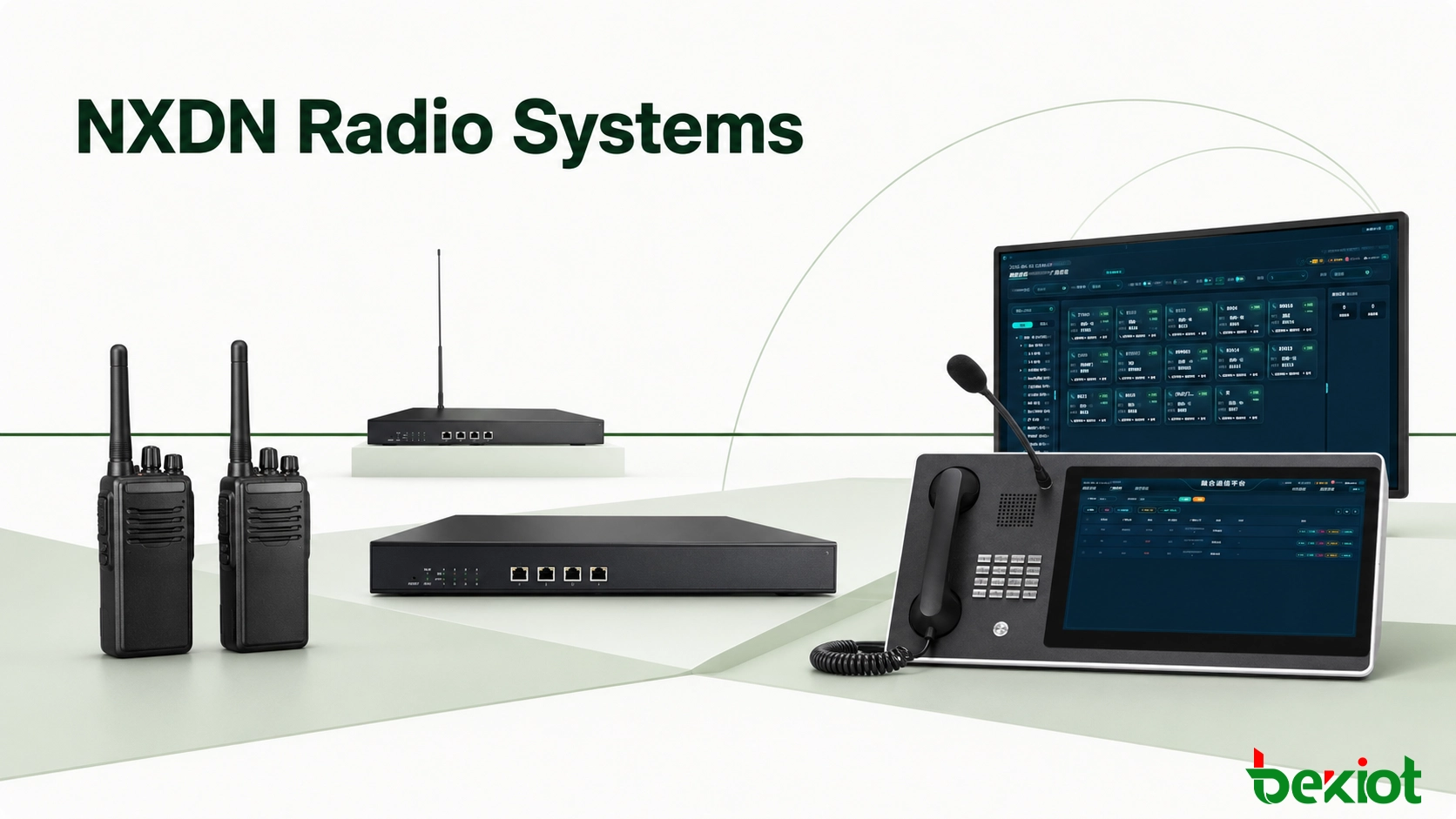
NXDN is a narrowband digital land mobile radio protocol designed for professional voice and data communication. It is used in private radio networks where organizations need direct control over coverage, talk groups, dispatch access and operating procedures without depending entirely on public mobile networks.
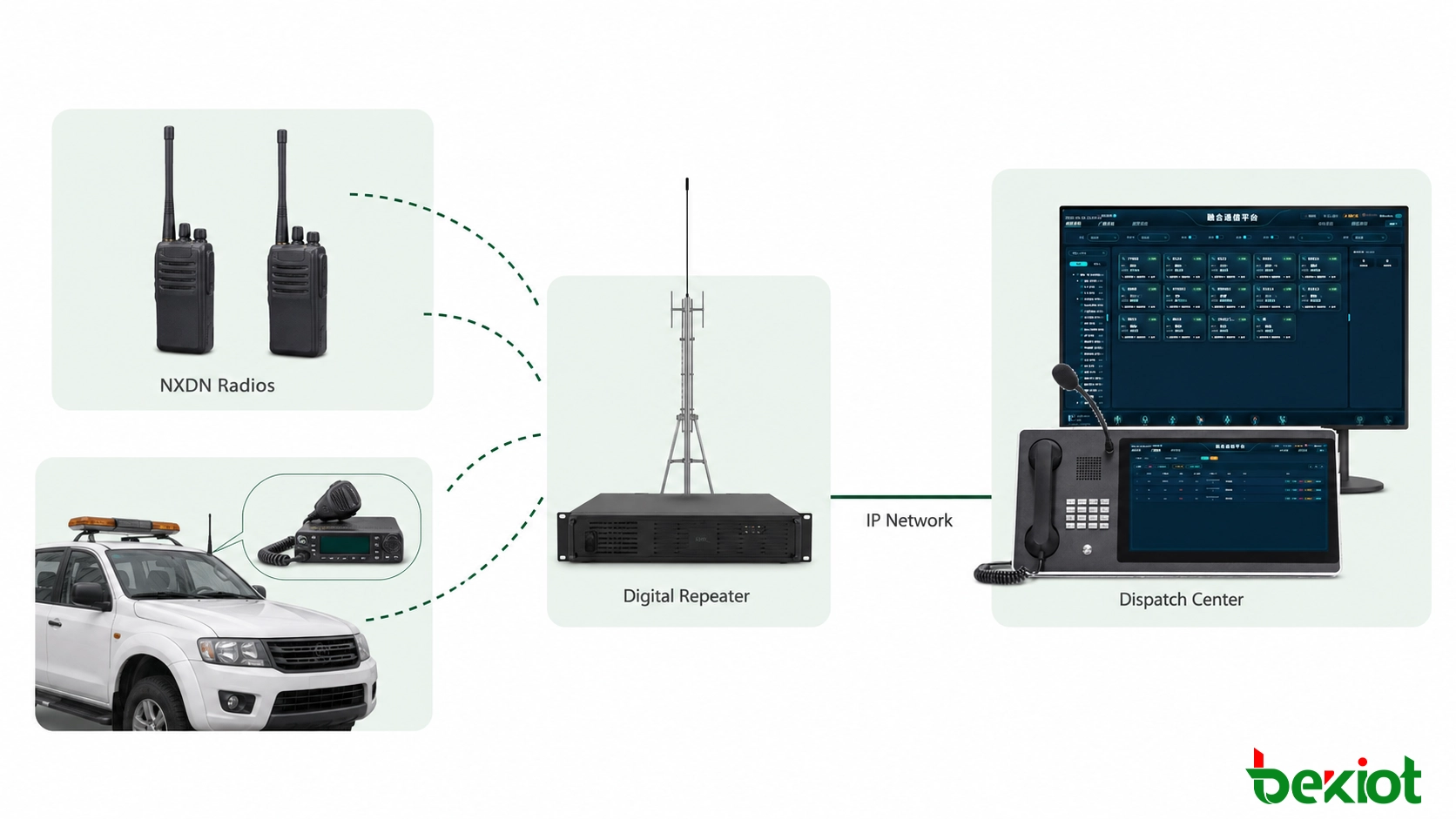
A deployment may be as simple as several handheld radios communicating through one repeater, or it may include multiple sites, automatic channel assignment, centralized dispatch, recording and connections to other communication systems. The correct architecture depends on coverage, traffic volume, available spectrum and the level of operational control required.
Related Product: Becke RoIP Gateway
A Narrowband Standard for Professional Radio
NXDN, short for Next Generation Digital Narrowband, was developed through a technical alliance between professional radio manufacturers and is now supported through the NXDN Forum. Its common air interface has also been included in an International Telecommunication Union radiocommunication report as a digital land mobile radio technology.
Unlike communication services that rely on a mobile operator, an NXDN network can be built as an organization-controlled radio system. Frequencies, repeaters, subscriber identities and talk groups are planned for a defined operating area. This makes the technology suitable for sites that require fast push-to-talk communication, predictable coverage and clear responsibility for system management.
Typical users include manufacturing plants, utilities, transport operators, ports, airports, campuses, property-management teams and public-service organizations. The same air interface can support direct radio-to-radio communication, conventional repeater operation and trunked networks.
Digital operation also provides more than basic group voice. Depending on the radios, repeaters and management platform, a system may support:
Group calls for departments, shifts or operating teams.
Individual calls between authorized radio users.
Short text, status and location data.
Emergency calls and priority handling.
Dispatch monitoring and call recording.
Multi-site roaming and IP-linked coverage.
Functions such as fall detection, Bluetooth positioning, alarm linkage and video-system integration are not guaranteed by the NXDN air interface alone. They are implemented through compatible terminals, applications, gateways and dispatch software. These requirements should therefore be defined at system level rather than assumed from the radio protocol.
What Happens Across the Radio Channel
NXDN uses frequency-division multiple access, or FDMA. Each active radio conversation occupies an assigned frequency channel rather than a time slot within a wider carrier. This is one of the main technical differences between NXDN and TDMA-based radio systems.
The standard supports 6.25 kHz and 12.5 kHz channel spacing. In a 6.25 kHz configuration, two separately coordinated channels can be positioned within spectrum equivalent to one 12.5 kHz analog channel. This can improve spectrum utilization, but the actual frequency plan must be approved according to local licensing and coordination rules.
| Technical Item | 6.25 kHz Operation | 12.5 kHz Operation |
|---|---|---|
| Access method | FDMA | FDMA |
| Modulation | 4-level FSK | 4-level FSK |
| Transmission rate | 4800 bps | 9600 bps |
| Codec rate | 3600 bps | 7200 bps |
| Vocoder | AMBE+2 | AMBE+2 |
| Operating modes | Conventional, Type-C and Type-D trunking | Conventional and Type-C trunking |
Audio Quality Depends on the Complete RF Path
Digital voice processing suppresses the background hiss normally heard as an analog FM signal becomes weaker. Speech can therefore remain clean through much of the usable coverage area. Near the edge of coverage, however, digital audio may deteriorate rapidly when the receiver can no longer recover the data reliably.
Claims that one radio protocol always provides better audio should be treated carefully. Perceived quality also depends on the microphone, vocoder configuration, receiver sensitivity, antenna installation, RF interference and the user's acoustic environment. A field coverage test is more useful than relying only on a protocol comparison.
Choosing the Right Operating Structure
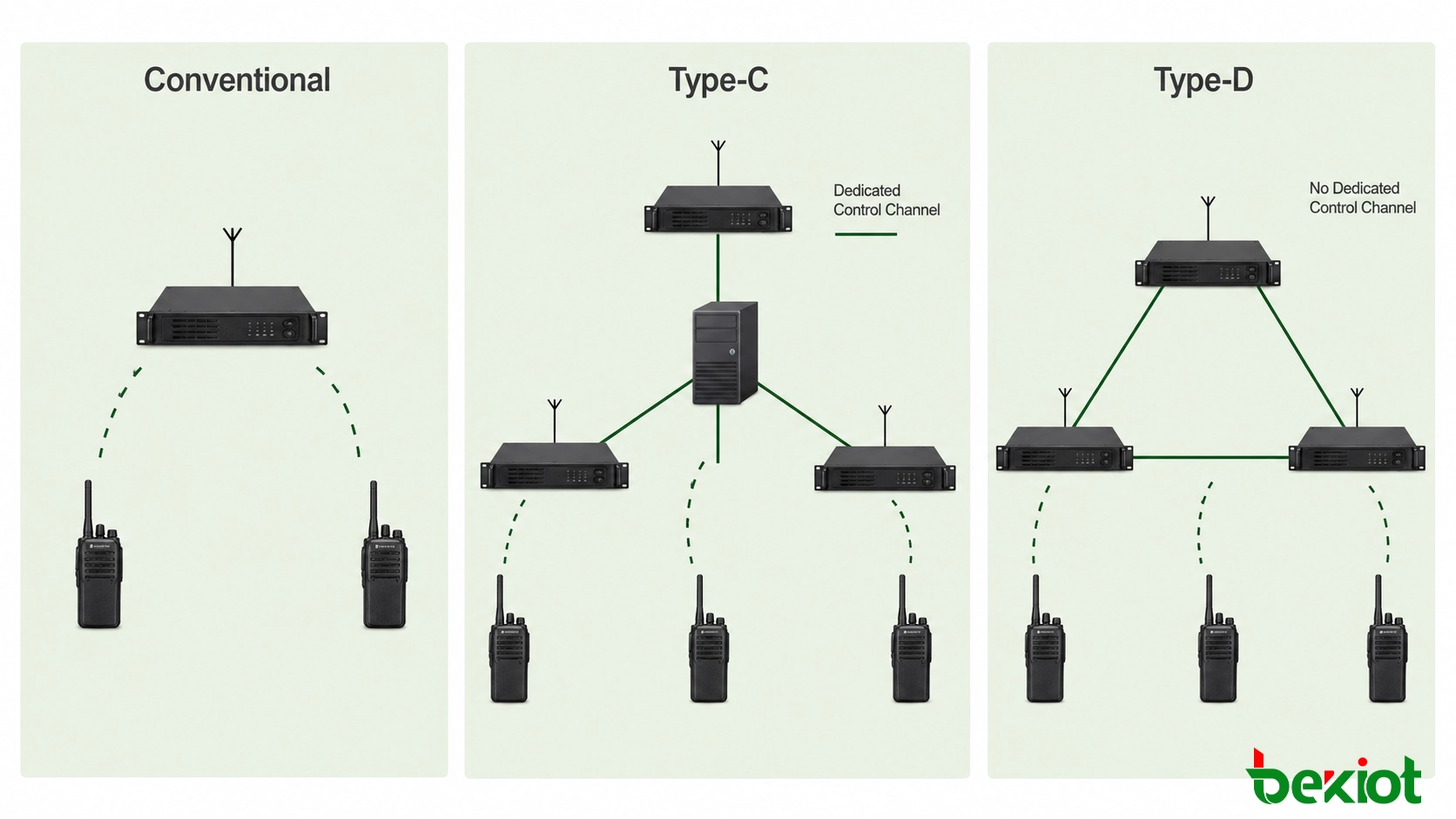
Not every organization needs a trunked network. The operating mode should be selected according to the number of users, available channels, coverage area and expected call traffic.
Direct and Conventional Operation
Direct mode allows compatible radios to communicate without a repeater when users are within radio range. It provides a simple local communication path for small teams, temporary work areas and situations where fixed infrastructure is unavailable.
Conventional repeater operation extends coverage by receiving a radio transmission and retransmitting it from an elevated or strategically located site. Each department or function is normally assigned a fixed channel. This arrangement is straightforward to operate and is often suitable for a single plant, warehouse, campus or local service area.
Type-C Centralized Trunking
Type-C uses a dedicated control channel. Subscriber radios register with the network, and the system assigns an available traffic channel when a call is requested. Central control supports efficient channel management, call queuing, priority rules and roaming across larger multi-site systems.
This architecture is appropriate when several user groups share a pool of radio channels or when the organization needs structured access control and coordinated wide-area operation. Because the control channel is central to call processing, redundancy and failure recovery should be included in the design.
Type-D Distributed Trunking
Type-D does not reserve a dedicated control channel. Trunking decisions are handled through distributed system logic, allowing the available channels to be used for traffic. It can provide an efficient structure for small and medium systems that need trunking functions without a continuously assigned control channel.
Type-D and Type-C should not be treated as interchangeable configuration options. Radio compatibility, repeater architecture, roaming requirements and expansion plans must be confirmed before the system type is selected.
How It Compares with DMR
NXDN and DMR both support professional digital radio communication, but they organize RF capacity differently. NXDN uses FDMA with 6.25 kHz or 12.5 kHz channels. DMR commonly uses two-slot TDMA within a 12.5 kHz carrier, allowing two logical communication paths to share that carrier by transmitting in alternating time slots.
| Design Point | NXDN | DMR |
|---|---|---|
| Multiple-access method | FDMA | Two-slot TDMA |
| Typical channel structure | 6.25 or 12.5 kHz per RF channel | Two time slots within a 12.5 kHz carrier |
| Conventional communication | Supported | Supported |
| Trunked communication | Type-C and Type-D architectures | Tier III and vendor-supported trunking implementations |
| Migration from analog | Mixed-mode options may be available | Mixed-mode options may be available |
| Interoperability | Requires compatible NXDN modes and configurations | Requires compatible DMR tiers, features and configurations |
Compare Usable Capacity, Not Only Channel Width
Channel width alone does not determine how many users a system can support. Engineers must also consider call duration, busy-hour traffic, reserved emergency capacity and the number of groups sharing each channel. A lightly used conventional network may work reliably with only a few frequencies, while a site with frequent simultaneous calls may benefit from dynamic trunked-channel allocation.
Frequency efficiency should therefore be evaluated together with operating behavior. Two technically available communication paths provide little benefit if both are assigned incorrectly, affected by interference or unavailable at a critical location. Capacity planning should use real call records or representative traffic estimates rather than relying only on the theoretical number of channels.
Neither method is automatically superior for every project. NXDN may be attractive where 6.25 kHz frequency assignments, FDMA operation or an existing NXDN fleet influence the design. DMR may offer a broader choice of suppliers in some markets and can provide two logical paths within a 12.5 kHz carrier.
A practical evaluation should begin with available frequencies, existing radios, traffic patterns and required interoperability. Replacing a working fleet solely because another protocol appears more popular can create unnecessary cost without improving coverage or operating procedures.
Bringing Radio Traffic into an IP Dispatch Environment
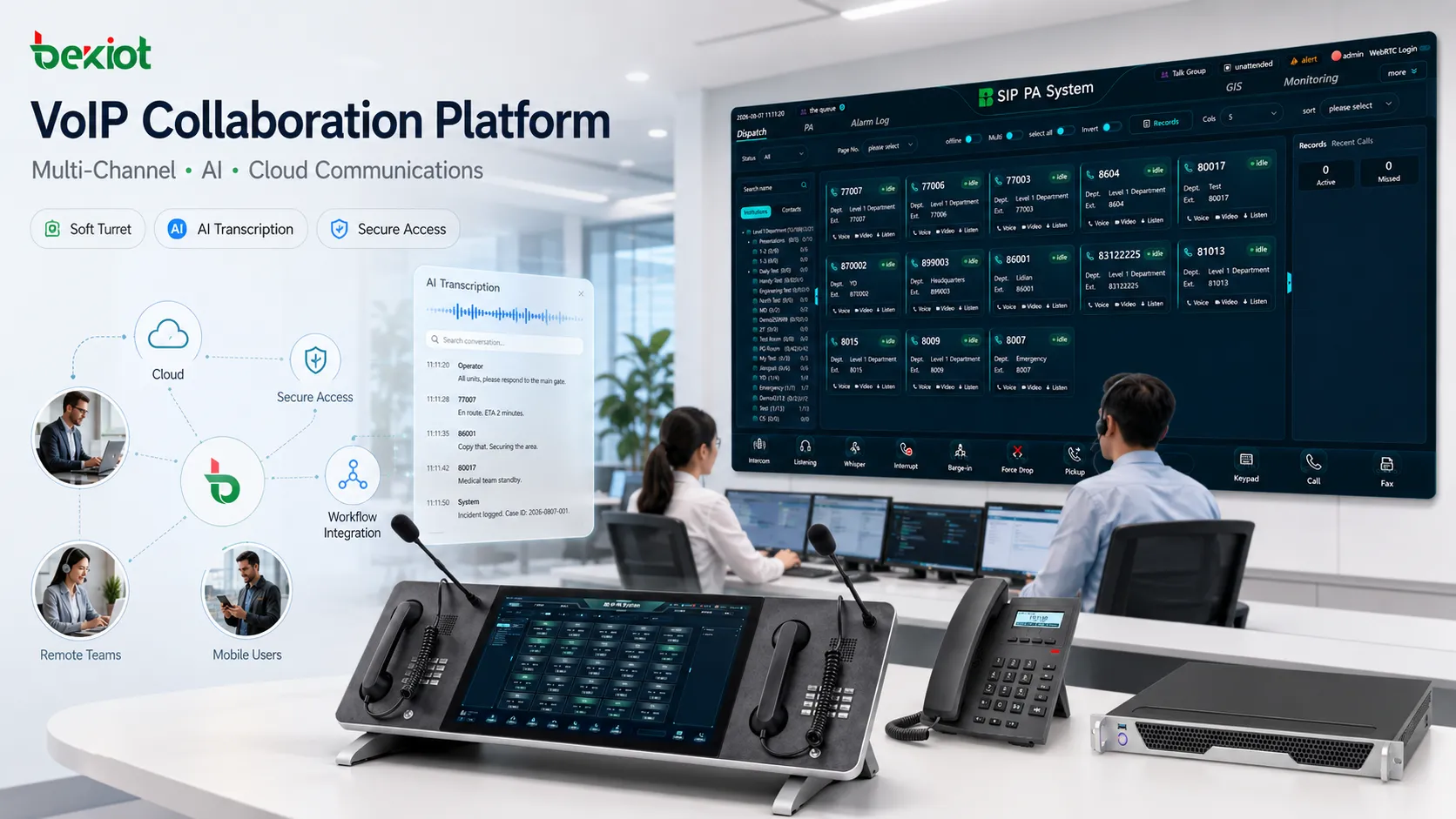
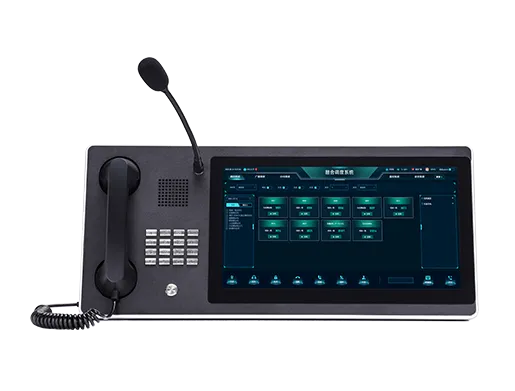
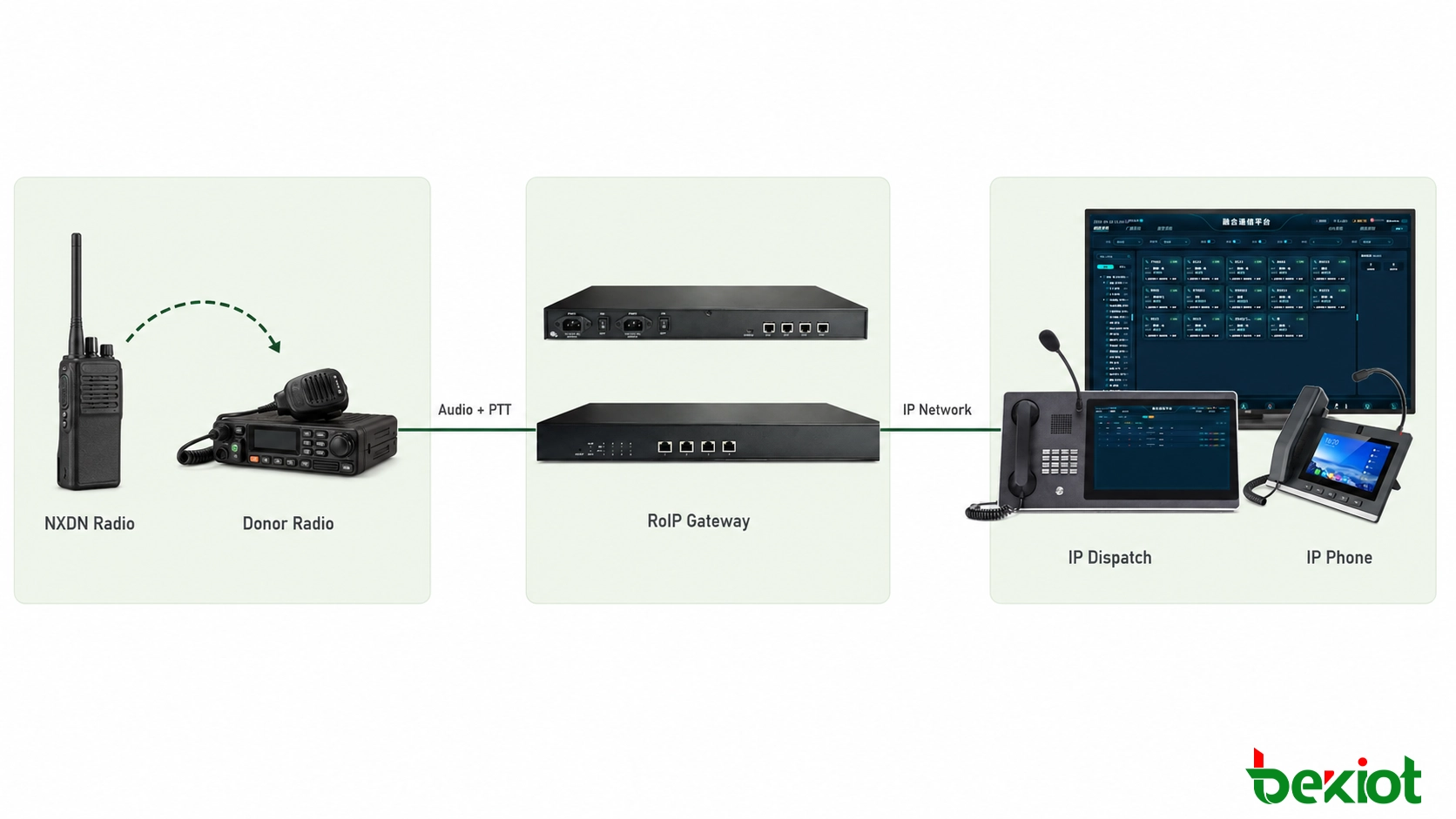
A standalone radio network is effective for local push-to-talk communication, but operations become more difficult when supervisors need to monitor several channels, coordinate remote sites or communicate with users on different systems. RoIP integration transports radio audio and control signals over an IP network so that selected channels can be presented to a centralized dispatch platform.
In many deployments, the RoIP gateway connects to a compatible mobile radio or base radio through accessory audio, push-to-talk control and carrier-detect or squelch signals. The gateway converts those physical audio and control interfaces into streams and signaling that the dispatch system can manage.
This boundary needs to be understood correctly. A gateway connected through a radio's analog accessory interface does not directly convert the NXDN air protocol into another radio protocol. The connected radio still handles RF transmission, subscriber identity and protocol operation. The gateway transports the available audio and control state to the IP side.
Once integrated, an authorized dispatcher may be able to:
Monitor one or more NXDN channels from a central console.
Transmit to a selected radio channel using push-to-talk controls.
Connect remote radio sites through an existing WAN.
Record channel audio with timestamps and operator information.
Include radio users in cross-system dispatch sessions.
Link radio communication with IP phones, mobile applications or other radio networks.
Separate Voice Transport from Radio Control
A reliable RoIP design treats audio and radio control as separate engineering paths. The audio interface carries received and transmitted speech, while control lines handle push-to-talk, carrier detection and other supported radio states. Incorrect timing between these paths can clip the first words of a transmission, keep a radio keyed after the operator releases PTT or allow background noise to open the dispatch channel.
Commissioning should measure PTT activation delay, audio start time and release behavior. If several remote channels are connected to one dispatch platform, each channel should also have a clear operational name, access permission and busy indication. Dispatchers should select locations such as “North Plant” or “Maintenance Channel” rather than work with gateway addresses or radio model names.
Feature availability depends on how the radio interface is implemented. Basic audio and PTT integration may not expose unit IDs, text messages, GPS reports or emergency status to the dispatch platform. Projects requiring these functions should confirm that the radio, gateway and dispatch software share a supported data or control interface.
Planning a Reliable Deployment
System design should start with operational requirements rather than radio specifications. Map the areas that need coverage, the teams that communicate, the number of simultaneous calls and the communication path required during a network or power failure.
Confirm spectrum availability. Verify frequencies, channel spacing, transmit power and licensing conditions with the appropriate local authority.
Survey the RF environment. Identify terrain, buildings, interference sources, coverage gaps and suitable repeater locations.
Estimate call traffic. Determine whether fixed conventional channels are sufficient or whether shared trunked capacity is justified.
Define groups and permissions. Create a clear plan for radio IDs, talk groups, emergency access and dispatch authority.
Check interface compatibility. Verify audio levels, PTT logic, carrier detection and supported data interfaces before selecting a RoIP connection.
Design for outages. Identify which local radio functions must remain available when the WAN, dispatch server or central site is unavailable.
Test real operating conditions. Commission the network with normal background noise, vehicle movement, indoor locations and realistic network loading.
Design Coverage Around the User's Working Position
Coverage predictions should be verified where radios are actually used: inside vehicles, beside machinery, below ground, inside reinforced buildings and near large metal structures. A signal measured in an open parking area does not prove that communication will remain reliable inside a workshop or tunnel.
Tests should include both uplink and downlink performance. A user may hear the repeater clearly while a low-power handheld radio cannot reach it from the same location. Antenna position, feeder loss, building penetration and portable-radio orientation can all create an unbalanced path. Representative handheld and mobile radios should therefore be included in the final coverage survey.
Acceptance testing should cover direct calls, repeater calls, group selection, individual calls, busy-channel behavior, roaming, dispatch PTT, audio levels and recovery after an interruption. For multi-site systems, tests should be performed across the production WAN rather than only on a local bench network.
A well-designed solution does not require every communication system to use the same air interface. NXDN can continue serving users who need reliable radio coverage, while gateways and dispatch software provide controlled access to telephone, broadband and other radio networks. The result is a migration path that protects the existing radio investment without isolating it from wider operational communications.
FAQ
Will Any NXDN Radio Work on an Existing NXDN Network?
Not automatically. Frequency band, channel spacing, conventional or trunked mode, system keys, unit IDs, feature licensing and encryption settings must be compatible. Interoperability should be confirmed through configuration review and field testing.
Can 6.25 kHz and 12.5 kHz Radios Communicate on the Same Channel?
The transmitting and receiving devices must use matching channel parameters. A radio may support both bandwidths, but the selected channel must be programmed for the same operating mode and frequency plan across the communicating devices.
Is Encrypted Radio Audio Automatically Protected Across a RoIP Link?
Not necessarily. When a gateway receives ordinary accessory audio from a radio, the audio may already have been decrypted inside that radio. End-to-end protection depends on the radio interface, gateway design, IP transport security and dispatch platform. Security requirements must be evaluated across the complete path.
Can Local Radio Communication Continue If the WAN Fails?
Local direct or repeater communication can continue when the RF infrastructure operates independently of the WAN. Central dispatch access, remote-site linking and network-based recording may be unavailable until the connection is restored.
What Information Should Be Recorded During Commissioning?
Record the programmed channel plan, radio and group IDs, antenna locations, coverage-test results, accepted audio levels, gateway control logic, network addresses and recovery procedures. This information provides a baseline for maintenance and future expansion.