


Radio systems are still widely used in emergency command, field operations, security patrol, industrial production, transportation, military-related communication, and public safety projects. However, traditional radios are often limited by coverage distance, independent channels, and separation from telephone or dispatch systems. A ROIP gateway helps solve this problem by converting radio voice into IP-based communication, allowing radio users to connect with SIP platforms, dispatch centers, IP phones, and remote radio networks.
ROIP stands for Radio Over Internet Protocol. It is also commonly described as a radio-over-IP gateway, intercom gateway, or radio gateway. The earliest use of this technology was to allow radios located in different places to communicate through IP networks, such as the internet or a local area network. With the development of VoIP and SIP softswitch technology, today’s ROIP gateway is no longer only used for remote radio networking. It has become an important integration device for unified communications and command dispatch projects.
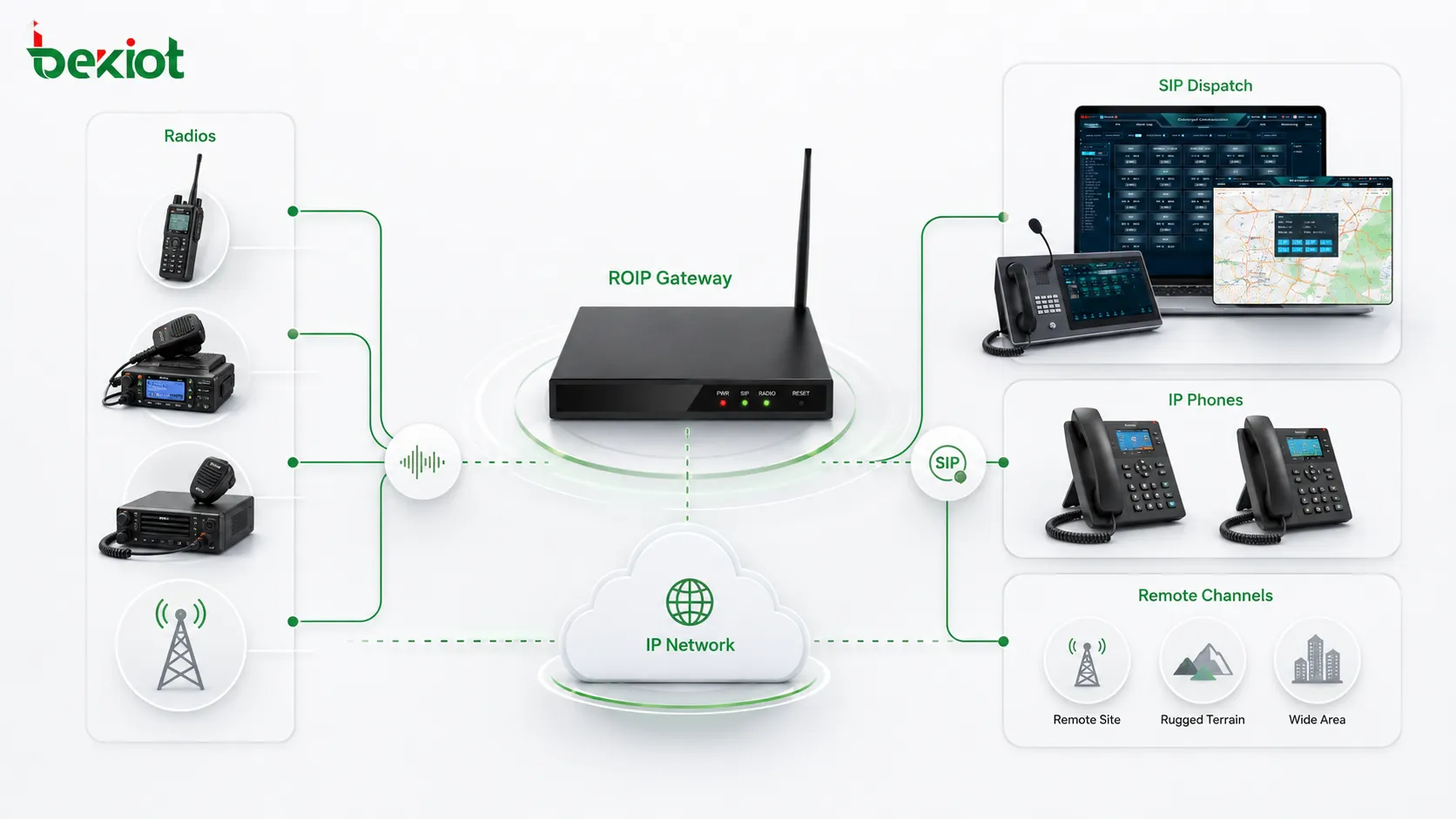
Why Radio Systems Need IP-Based Integration
Traditional radios and telephone systems are two different communication systems. Radios are usually used for group-based field communication, while telephones are used for point-to-point calling, enterprise communication, and public network access. Their working principles, user habits, and deployment scenarios are different.
As enterprise communication systems move toward SIP softswitch platforms and integrated command systems, many dispatch projects need to connect radios into the same communication framework. This is especially common in emergency response, industrial control rooms, public safety command centers, logistics operations, ports, mines, transportation projects, and large campus management.
Without ROIP gateway integration, radio users and SIP users remain separated. A dispatcher may need to operate a radio console, an IP phone, a command platform, and other systems at the same time. This reduces response efficiency and makes communication records harder to manage.
The value of a ROIP gateway is not only extending radio coverage. It turns radio channels into dispatchable IP communication resources.
Related Solution: ROIP Gateway Solution for Radio over IP Integration
How the Gateway Connects Radios with SIP Platforms
A ROIP gateway usually connects to handheld radios, vehicle-mounted radios, base stations, or other radio devices through external cables. In many practical deployments, a 9-pin aviation connector is used to connect with different brands of radios or vehicle stations. Customized cables can provide flexible control and audio access according to the radio model and project requirements.
After the radio audio is connected, the gateway converts the radio voice into standard SIP communication. This allows the radio channel to register to a SIP softswitch, IP PBX, unified communication platform, or dispatch system. Once registered, the radio channel can be managed like a communication extension or dispatch resource.
This method makes integration easier. The project team does not need to rebuild the radio system. Existing radios can continue to be used, while the ROIP gateway creates a bridge between radio communication and IP-based voice platforms.
Scenario One: Connecting Radios to a Telephone System
One common use case is connecting radios to a telephone system. In some command and dispatch environments, the telephone platform has become the center of communication. Operators may need to call internal extensions, external telephone numbers, mobile phones, IP phones, and radio channels from the same system.
With a ROIP gateway, a radio channel can be connected to the SIP telephone platform. This allows IP phone users to communicate with radio users, and dispatch operators can call radio channels directly from the platform interface. This is useful when office users, field teams, emergency staff, and duty rooms must communicate across different devices.
For example, a control room operator can call a radio group through the SIP platform. A field radio user can be connected with a duty office extension. A telephone user can join a radio communication workflow when needed. This improves communication flexibility without forcing all users to change devices.
Scenario Two: Accessing a Unified Dispatch Platform
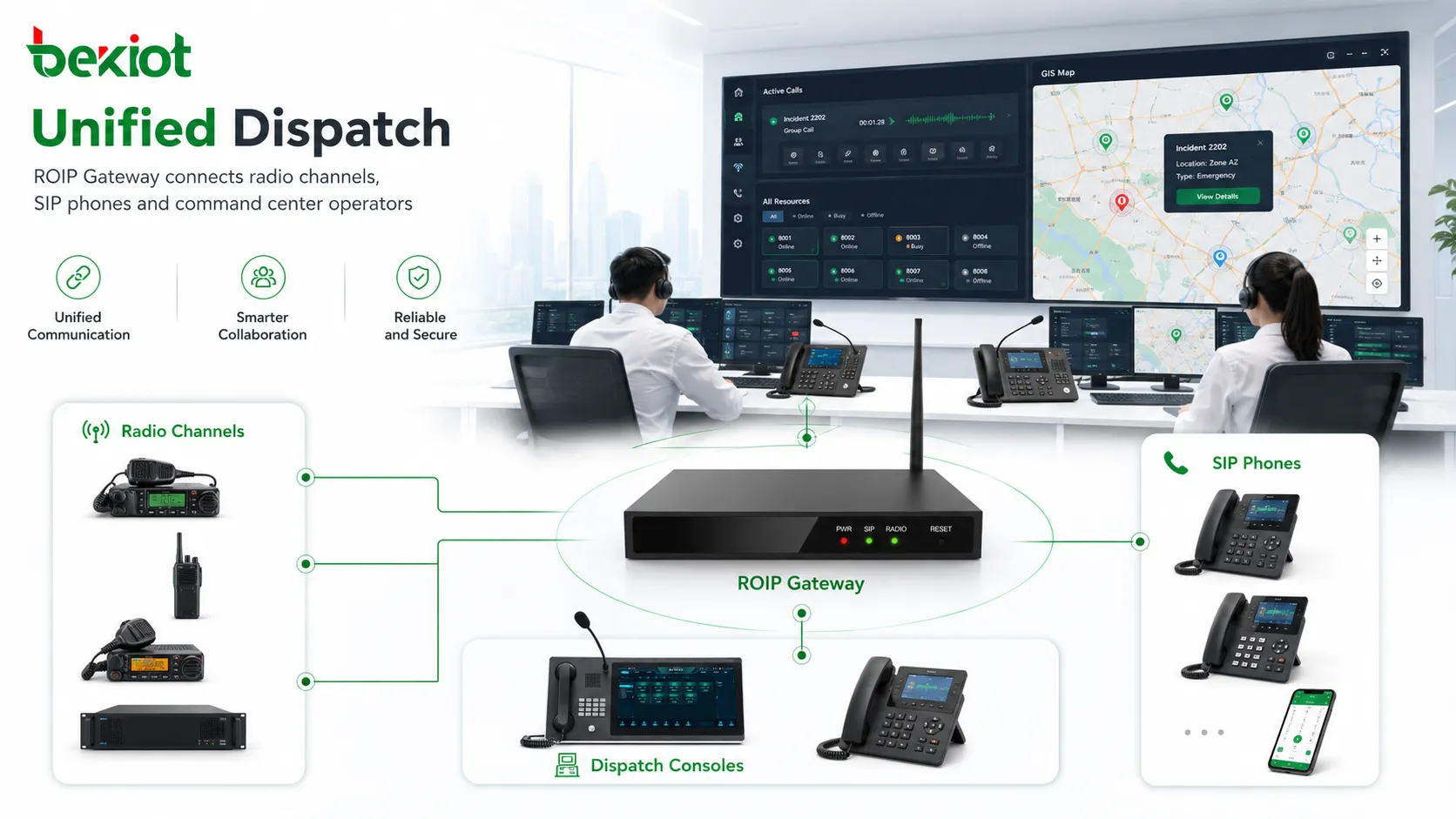
Another important use case is unified command dispatch. In many projects, the dispatch system is built on SIP communication, softswitch technology, and visual command software. The ROIP gateway allows radio channels to become part of this dispatch environment.
After integration, dispatch operators can manage radio channels, SIP extensions, IP phones, conference rooms, mobile terminals, and emergency communication points from one platform. This supports group calling, channel access, emergency broadcast, dispatch recording, cross-system calling, and command coordination.
This is especially useful in emergency command, public safety, industrial production, transportation management, energy facilities, military-related applications, and large-scale security projects. Radios remain familiar tools for field teams, while the command center gains centralized control and better coordination ability.
Scenario Three: Remote Radio Networking
Remote radio networking is one of the earliest and most important applications of ROIP technology. Traditional radio communication is limited by frequency coverage, terrain, repeater deployment, and local channel design. When teams are located in different regions, direct radio communication may not be possible.
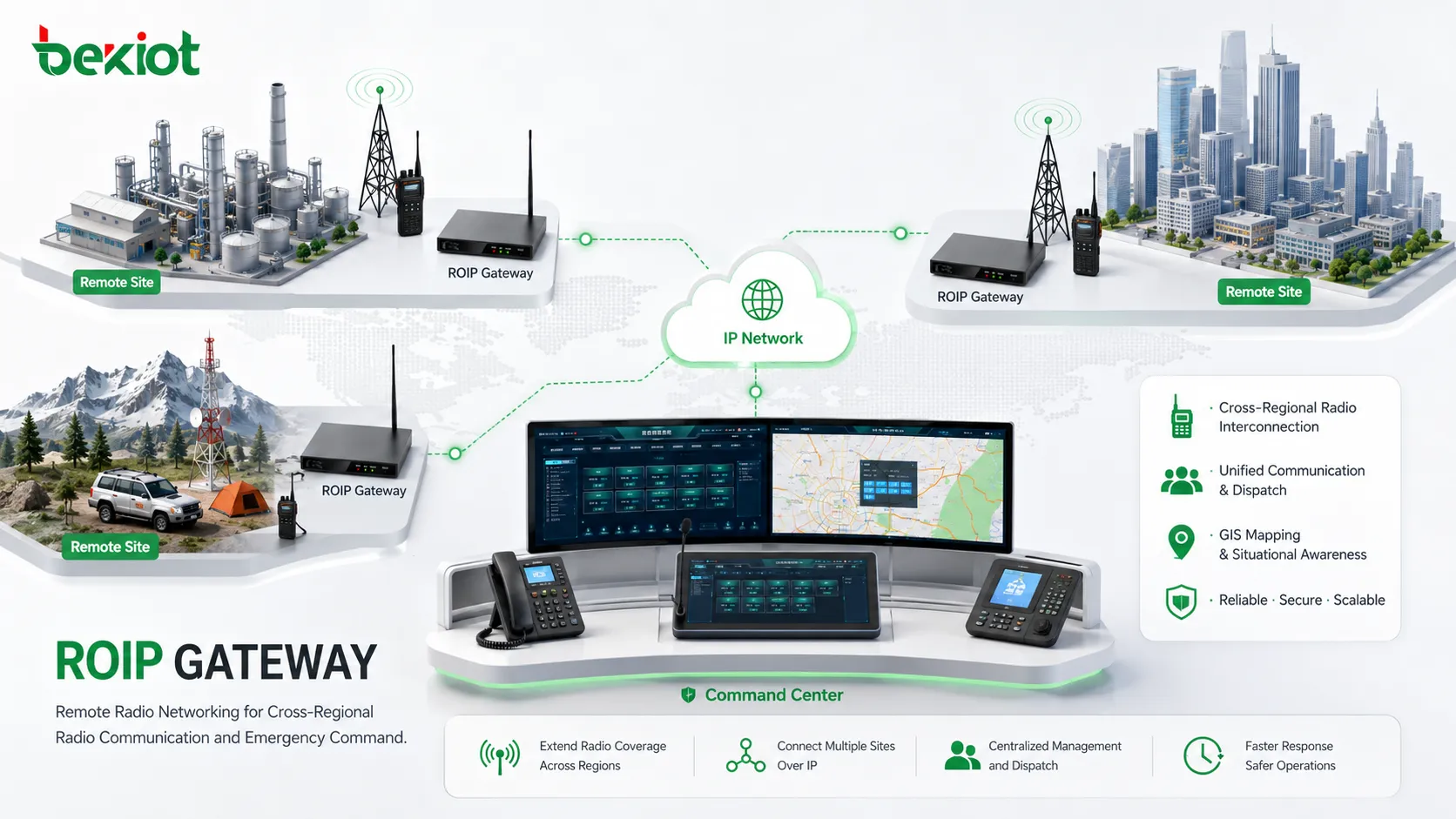
A ROIP gateway solves this by using an IP network to connect radio channels across different locations. Multiple gateways can be deployed in different sites, and each gateway can connect to one or more radio channels. Through internet or private network transmission, radios in different regions can communicate as if they were part of the same extended network.
This is valuable for emergency command, cross-regional rescue, industrial parks with multiple sites, transportation routes, remote stations, military-related communication, and distributed field operations. It helps extend radio communication distance and improves coordination across locations.
Multi-Gateway and Multi-Channel Applications
Modern ROIP gateway deployment is not limited to one radio and one platform. In more complex projects, multiple gateways can be networked together to connect several locations, multiple radio channels, and different radio systems.
This allows the command center to organize communication resources more flexibly. A project may connect radio channels from several regions, link different radio standards, register IP phones, and connect monitoring or management platforms. In this way, radio communication becomes part of a wider integrated communication architecture.
For project delivery, this multi-gateway approach is practical because it supports phased deployment. A project can begin with one site and one channel, then gradually add more gateways, more channels, and more systems as requirements grow.
Expanding Communication Distance and Capability
One major reason for using a ROIP gateway is to expand the communication distance of radios. Traditional radio systems depend heavily on local coverage. Even with repeaters, communication may still be limited by geography, building structure, terrain, and deployment cost.
By using IP networks, the radio channel can be extended beyond its original coverage area. A dispatch center in one city can communicate with a radio channel in another location. A remote site can be connected to headquarters. Two separate radio networks can be linked together through gateways.
This gives radio systems new value in modern communication projects. Instead of being limited to local field communication, radios can participate in enterprise-wide, regional, or cross-site command workflows.
Development Toward Broadband Push-to-Talk
ROIP gateways are also developing from single-function devices into more integrated communication products. In some international emergency communication applications, ROIP-related systems are moving toward MCPTT and broadband push-to-talk standards.
In China and other markets, technologies such as B-TrunC, MCPTT, and SIP-based broadband intercom are also important directions for future integration. This means radio gateway solutions may gradually connect traditional radio systems with broadband trunking, mission-critical communication, SIP dispatch, and public-private converged communication platforms.
For current projects, the most common applications are still radio-to-dispatch integration and remote radio networking. However, the long-term direction is clear: ROIP gateway technology will continue to support wider integration between narrowband radio, broadband PTT, SIP platforms, and emergency communication systems.
Typical Project Environments
Emergency Response and Command Centers
Emergency command centers often need to connect radio teams, dispatch operators, telephone users, mobile teams, and external support units. A ROIP gateway helps turn independent radio channels into unified command resources.
During urgent events, operators can quickly call radio channels, create dispatch groups, connect field teams, and coordinate communication from one platform.
Industrial Sites and Large Facilities
Industrial parks, power plants, mines, ports, logistics centers, and manufacturing sites often use radios for field coordination. At the same time, these sites may also use IP phones, dispatch software, monitoring platforms, and control room systems.
ROIP gateway integration helps these communication resources work together. It reduces system isolation and supports faster communication between field workers and management teams.
Cross-Regional Operations
Organizations with multiple sites often need long-distance radio interconnection. ROIP gateways can connect radio channels across regions through IP networks, making remote teams easier to coordinate.
This is useful for transportation routes, distributed facilities, remote stations, emergency rescue, military-related communication, and public utility operations.
Implementation Workflow
The first step is to identify which radio channels need to be connected. The project team should confirm radio types, channel quantity, radio locations, communication users, and dispatch scenarios.
The second step is to define the IP communication platform. The gateway may connect to a SIP softswitch, unified communication platform, command dispatch system, IP PBX, or monitoring platform. SIP compatibility is important because it makes radio access easier to manage in modern communication systems.
The third step is cable and interface matching. Because different radios may use different interfaces, a customized connection cable may be required. The 9-pin aviation connector is commonly used in many ROIP gateway applications because it can provide flexible connection and control options.
The fourth step is scenario testing. The project should test radio-to-SIP calling, SIP-to-radio calling, remote gateway networking, channel switching, audio clarity, delay, PTT control, dispatch operation, recording, and multi-site communication.
Operational Benefits
The first benefit is communication convergence. Radios, SIP systems, IP phones, dispatch consoles, and remote channels can be connected into one communication framework.
The second benefit is distance extension. IP networks allow radio channels to communicate across locations, helping overcome traditional coverage limitations.
The third benefit is better dispatch control. Radio channels can be managed by a command platform, making group communication, emergency calling, and dispatch recording easier.
The fourth benefit is investment protection. Existing radios can continue to be used, while the ROIP gateway adds IP communication capability and expands the system’s application value.
ROIP gateways are most valuable when a project needs to connect existing radio systems with modern SIP communication, dispatch platforms, or remote radio networks.
FAQ
Can a ROIP gateway connect radios from different brands?
In many cases, yes. The key is whether the gateway can be matched with the radio interface through the correct cable and control method. Interface confirmation is an important step before deployment.
Does remote radio networking require a private network?
Not always. ROIP gateways can work over different IP networks, but project requirements such as security, stability, delay, and reliability may determine whether a private network, VPN, or dedicated line is preferred.
Can radio channels be recorded after SIP integration?
Yes, if the connected dispatch platform or SIP system supports recording. Once radio voice is converted into SIP communication, recording and log management can usually be handled by the platform.
Is ROIP useful if a site already has a dispatch platform?
Yes. A dispatch platform may manage SIP users and IP terminals, but radio channels often need gateway access before they can be included in the same workflow.
What is the main difference between basic radio repeaters and ROIP gateway networking?
A repeater mainly extends radio coverage within a radio system. A ROIP gateway uses IP networks to connect radio channels with remote sites, SIP systems, dispatch platforms, and other communication resources.







