


Two-way radios are widely used in security, emergency response, industrial operations, transportation, construction, ports, utilities, and event coordination. They are fast, reliable, and familiar to field teams. However, radios usually work in a half-duplex mode: one person presses the push-to-talk button, speaks, releases the button, and then waits for others to reply.
Conference rooms, PA systems, and audio mixers usually work in a different way. They are closer to full-duplex or open-audio environments, where microphones, speakers, and audio processors can send and receive sound continuously. When a project needs to connect handheld radios or vehicle radios to a conference mixer, the main challenge is not only audio wiring. The real challenge is how to handle PTT control, audio direction, SIP conversion, and system isolation correctly.
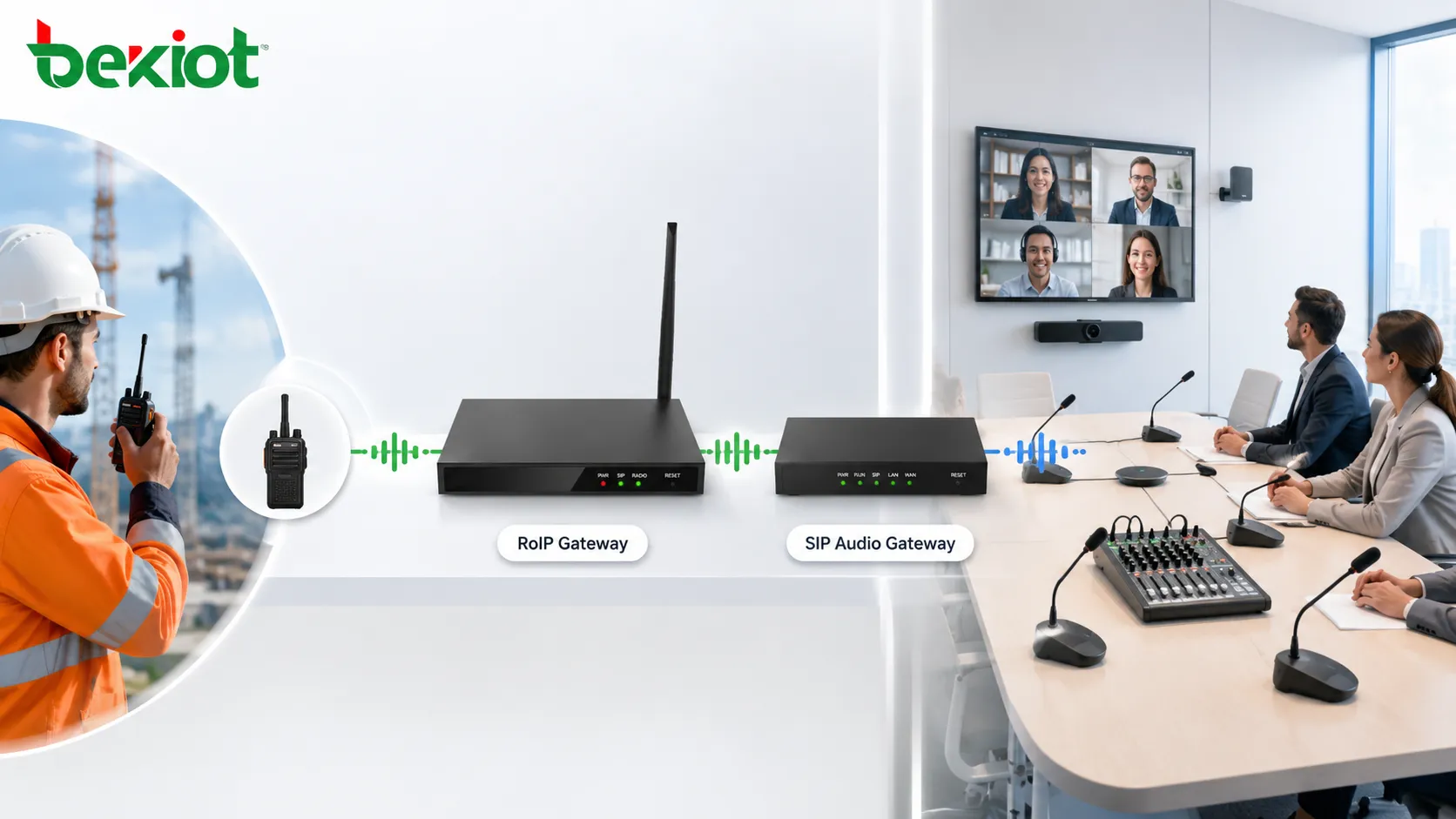
Why a Simple Audio Cable Is Not Enough
The radio side has audio input and output
At first glance, the integration may seem simple. A two-way radio has audio input and output. A conference mixer also has audio input and output. It may look as if one custom cable can connect the two systems directly.
This idea is only partly correct. Sending radio audio into a mixer is usually not the hardest part. The mixer can receive audio from the radio through a suitable interface, level matching, and cabling design. The real difficulty appears when the conference room needs to send audio back to the radio channel.
The missing signal is PTT control
A radio cannot normally transmit just because audio is present. Before speaking, the radio side must seize the talk right by activating the PTT signal. In a handheld or vehicle radio, this is usually done by pressing a button or triggering a control line.
A standard conference mixer does not provide radio PTT control. It outputs audio, but it does not know when to press the radio’s transmit key. Without proper PTT handling, conference audio may not be sent to the radio group, or transmission may become unstable and difficult to manage.
In radio-to-conference integration, audio connection is only one part of the design. The system must also manage talk control, SIP conversion, delay, grounding, and physical deployment.
A Practical Gateway-Based Architecture
RoIP gateway for the radio side
A RoIP gateway acts as the bridge between radio communication and IP-based voice systems. On the radio side, it connects to a handheld radio, vehicle radio, base station, repeater, or other radio equipment through a suitable audio and control interface.
The gateway can integrate audio input, audio output, and PTT control signals. In practical projects, custom cables may be required because different radio brands and models use different accessory ports, signal levels, wiring definitions, and headset detection methods.
Audio gateway for the conference side
In a conference room, an audio gateway can connect to the mixer through balanced interfaces such as XLR inputs and outputs. This helps convert meeting room audio into SIP/VoIP communication and allows the audio system to interact with IP-based voice platforms.
The mixer continues to handle microphones, speakers, amplifiers, echo control, and room audio processing. The gateway handles network voice access, SIP signaling, and interconnection with the radio-side gateway or communication platform.
Why two separate gateways can be better
Separating the radio gateway and the conference audio gateway can improve deployment flexibility. Radio equipment may create electromagnetic interference that affects audio devices, especially in sensitive meeting room environments. Keeping the radio-side equipment away from the mixer can reduce this risk.
Another reason is signal coverage. A conference room is not always the best location for radio reception. The radio gateway may need to be installed near a window, roof, control room, equipment cabinet, or remote site where the radio signal is stronger. As long as the IP network connection is available, the conference audio gateway can stay inside the meeting room while the radio gateway is deployed in a better radio location.
Related product: Becke Telcom RoIP gateways help connect two-way radios with SIP-based dispatch, conference audio, IP telephony, and command communication systems.
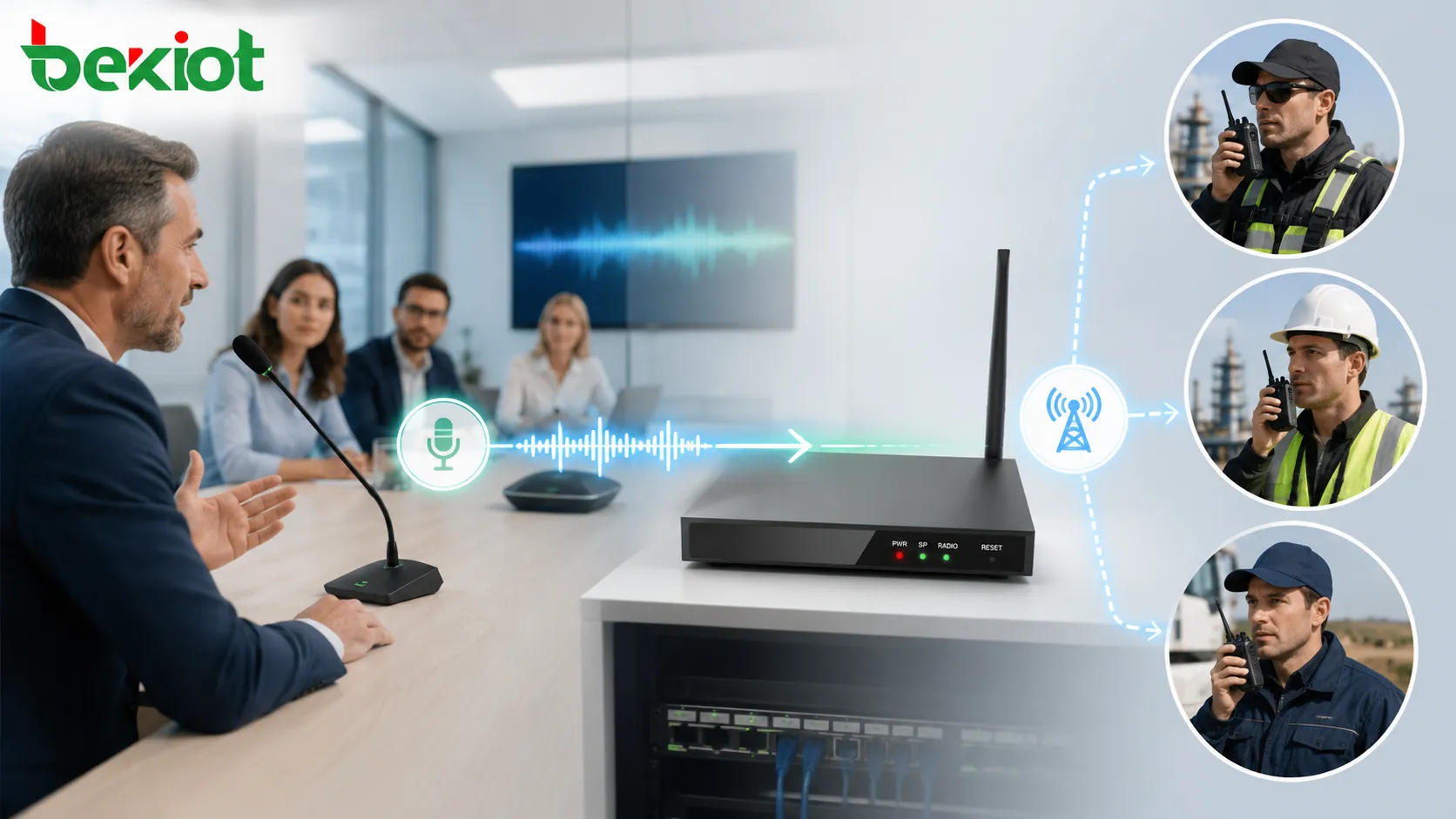
How the Audio Flow Works
From radio users to the conference room
When a radio user presses PTT and speaks, the radio audio is sent into the RoIP gateway. The gateway converts the radio audio into IP voice, usually through SIP/VoIP transmission. The audio then reaches the conference audio gateway or the SIP communication platform.
From there, the audio can be fed into the conference mixer and played through the meeting room’s sound system. This allows meeting participants to hear radio users through the existing conference speakers or PA equipment.
From the conference room to radio users
When someone in the conference room speaks, the mixer sends audio to the conference audio gateway. The audio is converted into SIP/VoIP and transmitted over the network to the RoIP gateway. The RoIP gateway then activates the radio-side PTT control and sends the conference audio to the connected radio channel.
This is the key part of the solution. The system must not only send audio to the radio, but also trigger radio transmission correctly. When the conference side stops speaking, the gateway releases PTT so radio users can reply.
Flexible network paths
The two gateways can be connected directly over an IP network, or they can be registered to an existing SIP server, IP-PBX, dispatch platform, or command communication system. Direct networking is suitable for simple point-to-point applications, while SIP platform integration is better for larger systems that require routing, recording, monitoring, conferencing, or multi-site communication.
This flexibility makes the architecture suitable for meeting rooms, emergency command centers, operations rooms, large venues, transport dispatch, industrial control rooms, and temporary field command scenarios.
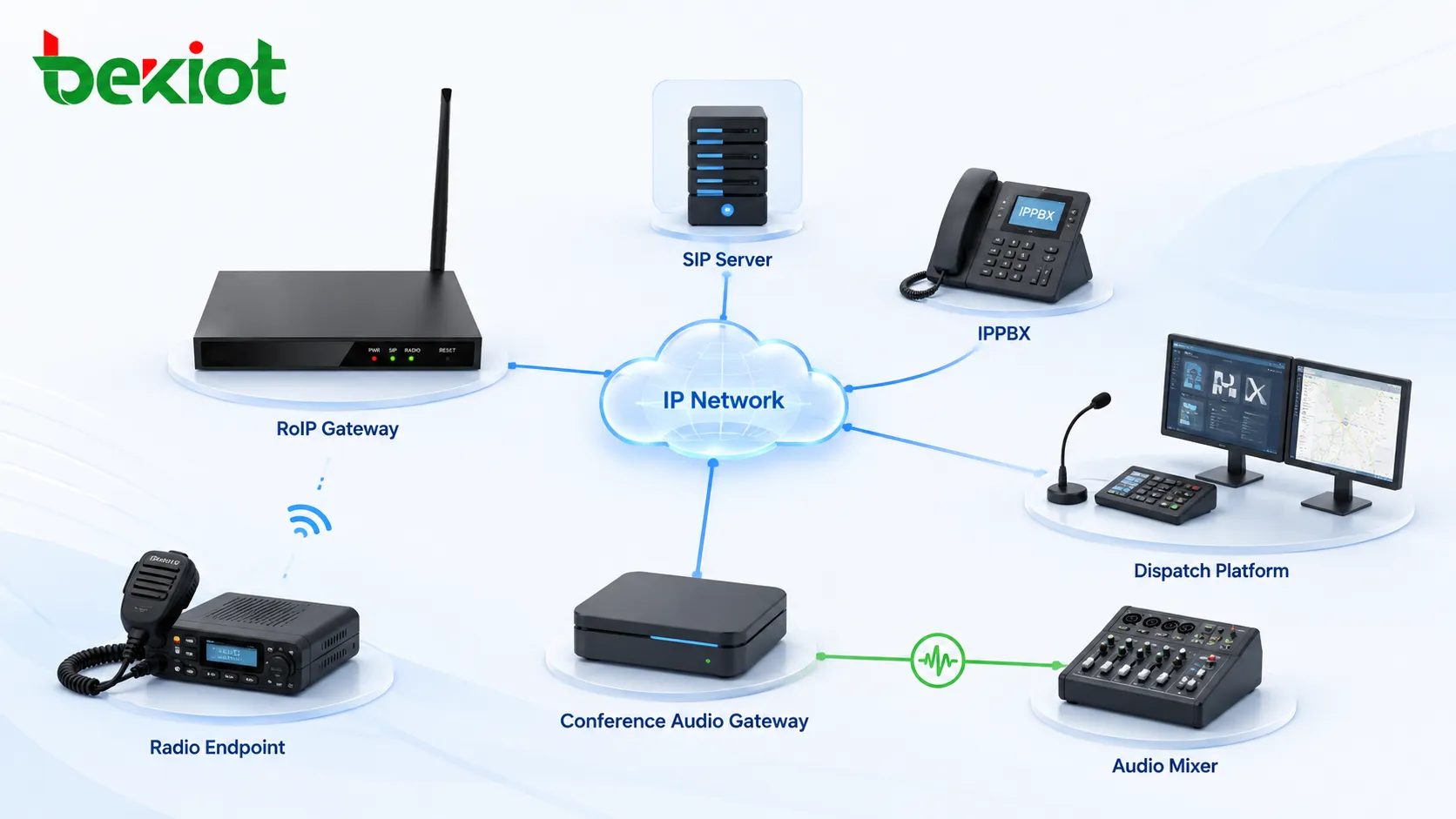
Compatible Radio and Communication Environments
Handheld radios and vehicle radios
A well-designed RoIP integration can support both handheld radios and vehicle radios. The exact connection depends on the radio accessory interface, microphone and speaker path, PTT control line, electrical level, and cable design.
Custom wiring is often required because different radios have different pin definitions and detection methods. For example, some radios detect whether an external speaker microphone or headset is inserted. The gateway cable may need to match that detection behavior to keep the radio working correctly.
Analog and digital radio systems
This kind of architecture can be used with many radio environments, including analog radios, digital trunking systems, DMR, PDT, TETRA, VHF aviation radios, maritime radios, and shortwave radio systems. The goal is to convert the radio-side audio and control signal into a voice path that can be handled by IP communication systems.
Because these radio systems differ in behavior and interface requirements, project testing is important. Audio level, impedance, transmit delay, PTT timing, and noise environment should be verified before formal deployment.
Interconnection with video meetings
In some projects, the RoIP gateway can also be connected to a video conferencing system. This allows an existing meeting environment to communicate with radio users without replacing the conference platform.
For example, a meeting room may use microphones, speakers, cameras, and video conferencing equipment for remote collaboration, while field teams continue to use radios. Through gateway integration, the video meeting can include radio audio as part of the communication workflow.
System Design Considerations
Audio level and interface matching
Conference mixers and radios do not always use the same audio levels or interface standards. Mixers may use balanced audio interfaces, while radios often use accessory ports designed for speaker microphones or headsets. Improper level matching can cause low volume, distortion, noise, or unstable transmission.
The design should confirm input and output levels, grounding, cable shielding, connector type, impedance, and whether isolation is required. For professional meeting rooms, balanced audio and proper cabling help reduce hum, interference, and signal loss.
PTT timing and talk control
PTT timing affects the user experience. If PTT is triggered too late, the first part of the conference speech may be lost. If it is held too long, radio users may not be able to reply quickly. If it is too sensitive, background noise from the meeting room may accidentally trigger the radio channel.
Good gateway configuration should consider transmit delay, release delay, voice detection threshold, manual trigger options, and priority rules. These settings help the system behave more naturally in real meetings and command environments.
Placement of radio equipment
Radio signal quality depends heavily on location. A conference room may be located deep inside a building, surrounded by walls, metal structures, or electronic equipment. This may not be ideal for stable radio communication.
A separated gateway architecture allows the radio unit and antenna to be placed where coverage is better, while the meeting room audio gateway remains close to the mixer. This improves both radio performance and audio system reliability.
Where This Integration Is Useful
Emergency command rooms
Emergency command centers often need to communicate with radio users, field responders, government departments, and remote experts at the same time. Connecting radios to the conference audio system allows commanders in the room to hear field radio traffic and speak back to radio users when needed.
Large venues and event operations
Exhibition centers, stadiums, hotels, conference halls, and public event venues often use both meeting room audio systems and radio communication. Gateway integration helps event managers, security teams, technical staff, and control rooms coordinate through a shared voice environment.
Industrial and transportation control rooms
Factories, mines, ports, railways, airports, highways, and utility facilities often use radios for field operations while control rooms use IP telephony, conference audio, dispatch consoles, and recording systems. A gateway-based architecture helps connect these different systems without forcing every team to change devices.
Deployment Checklist
Confirm the radio model and cable requirements
The project should first confirm the radio brand, model, connector type, PTT method, audio input and output level, and whether headset insertion detection is required. These details determine whether a standard or custom cable is needed.
Define the communication path
The team should decide whether the gateways will connect directly, register to a SIP server, connect to an IP-PBX, join a dispatch platform, or integrate with a video conferencing system. This decision affects numbering, routing, recording, and operational control.
Test with real room audio
Testing should be done in the real conference room or a similar environment. Microphone pickup, speaker volume, echo, background noise, PTT triggering, release timing, and radio audio clarity should all be checked before the system is used in a live event or command operation.
Conclusion
Connecting two-way radios to a conference mixer is not simply a cable problem. Radio systems work with half-duplex communication and PTT control, while conference rooms and audio mixers are designed for continuous audio environments. To make the two systems communicate reliably, the design must handle audio conversion, PTT control, SIP/VoIP networking, interface matching, and deployment location.
A practical solution is to use a RoIP gateway for the radio side and a conference audio gateway for the mixer side. This architecture allows radio users and conference participants to communicate through IP networks, SIP servers, IP-PBX systems, dispatch platforms, or video conferencing systems.
With correct planning, the system can support command rooms, large venues, industrial control rooms, emergency operations, and multi-site coordination while preserving the normal working habits of both radio users and conference room users.
FAQ
Can a conference mixer trigger radio PTT directly?
Most standard mixers cannot trigger radio PTT directly. They can output audio, but they usually do not provide the control signal required to seize the radio talk channel. A gateway or control interface is needed for reliable operation.
Is balanced audio necessary for every project?
Not always, but balanced audio is recommended for professional meeting rooms, long cable runs, and environments with possible electrical noise. It helps reduce interference and keeps the audio signal cleaner.
Can multiple radios be connected to one conference system?
Yes, but the architecture should define channel routing, talk priority, gateway quantity, and whether each radio channel needs independent control. Larger systems may require multiple gateways or a dispatch platform.
Will the conference room hear all radio traffic?
That depends on routing and configuration. The system can be designed to send all radio audio to the room, only selected channels, or only calls initiated through a dispatch or SIP platform.
What should be tested before live use?
The project should test PTT timing, first-syllable loss, echo, audio level, noise triggering, radio coverage, network delay, SIP registration, recording behavior, and emergency fallback procedures.







