In many video integration projects, buyers may compare a video access gateway with video platform software and find that both seem to support camera access, stream management, protocol conversion, and video distribution. However, these two solutions are not the same. Their differences become more obvious when a project involves hardware acceleration, multi-protocol streaming, SIP-based communication, emergency dispatch, video conferencing, or long-term system expansion.
A video access gateway is usually designed as an integrated hardware-and-software appliance, while video platform software is often delivered as an installable application that depends on a separate server environment. This difference affects performance, deployment difficulty, transcoding capability, maintenance workload, and the way the system integrates with other communication platforms.
Different Deployment Models
Gateway appliances are built around integrated hardware
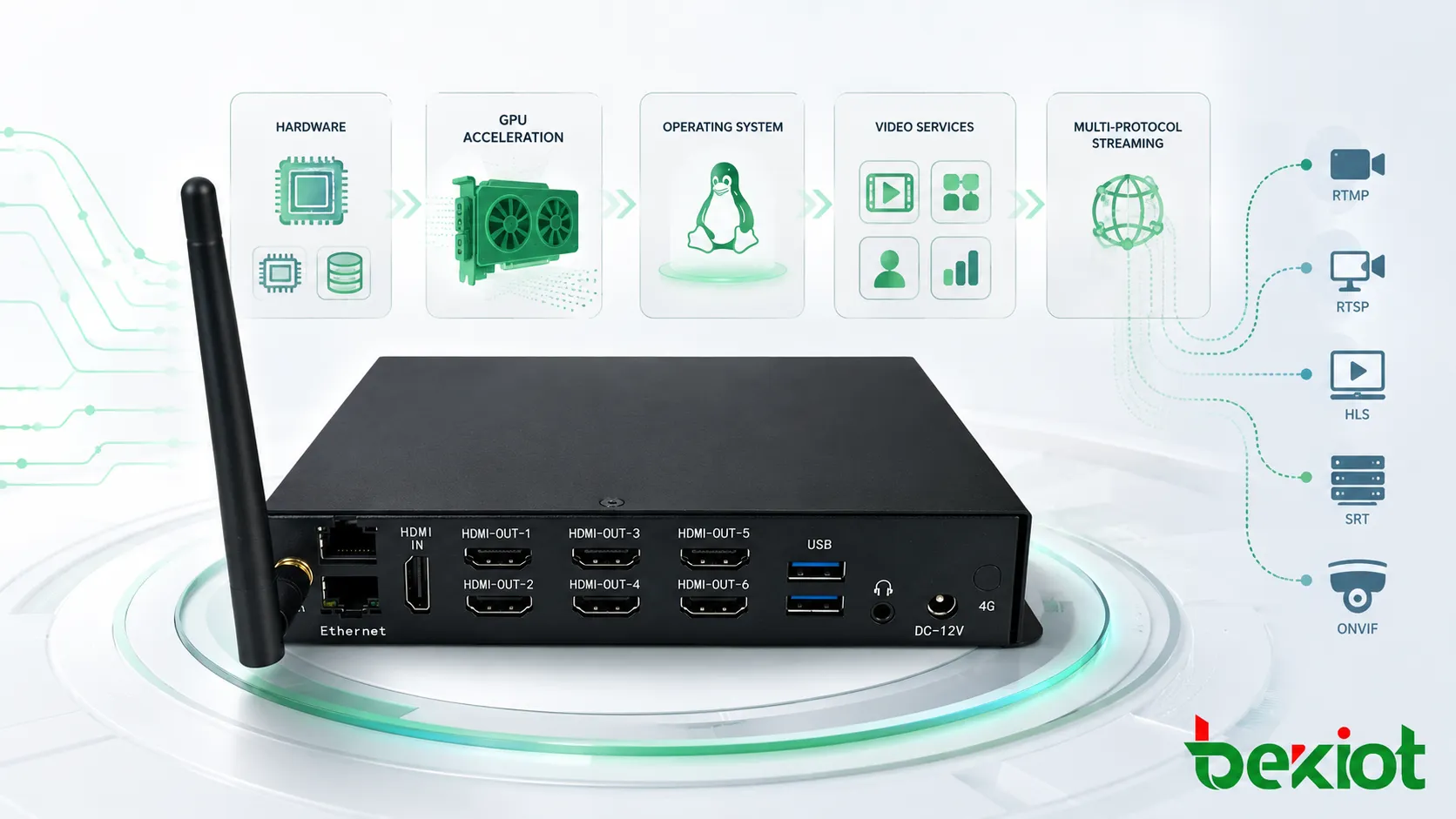
A video access gateway is commonly delivered as a dedicated device that combines hardware, operating system, GPU resources, video service software, and protocol access modules. This integrated design is important because video processing is highly dependent on hardware capability, especially when the system needs decoding, encoding, stream conversion, or real-time video distribution.
When the gateway manufacturer has already matched the hardware platform, GPU resources, operating system, and video application, the system can usually achieve better stability and more predictable performance. This is particularly useful in command centers, emergency communication systems, industrial monitoring rooms, mobile command vehicles, and multi-site video aggregation projects.
Software platforms depend more on the user environment
Video platform software is often provided as an installation package. The buyer or system integrator needs to prepare the server, operating system, storage, network environment, and sometimes GPU resources. As a result, actual performance may vary across different hardware configurations and software environments.
This does not mean software platforms are unsuitable. They can be effective when the project team has strong deployment experience and clear server planning. However, when compatibility issues appear, troubleshooting may involve the operating system, drivers, network settings, database services, GPU resources, and application configuration. This can increase the workload during project implementation.
What Each System Usually Does
Software platforms often focus on access management
Many video platform software products mainly focus on GB/T28181 access management, camera registration, basic stream forwarding, device management, and platform-level video access. In some cases, different functions are divided into separate software versions or modules. If a project needs richer video functions, the user may need to deploy multiple software products together.
This modular approach can be flexible, but it also requires careful planning. For example, stream access, media forwarding, recording, transcoding, API integration, and external platform docking may not always be included in a single software package. The project team must confirm the function boundary before deployment.
Gateways tend to provide more integrated video access
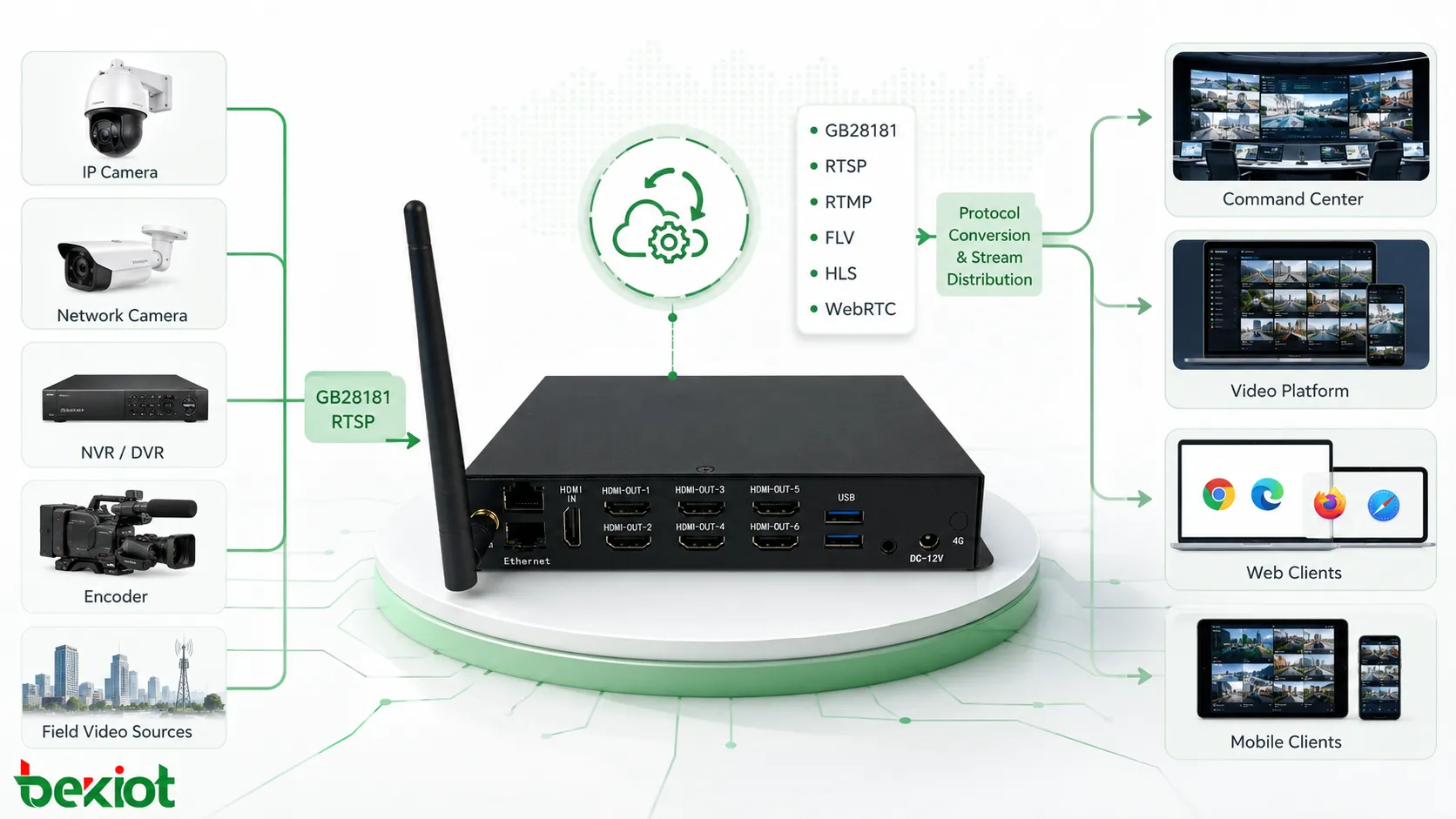
A video access gateway is usually designed with stronger integration. A typical gateway may support GB/T28181 access, RTSP input, RTMP input, FLV output, HLS output, WebRTC output, and other stream conversion or distribution capabilities. Instead of using several independent software tools, many video access and media processing tasks can be handled by one appliance.
This integrated structure is valuable when different video sources need to be connected to a unified dispatch platform, command center, monitoring system, or web-based video application. It can simplify system architecture and reduce the number of independent servers or software components.
SIP and Communication Integration
Why SIP capability changes the application value
One of the most important advantages of many video access gateways is SIP networking capability. Some gateways can work with SIP communication systems or even provide built-in SIP server functions. This gives the gateway a broader role in converged communication projects, not only in video access but also in audio-video dispatch, emergency command, conference integration, and intercom linkage.
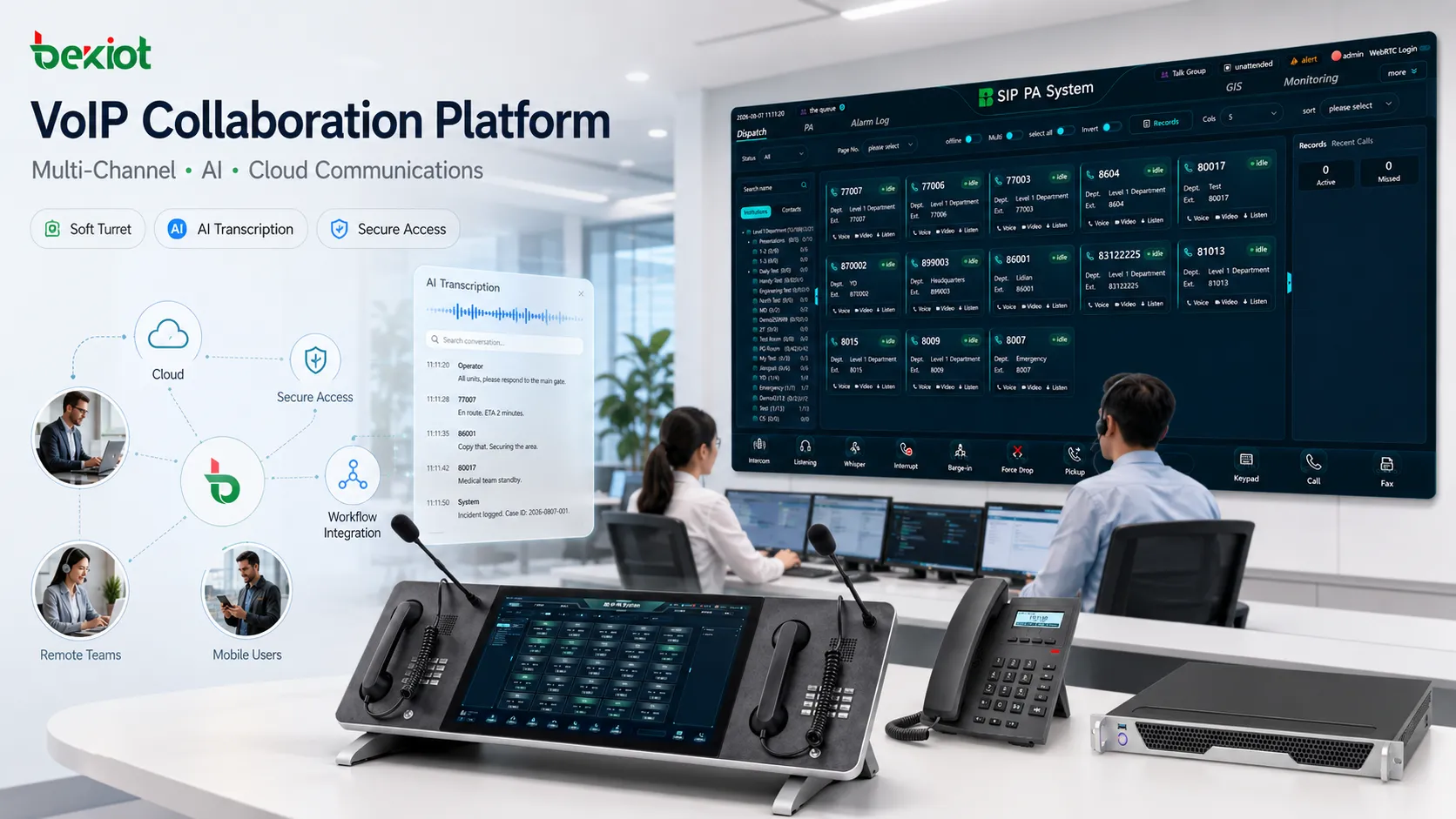
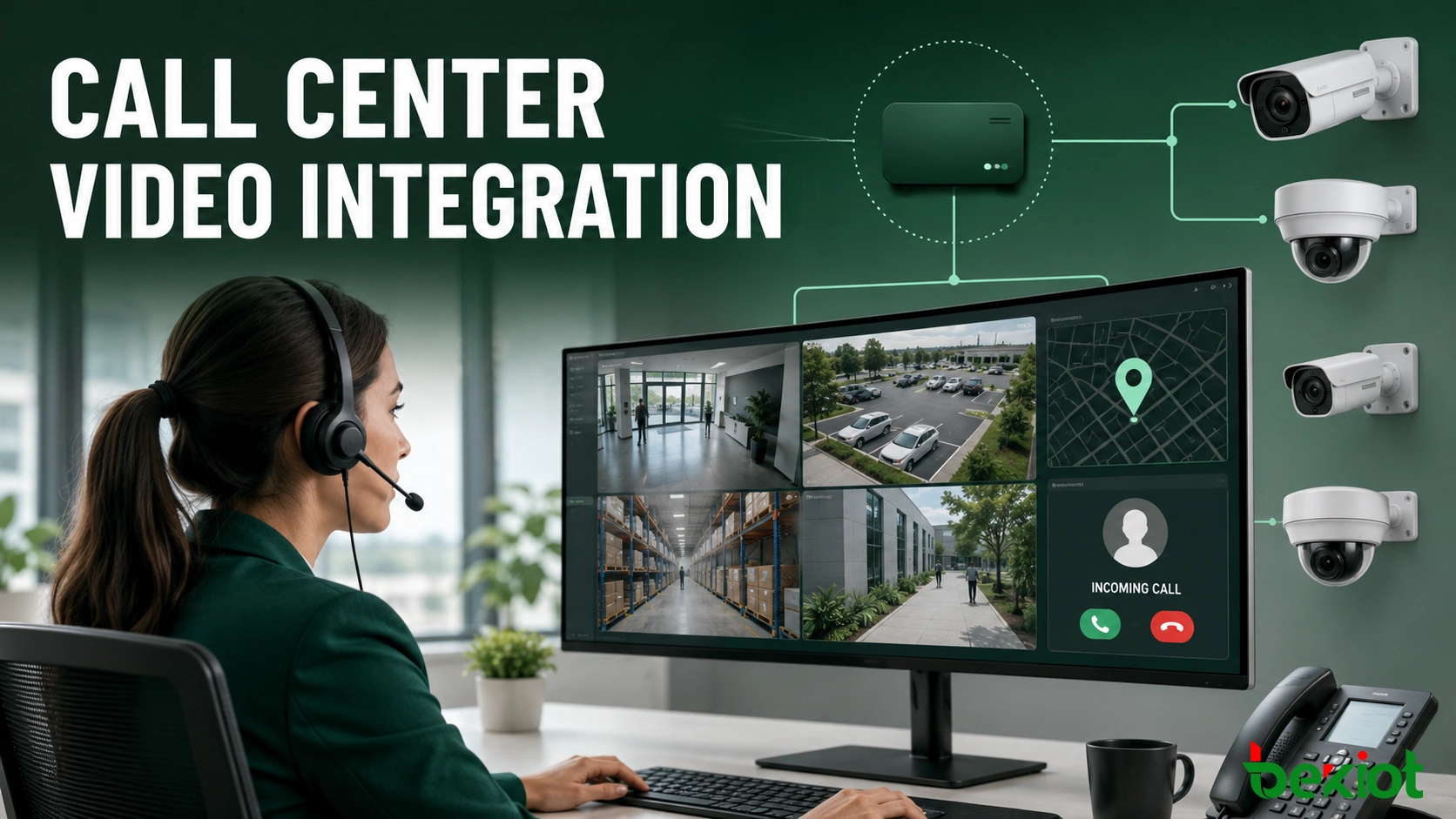
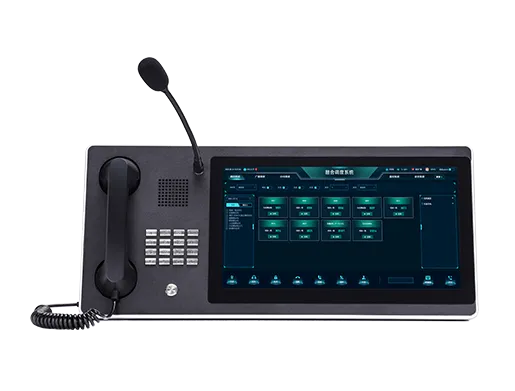
For example, a gateway with SIP integration can help connect video sources with IP phones, dispatch consoles, intercom terminals, conference systems, and emergency communication platforms. In this type of architecture, video is no longer isolated from voice communication. Operators can view live video, call field users, join a conference, trigger paging, or coordinate response actions from a unified system.
HDMI input and output can reduce extra equipment
Some video access gateways also provide HDMI input and HDMI output. This is useful when the project needs to capture a local video source, output video to a large display, or replace part of the function of a traditional encoder or decoder. In certain command room and meeting room scenarios, this can reduce system complexity and make deployment more direct.
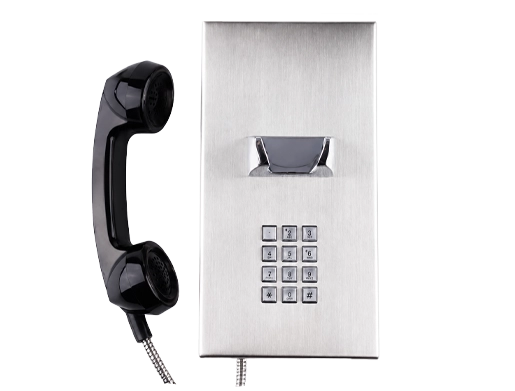
For projects involving emergency dispatch, industrial monitoring, or multi-site command coordination, Becke Telcom can be considered as a communication-side integration partner when SIP voice, dispatch terminals, industrial phones, paging, and video access need to work together in one solution.
Transcoding Capability Makes a Major Difference
Hardware-based transcoding is more suitable for real-time video
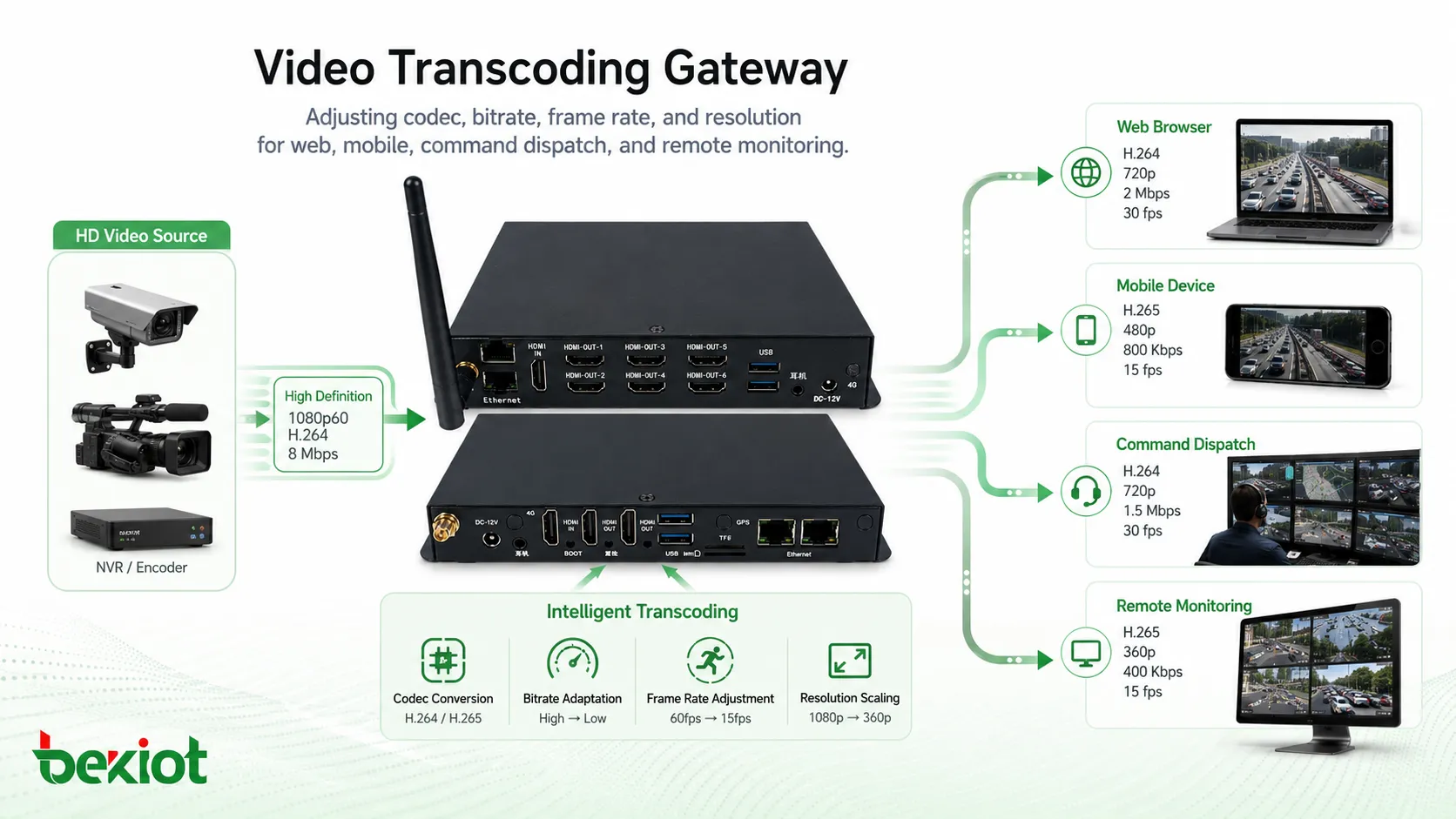
Video transcoding is not the same as video forwarding. A real transcoding process may change the video codec, resolution, frame rate, bitrate, or stream format. For example, a system may need to convert a high-bitrate surveillance stream into a lower-bitrate stream for mobile viewing, browser playback, remote dispatch, or low-bandwidth transmission.
Video access gateways usually have stronger transcoding ability because they can use dedicated hardware and GPU resources. This allows the system to process video streams more efficiently and deliver output streams that better match different terminals, networks, and application platforms.
Software-only systems may consume more server resources
Some video platform software products do not include true transcoding, or they may describe stream forwarding as transcoding, which can mislead users during selection. When software-based transcoding is required, it may consume a large amount of server CPU or GPU resources. If the software is not optimized for the hardware platform, the actual result may not meet the project requirement.
For this reason, projects with multiple channels, high-definition streams, WebRTC playback, mobile access, or mixed network conditions should carefully evaluate whether the selected system supports real transcoding and whether the hardware resources are sufficient for continuous operation.
System Support and Project Delivery
Integrated gateways simplify implementation
Because a video access gateway is normally delivered as a complete appliance, the system environment is more controllable. The project team does not need to spend too much time matching server hardware, drivers, operating system versions, video service dependencies, and GPU acceleration settings. This makes installation, testing, support, and maintenance easier.
In many engineering projects, this is a practical advantage. A gateway can shorten the delivery cycle, reduce compatibility risk, and provide a clearer responsibility boundary between the device supplier, system integrator, and end user.
Software platforms require stronger technical preparation
A video platform software deployment often requires more preparation. The user needs to prepare the server, configure the operating system, install dependencies, allocate storage, check network routing, and tune performance. When problems occur, troubleshooting may take more time because the issue may come from hardware, software, system environment, or third-party components.
For organizations with mature IT teams and standardized server infrastructure, this may be acceptable. However, for projects that require fast deployment, stable video access, built-in transcoding, and simplified operation, a video access gateway is often easier to implement.
How to Choose the Right Option
Choose a video access gateway when integration matters
A video access gateway is usually more suitable when the project needs multi-protocol video access, hardware-based transcoding, SIP communication integration, HDMI input or output, emergency command linkage, conference connection, web playback, and future expansion. In many cases, one gateway can handle multiple tasks without adding several independent servers or software modules.
It is also a better option when the buyer wants predictable performance, easier deployment, unified technical support, and lower system integration complexity. For command centers, industrial parks, transportation hubs, emergency response systems, and converged communication platforms, gateway-based architecture can provide stronger project adaptability.
Choose video platform software when the function scope is clear
Video platform software is more suitable when the project has a clear function boundary, a prepared server environment, an experienced technical team, and limited requirements for hardware acceleration or protocol conversion. It can also be useful when the user wants to deploy video management functions inside an existing IT infrastructure.
The key is to avoid comparing only the function list. Buyers should evaluate deployment difficulty, transcoding method, protocol coverage, SIP integration, hardware requirements, maintenance cost, and future expansion before making a decision.
Conclusion
A video access gateway and video platform software may appear similar at first, but they are designed for different project needs. The gateway is more like an integrated video communication appliance, combining hardware, software, GPU resources, multi-protocol access, stream conversion, SIP capability, and easier deployment. Video platform software is more dependent on the user’s server environment and is better suited for projects with clear requirements and experienced technical teams.
For projects involving video access, emergency command, SIP communication, dispatch centers, remote monitoring, and multi-network video distribution, a video access gateway can often reduce complexity and improve system reliability. For projects with fixed functions and mature IT resources, video platform software can also be a practical choice.
FAQ
Can a video access gateway replace a full video management system?
Not always. A video access gateway focuses on protocol access, stream conversion, transcoding, communication integration, and media distribution. A full video management system may also include user permission management, recording plans, map control, event rules, alarm workflows, storage policies, and large-scale device operation. In some projects, both systems can work together.
Why is WebRTC support important in modern video projects?
WebRTC is useful when live video needs to be viewed directly in a browser with low latency. It can support web dispatch consoles, remote command platforms, browser-based monitoring pages, and mobile-friendly video applications without relying only on traditional client software.
Does every project need GPU transcoding?
No. GPU transcoding is mainly important when the system needs to process many video streams, change resolution or bitrate, support different playback terminals, or reduce network bandwidth pressure. For simple access and forwarding projects, basic stream forwarding may be enough.
What should be checked before buying video platform software?
The buyer should confirm supported protocols, server requirements, operating system compatibility, database dependencies, maximum channel capacity, recording support, browser playback method, API availability, upgrade policy, and whether transcoding is included or requires an additional module.
How can video access be combined with emergency communication?
Video access can be linked with SIP calling, dispatch consoles, paging systems, alarm inputs, intercom terminals, and command center platforms. When an incident occurs, operators can view video, start voice communication, issue paging instructions, and record the response process in a unified workflow.