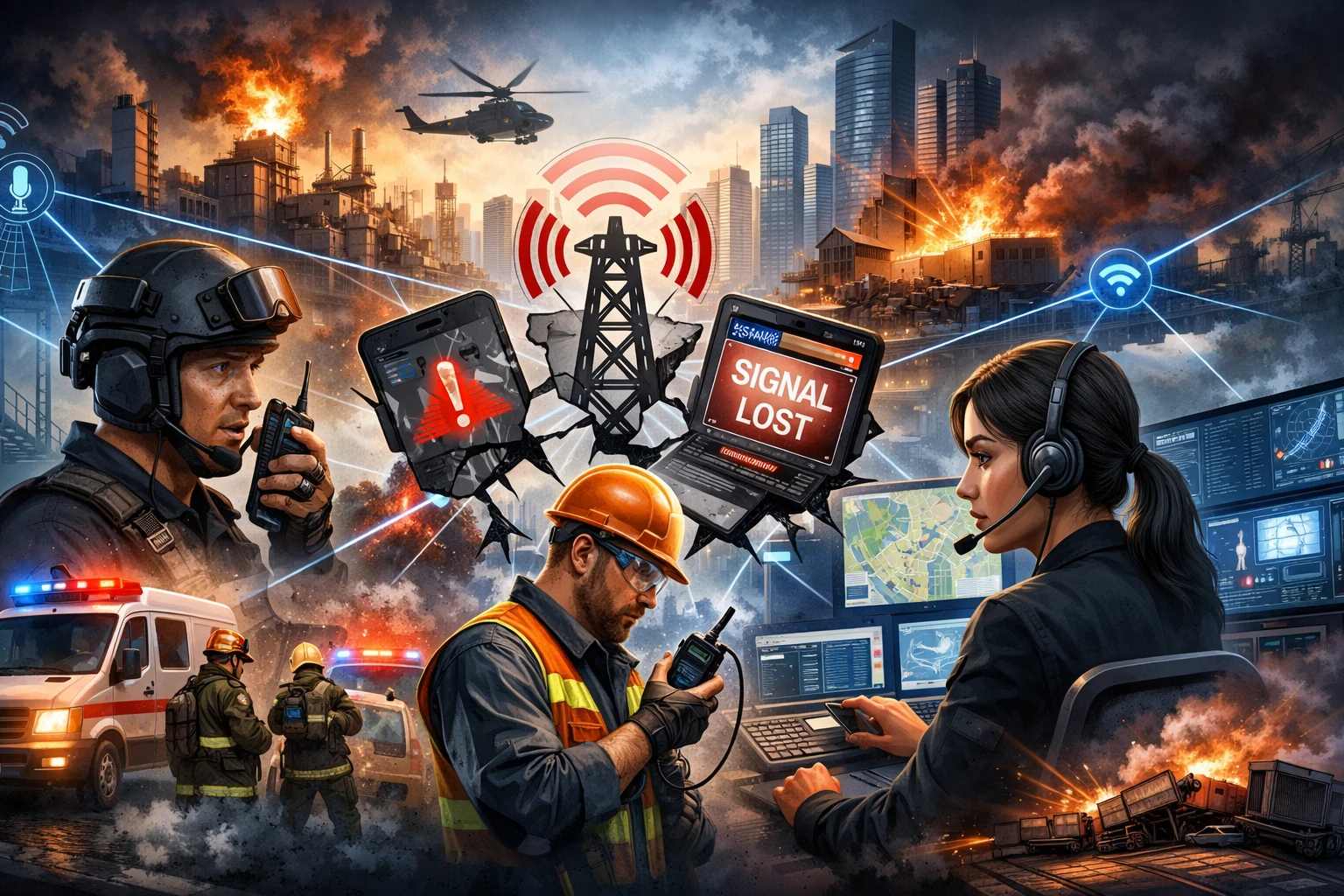
In emergency command projects, the term “three disconnections” is often used to describe the most difficult conditions that may occur after a major disaster: road interruption, network outage, and power failure. These three failures can appear at the same time during earthquakes, floods, landslides, fires, snow and ice disasters, tsunamis, and other large-scale emergencies. When roads are blocked, communication networks are damaged, and electricity is unavailable, rescue teams must still reach the site, rebuild communication, coordinate resources, and support life-saving operations.
A practical emergency command solution must therefore be designed for the worst conditions, not only for normal operating environments. It should support field access, temporary communication recovery, independent power supply, mobile command, real-time coordination, and multi-system linkage. The goal is not simply to deploy equipment, but to make sure emergency command can continue when ordinary infrastructure is no longer reliable.
Understanding the Real Meaning of the Three Failures
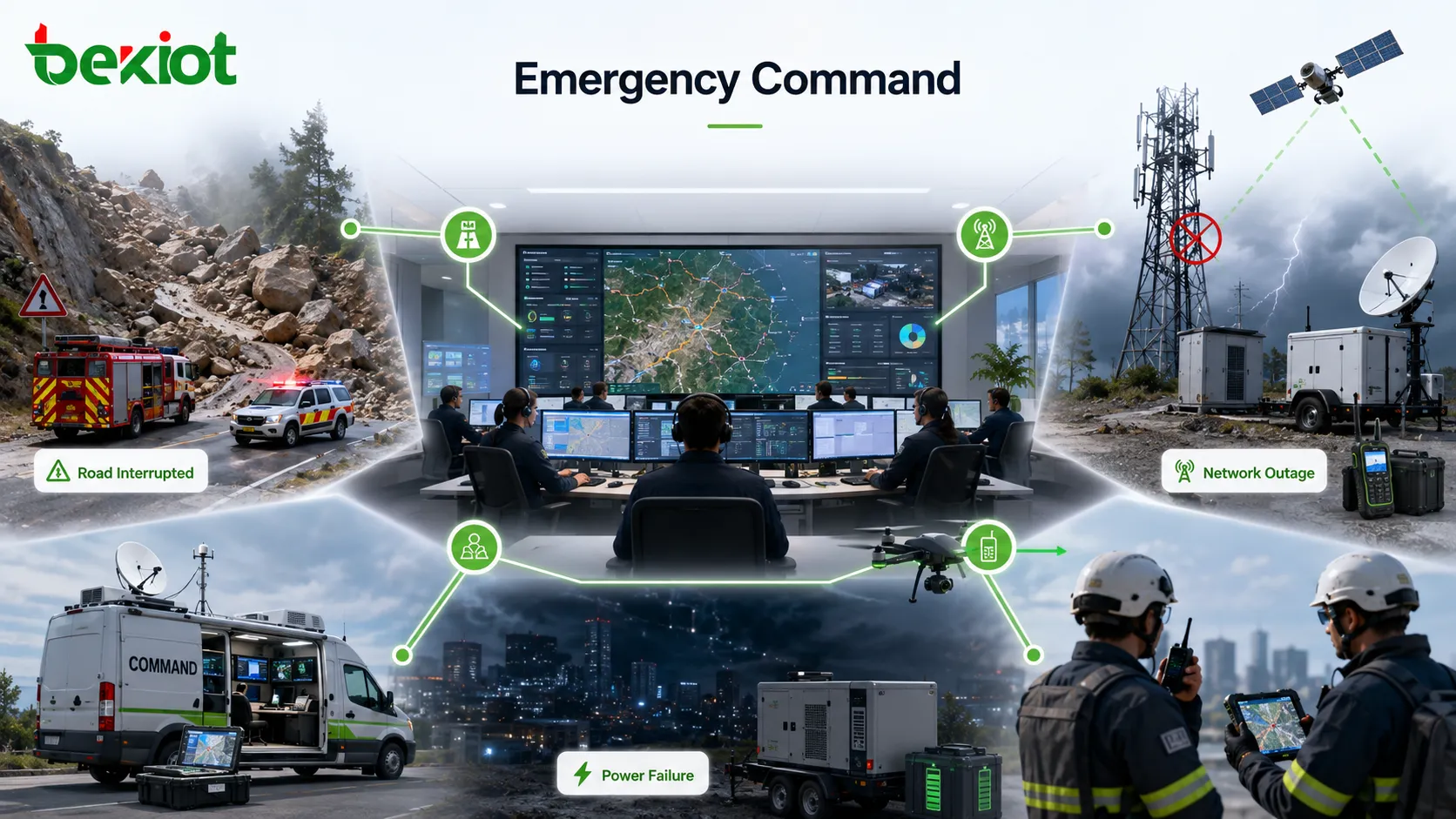
The three disconnections are not abstract technical terms. They describe real field problems that emergency management teams may face during serious incidents. “Road interruption” means that rescue vehicles, command vehicles, supply trucks, and heavy equipment cannot reach the affected area through normal roads. “Network outage” means that public mobile networks, fixed broadband, fiber links, or local communication infrastructure may be damaged or unavailable. “Power failure” means that the affected area loses grid electricity, making communication equipment, lighting, pumps, medical support, and command systems difficult to operate.
These three problems often reinforce each other. If roads are blocked, communication equipment and repair teams cannot arrive quickly. If communication is interrupted, the command center cannot fully understand the field situation. If power fails, even available communication devices may stop working after their batteries run out. This is why emergency command solutions must treat the three disconnections as a combined scenario rather than three isolated problems.
In solution planning, the key question is simple: can the command system still work when normal roads, normal networks, and normal power supply are all unavailable? If the answer is unclear, the emergency system may only be suitable for routine management, not for real disaster response.
Why Extreme Conditions Must Be Planned in Advance
Natural disasters are unpredictable. Earthquakes may destroy roads, bridges, power lines, base stations, and buildings within a very short time. Floods and mudslides may cut off access routes and isolate villages, factories, tunnels, or mountain areas. Large fires may cause power shutdowns and network congestion. Ice and snow disasters may damage power transmission facilities and make transport difficult. In these conditions, emergency management departments need command capability exactly when normal infrastructure is weakest.
Emergency response cannot depend on ideal conditions. A command system that works only in an office network or on a stable public communication network may fail when it is needed most. Therefore, emergency planning should include mobile deployment, independent network building, portable communication, field power support, and backup transmission methods.
The value of emergency command infrastructure is measured during abnormal events. A system should help responders understand the situation, communicate with field teams, dispatch resources, coordinate departments, and maintain continuous command even when the disaster site is difficult to access.
Blocked Roads Change the First Response Strategy
Road interruption is one of the most common and serious problems in disaster response. Earthquakes, landslides, mudslides, bridge collapse, floods, and debris flow may make roads unavailable. When command vehicles, rescue vehicles, and equipment trucks cannot reach the first response site, traditional vehicle-based deployment becomes limited.
A well-known example is the Wenchuan earthquake, where rescue access was extremely difficult in the early stage. Under severe road interruption conditions, air transport was used to move personnel and equipment into affected areas. This shows that emergency response planning must consider how to deliver people, communication devices, medical resources, and command capability when roads are no longer usable.
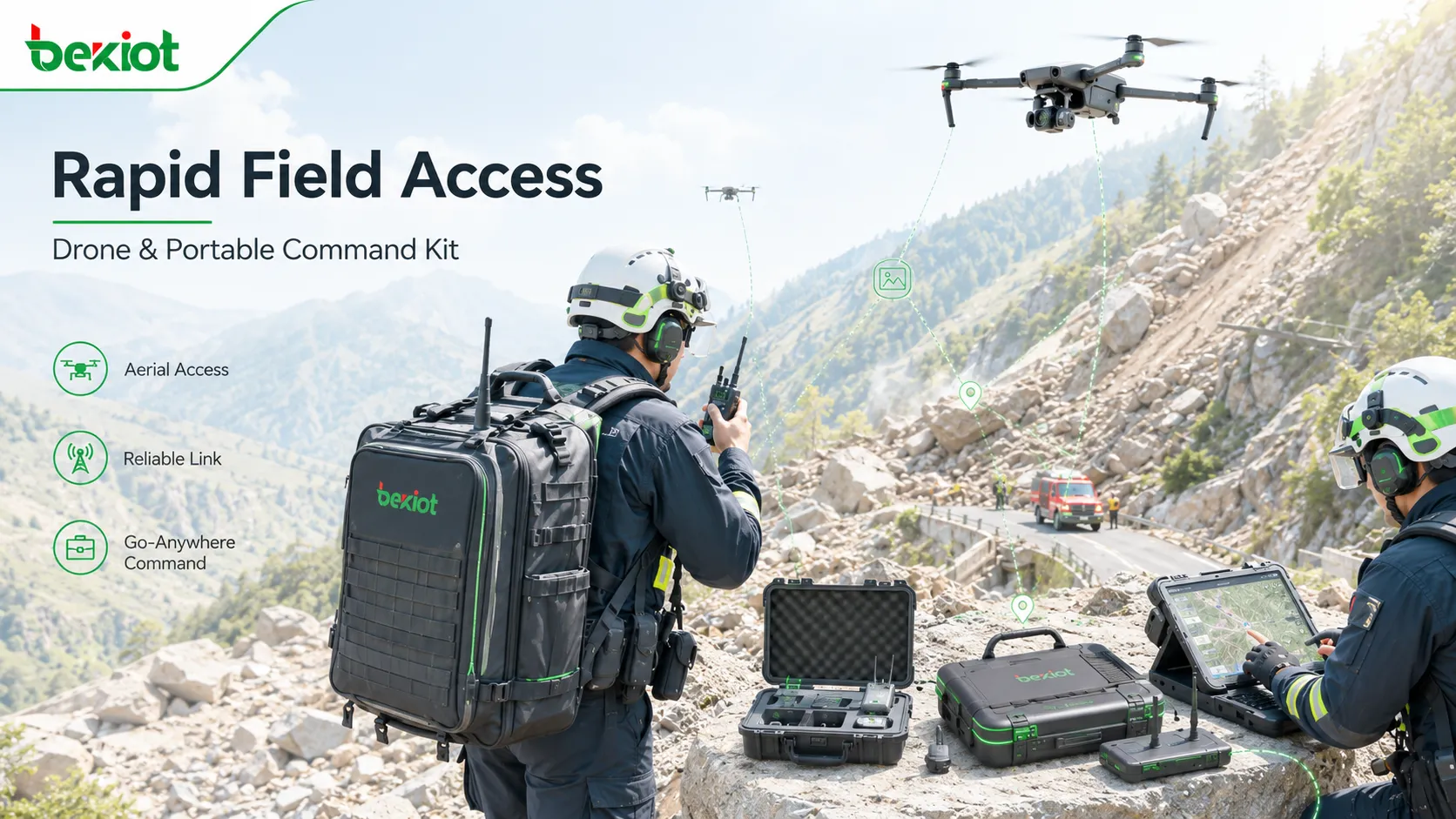
Modern emergency solutions can reduce the impact of blocked roads by using drones, backpack communication kits, portable command devices, lightweight field terminals, and rapidly deployable equipment. These resources can be carried by personnel, transported by air, or deployed closer to the disaster site than traditional vehicles can reach.
Drones and Portable Kits Help Reach the First Scene
When road access is blocked, drones can provide fast situational awareness. They can inspect damaged roads, collapsed buildings, flooded areas, landslide zones, and isolated communities. They can also help identify safe routes, locate people, check fire conditions, or provide aerial views for the command center. In some emergency designs, drones may also carry lightweight communication relay equipment or assist in temporary signal coverage.
Portable and backpack devices are also important. Compared with vehicle-mounted systems, portable kits can be carried by rescue personnel into areas where vehicles cannot enter. These kits may support voice communication, video return, temporary networking, field command, location reporting, or satellite backhaul depending on the project design.
The design principle is mobility. Emergency equipment should not only be powerful when installed in a command vehicle; it should also have deployable forms for areas where the command vehicle cannot arrive. This helps maintain communication and command capability closer to the affected site.
Network Outage Requires More Than One Backup Link
Network outage is another major challenge. Many modern command systems rely heavily on communication networks. Dispatch platforms, video return, location sharing, conference communication, data reporting, and remote coordination all require network connectivity. During large disasters, public mobile networks, fiber links, base stations, and local infrastructure may be damaged, overloaded, or completely unavailable.
Emergency communication planning should not rely on one network path. Satellite communication can provide long-distance backhaul when terrestrial networks are unavailable. Broadband ad hoc networks can create temporary field coverage between rescue teams, command points, vehicles, and portable nodes. Private 5G base stations can provide high-speed local data transmission in selected areas. Narrowband trunking systems can support reliable push-to-talk voice communication for field teams.
The concept of “network” should be expanded in emergency command. It should not only mean a link from the site back to the command center. It should also include local field coverage, team-to-team communication, broadband data transmission, narrowband voice dispatch, video return, and multi-hop temporary networking. A strong emergency system can quickly rebuild communication in several layers.
Satellite Communication Supports Backhaul Under Severe Damage
Satellite communication is one of the most important methods for solving network outage problems. When local base stations, fiber links, or broadband services are damaged, satellite links can provide a communication path between the disaster site and the remote command center. This is especially useful in mountain areas, islands, forests, remote industrial sites, coastal zones, and large disaster regions where terrestrial infrastructure is unstable.
In emergency command projects, satellite communication may be used by command vehicles, portable command kits, field stations, or temporary communication points. It can support voice dispatch, data upload, video return, command platform access, and coordination between the front-line site and rear command center, depending on bandwidth and system design.
Satellite communication should be planned together with other field networks. It is valuable for long-distance backhaul, but the local disaster site still needs on-site communication coverage. This is why satellite links are often combined with broadband ad hoc networking, private wireless coverage, narrowband radio, and portable dispatch systems.
Temporary Field Networks Restore Local Communication
Broadband ad hoc networking is useful when there is no fixed communication infrastructure. Field nodes can form a temporary network between rescue teams, vehicles, drones, portable command points, and temporary command centers. This helps create local broadband coverage for video, data, voice, and command applications.
Private 5G base stations can provide higher-speed wireless access in selected emergency areas. They may support video return, mobile terminals, data collection, and field application access. For sites that require more data capacity, private broadband coverage can be a strong supplement to satellite backhaul and narrowband radio.
Narrowband trunking or radio communication remains important because emergency voice must be simple and reliable. In many field operations, push-to-talk communication is faster than app-based communication. A practical design often combines broadband networks for data and video with narrowband or radio systems for essential voice dispatch.
Power Failure Can Stop Every Other System
Power failure is the third major problem. Electricity is the foundation of modern emergency systems. Communication devices, command platforms, routers, switches, satellite terminals, cameras, radios, lighting, medical support devices, pumps, charging stations, and field computers all require power. When the grid fails, emergency communication may continue only as long as backup power is available.
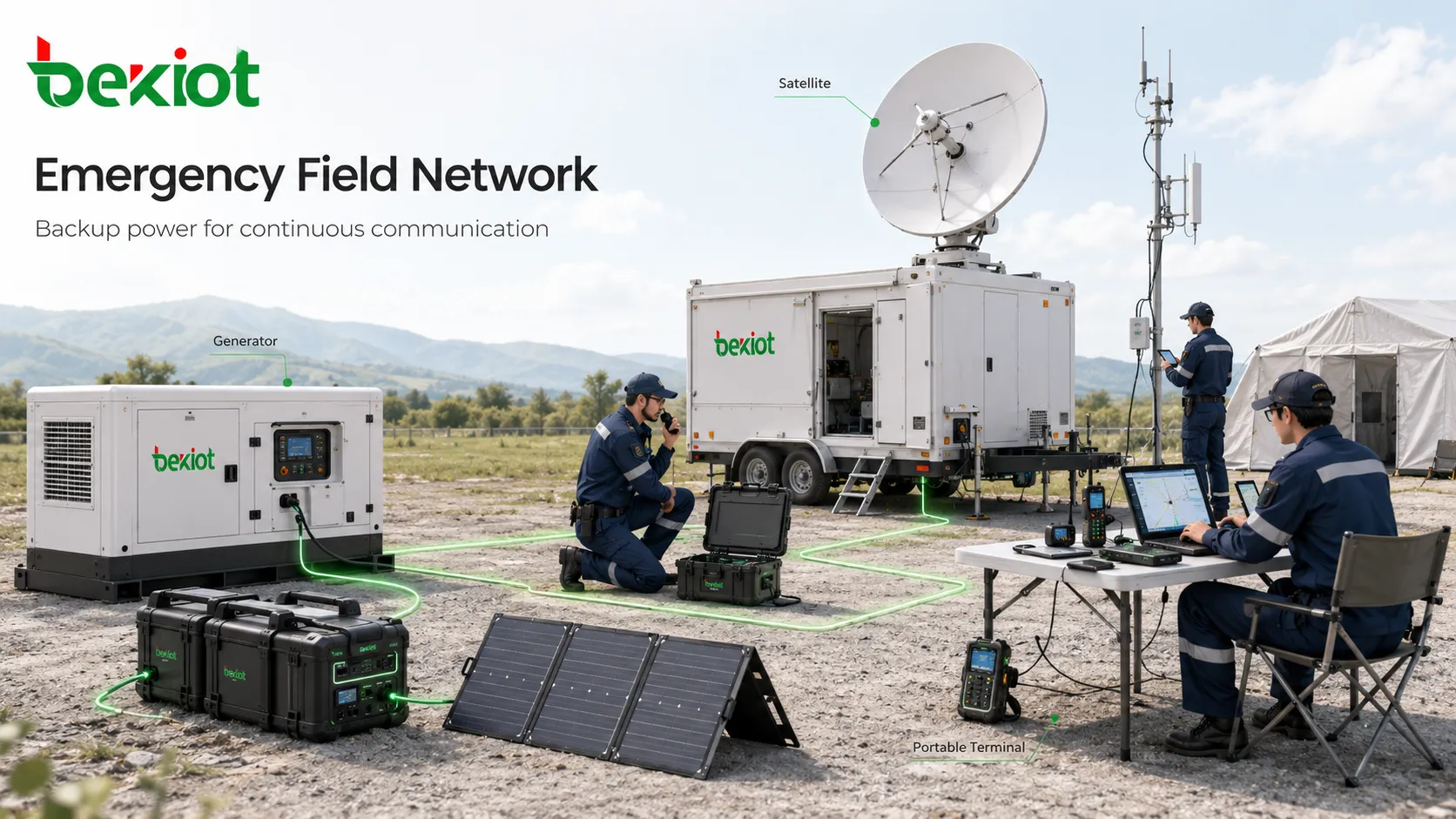
In many disaster areas, restoring electricity is itself a key rescue task. But command and rescue operations cannot wait until full power recovery. Emergency systems must have independent power options from the beginning. This includes built-in batteries, external battery boxes, high-capacity backup power stations, vehicle power, generators, and solar charging equipment.
Power planning should consider both duration and priority. Not every device needs the same backup time. Critical command terminals, radios, satellite devices, gateways, routers, lighting, and charging equipment should receive priority. A clear power plan prevents emergency resources from failing at the most critical moment.
Independent Energy Design Keeps Command Running
Battery-powered equipment is important for first response because it can be deployed immediately. Portable radios, handheld terminals, backpack devices, field routers, and command kits should have enough battery life for early-stage emergency operations. External battery packs or power boxes can extend operation time when field work continues for many hours.
Generators provide stronger long-duration support, especially for command vehicles, temporary command posts, base stations, charging points, and larger communication systems. Solar charging equipment can be useful in extended field operations, remote areas, or scenarios where fuel delivery is difficult. However, solar power should be treated as a supplement rather than the only source because weather and sunlight conditions may be unstable during disasters.
A good emergency command solution should define power input options, battery runtime, charging methods, generator compatibility, power distribution, safety protection, and maintenance procedures. Power is not an accessory; it is part of the communication system itself.
Designing a System for All Three Conditions
The most effective emergency command architecture is not built around a single device. It is a layered system that combines mobility, communication recovery, power independence, and command coordination. The access layer includes field personnel, drones, portable terminals, radios, cameras, sensors, and emergency devices. The communication layer includes satellite links, ad hoc networks, private broadband, narrowband trunking, radio systems, and available public networks. The command layer includes dispatch platforms, command centers, mobile command posts, recording, mapping, and event coordination.
When all three disconnections occur, the system should still provide a minimum command capability. Field teams should be able to report status. The command center should be able to receive key information. Local teams should be able to communicate with each other. Temporary networks should support essential voice, data, and video. Backup power should support critical devices long enough for rescue and recovery operations.
This layered approach is more reliable than relying on one technology. Satellite communication may solve backhaul, but not all local coverage. Drones may solve visibility, but not continuous power. Generators may solve electricity, but not blocked roads. The real solution is coordinated design.
Command Vehicles Are Useful but Not Enough
Emergency command vehicles are valuable because they can carry communication systems, power equipment, antennas, workstations, and command tools. They are useful in many incidents where roads are still available or partially available. However, the “three disconnections” scenario reminds us that command vehicles cannot be the only answer.
If roads are blocked, vehicles may not reach the most important area. If networks are down, the vehicle still needs independent backhaul and local coverage capability. If power is unavailable, the vehicle must support its own energy supply and also help power field equipment when necessary.
Therefore, vehicle-based systems should be combined with portable, backpack, airborne, and temporary field deployment methods. A command vehicle may become the coordination hub, while drones, portable kits, radio systems, and field nodes extend communication to places the vehicle cannot enter.
Field Communication Should Support Multiple Roles
Emergency command involves many roles: command center operators, field commanders, rescue teams, medical teams, logistics teams, power recovery teams, road repair teams, security personnel, drone operators, and external support departments. Each role may need different communication tools.
Some users need simple voice dispatch. Some need broadband data. Some need video return. Some need location sharing. Some need command platform access. A practical solution should not force every user into one communication method. Instead, it should support different terminals and networks while keeping them connected through a unified command workflow.
This is especially important during large-scale disasters. When many departments participate in rescue, communication fragmentation can slow down decisions. A unified emergency command design helps voice, video, data, maps, and task information flow between teams more efficiently.
Important Planning Points Before Deployment
Scenario Assessment
Identify the most likely disaster scenarios for the region or project site. Earthquake-prone areas, flood zones, mountain regions, coastal areas, industrial parks, tunnels, mines, ports, and forest areas may require different combinations of mobility, communication, and power design.
Road Access Strategy
Plan what happens when vehicles cannot reach the site. Consider drones, portable command kits, backpack devices, air transport, temporary field teams, and lightweight deployable communication nodes.
Communication Recovery Design
Prepare more than one communication method. Satellite communication, broadband ad hoc networks, private 5G, narrowband trunking, radio systems, and available public networks should be combined according to actual response needs.
Power Backup Structure
Define backup batteries, power boxes, generators, solar charging, vehicle power, UPS support, and charging plans. Critical communication equipment should have priority power protection.
Operational Training
Emergency equipment must be easy to deploy under pressure. Teams should regularly train on equipment startup, network building, satellite alignment, power switching, radio operation, command platform use, and fault handling.
Common Mistakes to Avoid
One common mistake is assuming that public communication networks will remain available. In major disasters, public networks may be damaged or congested. Emergency command should have independent or semi-independent communication methods.
Another mistake is focusing only on high-end command platforms while ignoring field deployment. A platform in the command center has limited value if field teams cannot reach the site, send information, or keep equipment powered.
A third mistake is treating backup power as an afterthought. Communication devices, satellite terminals, routers, radios, and field screens all depend on power. Without a realistic power plan, even well-designed communication systems may fail quickly.
A fourth mistake is relying on a single device type. Emergency response requires a system. Drones, portable kits, satellite links, radio networks, broadband coverage, generators, batteries, command platforms, and trained teams must work together.
Final Review
The “three disconnections” in emergency command refer to road interruption, network outage, and power failure. These are common and serious problems during major disasters such as earthquakes, floods, fires, landslides, snow and ice disasters, mudslides, and tsunamis. A real emergency command solution must be designed to operate under these conditions, not only under normal infrastructure conditions.
Road interruption requires drones, portable devices, backpack systems, air delivery, and lightweight field deployment methods. Network outage requires satellite communication, broadband ad hoc networking, private 5G coverage, narrowband trunking, radio communication, and multiple backup links. Power failure requires batteries, high-capacity power boxes, generators, solar charging, vehicle power, and clear power priority planning.
The value of an emergency command system is its ability to maintain coordination when ordinary conditions collapse. With proper planning, organizations can rebuild communication quickly, support field teams, improve response speed, protect lives and property, and make emergency rescue more organized even in the most difficult environments.
FAQ
Are the three disconnections always present at the same time?
No. Some incidents may only cause one or two of them. However, major disasters can cause road interruption, network outage, and power failure together, so emergency planning should prepare for the combined scenario.
Can satellite communication completely replace ground networks?
Not completely. Satellite communication is excellent for backhaul when ground networks fail, but field teams still need local communication coverage, radios, temporary networks, and power support inside the disaster area.
Why are drones useful in emergency command?
Drones can quickly provide aerial visibility when roads are blocked or the site is unsafe. They help command teams assess damage, locate routes, inspect danger zones, and support first-scene information collection.
What is the most important power design principle?
Critical communication equipment should receive priority backup power. Batteries, generators, solar charging, and vehicle power should be planned as a combined energy system rather than separate accessories.
How often should emergency communication systems be tested?
They should be tested regularly through drills that simulate blocked roads, network loss, and power failure. Equipment that is not practiced before an emergency may be difficult to deploy correctly under pressure.