


Smart mining projects are complex system engineering projects. They often involve communication, dispatching, video surveillance, AI analysis, IoT platforms, safety alarms, and emergency response systems. Among all these subsystems, communication integration is one of the most practical challenges, especially when a mining site already uses different types of radios and intercom systems.
In many mining enterprises, radios are still widely used for daily work coordination, field communication, production scheduling, safety management, and emergency response. These radios may include analog radios, public-network POC devices, B-trunC systems, DMR digital trunking radios, 4G private-network intercom systems, and 5G private-network communication terminals. If these systems cannot be connected into one unified communication and dispatch platform, the smart mining project will always have a gap in real-time coordination.
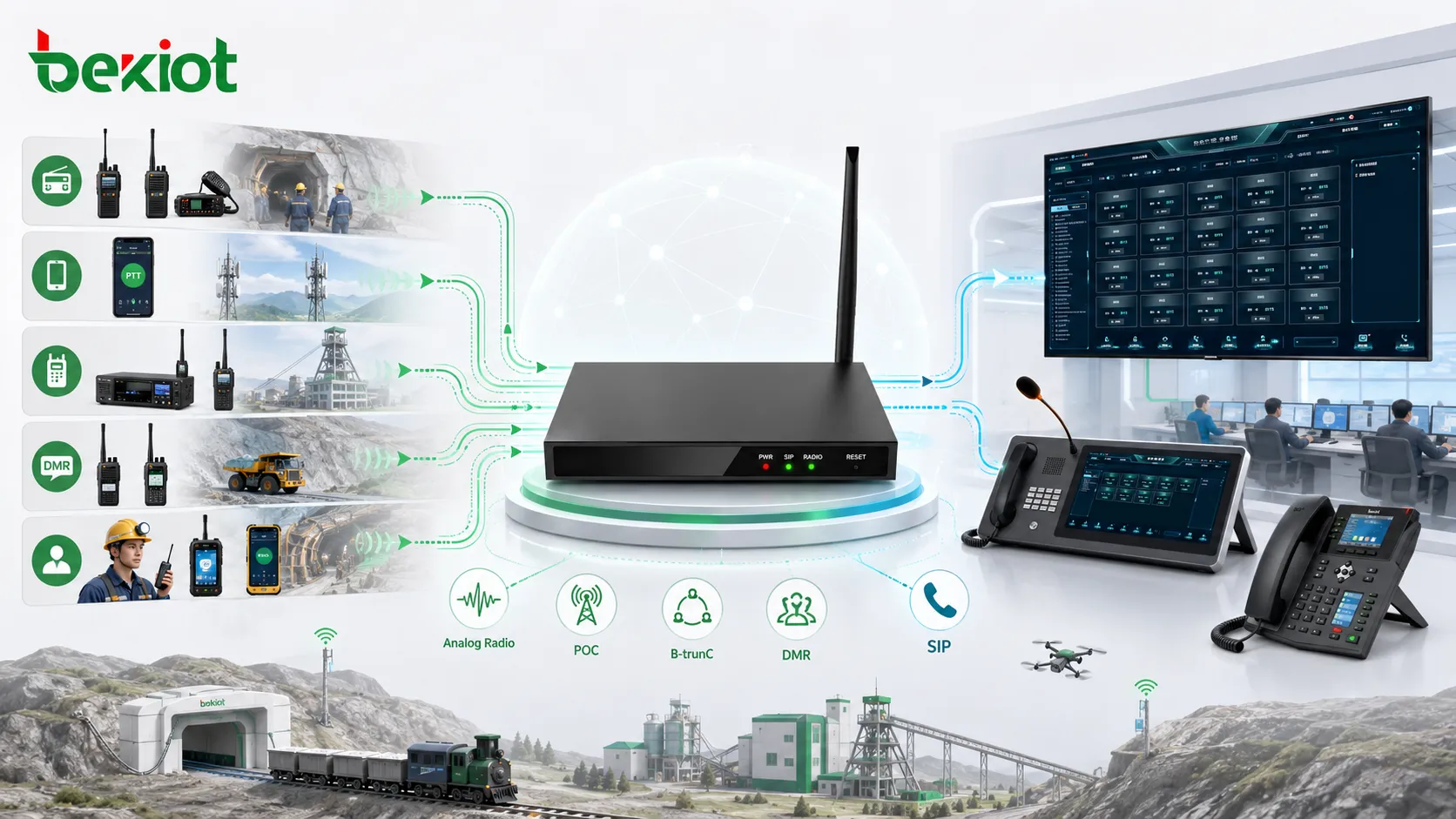
Integration Challenges in Mining Communication
A mine is not a simple office communication environment. It may include underground tunnels, open-pit areas, production zones, transportation roads, dispatch centers, safety monitoring rooms, maintenance teams, and emergency rescue groups. Different departments may use different communication systems because their work scenarios, coverage requirements, and historical equipment investments are different.
For example, one department may still use analog radios for short-range field communication. Another team may use public-network POC devices for wide-area mobile communication. Some mines may have DMR digital trunking systems, while newly built smart mining projects may deploy 4G or 5G private-network intercom systems. These systems can work independently, but they are difficult to coordinate during cross-department operations or emergency incidents.
The key point of a smart mining communication upgrade is not replacing every existing radio system, but making different systems communicate, dispatch, and respond through one unified workflow.
Common Radio Systems Found in Smart Mines
Before designing the solution, the project team should first review the existing communication systems on site. Smart mining projects may include several radio and intercom technologies at the same time. Each system has its own advantages, coverage conditions, device types, and user groups.
| Communication Type | Typical Use | Integration Consideration |
|---|---|---|
| Analog Radio | Basic voice communication in field teams, patrol groups, and local work areas | Usually requires channel-based access through a RoIP gateway |
| Public-Network POC | Wide-area mobile intercom over public mobile networks | Useful for mobile teams, outsourced staff, and cross-region coordination |
| B-trunC | Broadband trunking communication for professional dispatch scenarios | Needs proper gateway or platform-level integration for unified dispatch |
| DMR Digital Trunking | Professional radio communication for production and safety teams | Channel planning and dispatch permissions should be clearly defined |
| 4G/5G Private Network | Smart mine broadband communication, mobile dispatch, video, and data services | Should be integrated with dispatch, IoT, video, and emergency systems |
Because these systems may belong to different departments and serve different operational scenarios, simple device replacement is not always realistic. A more practical approach is to use RoIP gateway access, SIP-based platform integration, and dispatch software to build a unified communication layer above the existing systems.
Solution Architecture with RoIP Gateway Access
The RoIP gateway is the key device for cross-platform radio integration. In a smart mining project, different types of radios can be connected through different gateway ports or gateway units. Each port can correspond to a specific radio channel, allowing analog radios, DMR systems, public-network POC devices, B-trunC systems, and other radio resources to be connected into the command and dispatch platform.
After the radio channels are converted into IP-based communication resources, the system can connect with a smart mining integrated communication platform, command dispatch system, or telephone communication platform. The use of standard SIP protocol makes the access method simpler and improves compatibility with SIP-based communication systems.
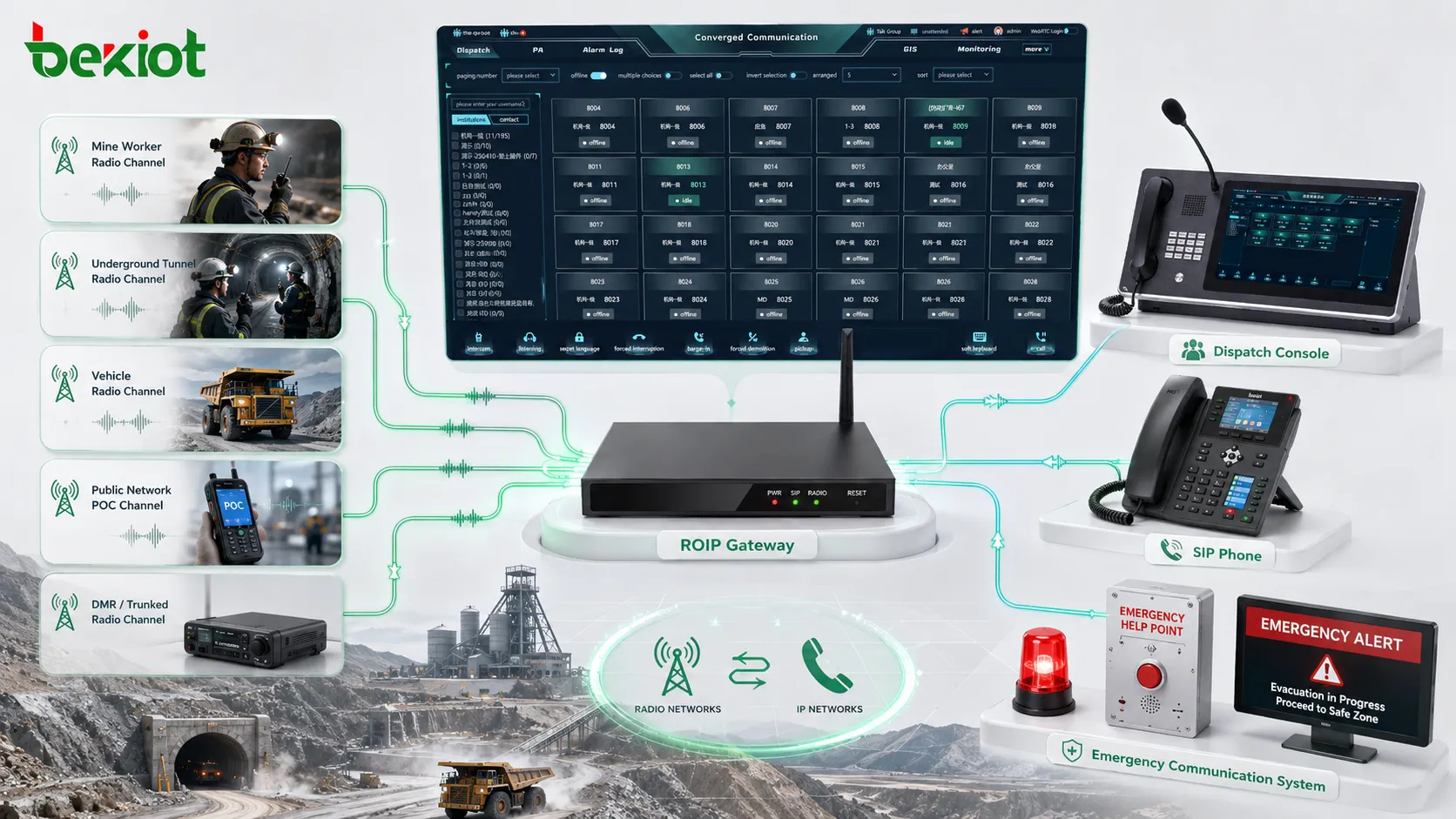
This architecture allows dispatch operators to communicate across different radio systems from one interface. A dispatcher can call a radio channel, connect a radio user with a SIP phone user, organize group communication, support emergency dispatch, and coordinate field teams without switching between multiple independent systems.
How Cross-System Communication Works
In a typical deployment, the RoIP gateway connects to existing radio equipment or radio channels. The gateway then registers or communicates with the integrated communication platform through SIP or related IP communication methods. Once the channel is added to the dispatch system, the operator can manage it like a communication resource.
This means a traditional analog radio channel can be included in a modern IP dispatch workflow. A DMR radio group can be connected with a dispatch console. A POC user can communicate with other teams through the platform. A SIP phone, dispatch station, or emergency communication terminal can also be included in the same coordination process.
The advantage is clear: existing radio assets can continue to be used, while the smart mining platform gains stronger dispatch capability. This helps reduce repeated investment, improve system compatibility, and create a smoother path for communication modernization.
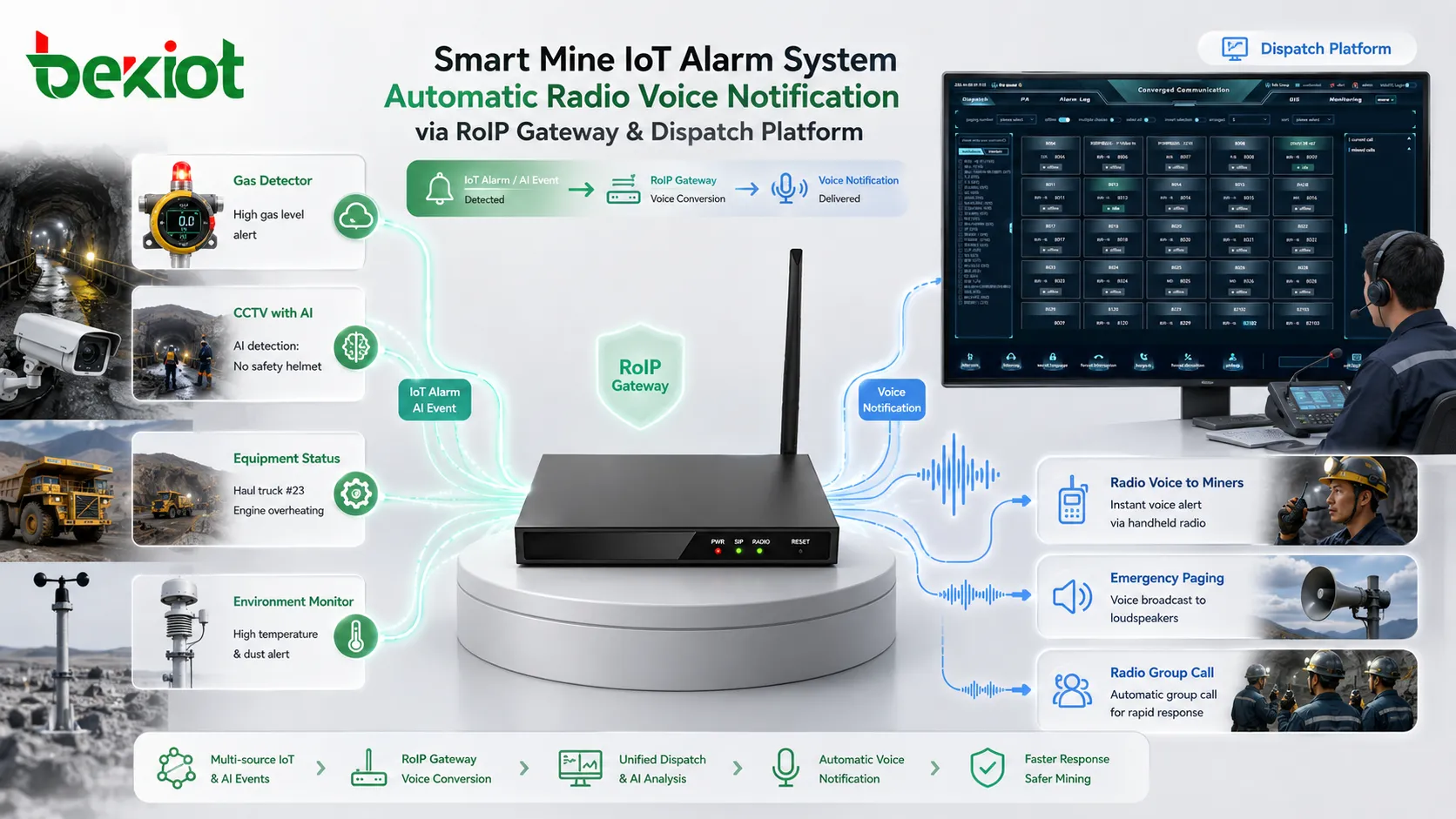
Alarm Linkage and Automatic Voice Notification
Smart mines often include many IoT and safety systems, such as gas monitoring, equipment status monitoring, environmental sensors, personnel positioning, video analysis, access control, and production safety alarms. If these systems only generate alarms on screens, field response may still be delayed.
By connecting the RoIP gateway and communication platform with IoT systems, alarm data can be converted into automatic voice notifications for radio users. For example, when an alarm is triggered, the system can automatically broadcast a voice message to a specified radio channel, dispatch group, or emergency team. This improves the timeliness of alarm delivery and makes the notification more direct for field workers.
This design is especially useful in mining environments where workers may not be near a computer screen. Voice notification through existing radio systems can help ensure that critical alarms reach the right personnel faster.
Working with IoT, Security, and AI Systems
A smart mining communication system should not operate alone. It should work together with IoT platforms, security networks, AI analysis systems, video monitoring platforms, and dispatch management systems. Through interface integration and gateway access, communication events can be linked with monitoring data, alarm data, and command workflows.
For example, an AI video analysis system may detect an abnormal event. The IoT platform may generate a safety alarm. The dispatch platform can then notify the responsible team through radio voice broadcast, call a supervisor through SIP communication, and record the entire response process for later review.
This turns the radio system from a simple voice tool into part of the smart mining operation loop. Communication, alarm, dispatch, and response can be connected into one practical workflow.
Deployment Planning for Mine Projects
The first step is communication resource investigation. The project team should identify what radio systems are already used on site, how many channels are active, which departments use them, where the coverage areas are, and which systems need to be included in unified dispatch.
The second step is gateway planning. Different radio systems may require different gateway access methods. The number of gateway ports should be planned according to radio channels, dispatch groups, emergency communication requirements, and future expansion needs.
The third step is platform integration. The RoIP gateway should connect with the integrated communication platform, command dispatch platform, or telephone system through standard and reliable communication protocols. SIP compatibility is important because it allows radio channels to work with SIP phones, dispatch consoles, industrial telephones, emergency stations, and other IP communication terminals.
The fourth step is scenario testing. Testing should include radio-to-radio communication, radio-to-SIP calls, group dispatch, emergency notification, IoT alarm linkage, automatic voice broadcast, audio quality, delay, channel stability, and operator workflow.
Application Scenarios in Smart Mining
Daily Production Coordination
During daily mining operations, different teams need reliable voice communication for shift coordination, equipment movement, transportation scheduling, maintenance tasks, and field inspection. With RoIP gateway integration, the dispatch center can coordinate teams using different radio systems from one platform.
This reduces communication barriers between departments and helps the command center maintain a clearer view of field operations.
Emergency Response and Safety Dispatch
Mining safety incidents require fast communication. When an emergency occurs, the command center may need to contact underground teams, surface patrols, rescue groups, equipment operators, and management personnel at the same time. A unified dispatch platform can help operators issue instructions, connect radio channels, broadcast emergency messages, and record communication history.
By integrating existing radios instead of abandoning them, the mine can improve emergency communication while keeping familiar tools available for field workers.
Automatic Alarm Broadcasting
When IoT sensors, AI analysis systems, or safety platforms generate alarms, automatic voice broadcast can notify the relevant radio channel or group. This is useful for gas alarms, equipment faults, restricted-area warnings, environmental risks, and emergency evacuation notices.
Voice notification is often more effective than visual-only alarms in field environments because workers can receive the message while moving, working, or operating equipment.
Benefits for Mining Communication Upgrades
The first benefit is unified access. Different radio systems can be connected into one communication and dispatch platform, including analog radios, public-network POC devices, B-trunC, DMR digital trunking, and 4G/5G private-network intercom systems.
The second benefit is better dispatch efficiency. Operators can manage multiple radio channels, SIP terminals, telephone users, and emergency communication points through one interface, improving coordination speed during both daily work and urgent events.
The third benefit is stronger system linkage. Radio communication can be connected with IoT alarms, safety platforms, video monitoring, AI analysis, and smart mining management systems, helping build a more complete operational response loop.
The fourth benefit is investment protection. Existing radio equipment can continue to serve the project after gateway integration. This helps reduce replacement cost and supports gradual system modernization.
For smart mining projects, radio integration should be treated as part of the command architecture, not as an isolated device connection task.
FAQ
Do all existing radios need to be replaced in a smart mining upgrade?
No. In many projects, existing analog radios, DMR systems, POC devices, or other radio resources can continue to be used. A RoIP gateway can help connect these systems into a unified dispatch platform, reducing unnecessary replacement cost.
How should the number of RoIP gateway ports be planned?
The number of ports should be planned according to the number of radio channels that need to be connected, the dispatch groups, emergency communication requirements, and future expansion needs. Each important channel should be evaluated based on actual operation priority.
Can radio voice notification be triggered automatically by mine alarms?
Yes. With proper platform integration, alarms from IoT systems, safety monitoring platforms, or AI analysis systems can trigger automatic voice notifications to specific radio channels or user groups.
What should be tested before project acceptance?
Testing should include cross-system calling, radio channel access, SIP communication, group dispatch, emergency broadcast, alarm linkage, audio quality, system delay, gateway stability, recording, and operator workflow.
Why is SIP compatibility important in this solution?
SIP compatibility allows radio channels to communicate with SIP phones, dispatch consoles, industrial terminals, emergency stations, and other IP communication systems. This improves interoperability and makes future expansion easier.







