SIP is one of the most widely used protocols for real-time audio and video communication. It is commonly used in unified communication, video conferencing, IP intercom, emergency command, dispatch systems, SIP phones, and softswitch platforms. GB/T 28181, on the other hand, is mainly used for video surveillance networking, video monitoring platform access, device registration, stream control, and security-oriented video management.
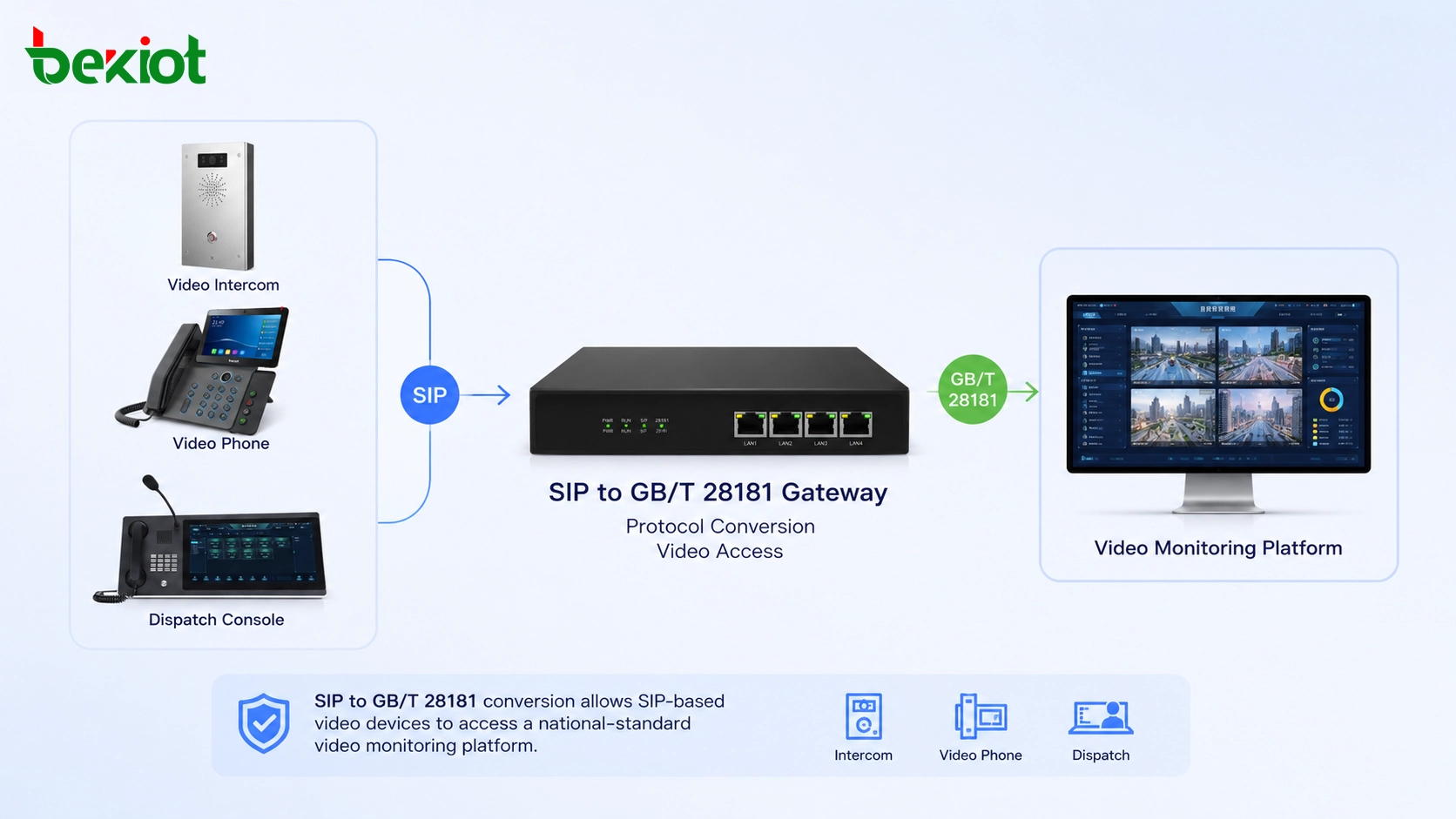
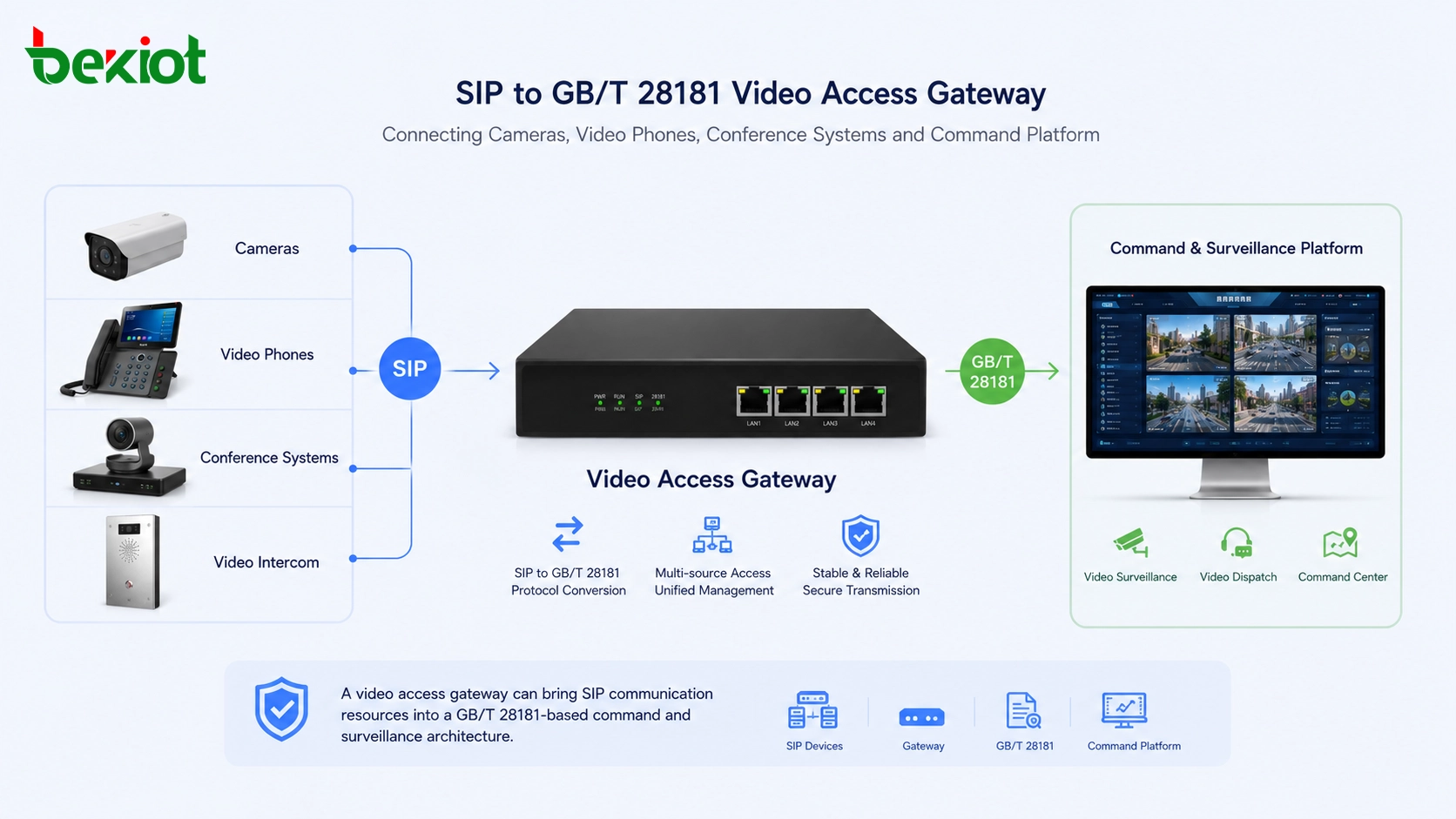
In many modern projects, these two systems need to work together. A site may already have a GB/T 28181 video surveillance platform, while new front-end devices, video intercom terminals, video phones, or conferencing systems are based on SIP. In this case, SIP to GB/T 28181 protocol conversion becomes necessary. A video access gateway can convert SIP audio and video resources into a format that can be registered, called, displayed, and managed by a GB/T 28181 monitoring platform.
Different Systems Need a Common Video Access Path
SIP and GB/T 28181 both use signaling mechanisms to establish and manage media sessions, but their application focus is different. SIP is more common in communication systems, while GB/T 28181 is more common in video surveillance systems. When a project includes both communication terminals and monitoring platforms, protocol boundaries can easily become an obstacle.
For example, a command center may use a GB/T 28181 platform to manage cameras, recorders, drones, body-worn cameras, and mobile surveillance devices. At the same time, the same project may deploy SIP-based video intercom terminals, video phones, meeting systems, or dispatch communication platforms. Without protocol conversion, these resources may stay separated in different systems.
SIP to GB/T 28181 integration provides a practical solution. It allows SIP-based audio and video resources to be presented to the surveillance platform as manageable video resources. The monitoring platform can then call, preview, display, or manage these resources through a unified interface.
Bringing Video Intercom Terminals into Monitoring Platforms
One common scenario is to connect SIP-based video intercom terminals to a GB/T 28181 monitoring platform. In many public safety, campus, park, building, factory, and emergency help-point projects, front-end video intercom devices are deployed for two-way communication and visual confirmation.
These terminals usually support SIP because they need real-time audio and video calls. However, the central monitoring platform may be based on GB/T 28181. By deploying a video access gateway, the SIP video intercom terminal can be converted and connected to the monitoring platform.
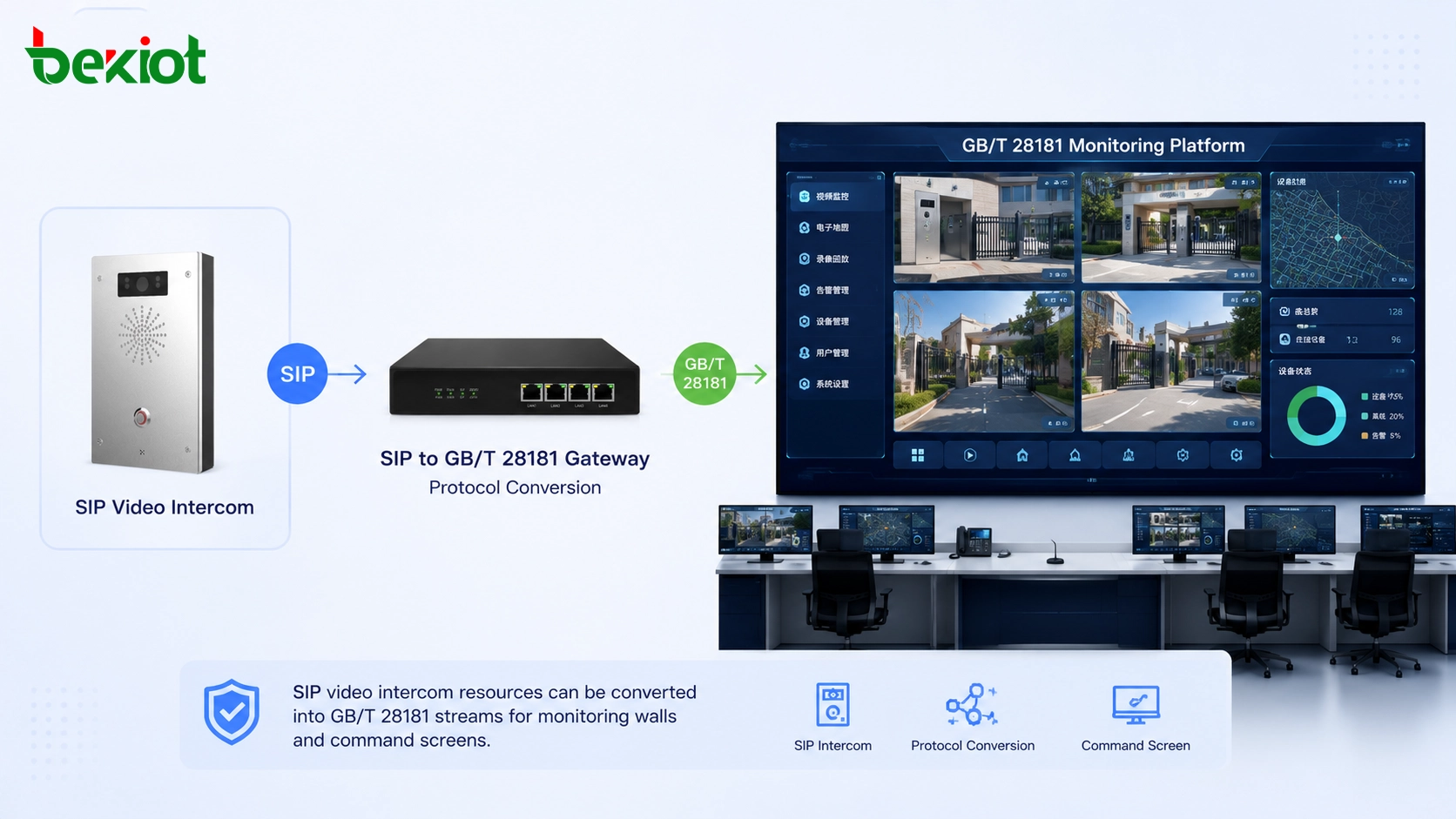
After integration, the monitoring platform can call the video intercom terminal, pull the video stream, view the scene, and support visual communication from the command center. This is useful in emergency help stations, campus entrances, industrial zones, parking areas, service windows, public facilities, and security duty rooms.
Making Intercom Video Available to Command Screens
In traditional deployment, a SIP intercom system may only be visible inside a communication platform or dispatch client. This limits the value of the video source when the command center mainly uses a video surveillance platform and large monitoring screens.
With SIP to GB/T 28181 conversion, the video stream from a SIP visual intercom terminal can be accessed by the GB/T 28181 platform and displayed on the monitoring wall. Operators can check the location, identify the caller, verify the situation, and coordinate emergency response more quickly.
This is especially important when voice communication alone is not enough. In emergency call points, industrial safety areas, railway stations, hospitals, schools, and public service sites, the command center often needs both two-way voice and real-time video evidence. Protocol conversion helps combine these functions into one operational screen.
Displaying Video Conference Feeds on Surveillance Platforms
Another important scenario is video conference integration. In some command and dispatch environments, video conferences are not only used for meetings. They may also become part of emergency coordination, remote expert consultation, multi-department response, or cross-region command communication.
When the monitoring center uses a GB/T 28181 platform as the main video display system, it may need to show video conference feeds on the same platform. Through a video access gateway, the output of a video conference MCU or conferencing platform can be converted and uploaded through GB/T 28181.
This allows conference images to be centrally managed, displayed on large screens, distributed to other platforms, or used in integrated command workflows. It also makes video conferencing resources easier to combine with surveillance cameras, mobile video sources, emergency communication terminals, and dispatch platforms.
Connecting SIP Video Phones to National-Standard Platforms
SIP video phones are widely used in command centers, duty rooms, office communication, industrial control rooms, and emergency contact points. They support audio and video calls through SIP registration, SIP trunking, or IPPBX-based communication systems.
In some projects, the video from these phones also needs to be available to the GB/T 28181 monitoring platform. A video access gateway can support this by allowing SIP video phones to register directly to the gateway, or by connecting the IPPBX and gateway through SIP trunk networking.
After conversion, the video phone can become part of the monitoring platform’s video resource pool. The system can pull video, display images, and support integrated application development. This helps duty centers combine communication and video monitoring instead of treating them as two isolated systems.
Integrating Communication Platforms with Surveillance Architecture
Many projects already have a clear platform structure. The communication side may use SIP softswitch, IPPBX, video dispatch, or unified communication platforms. The surveillance side may use GB/T 28181 video monitoring, storage, platform cascading, and centralized video management.
SIP to GB/T 28181 conversion helps these two architectures communicate with each other. SIP devices and platforms can be converted into GB/T 28181 resources, while the monitoring system can manage them in a familiar way. This reduces system separation and improves the value of existing infrastructure.
This integration is useful for emergency command centers, smart parks, transportation hubs, energy facilities, schools, hospitals, industrial plants, government projects, and public security-related video systems. In these environments, communication and monitoring often need to support the same workflow.
Expanding Video Source Access in Command Projects
GB/T 28181 platforms are often used to collect and manage many types of video sources, including surveillance cameras, recorders, mobile cameras, drones, body-worn cameras, vehicle-mounted video systems, and temporary field devices. As projects become more integrated, SIP-based video devices may also need to join this resource structure.
A video access gateway can expand the platform’s terminal access capability. Instead of only accepting traditional surveillance devices, the monitoring platform can access SIP intercoms, SIP video phones, conferencing outputs, SIP media platforms, and other real-time communication resources.
This creates a more complete video command environment. The system can display fixed surveillance, mobile video, emergency call video, conference video, and communication terminal video together. For command and dispatch users, this reduces switching between platforms and improves response efficiency.
Stream Output and API-Based Integration
In many projects, protocol conversion is only the first step. The system may also need stream output, platform calling, API integration, third-party application access, recording, display control, or custom command system development.
A well-designed SIP to GB/T 28181 solution should support more than basic video connection. It should make converted video resources easier to call, manage, display, and integrate. This is important for projects that need to connect with GIS platforms, alarm systems, command screens, case management systems, smart city platforms, or emergency response applications.
API-based integration can also help developers build customized workflows. For example, an alarm event may trigger the system to call a SIP video intercom, pull the related video stream through the GB/T 28181 platform, display it on the command screen, and record the event for later review.
Key Planning Points for Deployment
Before deploying SIP to GB/T 28181 conversion, the project team should confirm the source device type, SIP registration method, video codec, audio codec, stream resolution, platform access mode, GB/T 28181 ID structure, network routing, NAT traversal, and security policy.
The system should also consider whether the monitoring platform needs live preview, two-way audio, video call control, recording, stream distribution, alarm linkage, or large-screen display. Different requirements may affect gateway configuration, media handling, and platform integration logic.
Network quality is another key factor. Real-time audio and video services are sensitive to delay, packet loss, jitter, and bandwidth limitations. For emergency command, industrial operation, or security monitoring projects, a stable private network or managed network path is usually preferred.
Practical Scenario Summary
| Scenario | Integration Goal | Typical Value |
|---|---|---|
| SIP video intercom access | Connect SIP intercom terminals to a GB/T 28181 monitoring platform | Enable visual confirmation and platform-based video calling |
| Monitoring platform calling SIP devices | Allow the national-standard platform to pull SIP video resources | Unify communication video and surveillance video |
| Video conference display | Convert conference output into GB/T 28181 streams | Show conference feeds on monitoring walls and command screens |
| SIP video phone integration | Connect video phones through gateway registration or SIP trunking | Bring duty-room and command-phone video into monitoring systems |
| Command platform integration | Combine SIP communication resources with surveillance architecture | Support emergency response, dispatch, and customized application development |
Choosing an Integration Architecture
The best architecture depends on which platform is the core system. If the project is built around a SIP softswitch or unified communication platform, the gateway may mainly provide GB/T 28181 output for surveillance access. If the project is built around a GB/T 28181 monitoring platform, the gateway may mainly convert SIP terminals and conferencing systems into national-standard resources.
In some larger systems, both directions may be required. The project may need to convert GB/T 28181 cameras into SIP resources for video conferencing, while also converting SIP video devices into GB/T 28181 resources for monitoring platforms. A flexible gateway architecture can support phased deployment and reduce repeated system reconstruction.
The final design should follow actual workflow. The system should answer practical questions: who needs to call the video source, which platform controls the stream, where the video should be displayed, whether two-way audio is needed, and whether recording or API integration is required.
Conclusion
SIP to GB/T 28181 conversion is mainly used when SIP-based real-time audio and video resources need to be connected to a GB/T 28181 video monitoring or command platform. Typical scenarios include SIP video intercom access, monitoring platform calling SIP devices, video conference display on surveillance screens, SIP video phone integration, and unified command platform development.
The core value is not only protocol translation. A complete solution helps communication systems and surveillance systems work together. It allows video intercoms, video phones, conferencing platforms, monitoring platforms, command centers, and third-party applications to share video resources in a more unified way.
For projects involving emergency command, smart parks, public facilities, transportation, campuses, hospitals, industrial sites, and security monitoring, SIP to GB/T 28181 integration can reduce platform isolation and improve visual command capability.
FAQ
Is SIP to GB/T 28181 conversion only used for cameras?
No. It can also be used for SIP video intercoms, SIP video phones, video conferencing outputs, and other real-time audio-video sources.
Can the monitoring platform start a call to a SIP device?
Yes, when the gateway and platform support the required signaling and media handling, the monitoring platform can call or pull video from SIP-based devices.
Does SIP to GB/T 28181 always require an IPPBX?
Not always. Some SIP devices can register directly to the video access gateway, while other systems may use IPPBX or SIP trunk networking.
What affects the quality of converted video streams?
Codec compatibility, resolution, bandwidth, packet loss, latency, gateway processing capability, and platform configuration can all affect final video quality.
Can this integration support custom platform development?
Yes. When the gateway provides stream output and API access, developers can build custom display, calling, alarm linkage, and command workflow applications.