


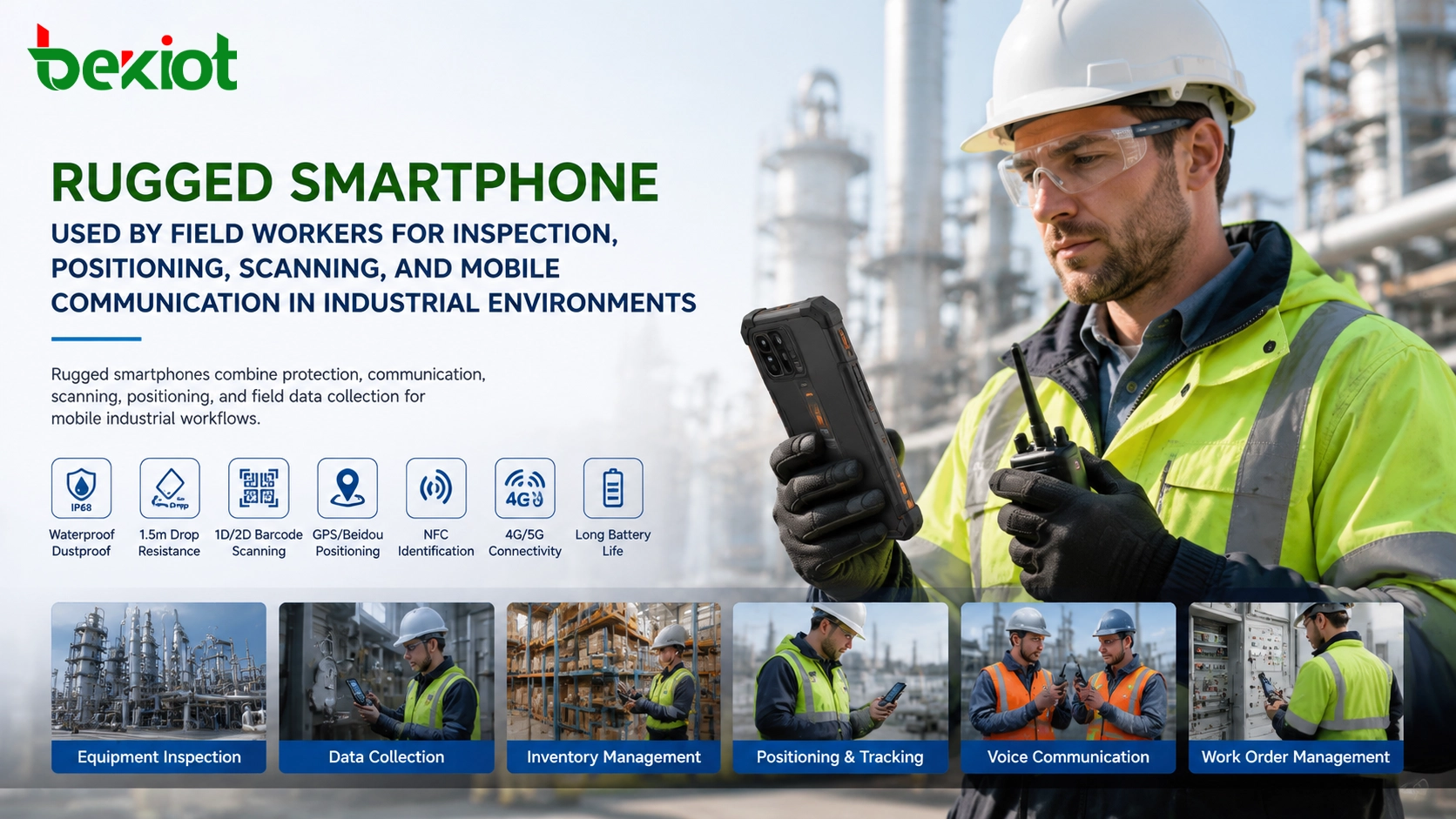
Smartphones are already common in daily life, but industry users need more than a consumer device. In public safety, healthcare, logistics, energy, manufacturing, emergency rescue, and field maintenance, a mobile terminal must survive frequent operation, unstable environments, dust, water, vibration, impact, and long working hours. This is why rugged smartphones, also known as rugged mobile terminals or three-proof smartphones, are increasingly used as the mobile access point for digital field operations.
A rugged smartphone is not only a stronger phone shell. It combines waterproof, dustproof, and drop-resistant protection with industry-oriented functions such as NFC, infrared or barcode scanning, positioning, Bluetooth, camera capture, dedicated communication modules, voice intercom, video transmission, and business application software. Its value lies in connecting people, equipment, data, and command platforms at the work site.
Why industry users need a different mobile terminal
Consumer smartphones are designed mainly for personal communication, entertainment, office messaging, and general mobile applications. They are suitable for normal indoor and urban use, but they are not always reliable in harsh or high-frequency work environments. A field worker may operate the device with gloves, in rain, near dust, inside a warehouse, on a patrol route, beside industrial equipment, or during an emergency response mission.
In these situations, device reliability directly affects work efficiency. If the phone screen breaks after a fall, if the device fails after exposure to water, if scanning is slow, or if positioning is inaccurate, the mobile workflow becomes unstable. For industry applications, the smartphone is often part of the operating system rather than a personal accessory.
Rugged smartphones are therefore designed around protection and task execution. The three basic protection requirements are waterproofing, dustproofing, and drop resistance. On top of these features, industry users often require stronger battery performance, louder audio, better outdoor visibility, physical buttons, programmable keys, fast scanning, NFC identification, camera evidence collection, and reliable network communication.
Core capabilities that support field applications
The most obvious feature of a rugged smartphone is its protective structure. Waterproof and dustproof design allows the device to work in wet, dusty, outdoor, warehouse, construction, and production environments. Drop-resistant design helps reduce device failure when the terminal is used frequently by mobile workers.
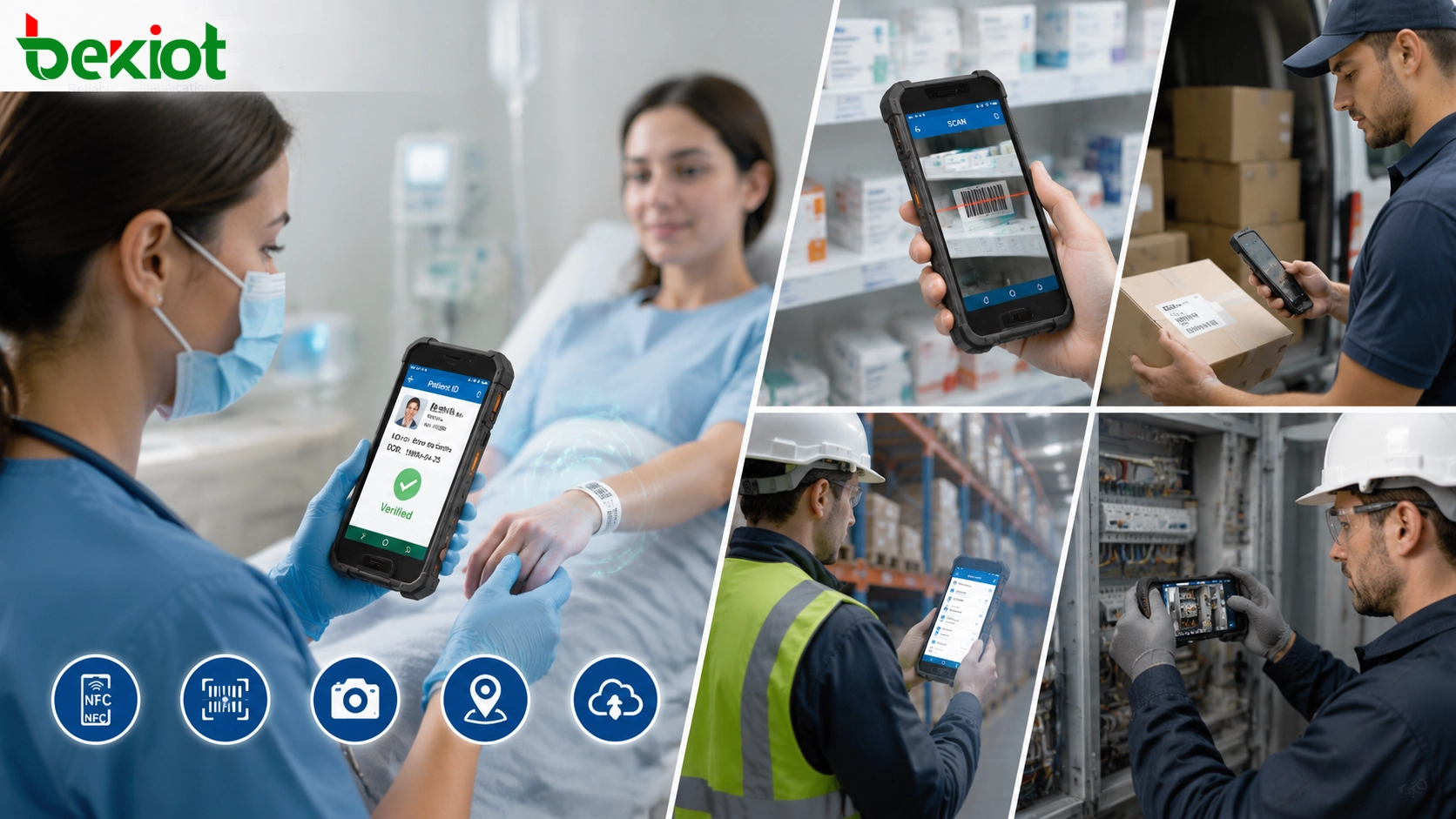
However, the real value of a rugged smartphone is its integration capability. NFC can be used for identity verification, asset confirmation, patrol checkpoint reading, medical identification, or access-related workflows. Infrared scanning or barcode scanning helps users read labels, prescriptions, packages, inventory codes, equipment tags, and material information quickly.
Positioning capability is also important. GPS, BeiDou, or other positioning technologies can help platforms locate personnel, track patrol routes, dispatch nearby teams, and record work trajectories. Cameras support image evidence, video upload, remote assistance, and visual inspection. Bluetooth can connect external sensors, printers, headsets, or measurement tools. Some industry terminals may also support dedicated communication functions for push-to-talk, digital radio, satellite communication, or private network access.
Public safety and identity verification
Public safety is one of the major application areas for rugged smartphones. In patrol, law enforcement support, event security, traffic control, emergency inspection, and community management, frontline personnel often need rapid access to information while moving across different locations.
By connecting to a dedicated network or secure application platform, a rugged mobile terminal can help users check records, identify people, verify documents, capture images, and submit field information. NFC, infrared scanning, camera recognition, and high-speed network access can work together to improve identity verification and information comparison.
For public safety work, speed and reliability are critical. A mobile terminal must allow users to obtain information quickly without returning to a fixed workstation. It should also support secure login, controlled data access, stable communication, and traceable field records. Rugged smartphones help extend digital public safety systems from the control room to the actual field site.
Healthcare workflows and medical identification
Healthcare is another important scenario for rugged smartphones. In hospitals, emergency departments, pharmacies, nursing stations, mobile care, and medical logistics, staff members need to identify patients, access case information, confirm prescriptions, check medicines, and record treatment-related data accurately.
Rugged smartphones can support these workflows through NFC, barcode scanning, camera capture, and mobile medical applications. For example, a nurse can scan a patient wristband, check medication information, confirm prescription details, or update a care record through a mobile platform. A pharmacy or medical logistics team can use scanning functions to track drugs, consumables, and distribution processes.
Compared with ordinary mobile phones, rugged terminals are more suitable for frequent professional use. They are designed for repeated scanning, continuous operation, higher reliability, and easier integration with medical management systems. In healthcare environments, the terminal helps reduce manual errors, improve process visibility, and support more refined workflow management.
Service industries and mobile task management
Service industries such as transportation, logistics, hotels, restaurants, retail, property management, and field service often involve mobile teams and distributed tasks. Employees may need to receive instructions, confirm service orders, scan packages, update job status, locate assets, communicate with supervisors, and provide feedback from the site.
A rugged smartphone can combine voice communication, push-to-talk, NFC, scanning, Bluetooth, positioning, and business software into one mobile device. In logistics, it can scan parcels, confirm delivery, update transport records, and capture proof of service. In hotels or property management, it can help staff receive work orders, verify room or asset information, report maintenance issues, and communicate with the service center.
This improves service efficiency because information no longer depends only on paper forms, phone calls, or delayed manual input. The field worker can collect and submit data immediately. Managers can view task progress, location status, service feedback, and exception information from the platform. For customer-facing industries, faster response and more accurate service records can also improve customer satisfaction.
Emergency response and multi-channel communication
Emergency response requires communication reliability under uncertain conditions. Rescue teams, disaster response personnel, fire support teams, utility repair workers, and emergency command staff may operate in areas where public networks are congested, damaged, or unstable. In such cases, a rugged smartphone may need more than ordinary cellular communication.
Some rugged mobile terminals can integrate multiple communication methods, such as broadband mobile network access, push-to-talk communication, digital radio interconnection, private network access, or satellite communication. This multi-channel design helps improve communication availability when a single network is not enough.
In emergency scenarios, the device can also support audio and video transmission, photo reporting, real-time positioning, field data upload, and connection with emergency command platforms. A rescuer can send site images, join voice coordination, report location, receive task instructions, or provide live information to the command center. This turns the rugged smartphone into a mobile command and reporting terminal.
The key point is not only device toughness. Emergency operations need rich media, location awareness, fast communication, and platform integration. Rugged smartphones can help frontline teams provide the command center with timely and structured field information.
Industrial inspection and maintenance
In industrial environments, rugged smartphones are widely used for routine inspection, equipment maintenance, production coordination, warehouse management, and safety supervision. Workers may need to check equipment status, scan asset tags, record inspection results, upload photos, report faults, and communicate with the control room.
Industrial sites often include dust, vibration, noise, temperature changes, oil, moisture, metal structures, and outdoor areas. A consumer phone may not be durable enough for this type of work. A rugged smartphone can provide stronger protection while also supporting field data collection and communication.
Audio and video communication are especially useful for remote maintenance. A field worker can show the actual equipment condition to an expert or supervisor through photo, video, or live communication. High-precision positioning can help the platform locate personnel, equipment, or inspection points. When combined with an industrial management platform, the device can help build a closed-loop workflow from inspection to reporting, dispatch, repair, and confirmation.
Energy sites and hazardous environments
Energy industries such as oil and gas, chemical production, power generation, mining, and utility infrastructure place higher demands on safety. Work areas may include flammable gases, dust, high-voltage equipment, remote sites, outdoor exposure, and strict operational procedures.
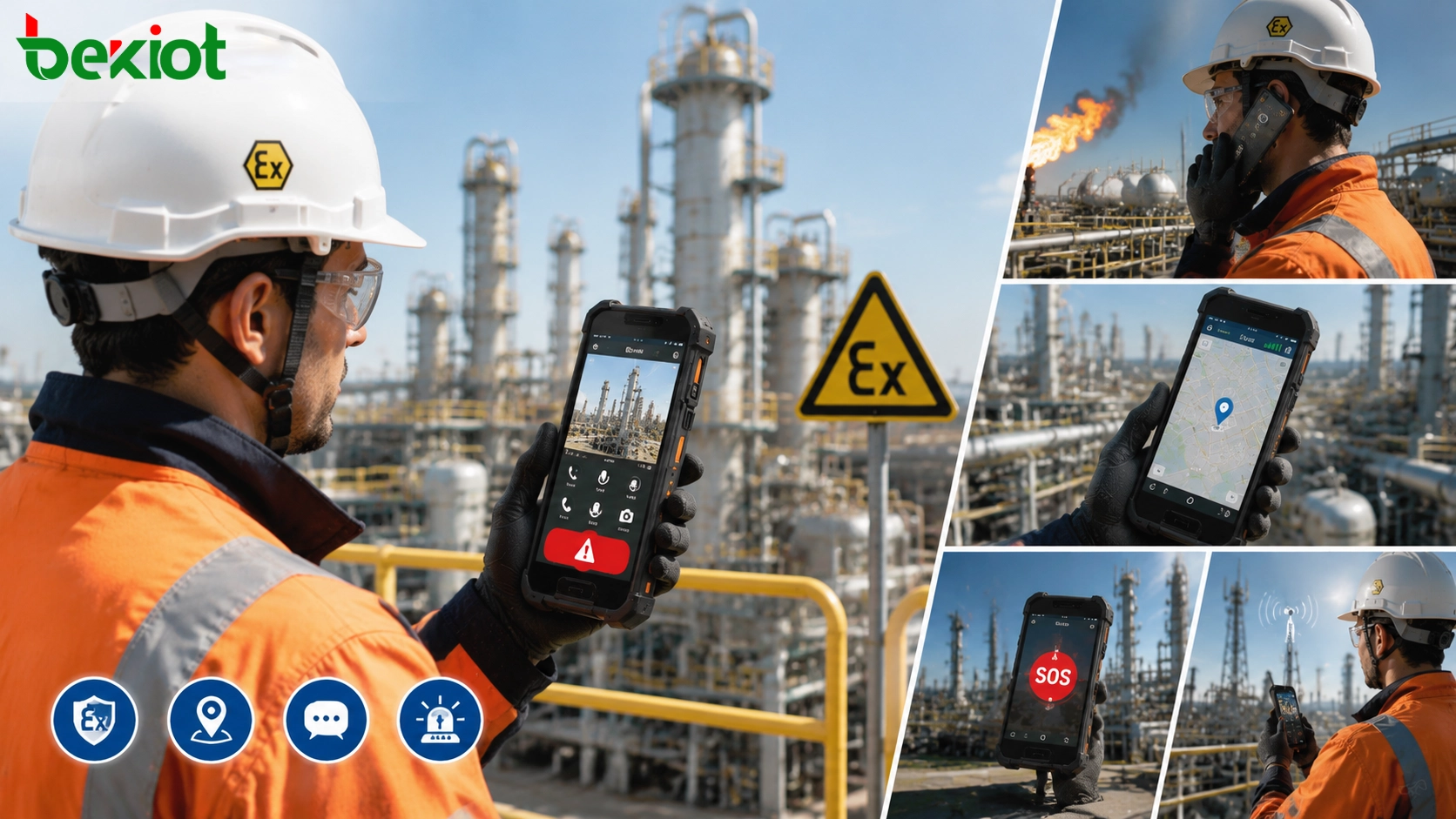
For these scenarios, rugged smartphones may need explosion-proof or intrinsically safe versions depending on the risk environment. This allows mobile communication and digital applications to be used in areas where ordinary electronic devices may not be permitted. The device can help workers communicate, receive work orders, perform inspections, upload evidence, and report emergencies while following site safety requirements.
Energy operations often depend on routine inspection and rapid incident response. A rugged smartphone can support daily work arrangements, patrol tasks, equipment checks, maintenance records, emergency reporting, and personnel positioning. Its value is strongest when it connects with the site’s safety management, dispatch, inspection, and emergency response systems.
How rugged smartphones fit into a digital operation platform
A rugged smartphone becomes more valuable when it is connected to a business platform. The terminal can collect information at the work site, but the platform is responsible for organizing tasks, user permissions, workflows, reports, records, and management dashboards.
For example, in public safety, the platform may manage identity verification and incident records. In healthcare, it may manage patient information and medical workflows. In logistics, it may manage delivery status and package tracking. In industry, it may manage inspection routes, equipment archives, and maintenance records. In emergency response, it may manage location, video, command instructions, and team coordination.
This platform-based approach changes the role of the mobile terminal. The rugged smartphone is no longer only a communication tool. It becomes the front-end data collection point, mobile collaboration terminal, identity verification tool, field reporting device, and real-time access point for business systems.
Choosing the right terminal for the scenario
Different industries require different priorities. A logistics team may focus on scanning speed, battery life, and application compatibility. A public safety team may focus on secure access, camera performance, positioning, and dedicated communication. A healthcare team may focus on NFC, barcode identification, hygiene-friendly operation, and medical system integration. An energy company may focus on explosion-proof certification, safety compliance, and long-term reliability.
Selection should therefore start with the workflow rather than the device appearance. Project teams should confirm the working environment, communication method, required software platform, scanning type, positioning accuracy, operating hours, protection level, accessory needs, and security requirements.
| Application Area | Main Requirements | Typical Value |
|---|---|---|
| Public safety | Identity verification, secure network access, camera capture, location reporting | Faster field information checking and traceable response records |
| Healthcare | NFC, barcode scanning, patient and medicine identification, medical app access | More accurate mobile medical workflows and reduced manual errors |
| Logistics and service | Package scanning, work order handling, voice intercom, task feedback | Higher service efficiency and better operational visibility |
| Emergency response | Multi-channel communication, audio/video upload, positioning, command platform access | Improved field coordination under unstable conditions |
| Industrial operations | Inspection records, equipment scanning, video feedback, maintenance reporting | Closed-loop maintenance and more accurate field data collection |
| Energy and hazardous sites | Explosion-proof design, safety compliance, emergency reporting, field communication | Safer mobile operation in complex and high-risk environments |
Deployment considerations for enterprise projects
For enterprise and industrial projects, rugged smartphone deployment should include more than purchasing devices. The organization should also plan network access, account management, software installation, device security, application permissions, charging and maintenance, spare devices, data backup, and remote device management.
If the terminal will be used for communication, the project should evaluate voice quality, push-to-talk behavior, network coverage, headset compatibility, emergency call procedures, and integration with dispatch or communication systems. If it will be used for scanning, the project should test real labels, distances, lighting conditions, and scanning frequency. If it will be used outdoors, screen brightness, battery performance, and environmental protection should be verified.
Security should also be considered. Industry terminals may carry sensitive business data, patient data, public safety records, inspection information, or emergency response materials. Device authentication, encrypted communication, application control, remote lock, and user permission management may be required depending on the project.
Future development of rugged mobile terminals
As industrial digitalization continues to expand, rugged smartphones will likely support more application forms. Future terminals may combine stronger communication, better positioning, AI-assisted image analysis, richer sensor access, private network integration, remote expert support, and more specialized industry applications.
The range of industries using rugged smartphones will also continue to grow. As more field workflows become digital, mobile terminals will be required in more places where ordinary phones cannot meet reliability, security, or integration needs. The device form may also evolve, including handheld terminals, push-to-talk smartphones, explosion-proof mobile devices, body-worn terminals, and vehicle-connected mobile devices.
The long-term trend is clear: rugged smartphones are becoming an important part of industrial mobility. They help organizations bring digital systems from the office and control room into the real work site.
Conclusion
Rugged smartphones are designed for industry applications where ordinary consumer phones are not reliable enough. Their three basic protection capabilities—waterproofing, dustproofing, and drop resistance—make them suitable for harsh and high-frequency work environments. Their extended functions, including NFC, scanning, positioning, Bluetooth, camera capture, voice intercom, video transmission, and dedicated communication, make them useful across many industries.
Public safety, healthcare, service industries, emergency response, industrial maintenance, and energy operations all have different requirements, but they share one common need: stable mobile access to people, information, tasks, and platforms. A rugged smartphone can become the field-side terminal that connects these elements together.
For organizations planning digital field operations, the best strategy is to choose rugged smartphones according to real workflows, environmental conditions, communication needs, and platform integration requirements. When properly deployed, they can improve work efficiency, strengthen field visibility, support safer operations, and make mobile digital management more practical.
FAQ
What is the difference between a rugged smartphone and a normal smartphone?
A rugged smartphone is designed for professional environments. It usually provides stronger protection against water, dust, drops, vibration, and heavy field use, while also supporting industry functions such as scanning, NFC, positioning, push-to-talk, and platform integration.
Can rugged smartphones be used as push-to-talk terminals?
Yes. Many rugged smartphones can support push-to-talk communication through software platforms, private networks, broadband mobile networks, or dedicated communication modules depending on the system design.
Are rugged smartphones only used outdoors?
No. They are also used indoors in hospitals, warehouses, factories, logistics centers, hotels, retail sites, and production areas where frequent scanning, task management, and reliable mobile operation are required.
What should be tested before large-scale deployment?
Organizations should test network coverage, battery life, scanning performance, software compatibility, positioning accuracy, device durability, user operation habits, security policies, and integration with existing management or communication platforms.







