


Radio communication is still widely used in firefighting, public safety, emergency rescue, tactical operations, power utilities, energy sites, transportation and industrial field teams. It supports fast push-to-talk communication, group calling and efficient on-site coordination. However, when radio systems need to communicate with telephone users, mobile users, IP-PBX extensions or remote command centers, traditional radio networks often face clear limitations.
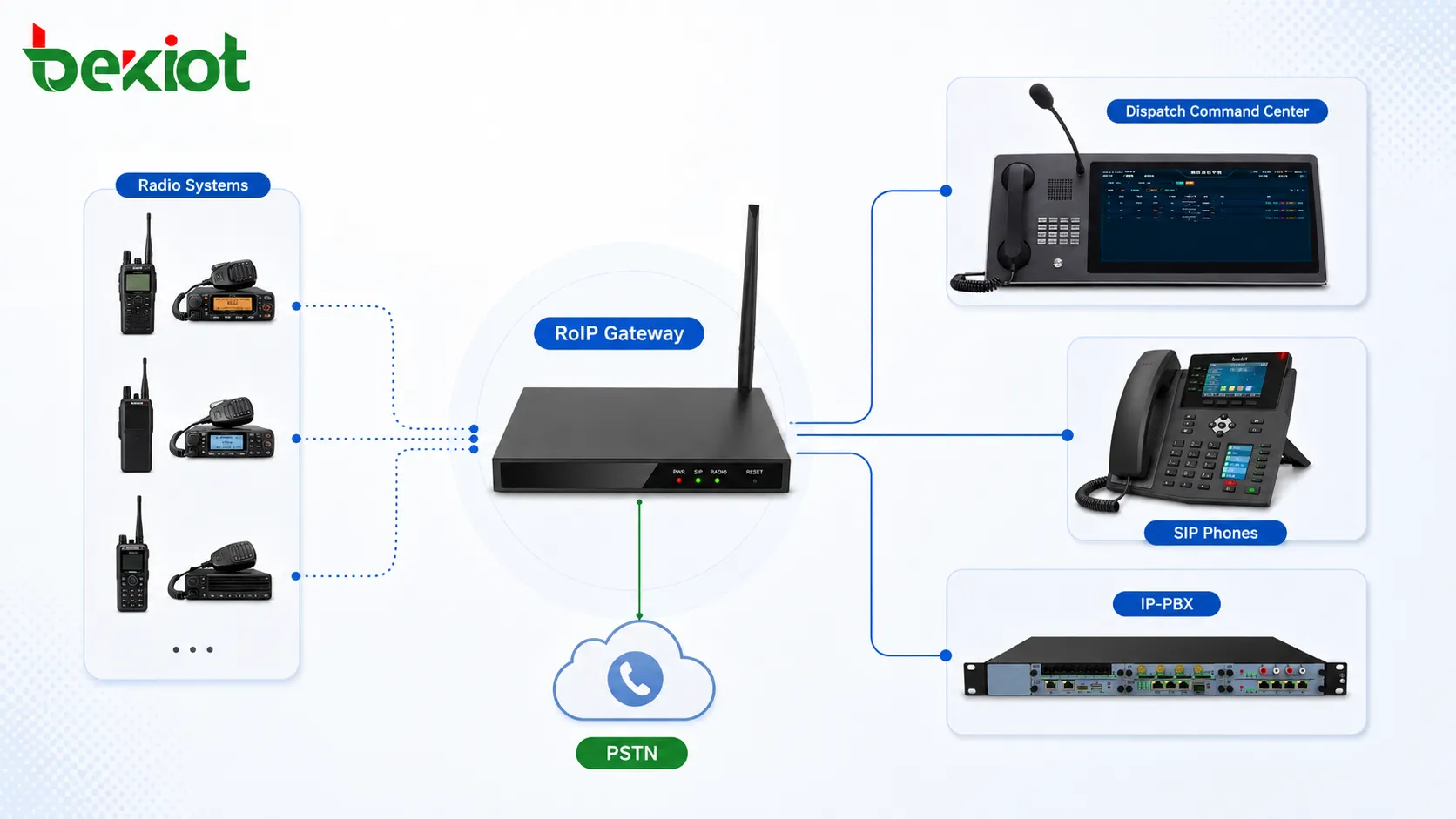
A RoIP Gateway uses Radio over IP technology to convert radio communication into IP-based voice access, typically through standard SIP protocol. This allows radio systems to interconnect with PSTN, enterprise PBX, IP-PBX, SIP dispatch platforms and unified communication systems. In practical projects, it helps break the boundary between radios, phones and command platforms, allowing different users to communicate through a more flexible and unified architecture.
Why Radio and Telephone Systems Need to Work Together
Telephone systems can generally be divided into public telephone networks and enterprise telephone systems. Public networks include traditional fixed-line phone systems as well as 4G and 5G mobile communication networks. Enterprise PBX systems have also evolved rapidly over the past decade, with many organizations replacing traditional PBX platforms with IP-based softswitch, SIP trunking and IP-PBX communication systems.
At the same time, many dispatch command platforms used in public safety, emergency management, utilities and industrial operations are also built on IP-PBX or SIP-based communication technologies. This means that SIP has become an important bridge between different communication resources.
Radio systems, however, were originally designed for local group communication. Common systems may include 400 MHz conventional radio, 370 MHz radio, 800 MHz radio, PDT, TETRA and other professional radio networks. These systems are efficient for field teams, but they are usually separated from telephone networks and enterprise voice platforms. A RoIP Gateway fills this gap by converting radio channels into accessible IP voice resources.
Turning Radio Channels into SIP Communication Resources
The core value of a RoIP Gateway is radio-to-IP conversion. It receives radio audio and push-to-talk control signals, then converts them into a format that can be processed by SIP-based systems. After integration, a radio channel can be treated as a communication resource inside an IP-PBX, dispatch platform or unified communication system.
This transformation makes the radio system much easier to connect with modern voice networks. A command center operator can call a radio channel from a SIP phone. A mobile phone user can communicate with a radio user through the telephone network. A dispatch platform can bridge radio groups with IP extensions, phone users or multi-party conferences.
| Connected System | Typical Use | Operational Value |
|---|---|---|
| PSTN telephone network | Fixed-line and mobile users call radio groups | Allows remote leaders or external contacts to reach field radio users |
| Enterprise PBX | Office extensions communicate with radio channels | Connects office staff, duty rooms and field teams |
| IP-PBX system | SIP extensions access radio communication | Supports flexible routing, call control and internal coordination |
| Dispatch platform | Radio groups join unified command workflows | Enables centralized dispatch and cross-system coordination |
| Multi-site network | Radio systems across different regions are interconnected | Extends communication coverage beyond local radio range |
Breaking the Barrier Between Different Communication Formats
One of the strongest advantages of RoIP Gateway deployment is interoperability. In many organizations, different teams use different communication systems. Field teams may use handheld radios, office users may use SIP phones, leaders may use mobile phones, and rear command centers may rely on IP-PBX or dispatch consoles.
Without integration, each system becomes a separate communication island. A mobile phone user cannot directly speak with a radio group. A command center extension cannot easily call a field radio channel. A radio user cannot join a telephone conference. These limitations create delays and force operators to repeat messages manually.
With a RoIP Gateway, telephone users and radio users can communicate across system boundaries. A leader in a rear command center can use a mobile phone or fixed phone to speak directly with field radio users. An IP phone in a duty office can call a radio group. A dispatcher can bridge telephone, SIP and radio users into the same communication workflow.
Improving Fire Rescue and Field Command Communication
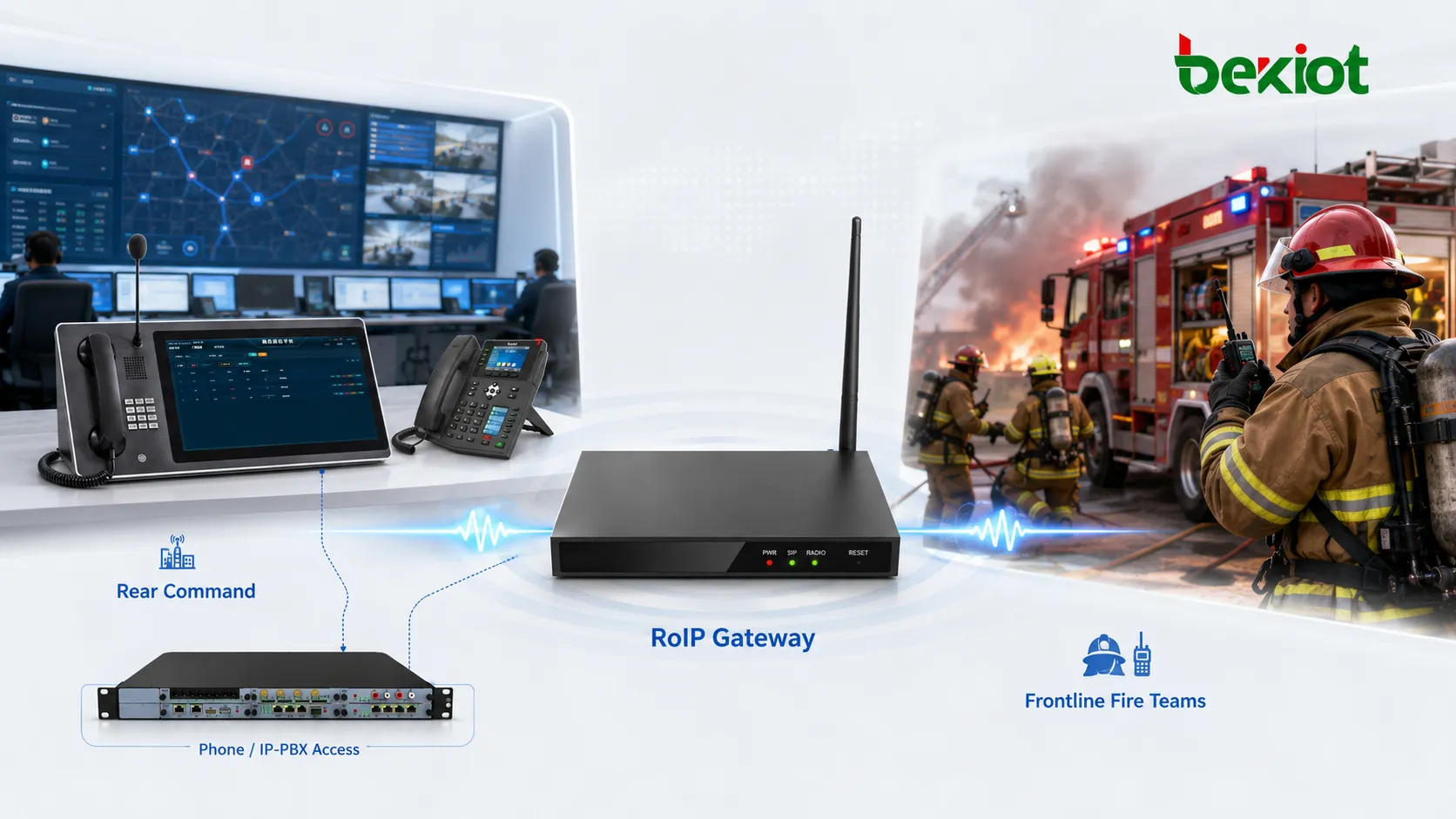
Fire rescue is a typical example. Firefighters at the incident site usually rely on radios because they are fast, direct and suitable for harsh field conditions. However, due to transmit power and coverage limitations, on-site radio communication is often limited to the immediate rescue area.
Rear command leaders may not be able to communicate directly with frontline radio users. They may need to receive information through several intermediate operators, which slows down decision-making and increases the risk of incomplete information.
By connecting the on-site radio system to the telephone network through a RoIP Gateway, rear command leaders can use mobile phones or fixed phones to speak directly with frontline radio users. This helps them understand the field situation faster, issue instructions more clearly and improve the overall efficiency of command response.
Extending Communication Beyond Local Radio Coverage
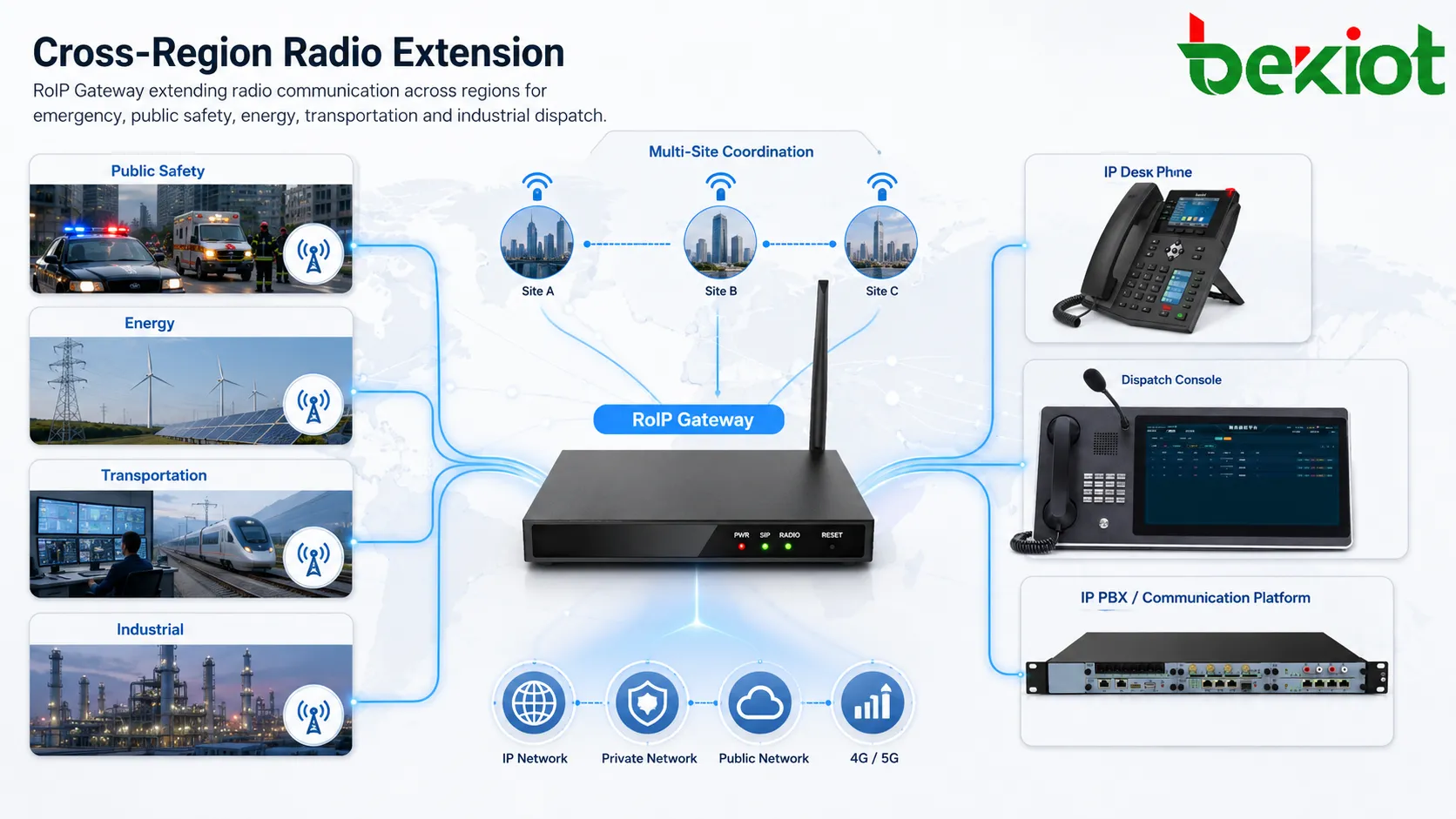
Traditional radio communication is often limited by coverage area. It works well in a hotspot area, a facility, a site or a local tactical zone, but it may not support communication across regions or remote locations. This becomes a problem when multiple teams need to coordinate over a wider area.
By connecting radio systems through RoIP Gateway access and telephone or IP networks, organizations can extend radio communication beyond the original local coverage. Multiple regional radio systems can be interconnected, allowing teams in different locations to communicate through a shared voice path.
This is useful for large-scale emergency operations, tactical exercises, cross-region maintenance, public safety coordination and multi-site industrial management. For example, several tactical groups in different locations can remain connected through the gateway-based communication architecture, even when their local radio networks do not directly overlap.
Making Dispatch Platforms More Flexible
Because a RoIP Gateway uses standard SIP access, it can connect conveniently with many types of dispatch command systems. This is important because modern dispatch platforms often use SIP, IP-PBX and softswitch technologies as their communication foundation.
After radio channels are connected through SIP, the dispatch system can manage them more like ordinary voice resources. Operators can call radio groups, bridge them into conferences, create dispatch groups, perform cross-system voice routing and coordinate different terminal types from one platform.
This improves team collaboration. Different radio systems can communicate with each other through the dispatch platform. Radio users can also communicate with SIP extensions, phone users and command operators. Instead of replacing every existing communication tool, the system connects them into a more unified command structure.
Dialing Rules and Call Control Design
When radio systems are connected with telephone systems, number planning becomes important. A radio channel can be mapped to a SIP extension, a dispatch shortcut key or a specific routing code. Telephone users can dial a preset number to access a radio group, while the dispatch platform can define how radio calls are routed to internal users, duty rooms or emergency command desks.
This design makes operation more intuitive. A command center does not need to remember technical interfaces or gateway ports. Operators only need to call a defined extension, select a channel or press a dispatch key. Behind the interface, the system handles SIP routing, radio access, PTT control and voice transmission.
For projects with multiple radio groups, clear naming and numbering are essential. The system can define different access rules for rescue teams, maintenance teams, security patrols, emergency response groups and external telephone users. This prevents accidental cross-calling and keeps daily communication organized.
Recording, Traceability and Emergency Review
In public safety, emergency response and industrial operations, communication records are often required for later review. When radio communication remains isolated, recording may depend on local radio equipment or manual procedures. After RoIP integration, radio calls can be recorded by the IP-PBX, dispatch platform or centralized recording server.
This provides stronger traceability. The system can record who initiated the call, which radio channel was used, when the communication happened and how long the conversation lasted. In emergency incidents, these records help organizations review command decisions, verify response timelines and improve future procedures.
Recording also supports compliance and management. For industries such as energy, transportation, chemical production and public security, voice logs can be important evidence for safety management, duty handover, accident analysis and operation optimization.
Combining the Strengths of Radio and Telephone Networks
Radio communication is strong in fast group calling, simple operation and field reliability. Telephone networks are strong in wide coverage, public access and remote communication. IP-PBX systems are strong in routing, extension management, recording, conferencing and enterprise voice control.
A RoIP Gateway brings these strengths together. Field users can keep using radios, while command centers and external users can communicate through phones or SIP systems. This creates a practical communication model for organizations that need both immediate field communication and wide-area command access.
The result is not just “radio connected to telephone.” It is a broader communication integration solution that improves command reach, field responsiveness and multi-team collaboration.
Related Product: becke roip Gateway
Suitable Industries and Project Scenarios
Public safety and emergency management
Police, fire rescue, emergency response and disaster management teams often rely on both radios and command center telephone systems. RoIP integration allows commanders, field teams and external support units to communicate more directly during urgent operations.
Military and tactical coordination
During tactical exercises or field operations, multiple teams may operate across different zones. RoIP Gateway deployment helps connect separated radio groups and enables cross-region voice coordination through IP or telephone networks.
Power, energy and utility operations
Power grids, substations, oil and gas sites, water utilities and maintenance teams often use radios for daily field communication. Connecting radio systems with IP-PBX or telephone systems helps control rooms reach field personnel quickly.
Industrial and transportation environments
Factories, chemical plants, ports, airports, railway systems, metro lines, highways and logistics parks require fast communication between control rooms and on-site teams. RoIP access helps integrate existing radio systems into centralized dispatch and communication platforms.
Planning Points for a Reliable Deployment
Confirm the radio system type
Different radio systems may use different bands, standards and interface methods. Before deployment, the project team should confirm whether the system involves 400 MHz, 370 MHz, 800 MHz, PDT, TETRA or another radio platform. This helps define the correct gateway access method.
Define call routing rules
The system should define how telephone users call radio channels, how radio users reach extensions, and whether calls should pass through IP-PBX, PSTN, SIP trunking or dispatch consoles. Clear routing rules are necessary for stable operation.
Design group communication carefully
Radio communication is usually group-based, while telephone systems are often number-based. The integration plan should map radio groups, SIP extensions, phone numbers and dispatch groups clearly to avoid confusion during operation.
Control audio quality
Radio audio and telephone audio may have different volume levels, delay characteristics and noise conditions. Proper audio gain, echo control, codec selection and network quality should be tested before final delivery.
Keep backup communication methods
Emergency communication should not depend on only one path. Even after RoIP integration, organizations should keep fallback methods for radio operation, telephone access, local dispatch and network interruption scenarios.
Phased Deployment for Existing Systems
Many organizations do not need to rebuild their entire communication system at once. A more practical method is phased deployment. The first phase can connect the most important radio channels with the IP-PBX or dispatch platform. The second phase can add more radio sites, telephone routing rules, recording functions and cross-region interconnection. Later phases can integrate GIS, video command, alarm linkage and mobile applications.
This approach reduces project risk. Existing radio users can continue their daily workflow while the organization gradually expands IP-based communication capability. It also allows the project team to test call routing, audio quality, permissions and emergency workflows before scaling to more departments or sites.
For large organizations with several branches or field teams, phased deployment also makes budget control easier. The system can start from key emergency communication needs and then expand according to operational value.
Long-Term Value for Communication Modernization
RoIP Gateway deployment helps organizations modernize communication without abandoning existing radio systems. Instead of replacing all field radios, the gateway allows current radio resources to connect with PSTN, PBX, IP-PBX and SIP dispatch platforms.
This provides a smoother upgrade path. Organizations can continue using proven radio communication for field teams while gradually adding IP phones, command consoles, voice recording, dispatch software, mobile applications and cross-region communication features.
For industries that rely on fast team coordination, the RoIP Gateway is not only an interface device. It is an important access layer that connects radio communication with wider telephone and IP-based command systems.
FAQ
Can a RoIP Gateway connect radios with mobile phones?
Yes. When the radio system is connected to a telephone or IP-PBX network through proper routing, mobile phone users can communicate with radio users under the designed call workflow.
Does RoIP Gateway integration replace the existing radio system?
No. In most projects, the existing radio system remains in use. The gateway adds an interconnection layer so radios can communicate with phone systems and IP platforms.
Can different regional radio systems be interconnected?
Yes. By connecting multiple radio sites through IP networks or telephone systems, radio communication can be extended across regions and different operating areas.
Why is SIP important in this solution?
SIP makes it easier to connect radio channels with IP-PBX systems, dispatch platforms and SIP phones. It provides a standard communication interface for integration.
What is the biggest advantage of connecting radios to a phone system?
The biggest advantage is wider communication reach. Commanders, office users, mobile phone users and field radio teams can communicate through a more connected system instead of remaining separated by device type or network boundary.







