


Dispatch command communication is widely used in firefighting, emergency response, public safety, utilities, chemical plants, energy operations, transportation, military support and large industrial sites. Unlike ordinary mobile phone communication, which is usually one-to-one, command communication must support one-to-one, one-to-many and many-to-many collaboration. It may also need to combine voice, video, messaging, location, conference audio, satellite communication and field radio networks into one operational workflow.
In many real projects, radio systems are still one of the most important communication tools for field teams. They are efficient for group calling, fast to operate and suitable for harsh or emergency environments. However, traditional radio networks are often isolated. A team using one channel, one frequency band or one radio standard may not communicate directly with users on another system. A RoIP Gateway solves this problem by converting radio voice into SIP/IP communication, allowing radio users to join a unified dispatch command system.
Communication Is No Longer a Single-Channel Task
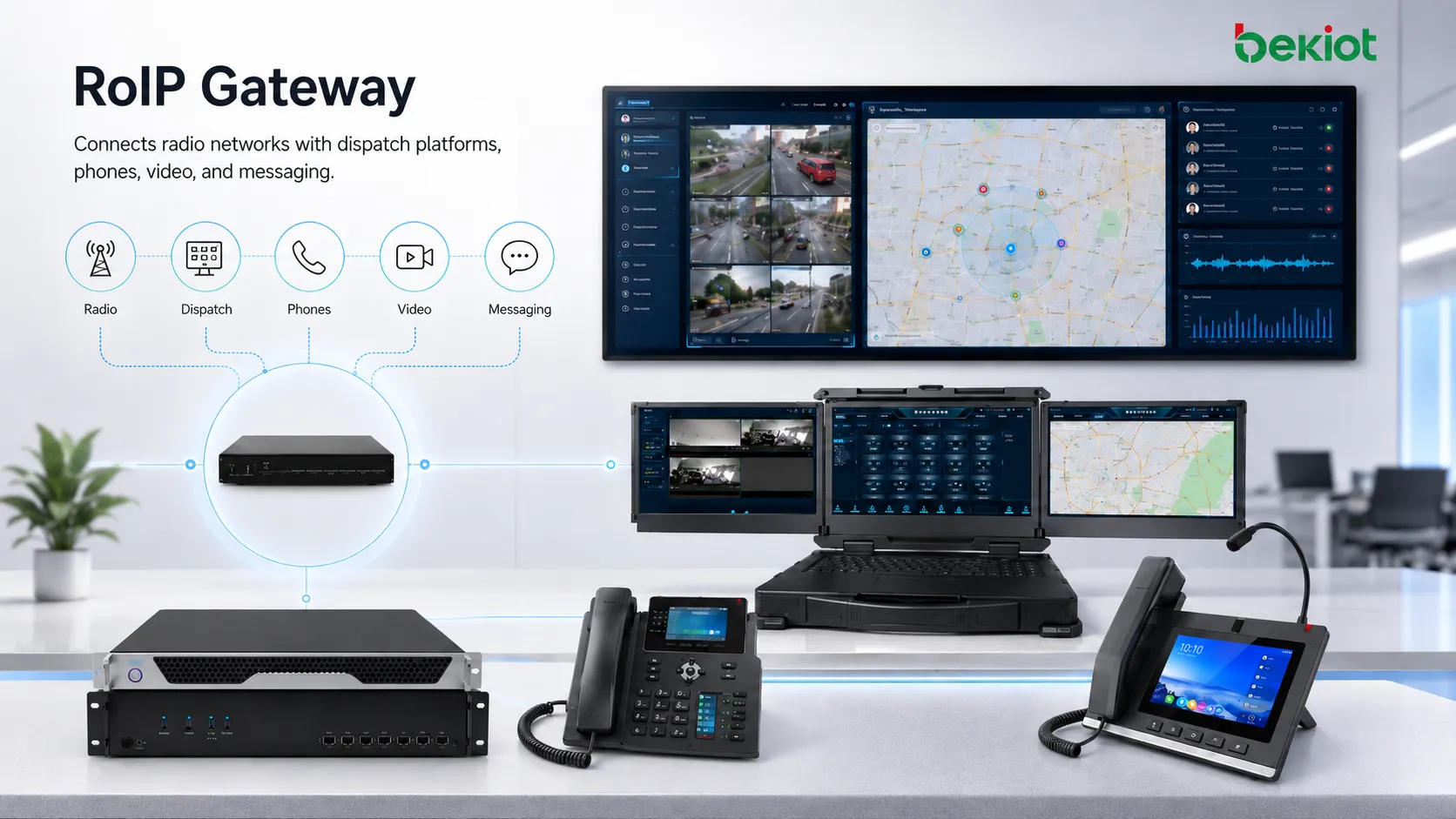
Modern command centers rarely depend on one communication tool. A typical dispatch command system may need to connect fixed telephones, mobile phones, IP phones, video terminals, messaging systems, GPS or GIS location services, radio networks, meeting rooms and satellite links. Each resource serves a different role, but the command team needs them to work together during a mission.
For example, a field rescue team may use portable radios, the rear command center may use SIP phones, department leaders may join through mobile phones, and a temporary meeting room may use conference audio. If these systems are not interconnected, the dispatcher must manually repeat instructions across different channels. This reduces efficiency and increases the possibility of information loss.
A RoIP Gateway provides an important bridge between radio communication and IP-based dispatch platforms. It enables radio voice to be accessed by the core switching layer of the command system, making radio users available to IP phones, dispatch consoles, conference systems and other connected communication resources.
Where It Fits in the Overall Architecture
A dispatch command system can usually be divided into several major layers: core switching, data storage, device access, link transmission and service presentation. The core switching layer handles call control and communication routing. The data layer may store recordings, logs, user data and event records. The access layer connects different terminals and networks. The transmission layer carries voice, video and data. The presentation layer provides the dispatcher interface, map view, contact list, group control and operational applications.
Because different communication tools use different interfaces and protocols, gateway devices are required at the access layer. A RoIP Gateway is responsible for connecting radio systems to the IP dispatch environment. It converts radio audio, PTT control and related signaling into a format that the dispatch platform can process, commonly through SIP-based integration.
Once connected, the radio network is no longer a separate island. The dispatcher can include radio users in group calls, conferences, emergency calls and cross-system communication workflows. This changes the role of radio communication from an isolated field tool into an integrated part of the command platform.
| System Layer | Main Function | Role of RoIP Gateway |
|---|---|---|
| Device Access | Connects field terminals, phones, radios and audio systems | Brings radio networks into the IP dispatch system |
| Core Switching | Handles call routing, conferencing and communication control | Receives SIP-based radio channels for unified dispatch |
| Link Transmission | Carries voice, data and signaling between systems | Allows radio voice to travel through IP networks |
| Service Presentation | Displays contacts, groups, channels and command workflows | Makes radio users visible and operable from the dispatch interface |
Breaking the Isolation of Traditional Radio Networks
Traditional radio systems are usually designed around closed group communication. Users on the same channel or within the same radio network can communicate efficiently, but communication becomes difficult when users are outside that channel, outside that network or using a different terminal type.
This creates a limitation in dispatch command scenarios. A new user may need a compatible radio to join the group. A command center operator may not be able to speak directly with radio users from an IP phone. A meeting room may not be able to listen to live radio communication. A mobile phone user may have no direct way to join the radio group.
With a RoIP Gateway, the existing radio system can be connected to the unified command platform. Radio users can communicate with mobile users, video phone users, SIP phone users, dispatch console operators and meeting room participants. The command system no longer depends on every user carrying the same radio terminal.
Solving Multi-Department Interoperability
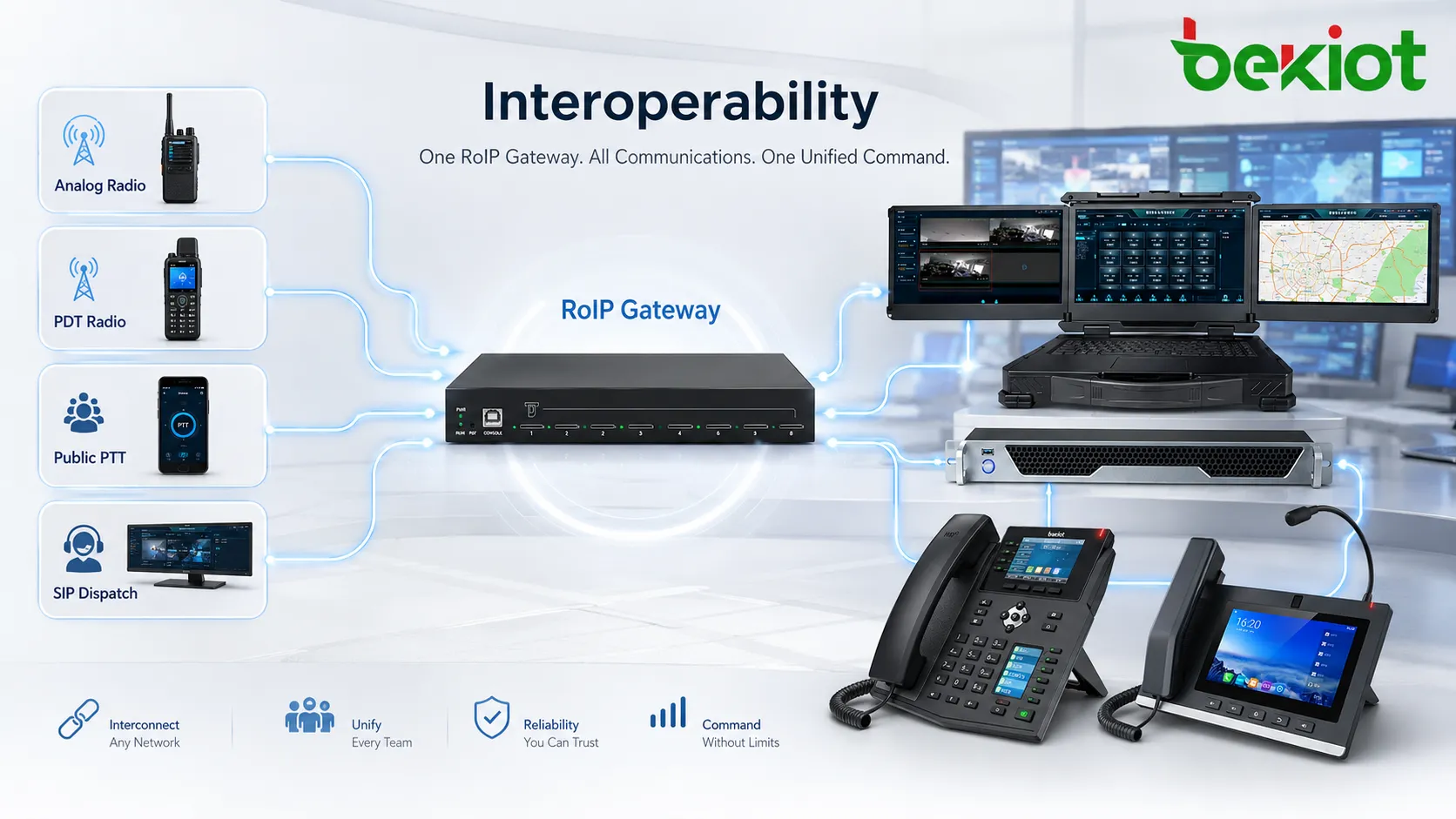
Multi-agency operations often face a serious communication problem: different departments use different radio standards, frequency bands and communication platforms. One team may use 400 MHz analog radios, another may use a PDT digital trunked system, while another may rely on public-network PTT. These differences make unified command more difficult during joint operations.
A RoIP Gateway can connect different radio systems to the dispatch platform and allow them to communicate through controlled bridging, group calling or conference dispatch. Instead of forcing every department to replace its existing terminals, the gateway creates a practical interconnection layer between old and new systems.
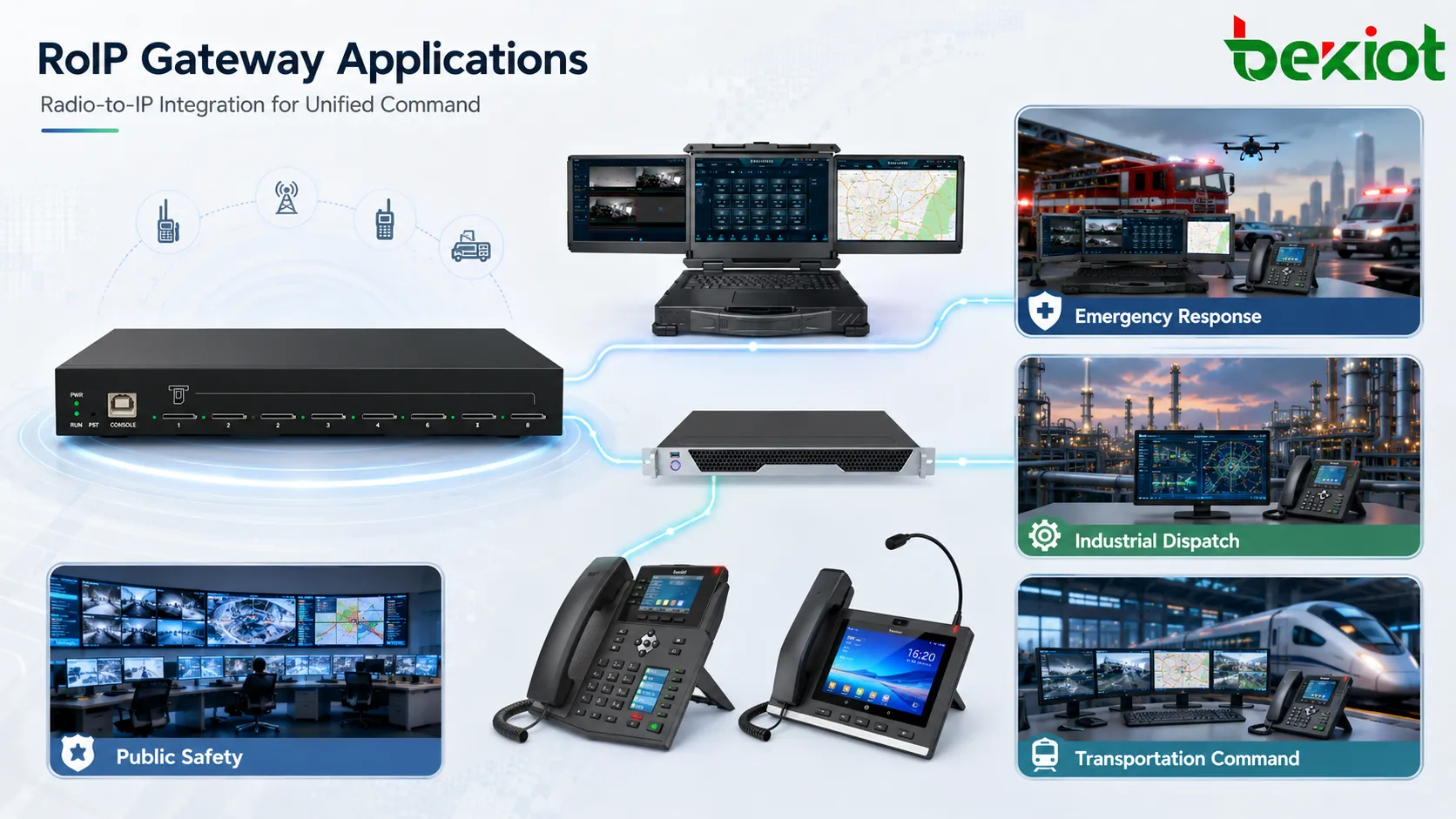
This is especially valuable in emergency response, public safety coordination, power grid repair, chemical plant emergency command and transportation incident handling. These environments often involve multiple teams, and each team may already have its own communication equipment. The RoIP Gateway helps build a shared communication path without destroying the existing communication structure.
From Radio Voice to SIP-Based Dispatch
The core technical value of a RoIP Gateway is protocol and media conversion. Radio systems are built around radio channels, PTT control and group communication behavior. IP dispatch platforms commonly use SIP, RTP, IP networking and software-based call control. The gateway converts radio audio and access control into a format that can be used by the dispatch platform.
After conversion, the dispatch system can treat the radio channel as a manageable communication resource. The dispatcher may call a radio channel from a SIP console, bridge a radio group into a dispatch conference, route a phone call to radio users, or monitor radio communication through the command platform.
This approach also protects existing radio investment. Many organizations have already deployed radio networks across vehicles, plants, stations, substations, warehouses or field teams. Replacing all radio terminals is often costly and unrealistic. RoIP integration allows these resources to remain in service while gaining access to modern IP dispatch capabilities.
Why Group Communication Still Matters
Radio systems remain important because they are designed for fast group communication. One press can reach many users. This “one call, many listeners” model is extremely efficient for emergency command, field service, patrol coordination and operational dispatch.
Unlike ordinary phone calls, radio group communication does not require dialing one person at a time. In urgent conditions, a dispatcher can deliver instructions to a whole team immediately. This is why radio remains widely used in firefighting, security, utilities, industrial plants, transportation and emergency management.
By integrating radio systems into the dispatch platform through a RoIP Gateway, organizations can keep the efficiency of group communication while gaining IP-based control, recording, cross-network bridging, centralized management and broader terminal access.
Connecting Radios with Phones, Video and Meeting Rooms
Dispatch command work is not limited to radio voice. Commanders may need to speak with external telephone users, view video feeds, send messages, track locations and hold multi-party discussions. When radio communication is integrated into the same platform, field voice can become part of a larger operational picture.
For example, a dispatcher can receive a report from a radio user, contact an external expert through a phone line, open a video call with a site operator and bring both sides into a coordinated discussion. The radio channel can also be routed into a command meeting room, allowing decision-makers to hear real-time field communication.
This level of integration improves situational awareness. Instead of treating radio, phone, video and messaging as separate systems, the command center can manage them as connected tools for one mission.
Related Product: becke RoIP Gateway
The becke RoIP Gateway can be introduced as a radio-to-IP access device for dispatch command, emergency communication, industrial coordination and multi-network voice interconnection. It helps connect existing radio resources with SIP-based platforms, dispatch consoles, IP phones and integrated command systems.
Practical Benefits for Command Operations
Unified access to different communication resources
A RoIP Gateway allows radio channels to become part of the unified dispatch environment. The command center can manage radio users together with phones, SIP terminals, meeting audio and other communication resources. This reduces the need to operate several isolated systems at the same time.
Better response speed in urgent situations
Emergency operations require fast communication. When radio users, phone users and command staff can communicate through one platform, instructions can be delivered more quickly. The dispatcher does not need to repeat the same message manually across multiple devices.
Lower integration cost compared with full replacement
Many organizations already have radio equipment in daily use. A RoIP Gateway makes it possible to reuse existing radio networks and connect them to modern command platforms. This is often more economical than replacing all field terminals, especially in large industrial or public safety projects.
Improved collaboration between departments
Different teams may use analog radios, PDT systems, public-network PTT or IP-based terminals. By connecting these resources into one platform, the command center can coordinate cross-department communication more effectively.
Stronger support for emergency environments
Radio systems are suitable for harsh environments and fast group calling. IP dispatch platforms provide centralized control and flexible routing. Combining both through a RoIP Gateway creates a more resilient communication structure for emergency and field operations.
Deployment Scenarios
Public safety and emergency response
Firefighting, rescue, police support and emergency management teams often need to coordinate multiple field groups. A RoIP Gateway allows radio users to connect with command center operators, mobile staff, telephone users and other response teams through a unified dispatch platform.
Power, energy and utility operations
Power plants, substations, oil and gas facilities, water systems and utility repair teams require reliable field communication. RoIP integration helps connect existing radio users with IP dispatch centers, maintenance teams and emergency command workflows.
Chemical and industrial sites
Chemical plants, manufacturing parks, mining areas and large industrial zones often use radios for patrol, production coordination and emergency response. A RoIP Gateway helps bring these radio resources into a centralized command system for safer and more efficient operation.
Transportation and infrastructure management
Railway, metro, highway, airport, port and tunnel operations require coordinated communication across control rooms and field teams. RoIP access allows radio groups to communicate with IP phones, control desks and emergency dispatch systems.
Temporary command and mobile dispatch
During large events, temporary rescue missions or field operations, teams may need to connect different radio systems quickly. A RoIP Gateway can provide a flexible access point for building temporary cross-network voice communication.
Key Planning Considerations
Confirm radio system type and interface
Before deployment, the project team should identify the radio system type, frequency band, channel plan, PTT control method and available interface. Analog radio, PDT, DMR, TETRA, public-network PTT and other systems may require different integration methods.
Plan dispatch groups and communication workflows
The gateway should not only connect equipment physically. It must match real dispatch workflows. The system should define which radio channels need to communicate with which SIP extensions, dispatch groups, phone lines or conference resources.
Control audio quality and delay
Radio audio, SIP audio and phone audio may have different volume levels, codec behavior and delay characteristics. Proper gain adjustment, echo control and network quality planning are important for clear communication.
Design security and permission rules
Not every user should have access to every radio channel. The dispatch system should define permissions, call groups, emergency priority, monitoring rights and recording policies according to operational requirements.
Prepare fallback communication paths
Emergency communication should include backup planning. Even when radio networks are integrated into the IP platform, organizations should keep fallback methods for power failure, network interruption or platform maintenance.
How RoIP Gateway Strengthens the Whole Command System
The value of a RoIP Gateway is not limited to radio access. It improves the overall dispatch command system by connecting previously isolated communication resources into one operational environment. Radio users can join IP-based command workflows, and dispatchers can manage field voice communication from a clearer interface.
It also supports long-term system evolution. Organizations can keep existing radio networks while gradually adding SIP phones, video dispatch, GIS location, recording, mobile applications, emergency conference and unified command functions. This makes the communication system more scalable and easier to modernize.
For industries that depend on fast group communication and multi-department coordination, the RoIP Gateway is not just an accessory. It is a key access layer that determines whether radio systems can truly participate in modern command communication.
FAQ
Can a RoIP Gateway connect old analog radios to an IP dispatch platform?
Yes. In many projects, analog radio channels can be connected through suitable audio and control interfaces, then converted for use by the IP dispatch platform.
Does RoIP integration require replacing all existing radios?
No. One of the main advantages is that existing radio resources can often be retained. The gateway helps connect them to the IP command environment instead of forcing a full terminal replacement.
Can different radio systems communicate with each other after integration?
Yes, if the dispatch platform and gateway configuration support the required bridging workflow. Analog radio, digital radio and public-network PTT resources can be connected through controlled dispatch groups or conferences.
Is SIP required for this type of integration?
SIP is commonly used because many dispatch platforms, IP PBX systems and SIP phones support it. A RoIP Gateway usually converts radio communication into SIP/IP resources so they can be managed by the command system.
What industries benefit most from RoIP Gateway deployment?
Public safety, emergency response, utilities, energy, chemical plants, transportation, industrial parks, mining, ports and large facility management can all benefit from radio-to-IP integration.







