


Emergency rescue teams often face the same problem at the most critical moment: how to build a reliable field command system when power, roads, public networks, and normal communication channels may already be disrupted. A portable audio and video command case provides a practical solution by bringing voice dispatch, video access, multi-network connectivity, and front-line coordination into one mobile command platform.
Unlike a fixed command center, an emergency site is temporary, complex, and highly dynamic. Fire rescue teams, public safety units, medical support teams, transportation departments, forest protection teams, and industrial safety personnel may all arrive with different communication devices and operational workflows. Without a unified field communication hub, information becomes fragmented and command decisions are delayed.
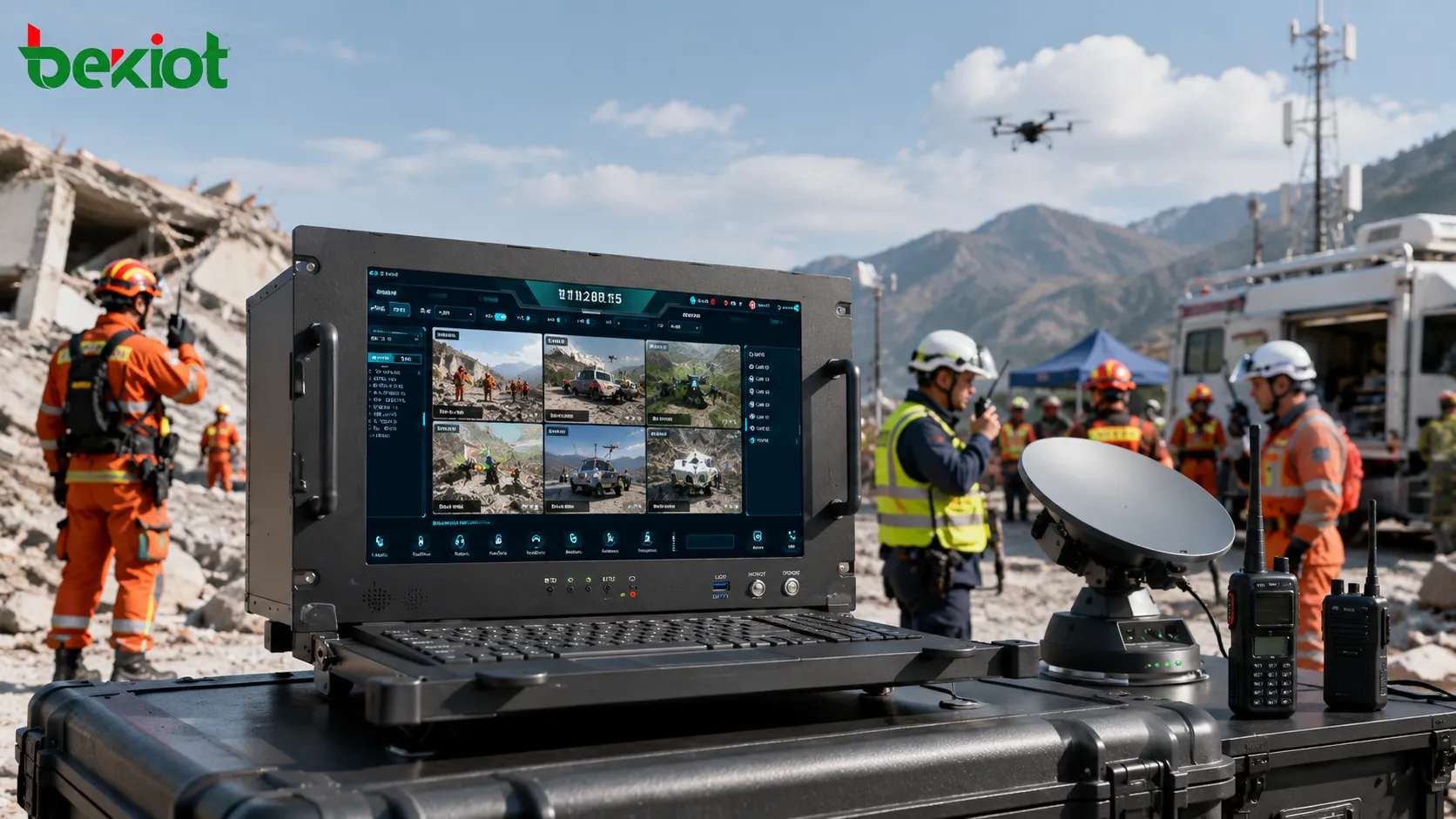
Field Coordination Challenges During Emergency Response
Emergency scenes are very different from office-based or control-room-based communication environments. The front line may involve multiple departments working together, while each team may use its own radios, mobile phones, satellite communication devices, video terminals, or command applications. When these systems cannot communicate with each other, the command process becomes slow and inefficient.
Another common challenge is infrastructure failure. Public mobile networks may be congested or unavailable, electric power may be interrupted, transportation routes may be blocked, and the rescue area may lack fixed communication facilities. In such conditions, the ability to quickly establish an independent field command node becomes essential.
An effective on-site communication and command system should solve three problems at the same time: connecting field personnel, transmitting live visual information, and keeping the rear command center synchronized with the front-line situation.
Solution Positioning: A Mobile Command Node for the Front Line
A portable audio and video command case is designed as a compact field command node. It integrates voice communication, video access, dispatch control, network transmission, and local operation into a transportable rugged case. Instead of relying only on a fixed command room, the rescue organization can move part of the command capability directly to the incident site.
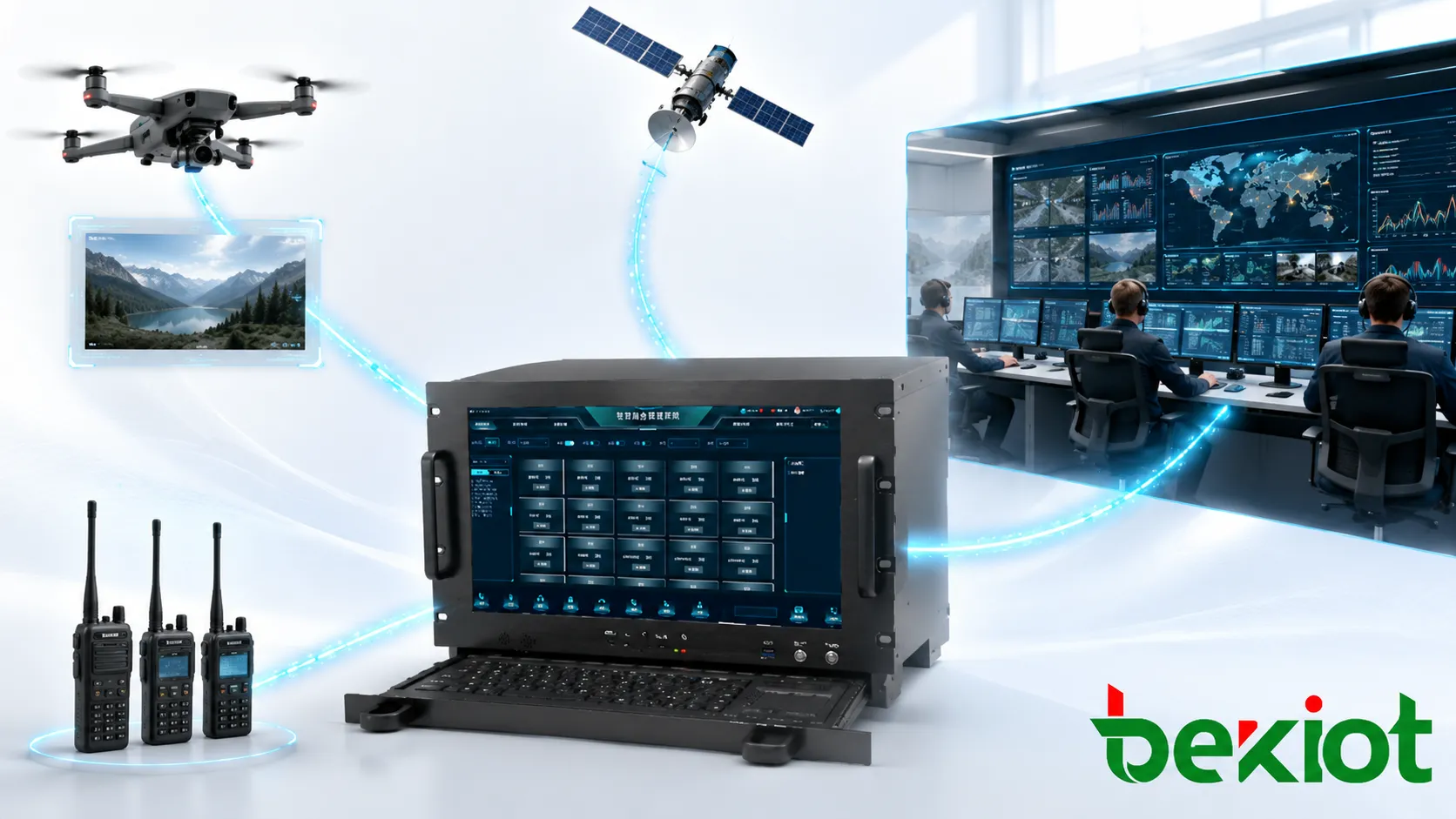
The system can connect different types of field communication equipment, including two-way radios, satellite phones, public network mobile phones, and other voice terminals. It can also access multiple video sources such as UAV video streams, portable surveillance cameras, mobile video collection terminals, and video conferencing systems.
For projects that require integration with SIP dispatch, industrial communication, radio interconnection, emergency broadcasting, and command center platforms, Becke Telcom can be considered as a solution partner for system-level planning and equipment adaptation.
System Architecture for Voice, Video, and Backhaul
The core value of the command case is not only portability, but also integration. It acts as a bridge between front-line communication devices and the rear command center. On the voice side, field radios and phones can be connected to the dispatch system, allowing the commander to coordinate multiple teams from one interface.
On the video side, live feeds from UAVs, mobile cameras, body-worn or vehicle-mounted video terminals, and video meeting systems can be accessed, viewed, and forwarded. The command case can support video encoding conversion, transcoding, and bitrate adjustment, helping video streams adapt to bandwidth-limited transmission environments.
For backhaul, the system may use satellite links, public network links, private wireless networks, or other available transmission channels. When connected to the rear command center, the portable case becomes a forward command extension, enabling unified coordination between the incident site and the central control room.
Key Functional Modules
Unified Voice Dispatch
The command case can integrate field radio devices, satellite phones, mobile phones, and other voice communication terminals. This allows the on-site commander to issue instructions through one dispatch interface instead of switching between multiple independent systems.
In multi-department rescue operations, unified voice dispatch helps reduce repeated messages, unclear command chains, and missed instructions. Orders can be delivered quickly to different field teams through the connected communication channels.
Live Video Access and Viewing
Video is one of the most important sources of situational awareness during emergency response. The command case can receive video from UAVs, portable surveillance devices, mobile video terminals, and video conferencing platforms, allowing the field commander to understand the scene more accurately.
Local video viewing and command operation help the field commander make faster decisions without depending entirely on the rear command room for visual confirmation.
Video Processing for Limited Bandwidth
Emergency sites often rely on satellite links or unstable public networks. These links may not always provide enough bandwidth for continuous high-quality video transmission. To address this, the command case can process video streams through encoding conversion, compression, and bitrate adjustment.
This function is especially useful when UAV video, mobile camera feeds, or video meeting streams need to be sent back to a rear command center over limited network conditions. By reducing bandwidth pressure, the system improves the reliability of field-to-center video transmission.
Rugged and Mobile Field Deployment
The command case is designed for mobile field use. It can be carried to temporary rescue sites, outdoor command posts, remote accident areas, and locations where fixed communication infrastructure is not available.
A rugged case structure improves field usability in environments where dust, moisture, rain, vibration, and rough handling may occur during emergency operations.
Typical Field Deployment Workflow
After the portable command case arrives at the scene, field radio devices can be connected to the system through dedicated interfaces, while satellite or public network equipment can be used to establish communication with the rear command center.
At the same time, UAV video can be pushed into the command case through the UAV control system. The field commander can view the live aerial image locally, while the command case processes the video stream before sending it back to the rear command center through the available backhaul link.
The rear command center can then invite experts into a video conference, review the field commander’s report, analyze the UAV video, and issue action instructions. These instructions are sent back to the field and delivered to rescue personnel through the radios connected to the command case.
A portable command case helps close the loop between field observation, expert decision-making, and front-line execution.
Recommended Deployment Configuration
| Deployment Element | Recommended Role | Operational Value |
|---|---|---|
| Portable command case | Field voice and video command node | Unifies dispatch, video access, and local operation |
| Two-way radios | Front-line team communication | Delivers instructions quickly to rescue personnel |
| UAV video source | Aerial situational awareness | Provides real-time overview of the incident area |
| Satellite or public network backhaul | Remote command connection | Maintains communication when fixed networks are unavailable |
| Rear command center | Expert coordination and decision support | Supports remote assessment and unified command |
Operational Benefits for Rescue Organizations
Faster Command System Setup
The system can be deployed rapidly at the incident site, reducing the time required to establish a working command environment. This is valuable for rescue operations where early coordination directly affects response efficiency.
Instead of waiting for fixed infrastructure or large command vehicles, teams can create a temporary command node near the front line and start dispatching personnel, receiving video, and communicating with the rear center as soon as the field system is connected.
Better Situational Awareness
By combining UAV video, mobile video terminals, field cameras, video conferencing, and voice reports, the command case helps decision-makers understand the scene more accurately. This reduces dependence on verbal descriptions alone and supports faster, evidence-based decisions.
When video is transmitted back to the command center, remote experts can participate in the response process without being physically present at the incident site.
More Reliable Field Communication
Because the system can support satellite links, public network links, and other available transmission paths, it provides more flexible backhaul options. This is important in natural disasters, forest fires, road accidents, industrial incidents, and remote area operations where normal public networks may not be dependable.
The integration of different communication devices also helps reduce the problem of isolated teams. Radios, satellite phones, mobile phones, and video terminals can work as part of a coordinated field communication system.
Application Scenarios
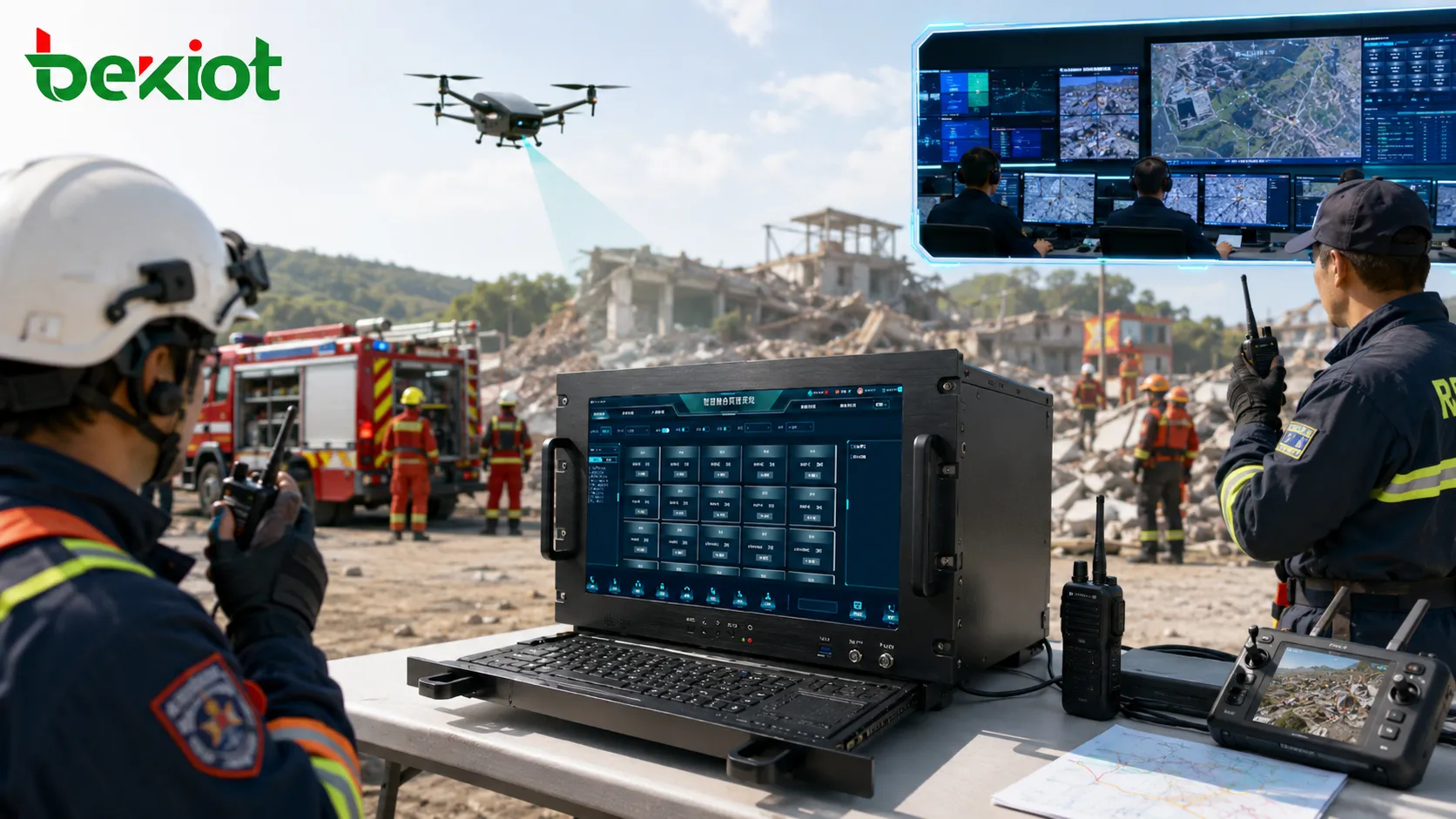
A portable audio and video command case can be used in many emergency and public safety environments. Typical applications include fire rescue, disaster response, forest fire prevention, public security operations, emergency drills, transportation emergencies, petroleum and petrochemical safety, utility repair, and large-scale event security.
In industrial scenarios, the system can support emergency communication during refinery incidents, pipeline accidents, chemical leakage response, power facility recovery, and large plant safety operations. In public safety scenarios, it can support temporary command posts, mobile patrol operations, disaster relief coordination, and cross-agency emergency response.
Planning Considerations Before Deployment
Before deploying this type of solution, organizations should confirm the communication devices used by each response team, the required radio interfaces, available satellite or public network resources, video source formats, command center platform compatibility, and power supply strategy.
Bandwidth planning is especially important. UAV video and mobile video feeds may require transcoding or bitrate control before being transmitted over satellite or unstable public network links. If the system needs to integrate with an existing command platform, SIP system, video gateway, dispatch server, or recording system, interface testing should be completed before formal deployment.
For a more complete emergency communication architecture, the command case can be combined with dispatch servers, SIP intercoms, industrial telephones, radio gateways, emergency broadcasting systems, and video surveillance platforms. This creates a stronger response chain from incident detection to command decision and field execution.
FAQ
Can a portable command case replace a full command vehicle?
It depends on the project scale. A command case is better suited for fast arrival, temporary field command, small-to-medium emergency sites, and forward command extension. A command vehicle usually provides more workspace, larger screens, more power, and more equipment capacity. In many projects, both can work together.
What should be checked before using satellite transmission?
Teams should check satellite terminal alignment, available bandwidth, network latency, power supply, antenna position, and video bitrate settings. It is also useful to prepare lower-bitrate video profiles in advance so that live video can still be transmitted when bandwidth is limited.
How should field command records be managed?
Important voice calls, video streams, dispatch actions, and event logs should be stored according to the organization’s evidence management and data security policies. For public safety and industrial emergency response, proper recording can support incident review, training, accountability, and future process improvement.
What training is needed for field operators?
Operators should know how to power on the system, connect radios, access video sources, establish backhaul links, adjust video bitrate, join video meetings, and communicate with the rear command center. Regular drills are recommended so that personnel can complete deployment quickly under pressure.







