5G smart mine construction is not a single device upgrade. It is a large-scale system integration project that connects private 5G networks, industrial IoT, unmanned operation, emergency command, dispatch communication, video monitoring, mobile terminals, and intelligent business applications. Among these capabilities, video is one of the most valuable because mining operations require visible, real-time, and mobile information from underground areas, surface facilities, transport roads, control rooms, inspection routes, and emergency scenes.
With high bandwidth and low latency, a 5G private network can turn video from a fixed monitoring resource into a mobile, interactive, and dispatchable capability. Cameras, smart terminals, dispatch consoles, inspection apps, video gateways, and existing monitoring platforms can be connected into one communication workflow, helping mine operators improve safety supervision, emergency response, remote collaboration, and daily production management.
Why Video Becomes a Core Capability in Digital Mine Projects
Smart mine development includes many technical directions, such as industrial IoT, autonomous driving, remote operation, production monitoring, emergency command, personnel positioning, and communication transmission. These applications all require reliable data channels, but video has a special role because it allows decision-makers to see the field situation directly.
In traditional mine communication, video monitoring is often fixed inside a surveillance platform. Operators may need to open a separate video system, search camera resources manually, and then report what they see through another communication tool. This fragmented process is not efficient enough for emergency handling, safety inspection, production dispatch, or cross-department coordination.
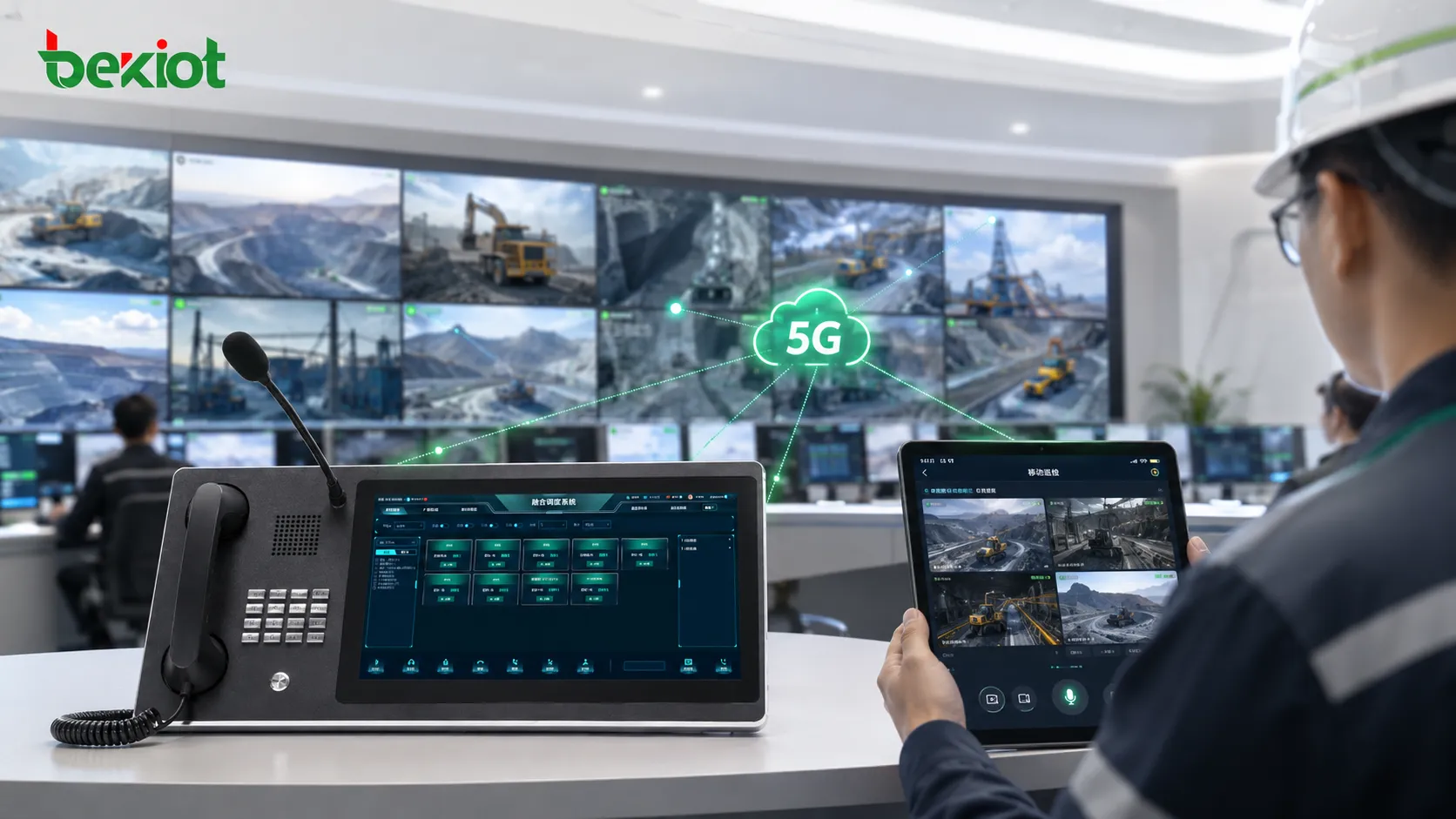
By using 5G private network resources, video can become more mobile and more deeply integrated with mine communication. Field personnel can use smart terminals for video calls. Dispatchers can call up live camera feeds from the console. Monitoring video can be returned through 5G links. Inspection applications can receive video resources through API integration. This makes video no longer only a monitoring function, but also an active part of command and business operations.
Private Network Foundation for Real-Time Visual Communication
A 5G private network provides the transmission foundation for many smart mine applications. Its high bandwidth supports video stream transmission, while its low latency improves the experience of video calling, real-time monitoring, mobile inspection, and remote collaboration. Compared with isolated wired monitoring systems, a private 5G environment can better support mobile terminals, temporary sites, moving vehicles, and distributed work areas.
For mining environments, this is especially important. Production areas may be wide, complex, and constantly changing. Some locations may be difficult to reach with fixed network construction. Mobile equipment, inspection teams, rescue teams, and temporary command points may need video communication at different times and places. A 5G-based design gives the video system more flexibility.
However, network coverage alone is not enough. To make 5G resources valuable, the project must connect practical business systems. Video calls, video return, monitoring access, live streaming, video conferencing, dispatch control, inspection apps, and intelligent analysis should be planned together so that the private network can support real operational needs.
Point-to-Point Video Calls for Field Collaboration
One important video capability in a smart mine is point-to-point video calling. Through the 5G private network and a converged communication system, users can make video calls between mobile terminals, fixed desktop video terminals, control-room users, and field personnel. This supports direct visual communication when voice alone is not enough.
For example, a field worker can use a smart terminal to show equipment status to the control room. A maintenance engineer can guide troubleshooting through a live video call. A safety supervisor can visually confirm whether an operation area is clear before issuing instructions. These interactions are more accurate than voice descriptions and can reduce misunderstanding during urgent work.
Video calling can be implemented through mobile applications, compatible voice and video services, or private-network terminal access. The key value is not only making a call with video. The real value is allowing video communication to become part of the mine’s daily dispatch and emergency collaboration process.
Related System Solution: BK-RCS Unified Communications System
Video Return, Consultation, and Live Streaming
After video calling is integrated, the next step is to support more advanced visual coordination. A command and dispatch system can use 5G smart terminals to support video return, video consultation, and live streaming. These capabilities are highly useful for mine safety management, emergency command, production inspection, and remote decision-making.
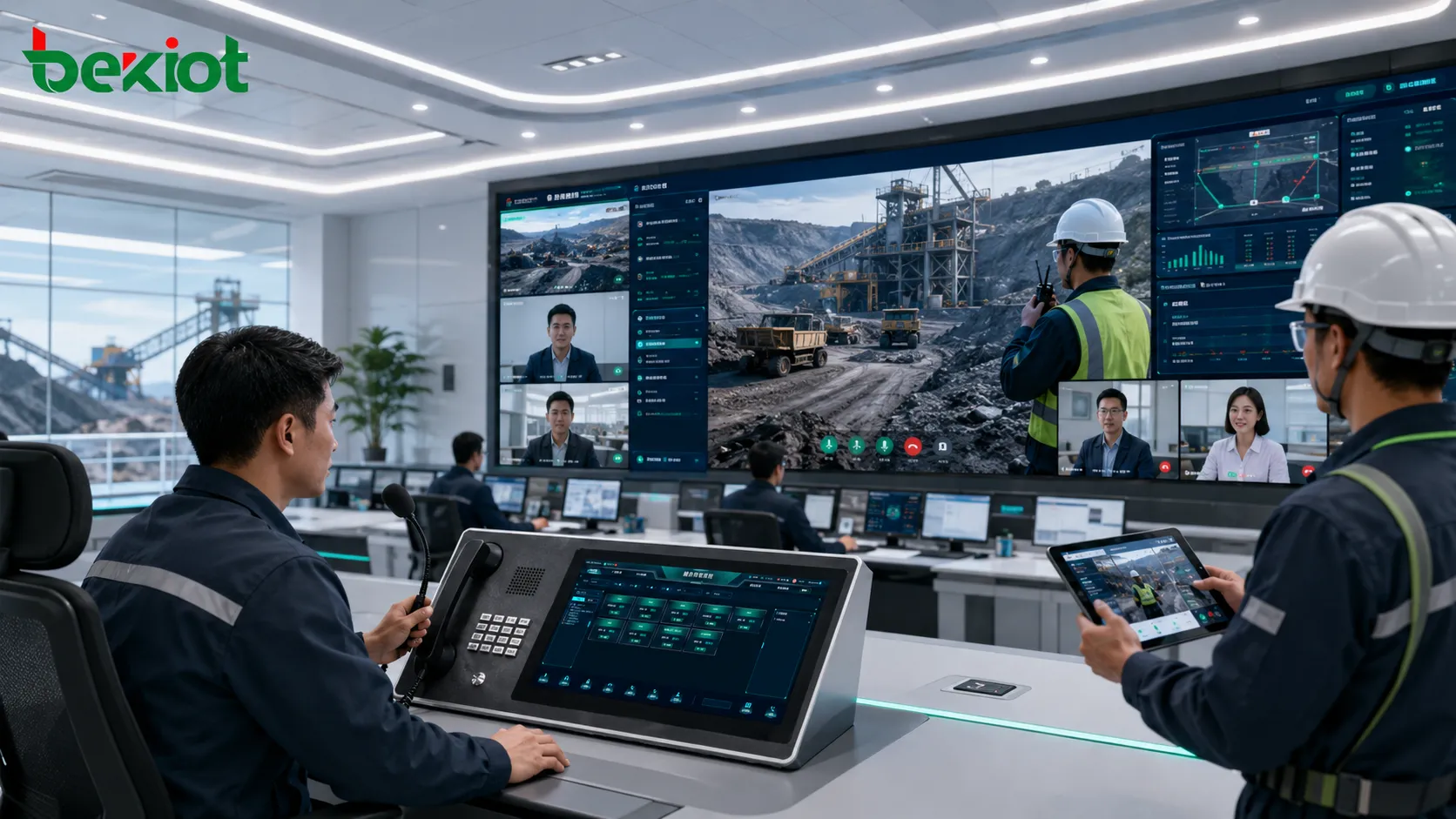
Video return allows field images to be sent back to the control center in real time. When an incident occurs, the dispatcher does not need to rely only on phone reports. The platform can receive live images from a smart terminal, inspection device, mobile camera, vehicle-mounted terminal, or other field video source.
Video consultation helps multiple users discuss the same field situation. A control-room dispatcher, safety manager, technical expert, and field worker can participate in a visual coordination process. Live streaming can distribute field images to a command center, emergency meeting, supervision platform, or remote management team. This improves situational awareness and shortens the time from event discovery to decision-making.
Connecting Existing Surveillance Resources
Many mines already have video monitoring systems, including fixed cameras, platform management software, network video recorders, and monitoring rooms. These resources should not be isolated from the 5G dispatch communication system. A practical smart mine solution should connect existing surveillance with the new private-network communication environment.
By opening video monitoring access, existing surveillance images can be transmitted through 5G where necessary and integrated with the command and dispatch platform. Dispatchers can view cameras from the same interface used for communication tasks. 5G smart terminals can also access monitoring video when field personnel need visual confirmation from another location.
This integration helps avoid repeated construction. Instead of replacing all cameras or building a separate video system for every new application, the mine can reuse current surveillance resources and make them available to dispatch consoles, mobile terminals, inspection systems, and intelligent applications.
Gateway Layer for Protocol and Stream Integration
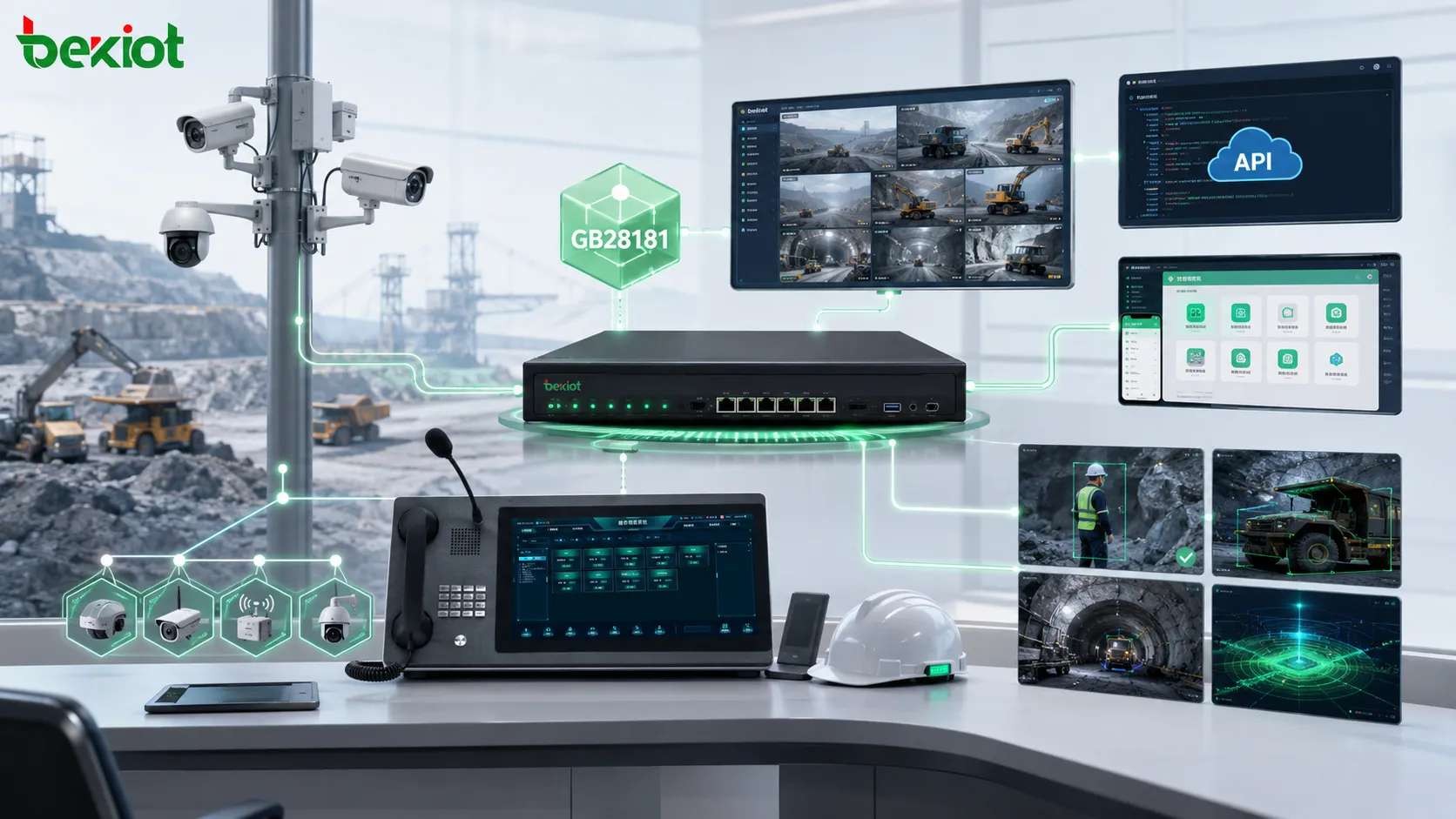
A video access gateway is often required to connect mine surveillance systems with 5G converged communication platforms. In many projects, existing monitoring systems use video protocols such as GB28181 or other stream access methods. Communication platforms, dispatch systems, and mobile applications may require different interfaces or media formats.
The gateway acts as a conversion and access layer. It can connect to the existing monitoring system through GB28181, collect or output richer video streams, and then integrate those resources with the 5G smart mine communication platform. After integration, a dispatch console can call up monitoring video, while 5G intelligent terminals can view selected camera feeds according to permission and business requirements.
This gateway-based approach is suitable for system integration because it reduces the need to modify every camera or rebuild the monitoring system. It creates a bridge between the mine’s existing video resources and new 5G communication applications.
Making Video Useful for Inspection and Intelligent Applications
Video integration should not stop at “viewing camera feeds.” In a smart mine, video should support practical business processes such as safety inspection, equipment supervision, remote patrol, incident verification, intelligent analysis, and emergency response. This requires video resources to be available not only on a dispatch console, but also inside business applications.
Through API output capabilities, monitoring video can be connected with smart mine applications. For example, an inspection app may call nearby camera feeds according to the inspection route. A safety management platform may link video with alarm events. An intelligent analysis system may use video streams for behavior recognition, equipment status detection, zone intrusion detection, or abnormal event verification.
This creates a deeper level of integration. The video system is no longer only a passive monitoring tool. It becomes part of the mine’s data-driven operation system, supporting smarter inspection, faster response, and better evidence collection.
Unified Access for Control Rooms and Mobile Teams
A strong 5G smart mine video solution should serve both control-room operators and mobile field users. The control center needs a stable dispatch interface, camera resource access, event linkage, video consultation, and live video display. Field personnel need simple terminal operation, mobile video calling, video return, and access to relevant monitoring images.
When these two sides are connected, the mine gains a closed communication loop. The field sends real-time visual information to the command center. The command center analyzes the situation and issues instructions. Field teams receive guidance, confirm execution, and continue feeding back images or status. This cycle improves the speed and accuracy of decision-making.
Without unified access, video resources may remain scattered across different systems. With unified access, video becomes part of daily dispatch, emergency handling, remote inspection, and intelligent management.
Deployment Value for Mine Safety and Operations
Stronger Situational Awareness
Integrated video allows managers and dispatchers to understand field conditions more directly. Instead of waiting for verbal reports, they can view live images from cameras, mobile terminals, or inspection devices.
This supports faster judgment during safety incidents, equipment failures, emergency drills, production coordination, and abnormal event handling.
Better Use of Existing Infrastructure
Many mines have already invested in surveillance systems. By using video access gateways and platform integration, existing video resources can be reused in 5G private-network communication and dispatch applications.
This protects previous investment while expanding the value of monitoring systems into mobile, intelligent, and command-oriented use cases.
More Practical 5G Application Scenarios
5G private networks need real business applications to show their value. Video convergence provides visible and practical scenarios, including mobile video calls, video return, monitoring access, live streaming, remote inspection, and intelligent analysis.
These applications help move 5G smart mine construction from network deployment to operational improvement.
Recommended Implementation Path
Assess Existing Video Resources
The project team should first identify existing cameras, monitoring platforms, recording systems, video protocols, network conditions, and available stream access methods. This determines how video resources can be connected to the new system.
Special attention should be given to GB28181 access, stream output capability, camera grouping, platform permissions, and whether video resources need to be viewed by dispatch consoles, mobile terminals, or third-party applications.
Build the Converged Communication Layer
The communication layer should support voice, video, dispatch, terminal access, and platform interconnection. It should allow control-room users and field users to communicate through one coordinated system rather than relying on separate tools.
Video call, video return, video consultation, and live streaming functions should be configured according to actual mining workflows, not only according to technical capability.
Connect Business Applications Through Interfaces
After video resources are unified, they can be opened to inspection apps, intelligent analysis systems, emergency platforms, and management applications through controlled interfaces. This helps video become part of real business processes.
Interface planning should include authentication, permission control, stream selection, bandwidth planning, data security, and event linkage requirements.
FAQ
Does every mine need to rebuild its camera system for 5G video integration?
No. In many cases, existing cameras and monitoring platforms can be reused. A video access gateway or platform interface can connect current video resources with the 5G communication and dispatch system.
Can mobile workers view surveillance video on smart terminals?
Yes, if the system is configured with proper permissions, network access, and video stream adaptation. Mobile users can view selected camera feeds based on job role, area, or emergency task requirements.
What should be tested before deployment?
Important tests include camera access stability, stream opening speed, video clarity, terminal compatibility, GB28181 connection, mobile network performance, dispatch console viewing, API output, and concurrent video access under real operating conditions.
How does video integration support emergency response?
It allows command centers to receive live images, verify incident locations, guide field teams, coordinate experts, and record the handling process. This reduces dependence on verbal reporting and improves decision accuracy.
Is API access necessary for smart mine video applications?
API access is not required for simple viewing, but it becomes important when video must be linked with inspection apps, intelligent analysis, alarm systems, event workflows, or digital mine management platforms.