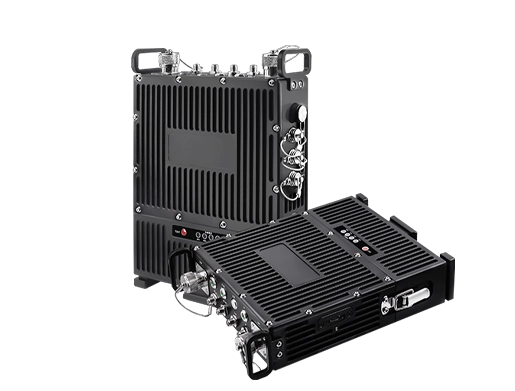
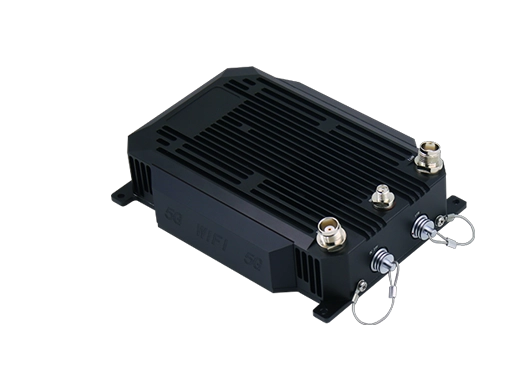
Broadband ad hoc networking is a wireless communication solution designed to create temporary broadband coverage without relying on fixed network infrastructure. It uses self-organizing networking technology to form flexible data links between vehicles, field teams, command posts, drones, portable terminals, and remote access equipment.
For upper-layer applications, broadband ad hoc networking should not be understood as a complicated standalone system. Its essential role is to provide a data transmission channel, similar in purpose to Ethernet cables, fiber links, WiFi, 4G, or 5G. The difference is that it can be quickly deployed in field environments where fixed network access is unavailable, damaged, delayed, or difficult to extend.
Why Temporary Broadband Links Matter
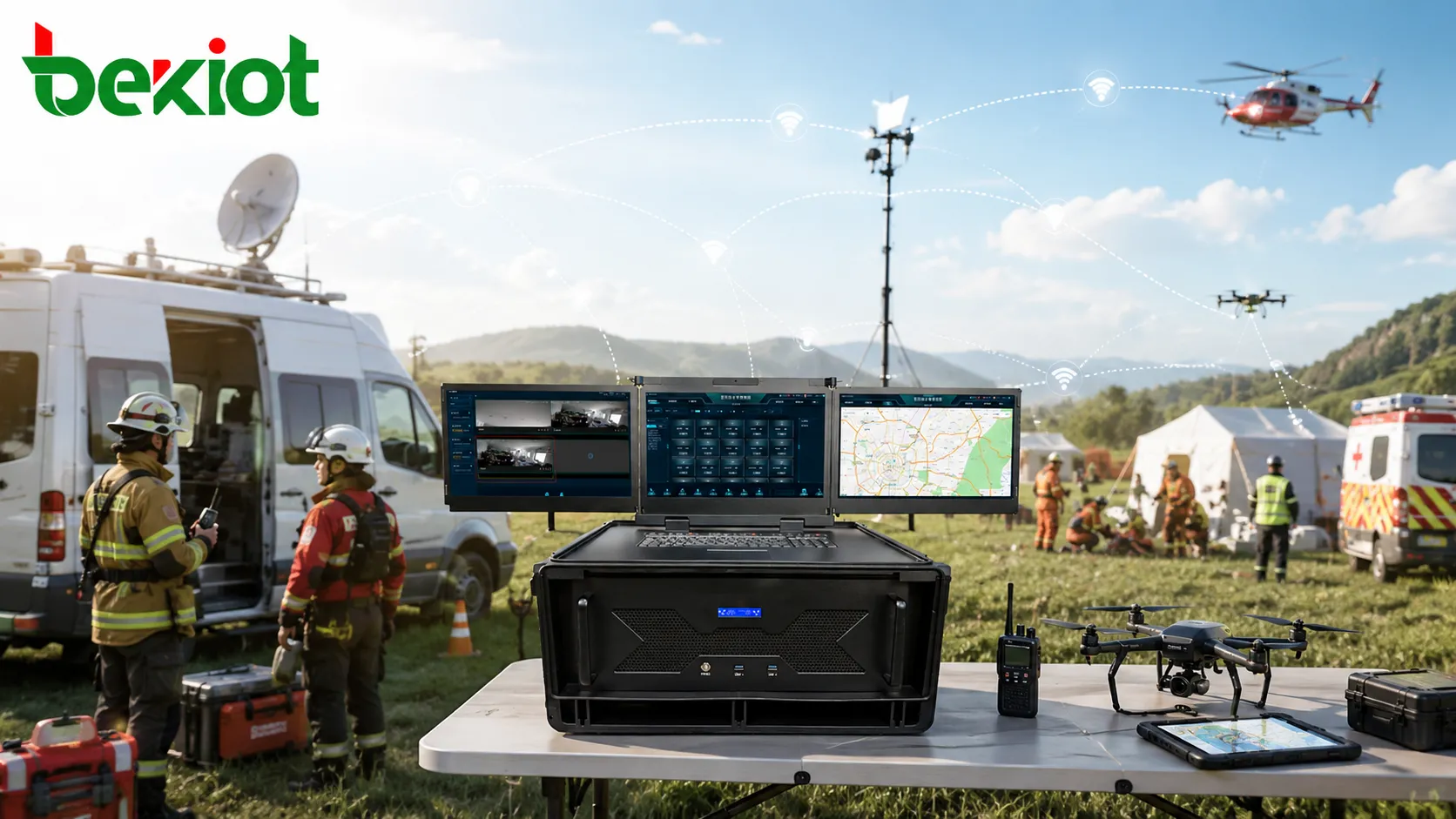
In many emergency, military, industrial, rescue, and IoT scenarios, the main challenge is not whether a business platform exists. The real challenge is how to send voice, video, location, and data back to the command center when the fixed network cannot reach the site.
Broadband ad hoc networking solves this problem by allowing multiple wireless nodes to organize themselves and forward data through multi-hop routing. This makes it suitable for rapid broadband coverage, temporary command posts, mobile patrol teams, disaster rescue, remote inspection, and field video transmission.
The technology is commonly associated with several important characteristics: self-organization, multi-hop routing, high bandwidth, and dynamic topology. These features allow the network to adjust when nodes move, when the deployment area changes, or when a single communication path becomes unstable.
Solution Highlight: Broadband ad hoc networking is not only a communication device set. It is a flexible broadband data layer that helps other voice, video, command, IoT, and emergency platforms work in places where normal network infrastructure is unavailable.
Core Equipment in a Field Deployment
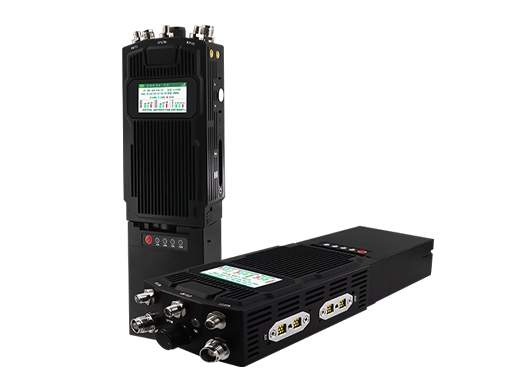
Broadband ad hoc networking equipment can be divided into several common types according to deployment environment and usage method. The main categories include vehicle-mounted units, backpack units, handheld terminals, and airborne units. Each type serves a different role in the overall field communication structure.
A vehicle-mounted unit is normally installed in a command vehicle, emergency vehicle, patrol vehicle, or mobile communication platform. It may use a rack-style or fixed installation design, connect to external communication antennas, and link with the vehicle’s local network through Ethernet. In this way, the vehicle network can be extended outward through the broadband ad hoc network.
In many deployments, a vehicle-mounted ad hoc radio weighs less than 10kg and may reach an IP54 protection level. This makes it suitable for mobile command vehicles, temporary field stations, and vehicle-based broadband extension where stronger installation stability is required.
Portable Nodes for Wider Temporary Coverage
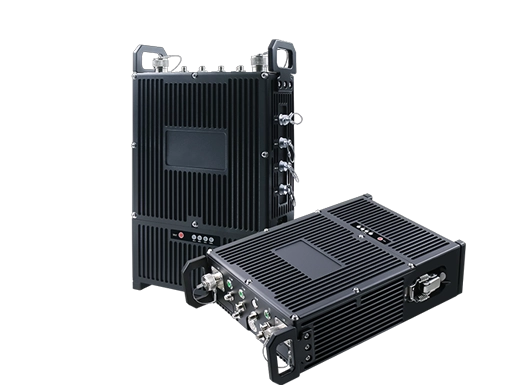
Backpack-type equipment is designed for personnel-carried deployment. Compared with smaller handheld terminals, backpack units usually provide stronger power supply capability and higher transmission capacity. They are useful when multiple nodes need to be placed across a large field area to extend the network step by step.
A typical backpack broadband node may weigh less than 8kg and use an enclosure that meets IP67 protection requirements. This allows it to work in more demanding outdoor environments, including rescue sites, mountain areas, flood control zones, temporary security areas, and remote construction sites.
When several backpack units are deployed together, they can form a wireless broadband mesh-like structure. Each node can help forward data to another node, improving the coverage distance when a single point-to-point link is not enough.
Handheld Terminals for Individual Users
Handheld broadband terminals, sometimes used as individual field terminals, are designed for mobile personnel. In general, this type of equipment may weigh less than 2kg, making it easier for operators, rescue workers, inspection teams, or security personnel to carry during field tasks.
Earlier handheld units were often relatively large, but newer designs can be closer to the size of a professional radio terminal. Many handheld devices are also combined with business applications, such as push-to-talk, external helmet cameras, shoulder microphones, video return, location reporting, or mobile command functions.
This makes handheld terminals more than simple network nodes. They can become the field user’s communication entry point, carrying both data access and practical application functions for voice, image, and real-time coordination.
Airborne Nodes for Height and Coverage Extension
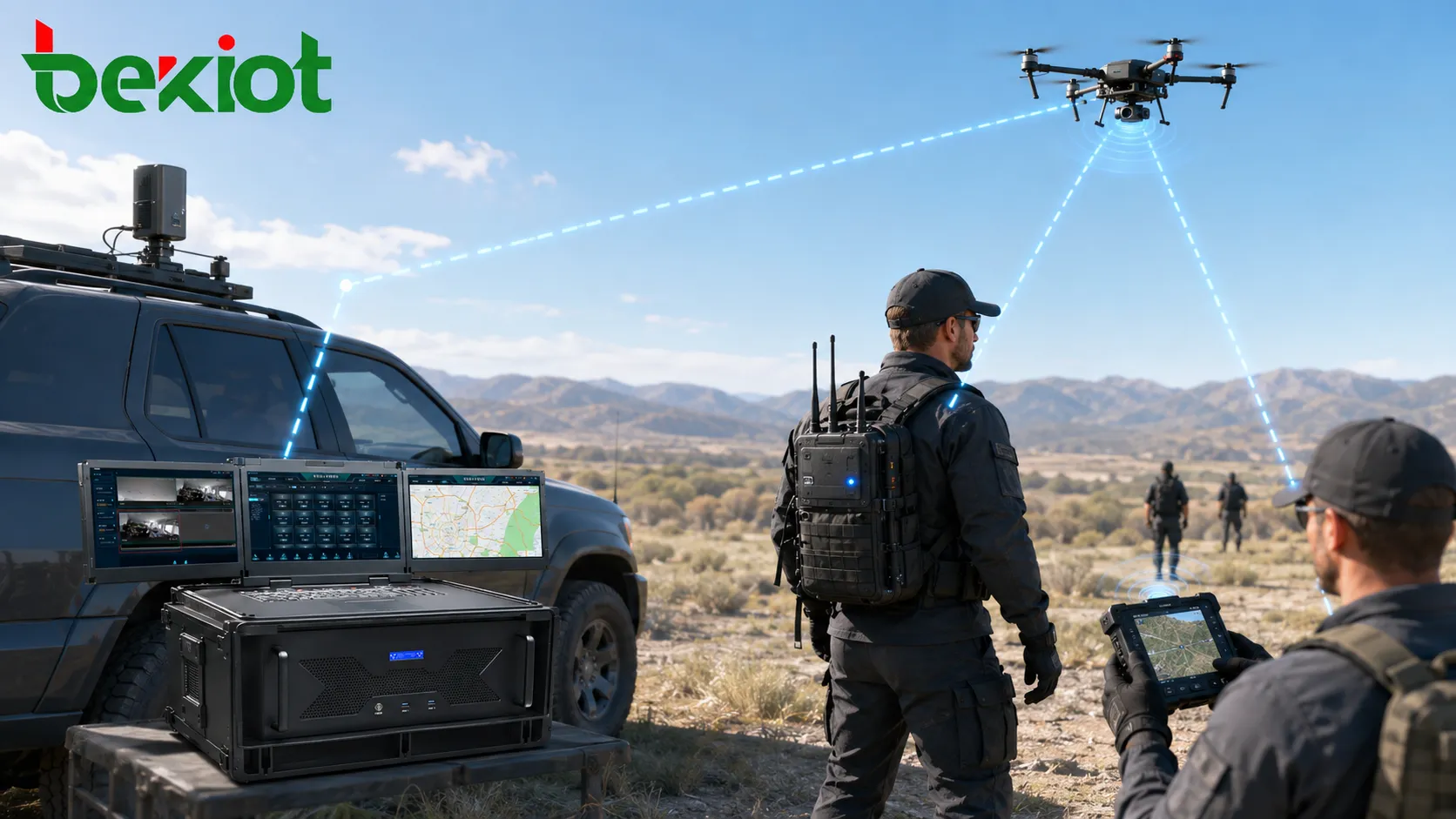
Airborne broadband nodes are closely related to the development of drone technology. In many field environments, wireless coverage is limited by terrain, buildings, vegetation, mountains, or other obstacles. When the ground link is blocked, increasing node height is often one of the most direct ways to improve coverage.
There are generally two ways to improve wireless coverage: increasing antenna height or increasing transmission power. However, increasing power is not always practical, and terrain limitations may still block the signal. A drone-mounted node can act as an elevated relay point, helping the network reach areas that are difficult for ground equipment to cover.
By carrying a broadband ad hoc radio into the air, the drone can create a higher wireless relay position. This can improve line-of-sight conditions, expand temporary coverage, and support better communication between field teams, vehicles, command posts, and remote video sources.
How the Network Is Used in Real Projects
Broadband ad hoc networking is mainly used to provide a network connection channel. Therefore, many devices include Ethernet ports and WiFi access. These interfaces make it easier to connect computers, gateways, cameras, routers, field terminals, video encoders, and other service equipment.
The simplest example is a two-point deployment. Several broadband ad hoc radios can be placed between two locations. A computer is connected by Ethernet at each end. Once the wireless link is formed, the two computers can communicate through the temporary broadband network.
In practical projects, the same idea can be extended to more complex use cases. Field command vehicles can connect their local area networks to remote teams. Temporary rescue sites can send video and data to command posts. Remote monitoring points can return camera streams through wireless links. Mobile teams can access the field network through WiFi provided by the ad hoc node.
Emergency Coverage in Disrupted Environments
Broadband ad hoc networking is especially useful in disrupted environments where normal communication infrastructure is unavailable or unreliable. This may include disaster areas, road interruptions, power failures, damaged network lines, remote rescue zones, and temporary command locations.
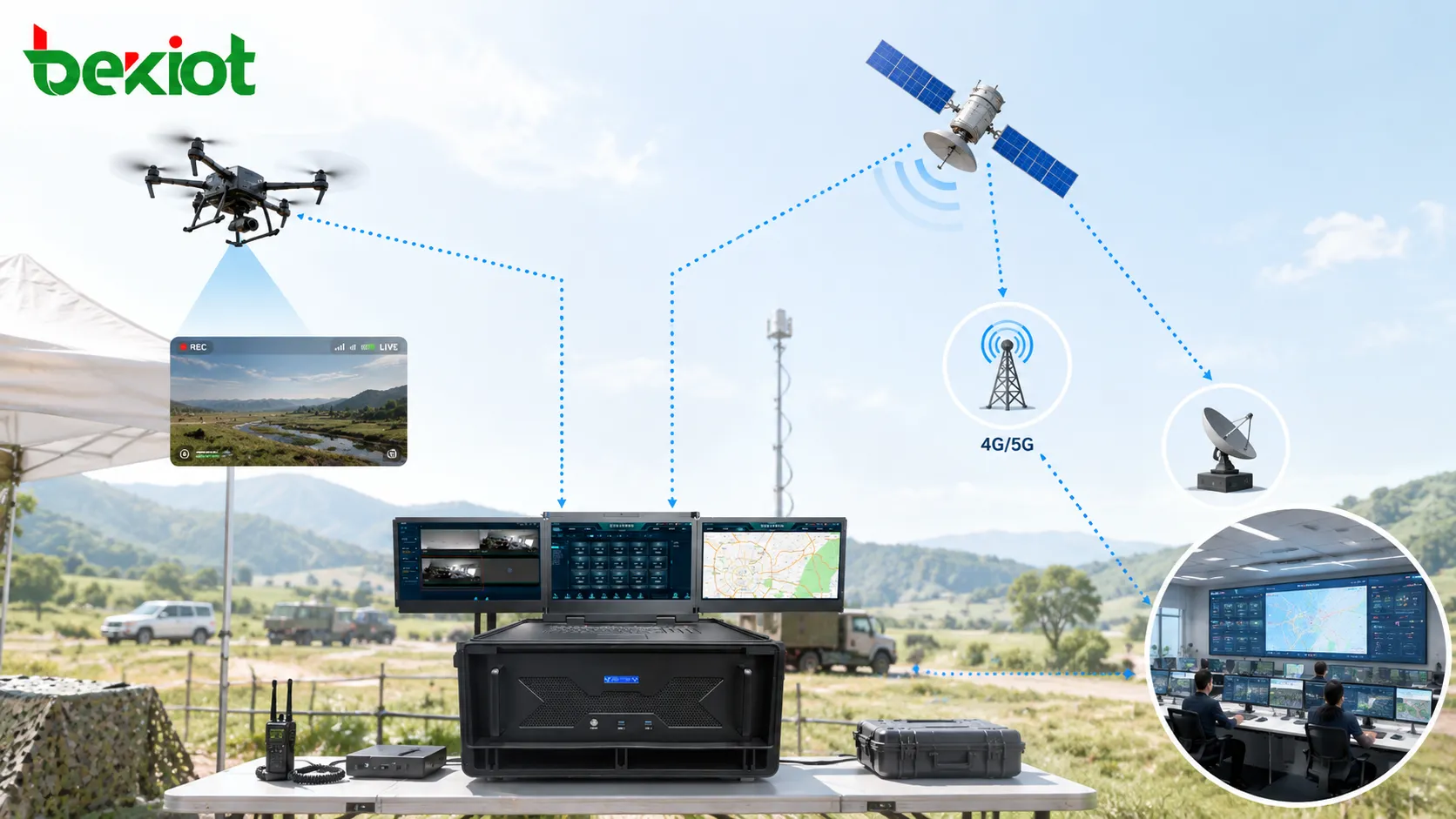
In these conditions, the ad hoc network can work together with portable high-throughput satellite stations, multi-SIM bonded internet devices, 4G/5G routers, or other backhaul equipment. The ad hoc network extends the local field network, while satellite or cellular bonding sends the collected data back to the remote command center.
This structure is valuable because the command center does not need to be physically near every field device. The field network can collect local video, audio, and data, then forward it through satellite, 4G, 5G, or bonded internet links for remote command, supervision, and decision-making.
Drone Video Backhaul and Field Sharing
Drone video backhaul is one of the common applications of broadband ad hoc networking. A drone pilot can connect to the temporary field local area network through WiFi. After video streaming is started, the drone image can be transmitted to a temporary command node through the ad hoc broadband link.
At the field command point, the video can be displayed, shared, recorded, or forwarded to other systems. If the project requires remote command center access, the video can continue to be transmitted through satellite, 4G, or 5G backhaul. A video gateway or media processing device can then output the stream through different protocols or perform video transcoding for platform compatibility.
This workflow is useful for emergency rescue, disaster inspection, firefighting, flood control, border patrol, traffic management, large-event security, industrial inspection, and remote construction monitoring. The drone provides visual information, while the broadband ad hoc network provides the temporary data path.
Integration with Voice, Video, and Data Platforms
Although some broadband ad hoc devices may include voice or video features, their core value is still broadband data transmission. In many projects, the ad hoc network supports other systems rather than replacing them. It may carry video surveillance streams, push-to-talk traffic, command platform data, IoT information, file transfer, location data, or emergency reporting.
This makes the solution highly flexible. The same wireless network can support different upper-layer systems as long as bandwidth, delay, routing, and interface requirements are properly planned. For example, a command platform may use the link for video return, while field computers use it for data sharing and mobile terminals use it for WiFi access.
For project design, this means the ad hoc network should be planned as a transport layer. The business systems running above it should be selected according to operational needs, such as emergency command, video convergence, public safety communication, mobile inspection, or industrial monitoring.
Limitations That Must Be Considered
Broadband ad hoc networking is convenient, but it is not perfect. Obstructed environments can reduce signal quality. Buildings, mountains, tunnels, dense vegetation, metal structures, and complex urban areas may affect wireless coverage. Good site planning and node placement are therefore important.
Multi-hop transmission can also reduce available bandwidth. Each additional hop may consume part of the wireless resources, especially when large video streams are being transmitted. For this reason, critical video backhaul projects should evaluate hop count, bandwidth demand, antenna height, link distance, and expected service quality before deployment.
Even with these limitations, broadband ad hoc networking is still highly useful in emergency and temporary scenarios. Its advantage lies in fast deployment, flexible topology, mobile access, and the ability to build a working broadband environment where normal infrastructure cannot be used.
Recommended Deployment Workflow
Assess the Field Communication Need
The project team should first identify what needs to be transmitted: voice, video, files, IoT data, location information, command platform data, or drone streams. Different services require different bandwidth, delay, stability, and interface planning.
For video-heavy applications, the system should reserve enough bandwidth and reduce unnecessary multi-hop paths. For command and data applications, coverage reliability and node availability may be more important than peak bandwidth.
Choose the Right Node Types
Vehicle-mounted equipment is suitable for command vehicles and mobile centers. Backpack nodes are suitable for temporary relay and wider field coverage. Handheld terminals are suitable for individual users. Airborne nodes are suitable for height-based coverage extension and drone relay scenarios.
Many projects use several node types together. A command vehicle may serve as the main hub, backpack nodes may extend field coverage, handheld terminals may support mobile users, and airborne nodes may solve terrain-related coverage gaps.
Plan Backhaul and Platform Access
The ad hoc network usually covers the local field area, while satellite, 4G, 5G, fiber, or multi-card bonding may provide remote backhaul. This layered design allows local devices to communicate first and then send important data to the remote command center.
Platform access should also be planned. Cameras, encoders, video gateways, dispatch platforms, computers, and mobile terminals should have clear IP addressing, routing, bandwidth allocation, and security policies.
Typical Application Value
Emergency Rescue and Disaster Response
When fixed communication systems are damaged or unavailable, broadband ad hoc networking can quickly create a temporary field network. It helps rescue teams send live video, share data, and coordinate with mobile command posts.
This improves on-site visibility and allows decision-makers to receive information from areas that may otherwise be isolated.
Mobile Command and Patrol Operations
Command vehicles, patrol teams, and field users can use ad hoc networking to extend their local communication environment. This is useful for temporary security, large public events, remote inspection, and outdoor operations.
The network can support video return, data sharing, mobile access, and coordination between vehicles and personnel.
Remote Monitoring and Drone Inspection
For remote sites, drone inspection, temporary monitoring points, or unmanned field devices, broadband ad hoc networking provides a flexible data path. It can bring video and sensor information back to a local command node and then forward it through satellite or cellular backhaul.
This reduces dependence on fixed network construction and makes temporary visual monitoring easier to deploy.
FAQ
Does broadband ad hoc networking require a base station?
Not in the traditional fixed-infrastructure sense. Nodes can form a self-organizing network with each other. However, a project may still define a vehicle node, command node, or relay node as the main access point for easier operation.
Can it replace 4G or 5G networks?
It usually does not replace 4G or 5G. Instead, it often works with them. The ad hoc network provides local field coverage, while 4G, 5G, satellite, or bonded links provide remote backhaul to a command center.
Is it suitable for continuous permanent coverage?
It can be used for longer operations, but its strongest value is temporary, mobile, emergency, and rapidly deployed coverage. Permanent networks usually require more fixed planning, power design, maintenance access, and environmental protection.
What affects the transmission distance?
Transmission distance depends on antenna height, terrain, obstacles, frequency conditions, device power, node placement, and whether relay nodes are used. Line-of-sight conditions usually provide better performance than heavily obstructed environments.
Why does bandwidth decrease after multiple hops?
Multi-hop forwarding consumes wireless resources because each node needs to receive and forward data. As hop count increases, available bandwidth may decrease, especially when large video streams or multiple high-bandwidth services are running at the same time.