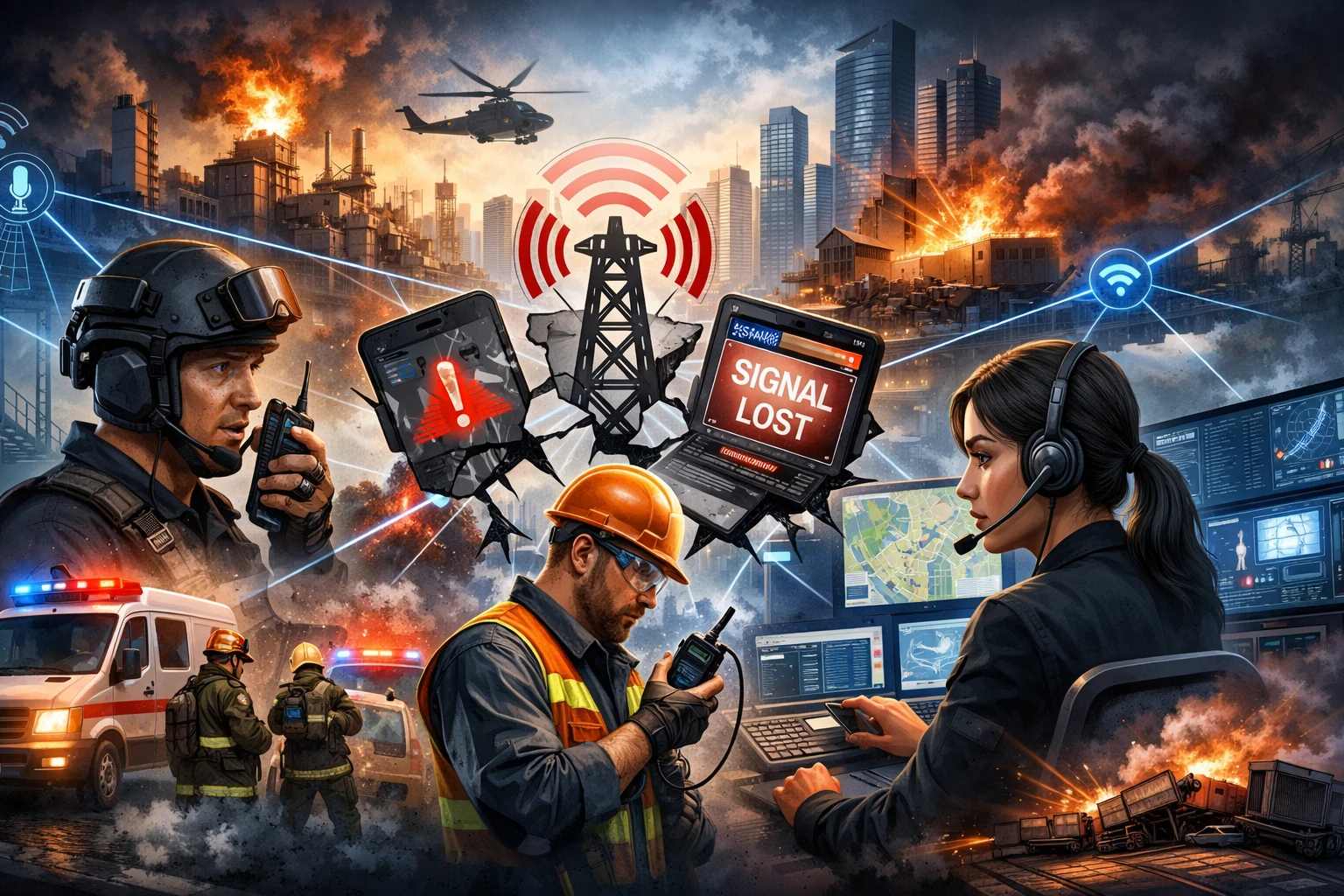
When a disaster damages local communication infrastructure, mobile users often face one of the most critical problems: the signal may return, but only for users of a specific operator. The newly launched national emergency communication integrated access platform changes this model by allowing users from China Telecom, China Mobile, and China Unicom to access emergency communication services through a unified national network without changing SIM cards, phone numbers, or devices.
The platform represents a major upgrade in emergency communication infrastructure. Instead of separate operator systems, isolated emergency equipment, and fragmented dispatch workflows, it introduces a unified framework for access, monitoring, dispatch, and management. For disaster response, this means emergency base stations, drone-mounted stations, portable backpack stations, vehicle-mounted stations, shipborne systems, satellite links, and command platforms can work together under one national-level coordination system.

Why Disaster Communication Needs a Unified Access Layer
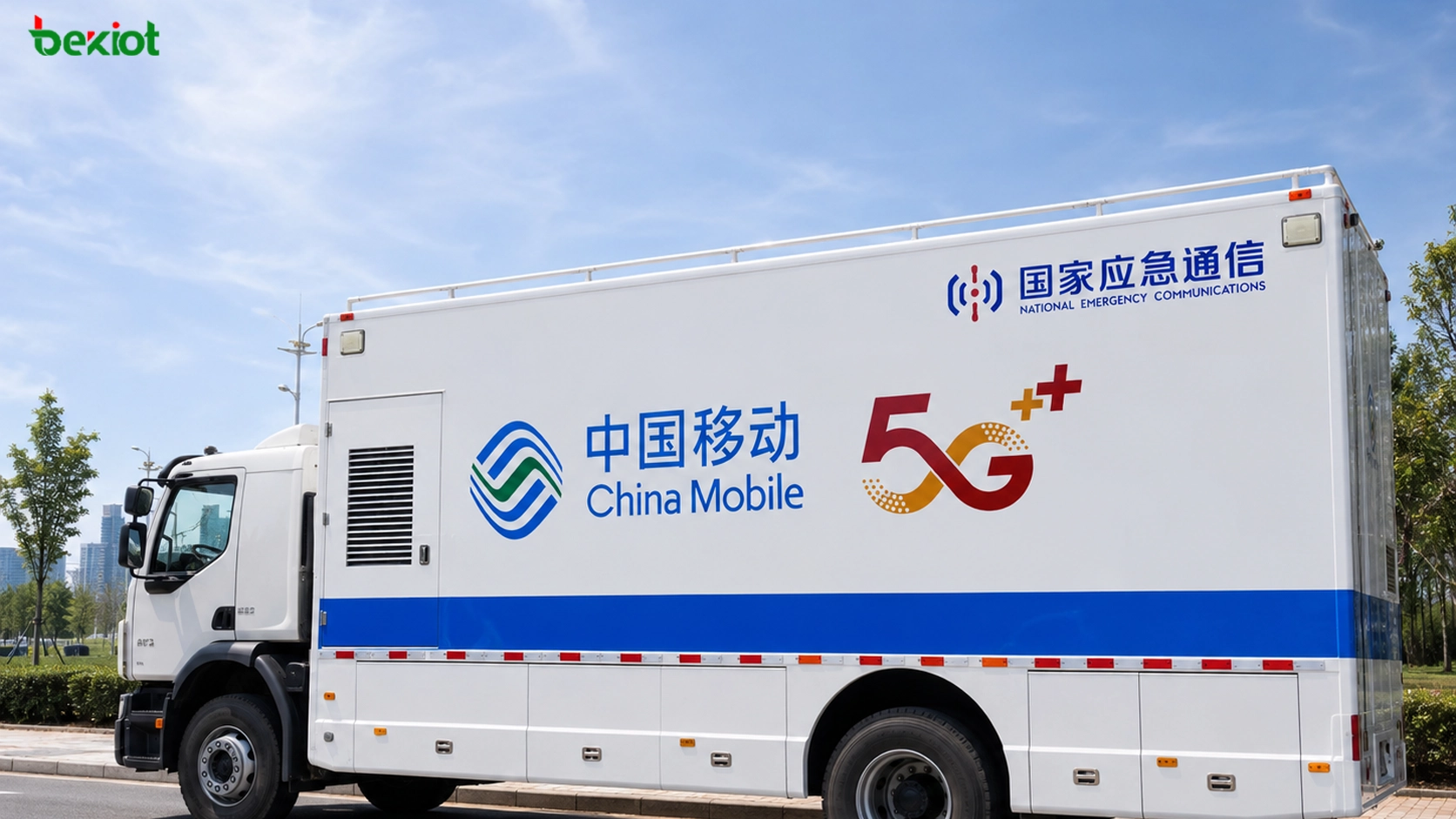
Traditional emergency communication systems are often deployed quickly after natural disasters, floods, landslides, typhoons, earthquakes, or large-scale network outages. Operators may send emergency vehicles, portable base stations, satellite terminals, drone platforms, and temporary backhaul systems to the affected area. These resources are essential, but they can still face a structural limitation: each operator’s emergency base station usually serves its own subscribers.
In a real disaster area, the affected population may include local residents, rescue teams, volunteers, government workers, logistics staff, medical teams, and people from other provinces. Their mobile numbers may belong to different operators. If emergency infrastructure only supports one operator at a time, a user with a different SIM card may still be unable to call, send messages, or access data services.
This creates three major problems. First, emergency communication coverage may be restored unevenly. Second, multiple sets of equipment must be deployed, configured, and managed separately. Third, field rescue efficiency may be affected because communication resources cannot serve all users equally. A unified emergency access platform is designed to solve this issue at the network, equipment, and dispatch levels.
From Separate Operator Networks to Shared Emergency Connectivity
The core value of the platform is cross-carrier emergency access. In a disaster area, users do not need to replace their SIM cards, change phone numbers, or switch mobile phones. Whether the user belongs to China Telecom, China Mobile, or China Unicom, the device can automatically search for and connect to the national emergency communication network when conditions are met.
For the public, this capability may be invisible during normal times, but it can become life-saving during emergencies. A successful connection may allow a resident to report safety, a trapped person to send a rescue message, a rescue worker to coordinate field operations, or a local command unit to restore communication with affected communities.
The platform also improves resource efficiency. One emergency base station can support users from all three major operators, instead of being limited to a single operator’s subscriber base. Under the same equipment investment, emergency service capacity can increase significantly because the deployed infrastructure becomes available to a broader user group.
How the Platform Improves Field Deployment
Emergency communication deployment must be fast, flexible, and reliable. The platform supports multiple types of emergency access equipment, including drone base stations, portable backpack base stations, vehicle-mounted base stations, shipborne base stations, satellite communication terminals, and other high-mobility communication assets.
In previous deployment models, different equipment sources and operator-specific configurations could slow down field coordination. With unified platform access, emergency communication resources can be configured once and used across regions. Equipment from different provinces or vendors can be brought into the same management framework, reducing repeated configuration work and improving response speed.
This is especially important for large-scale disasters. Floods, typhoons, mountain disasters, and transportation interruptions may require communication assets from multiple regions to support one affected area. A platform-based approach helps national and regional teams see available resources, monitor service status, coordinate deployment, and manage the communication recovery process more efficiently.
Unified Monitoring, Dispatch, and Management
The platform is not only about connecting mobile users. It also provides a national-level management mechanism for emergency communication resources. The article highlights four key capabilities: unified access, unified monitoring, unified dispatch, and unified management.
Unified access means emergency communication equipment and carrier networks can connect into one framework. Unified monitoring allows operators and emergency communication teams to observe network status, equipment operation, access performance, and service availability. Unified dispatch supports coordinated resource allocation across regions, operators, and equipment types. Unified management enables a more standardized emergency communication workflow.
This model turns emergency communication from a fragmented recovery task into an integrated national infrastructure capability. Instead of simply restoring a signal, the goal becomes maintaining usable, coordinated, and scalable communication services for affected users, rescue teams, and command centers.

Proven Through Real Emergency Scenarios
The platform was not launched as a concept only. Before nationwide application, it had already supported multiple emergency communication assurance tasks in real-world incidents. According to the source article, the platform helped support emergency communication during events such as the Changdu mudslide in Tibet, flooding in Qiandongnan, flash floods at the Gyirong Port in Tibet, heavy rainfall in Beijing, flooding in Chengde, Hebei, and Typhoon “Madm”.
The accumulated operational data is important. The platform supported more than 1.041 million user access events and more than 92,000 calls. These numbers show that the platform has already moved beyond laboratory testing and has been validated through field scenarios where emergency communication services were urgently needed.
In emergency communication, each access event may represent a safety report, a rescue request, a coordination instruction, or a message between affected families and responders. Therefore, the platform’s value should be measured not only by network architecture, but also by its ability to maintain communication continuity when normal infrastructure is damaged or overloaded.
Policy Direction and Industry Impact
The platform also reflects a broader policy direction. In January 2025, China’s Ministry of Industry and Information Technology, together with 14 departments, issued guidance on strengthening emergency communication capabilities for extreme scenarios. One of the key directions was to promote cross-operator emergency roaming and build a coordinated public-private emergency communication capability system.
The national integrated access platform can be viewed as an engineering-level implementation of that policy direction. It transforms cross-operator emergency roaming from a concept into an operational system. For the emergency communication industry, this creates new requirements for equipment compatibility, platform integration, standard interfaces, and multi-network support.
Emergency base stations, backpack communication systems, vehicle-mounted systems, shipborne systems, drone-mounted base stations, airborne communication relay systems, satellite-ground integration devices, and mobile command terminals may all need to support more unified access and management requirements in the future. Equipment that can connect into national or regional emergency platforms will become more valuable than isolated single-network devices.
From Basic Recovery to High-Quality Service Continuity
In the past, emergency communication often focused on “restoring access” as quickly as possible. The basic target was simple: bring back a signal. Today, the requirement is moving toward “smooth communication.” This means people in disaster areas should experience communication services that are closer to normal daily use whenever possible.
This shift places higher demands on network capacity, voice quality, SMS reliability, data access, video backhaul, command dispatch systems, satellite-ground coordination, and emergency resource visualization. Public communication networks, private communication systems, and satellite communication networks are becoming more closely integrated at the platform level.
For emergency command centers, this also means communication is no longer limited to voice restoration. A modern emergency communication system may need to support voice calls, SMS, data services, video transmission, location information, dispatch coordination, remote monitoring, and multi-agency collaboration through a unified operational view.
Technical Value for Future Emergency Networks
The nationwide application of this platform shows a clear direction for future emergency network design. First, emergency networks must be cross-carrier rather than operator-isolated. Second, emergency equipment must be platform-ready rather than standalone. Third, command centers need unified visibility across base stations, satellite terminals, mobile assets, and field teams.
The phrase “one map, one network, and one set of rules” summarizes the direction of the system. One map improves situational awareness. One network improves connectivity and resource sharing. One set of rules improves dispatch consistency, operational standards, and multi-party collaboration.
For the ICT industry chain, the platform creates a new opportunity window. Network equipment vendors, satellite communication providers, emergency command software companies, drone communication system suppliers, mobile base station manufacturers, and integrated dispatch solution providers may all need to adapt their products to a more unified, interoperable, and platform-oriented emergency communication environment.
Conclusion
The national emergency communication integrated access platform marks a significant step forward in disaster communication infrastructure. By enabling cross-carrier access, shared emergency base station service, unified monitoring, unified dispatch, and unified management, it helps transform emergency communication from separate network recovery into coordinated national connectivity.
For the public, the value is simple: during a disaster, the phone in hand has a better chance of connecting. For emergency teams, the value is operational: resources can be deployed, monitored, and coordinated more efficiently. For the communication industry, the message is clear: future emergency systems will be judged not only by equipment performance, but by their ability to integrate into a larger platform, serve multiple networks, and support real-world disaster response at scale.
FAQ
Does cross-carrier emergency access replace normal mobile networks?
No. Cross-carrier emergency access is designed for disaster or extreme scenarios where normal network infrastructure may be damaged, overloaded, or unavailable. It provides an emergency connectivity layer, not a replacement for daily commercial mobile services.
Why is platform compatibility important for emergency equipment?
Platform compatibility allows emergency base stations, satellite terminals, vehicle systems, and portable devices to be managed under a unified framework. This reduces deployment complexity and improves coordination when multiple regions, operators, or rescue teams are involved.
What types of services may be supported during emergency access?
Depending on network conditions and equipment capability, emergency access may support voice calls, SMS, basic data services, command communication, and service coordination. Higher-bandwidth services such as video backhaul may require additional transmission capacity and stable backhaul links.
What should equipment vendors focus on after this platform launch?
Vendors should focus on multi-network compatibility, standardized interfaces, remote management, fast deployment, satellite-ground integration, dispatch platform integration, and field reliability. Products that only serve isolated single-network scenarios may face stronger upgrade pressure.