Coal mine communication is no longer limited to fixed telephones, underground broadcast lines, or isolated two-way radios. Modern mine operations need a communication environment where dispatch rooms, underground workers, rescue teams, mobile terminals, broadcast systems, and radio users can work together. An integrated radio and Wi-Fi voice system connects these resources into one coordinated network, helping mines improve daily production, safety management, and emergency response.
The core value of this approach is interoperability. Two-way radios are fast and efficient for group communication, while Wi-Fi voice, 4G private networks, fiber transmission, SIP telephony, and broadcasting systems provide wider communication coverage and richer dispatch functions. When these systems are connected through gateways and a unified dispatch platform, the mine can reduce communication blind spots, improve command efficiency, and respond faster when incidents occur.
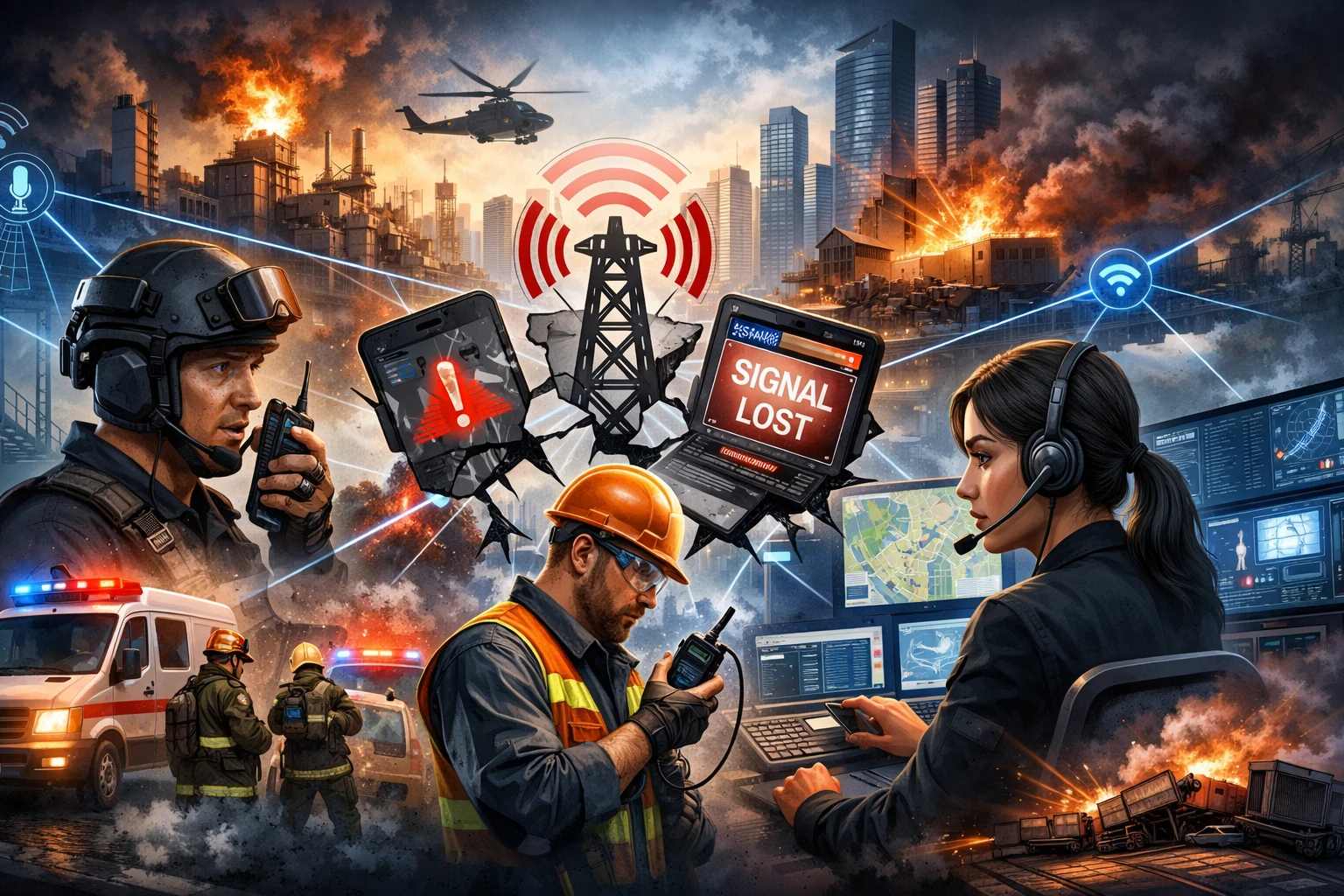
Modern Mine Communication Requires More Than One Network
Coal mine communication systems usually include both wired and wireless infrastructure. Traditional wired systems such as underground telephones and public address broadcasting are still important because they provide stable fixed-point communication in key locations. At the same time, wireless systems such as Wi-Fi voice, 4G private networks, mobile terminals, and underground broadband access have become essential for modern mine operations.
Fiber, network switches, underground access points, base stations, and broadband transmission equipment now form the communication foundation of many modern mines. These systems improve production efficiency, support mobile collaboration, and help underground personnel communicate more conveniently. However, a single communication network is rarely enough. Different departments, locations, and emergency situations often require different communication methods.
Two-way radios remain widely used because they provide fast group calling, simple operation, and strong coordination value. Compared with phone calls, radios are more suitable for one-to-many communication. A dispatcher, team leader, or safety officer can speak to a group immediately without dialing individual numbers. This makes radio communication especially useful for production coordination, security patrol, equipment scheduling, underground work groups, and emergency rescue.
Communication Silos Create Operational Risk
Although multiple communication systems improve mine connectivity, they can also create a new challenge: each system may operate independently. Radios, Wi-Fi phones, mobile terminals, fixed phones, dispatch consoles, and broadcast systems may not be able to communicate with each other directly. When communication resources are separated, the command process becomes slower and less reliable.
For example, the surface dispatch room may need to contact a team leader near a working face, but the available system in that area may not be connected to the dispatch platform. In many underground environments, communication coverage mainly follows main roadways, transport tunnels, substations, equipment rooms, and other planned areas. As the working face continues to extend, there may still be areas where Wi-Fi, 4G, telephone lines, or fixed broadcast coverage has not yet reached.
In these locations, explosion-proof two-way radios are highly practical because they do not always depend on newly built fixed coverage equipment. Workers can carry radios to maintain group communication in temporary, extended, or difficult-to-cover areas. However, if radios remain isolated from the mine’s phone, Wi-Fi voice, and broadcast systems, their value is limited to local radio groups. The key is to connect them into the wider communication system.
Gateway Integration Turns Radio Channels Into SIP Resources
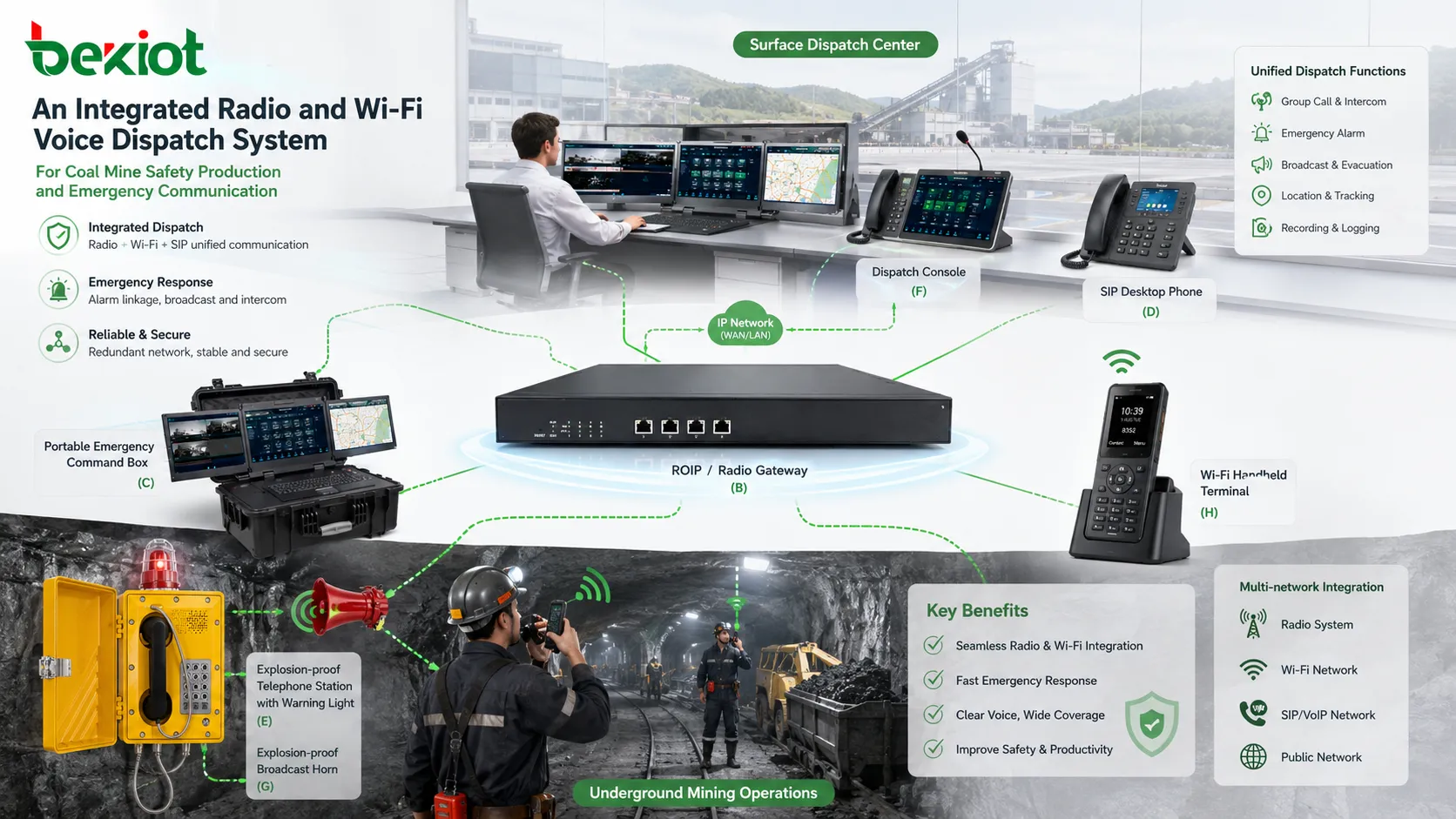
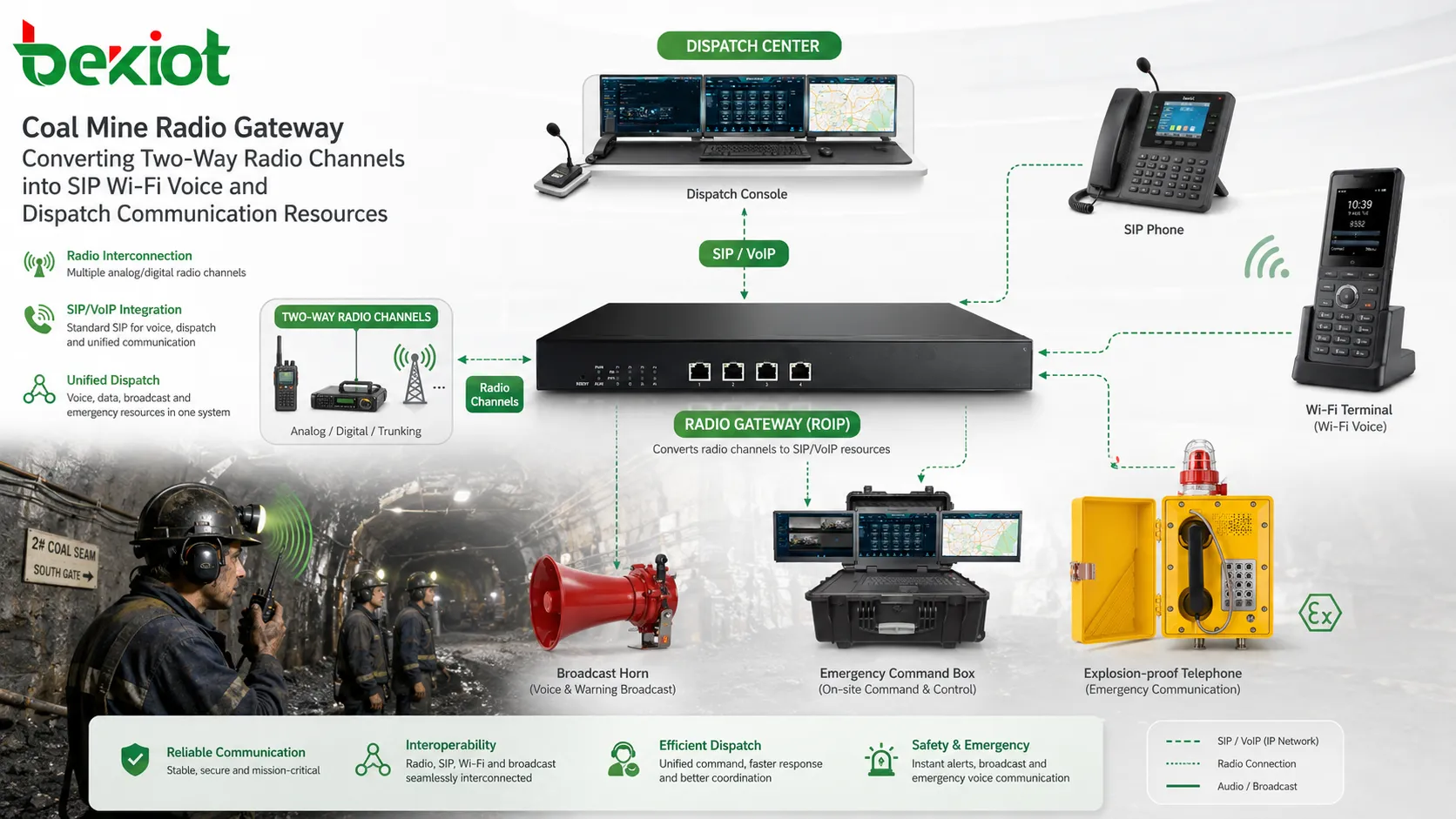
A radio gateway provides the technical bridge between two-way radios and the mine communication platform. It can connect one or more radio channels and convert radio communication into standard SIP-based communication resources. Through SIP, radio users can be integrated with dispatch consoles, IP phones, Wi-Fi voice terminals, mobile apps, and broadcast systems.
This architecture allows the dispatch center to communicate with radio users from the same platform used for telephone calls, group dispatch, emergency notification, and recording. A dispatcher can call a radio group, receive communication from underground radio users, or bridge a radio channel with other communication endpoints. This helps remove the barrier between traditional radio communication and IP-based mine communication systems.
Radio gateway integration also helps solve the difference between half-duplex and full-duplex communication. Two-way radios usually work in half-duplex mode, where users take turns speaking. SIP phones and many voice systems usually support full-duplex communication, where both parties can speak and listen at the same time. Gateway software coordinates these different communication modes so that radio users, phone users, and dispatch operators can communicate more effectively.
Multi-Channel Access Supports Department-Based Coordination
Coal mines often organize communication by department, task, zone, or operation group. Production teams, safety supervision, electromechanical maintenance, transport teams, ventilation teams, security staff, and emergency rescue groups may each need separate communication channels. A suitable gateway can connect multiple radio channels at the same time, allowing different departments to be integrated into the unified dispatch system without forcing all users into one group.
This multi-channel design improves command flexibility. The dispatch center can communicate with one department, several selected radio channels, or multiple systems when needed. For routine production, this supports more organized communication. For emergency handling, it allows the command center to quickly coordinate different teams without switching between isolated devices and systems.
When connected with the broader communication platform, radio users can communicate with fixed phones, Wi-Fi voice terminals, mobile dispatch apps, and operator consoles. In some scenarios, radio communication can also be linked to underground emergency broadcasting, allowing important instructions to be amplified to specific areas when direct individual communication is not enough.
Wi-Fi Voice Expands Mobile Communication Underground
Wi-Fi voice is an important part of modern underground communication. With suitable Wi-Fi coverage and voice terminals, workers can use mobile devices for voice calls, group communication, task coordination, and dispatch interaction. Compared with fixed telephones, Wi-Fi voice gives underground personnel more mobility and allows communication to follow people instead of only fixed locations.
In a converged system, Wi-Fi voice terminals can register to the same communication platform as SIP phones and dispatch consoles. This makes it possible for a surface operator to call a Wi-Fi terminal, connect with a radio group through a gateway, or coordinate with multiple underground teams through one dispatch interface. The result is not simply wireless calling, but a unified communication workflow.
Wi-Fi voice is especially valuable in areas with stable underground network coverage, such as main roadways, equipment rooms, control points, maintenance zones, and frequently used operation areas. Radios can complement this coverage in temporary or extended working areas. Together, Wi-Fi voice and radio communication create a more flexible mine communication environment.
Broadcast Linkage Improves Emergency Notification
Underground broadcasting remains essential for mine safety because it can deliver messages to a wide area, even when individual workers do not answer a call. When broadcasting is integrated with the dispatch system and radio gateway, the command center can use voice resources more flexibly during daily operation and emergency response.
For routine use, broadcast linkage can support shift reminders, production notices, safety announcements, and operation instructions. For emergency use, it can help deliver evacuation guidance, hazard alerts, rescue instructions, or area-specific warnings. If a radio group reports an abnormal situation, the dispatch operator can quickly coordinate calls and trigger related announcements through the same system.
This kind of linkage is especially useful in mines where communication must reach both individuals and groups. A call may be suitable for a team leader, a radio group may be suitable for field coordination, and a broadcast message may be suitable for warning everyone in an affected area. Integrating these methods improves command coverage and reduces response delay.
Portable Command Equipment Strengthens Rescue Communication
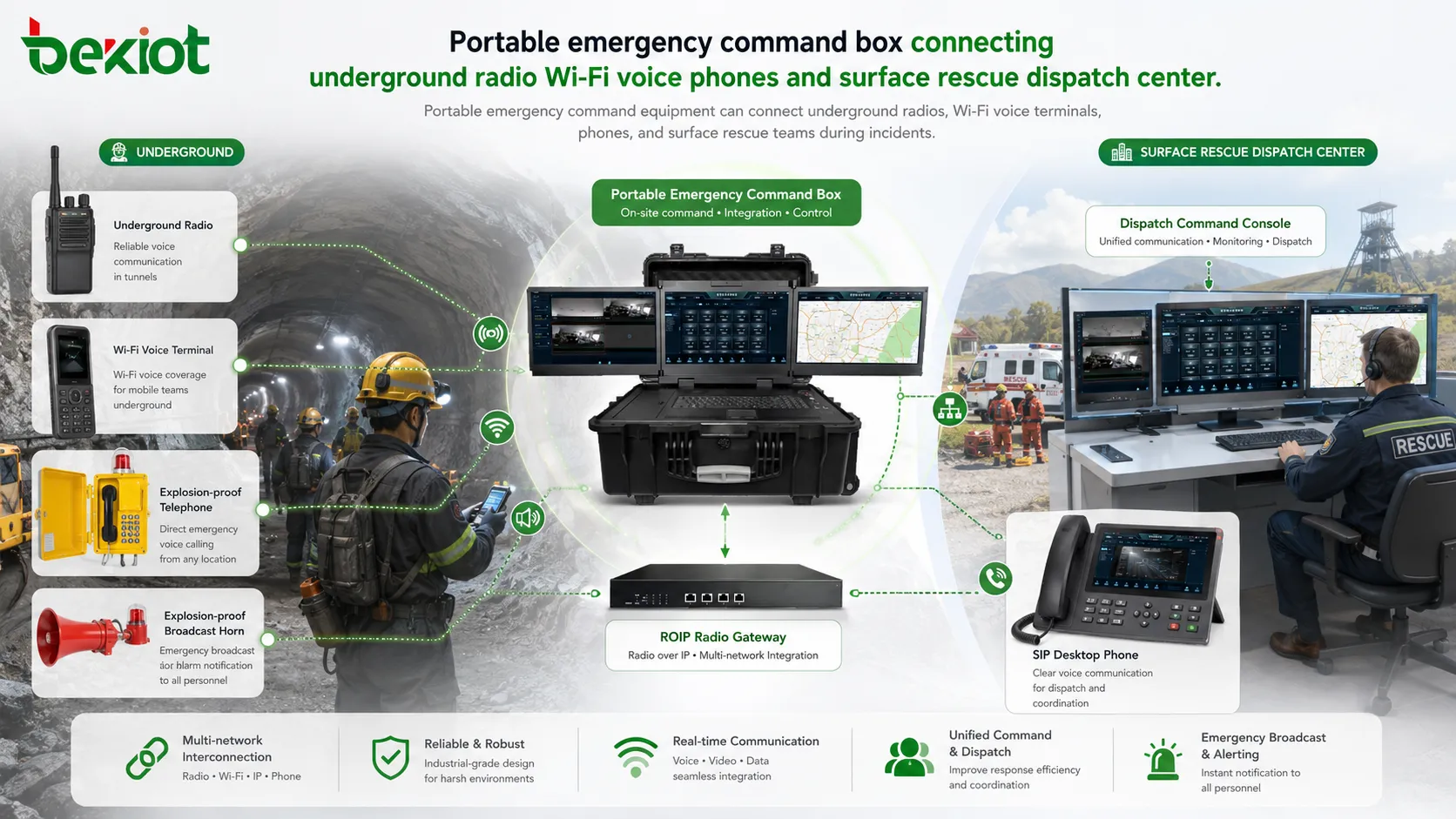
Emergency response in underground environments often requires temporary communication deployment. A portable command box or mobile emergency communication unit can help rescue teams quickly connect field radios, phones, mobile terminals, and other communication devices. Through fiber or network transmission, underground or tunnel communication signals can be sent back to the surface command center.
This is valuable when fixed communication infrastructure is damaged, incomplete, or not available near the incident area. Rescue teams can carry portable equipment to the site, connect multiple communication channels, and establish a temporary communication bridge between underground workers and surface commanders.
For command departments, this improves coordination during rescue operations. The surface team can communicate with underground teams, monitor response progress, organize multi-party communication, and keep communication records. In high-risk environments, faster communication setup can directly support safer and more effective rescue action.
System Architecture for Mine Safety Production
A practical architecture usually includes a communication server or dispatch platform, SIP-based voice system, Wi-Fi voice terminals, radio gateways, explosion-proof radios, underground broadcasting equipment, dispatch consoles, fiber transmission links, and optional emergency command equipment. The platform acts as the central control layer, while gateways connect different communication methods into a unified network.
The system does not need to replace all existing infrastructure at once. Existing radios, phones, Wi-Fi networks, broadcast systems, and underground communication links can be integrated step by step. This protects previous investment and allows the mine to expand based on actual production and safety needs.
For projects that require industrial-grade communication terminals, radio gateways, dispatch systems, and emergency linkage capability, Becke Telcom can be considered as a practical product and solution partner. Its equipment selection can be matched according to mine environment, communication coverage, system interface, explosion-proof requirements, and dispatch workflow.
Operational Benefits for Underground Management
The first benefit is faster communication. Dispatchers can reach radio users, Wi-Fi voice terminals, phone users, and broadcast zones from one platform. This reduces the need to switch between different systems and helps instructions reach the right people more quickly.
The second benefit is improved coverage flexibility. Wi-Fi voice and fixed communication systems can serve areas with network infrastructure, while radios can support field teams in areas where fixed coverage is difficult or not yet deployed. Gateways connect these resources so that coverage differences do not become communication barriers.
The third benefit is stronger safety coordination. During abnormal events, the command center can call relevant personnel, connect radio groups, issue broadcast messages, organize rescue communication, and keep communication records. This improves both real-time response and post-event review.
Deployment Planning for Mining Projects
Before deployment, the project team should assess the mine’s communication coverage, underground roadway layout, working face movement, existing radio channels, Wi-Fi network condition, fiber routes, dispatch requirements, emergency response process, and explosion-proof device requirements. These factors determine how gateways, terminals, broadcast systems, and command equipment should be selected.
It is also important to define user groups and communication permissions. Production teams, safety officers, equipment maintenance teams, rescue teams, transport teams, and surface dispatchers may need different communication channels and priority levels. Clear planning helps avoid confusion during daily operation and emergency response.
System testing should be carried out in real underground conditions. Voice quality, radio gateway delay, SIP registration stability, Wi-Fi roaming, broadcast linkage, emergency call flow, multi-channel coordination, and fiber transmission reliability should all be verified before formal acceptance.
Long-Term Value of Integrated Communication
The development direction of mine communication is not to add more isolated devices, but to break system barriers and make different communication methods work together. Radios, Wi-Fi voice, telephones, broadcasting, dispatch consoles, gateways, and emergency command equipment each have their own value. The real improvement comes when they are connected into one coordinated communication system.
For coal mines, this integration supports both production efficiency and safety management. It helps field teams communicate quickly, gives dispatchers better control, extends communication to difficult underground areas, and improves emergency response capability. It also creates a more scalable foundation for future mine digitalization and intelligent safety management.
A well-designed integrated radio and Wi-Fi voice system is not only a communication upgrade. It is a safety production tool that helps coal mines coordinate people, equipment, commands, and emergency resources more effectively.
FAQ
How should a mine decide where to use Wi-Fi voice and where to use radios?
Wi-Fi voice is suitable for areas with stable network coverage and frequent mobile communication needs. Radios are better for temporary working areas, extended roadways, rescue operations, and locations where fixed network coverage is difficult to deploy quickly.
Can radio gateway integration affect radio communication habits?
A properly designed gateway should preserve the basic push-to-talk operation of radio users while allowing dispatchers and phone users to communicate through the platform. User training should focus on group rules, speaking priority, and emergency procedures.
What should be considered for underground device selection?
Device selection should consider explosion-proof requirements, moisture and dust protection, battery life, audio loudness, microphone pickup, antenna performance, installation method, maintenance convenience, and compatibility with the existing communication platform.
Is broadcast linkage only needed for emergencies?
No. Broadcast linkage can also support daily announcements, production reminders, shift notices, and safety education. Emergency notification is only one of its most important uses.
How can the system support future mine digitalization?
A SIP-based and gateway-based architecture makes future integration easier. The mine can gradually add positioning, video monitoring, intelligent alarms, data platforms, mobile apps, and command management tools without rebuilding the entire communication network.