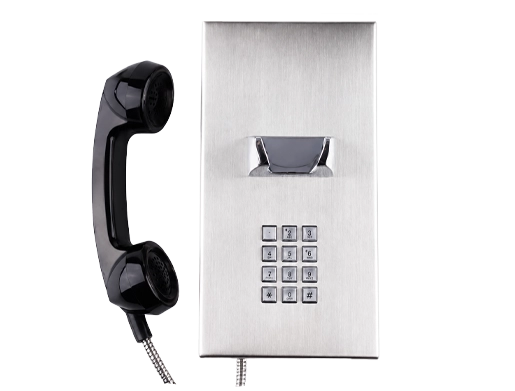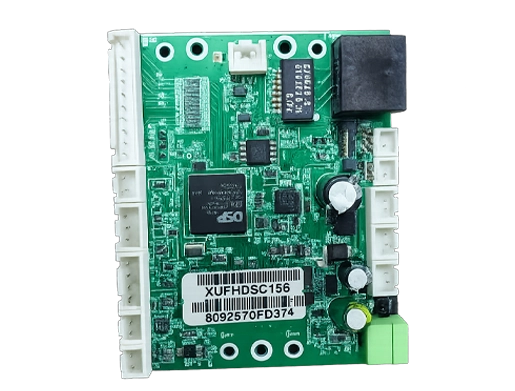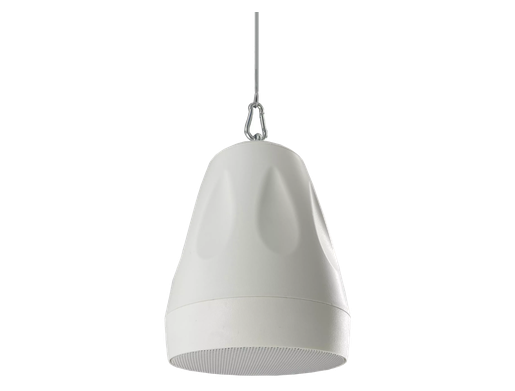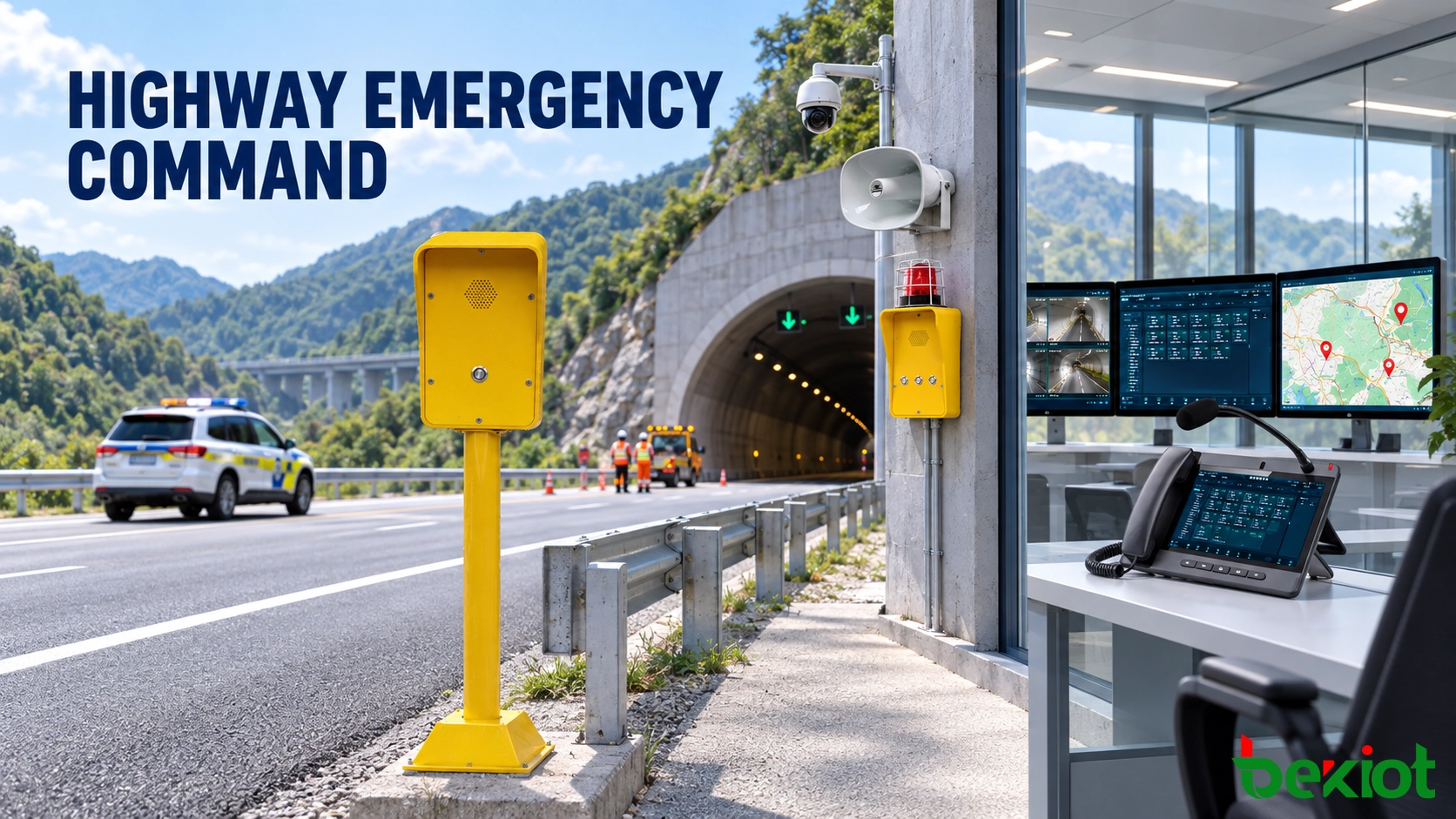
A truck stops inside a tunnel after a collision, smoke appears near the engine compartment, and traffic continues entering from the upstream portal. The first report may come from a tunnel telephone, an SOS button, a patrol officer or the video surveillance system. Before sending assistance, the control center has to confirm the tunnel bore, travel direction, kilometer marker, affected lanes and safest access route.
This process becomes slower when emergency telephones, private radio, public cellular push-to-talk, video surveillance and tunnel paging use separate consoles. A converged communications system brings the relevant channels into one dispatch environment, allowing operators to move from the first report to field coordination without repeatedly searching for locations and contact groups.
Start with Incidents, Roles and Response Boundaries
Highway communication requirements vary according to the event and its location. A disabled passenger car on an open road may only require a patrol unit and recovery vehicle. A hazardous-material leak near a service area can involve traffic police, fire services, medical personnel, environmental specialists and staff responsible for closing nearby access roads.
Tunnels create another set of demands. Operators may need to communicate with stranded drivers, contact personnel inside the tunnel, warn vehicles approaching the portals and direct emergency teams to a cross-passage or service entrance. Severe weather can affect several road sections at once, creating simultaneous calls from patrols, toll stations and maintenance teams.
Before equipment is selected, the operating organization needs to define:
Which control position receives each type of report
Which organization takes responsibility for field verification
When traffic police, fire services, medical teams or recovery contractors are contacted
Which tunnel or road zones receive safety announcements
Who can expand the response to adjacent road sections
Which position has authority to close the event
These decisions form an incident communication matrix. The matrix translates the emergency plan into practical call routes, radio groups, paging zones and escalation contacts. It also prevents technical settings from determining operational policy by accident.
Separate Routine Coordination from Emergency Traffic
Highway control rooms handle maintenance calls, toll-station coordination and equipment reports throughout the day. These calls do not require the same treatment as an SOS request from a tunnel or roadside call point.
Emergency calls can use a dedicated queue with persistent visual and audible indication. If the assigned operator is already handling another event, the new call remains visible to other authorized positions instead of receiving an ordinary busy response.
Routine communication continues through standard extension and radio procedures. This separation protects emergency access without forcing every operational call into a high-priority workflow.
Make Road Location Data Useful to Dispatchers
Telephone numbers and device IDs are useful for system administration, but they are not enough for emergency response. A dispatcher needs a road-based description that can be understood by patrol teams, traffic police and outside rescue agencies.
Each field endpoint can be associated with a road name, management section, travel direction, kilometer marker and geographic coordinates. Tunnel records may also include the bore, portal, cross-passage, equipment room and emergency access point.
A practical device name might read:
GXX Highway – KM 128.6 – Southbound – Emergency Phone 03
This is more useful than an internal label such as “Extension 8103.” It lets the operator confirm a known position with the caller and pass the same location to the response team without translating between separate numbering systems.
Associate the Call Point with Nearby Resources
The location record can include more than coordinates. A roadside phone may be linked to the nearest camera, patrol sector, crossover, recovery access and maintenance unit. A tunnel SOS terminal can reference the closest cross-passage, hydrant cabinet and surveillance preset.
When a call arrives, the dispatch screen presents the resources associated with that point. The operator can open the relevant camera, identify the responsible radio group and check which entrance gives rescuers the shortest safe approach.
Road expansion and equipment relocation can make a technically valid record operationally incorrect. Any change to physical markers, tunnel numbering or management boundaries needs to be reflected in the GIS database, device directory and camera associations.
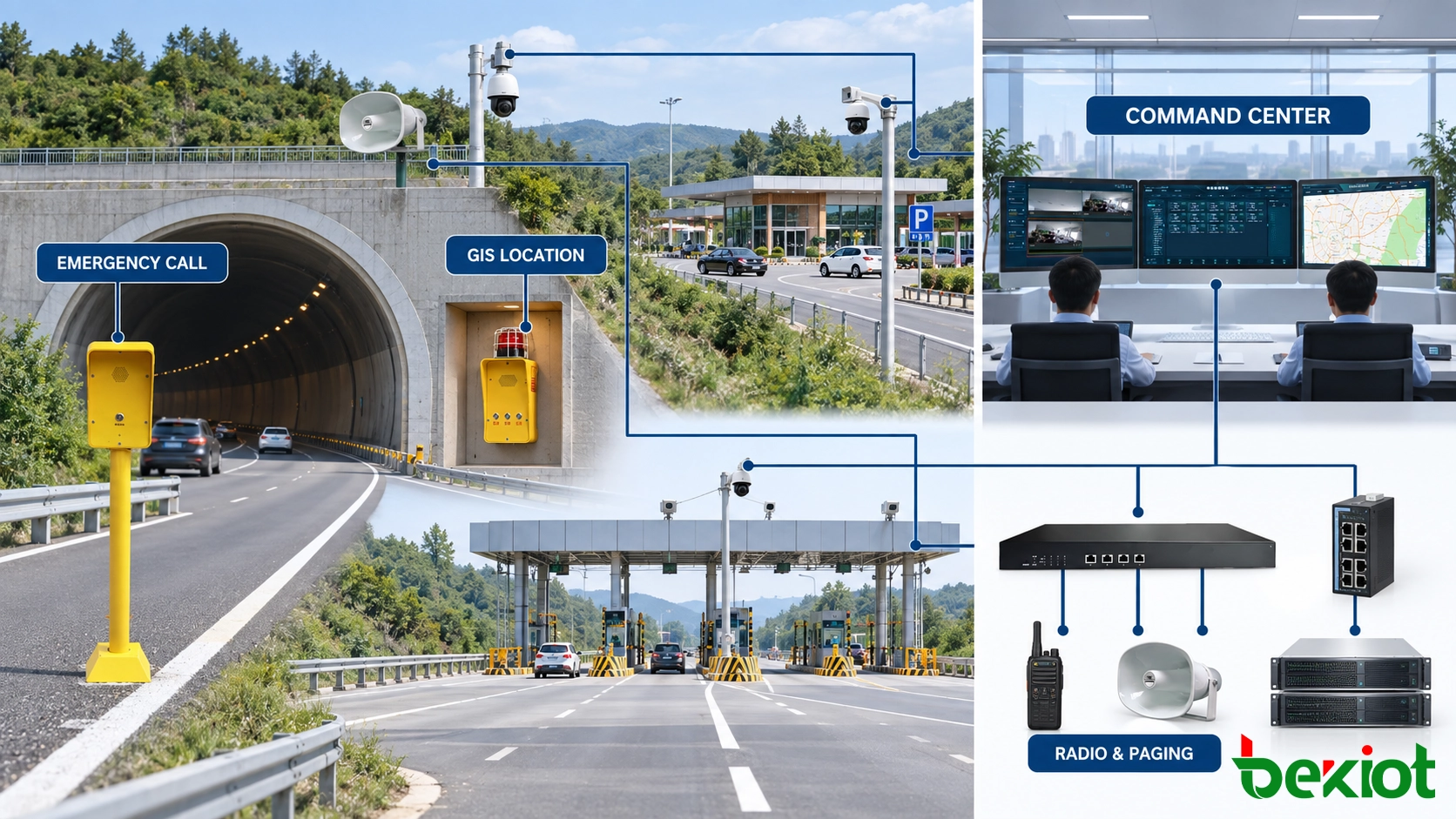
Field communication and monitoring resources are organized according to road section, direction and operational responsibility.
Connect Existing and New Communication Resources
Highway communication networks are rarely built as one project. Older sections may use analog emergency telephones, while newer tunnels and service areas have SIP endpoints. Patrol and maintenance teams may use DMR, PDT, TETRA or Push-to-Talk over Cellular (PoC), often with different coverage and operating rules.
A phased integration protects useful existing assets. Analog lines can enter the IP environment through voice gateways. SIP telephones register with the communication server, while selected radio channels connect through RoIP gateways or supported radio-system interfaces.
Handle Fixed Calls According to Their Purpose
Roadside phones, tunnel call points, toll-station extensions and service-area telephones can share a structured numbering plan without following identical routing rules.
An SOS terminal may call a predefined destination as soon as the button is pressed or the handset is lifted. A toll-station phone can retain ordinary dialing for routine coordination. Call permissions prevent public-facing terminals from reaching unrelated internal or external numbers.
During night operation, calls from a locally unattended section may route to a regional command center. The receiving operator still sees the originating road position and emergency classification.
Present Radio Channels as Operational Resources
Dispatchers work more effectively with names such as “North Tunnel Patrol” or “Recovery Team West” than with gateway ports and radio frequencies. The console can group available channels by road section and responsibility while preserving the access rules of each radio network.
A dispatcher may contact the local patrol first, then bring a recovery contractor or external command post into the communication when the incident requires it. Telephone-to-radio conferencing is established for a defined purpose and released when the exchange is complete, leaving the channel available for field traffic.
Deeper integration may provide radio identity, group selection and push-to-talk status. A basic RoIP connection may offer only audio and PTT. The project specification needs to distinguish these capabilities rather than treating every radio interface as equivalent.
Combine Video Verification with Targeted Paging
Camera linkage gives the operator a faster view of lane occupancy, visible smoke, pedestrians and approaching traffic. It is particularly useful when the caller cannot describe the scene clearly.
Video remains supporting information. Rain, darkness, smoke and vehicle obstruction can hide important details, so the dispatcher still relies on field reports and other road-monitoring data.
Once the affected area is understood, the operator can issue a live or prerecorded announcement to the relevant tunnel section, toll station or service area. A local incident does not need to interrupt every speaker on the highway network.
Keep Every Communication Action with the Incident
A major road accident can generate many independent calls within a few minutes. Patrol officers report conditions, traffic police request lane closures, medical teams confirm their access route and tunnel staff provide equipment status. Without a shared incident record, these updates can become separate conversations with no clear sequence.
Consider a tanker collision near a tunnel entrance. The first SOS call identifies the road section and direction. A nearby camera confirms that one lane is blocked, but the tanker placard cannot be read. The dispatcher contacts the closest patrol and asks the toll station upstream to prevent additional heavy vehicles from entering the section.
Once the patrol confirms a hazardous-material risk, the event expands. Fire and environmental response teams are added, the affected paging area is widened and the appropriate access route is shared with incoming units. Each action stays attached to the original event rather than creating a new, unrelated task.
Track Progress Instead of Treating Contact as Completion
An answered call only confirms that communication has started. The operational event remains active while teams are traveling, lanes are being closed or injured people are waiting for assistance.
The incident interface can show stages such as received, under verification, resources dispatched, field response and cleared. Operators record important milestones, including the first acknowledgement, team departure, arrival, traffic restriction and road reopening.
This timeline helps the next shift understand the situation and provides evidence for later review. It can reveal whether a delay occurred during call handling, resource selection, travel to the site or communication with an outside organization.
Control the Scope of Public Information
Messages sent to road users need to match the confirmed event. A breakdown on an exit ramp may only affect a local toll station and one patrol sector. Smoke inside a tunnel may require instructions at the portals, inside the bore and on the upstream approach.
Recorded messages provide consistent language for evacuation, lane closure and restricted access. Live announcements are better suited to changing conditions, such as a revised evacuation direction or the arrival of rescue teams.
When the communications platform exchanges information with variable-message signs or traffic-control systems, each interface needs a defined authority boundary. Broadcasting an instruction and changing traffic-control equipment are different operations and may require separate approval.
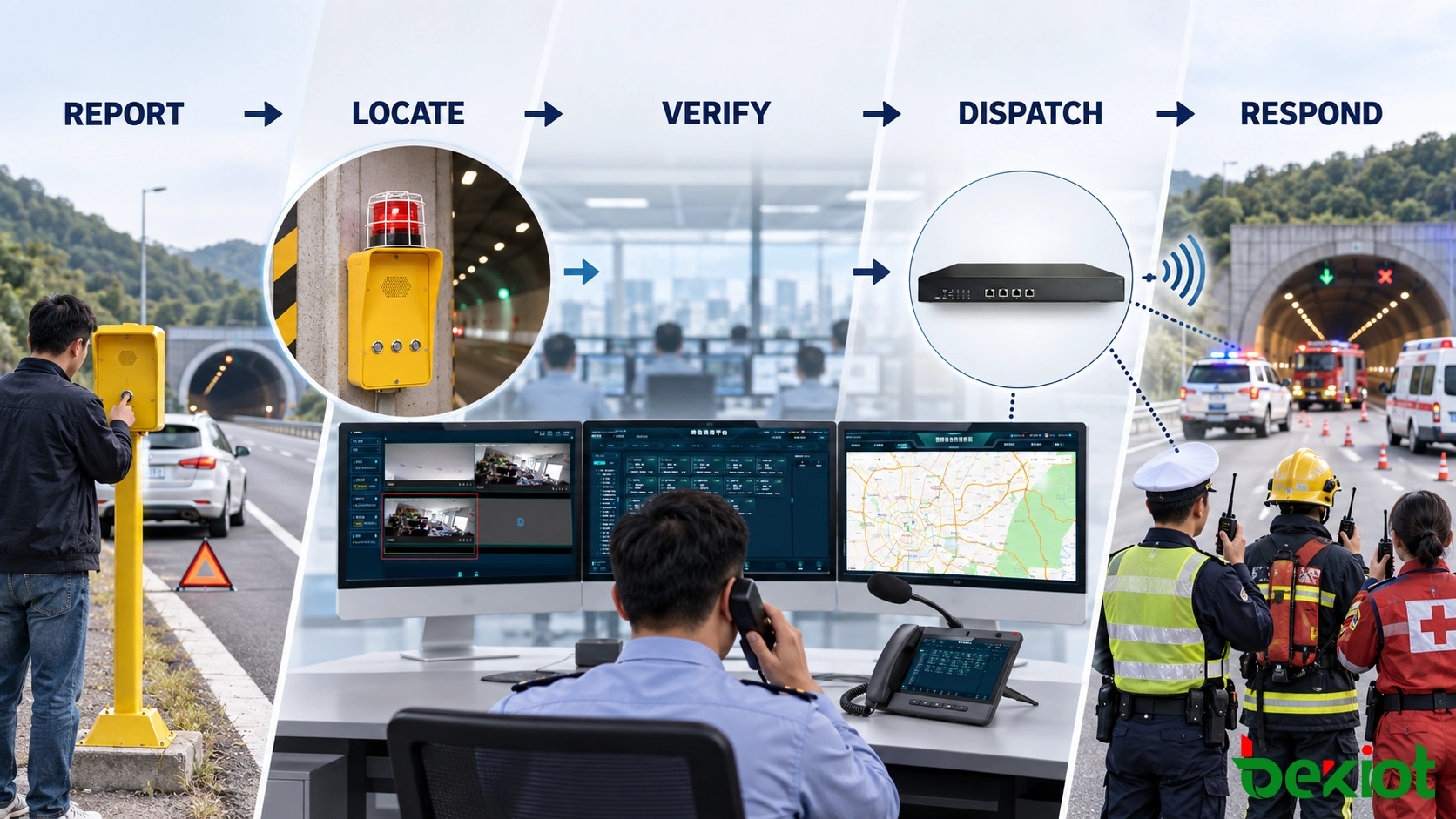
Calls, field reports, paging actions and response milestones remain associated with one managed incident.
Preserve Local Service When the Main Connection Fails
A highway may extend across hundreds of kilometers, with tunnels and operating stations connected through a common fiber network. Damage to one route or the loss of a core node can isolate facilities that still have power and functioning local equipment.
A layered deployment reduces this risk. Regional centers manage shared users, recording and cross-section resources. Section control rooms handle their own alarms and routine dispatch, while important tunnels and toll stations retain enough local functionality to communicate during a wide-area outage.
Test Complete Services, Not Individual Redundant Devices
Installing two servers does not remove a single point of failure if they share one switch, storage system or power circuit. The same applies to backup links routed through the same roadside cabinet or fiber duct.
A resilience review follows the entire communication path:
Server, database and recording services
Core switches and roadside access equipment
Fiber routes and tunnel entry points
Radio controllers and RoIP gateways
Operator consoles and local paging controls
UPS systems and generator-backed power
Authentication, DNS and time synchronization
During a failover exercise, engineers place a real call from the field and follow it to the intended operator. They also confirm that radio groups remain available, emergency announcements keep their priority and new recordings contain accurate timestamps.
Design Specifically for Tunnel Conditions
Tunnel communication is affected by vehicle noise, ventilation fans, reflected sound and restricted radio propagation. A telephone that performs well in a workshop may be difficult to understand when mounted beside an active traffic lane.
Field tests need to cover portal areas, cross-passages, equipment rooms and the center of long tunnel bores. Speech is checked while traffic and ventilation systems are operating, using complete safety instructions rather than short test tones.
If the link to the regional center is interrupted, local personnel still need a way to answer tunnel calls, use designated radio resources and send essential announcements. The fallback method may be less feature-rich than the central platform, but it must remain clear, documented and accessible.
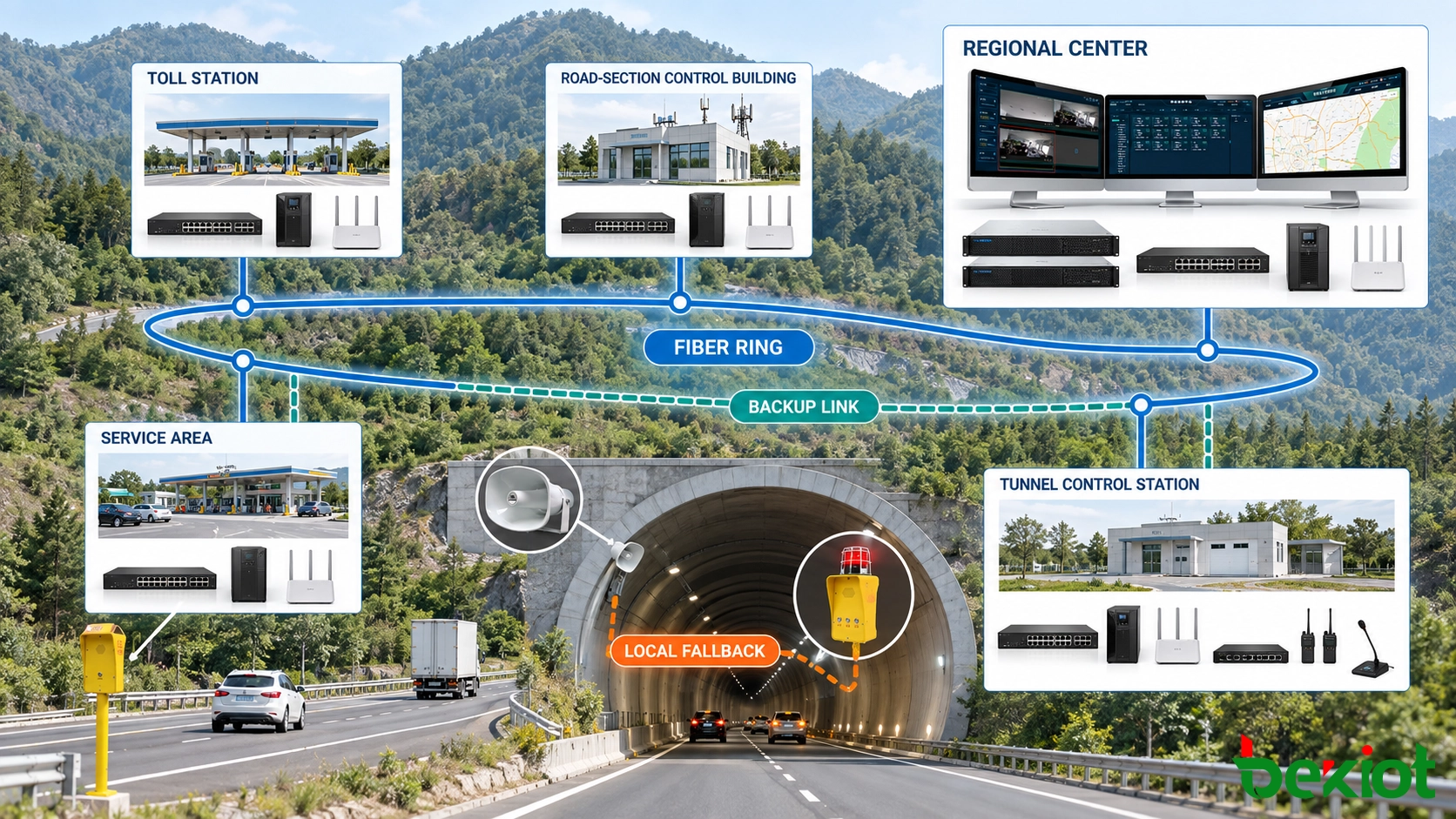
Central management and local operating nodes maintain essential communication across fiber, wireless and backup paths.
Commission the System Through Real Operating Scenarios
Commissioning is most useful when it reproduces the work of control-room and field personnel. Instead of checking telephones, radios and servers separately, the acceptance team runs complete scenarios from the reporting point to incident closure.
A roadside test begins with the emergency button, confirms the displayed direction and kilometer marker, contacts the assigned patrol and checks the unanswered-call route. A tunnel exercise adds camera verification, field radio communication and an announcement to the selected bore.
Tests involving simultaneous incidents are particularly valuable. They show whether new SOS calls remain visible while another event is active, whether operators can separate the records and whether radio and paging resources can be assigned without affecting unrelated road sections.
Confirm Security and Operational Accountability
Control-room operators, supervisors and maintenance engineers do not require the same permissions. Operators handle assigned calls and communication resources. Supervisors manage wider response areas, while technical staff maintain devices without automatically receiving authority to initiate emergency broadcasts.
High-impact actions, including network-wide announcements and changes to emergency routes, can require an additional confirmation. Individual user accounts make it possible to identify who initiated, modified or ended an operation.
Final documentation includes device identities, road positions, numbers, network addresses, radio resources, paging zones, escalation contacts, account permissions and tested fallback paths. The document set also identifies where each rule is configured, reducing the risk of conflicting settings in terminals, gateways and servers.
Related Solution: Becke Converged Communication System
Reliable highway emergency communication depends on continuity between the person reporting an incident, the operator interpreting it and the teams responding in the field. When location data, voice, radio, video and paging follow the same event process, the control center can coordinate resources without losing time between isolated systems.
FAQ
Can Calls from Ordinary Mobile Phones Enter the Command Platform?
Yes. A compatible SIP trunk, mobile-network interface or contact-center connection can route public calls to authorized positions. Mobile calls do not automatically provide the same precise location data as fixed roadside terminals, so the operator may still need to confirm the road, direction and visible marker with the caller.
How Can External Rescue Agencies Join an Incident Conference?
Fire, medical or recovery organizations can join through authorized telephone numbers, SIP connections or supported radio interfaces. They do not necessarily need a permanent platform client. The conference organizer controls who participates and removes temporary connections when coordination ends.
How Should the System Handle Temporary Roadworks?
Temporary work zones can be created as time-limited operational groups containing the responsible supervisor, patrol unit, nearby call points and relevant paging areas. The group should expire or be reviewed when construction ends so that outdated contacts do not remain in emergency workflows.
Can the Platform Provide Multilingual Safety Announcements?
Prerecorded messages can be prepared in the languages commonly used by road users in the region. Each version needs operational review to confirm that lane directions, tunnel references and evacuation instructions remain consistent. Operators can select the required language without changing the target paging zone.
How Are Several Unrelated Incidents Handled at the Same Time?
Each incident receives a separate record, priority, location and resource assignment. Operators can share radio or response resources where appropriate without merging the event histories. Supervisors retain an overview of active incidents and can redistribute calls when one control position becomes overloaded.