Over the past decade, PoC, or Push-to-Talk over Cellular, has reshaped the public-network push-to-talk market. By using mobile operator networks, smart terminals, cloud platforms, and application-based dispatch systems, PoC made group communication easier to deploy than traditional private radio networks.
However, critical communication is now entering a more demanding stage. Many industries no longer need only “voice that can connect.” They need real-time video, data coordination, priority assurance, cross-agency interoperability, public-private network integration, and stronger command capabilities. This is why MCX, the 3GPP-defined mission-critical service framework, is becoming increasingly important.
Why PoC Became Successful So Quickly
The success of PoC came from a simple but powerful change: it lowered the entry barrier for push-to-talk communication. Compared with narrowband private radio systems such as DMR, PDT, TETRA, and other trunked radio networks, PoC does not require the same level of dedicated infrastructure, spectrum planning, base station construction, or heavy upfront investment.
In many deployments, a SIM card, a smart terminal, and a platform are enough to build a practical dispatch communication system. This made PoC attractive for logistics, property management, security, energy, transportation, commercial operations, and many other industries where fast deployment and wide-area coverage were more important than strict mission-critical guarantees.
China’s mature hardware supply chain also accelerated the growth of PoC. From chips and modules to smart terminals, dispatch platforms, ODM manufacturing, and overseas channels, the ecosystem became increasingly complete. Shenzhen in particular developed into one of the most important global clusters for PoC devices and solutions.
PoC Solved the Connection Problem First
PoC’s biggest contribution was not simply adding another push-to-talk application. It helped the critical communication industry complete its first large-scale move toward public-network-based operation. It allowed many users outside traditional public safety and large private-network sectors to access dispatch communication for the first time.
For many commercial and light industrial users, this was enough. They needed group calls, fast voice communication, location features, dispatch management, and wide-area connectivity. PoC provided these capabilities with lower cost and simpler deployment.
But as industries become more digital, the communication requirement is changing. Users increasingly expect visual command, real-time data, cross-region collaboration, system linkage, and guaranteed service quality. This means that communication is moving from “being connected” to “being reliable, prioritized, integrated, and mission-ready.”
New Demands Are Pushing the Market Further
The next stage of critical communication is driven by several practical requirements. Command centers need video-enabled dispatch rather than voice-only coordination. Emergency teams need multi-department and cross-region collaboration. Industrial sites need voice, video, sensor data, and alarm information to work together.
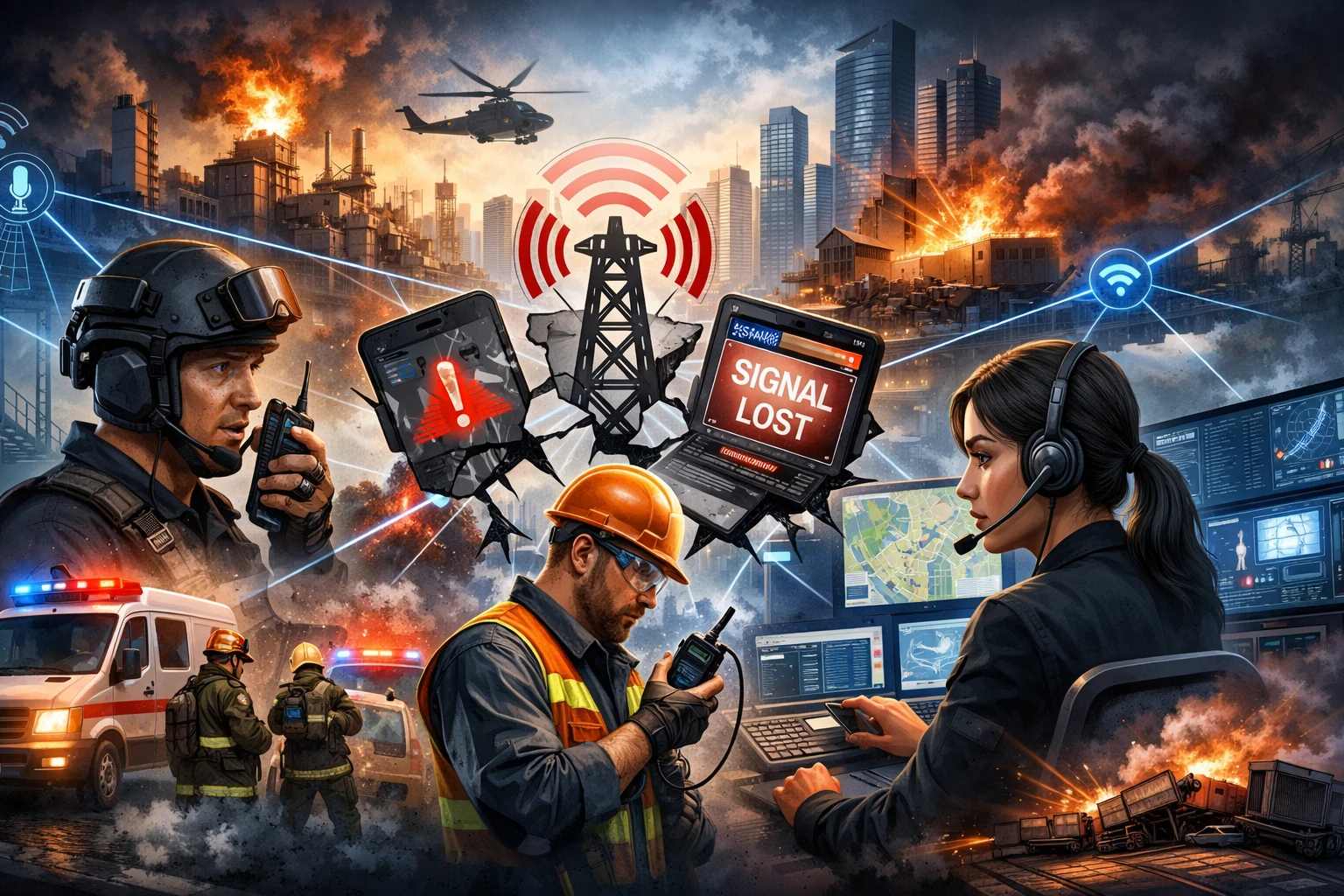
At the same time, communication networks need stronger quality assurance. For high-risk scenarios, users care about low latency, high reliability, service priority, interoperability, and the ability to keep communication available when ordinary network traffic is congested.
This is where PoC begins to show its limits. PoC is often deployed as an application-layer service over commercial mobile networks. It can be useful and efficient, but it does not automatically provide the full network-level priority, standardized interoperability, and mission-critical architecture required by emergency services and high-reliability industries.
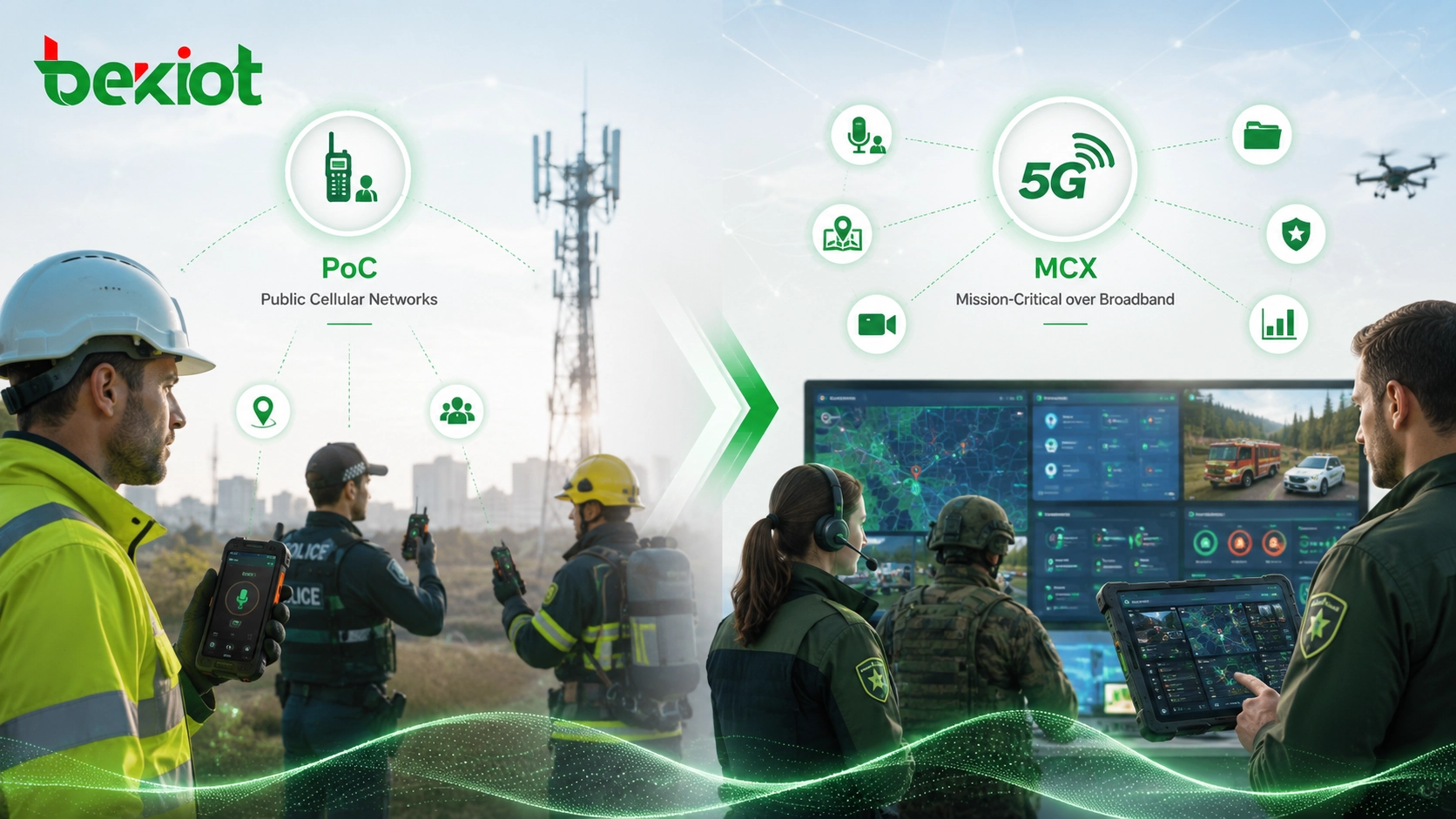
PoC made public-network push-to-talk widely accessible, but MCX aims to define how voice, video, and data should operate as mission-critical services over modern broadband networks.
MCX Is Not Simply an Advanced Version of PoC
A common misunderstanding is that MCX is just PoC with more features. In reality, the two are based on different industry logic. PoC is mainly focused on fast deployment, broad availability, and service popularization. MCX focuses on standardization, reliability, priority, interoperability, and system-level coordination.
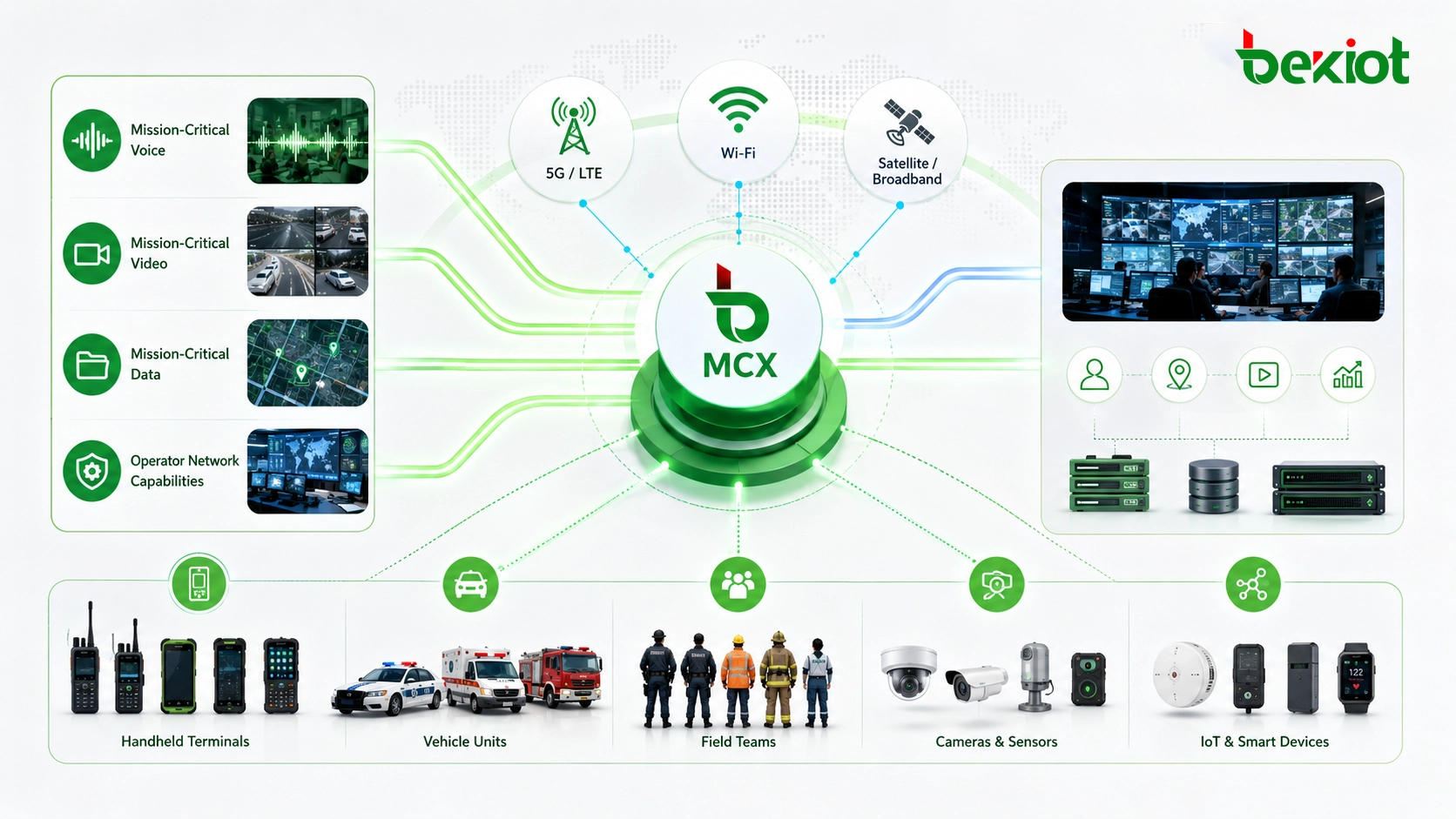
MCX refers to Mission Critical Services defined within the 3GPP system. It includes mission-critical push-to-talk, mission-critical video, and mission-critical data. In other words, MCX is not limited to voice communication. It is designed for a wider mission-critical broadband service environment.
Because MCX is tied to telecom network architecture, it is more complex than a typical PoC platform. It may involve 5G SA networks, QoS control, priority and pre-emption mechanisms, network slicing, operator core network coordination, identity and security systems, dispatch platforms, and interconnection between multiple organizations.
Why MCX Takes Longer to Mature
The global development of MCX has been slower than many market expectations because it requires more than mature devices or software applications. It requires the coordinated development of terminals, platforms, operator networks, core network capabilities, standards compliance, security mechanisms, dispatch systems, and ecosystem interoperability.
PoC can often be introduced as a service by application providers or solution vendors. MCX, however, is much closer to the network itself. To deliver true mission-critical performance, it needs cooperation between equipment vendors, operators, platform providers, public safety organizations, industrial users, and regulators.
This explains why MCX is not replacing PoC overnight. PoC will continue to serve many commercial and light industry scenarios. MCX will grow first in sectors where communication reliability, priority, standardization, and multi-agency coordination are more important than low-cost deployment alone.
Public Safety and Emergency Systems Need More Than Voice
Emergency communication systems are moving from voice-centered operation to information-centered command. In the past, the core question was whether field teams could talk to each other. Today, emergency teams may also need live video, map-based dispatch, resource status, sensor information, data reporting, location sharing, and real-time event coordination.
This change is especially important for public safety, disaster response, transportation, energy, utilities, large industrial sites, and urban emergency management. These users need communication systems that can work across networks, regions, departments, and command levels.
MCX is designed for this direction. It supports the idea that mission-critical communication should not be only a voice service. It should become a standardized broadband service framework where voice, video, and data can work together under mission-critical requirements.
Operators Are Returning to the Critical Communication Market
Another reason MCX is becoming more important is the development of 5G SA, private 5G networks, and operator B2B services. As mobile networks become more capable, operators are once again becoming important participants in critical communication systems.
In the PoC stage, many services were built around applications, smart terminals, and cloud platforms. In the MCX stage, the operator network itself becomes a more important part of the service. Network priority, slicing, coverage design, core network coordination, and service assurance are all closely related to the carrier environment.
For industries that require stronger communication guarantees, this is a major shift. The future system may not be a simple choice between public network and private network. Instead, it may combine public networks, private 5G, broadband trunking, satellite links, narrowband backup, and dispatch platforms into a coordinated communication architecture.
Video and Data Are Changing the Meaning of Critical Communication
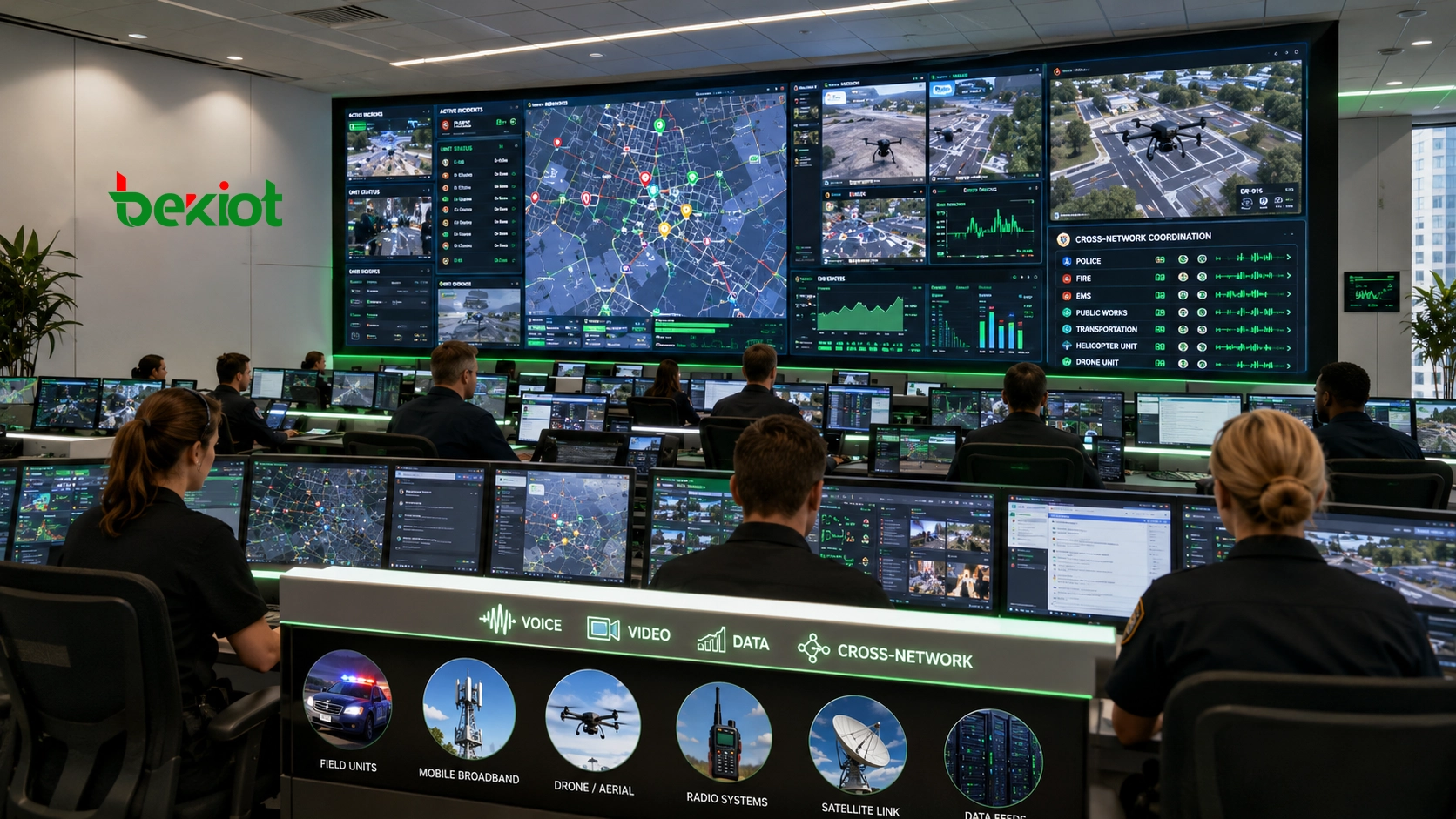
Future mission-critical communication will not be built around push-to-talk voice alone. Field teams may need to send video back to the command center. Dispatchers may need AI-assisted analysis. Devices may need to exchange status data. Command platforms may need to connect alarms, maps, cameras, sensors, and field terminals.
This means critical communication is becoming more data-centered. Voice remains important, but it is only one part of the workflow. Real-time video, structured data, location information, system alerts, and operational records are becoming equally important in many scenarios.
MCX is better aligned with this trend because it includes mission-critical voice, video, and data services under a common standards-based framework. This gives it a stronger long-term position in broadband critical communication.
PoC Will Still Have a Long Market Life
The rise of MCX does not mean PoC will disappear. PoC still has strong value in commercial communication, small and medium-sized organizations, flexible dispatch scenarios, property management, logistics, security, retail operations, and many light industry applications.
For these users, cost, deployment speed, terminal availability, and operational simplicity may matter more than strict mission-critical guarantees. PoC can continue to meet these needs efficiently.
The more realistic market direction is layered development. PoC will remain important for broad public-network push-to-talk services, while MCX will grow in higher-reliability sectors that require standardization, priority, interoperability, video, data, and stronger network coordination.
China’s Critical Communication Market Is Moving in the Same Direction
China’s critical communication market is also showing signs of moving from simple public-network intercom toward broader mission-critical broadband communication. Several trends are shaping this direction.
First, national and regional emergency communication systems are being upgraded. Concepts such as broadband-narrowband integration, space-air-ground coordination, and cross-regional command are becoming more important. These trends require communication systems to connect more networks, more departments, and more types of information.
Second, operators are deepening their role in industrial and emergency communication through 5G SA, private network projects, and B2B services. This creates a stronger foundation for mission-critical services that rely on network-level capability rather than application-layer connectivity alone.
Third, users are increasingly demanding video, data, AI-assisted dispatch, multi-terminal cooperation, and situational awareness. These requirements are difficult to satisfy with voice-only systems. They point toward a more complete MCX-oriented architecture.
What This Means for System Planning
For project owners, the transition from PoC to MCX should not be understood as a sudden replacement. It is better viewed as an evolution of communication architecture. Different users should choose different levels of capability according to risk level, operational complexity, budget, network conditions, and command requirements.
A logistics company may still choose PoC for simple wide-area dispatch. A factory may use PoC together with video monitoring and alarm linkage. A transportation authority, emergency command center, or energy operator may need a more robust broadband critical communication system with priority, redundancy, and cross-system integration.
The key is to plan communication as part of a larger operational system. Voice, video, data, alarms, maps, terminals, networks, and dispatch platforms should not be isolated. They should be designed around real workflows and emergency response requirements.
The Future Is Not Only Public Network Push-to-Talk
PoC proved that public-network communication could serve a much wider range of industries than traditional private radio systems. It lowered cost, expanded access, and created a large ecosystem of terminals and platforms.
But the next stage of critical communication requires more than access. It requires mission-grade service design, stronger network cooperation, unified standards, priority assurance, video and data integration, and multi-agency interoperability.
That is why MCX is becoming the long-term direction for many high-value and high-reliability communication scenarios. PoC opened the door to public-network push-to-talk. MCX is likely to define the next stage of broadband mission-critical communication.
FAQ
Is MCX only useful for public safety organizations?
No. Public safety is one of the most important application areas, but MCX can also be relevant to transportation, energy, utilities, airports, ports, mining, large industrial parks, and other sectors that need reliable broadband communication.
Can existing PoC users migrate directly to MCX?
Migration depends on the platform, terminal, network, and service architecture. Some users may adopt hybrid systems first, using PoC for general communication while introducing MCX-oriented capabilities in higher-priority workflows.
Does MCX require 5G?
MCX is closely associated with LTE and 5G mission-critical broadband networks. 5G can provide stronger capabilities for slicing, capacity, low latency, and private network deployment, but actual implementation depends on the operator and system architecture.
Why is interoperability important for MCX?
Mission-critical communication often involves multiple agencies, regions, departments, and systems. Interoperability helps different users communicate and coordinate during joint operations, emergencies, and large-scale incidents.
What should organizations consider before choosing MCX?
They should evaluate network coverage, service priority requirements, dispatch workflow, terminal compatibility, cybersecurity, system redundancy, integration with existing platforms, and long-term operation and maintenance capabilities.