


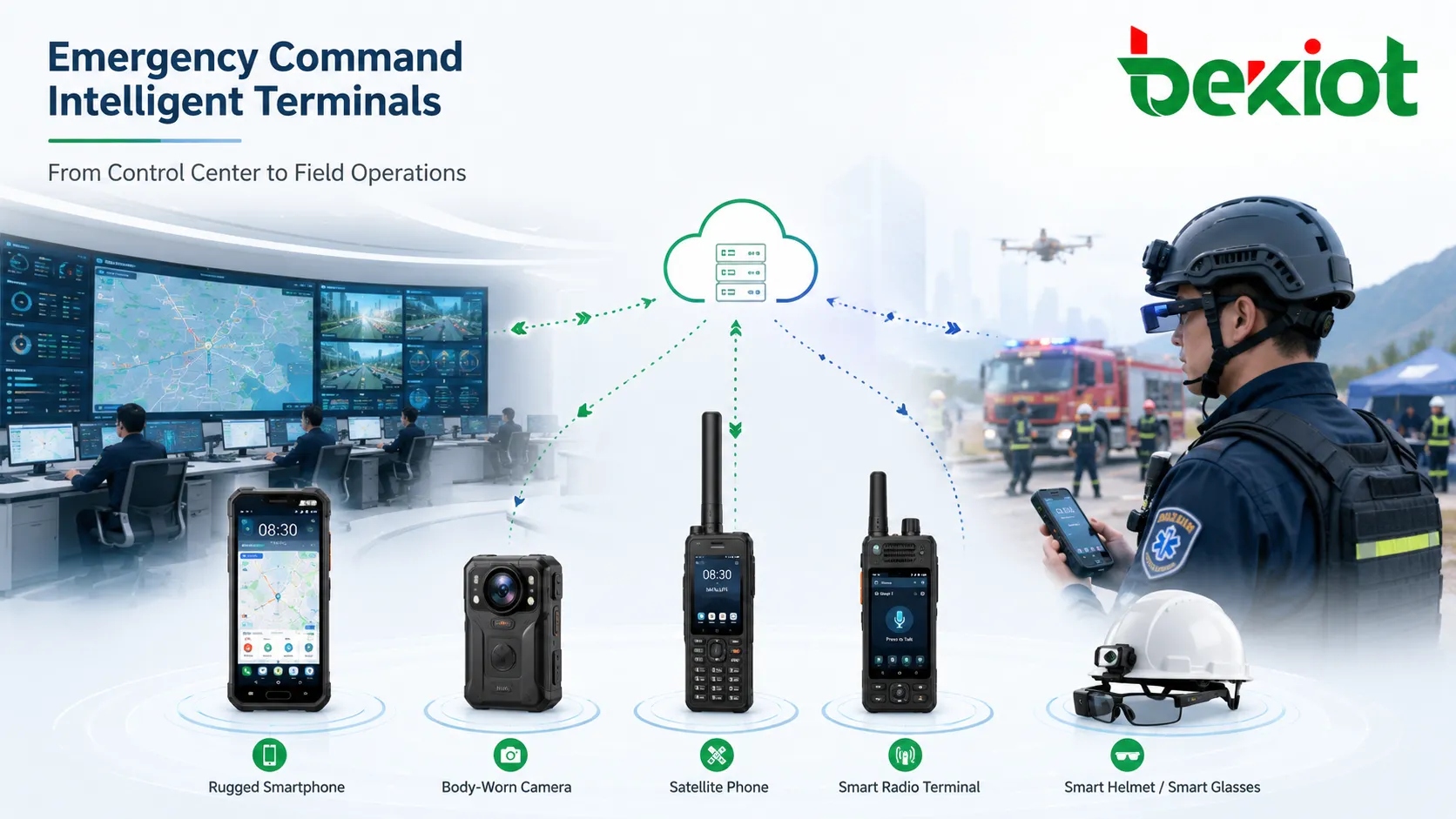
Emergency command projects depend on more than one communication platform. Field teams need terminals that can connect people, video, location, data, and dispatch instructions under difficult conditions. These terminals work with emergency command systems and converged communication platforms to support audio and video calls, push-to-talk communication, video return, GIS positioning, on-site recording, and remote coordination.
Unlike ordinary consumer devices, intelligent terminals for emergency response usually need rugged protection, reliable network access, and strong field usability. Many devices are designed with waterproof, dustproof, shock-resistant, or even explosion-proof features, so they can operate in harsh outdoor, industrial, rescue, mining, transportation, and public safety environments.
Key Point: Emergency command terminals should combine rugged protection, broadband communication, radio capability, satellite backup, video return, and dispatch system integration.
Why field terminals matter in emergency response
In an emergency scene, the command center must understand what is happening, contact the right team, locate field personnel, and issue instructions quickly. Traditional voice communication alone is often not enough. Modern emergency response requires voice, video, positioning, image capture, data reporting, and real-time collaboration.
Intelligent terminals help fill this gap. A field worker can use a rugged smartphone to join a dispatch call, a body-worn recorder to upload live video, a dual-mode terminal to keep local radio contact when mobile networks fail, or a satellite phone to maintain communication in areas without ground network coverage.
This makes terminal planning an important part of emergency command system design. The goal is not simply to equip every person with a device, but to match the right terminal type with the right emergency scenario, communication network, dispatch workflow, and safety requirement.
Rugged smartphones for mobile command access
Rugged smartphones are one of the most common intelligent terminals in emergency command projects. They retain the flexibility of ordinary smartphones while adding protection for field use. Many rugged phones support 4G or 5G network access, Wi-Fi, Bluetooth, NFC, camera functions, positioning, mobile applications, and multimedia communication.
When connected with a command and dispatch platform, rugged smartphones can support mobile audio calls, video calls, group communication, task reporting, location sharing, image upload, and video return. This allows field teams to communicate with the command center through a familiar smart operating system and dedicated emergency communication applications.
In special environments, rugged smartphones may also be selected with explosion-proof or higher protection designs. This is important for petroleum, chemical, mining, power, emergency rescue, and hazardous industrial locations where ordinary smartphones may not meet safety requirements.
Body-worn recorders for evidence and live video
Body-worn recorders are widely used when the emergency command center needs clear audio and video evidence from the field. Compared with smartphones, recorders usually focus more on continuous video capture, front-line evidence collection, incident documentation, and real-time scene recording.
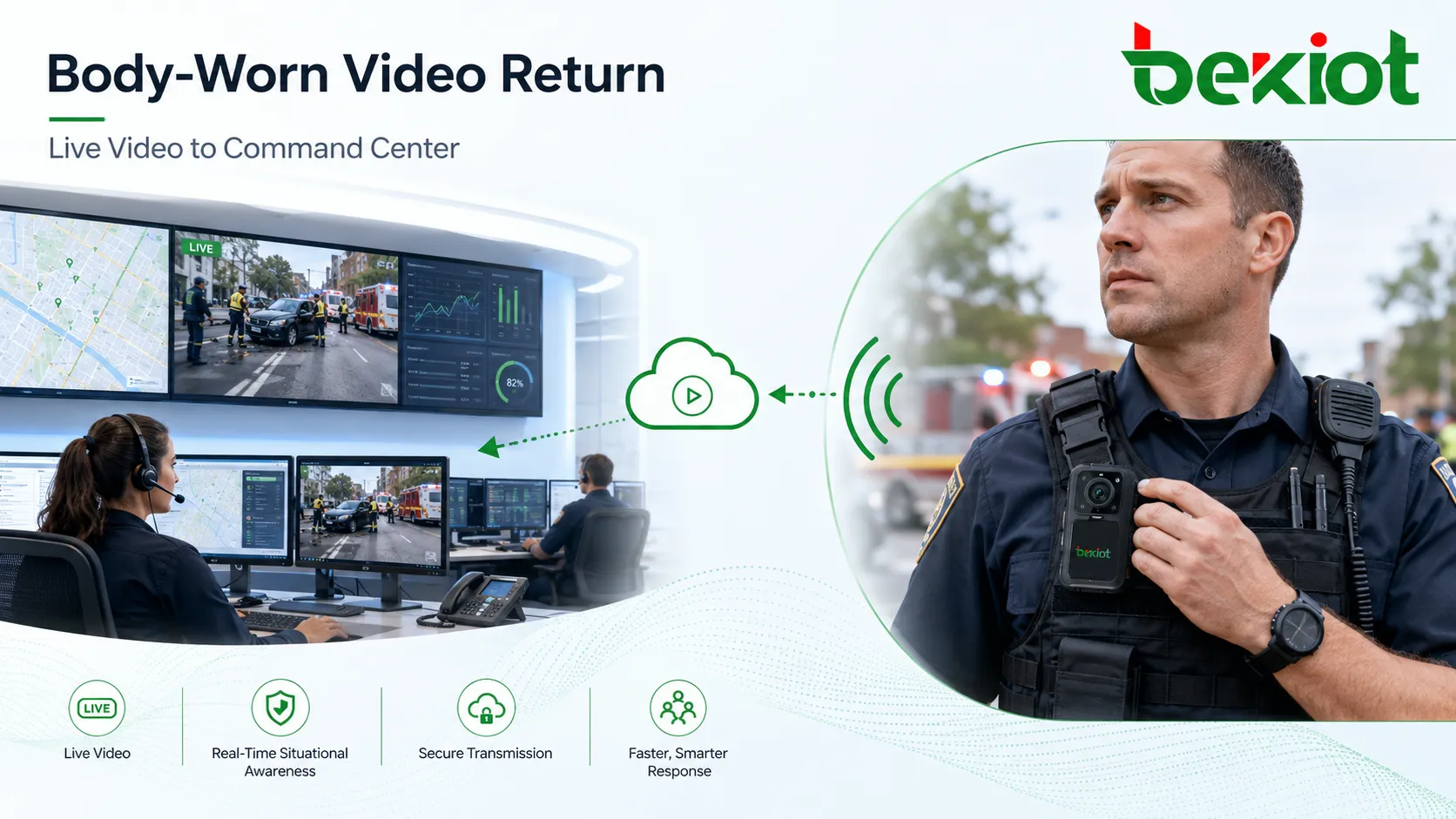
Modern body-worn recorders can integrate 4G or 5G connectivity, online video upload, voice communication, push-to-talk functions, and audio/video calling. When connected with a dispatch system, they can become mobile video sources that help operators see the field situation directly.
This is useful in law enforcement, traffic management, emergency rescue, industrial inspection, public safety, security patrol, and disaster response. The command center can view live video, communicate with the wearer, record the handling process, and use video evidence for later review.
Dual-mode terminals for network and radio continuity
Dual-mode smart terminals are usually based on rugged smartphone design, but they add private radio communication capability. This is important because public-network push-to-talk over 4G or 5G depends on mobile signal coverage. When an emergency damages the network, blocks coverage, or causes congestion, public-network communication may become unstable.
A dual-mode terminal can combine smart mobile communication with a built-in radio function. Some solutions integrate 400 MHz radio communication capability, allowing nearby teams to maintain local push-to-talk communication even when mobile network access is unavailable.
This reduces the need to carry a separate radio and smartphone at the same time. For emergency workers, lighter equipment means easier movement, faster response, and less operational burden. For command system design, dual-mode terminals provide a practical balance between broadband multimedia communication and narrowband radio reliability.
Satellite phones for extreme communication backup
Satellite phones are essential backup communication terminals for emergency command projects. They do not depend on terrestrial base stations, local broadband networks, Wi-Fi, or public mobile network coverage. In extreme conditions, they may become the only available communication method.
In China-related emergency projects, Tiantong-1 satellite phones are often considered because they can provide satellite communication coverage within China. Under outdoor conditions with available satellite signal resources, users can make calls to mobile phones, landlines, and other communication endpoints, helping maintain command communication when ground networks are unavailable.
Satellite phones are especially valuable for disaster rescue, remote mountains, offshore areas, border regions, mining sites, forest fire response, flood rescue, and temporary emergency command posts. They should usually be planned as part of the communication backup layer rather than as the only daily communication terminal.
Wearable devices for hands-free field operation
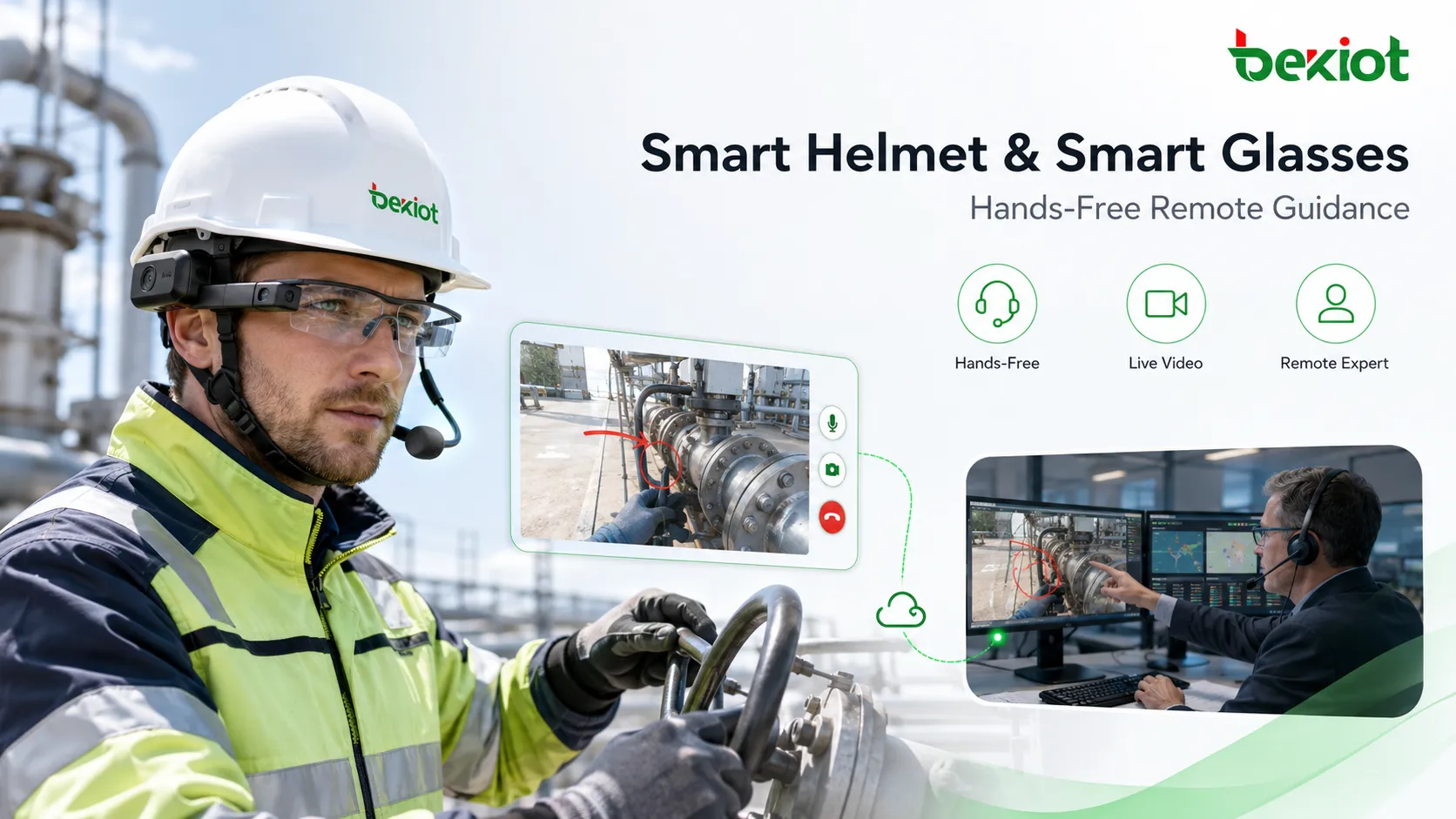
In addition to smartphones, recorders, dual-mode terminals, and satellite phones, emergency command projects may also use smart helmets, smart glasses, and other wearable terminals. These devices are useful when users need hands-free operation, first-person video return, remote expert guidance, or augmented field information.
A smart helmet can integrate camera, microphone, speaker, positioning, network communication, and safety protection. A smart glasses terminal can help experts see what the field worker sees and provide remote guidance. These devices are especially useful in rescue, inspection, maintenance, hazardous operation, and technical support scenarios.
Wearable terminals are not always required in every project, but they can greatly improve efficiency when field workers must keep both hands free while sharing real-time visual information with the command center.
Matching terminals with communication networks
Emergency command terminals usually rely on different communication links. Rugged smartphones and body-worn recorders mainly use 4G, 5G, Wi-Fi, or private broadband networks. Dual-mode terminals add local radio communication. Satellite phones provide backup communication when ground networks fail.
A reliable emergency command solution should not depend on only one network. In many projects, the system may combine public mobile networks, private 5G networks, Wi-Fi, narrowband radio, satellite communication, and wired command center networks. Each terminal type should be selected according to the network resources available at the field site.
For example, a city emergency team may rely mainly on 4G or 5G terminals with video return. A mine rescue team may require rugged and explosion-proof devices. A remote rescue team may need satellite backup. A security patrol team may need body-worn recording and push-to-talk communication.
Integration with command and dispatch platforms
Intelligent terminals become more valuable when they are connected to the command and dispatch system rather than used as isolated devices. Through system integration, the command center can call field users, view live video, check GIS locations, receive data reports, dispatch tasks, and record communication processes.
This integration allows different terminal types to work together. A rugged smartphone can join a video call, a recorder can return live video, a dual-mode terminal can keep radio contact, a satellite phone can provide backup voice, and wearable devices can provide first-person visual information.
The final goal is to improve response efficiency. When an event occurs, the platform should help operators know who is on site, where they are located, what they can see, what communication channel is available, and which team should be dispatched next.
Practical selection checklist
Choose rugged smartphones when field teams need mobile applications, 4G/5G access, video calls, GIS positioning, NFC, Wi-Fi, Bluetooth, and multimedia dispatch functions.
Choose body-worn recorders when the project requires field video capture, evidence recording, live upload, patrol documentation, or real-time video return.
Choose dual-mode terminals when users need both smart mobile communication and local radio communication in case public-network coverage fails.
Choose satellite phones for remote areas, disaster scenarios, and extreme conditions where ground network resources may be unavailable.
Choose wearable devices when hands-free operation, first-person video, remote expert guidance, or safety protection is required.
Verify system integration including audio/video calls, push-to-talk, video return, GIS positioning, data upload, dispatch recording, and platform permissions.
Recommended deployment approach
A practical emergency command terminal plan should be layered. Rugged smartphones can serve as the main mobile terminal for most field workers. Body-worn recorders can be used for law enforcement, patrol, and incident recording. Dual-mode terminals can be assigned to rescue teams or key personnel who need local radio backup. Satellite phones should be reserved for commanders, remote teams, and high-risk emergency scenarios.
Wearable terminals can be added where first-person video and hands-free operation are important. This layered method avoids over-equipping every user with the same device while still ensuring that the command system has enough communication, video, positioning, and backup capabilities.
Before final deployment, the project team should test network coverage, battery life, device protection level, video upload performance, positioning accuracy, application compatibility, and dispatch platform integration. Emergency communication must be verified in real operating conditions, not only in a demonstration environment.
FAQ
Are ordinary smartphones suitable for emergency command projects?
Ordinary smartphones may work in low-risk office scenarios, but they are usually not ideal for field emergency response. Rugged or protected terminals are more suitable when the environment includes water, dust, impact, hazardous areas, or outdoor operation.
Why are body-worn recorders important for emergency teams?
They provide continuous field video, audio evidence, and live visual information. This helps the command center understand the situation and also supports later review, training, and accountability.
Can public-network push-to-talk replace radio communication?
It can be useful when 4G or 5G coverage is stable, but it should not fully replace radio communication in all emergency scenarios. Radio or satellite backup may still be necessary when the public network is unavailable.
When should satellite phones be included?
Satellite phones should be included when the project covers remote areas, disaster sites, mountains, forests, offshore areas, mines, or locations where ground network coverage may fail.
What should be tested before terminal acceptance?
Testing should include voice quality, video return, positioning, battery endurance, network switching, device protection, application login, dispatch calling, group communication, recording, and emergency backup communication.
Do all field workers need the same terminal?
No. Terminal selection should match job roles. Commanders, rescue teams, patrol staff, technical experts, and ordinary field workers may need different terminal combinations.







