What is the Strobe Beacon? What are the system benefits?
A strobe beacon is a visual warning device that uses flashing light to draw attention to an alarm, equipment status, emergency event, or safety condition. It is widely used in industrial plants, warehouses, transportation facilities, substations, public buildings, machinery lines, access control points, emergency help stations, and hazardous work areas.
In many sites, sound alone is not enough. Workers may wear hearing protection, machines may generate high background noise, or an alarm may need to be seen from a distance. A strobe beacon adds a clear visual layer to the warning system, helping people notice events faster and respond more accurately.
A strobe beacon is not just a flashing lamp. It is a visual communication point that helps convert alarms, machine states, and emergency signals into immediate human awareness.
Basic Meaning of a Strobe Beacon
A strobe beacon is a light-based signaling device designed to provide high-visibility indication. It may flash, pulse, rotate visually, stay steady, or use different colors and patterns depending on the event type. The device can be installed on machines, cabinets, walls, poles, gates, doors, vehicles, emergency stations, or control panels.
Strobe beacons are usually connected to another system. The trigger may come from a sensor, PLC, relay output, alarm panel, access controller, fire alarm interface, safety relay, communication terminal, building management system, or remote monitoring platform. When the connected system detects a specific condition, the beacon activates and delivers a visible signal.
Visual Warning Purpose
The core purpose of a strobe beacon is visual warning. It alerts people when something requires attention, such as machine failure, emergency stop, unauthorized entry, door forced open, gas alarm, fire alarm, process abnormality, power fault, or safety-zone warning.
This visual warning is especially useful in large or noisy environments. In a factory, logistics center, tunnel, power room, or chemical plant, workers may not always hear an audible alarm clearly. A flashing beacon helps make the event more visible.
Status Communication Purpose
Strobe beacons are also used for status communication. A beacon may show whether equipment is running, stopped, waiting, in warning state, under maintenance, or in fault condition. Multi-color beacons can represent several states with one device.
Clear status indication improves operational visibility. Operators, maintenance staff, supervisors, and security teams can identify the condition of equipment or zones without checking every screen or control cabinet.
How a Strobe Beacon Works
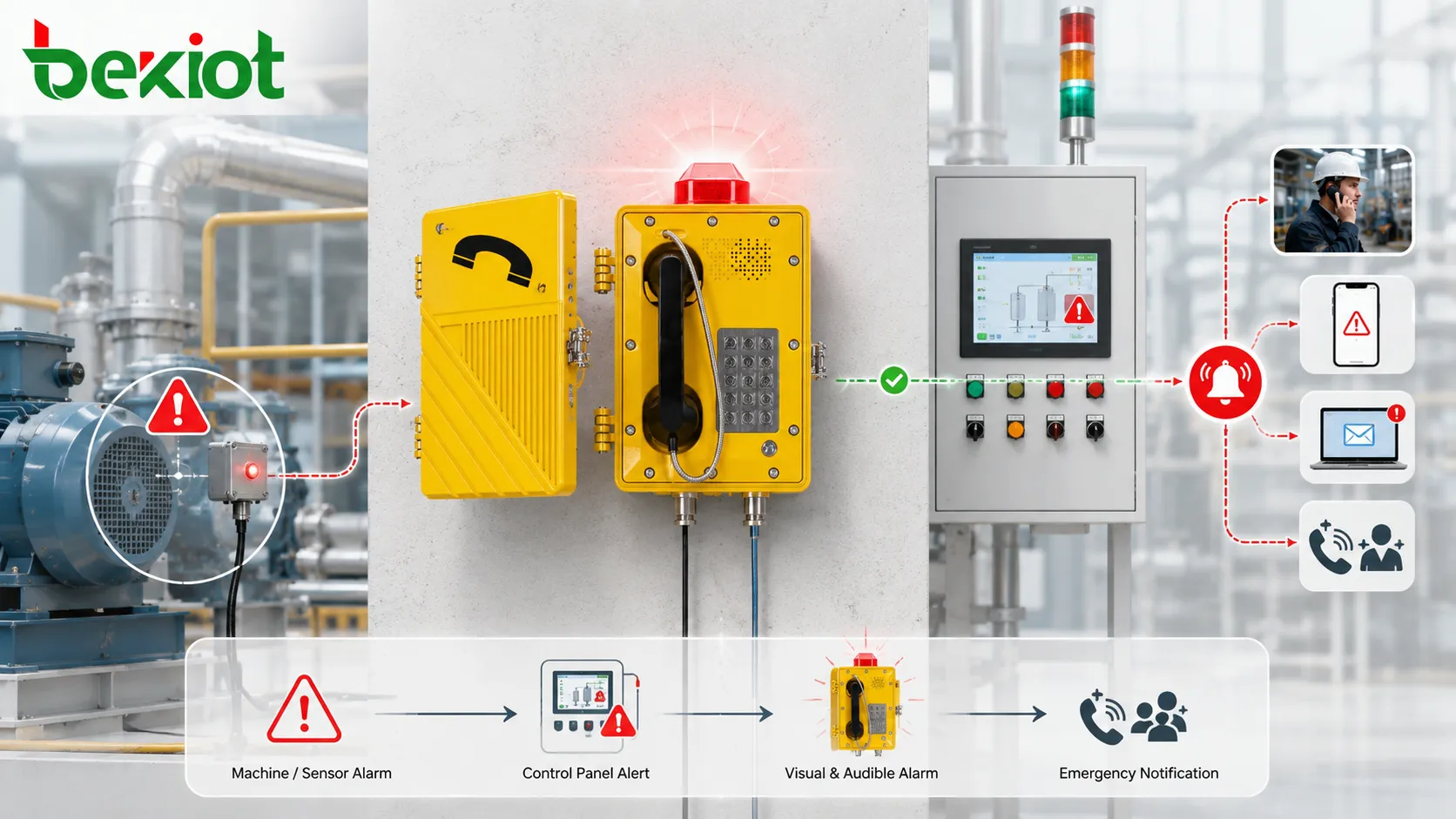
A strobe beacon works by receiving an electrical or control signal and converting it into a visible flash pattern. The input may be direct power, dry contact, relay output, PLC signal, network command, or a dedicated alarm interface. After activation, the beacon emits light through an LED array, xenon tube, or other light source.
Modern systems often use LED strobe beacons because they offer low power consumption, long service life, multiple color options, fast response, and flexible flash patterns. However, the final choice should still match the site’s visibility requirement, voltage, environment, enclosure rating, and safety rules.
Signal Triggering
Triggering is the first step. In simple systems, applying power to the beacon starts the flash. In more advanced systems, the beacon may be controlled by a PLC, alarm controller, relay module, or networked I/O device.
Different trigger inputs can represent different events. For example, one input may activate an amber warning light for machine fault, while another input activates a red flashing light for emergency stop or evacuation warning.
Light Output
The beacon’s light output must be strong enough for the intended distance and environment. Outdoor sites, high-ceiling warehouses, and bright industrial areas usually need stronger output than small equipment rooms or indoor corridors.
Brightness alone is not the only factor. Viewing angle, lens design, flash rate, installation height, background lighting, and obstructions all affect whether the signal can be seen clearly.
Flash Pattern
Flash pattern helps people identify urgency. A slow pulse may indicate a general warning, while a rapid flash may indicate a more urgent event. Some beacons support steady light, single flash, double flash, rotating simulation, or configurable patterns.
Flash patterns should be standardized across the site. If every machine or system uses a different visual language, workers may become confused. Consistency makes response faster and safer.
Main Functions of a Strobe Beacon
Strobe beacons support several functions in safety, automation, security, and facility operations. Their value depends on how clearly the signal is defined and how well it is integrated with the response process.
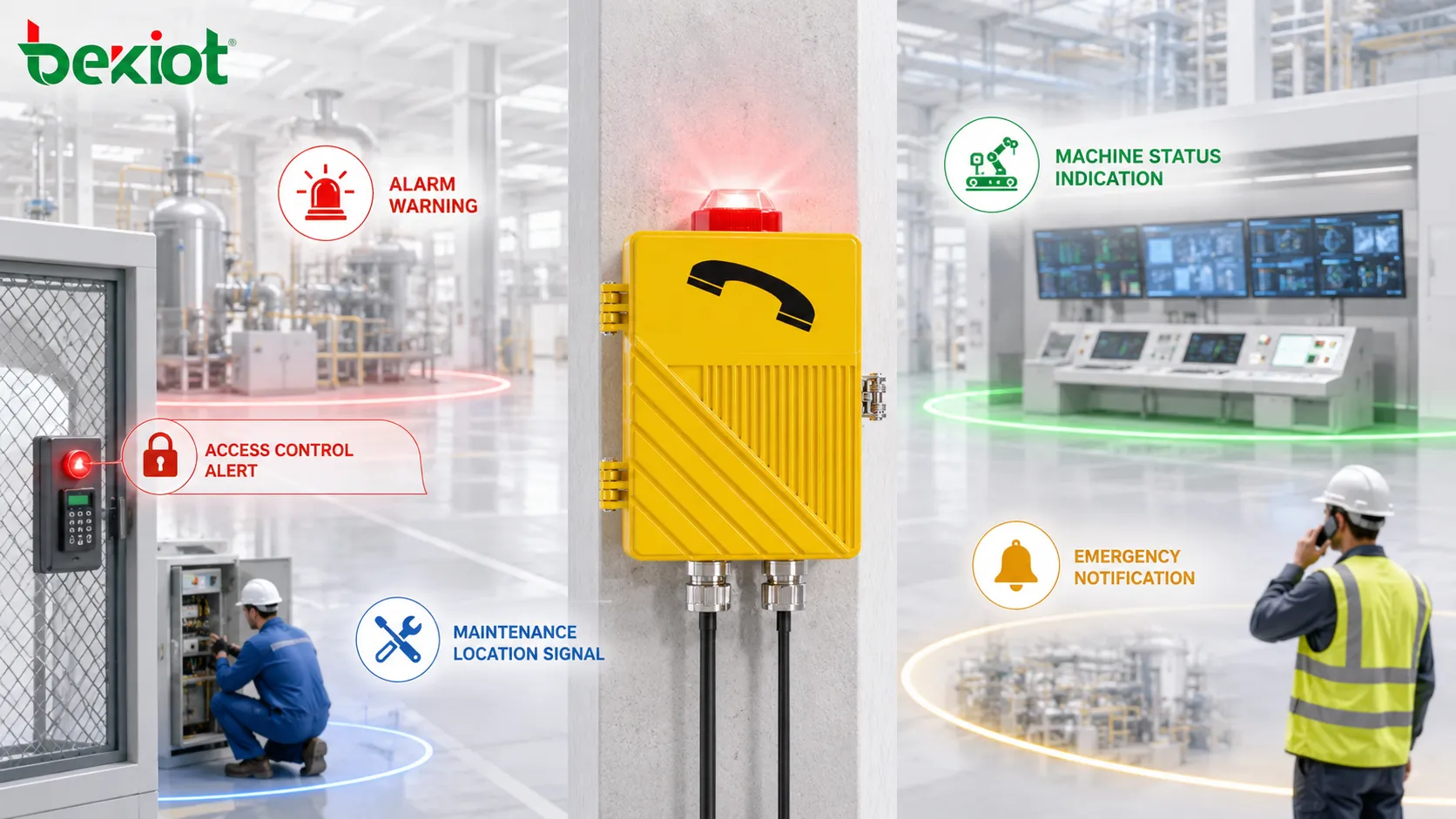
Alarm Warning
Alarm warning is the most common function. When a system detects an abnormal condition, the beacon flashes to tell nearby people that something requires attention. This can include equipment fault, overheating, gas detection, door alarm, fire interface signal, or emergency help request.
The beacon should not only flash; it should also guide action. Workers should know whether the signal means stop, evacuate, check a machine, call maintenance, avoid an area, or contact the control room.
Machine Status Indication
On production lines, beacons often show machine state. Green may indicate normal operation, amber may indicate warning or waiting status, red may indicate fault or stop, and blue or white may indicate maintenance or special process state depending on site convention.
This improves visual management. Supervisors can quickly identify which machines are operating normally and which require attention, reducing downtime and improving workflow coordination.
Emergency Notification
Strobe beacons can form part of an emergency notification system. They may activate when an emergency button is pressed, a fire alarm interface is triggered, a public address message is broadcast, or a security incident is detected.
In these applications, the beacon should be integrated with the full response workflow. Visual warning may need to work together with sirens, speakers, intercoms, control room alarms, CCTV pop-ups, dispatch records, and evacuation instructions.
Access Control and Security Alert
In access control systems, strobe beacons can indicate unauthorized entry, door forced open, gate movement, vehicle barrier operation, restricted area access, or security breach. This allows guards or operators to locate the event visually.
For vehicle gates, loading docks, and automated doors, beacons also warn pedestrians and drivers that equipment is moving or that an area is temporarily unsafe.
Maintenance Location Support
In large facilities, many machines, cabinets, or panels may look similar. A beacon installed near the affected device helps technicians find the problem faster.
This is useful for remote pump rooms, utility cabinets, equipment shelters, production lines, warehouse conveyors, and distributed field stations where fault location must be identified quickly.
System Value in Real Environments
The system value of a strobe beacon is not limited to the device itself. Its real value appears when it helps people notice events, understand priority, locate problems, and respond correctly.
Faster Awareness
A flashing light can be recognized quickly, even when a person is not directly watching a display. In a workshop, plant room, warehouse, or outdoor site, visual alerts help workers become aware of abnormal conditions without waiting for someone to report them verbally.
Faster awareness can reduce equipment damage, safety exposure, delayed maintenance, and operational confusion. This is why beacons are often installed near machines, emergency stations, entrances, and hazardous zones.
Multi-Sensory Alarm Coverage
Many alarm systems combine sound and light. Audible alarms attract attention through hearing, while strobe beacons provide visible confirmation and location information. This improves the chance that the alarm is noticed under different conditions.
Multi-sensory alerting is also important for accessibility. People with hearing limitations, workers wearing ear protection, or personnel in noisy areas may rely more on visible signals.
Better Response Coordination
When a beacon is linked to a defined event, teams can respond more consistently. A red flashing beacon near a machine may tell operators to stop work. A beacon at a help point may tell security staff where assistance is needed. A beacon on a control cabinet may guide maintenance personnel to a specific fault location.
This reduces guesswork and improves coordination between operators, maintenance teams, security staff, and control room personnel.
Improved Operational Visibility
Strobe beacons provide local visual status even when operators are away from computer screens. This is useful in environments where staff move through large areas, supervise multiple machines, or handle physical operations.
Visual indicators support faster decisions and reduce reliance on verbal reporting. In production and facility management, this can improve both safety and efficiency.
Important Technical Features
Strobe beacon selection should be based on the actual environment and alarm purpose. A beacon that works well in a small indoor room may not be suitable for a large outdoor industrial zone.
Light Source Type
LED and xenon are common strobe beacon light sources. LED beacons are widely used because they offer long service life, lower energy consumption, fast switching, flexible color options, and reliable electronic control.
Xenon strobe beacons can produce intense flashes and may still be used in some special warning applications. However, they may require more maintenance and consume more power than LED alternatives.
Color and Meaning
Color selection should follow site standards, safety policy, and applicable rules. Red is often associated with emergency or stop, amber with warning, green with normal operation, blue with special status, and white with general signaling. However, meanings may vary by industry or country.
The most important point is consistency. If red means emergency in one area but only maintenance in another, workers may misunderstand the signal.
Brightness and Visibility
The required brightness depends on viewing distance, ambient light, lens design, mounting height, and background contrast. Outdoor daylight, dusty environments, and large spaces require stronger visibility planning.
Visibility should be tested after installation. A beacon may look bright during installation but become blocked by shelves, pipes, vehicles, equipment doors, or later layout changes.
Flash Rate and Pattern
Flash rate should match urgency. General warning, machine status, emergency event, and maintenance indication should not all use the same pattern if they require different responses.
However, too many patterns can also confuse users. The best design is simple, standardized, and documented.
Voltage and Interface
Strobe beacons may support 12V DC, 24V DC, 110V AC, 220V AC, PoE, relay input, dry contact control, PLC output, or network control depending on model and system design.
Voltage and wiring must be checked carefully. Incorrect voltage or poor wiring may cause malfunction, flickering, false activation, or equipment damage.
Types of Strobe Beacons
Different strobe beacons are used for different environments. Selection should consider brightness, color, power, enclosure, certification, mounting, and control method.
| Type | Typical Use | Main Value |
|---|---|---|
| LED strobe beacon | Machine alarms, facility warnings, equipment status | Low power consumption, long life, flexible control |
| Multi-color beacon | Production lines, process systems, access control points | Multiple states shown through one device |
| Sounder beacon | Emergency alarms, security warning, noisy areas | Combines visible and audible alerting |
| Explosion-proof beacon | Hazardous industrial areas with classified risks | Designed for use only when certification matches the site classification |
| Networked beacon | Smart buildings, IoT systems, remote monitoring platforms | Supports centralized control and event integration |
| Vehicle beacon | Forklifts, service vehicles, emergency vehicles, industrial transport | Improves mobile equipment visibility and movement warning |
Single-Color Beacon
A single-color beacon is suitable when one clear meaning is required. It may indicate machine fault, restricted access, emergency alarm, or equipment running status.
This type is simple and easy to understand. It works well when the site does not need multiple alarm levels at one location.
Multi-Color Beacon
A multi-color beacon can show several states through one device. It is useful for machines, production stations, control panels, access points, and process lines where different events need separate visual meanings.
Multi-color design can reduce installation space and wiring complexity, but the color logic must be clearly defined and documented.
Sounder Beacon
A sounder beacon combines flashing light with an audible tone. It is useful when the system needs both visual and sound notification from one device.
Sounder beacons should be selected carefully. Sound pressure level, tone type, flash intensity, mounting location, and user comfort all affect whether the alert is effective.
Applications in Industrial and Public Systems
Strobe beacons are used across many fields because visible warning is direct and easy to recognize. Their role changes depending on whether the system is designed for safety, machine status, access control, or emergency notification.
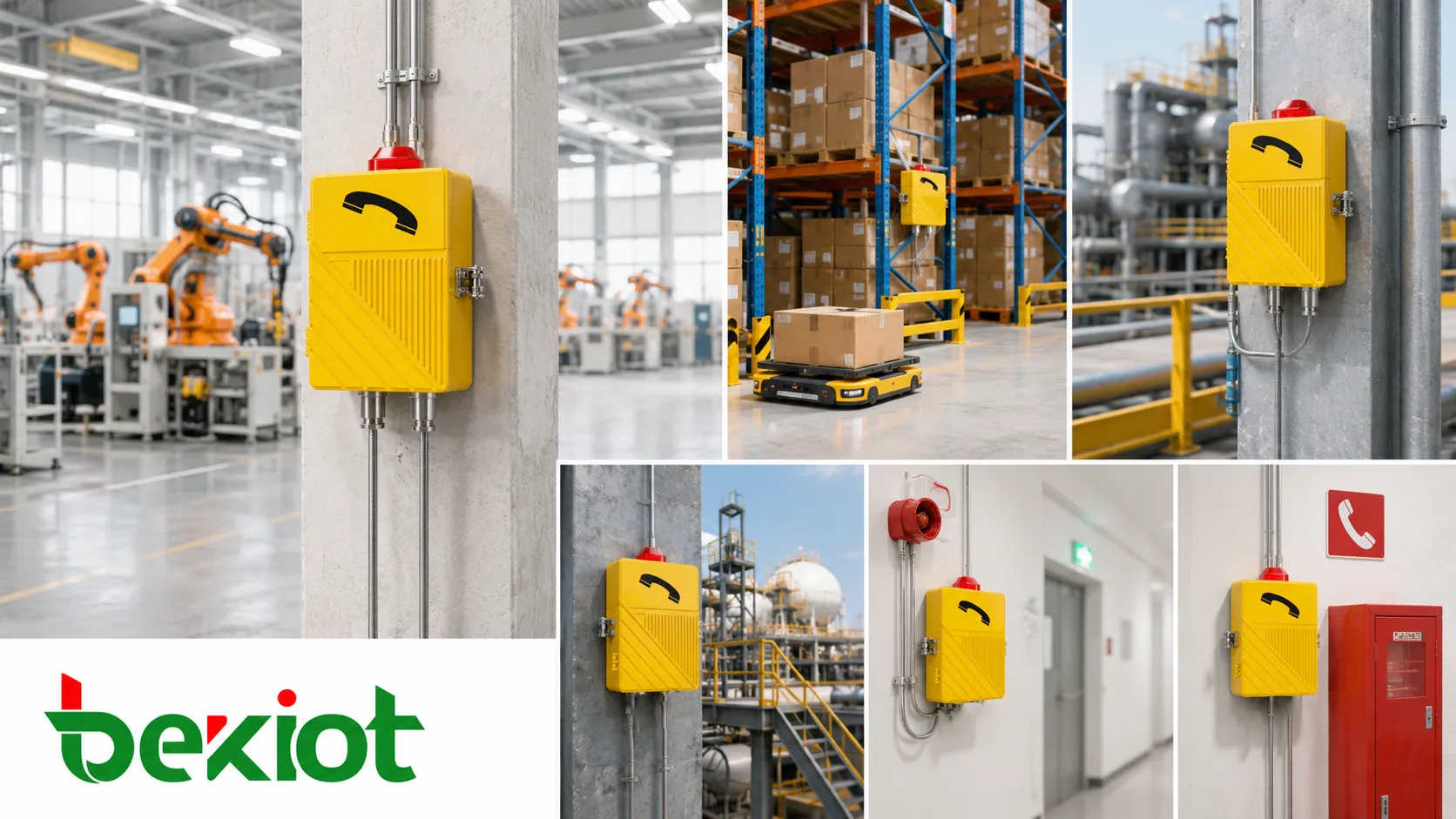
Industrial Manufacturing
Manufacturing facilities use strobe beacons on machines, robotic cells, conveyors, assembly lines, control cabinets, packaging lines, and maintenance stations. The beacon may indicate fault, running status, material shortage, emergency stop, inspection request, or quality issue.
In production environments, visual signals help reduce downtime and support faster maintenance response. They also help supervisors identify abnormal equipment from a distance.
Warehouses and Logistics
Warehouses use beacons for loading docks, automated storage systems, conveyor lines, forklift crossings, vehicle gates, lifts, and restricted zones. They warn people when equipment is moving or when a zone requires attention.
In busy logistics areas, visual alerts help reduce confusion between workers, drivers, automated equipment, and control systems.
Building Safety and Facility Management
Buildings may use strobe beacons with security systems, access control, fire alarm interfaces, emergency exits, equipment rooms, pump rooms, elevators, HVAC faults, and facility monitoring platforms.
In plant rooms, corridors, basements, rooftops, and electrical rooms, a visible warning can help maintenance and security teams identify abnormal conditions quickly.
Transportation and Infrastructure
Transportation sites such as rail stations, airports, tunnels, parking areas, ports, bridges, and service roads use beacons for warning, guidance, gate movement, restricted access, and emergency indication.
Outdoor infrastructure requires attention to weather resistance, daylight visibility, corrosion resistance, vibration, mounting strength, and long-term maintenance access.
Energy and Utility Sites
Power substations, solar plants, wind farms, water treatment facilities, pump stations, telecom shelters, and remote cabinets may use beacons for fault alarms, power warnings, access events, equipment status, and remote maintenance location guidance.
Because many utility sites are unattended, visual indication should often be linked with remote alarm reporting. The beacon helps field personnel after arrival, while the monitoring system notifies them before dispatch.
Hazardous Industrial Communication Points
In petrochemical plants, fuel depots, chemical storage areas, offshore facilities, mines, and other hazardous environments, visual warning often needs to work together with voice communication. A beacon can show that an alarm condition exists, while an explosion-proof telephone or industrial communication terminal provides direct voice contact with a control room.
For projects where hazardous-area voice communication is required, Becke Telcom EX-BH621 explosion-proof telephone can be considered as a field communication endpoint that works alongside visual warning devices, emergency call workflows, and control room response systems. The final design should still verify explosion-proof certification, installation zone, wiring method, environmental rating, and local safety requirements.
Integration with Alarm and Communication Systems
A strobe beacon becomes more valuable when it is part of a complete alarm workflow. The device should not only flash; it should support clear event detection, response assignment, acknowledgment, and recovery.
Linkage with Sensors and Controllers
Sensors and controllers can trigger beacons based on temperature, pressure, gas concentration, door state, equipment fault, emergency stop, or access status. PLCs and alarm panels often provide relay outputs or digital outputs for beacon control.
The control logic should be simple enough for operators to understand. Each beacon signal should have a clear cause and expected response.
Connection with Public Address and Intercom
Visual alerts can be paired with voice systems. A beacon may warn people to look for further instructions, while a public address speaker, intercom, or telephone connection provides the message or communication channel.
This is useful in industrial sites, emergency stations, security posts, tunnels, plants, and large facilities where operators need both visible indication and voice coordination.
Control Room Notification
Local flashing should often be reported to the control room. If the beacon only activates locally but no event appears on the monitoring platform, supervisors may not know that an incident occurred.
For important alarms, the event should be recorded with location, time, device ID, alarm type, acknowledgment status, and response result.
Selection and Deployment Considerations
Choosing a strobe beacon requires a clear understanding of the alarm purpose, environment, users, and response process. The device should match the site rather than be selected only by appearance or price.
Define the Event Type
The first step is to define what the beacon means. It may represent emergency, warning, equipment status, access alert, maintenance request, or process state.
Without clear event definition, users may see the flashing light but not know what action to take. Alarm meaning should be documented and included in staff training.
Match the Environment
Indoor, outdoor, dusty, wet, corrosive, high-temperature, low-temperature, vibration-prone, and hazardous environments require different enclosure designs and certifications.
For hazardous areas, ordinary beacons should not be used unless the device is properly certified for the classified location and installed according to relevant requirements.
Plan Mounting Position
The beacon should be visible to the people who need to respond. It should not be hidden behind shelves, pipes, machines, doors, cable trays, vehicles, or structural elements.
Mounting height and angle should be checked from real working positions. A beacon that is visible from one direction may be blocked from another.
Check Power and Backup Requirements
If the beacon is part of an emergency or safety system, power continuity may be important. Backup power, circuit supervision, cable routing, and fault reporting should be considered.
A beacon that loses power during an emergency may fail exactly when it is needed most.
Maintenance and Testing
Strobe beacons should be tested and maintained because they may sit idle for long periods. A device that is rarely activated can still fail due to aging, wiring faults, water ingress, dust, corrosion, or power problems.
Functional Testing
Functional testing confirms that the beacon activates correctly when the trigger condition occurs. The test should check color, flash pattern, brightness, reset behavior, control input, and alarm linkage.
Test alarms should be coordinated with the control room and site personnel to avoid confusion. Test records are useful for maintenance management.
Visual Inspection
Inspection should check the lens, housing, mounting bracket, cable entry, sealing, labels, corrosion, dirt, cracks, and physical damage. A dirty lens or loose mounting can reduce effectiveness.
Outdoor and industrial beacons may require more frequent inspection because they face harsher environmental conditions.
Wiring and Control Check
Technicians should verify terminal tightness, voltage stability, relay operation, PLC output state, dry contact logic, and control module function. Intermittent wiring faults can cause missed alarms or false flashes.
If the beacon is linked to a monitoring platform, event records should be checked to confirm that activation and recovery are logged correctly.
Common Mistakes to Avoid
One common mistake is installing beacons without defining what each color or flash pattern means. This creates visual noise instead of useful warning.
Another mistake is selecting a beacon that is not bright enough for the environment. A beacon that looks clear indoors may be difficult to see outdoors in sunlight.
A third mistake is ignoring the full response workflow. If the beacon flashes but no one is assigned to respond, the alarm system is incomplete.
A fourth mistake is using ordinary devices in hazardous areas without verifying certification. Explosion-proof or hazardous-area applications require proper product selection, installation method, and compliance review.
FAQ
Can strobe beacons replace audible alarms?
They usually should not replace audible alarms in all situations. In many systems, visual and audible alerts work together. The correct design depends on site noise, accessibility needs, emergency rules, and the type of event.
How can a facility avoid too many flashing lights?
The facility should define alarm priority, use consistent color rules, reduce low-value visual alerts, and reserve urgent flash patterns for events that truly require immediate response.
What should be checked before using a beacon in a hazardous area?
Check the hazardous-area classification, explosion-proof or intrinsic safety certification, temperature class, enclosure rating, cable gland requirements, installation method, inspection procedure, and local regulatory requirements.
Can a strobe beacon be linked with an explosion-proof telephone?
Yes. In hazardous or industrial areas, a beacon may provide visual alarm indication while an explosion-proof telephone provides voice communication with a control room. The linkage logic and certification requirements should be reviewed during engineering design.
Why might a beacon be visible in testing but missed during real operation?
Possible reasons include blocked sightlines, strong daylight, dust on the lens, wrong mounting angle, worker position, competing visual signals, or unclear alarm meaning. Real-environment visibility testing is important.
Should beacon activation events be logged?
For important alarms, yes. Logging activation time, device location, alarm type, reset time, and response result helps with maintenance review, safety management, and incident analysis.