


Multi-tenant management is a system design and administration model that allows one software platform, cloud service, communication system, security platform, or management portal to serve multiple independent tenants from a shared infrastructure. A tenant may be a company, department, branch office, customer, project team, agency, campus, building, region, or managed service client. Each tenant can have its own users, permissions, data, settings, resources, reports, and service policies while the platform remains centrally operated.
The main purpose of multi-tenant management is to improve scalability, resource efficiency, operational control, and service separation. Instead of building a separate system for every customer or organization, one platform can support many tenants in a controlled way. This model is widely used in cloud software, SaaS platforms, unified communications, property management systems, security platforms, IoT platforms, help desk systems, enterprise portals, service provider networks, and managed IT services.
Multi-tenant management is especially valuable when organizations need centralized administration but still require strict separation between different users or business units. It helps service providers manage many customers, helps enterprises manage multiple subsidiaries, and helps large facilities manage departments, sites, or buildings under one platform without mixing sensitive data or permissions.
What Is Multi-Tenant Management?
Definition and Core Meaning
Multi-tenant management refers to the ability to manage multiple tenants within one shared platform while keeping their data, users, permissions, configurations, and operational boundaries separated. The platform may use the same software codebase, infrastructure, database architecture, service layer, or administration portal, but each tenant experiences the system as a controlled and independent environment.
In simple terms, multi-tenant management allows one platform to serve many organizations or groups without forcing them to share the same visible workspace. Each tenant can have its own administrators, users, access rules, branding, service package, feature set, billing data, and operational records.
This differs from a single-tenant model, where each customer or organization has a separate software instance or isolated system deployment. Multi-tenant management focuses on shared infrastructure with logical separation, while single-tenant deployment focuses on dedicated infrastructure or dedicated application instances.
Multi-tenant management is about sharing one platform efficiently while keeping every tenant logically separated and independently manageable.
Why Multi-Tenant Management Matters
Multi-tenant management matters because modern organizations often operate across multiple entities, customers, locations, or service groups. A cloud service provider may manage hundreds of customers. A property group may manage many buildings. A school district may manage multiple campuses. A security operation center may manage several sites. A managed service provider may support many client networks from one portal.
Without multi-tenant management, every tenant may require a separate system, separate login portal, separate server, separate database, and separate maintenance process. This increases cost, complexity, deployment time, software updates, and support workload. It can also make centralized reporting and service control difficult.
With multi-tenant management, administrators can operate one platform while giving each tenant the right level of independence. This creates a balance between central control and tenant-level autonomy.
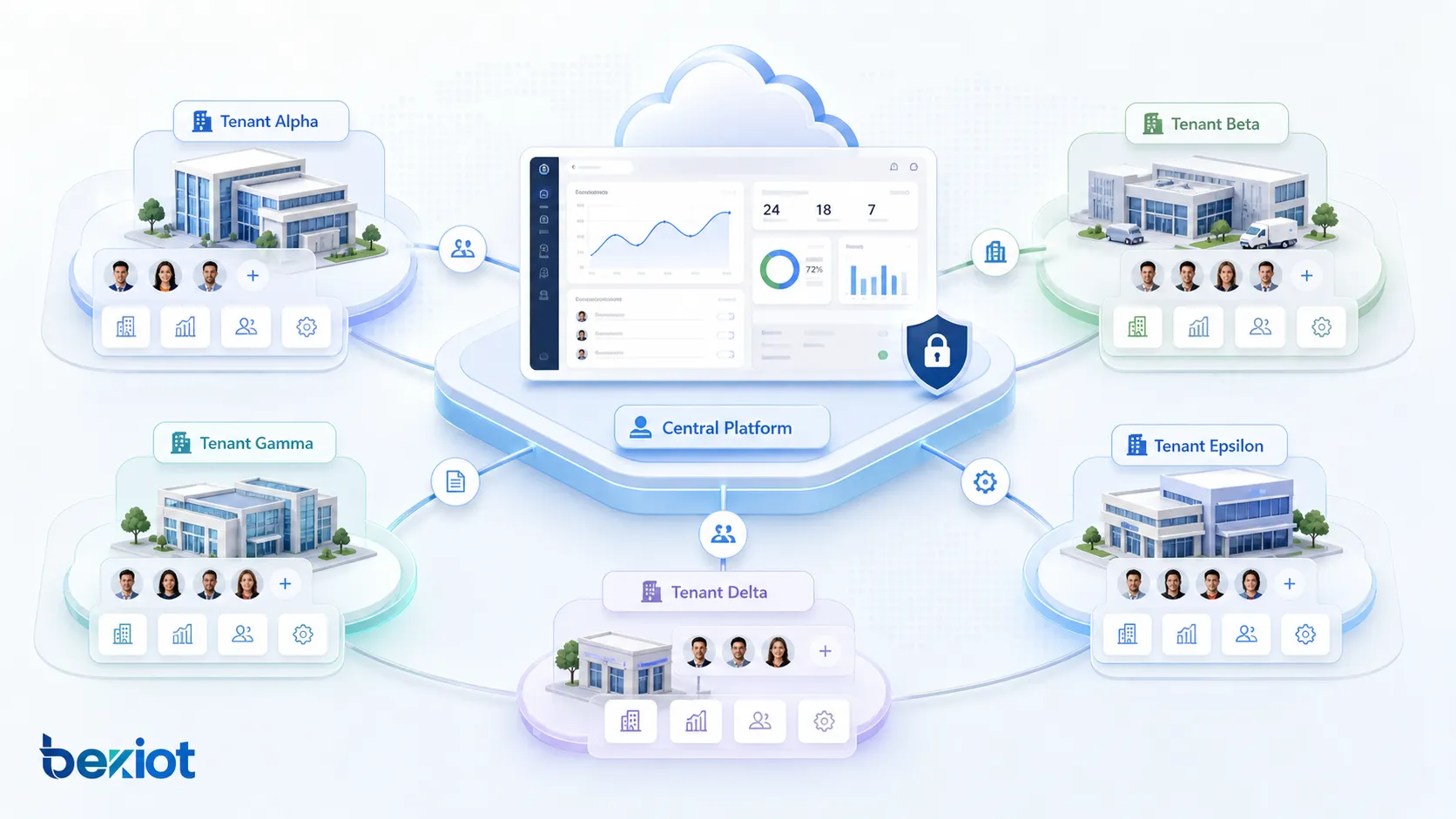
How Multi-Tenant Management Works
Shared Platform with Logical Separation
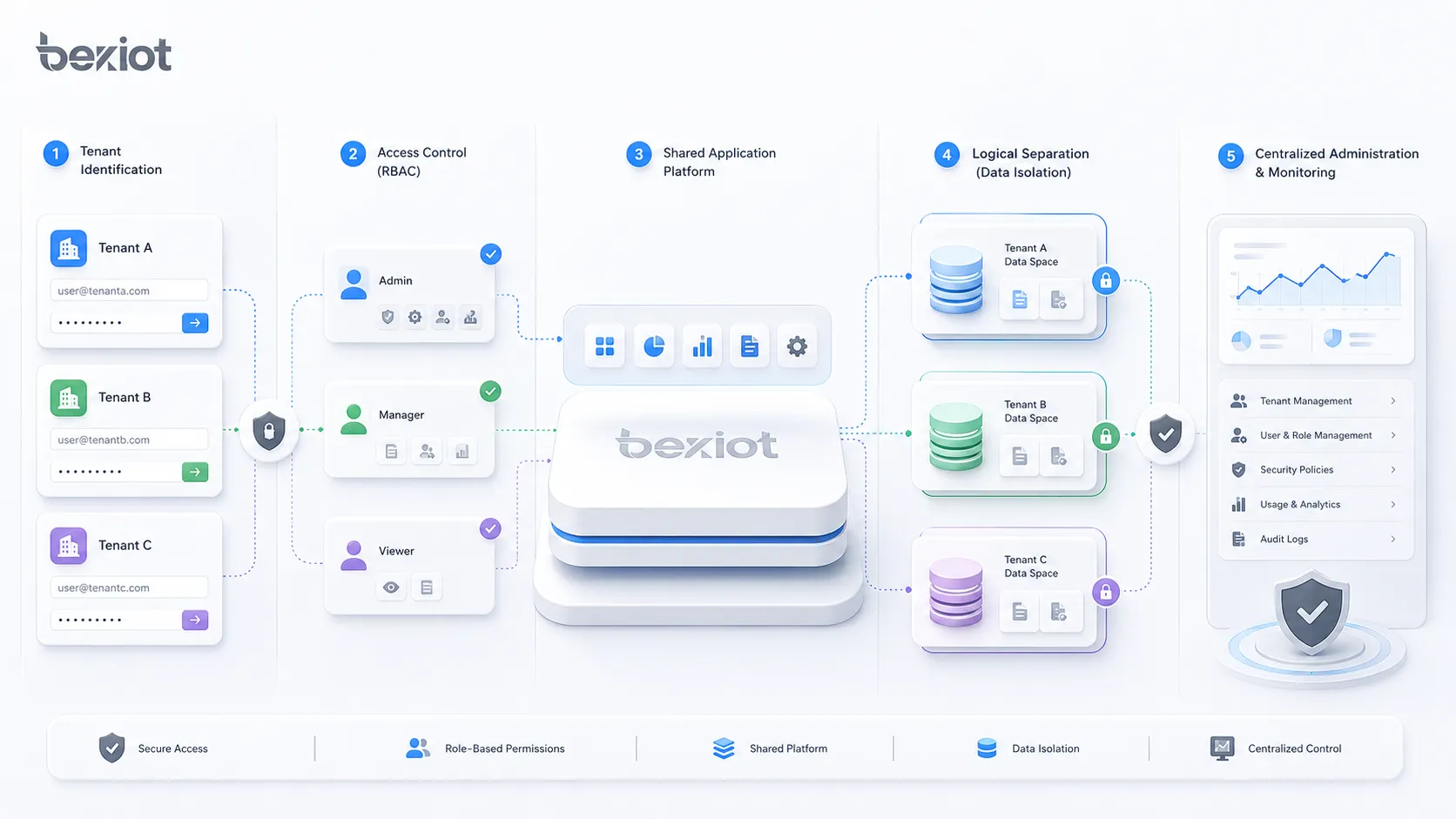
Multi-tenant management usually works by running multiple tenants on a shared platform while separating them through software logic, database rules, access control, tenant IDs, policy boundaries, and resource allocation. Each tenant’s data is tagged, partitioned, or stored in a way that prevents unauthorized access by other tenants.
The shared platform may include a common application layer, common infrastructure, shared authentication services, shared update mechanisms, and centralized monitoring. However, tenant separation ensures that users from one tenant cannot view, modify, or manage another tenant’s data unless explicit cross-tenant permissions are configured.
This logical separation is the foundation of multi-tenant design. The platform must provide efficiency without sacrificing security, privacy, and administrative boundaries.
Tenant Identification and Access Control
Every tenant in a multi-tenant platform is usually assigned a tenant identity. This may be a tenant ID, organization ID, domain, workspace name, account ID, site ID, or customer profile. When a user logs in, the system checks which tenant the user belongs to and applies the correct permissions, data visibility, policies, and interface settings.
Access control is essential. A tenant administrator may manage users and settings only within their tenant. A platform administrator may manage all tenants. A service provider may create new tenants, assign resources, monitor usage, and configure service plans. Normal users may only access the data and functions assigned to them.
Good access control prevents data leakage, accidental cross-tenant changes, and unauthorized administration.
Centralized Administration and Tenant-Level Control
Multi-tenant management normally includes both central administration and tenant-level administration. Central administrators manage the platform as a whole. They may create tenants, assign licenses, monitor system health, set global policies, configure security rules, and manage platform-wide updates.
Tenant administrators manage their own environment. They may add users, assign roles, configure departments, set local rules, view tenant reports, manage devices, and adjust tenant-specific settings. This division of control reduces workload for central administrators while giving tenants enough flexibility to manage their own operations.
The best multi-tenant systems define clear boundaries between what is controlled globally and what can be customized by each tenant.
A strong multi-tenant platform gives central administrators control over the whole system while allowing each tenant to manage its own users, settings, and resources.
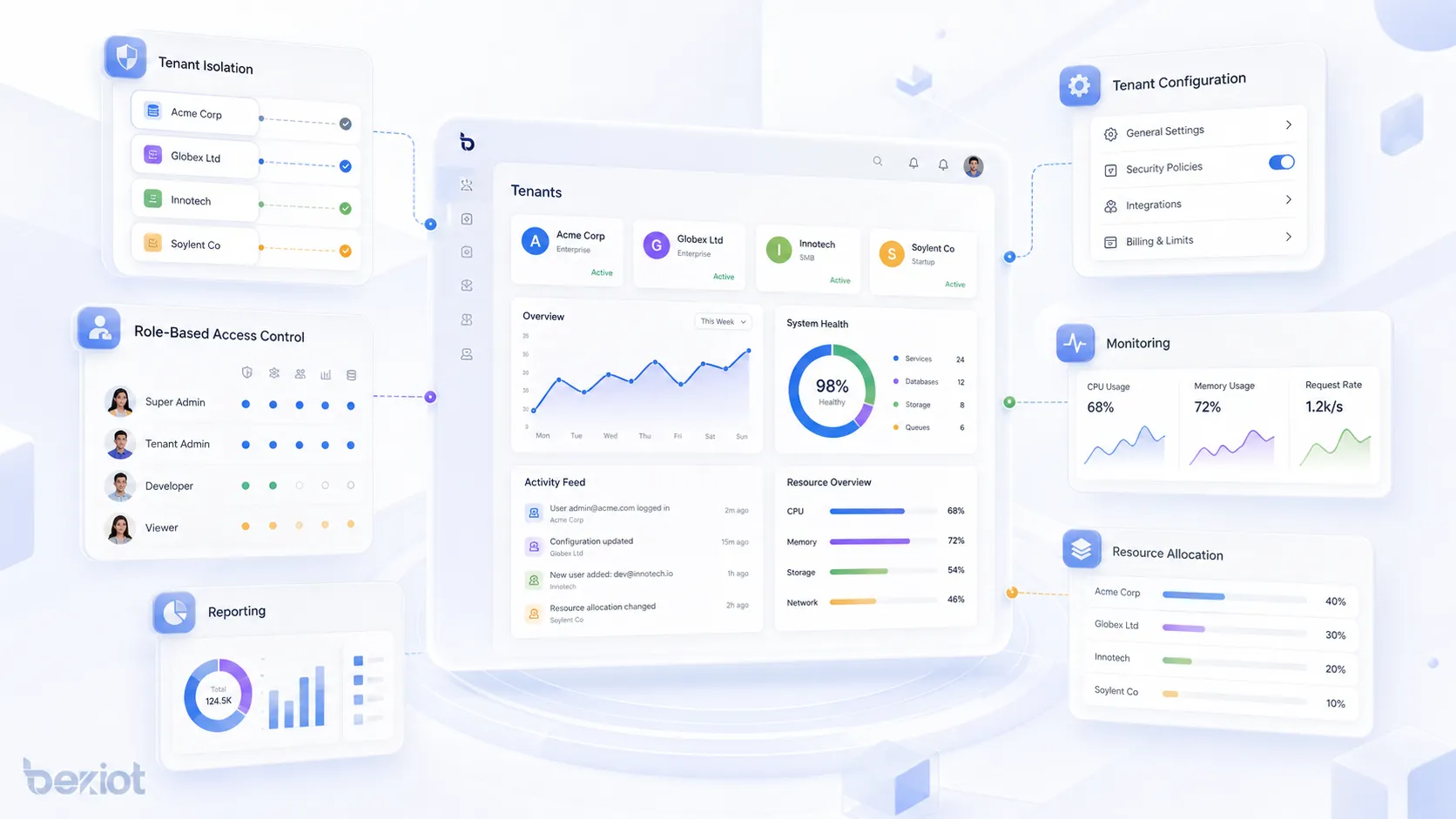
Main Features of Multi-Tenant Management
Tenant Isolation
Tenant isolation is the most important feature of multi-tenant management. It ensures that each tenant’s data, users, configurations, reports, and operational records remain separated from other tenants. This separation may be implemented at the application layer, database layer, storage layer, network layer, or permission layer.
Tenant isolation protects privacy and security. Without it, users from one tenant might accidentally view another tenant’s data, administrators might change the wrong configuration, or reports might mix records from unrelated organizations. Strong isolation reduces these risks.
In cloud services and managed platforms, tenant isolation is also a trust requirement. Customers must know that sharing platform infrastructure does not mean sharing private data.
Role-Based Access Control
Role-based access control allows the platform to define what different users can do. A platform owner, service provider, tenant administrator, department manager, operator, technician, viewer, and normal user may all need different permissions.
In a multi-tenant environment, roles must work within tenant boundaries. For example, a tenant administrator may manage all users within one tenant but should not manage users in another tenant. A central administrator may have cross-tenant rights, but those rights should be protected by stronger security controls.
Role-based access control makes the system safer, easier to manage, and better aligned with real organizational responsibilities.
Tenant-Specific Configuration
Multi-tenant platforms often support tenant-specific settings. Each tenant may have its own language, time zone, branding, notification rules, workflow settings, device groups, service plan, feature permissions, report templates, contact lists, or integration settings.
Tenant-specific configuration is important because different organizations rarely operate in exactly the same way. A hospital, factory, campus, property company, service provider customer, and government department may all need different workflows even when they use the same core platform.
Good configuration flexibility helps a shared platform serve different tenants without requiring custom software for every customer.
Centralized Monitoring and Reporting
Centralized monitoring allows platform owners or service providers to see the overall health, usage, performance, alarms, device status, license consumption, and service activity across multiple tenants. At the same time, tenant-level reporting allows each tenant to view only its own records.
This layered reporting structure is useful for operations, billing, compliance, capacity planning, service quality review, and technical support. A service provider may need cross-tenant statistics, while each customer needs private reports for its own environment.
Centralized monitoring improves platform operation, while tenant-level reporting maintains data separation.
System Architecture of Multi-Tenant Management
Application Layer
The application layer provides the user interface and business logic for the multi-tenant platform. It handles tenant selection, user login, dashboard views, permission checks, workflow operations, configuration pages, reports, and service features.
In this layer, the platform must ensure that every request is processed within the correct tenant context. When a user views a dashboard, edits a record, creates a user, or exports a report, the application must check the user’s tenant and permission scope.
A well-designed application layer prevents cross-tenant mistakes and makes the system feel natural for both central administrators and tenant users.
Data Layer
The data layer stores tenant data, user records, configuration settings, logs, files, reports, device records, and service history. Multi-tenant platforms may use different data separation methods. Some use a shared database with tenant identifiers. Some use separate schemas. Others use separate databases for each tenant.
A shared database can improve efficiency and simplify updates, but it requires strict access controls and careful query design. Separate databases may provide stronger isolation but can increase operational complexity. The best model depends on security needs, scale, compliance requirements, performance, and cost.
Regardless of the storage model, the data layer must protect each tenant’s information and support backup, recovery, auditing, and data lifecycle management.
Infrastructure and Resource Layer
The infrastructure layer includes servers, virtual machines, containers, cloud services, storage, networks, databases, message queues, monitoring tools, and backup systems. In a multi-tenant platform, these resources may be shared by many tenants.
Resource allocation controls how much capacity each tenant can use. This may include storage limits, user limits, device limits, API rate limits, bandwidth limits, call capacity, compute resources, or service plan restrictions. Without resource control, one tenant’s heavy usage may affect other tenants.
Infrastructure planning should include scalability, redundancy, security, performance monitoring, and fair resource distribution.
Benefits of Multi-Tenant Management
Better Scalability
Multi-tenant management improves scalability because new tenants can be added to the existing platform without building a completely separate system each time. This is useful for SaaS providers, managed service providers, telecom platforms, security platforms, IoT platforms, and large enterprises with many branches or departments.
Scalability is not only about adding more users. It also includes adding more organizations, more workspaces, more sites, more devices, more service plans, and more administrative layers. A good multi-tenant architecture allows the platform to grow while keeping tenant management organized.
This makes multi-tenant management a strong foundation for platforms that need to serve many customers or distributed organizations.
Lower Operating Cost
Multi-tenant management can reduce operating cost by sharing infrastructure, software updates, monitoring tools, maintenance processes, and support systems across many tenants. Instead of running a separate platform for every customer, the provider can operate one controlled environment.
Shared infrastructure can reduce hardware cost, cloud cost, deployment time, system administration workload, and upgrade complexity. Tenant-specific configuration still allows different organizations to use the same platform in different ways.
The result is a more efficient service model, especially when the platform must support many small or medium-sized tenants.
Centralized Governance
Multi-tenant management supports centralized governance. Platform owners can define global security policies, password rules, audit requirements, data retention settings, service availability standards, update schedules, and compliance controls. These policies can apply across tenants while still allowing local customization where appropriate.
Centralized governance is important for organizations that need consistent security and operational control. It reduces the risk of every tenant creating its own unmanaged process. It also makes audits, updates, and support easier.
When governance is designed well, multi-tenant platforms can be both flexible and controlled.
Faster Deployment
A multi-tenant platform can usually onboard new tenants faster than a single-tenant deployment model. Administrators can create a tenant, assign users, configure settings, apply templates, allocate resources, and activate services without building a new infrastructure stack.
Faster deployment is useful for service providers, franchise groups, multi-branch enterprises, property operators, school districts, and organizations that frequently open new sites or support new customers.
Standardized onboarding reduces project time and improves consistency across tenants.
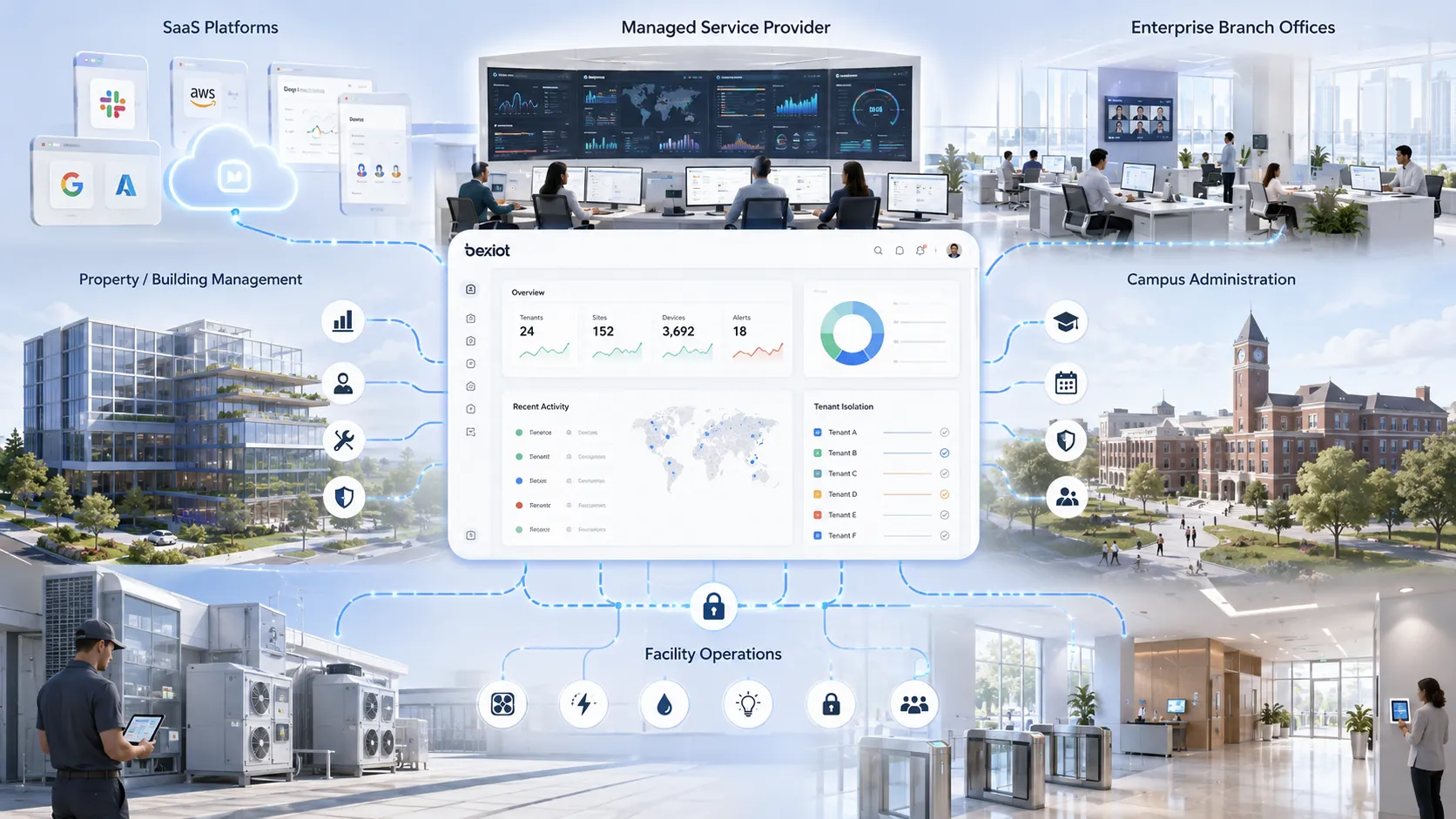
Applications of Multi-Tenant Management
SaaS and Cloud Platforms
SaaS platforms are one of the most common applications of multi-tenant management. A single cloud software platform may serve thousands of customers, each with separate users, data, subscription plans, configurations, and reports. Examples include CRM systems, help desk tools, HR platforms, project management platforms, accounting systems, and collaboration tools.
Multi-tenant management allows SaaS providers to update the platform centrally while giving every customer a separate workspace. This supports faster software delivery, simpler maintenance, and more efficient resource usage.
For customers, it provides a dedicated service experience without requiring dedicated infrastructure.
Managed Service Providers
Managed service providers use multi-tenant management to support many customer environments from one portal. This may include IT monitoring, cybersecurity, communication services, backup management, device management, network operations, or cloud administration.
Each customer is treated as a tenant. The provider can monitor systems, apply policies, manage support tickets, review service reports, and configure resources while keeping customer data separated.
Multi-tenant management helps managed service providers scale service delivery without losing customer-level control.
Enterprise Branch and Department Management
Large enterprises may use multi-tenant management internally to separate branches, regions, subsidiaries, departments, plants, business units, or project groups. The organization can operate one platform but assign separate administration rights to each internal tenant.
This is useful when each branch or department needs local control but the headquarters still needs centralized governance, reporting, compliance, and system maintenance. For example, a company may manage multiple factories, offices, warehouses, and service centers from one platform.
Internal multi-tenant management reduces system duplication and improves organizational visibility.
Property, Campus, and Facility Platforms
Property groups, campuses, hospitals, industrial parks, hotels, and facility operators may use multi-tenant management to separate buildings, tenants, departments, floors, service zones, or customer accounts. Each tenant can manage its own users or requests, while the facility operator keeps centralized oversight.
Applications may include access control, visitor management, maintenance requests, energy management, security monitoring, communication services, and building operations. Multi-tenant design helps one platform serve many occupants or managed areas without mixing data.
This is especially useful in multi-building or multi-organization environments where responsibilities are divided.
Multi-Tenant Management in Communication and Security Systems
Unified Communication Platforms
Unified communication platforms may use multi-tenant management to separate organizations, departments, branch offices, or service customers. Each tenant may have its own users, extensions, call routing rules, recording policies, contact lists, device groups, and administrator permissions.
This model is useful for hosted communication providers and large organizations that want centralized voice, messaging, conferencing, or dispatch services. It allows multiple tenants to share the same platform while maintaining independent communication settings.
Multi-tenant communication management can also support service packages, billing, usage reports, and customer-specific feature control.
Security and Access Control Platforms
Security systems often need strong tenant separation. In a multi-tenant access control platform, each tenant may manage its own users, doors, permissions, schedules, visitor records, alarms, and reports. A property owner or security operator may retain central oversight.
This is common in office buildings, campuses, industrial parks, co-working spaces, shopping centers, and residential complexes. One security platform can serve many organizations while preventing one tenant from viewing another tenant’s private access records.
Clear separation is essential because access control data can be sensitive and operationally important.
IoT and Device Management Platforms
IoT platforms use multi-tenant management to separate devices, sensors, gateways, dashboards, alerts, and data streams by customer, site, region, or project. Each tenant may monitor only its own devices and receive only its own alerts.
Device management may include firmware updates, configuration templates, remote diagnostics, data visualization, alarm rules, and usage reports. A service provider can manage many customer deployments from one platform without mixing device data.
Multi-tenant IoT management supports large-scale deployment while keeping data and device permissions organized.
Deployment Considerations
Define Tenant Boundaries Clearly
Before deploying a multi-tenant platform, organizations should define what a tenant means in their environment. A tenant may be a customer, company, branch, site, department, building, project, or service group. If tenant boundaries are unclear, the system may become difficult to manage.
Clear boundaries help determine user roles, data separation, reporting levels, billing models, resource allocation, and support responsibilities. They also prevent confusion when an organization has overlapping departments or shared resources.
The tenant model should match the real business and operational structure.
Plan Security and Data Isolation
Security and data isolation should be designed from the beginning. The platform should prevent unauthorized cross-tenant access at the application, API, database, storage, and administration levels. Logging and auditing should record important tenant-level actions.
Authentication methods, password rules, multi-factor authentication, single sign-on, administrator privileges, data retention, and backup access should be planned carefully. A mistake in tenant isolation can create serious privacy and compliance issues.
Security should not rely only on user interface restrictions. It should be enforced throughout the platform architecture.
Balance Standardization and Customization
Multi-tenant platforms need a balance between standardization and customization. Too little customization may make the platform unsuitable for different tenants. Too much customization may make support, upgrades, testing, and maintenance difficult.
A practical approach is to provide configurable templates, feature flags, service plans, role models, branding options, and workflow settings while keeping the core system consistent. This allows tenants to adapt the platform without creating separate custom versions.
Good multi-tenant design makes customization manageable rather than uncontrolled.
The best multi-tenant platforms are standardized at the core and flexible at the tenant configuration level.
Common Challenges
Data Leakage Risk
Data leakage is one of the most serious risks in multi-tenant management. If access controls, database queries, APIs, or reporting tools are not designed correctly, one tenant may accidentally see another tenant’s data. This can damage trust and create compliance problems.
Preventing data leakage requires strict tenant filtering, secure coding, permission testing, audit logs, API validation, and careful report generation. Security testing should include attempts to access data across tenant boundaries.
Tenant isolation should be treated as a core system requirement, not as an optional feature.
Resource Competition
Because tenants may share infrastructure, resource competition can occur. One tenant with heavy usage may affect system performance for others if capacity limits and resource controls are not in place. This may involve CPU, memory, storage, bandwidth, database queries, API calls, or communication sessions.
Platforms can reduce this risk through quotas, rate limits, usage monitoring, fair scheduling, scalable infrastructure, and service plan design. Critical tenants may require dedicated resources or stronger service guarantees.
Resource management helps keep the platform stable and fair for all tenants.
Administrative Complexity
Multi-tenant systems can become complex when there are many tenants, roles, policies, integrations, service plans, and configuration options. Without good administration tools, platform operators may struggle to track which tenant has which settings or which users have elevated permissions.
Clear dashboards, templates, audit logs, bulk management tools, search functions, naming conventions, and documentation help reduce this complexity. Tenant lifecycle management should include creation, configuration, support, suspension, export, and deletion.
Good administration design is essential for long-term multi-tenant success.
Maintenance and Management Tips
Use Templates for Tenant Creation
Templates help standardize tenant creation. A template may include default roles, permissions, features, dashboards, notification settings, branding options, and security policies. This speeds up onboarding and reduces configuration mistakes.
Different templates may be created for different tenant types, such as small customers, enterprise customers, branches, departments, or managed sites. Templates should be reviewed regularly to keep them aligned with current service standards.
Standardized onboarding improves quality and reduces repetitive administrative work.
Review Permissions Regularly
Permissions should be reviewed regularly, especially for tenant administrators and cross-tenant service accounts. Staff changes, project changes, customer changes, and temporary access can create permission drift over time.
Regular permission reviews help remove unused accounts, reduce excessive privileges, and confirm that users still have the correct role. This is important for both security and compliance.
Access control is not a one-time setup. It requires ongoing management.
Monitor Tenant Usage and Performance
Tenant usage and performance should be monitored continuously. Administrators should track login activity, storage usage, API traffic, device count, service consumption, error rates, support tickets, and system performance by tenant.
Monitoring helps detect abnormal activity, plan capacity, identify overloaded tenants, support billing, and improve service quality. It also helps service teams understand which tenants need support, training, or resource adjustment.
Usage visibility is one of the major advantages of centralized multi-tenant management.
Conclusion
Multi-tenant management is a platform model that allows one shared system to serve multiple organizations, customers, departments, sites, or user groups while keeping their data, permissions, configurations, and operations separated. It combines shared infrastructure with logical tenant isolation and centralized administration.
Its main features include tenant isolation, role-based access control, tenant-specific configuration, centralized monitoring, reporting, resource allocation, templates, usage tracking, and cross-tenant administration. These features help organizations scale services, reduce cost, improve governance, and support many tenants from one platform.
Multi-tenant management is widely used in SaaS platforms, managed services, communication systems, security platforms, IoT platforms, enterprise branch systems, property management, campuses, hospitals, and facility operations. When designed with strong security, clear tenant boundaries, scalable infrastructure, and practical administration tools, it becomes a powerful foundation for modern digital service delivery.
FAQ
What is multi-tenant management in simple terms?
Multi-tenant management means one platform can serve multiple organizations, customers, branches, or groups while keeping each tenant’s data, users, settings, and permissions separate.
It allows centralized operation without mixing tenant information.
What is a tenant in multi-tenant management?
A tenant is an independent organization, customer, department, branch, site, building, or user group inside a shared platform. Each tenant can have its own users, data, roles, settings, and reports.
The exact meaning of tenant depends on the platform and business model.
What are the main benefits of multi-tenant management?
The main benefits include better scalability, lower operating cost, centralized governance, faster deployment, easier updates, tenant-level customization, and stronger service management.
It is especially useful for platforms that must support many customers, sites, or organizational units.
What is the biggest risk in multi-tenant management?
The biggest risk is weak tenant isolation. If access control, database filtering, API security, or reporting is poorly designed, one tenant may accidentally access another tenant’s data.
Strong security design, testing, auditing, and permission management are essential.







