Dispatch recording is the process of capturing, storing, indexing, and reviewing voice communications and related operational data in a dispatch or command center environment. It is commonly used in public safety, transportation, industrial operations, utilities, energy sites, airports, seaports, campuses, and enterprise control rooms where every call, radio exchange, alarm response, and operator decision may become important evidence for incident review.
Unlike ordinary call recording, dispatch recording is designed for multi-channel, multi-role, and time-sensitive communication scenarios. It may record SIP calls, radio conversations, intercom sessions, emergency calls, operator console audio, paging announcements, and event-related metadata. The goal is not only to keep an audio file, but also to create a reliable operational record that can be searched, replayed, audited, and used for improving response quality.
A Practical Definition for Control Rooms
In a dispatch environment, communication often happens across many systems at the same time. Operators may speak with field teams, receive emergency calls, monitor alarms, coordinate with supervisors, and use push-to-talk radio networks. Dispatch recording brings these communication streams into a structured recording system so that organizations can reconstruct what happened before, during, and after an incident.
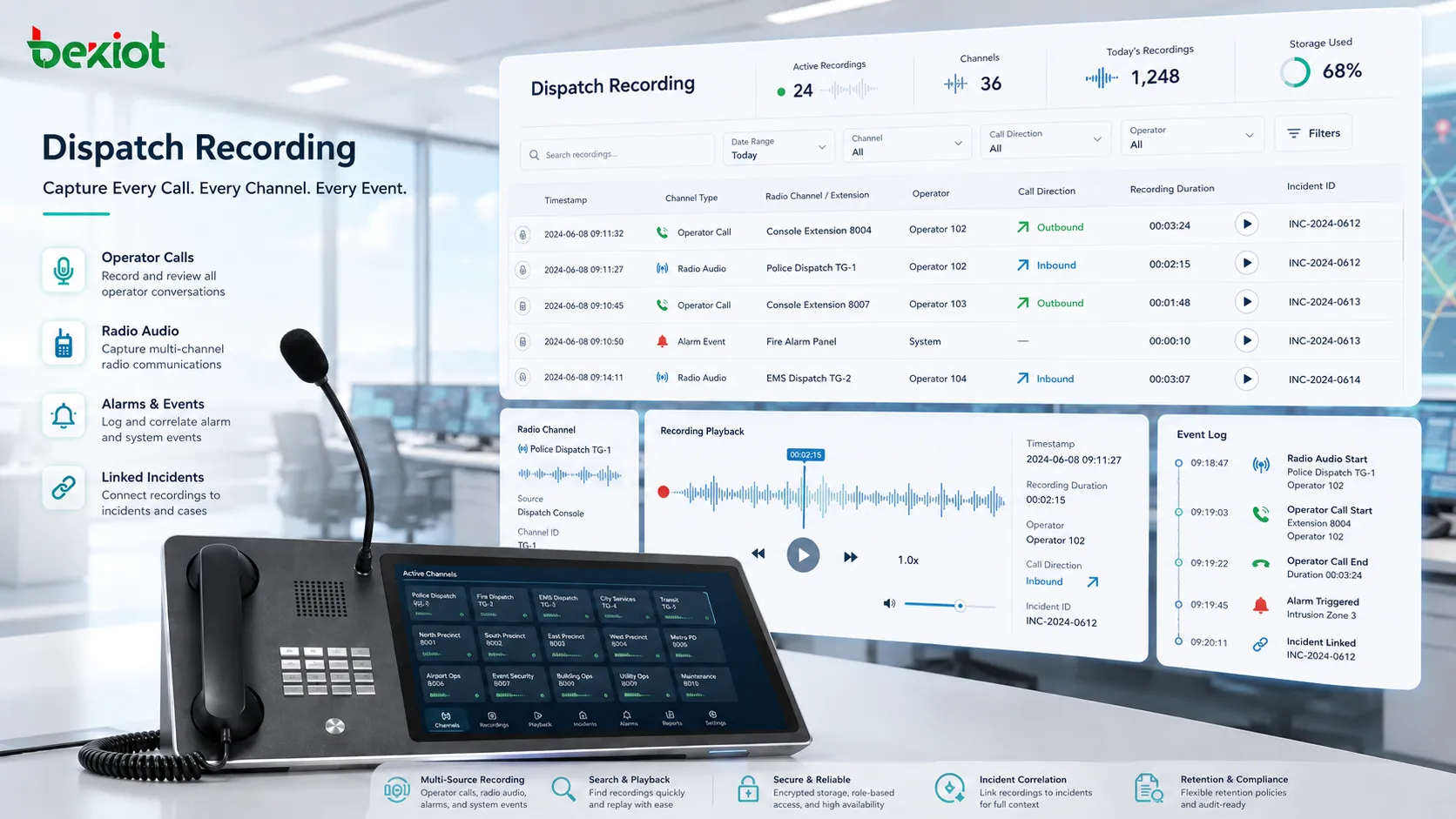
A complete recording record may include audio, caller or extension number, radio channel, operator identity, talk group, event ID, timestamp, call direction, recording duration, and sometimes console actions or associated incident notes. This makes dispatch recording especially valuable for organizations that need accountability, compliance, quality control, and post-incident analysis.
How Dispatch Recording Works
Audio Capture from Multiple Sources
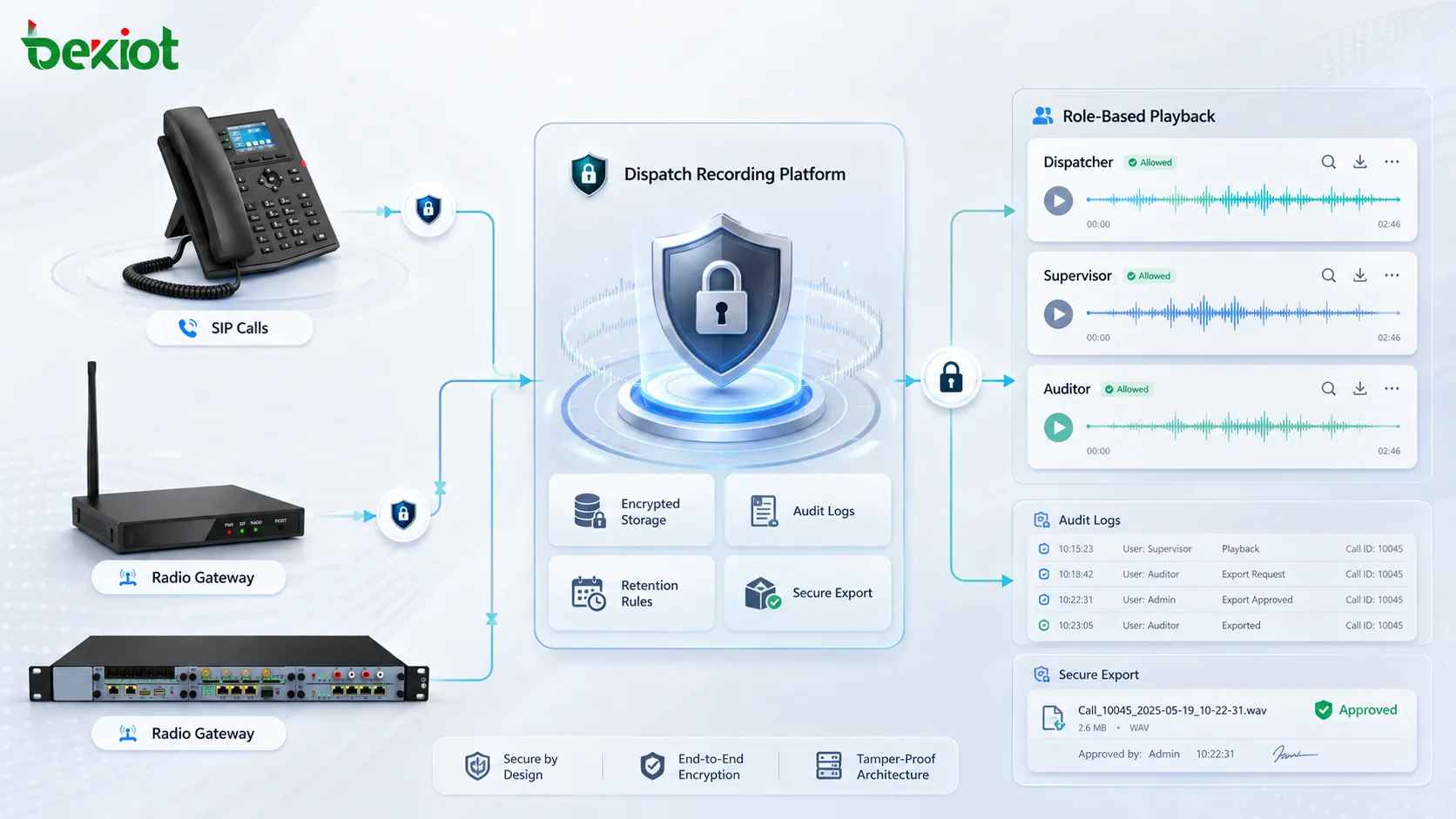
The recording process starts by capturing audio from different communication endpoints. In a modern IP-based system, this may include SIP trunks, IP phones, dispatcher consoles, intercom devices, radio gateways, emergency help points, and paging servers. In hybrid environments, analog lines, two-way radio systems, and legacy PBX interfaces may also be connected through gateways or recording adapters.
Each source is usually assigned a channel, device ID, extension, or talk group label. This allows the system to organize recordings by communication source instead of storing anonymous audio files. For example, a transportation command center may need to distinguish between station intercoms, train depot radio channels, dispatch console calls, and emergency hotline conversations.
Metadata Tagging and Time Synchronization
Audio alone is not enough for professional incident review. Dispatch recording systems typically attach metadata to every session so that supervisors can search by time, operator, device, extension, channel, event type, or incident number. Accurate timestamps are critical because many incidents involve several simultaneous communication streams.
Time synchronization is commonly handled through NTP or another trusted time source. When call records, alarm events, video footage, access control logs, and dispatch recordings share consistent timestamps, investigators can build a clear timeline instead of manually comparing disconnected records.
Secure Storage and Searchable Playback
After audio is captured, the recording system stores it in a searchable database or file archive. Depending on the organization, recordings may be retained for days, months, or years. Storage policies are usually based on compliance requirements, internal rules, risk level, and available capacity.
Playback tools allow authorized users to search, listen, export, annotate, or mark important recordings. Some systems support multi-channel synchronized replay, which helps reviewers hear several related communication streams together. This is useful when reconstructing a complex response involving dispatchers, field teams, radio operators, and supervisors.
Main Features of a Dispatch Recording System
Multi-Channel Recording
One of the most important features is the ability to record multiple channels at the same time. A dispatch center may have many operators, radio groups, SIP extensions, hotline numbers, and paging channels active during a single event. The recording system should capture these conversations without affecting live communication performance.
Multi-channel recording also helps organizations separate routine communication from emergency traffic. For example, daily maintenance calls, access control conversations, and emergency response channels may be recorded under different retention rules and permission levels.
Search, Filter, and Replay
Professional dispatch recording should support fast retrieval. Supervisors may need to find a recording by operator name, extension, caller number, radio channel, time range, alarm event, or incident keyword. Without searchable indexing, recording archives quickly become difficult to use.
Replay functions are equally important. A strong system allows authorized staff to listen to recordings clearly, jump to key moments, compare related channels, and export files for investigation or reporting. In some environments, synchronized playback across multiple channels is essential for understanding how the event developed.
| Feature Area | Purpose | Operational Value |
|---|---|---|
| Multi-channel capture | Records calls, radio traffic, intercoms, and console audio | Preserves a complete communication timeline |
| Metadata indexing | Links recordings with time, operator, device, channel, or event data | Improves search speed and investigation accuracy |
| Secure playback | Controls who can listen, export, or manage recordings | Protects sensitive information and evidence integrity |
| Retention policy | Defines how long recordings are stored | Supports compliance, storage planning, and risk management |
| Export and reporting | Provides files or reports for review and documentation | Supports audits, training, and incident reconstruction |
Why Dispatch Recording Matters
Accountability During Critical Events
In emergency and high-pressure operations, decisions are made quickly. Dispatch recording provides an objective record of what was said, who responded, when instructions were issued, and how information moved between teams. This helps reduce disputes and supports transparent incident review.
For public safety, transportation, and industrial command centers, this level of accountability can be essential. When a serious incident occurs, managers need reliable communication records rather than memory-based reports alone.
Training and Quality Improvement
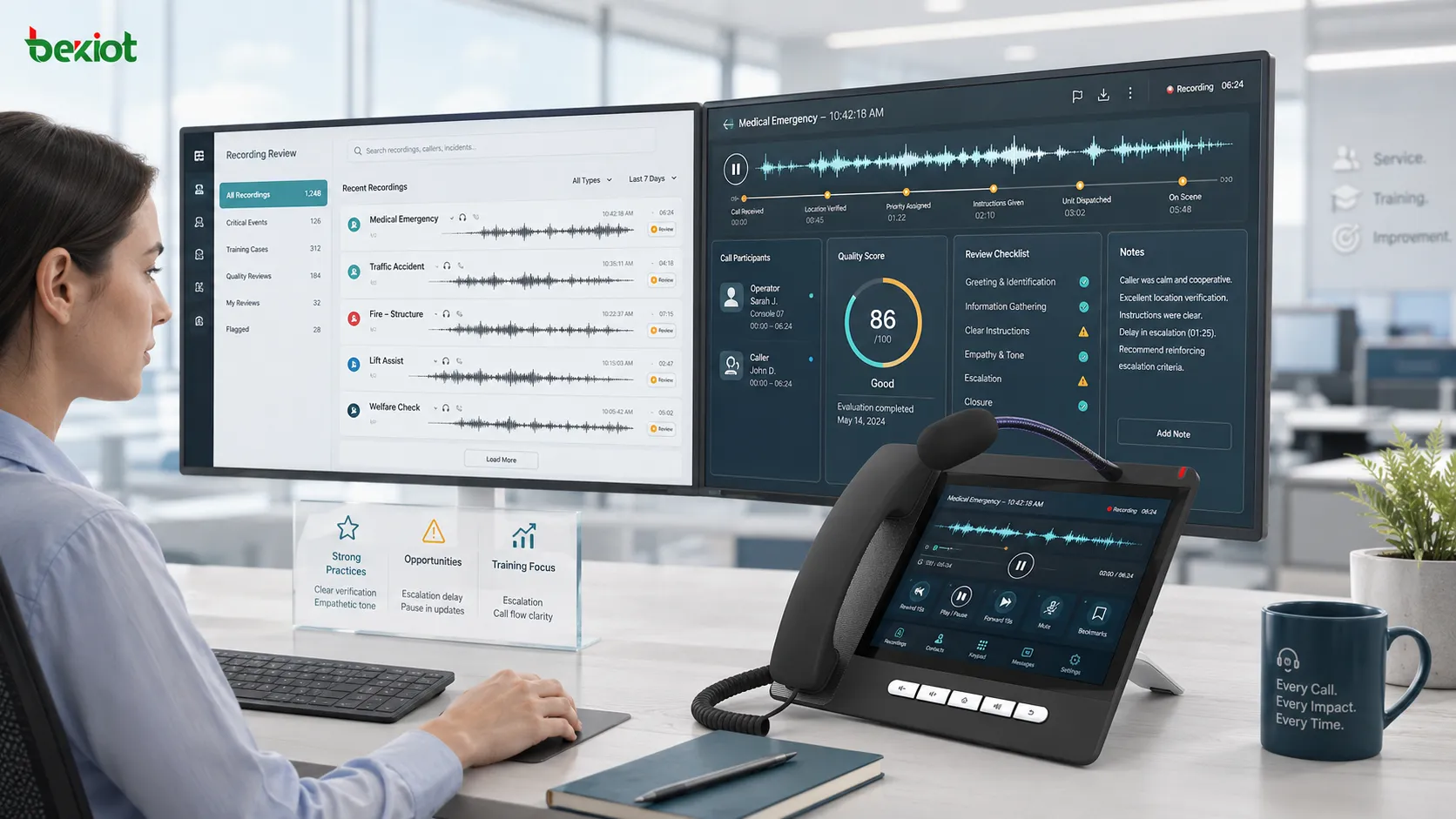
Recordings can also be used to improve operator performance. Supervisors may review real communication cases to identify strong practices, unclear instructions, delayed responses, or missed escalation steps. These examples are often more useful than generic training materials because they reflect actual operating conditions.
In customer-facing dispatch centers, recordings can help improve language clarity, response structure, escalation discipline, and service consistency. In emergency environments, they can help teams refine standard operating procedures and communication scripts.
Evidence for Investigation and Compliance
Many organizations must provide proof of how they handled incidents, calls, alarms, or service requests. Dispatch recording can support internal investigations, legal review, insurance claims, safety audits, regulatory compliance, and customer dispute resolution.
To be useful as evidence, recordings should be complete, time-accurate, protected from unauthorized modification, and supported by access logs. Exported files should also be traceable so that reviewers understand where the recording came from and when it was created.
Common Applications
Public Safety and Emergency Response
Police, fire, ambulance, emergency management, and city command centers often depend on dispatch recording to capture calls, radio communication, emergency coordination, and operator instructions. During major events, recordings help supervisors review response timelines and verify whether escalation procedures were followed.
In these environments, recording systems may be connected with CAD platforms, radio dispatch consoles, emergency hotlines, GIS maps, and incident management tools. The recording record becomes part of the broader operational evidence chain.
Transportation and Logistics
Railways, metro systems, airports, ports, highways, and logistics hubs use dispatch recording to document communication between operators, drivers, field engineers, security teams, and control rooms. Recorded communication is useful for service disruption review, safety investigation, passenger assistance, and maintenance coordination.
When transportation systems experience delays, equipment faults, traffic incidents, or emergency evacuations, recording archives help managers understand how instructions were delivered and how field teams responded.
Industrial and Energy Sites
Factories, mines, power plants, oil and gas facilities, chemical plants, and utility networks may use dispatch recording to capture safety-critical voice communication. These sites often combine industrial telephones, radio systems, explosion-proof endpoints, paging devices, and control room consoles.
Recording helps safety managers verify that alarms were acknowledged, instructions were clear, and field teams received the correct guidance. It also supports maintenance review, contractor coordination, shift handover, and emergency drill evaluation.
For organizations building an integrated communication and command platform, the Becke Telcom BK-RCS converged dispatch system can be considered as part of a broader dispatch environment where voice communication, radio access, emergency calling, paging, and recording-related workflows need to work together in a unified operation center.
Deployment Considerations
Integration with Existing Communication Systems
Before deployment, organizations should identify every communication source that needs to be recorded. This may include SIP extensions, PBX trunks, radio gateways, dispatcher consoles, emergency phones, intercom stations, public address channels, and mobile dispatch clients. The recording design should match the actual workflow, not only the network topology.
In many projects, the system must support both new IP-based endpoints and legacy communication devices. Gateway planning, codec compatibility, channel mapping, and signaling integration should be reviewed early to avoid incomplete recording coverage.
Storage Capacity and Retention Rules
Storage planning depends on the number of recorded channels, audio quality, recording schedule, retention period, and whether long-term archiving is required. Continuous multi-channel recording consumes more capacity than event-triggered recording. Organizations should also decide whether older recordings will be compressed, archived, or automatically deleted.
Retention rules should be practical and legally appropriate. Sensitive industries may require longer storage periods, while routine operational recordings may only need short-term retention. Clear retention policies prevent uncontrolled storage growth and reduce compliance risk.
Security and Privacy
Dispatch recordings may include personal information, emergency details, security instructions, or business-sensitive conversations. Therefore, encryption, role-based access, secure export, audit logging, and administrator controls should be included in the design.
Organizations should also define who can request recordings, who can approve exports, and how files should be handled after download. A recording system is only trustworthy when both the technology and the management process are controlled.
Selection Checklist
Operational Fit
A dispatch recording system should match the organization’s daily operating model. The number of operators, channels, departments, sites, and emergency workflows will influence the system design. A small security control room may only require a few channels, while a citywide emergency platform may need distributed recording, centralized search, and strict evidence management.
It is also important to evaluate whether the system supports the communication methods used on site. SIP calls, radio-over-IP, analog radio, intercoms, emergency phones, and paging channels may require different capture methods.
Reliability and Maintainability
Recording systems are often expected to run continuously. Reliability features such as redundant storage, health monitoring, recording failure alerts, backup policies, and system logs can reduce the risk of missing critical communication records.
Maintenance should also be simple. Administrators need clear tools for channel management, user permissions, archive review, storage monitoring, and system status checking. A recording platform that is difficult to maintain may create gaps even if the initial installation is successful.
Conclusion
Dispatch recording is a core component of modern command, control, and emergency communication systems. It captures voice communication and operational metadata so that organizations can review incidents, improve training, support compliance, and maintain accountability during critical events.
The best recording design is not simply a storage system for audio files. It should be connected with real dispatch workflows, protected by strong security controls, supported by accurate time synchronization, and easy for authorized users to search and replay. For public safety, transportation, industrial, utility, and enterprise control rooms, dispatch recording helps turn fast-moving communication into a reliable operational record.
FAQ
How long should dispatch recordings be kept?
The retention period depends on industry rules, internal policy, legal exposure, and the type of communication being recorded. Routine operational calls may have shorter retention periods, while emergency incidents, safety events, or regulated communications may require longer storage.
A practical approach is to classify recordings by risk level and business purpose. This prevents unnecessary storage growth while ensuring that important records remain available when needed.
Can dispatch recordings be used together with video surveillance?
Yes. Many command centers review audio recordings together with video footage, access control logs, alarm records, and GIS event data. This creates a more complete view of the incident than audio or video alone.
For best results, all systems should use synchronized time. When timestamps match, reviewers can compare recorded calls, camera footage, and alarm events more accurately.
Who should have permission to export recordings?
Export permission should normally be limited to authorized supervisors, compliance officers, administrators, or investigation managers. General users may need playback permission but not export rights.
Every export should be logged with user identity, time, file reference, and purpose. This helps protect sensitive recordings and supports evidence traceability.
Is event-triggered recording better than continuous recording?
Neither method is always better. Continuous recording provides the most complete archive, but it uses more storage. Event-triggered recording reduces storage demand, but it depends on correct triggers and may miss context before or after an event.
Some organizations use a hybrid model. Critical channels are recorded continuously, while lower-risk channels are recorded only when a call, alarm, or dispatch event occurs.
What should be tested before a dispatch recording system goes live?
Before acceptance, teams should test channel coverage, audio clarity, metadata accuracy, timestamp consistency, playback permissions, export functions, retention rules, storage alarms, and failure notifications.
It is also useful to run scenario-based tests. For example, simulate an emergency call, radio response, paging announcement, and operator handover, then verify whether the recording system captures the full communication chain.