


An explosion-proof call station is a fixed voice communication terminal designed for hazardous industrial locations where ordinary phones, office intercoms, or consumer communication devices are not suitable. It is used to provide reliable voice access between field workers, control rooms, dispatch centers, maintenance teams, and emergency response personnel in areas where flammable gas, combustible dust, chemical vapor, moisture, corrosion, vibration, or high noise may be present.
In practical industrial projects, an explosion-proof call station is more than a telephone mounted on a wall. It can serve as an emergency contact point, a field intercom terminal, a paging call station, a dispatch endpoint, or a voice notification node within a larger hazardous-area communication system. Its value depends not only on the device itself, but also on where it is installed, how it is connected, and how it supports the site’s safety workflow.
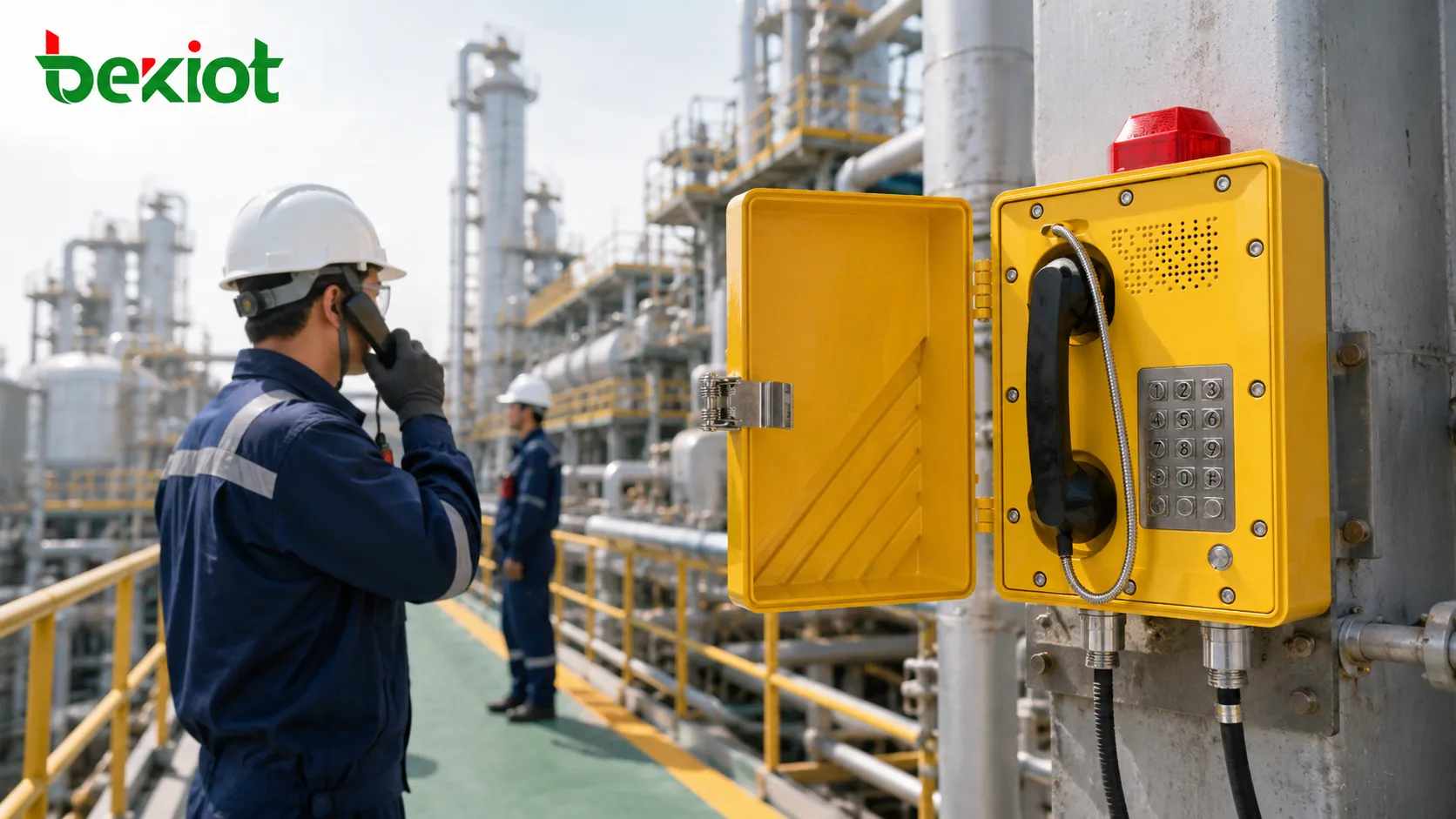
A Fixed Voice Point for Dangerous Work Areas
Hazardous industrial sites are often large, noisy, and divided into many process areas. Workers may be moving between pumps, tanks, loading points, conveyors, control valves, inspection routes, and maintenance locations. In these environments, a fixed communication point gives workers a known place to report abnormal conditions, request support, or receive instructions.
Unlike mobile phones or handheld radios, a fixed call station can be tied to a specific physical location. When the control room receives a call, operators can identify not only who is calling, but also where the call is coming from. This is especially useful in tank farms, pump rooms, underground tunnels, powder handling areas, gas stations, refineries, and chemical production units.
This location-based communication role is one of the main reasons explosion-proof call stations remain important even when a site already uses radios, mobile devices, or wireless systems. Mobility is useful, but fixed emergency communication points provide clarity, visibility, and repeatable operating procedures.
How It Differs from a Standard Industrial Phone
A standard industrial phone is usually designed for harsh environments such as factories, tunnels, ports, power plants, parking areas, or outdoor public facilities. It may provide weather resistance, a rugged enclosure, a metal keypad, a strong handset, and stable analog or SIP communication.
An explosion-proof call station has a narrower and more safety-critical purpose. It is intended for hazardous areas where communication equipment must be selected according to the site’s risk classification and installation requirements. The device must be suitable for the operating environment, cable entry method, enclosure protection, grounding practice, and long-term maintenance conditions of the hazardous area.
This means the difference is not simply “stronger housing.” A weatherproof phone may resist rain and dust, but it does not automatically become suitable for explosive atmospheres. A hazardous-area communication terminal must be evaluated as part of the site’s safety and engineering design.
Core Functions in Field Communication
The most basic function is voice calling. A worker can use the terminal to contact the control room, security office, dispatch console, maintenance team, or emergency center. Depending on the system design, the call may use a full keypad, speed dial key, hotline function, one-touch button, off-hook auto dial, or SIP extension number.
Many projects also require intercom-style communication. This allows a control room operator and field worker to confirm equipment status, discuss maintenance steps, verify alarm conditions, or coordinate safe startup and shutdown procedures. In high-risk sites, these short confirmation calls can reduce misunderstanding and speed up response.
Some call stations support paging or loudspeaker output. This allows the device to act as a local voice announcement point. Instead of only speaking to the person holding the handset, the control room can broadcast short instructions to nearby personnel, such as “stop operation,” “leave the loading area,” “confirm valve position,” or “wait for clearance.”
Why Audio Clarity Matters
Hazardous areas are often noisy. Pumps, compressors, fans, conveyors, crushers, vehicles, ventilation systems, and process equipment can make ordinary communication difficult. A call may technically connect, but still fail in practice if the worker cannot hear the message or the control room cannot understand the caller.
For this reason, audio design is a key part of selection. The project team should consider handset clarity, microphone pickup, speaker output, acoustic direction, volume adjustment, and whether an external speaker is required. In some areas, a loudspeaker call station may be more suitable than a handset-only device.
The best test is not a quiet office demonstration. A real evaluation should happen during normal site operation, when machines are running and background noise is present. This helps confirm whether the device can support real emergency and maintenance communication.
Role in Emergency Reporting
Emergency communication often begins with a simple field report. A worker may notice an unusual smell, gas alarm, visible leak, abnormal vibration, smoke, blocked passage, dust accumulation, temperature change, or injured person. If there is a call station nearby, the worker can report the issue quickly without leaving the area to find another communication tool.
The fixed location of the terminal also improves the quality of the report. The control room can match the call to a known area and ask more targeted questions. Instead of starting with “where are you,” the operator can ask about the exact equipment, nearby personnel, wind direction, access condition, or whether evacuation is required.
This makes the device useful not only during major emergencies, but also during early-stage abnormal conditions. Many incidents can be controlled more effectively when the first report reaches the right operator early.
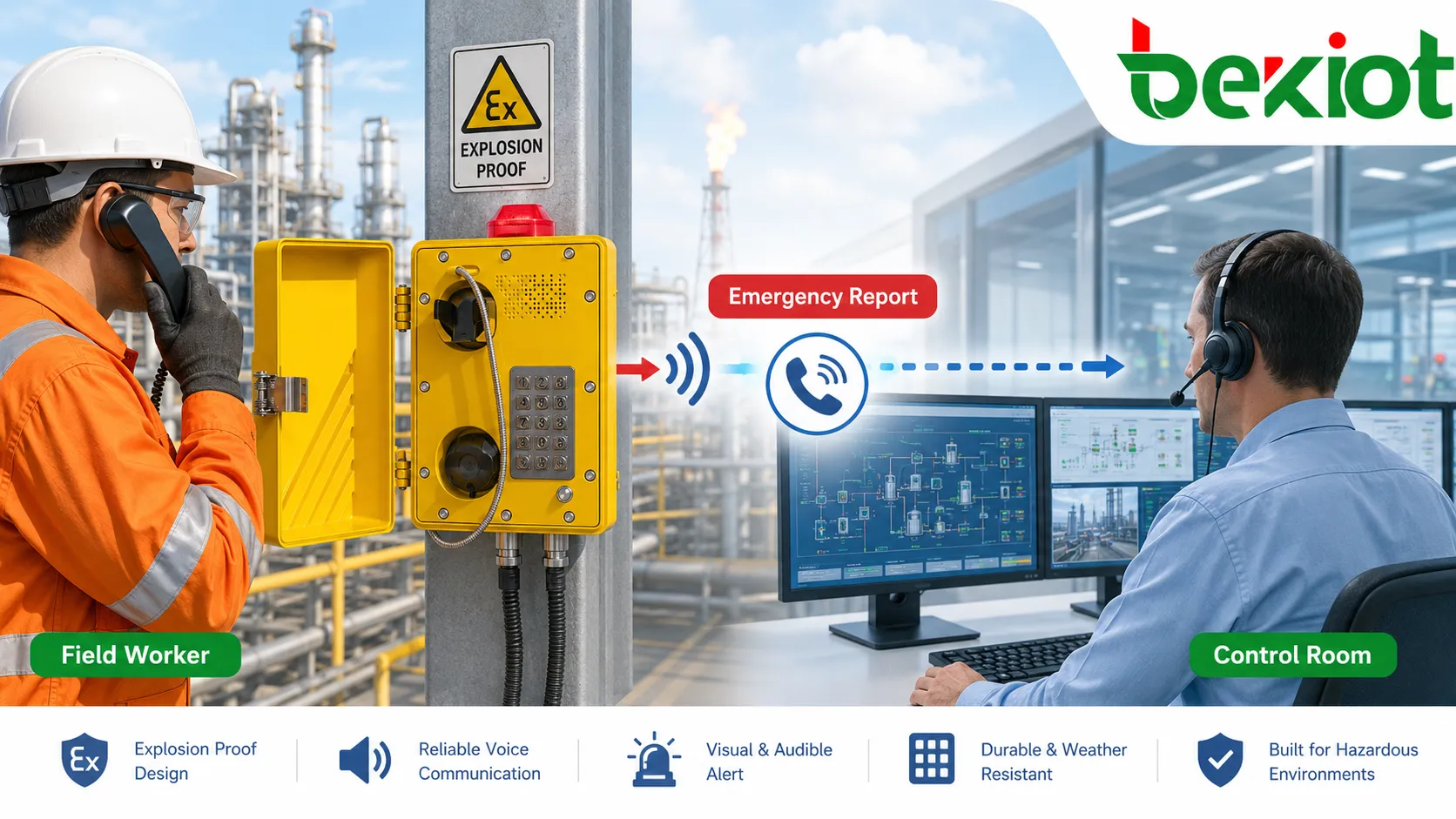
Where It Is Commonly Installed
In oil, gas, and petrochemical facilities, call stations are commonly installed near process units, pump areas, compressor rooms, tank farms, loading racks, pipe racks, gas metering stations, and emergency exits. These are locations where workers may need to report abnormal conditions, coordinate maintenance, or receive safety instructions.
In mining and tunneling environments, they may be placed along conveyor lines, underground intersections, pump rooms, substations, shaft stations, crushing areas, and refuge points. In these locations, fixed communication helps workers contact the control room even when mobile communication coverage is limited or unreliable.
In factories and powder processing sites, they may be used near dust collection systems, mixing areas, packaging lines, spray booths, chemical storage zones, boiler rooms, wastewater treatment areas, and outdoor equipment yards. The selection should depend on the actual site risk, not only the industry name.
Connection Methods and System Options
Explosion-proof call stations may connect through different communication architectures. Some projects use analog telephone lines, especially when a legacy PBX or existing field cabling is still in service. This approach can be useful for brownfield sites that need a simple upgrade without replacing the entire communication system.
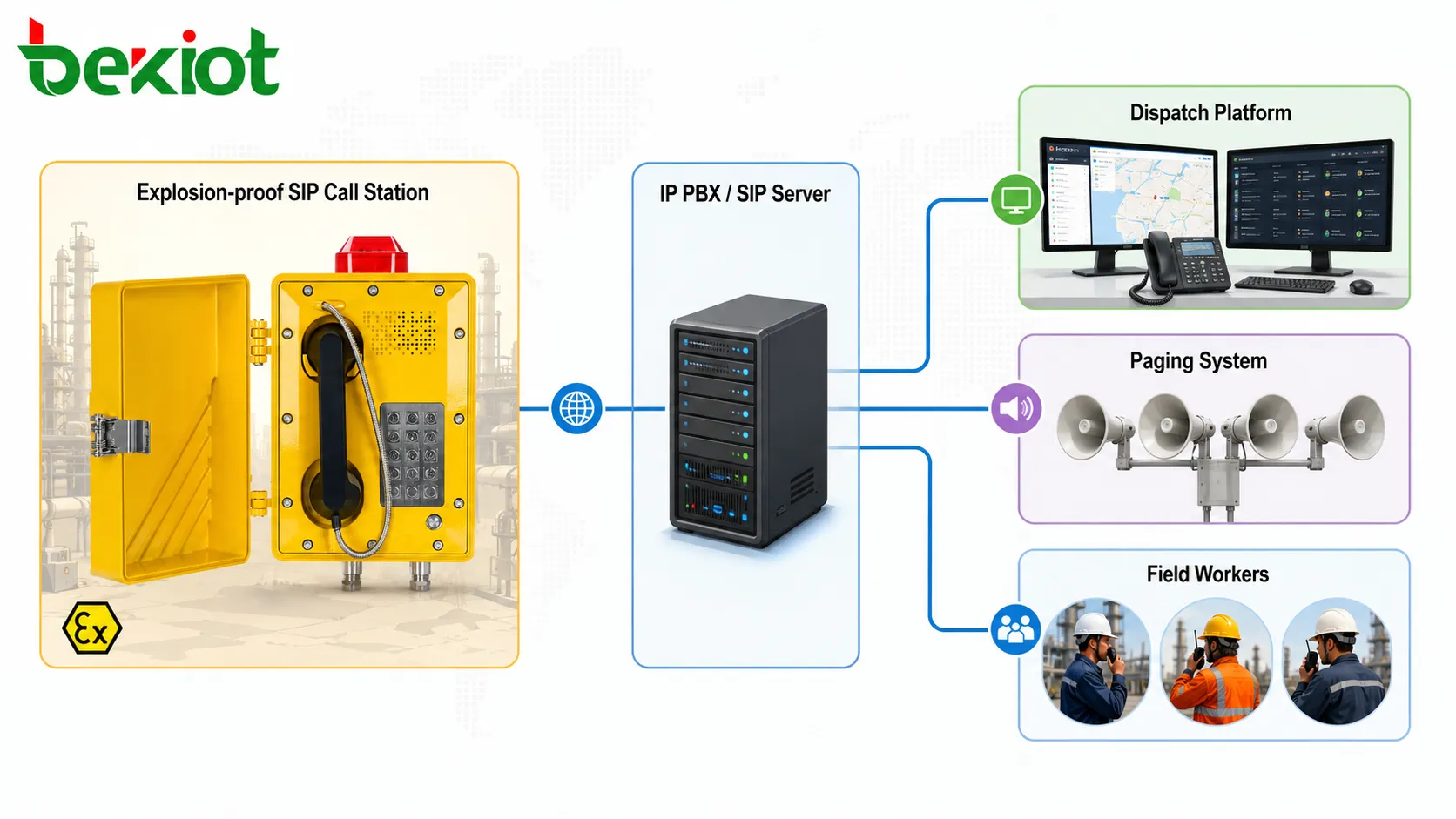
Modern projects often use SIP or VoIP communication. A SIP-based call station can register to an IP PBX, SIP server, industrial dispatch platform, or unified communication system. This allows easier extension management, call routing, call recording, remote configuration, multi-site communication, and integration with paging or emergency systems.
Mixed architecture is also common. Existing analog lines can remain in service while new SIP endpoints are added in critical areas. Gateways can connect analog devices, IP platforms, dispatch consoles, and public address systems. This step-by-step approach is practical for factories, refineries, mines, and transport facilities that cannot replace all equipment at once.
Integration with Paging and Alarm Systems
A call station becomes more valuable when it works with the larger site communication system. In many hazardous-area projects, field voice communication is connected with paging speakers, visual alarms, emergency buttons, gas detection, video surveillance, access control, and dispatch platforms.
For example, a worker may use the call station to report a leak. The control room receives the call, checks the terminal location, views the nearby camera, and then sends a voice announcement to the affected zone. If the incident becomes more serious, the operator can escalate the notification to a wider area.
This type of workflow is different from simply placing phones in the field. It turns the call station into a communication node that helps connect human reporting, system alarms, and coordinated response.
| Function Area | Typical Purpose | System Value |
|---|---|---|
| Field Calling | Worker-to-control-room voice contact | Supports routine coordination and abnormal condition reporting |
| Intercom | Two-way confirmation between field and operator | Helps verify alarms, maintenance steps, and site status |
| Paging | Local or zone-based voice announcement | Delivers short instructions to nearby personnel |
| Emergency Call | Fast contact with a dispatch or safety position | Reduces delay during personnel assistance or incident response |
| System Linkage | Connection with alarms, cameras, PA or dispatch systems | Creates a more complete hazardous-area communication workflow |
Selection Factors for Project Engineers
Selecting the right model begins with the site environment. The project team should identify the hazardous-area classification, gas or dust risk, outdoor exposure, moisture level, corrosion risk, ambient temperature, background noise, cable route, mounting surface, and maintenance access.
The second step is to define the communication workflow. Will the station call a control room, dispatch console, maintenance team, or emergency center? Does it require one-touch calling, keypad dialing, auto-dial, SIP registration, paging output, call recording, alarm input, or visual indication? These questions should be answered before comparing product models.
Installation details are just as important. Cable glands, conduit sealing, grounding, cover fastening, mounting height, signage, lighting, and access clearance can all affect long-term reliability. A certified or rated device should not be treated as a box that can be modified freely on site.
How It Supports Daily Operation
Although the device is often selected for emergency communication, it also supports daily industrial work. Operators can use it for shift handover, inspection reporting, maintenance coordination, equipment status confirmation, loading operations, startup communication, and access control support.
In many facilities, daily use is what keeps emergency systems familiar. If workers regularly use the call station for normal coordination, they are more likely to remember where it is and how to operate it during an abnormal event.
For this reason, the system should not be designed only for rare emergency use. A good layout supports both routine work and critical response, so the equipment remains visible, tested, and operational.
Product Fit Within a Broader System
For hazardous-area communication projects, Becke Telcom EX-BH621 can be considered as one possible field terminal option. It is positioned for explosion-proof telephone, SIP call station, intercom, paging, and emergency dispatch integration applications. It can support field voice contact, local paging, and connection with SIP-based industrial communication systems.
In a practical project, this type of device may be used near petrochemical units, gas stations, pipe racks, tank farms, mining points, and high-noise industrial areas where fixed voice access is required. The final selection should still be verified against the site’s hazardous-area requirements, installation method, network architecture, power design, and maintenance plan.
Common Mistakes to Avoid
One common mistake is selecting a device only because it looks rugged. A strong enclosure is useful, but hazardous-area suitability, installation method, cable entry, and system compatibility must also be checked.
Another mistake is installing the station where it is easy for contractors but inconvenient for workers. A call station should be close to real inspection paths, work positions, emergency exits, and maintenance points. If workers cannot find it quickly, the device loses much of its practical value.
A third mistake is testing only whether the call connects. Real acceptance should also include audio clarity, emergency call routing, paging volume, platform display, recording, alarm linkage, network recovery, power recovery, and operator workflow.
Long-Term Maintenance Considerations
Explosion-proof call stations should be included in the site’s regular inspection plan. Maintenance teams should check the enclosure, handset, keypad, speaker, cable entry, sealing parts, mounting bolts, grounding, labels, and communication status.
For SIP-based systems, the inspection should also include registration status, extension number, network port, IP address, call routing, recording storage, and dispatch platform display. For outdoor or dusty areas, cleaning and seal inspection are especially important.
The goal is to avoid a situation where the device exists on site but is not ready when needed. Emergency communication equipment must remain usable, visible, and understood by the people who may depend on it.
FAQ
Can a weatherproof industrial phone replace a hazardous-area call station?
Not automatically. Weatherproof protection mainly addresses dust and water exposure. Hazardous-area use requires the device, installation method, and accessories to match the site’s safety requirements.
Should every hazardous area have a call station?
Not necessarily. The number and location should be based on risk level, worker movement, inspection routes, emergency exits, communication blind spots, and response procedures.
Is SIP always better than analog communication?
SIP is better for centralized management, recording, routing, and system integration. Analog lines can still be practical in retrofit projects with existing cabling and simple communication needs.
What should be tested before handover?
A handover test should include normal calling, emergency calling, audio quality, paging output, platform display, recording, network recovery, power recovery, and location identification.
How often should field devices be inspected?
Inspection frequency depends on site conditions. Outdoor, dusty, corrosive, or high-risk areas usually require more frequent checks than clean indoor areas.







