Every generation of communication technology has promised to change the world. For many ordinary users, however, the most visible difference often seems simple: the network becomes faster. With 6G now becoming a major topic in telecom research and industry planning, many people are asking a practical question: is 6G just a faster version of 5G, or will it create new applications, business models, and technical opportunities?
The answer is that 6G is not only about higher speed. It represents a deeper change in how communication networks connect people, devices, machines, vehicles, sensors, cloud platforms, and intelligent systems. From a solution and engineering perspective, the transition from 5G to 6G is about wider coverage, lower latency, integrated sensing, AI-native network control, and the ability to support new industrial and consumer applications at scale.
This article rewrites the key ideas of the original discussion into a technical and SEO-oriented guide. It explains how each generation of mobile communication changed user behavior, why 6G should not be understood as “faster 5G,” and where practical opportunities may appear for enterprises, developers, system integrators, smart hardware companies, and industrial communication solution providers.

How Each Generation of Mobile Communication Changed the Market
The Real Logic Behind Network Upgrades
Many technical explanations begin with spectrum, modulation, coding, and base station architecture. These topics are important, but for most users and business decision-makers, every network generation can be understood through three basic questions: can the network connect more devices, can it transmit more data, and can it reduce latency for time-sensitive applications?
Over the past several decades, each generation of mobile communication solved a different stage of the connectivity problem. 2G made mobile voice calls practical and moved communication away from fixed-line telephones. 3G brought mobile internet access, web browsing, and early mobile social applications into everyday life. 4G increased data rates and helped create large-scale mobile video, short video platforms, mobile payment, ride-hailing, and app-based services. 5G introduced higher bandwidth and lower latency, with the most visible deployments appearing in enhanced mobile broadband and industrial IoT.
| Generation | Main Technical Value | Typical User or Industry Impact |
|---|---|---|
| 2G | Mobile voice communication | Allowed users to make calls away from fixed telephones. |
| 3G | Mobile internet access | Enabled web browsing, messaging, and early mobile online services. |
| 4G | High-speed mobile data | Accelerated short video, mobile payment, food delivery, and app ecosystems. |
| 5G | High bandwidth, low latency, and massive device access | Supports fast downloads, industrial IoT, smart factories, and private network scenarios. |
| 6G | Full-scenario intelligent connectivity | Expected to support integrated satellite-terrestrial coverage, sensing, AI-native networks, and ultra-low-latency applications. |
Why Many Users Feel 5G Has Not Fully Changed Daily Life
Many users say they do not strongly “feel” 5G in daily life. This does not mean 5G has no value. It means that network technology often develops ahead of large-scale applications. When 4G was first deployed, few people predicted how large short video, mobile payment, food delivery, and location-based mobile services would become. In the same way, 5G has provided the foundation for the next stage, especially for industrial IoT, private networks, high-density device access, and 6G research.
From an industrial communication perspective, 5G is already important in factories, ports, mines, logistics parks, power plants, transportation systems, and smart campuses. It supports machine connectivity, video backhaul, mobile inspection, remote monitoring, and edge computing. These use cases are less visible to ordinary consumers, but they are essential for the digital infrastructure that 6G will further expand.
The value of a new communication generation often becomes obvious only after applications catch up with the network. Technology usually prepares the road before new industries appear.
6G Is Not Just a Faster 5G Network
From Higher Speed to Full-Scenario Connectivity
The biggest misunderstanding about 6G is that it is only a faster version of 5G. Speed will certainly improve, but the real focus of 6G is broader. It aims to make connectivity more continuous, more intelligent, more aware of the physical environment, and more deeply integrated with AI, satellites, devices, and industry systems.
The original article highlights three major directions that are already widely discussed in the industry: space-air-ground integrated networks, integrated communication and sensing, and AI-native communication. These directions are not abstract slogans. They are closely related to future emergency communication, industrial automation, smart transportation, remote healthcare, autonomous driving, smart homes, and intelligent city operations.

Key Direction One: Space-Air-Ground Integrated Network
Why Coverage Matters More Than Speed Alone
Many users have experienced weak or missing signals in mountain roads, remote villages, offshore areas, aircraft cabins, mines, tunnels, or wide outdoor industrial sites. A major goal of 6G is to extend connectivity beyond the traditional ground base station model. Instead of relying only on terrestrial cellular towers, future networks may combine ground base stations, low-earth-orbit satellites, UAV relay nodes, and other aerial communication platforms.
This is often described as a space-air-ground integrated network. Its purpose is to support more continuous communication in remote, mobile, emergency, and wide-area scenarios. The original article mentions that low-orbit communication satellite trials and smartphone satellite connectivity have already become visible industry directions. These developments suggest that future communication systems may make “no signal” situations less common.
Application Value for Emergency and Industrial Communication
For ordinary users, this may mean better connectivity during travel, hiking, offshore navigation, remote work, and emergency rescue. For enterprises, the value is even larger. Ports, mines, energy sites, railways, highways, utility corridors, and disaster response teams often operate in places where public network coverage is limited or unstable. A 6G-oriented architecture could improve command dispatch, remote monitoring, emergency notification, and field coordination.
In Becke Telcom-style industrial communication solutions, this direction can be combined with SIP dispatch platforms, emergency telephones, industrial phones, public address systems, radio gateways, CCTV linkage, and command center platforms. The goal is not only to connect mobile phones, but also to connect field devices, emergency endpoints, control rooms, sensors, vehicles, and response teams into one reliable communication system.
Key Direction Two: Integrated Communication and Sensing
Communication Networks That Can Sense the Environment
Traditional communication networks mainly transmit data. 6G introduces a deeper concept: integrated communication and sensing. This means that wireless signals may not only carry information, but also help detect environmental changes, object movement, location, and activity patterns.
A simple example is smart parking. Today, an underground parking system often requires separate sensors installed in parking spaces. In a future 6G environment, a base station or wireless infrastructure may help detect whether a parking space is occupied by analyzing signal reflection and environmental changes. Another example is elderly care. Instead of requiring every elderly person to wear a device, a sensing-capable communication system may detect abnormal movement or a fall through signal changes and send alerts to family members or care platforms.
Why This Reduces Hardware Cost
The technical value of integrated sensing is that it can reduce dependence on separate hardware sensors. If the communication infrastructure can also provide part of the sensing function, smart city systems, industrial parks, logistics centers, hospitals, and residential communities may reduce deployment cost and maintenance complexity.
For industrial sites, integrated sensing may support worker safety, equipment monitoring, vehicle movement awareness, perimeter security, indoor positioning, and process visibility. For transportation and public safety, it may support road monitoring, collision prevention, emergency detection, and smart infrastructure management.
Integrated communication and sensing changes the network from a pure data pipe into an environmental awareness layer. This is one of the most important differences between 6G and earlier mobile networks.
Key Direction Three: AI-Native Communication
Networks Designed for AI from the Beginning
In many 5G deployments, AI is added after the network is built. 6G is expected to be different. It is often described as AI-native, meaning that AI will be part of network design, resource allocation, optimization, fault prediction, and service management from the beginning.
In practical terms, an AI-native network can allocate resources according to application demand. A video application may receive higher throughput when needed. A background messaging app may use lower power and fewer network resources. A factory machine vision system may receive low-latency priority. A network fault may be detected and repaired automatically before users notice a service problem.
What Users and Enterprises May Actually Feel
For ordinary users, AI-native networking may mean fewer freezes during peak hours, more stable mobile connections, better battery efficiency, and smoother experience when many people are using the network at the same time. For enterprises, it may mean smarter private networks, automatic quality-of-service adjustment, predictive maintenance, energy saving, and more reliable industrial communication.
In solution design, AI-native networks can be connected with edge computing, industrial IoT platforms, video analytics, GIS dispatch, emergency response systems, and unified communication platforms. This allows the network to move from passive connection to active optimization.

Where Practical Opportunities May Appear
Vertical Application Development
Many people assume that 6G opportunities belong only to telecom equipment vendors, research institutes, and large technology companies. In reality, every network generation creates new application layers. The biggest shortage may not be base station engineers alone, but developers and solution providers who understand specific industries and know how to connect technology with real business problems.
In agriculture, 6G and integrated sensing could support crop growth monitoring, soil condition awareness, equipment tracking, and remote farm management. In tourism, wider coverage could allow remote scenic areas to offer live streaming, VR tours, smart navigation, and emergency connectivity. In healthcare, low-latency and high-reliability networks could support remote consultation, medical device connectivity, and emergency response.
Localized Smart Hardware Adaptation
Many smart devices today still depend on smartphones or Wi-Fi networks. Smart watches, vehicle devices, helmets, elderly care devices, and field terminals often need a phone hotspot or nearby gateway. With stronger future connectivity, more devices may contain their own communication modules and work independently.
This creates opportunities for localized smart hardware adaptation. Examples include one-button emergency wearables for elderly users, smart helmets for couriers and construction workers, connected safety devices for industrial sites, mobile terminals for inspection workers, and portable emergency communication tools. These products do not always require a company to invent core telecom technology. They require a strong understanding of user scenarios, hardware integration, device management, and service operation.
Industry Digital Transformation Services
Many factories, farms, warehouses, logistics parks, and small businesses want digital transformation, but cost and network complexity remain barriers. 5G private networks and industrial IoT are already moving this process forward, but many smaller enterprises still need simpler, lower-cost, easier-to-deploy solutions.
As future networks reduce connectivity cost and improve coverage, more traditional businesses will need support for equipment networking, data upload, remote monitoring, digital inspection, emergency communication, video linkage, and platform integration. This creates opportunities for system integrators, local service providers, software developers, and communication solution companies.
Solution Architecture for 5G-to-6G Industrial Communication
Connectivity Layer
The connectivity layer may include 5G private networks, future 6G access, Wi-Fi, fiber, satellite links, radio systems, and IoT connections. Its role is to provide stable access for people, machines, sensors, cameras, vehicles, and emergency communication terminals.
Edge and AI Layer
The edge layer processes time-sensitive data close to the site. It may support video analytics, device control, local AI inference, emergency event filtering, and low-latency industrial applications. In a 6G-oriented system, edge computing and AI-native resource management will become increasingly important.
Communication and Dispatch Layer
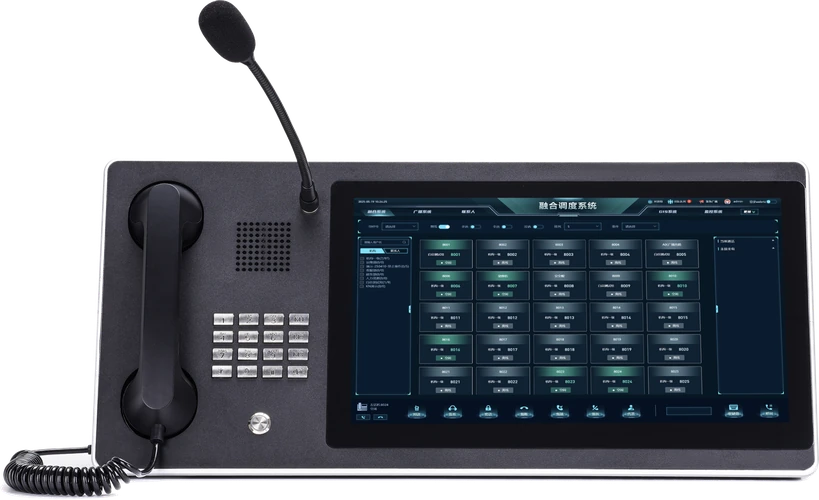
The communication layer connects voice, video, broadcast, intercom, alarm, and command dispatch. For example, Becke Telcom solutions may integrate SIP phones, industrial telephones, emergency intercoms, RoIP gateways, public address systems, CCTV linkage, dispatch consoles, and control-room platforms. This makes the network useful not only for data transmission, but also for real-time decision-making and emergency response.
Application and Business Layer
The application layer includes smart manufacturing, logistics management, remote healthcare, smart agriculture, tourism services, safety monitoring, elderly care, smart transportation, and public safety. This is where ordinary users, small businesses, developers, and vertical industry service providers can find practical opportunities.
Why Enterprises Should Prepare Before 6G Arrives
6G will not become mature overnight. However, enterprises do not need to wait passively. The best preparation is to identify current bottlenecks: where does the business suffer from poor coverage, high latency, isolated devices, high sensor cost, weak emergency response, or fragmented communication systems?
Once those pain points are clear, companies can start with 5G, private networks, SIP communication, industrial IoT, edge computing, and unified dispatch systems today. When 6G becomes commercially available, these systems can evolve more smoothly because the business architecture is already prepared.
Conclusion
From 5G to 6G, communication technology is moving beyond simple network speed. 2G solved mobile calling, 3G brought mobile internet, 4G created the mobile app economy, and 5G is laying the foundation for industrial IoT and high-speed connectivity. 6G is expected to go further by combining space-air-ground coverage, integrated communication and sensing, and AI-native network intelligence.
For ordinary users, the future may bring fewer signal blind spots, more stable connections, smarter devices, and better digital services. For enterprises, the greater value lies in industrial digital transformation, emergency communication, smart hardware, AI edge applications, and integrated command systems.
The key is not to treat 6G as a distant technical slogan. The practical question is: what existing problem can the new network solve? Which industry is still limited by coverage, latency, device cost, or data collection? The teams that identify those problems early will be better positioned to benefit from the next generation of communication infrastructure.
FAQ
Is 6G just faster than 5G?
No. Higher speed is only one part of 6G. The more important changes include wider coverage, satellite-terrestrial integration, integrated sensing, AI-native network optimization, and support for new industrial and consumer applications.
What is space-air-ground integration in 6G?
It means combining terrestrial base stations, satellites, UAVs, and other aerial or space-based communication resources to create wider and more continuous network coverage.
What does integrated communication and sensing mean?
It means wireless networks may transmit data and sense the surrounding environment at the same time. This can support parking detection, elderly care alerts, industrial safety monitoring, positioning, and smart city applications.
Why is AI important in 6G networks?
AI can help networks allocate resources, predict traffic, reduce energy use, detect faults, optimize performance, and support low-latency applications more intelligently than traditional manual network management.
What opportunities can ordinary people or small companies find in 6G?
Opportunities may appear in vertical application development, smart hardware adaptation, industry digital transformation services, edge AI applications, remote monitoring, emergency communication, and localized service integration.
How can industrial companies prepare for 6G?
They can begin by improving current connectivity, deploying industrial IoT, integrating SIP communication and dispatch systems, building edge computing capability, and identifying business scenarios where coverage, latency, or device connectivity is still a bottleneck.