


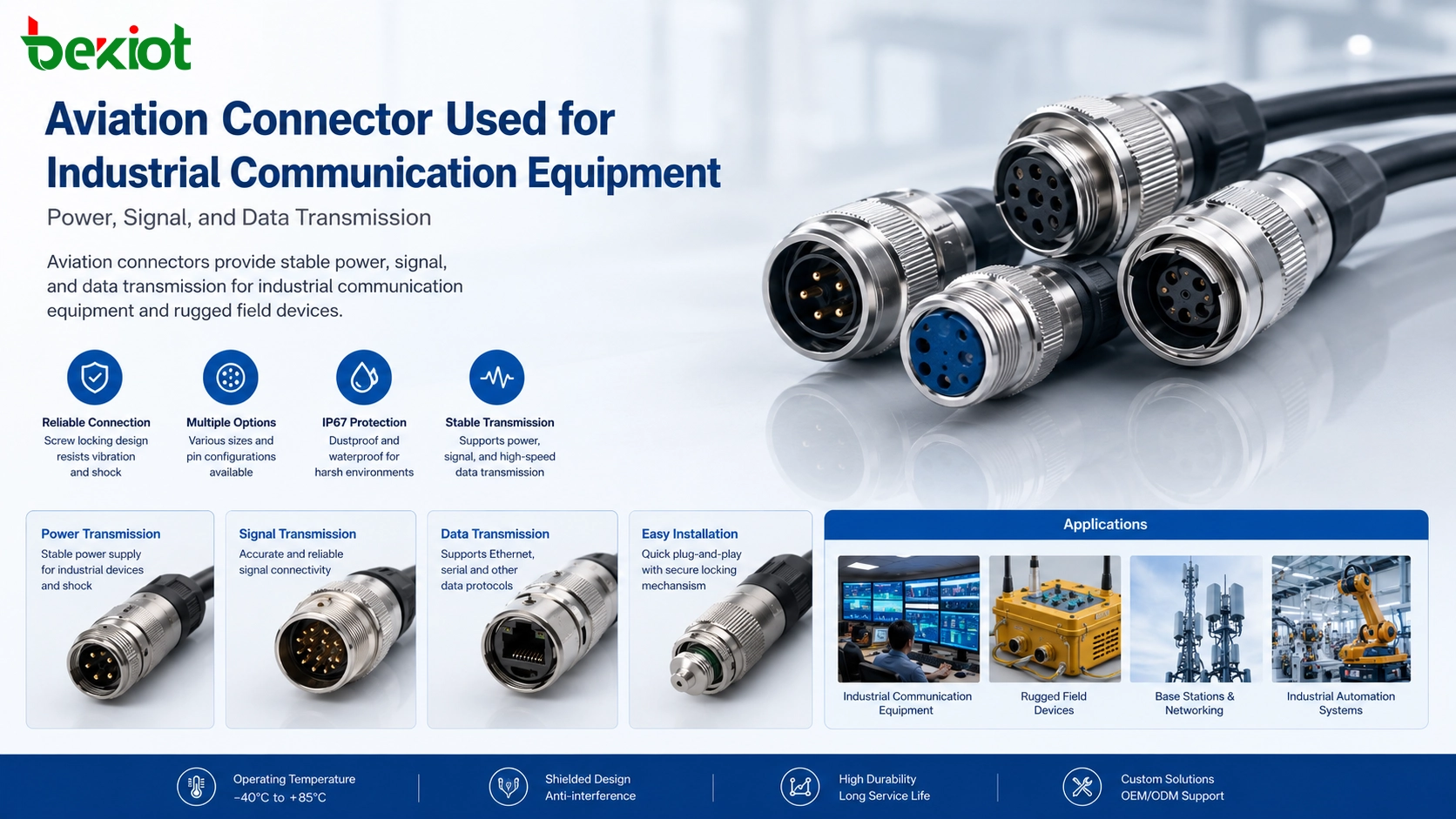
In industrial communication, automation, railway transportation, medical equipment, marine systems, and rugged field devices, a connector is not just a small accessory. It directly affects signal stability, power transmission, device reliability, maintenance efficiency, and long-term system performance. Aviation connectors, also known as circular connectors, are widely used in demanding environments because they provide secure physical locking, stable electrical contact, and strong environmental protection.
The name “aviation connector” comes from the military aircraft manufacturing industry in the 1930s. These connectors were originally developed for aviation applications, where vibration, space limitations, signal reliability, and harsh operating conditions required a more dependable connection method. Today, the same connector concept is widely used in industrial automation, communications, military equipment, medical devices, railway systems, and outdoor engineering projects.
Why Rugged Connectors Matter in Industrial Systems
Many industrial projects involve devices installed in outdoor areas, equipment rooms, vehicles, production lines, transportation systems, control cabinets, and harsh field environments. Ordinary connectors may become loose, corroded, damaged, or unstable after long-term exposure to vibration, dust, water, temperature changes, and repeated plugging.
An aviation connector is designed to solve these practical problems. Its circular structure, locking mechanism, sealed housing, and high-quality contact design help create a more reliable connection between equipment, cables, sensors, control modules, radio devices, gateways, and industrial terminals.
For system integrators, this means fewer connection failures, easier maintenance, and better long-term reliability. In projects where communication interruption or signal loss may affect safety and operation, connector quality becomes part of the overall system design.
Connector Structure and Basic Working Logic
An aviation connector usually includes a plug, socket, contact pins, shell, locking structure, sealing components, and cable connection parts. The contact pins are used to transmit power, data, control signals, or audio signals. The shell protects the internal contacts and provides mechanical strength.
Because aviation connectors are often circular, they are also called circular connectors. They can be designed with different pin counts, sizes, contact layouts, materials, and protection levels. Some connectors are used for low-voltage signal transmission, while others are used for power supply, data transmission, radio connection, control signals, or mixed power-and-signal applications.
The connection is usually completed by aligning the plug and socket correctly, inserting the connector, and locking it mechanically. This locking structure helps prevent accidental disconnection caused by vibration, pulling, or movement.
Pin Count Is Important, but Not the Only Factor
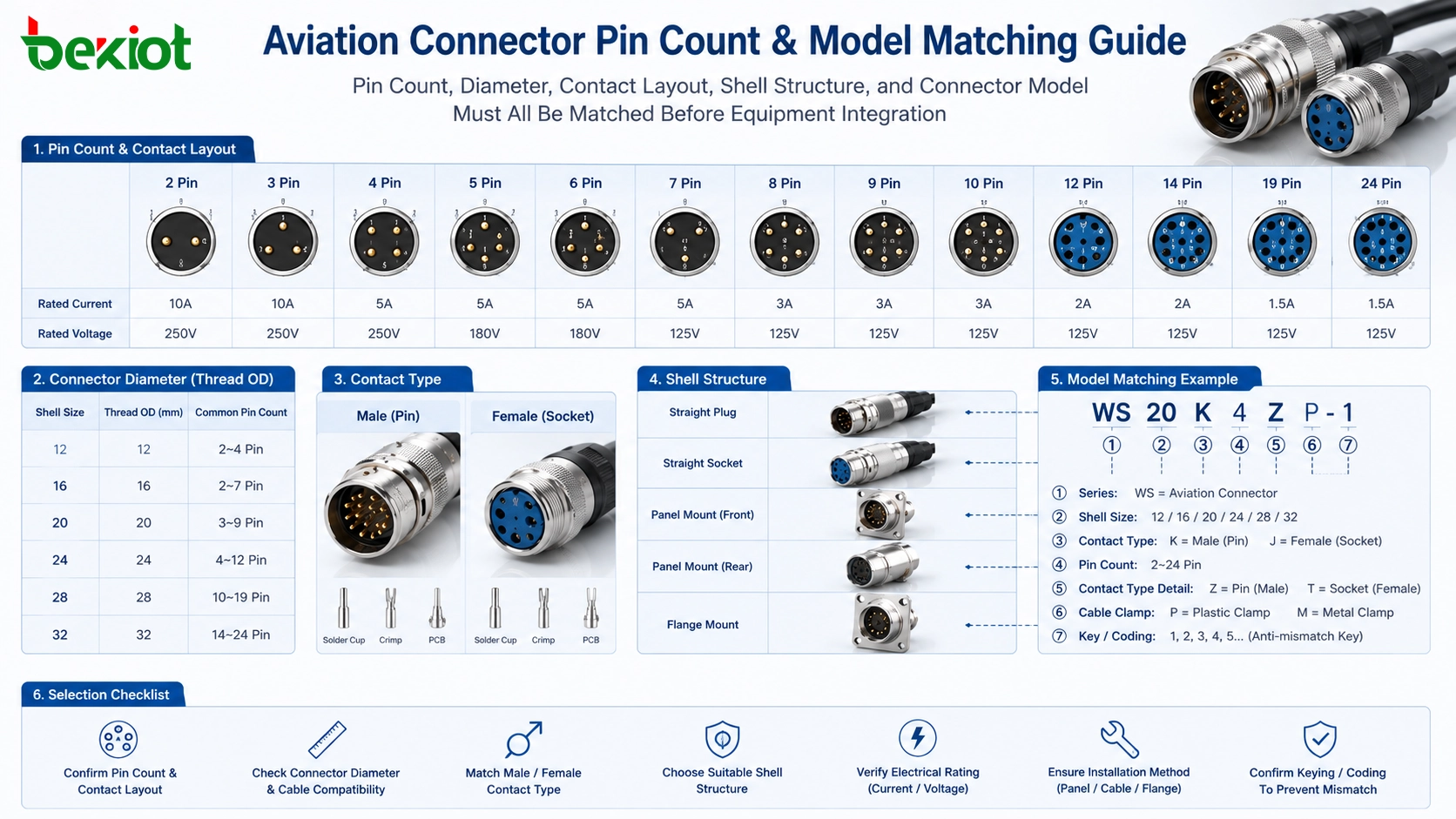
Aviation connectors can be classified by the number of cores or pins. Common examples include 2-pin, 3-pin, 4-pin, and 9-pin connectors, while some industrial connectors may have many more contact points. The correct pin count must match the equipment interface and the required signal functions.
For example, a radio gateway, communication terminal, control box, or industrial device may use a 9-pin aviation connector for audio, control, power, or signal access. However, choosing a connector only by pin count is not enough. Even if two connectors are both 9-pin aviation connectors, they may still have different diameters, pin arrangements, shell sizes, locking methods, and manufacturing standards.
For project delivery, the specific connector model must be confirmed. Matching only the number of pins may lead to installation failure, poor contact, or incompatible cable assembly. This is an important detail when designing custom cables or replacing connectors in industrial communication projects.
Standards and Form Factors Used in Projects
Aviation connectors can be manufactured according to different standards and design families. Some connectors follow German DIN-related standards, while others are designed according to military specifications such as MIL-Spec. The standard affects mechanical dimensions, contact layout, locking structure, material requirements, and application suitability.
In real projects, the connector standard should be selected according to equipment interface requirements, environmental conditions, cable type, signal type, installation space, and maintenance method. Micro aviation connectors may be suitable for compact equipment, while larger connectors may be required for higher current, more contacts, or rugged outdoor use.
This is why connector confirmation should be included early in the project design stage. If the connector is ignored until installation, the project may face cable mismatch, delayed commissioning, additional customization cost, or unreliable field operation.
Stable Physical and Electrical Connection
One major advantage of aviation connectors is their reliable physical and electrical connection. The contact points are often designed with corrosion-resistant materials, and some contacts may use gold plating or other surface treatments to maintain good electrical performance.
This is important for devices that need stable signal transmission over a long period. Poor contact can cause intermittent audio, unstable data transmission, control failure, power interruption, or system alarms. A high-quality aviation connector reduces these risks by maintaining consistent contact pressure and protecting the connection area from environmental damage.
For communication devices, radio equipment, control systems, sensors, and automation terminals, this stable connection helps improve the reliability of the whole system instead of only protecting one cable interface.
Protection for Harsh Environments
Many aviation connectors are designed to be waterproof and dustproof. Some models can reach IP67 or higher protection levels, making them suitable for outdoor equipment, industrial plants, field communication systems, transportation applications, and equipment exposed to dust, moisture, or rain.
In harsh environments, connector sealing is especially important. Water or dust entering the contact area may cause corrosion, short circuits, poor signal quality, or equipment failure. A protected aviation connector helps reduce these risks and improves long-term device stability.
The housing material also matters. Aviation connectors often use strong metal shells or high-strength plastic housings to withstand mechanical impact, cable pulling, vibration, and demanding installation environments.
Installation and Maintenance Efficiency
Aviation connectors are not only designed for reliability. Many models are also designed for easier installation and maintenance. Quick-locking mechanisms, clear alignment structures, and plug-and-socket designs help technicians connect and disconnect equipment more efficiently.
This is useful in projects where devices may need regular inspection, replacement, or field maintenance. Instead of opening equipment enclosures or rewiring terminals every time, technicians can disconnect the aviation connector, replace the device or cable, and restore operation more quickly.
For large-scale industrial projects, this can reduce maintenance time and simplify spare parts management. It also improves the maintainability of outdoor terminals, gateways, control boxes, radio devices, and mobile equipment.
Cable Compatibility and Custom Assembly
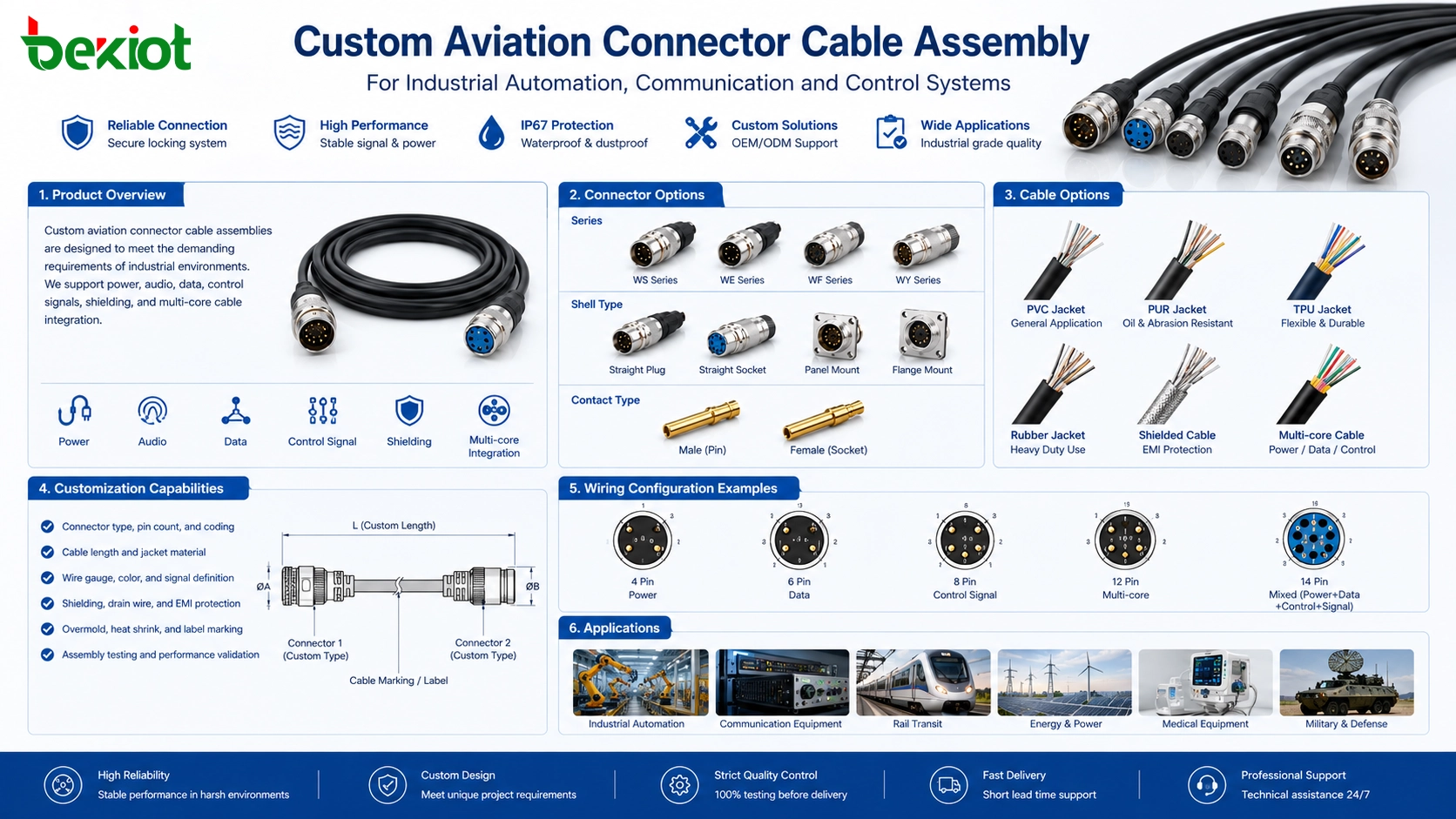
Aviation connectors can be used with different cable types, including coaxial cables, multi-core cables, shielded cables, control cables, and even optical fiber in some specialized designs. This allows them to support different signal types and application requirements.
For communication and automation projects, custom cable assembly is often required. The connector must match the device interface, while the cable must match the transmission requirements. Audio, data, power, control, and shielding requirements should all be considered before cable production.
In some designs, aviation connectors also support modular or customized contact layouts. This allows project teams to build connector solutions based on specific device functions rather than being limited to one fixed interface structure.
Where This Connector Solution Fits
Aviation connectors are suitable for many industries because they combine mechanical strength, environmental protection, and electrical reliability. In industrial automation, they can be used for sensors, control modules, robotics, production equipment, and field terminals. In communication systems, they can connect radios, gateways, control panels, emergency devices, and outdoor terminals.
In railway and transportation projects, aviation connectors can help protect equipment interfaces from vibration, dust, and long-term outdoor exposure. In medical equipment, stable signal and power connection can support device reliability. In marine exploration, outdoor monitoring, military-related systems, and rugged engineering projects, sealed and durable connectors are often required.
The best value appears when the connector is selected as part of the system design, not as an afterthought. Pin count, contact layout, standard, shell material, protection level, cable type, and maintenance method should all be planned together.
Project Value
The first value is reliability. Aviation connectors help maintain stable physical and electrical connections in environments where vibration, dust, water, and repeated operation may affect ordinary connectors.
The second value is protection. With waterproof and dustproof designs, and protection levels that can reach IP67 or higher in suitable models, aviation connectors are well suited for outdoor and demanding industrial applications.
The third value is flexibility. Different pin counts, sizes, standards, cable types, and customized layouts allow aviation connectors to serve many types of industrial and communication equipment.
The fourth value is maintainability. Quick connection, clear interface matching, and rugged structure help reduce maintenance difficulty and improve field service efficiency.
In industrial and communication projects, a reliable connector is part of system stability. Choosing the right aviation connector helps protect signal quality, power transmission, device operation, and long-term maintenance.
FAQ
Can two aviation connectors with the same pin count always be used together?
No. The same pin count does not guarantee compatibility. Diameter, pin arrangement, shell structure, locking method, standard, and exact model must also match.
When should a project use a metal shell instead of a plastic shell?
A metal shell is usually preferred when the device faces stronger vibration, impact, electromagnetic interference, outdoor exposure, or demanding industrial conditions. Plastic shells may be suitable for lighter-duty or weight-sensitive applications.
Is IP67 protection necessary for every project?
No. IP67 or higher protection is important for outdoor, wet, dusty, or harsh environments. Indoor control cabinets or protected equipment rooms may not always require the same protection level.
What information should be confirmed before ordering a custom cable?
The project team should confirm connector model, pin definition, cable length, shielding requirement, signal type, current level, installation environment, and whether the connector needs waterproof or anti-vibration performance.
Can aviation connectors transmit both power and signal?
Yes. Many aviation connectors can be designed for power, signal, audio, control, or mixed transmission. The specific capability depends on contact design, pin layout, cable specification, and electrical rating.







