Two-way radio communication has evolved through three major forms: analog two-way radios, digital two-way radios, and PoC radios, also known as Push-to-Talk over Cellular or public network radios. Each technology was created for a different stage of communication development, and each one still has practical value in the market.
For industrial users, the real question is not simply which radio is “newer.” The better question is which communication model is suitable for the site, the budget, the coverage requirement, the dispatch workflow, and the long-term system upgrade plan. A factory, mine, port, tunnel, security team, transportation site, or emergency response center may need different radio technologies working together rather than one technology replacing all others.
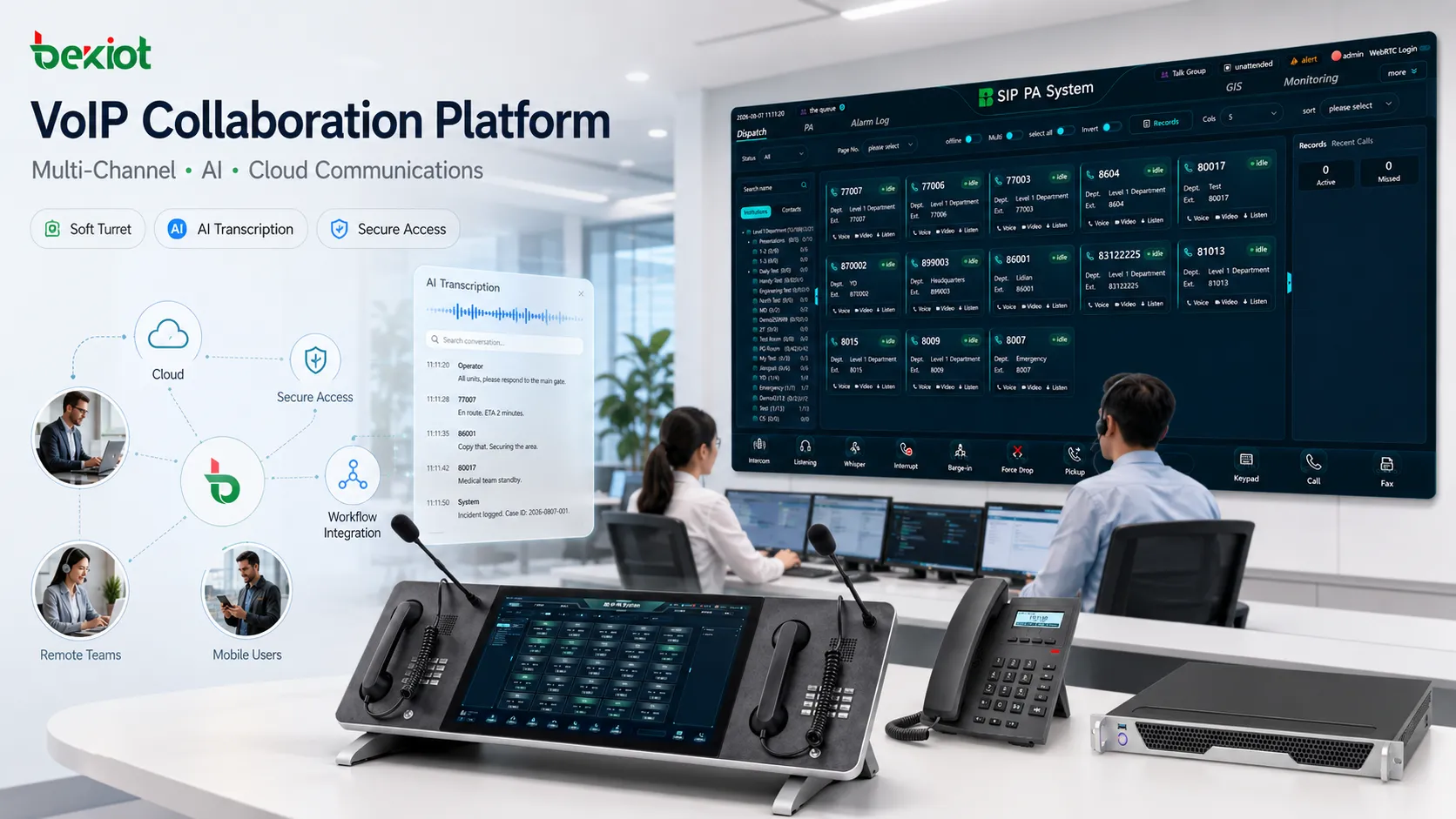
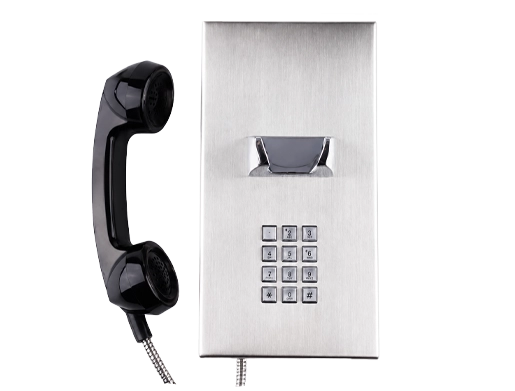
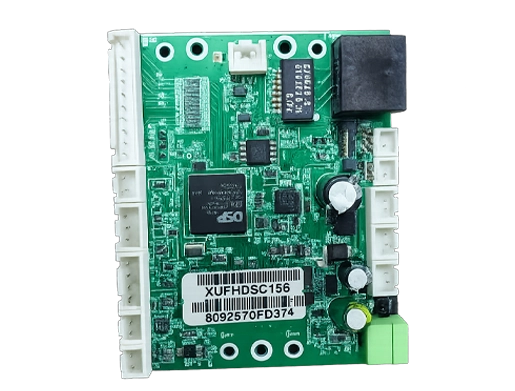
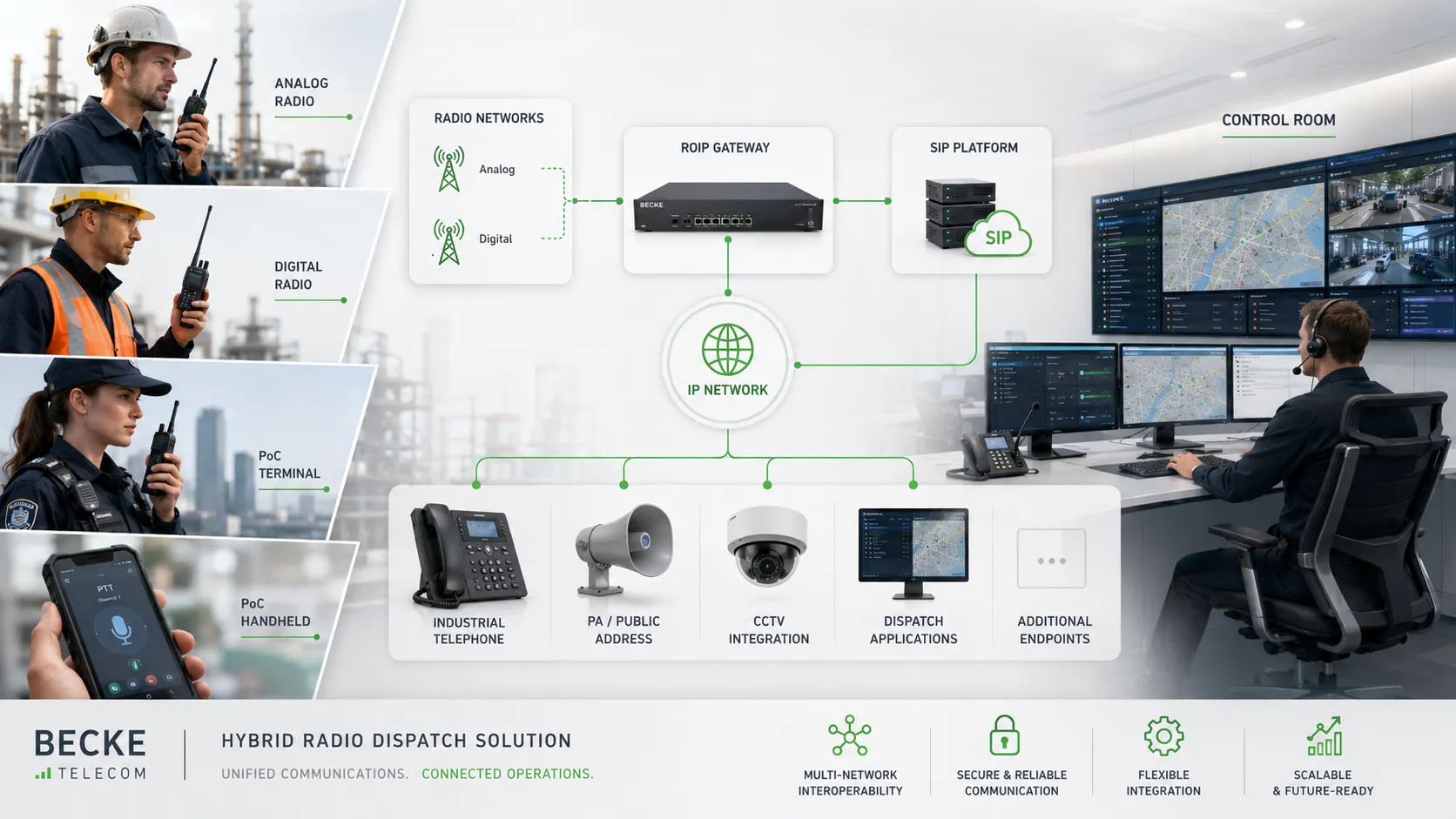
Becke Telcom approaches radio communication from a system integration perspective. Analog radios, digital radios, and PoC terminals can all be connected with RoIP gateways, SIP dispatch platforms, industrial telephones, emergency intercoms, public address systems, and control-room communication platforms to form a more unified industrial communication solution.
From Radio Devices to Communication Systems
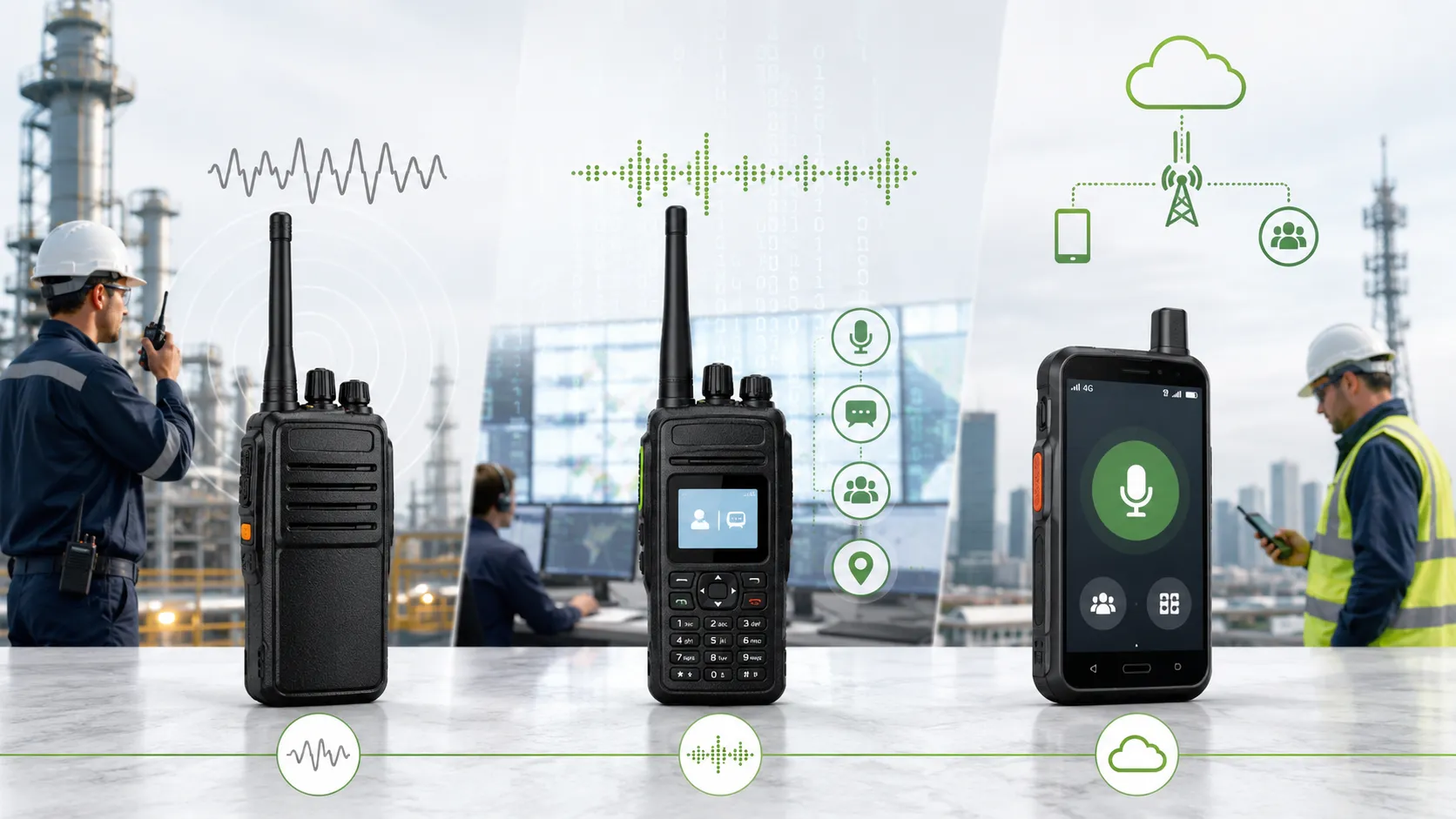
Early two-way radios were mainly analog devices. Their working logic was direct and practical: voice, signaling, and control signals were modulated as continuous waveforms onto a radio carrier frequency, then transmitted and received through the antenna system. This made analog radios reliable, easy to understand, and cost-effective for many field users.
Later, digital radios entered the market. Instead of transmitting voice as a continuous analog waveform, digital radios convert voice into digital information and transmit it through digital encoding. This change improves spectrum efficiency, voice clarity, anti-noise performance, and the ability to combine voice with data services.
In recent years, PoC radios have become more visible. A PoC radio uses the mobile cellular packet network and VoIP technology to provide half-duplex push-to-talk service. It can support one-to-one calls, group calls, and broadcast-style communication over a wide-area mobile network.
Core Technical Difference
The difference between analog, digital, and PoC radios is mainly found in how voice is carried, how coverage is achieved, and how the system is managed. Analog radios rely on traditional RF channels. Digital radios still use radio channels but encode voice and control information digitally. PoC radios depend on cellular data networks and IP communication.
| Radio Type | Transmission Method | Main Strength | Main Limitation |
|---|---|---|---|
| Analog Two-Way Radio | Voice and signaling are modulated as continuous waveforms on the carrier frequency. | Mature technology, simple operation, complete ecosystem, relatively low cost. | Limited spectrum efficiency, weaker data capability, more noise as signal quality drops. |
| Digital Two-Way Radio | Voice is digitized and transmitted through digital encoding. | Better spectrum utilization, clearer audio, error correction, stronger voice-data integration. | Higher device and system cost, slower adoption in cost-sensitive markets. |
| PoC Radio | PTT voice is carried over cellular packet data networks using VoIP technology. | Wide network coverage, always-online service, one-to-one calls, group calls, and broadcast. | Depends on mobile network coverage, data service, platform stability, and recurring fees. |
Analog Two-Way Radios: Mature, Affordable, and Still Useful
Analog radios are often called traditional walkie-talkies. They have been used for many years in security patrols, property management, warehouses, construction sites, hotels, factories, ports, and transportation operations. Their biggest advantage is maturity. The technology is stable, the operating method is simple, and the cost is usually easier for large-volume users to accept.
From an engineering point of view, analog radio communication is straightforward. Voice, signaling, and control information are processed as continuous signals and carried on the radio frequency. This makes analog radios easy to deploy and maintain in many local communication scenarios.
However, analog radio also has limits. As the signal becomes weak, background noise becomes more obvious. Spectrum resources are not used as efficiently as digital systems. Data applications are also limited compared with digital radio platforms. In highly congested frequency environments, analog systems may face more pressure.
Analog radio is not outdated simply because digital radio exists. In many cost-sensitive and simple-dispatch scenarios, analog radio remains practical because it is mature, affordable, and easy to operate.
Digital Two-Way Radios: Better Spectrum Use and Clearer Voice
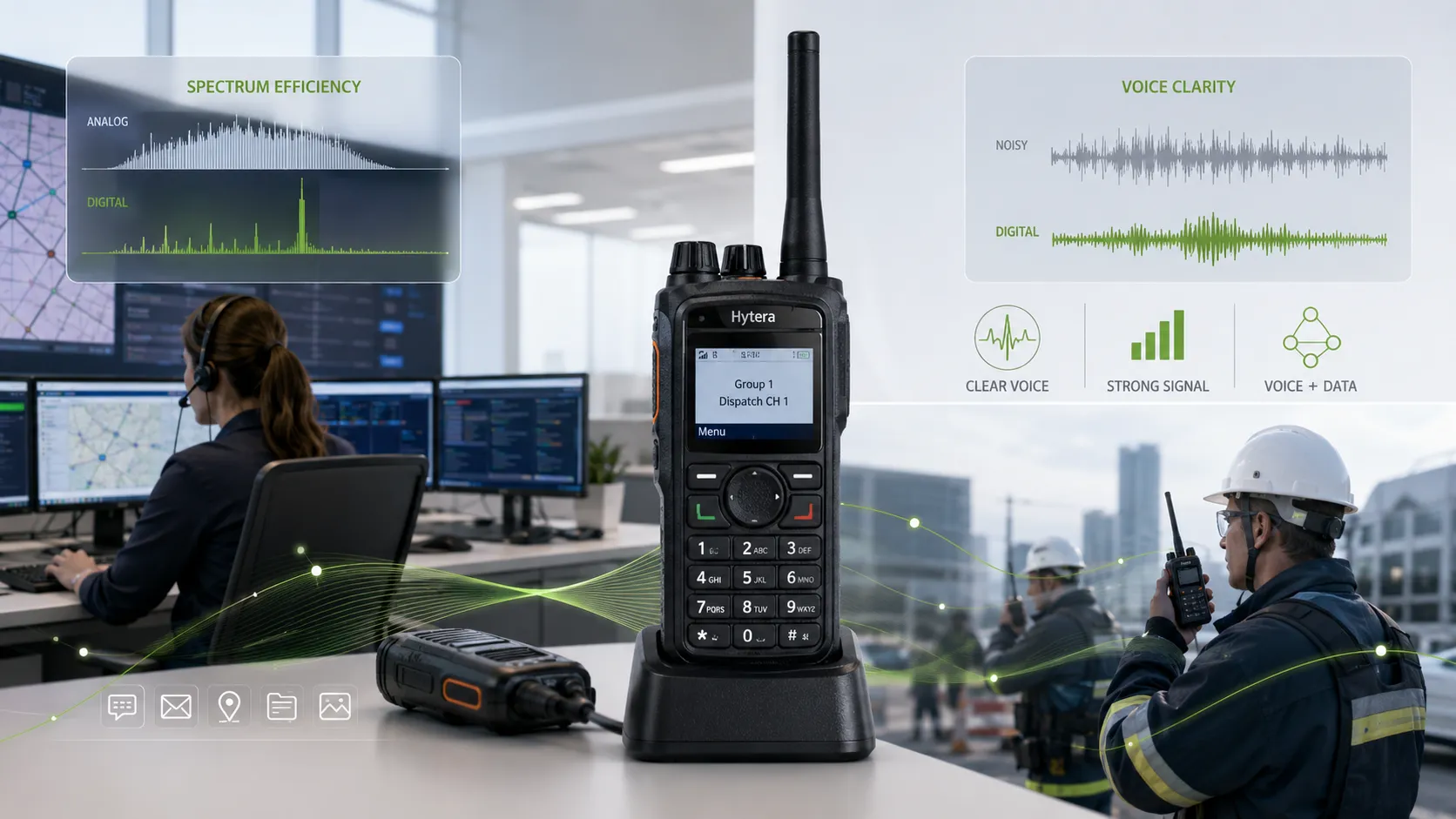
Digital radios were developed to solve several long-term problems in traditional radio systems. The first advantage is better spectrum utilization. Similar to cellular digital technology, digital radio can allow more users or more efficient service capacity on a designated channel, which is important when frequency resources become crowded.
The second advantage is improved call quality. Digital communication technology can include error correction inside the system. Compared with analog radio, digital radio can maintain clearer audio in a wider range of signal environments. The received voice has less noise, and speech can remain easier to understand when conditions are not ideal.
The third advantage is the integration of voice and data. Digital radio can provide stronger data processing and interface capabilities than traditional analog systems. This allows more applications to be integrated into the same two-way radio communication infrastructure, including ID display, status signaling, short data, positioning, dispatch management, and system-level control.
Why Digital Radios Are More Expensive
Digital radios are usually more expensive because they require more advanced processing, encoding, decoding, protocol support, and system management. Digital trunking systems are often used in command dispatch, public security, large enterprises, industrial parks, transportation, and professional operation teams. These users may accept a higher price when the system provides better dispatch capability and more reliable management.
But many ordinary professional radio users are different. They often need a large number of devices at a low unit cost. For them, price is a key factor. This is why analog radios can continue to occupy a large part of the market in China and many other regions. Digital radio adoption will become faster when device cost drops, system technology becomes more widely mastered by manufacturers, and different product tiers become available for different user groups.
PoC Radios: Wide-Area PTT over Mobile Networks
PoC radio, or public network radio, is based on the mobile cellular packet domain and VoIP technology. It provides half-duplex voice service similar to traditional PTT. Users can press one button to talk, create group conversations, make one-to-one calls, or send broadcast-style voice messages.
The strongest advantage of PoC is coverage. Because it uses mobile communication networks, it can support wide-area communication wherever the cellular network is available. This makes PoC attractive for logistics, taxis, city services, property management, chain stores, mobile patrols, and teams that move across large geographic areas.
PoC is also naturally IP-based. It can support always-online operation, platform management, group organization, user status, location services, and application integration. For many users, this makes PoC feel more flexible than a traditional local radio system.
Why PoC Will Not Replace All Traditional Radios
Although PoC has strong coverage advantages, it also has clear limitations. First, it depends on the mobile network. If cellular coverage is weak, overloaded, interrupted, or unavailable during an emergency, PoC communication may be affected. Traditional radios can still work locally without relying on the public mobile network.
Second, PoC usually involves recurring service fees. A traditional radio is often a one-time device purchase, which makes cost easier to estimate. PoC may require device cost, platform cost, SIM card service, data traffic, and monthly communication fees. For large teams, long-term operating cost must be considered carefully.
Third, some users may find PoC less intuitive than traditional radios. Possible concerns include network traffic consumption, platform dependence, account management, service activation procedures, voice quality variation, and operation habits. These factors can limit PoC adoption in some practical markets.
Market Direction: Replacement Is Not the Main Story
A frequent debate in the radio industry is whether digital radios will replace analog radios, or whether PoC radios will replace both analog and digital radios. In real projects, this replacement view is too simple. The more likely future is coexistence and integration.
Analog radios will remain useful for low-cost local communication and simple team coordination. Digital radios will grow in professional markets that require clearer audio, better spectrum efficiency, data integration, and stronger dispatch functions. PoC radios will continue to expand in wide-area mobile communication where cellular coverage and platform service are available.
This means different radio types will serve different user groups. The key is to build a communication architecture that allows them to work together when needed.
| Application Scenario | Recommended Technology Direction | Reason |
|---|---|---|
| Small security team or warehouse | Analog radio or entry-level digital radio | Simple operation and low cost are usually more important than advanced data functions. |
| Industrial dispatch center | Digital radio with SIP or RoIP integration | Clear voice, better management, and system linkage are important for production safety. |
| Citywide mobile workforce | PoC radio with platform management | Wide-area coverage and group management are more important than local RF independence. |
| Mission-critical industrial site | Hybrid analog, digital, PoC, RoIP, SIP, and dispatch platform | Multiple communication paths improve reliability and operational flexibility. |
Becke Telcom Hybrid Radio Communication Solution
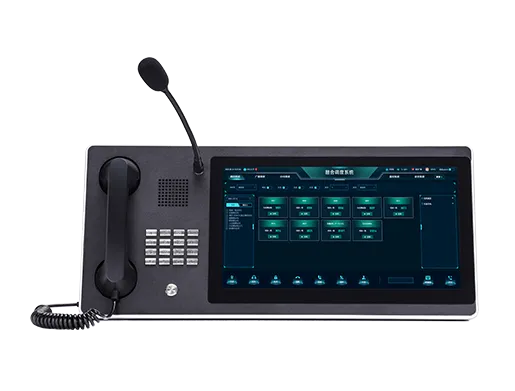
Becke Telcom can help organizations move from isolated radio devices to an integrated communication system. In a practical deployment, analog radios, digital radios, and PoC terminals can be connected with RoIP gateways, SIP servers, dispatch consoles, industrial SIP phones, emergency intercom stations, PA speakers, CCTV systems, and alarm inputs.
This architecture allows field users to continue using familiar PTT devices while control-room operators manage calls, groups, incidents, recordings, alarms, and emergency broadcasts from a unified platform. It also helps organizations protect existing radio investments while gradually adding digital and IP-based capabilities.
RoIP Gateway Integration
A RoIP gateway connects radio voice to an IP network. It can bridge radio users with SIP phones, dispatch consoles, remote command centers, and other IP endpoints. This is useful when field radio teams need to communicate with office users, fixed industrial telephones, or emergency communication platforms.
SIP Dispatch and Industrial Endpoints
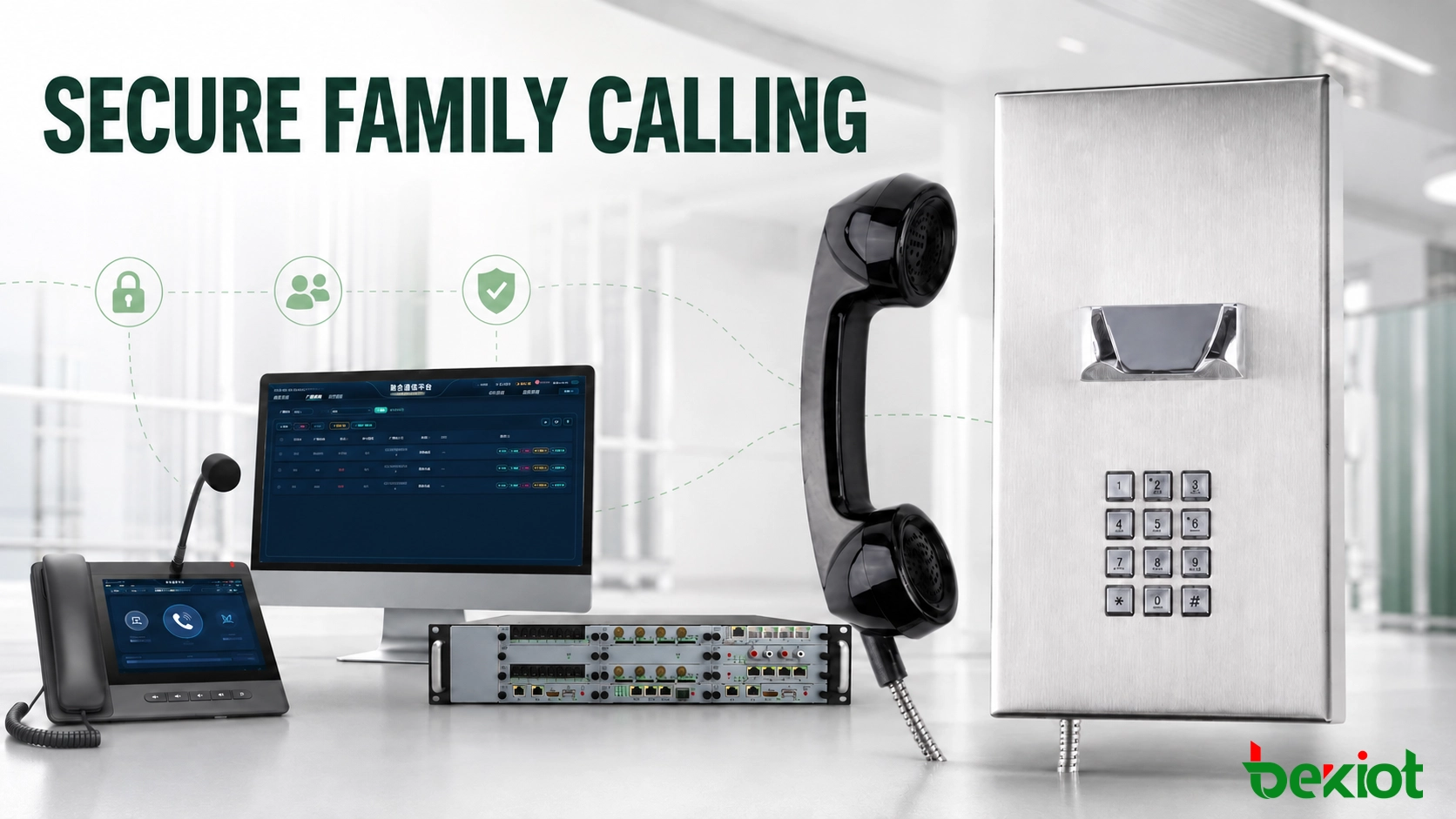
A SIP dispatch platform can manage calls, groups, priority communication, recording, and system linkage. Becke Telcom industrial telephones, emergency intercoms, paging gateways, horn speakers, and public address devices can be integrated into the same communication workflow.
Alarm, PA, and CCTV Linkage
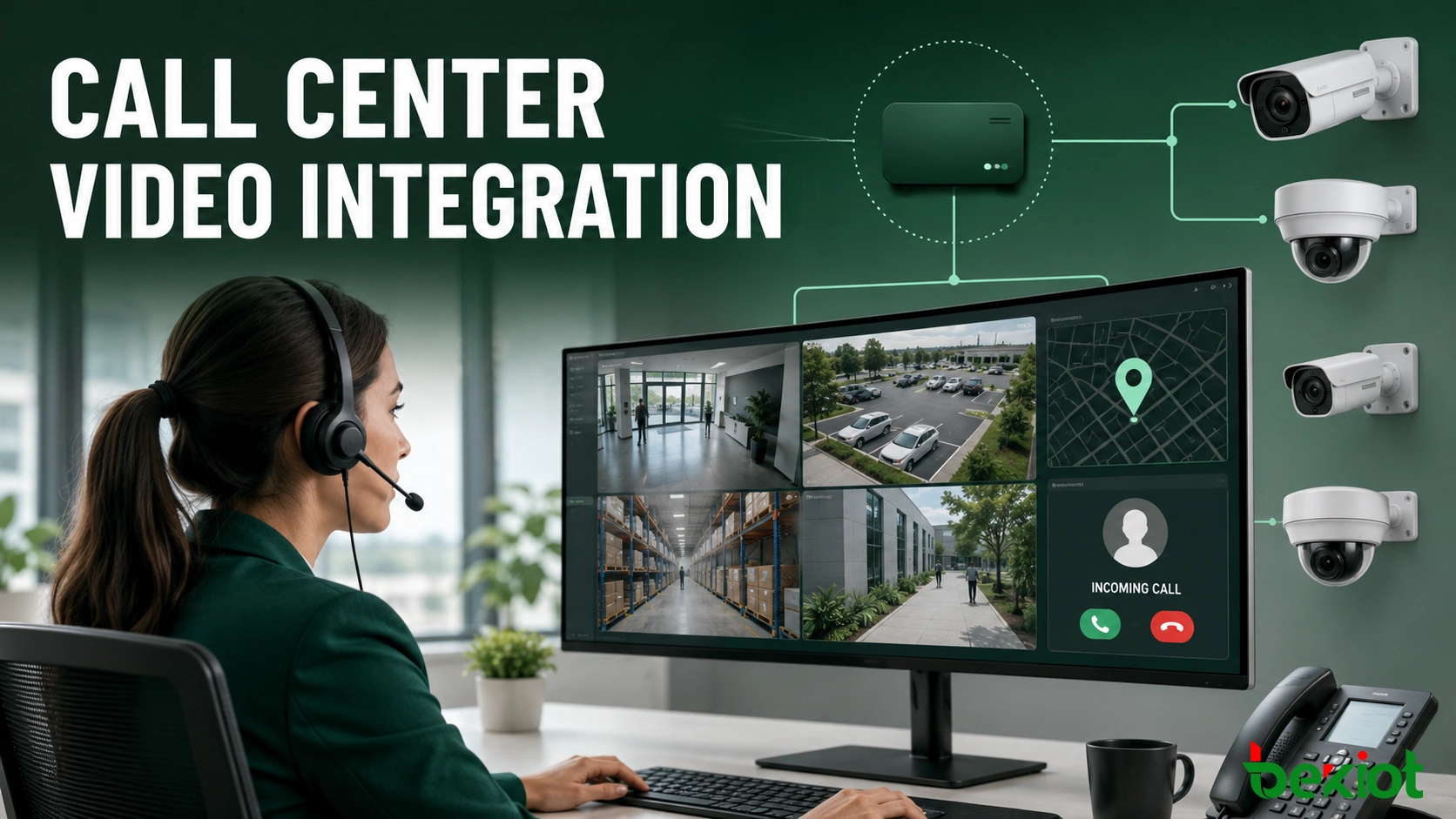
In industrial safety scenarios, communication should not stop at voice calls. A complete system can link radio communication with public address broadcasting, visual alerts, CCTV, access control, fire alarm systems, and command-center event handling. This creates a more complete response chain from incident detection to dispatch, notification, and follow-up.
Future Development: Smaller, Lower-Cost, More Integrated
The future of two-way radio communication will not be decided by one single technology. The market will move toward smaller devices, lower costs, stronger features, better platform management, and deeper integration with IP communication systems.
Digital radios will continue to develop as costs decrease and technical standards become more widely adopted. PoC radios will continue to grow where wide-area cellular coverage and platform services are valuable. Analog radios will continue to serve large-volume, cost-sensitive markets for a long time.
For manufacturers, integrators, and end users, innovation is the key. Radio communication should not remain only as a simple voice tool. It should become part of a broader communication and safety system that includes dispatch, alarms, broadcasting, video linkage, location, recording, and management.
The future is not analog versus digital versus PoC. The future is an integrated communication system where each technology plays the role it is best suited for.
How to Choose the Right Radio Technology
When choosing a radio communication solution, users should first define their operational scenario. If the project only needs low-cost local PTT communication, analog radios may still be suitable. If the project requires clearer audio, stronger anti-noise capability, data integration, and professional dispatch, digital radios may be better.
If the users are distributed across cities or large regions and mobile network coverage is stable, PoC radios may provide greater flexibility. If the site is mission-critical, such as a mine, port, energy plant, tunnel, or emergency command center, a hybrid solution is usually more reliable than relying on a single communication technology.
Conclusion
Analog radios, digital radios, and PoC radios are not simply three generations where the newer one completely replaces the older one. Analog radios are mature, stable, and cost-effective. Digital radios improve spectrum efficiency, audio quality, and voice-data integration. PoC radios extend PTT communication through cellular packet networks and VoIP technology, supporting one-to-one calls, group calls, broadcast, and always-online service.
Digital radios have strong development potential, but higher cost means they will not replace analog radios immediately in all markets. PoC radios can replace some traditional applications, especially wide-area mobile team communication, but they are limited by network dependence, service cost, traffic usage, platform operation, and user habits.
Becke Telcom recommends an integrated communication strategy. By combining radio systems with RoIP gateways, SIP dispatch platforms, industrial telephones, emergency intercoms, public address systems, CCTV linkage, and alarm integration, organizations can build a practical, scalable, and future-ready communication system.
FAQ
What is the main difference between analog and digital two-way radios?
Analog radios transmit voice and signaling as continuous waveforms on a carrier frequency. Digital radios convert voice into digital information and transmit it through digital encoding, which can improve spectrum efficiency, audio clarity, and data integration.
Why are digital radios usually more expensive?
Digital radios require more advanced processing, encoding, decoding, protocols, and system management. They are often used in professional dispatch, security, industrial, and enterprise environments where stronger functions justify a higher cost.
What is a PoC radio?
A PoC radio is a Push-to-Talk over Cellular device. It uses mobile cellular packet networks and VoIP technology to provide half-duplex voice communication, including one-to-one calls, group calls, and broadcast-style communication.
Will PoC radios replace traditional two-way radios?
PoC radios may replace some applications that need wide-area coverage, but they will not replace all traditional radios. PoC depends on mobile networks, platform services, data traffic, and recurring fees, while traditional radios can still work independently in local environments.
Will digital radios replace analog radios soon?
Digital radios have strong advantages, but analog radios are still widely used because they are mature, simple, and low-cost. In many markets, analog radios will continue to occupy a large share until digital radio costs fall and product tiers become more widely accepted.
How can Becke Telcom integrate different radio systems?
Becke Telcom can connect analog radios, digital radios, and PoC systems with RoIP gateways, SIP dispatch platforms, industrial telephones, emergency intercoms, PA broadcasting, CCTV linkage, and alarm systems to create a unified communication solution.