


A call box on the highway is a roadside emergency communication point designed to help stranded motorists quickly reach assistance when they cannot rely on a mobile phone. In the classic sense, it is the yellow emergency phone many drivers remember from older freeway systems. In the modern sense, it can also be a video-enabled roadside help point connected to a wider dispatch, broadcast, surveillance, and emergency response platform.
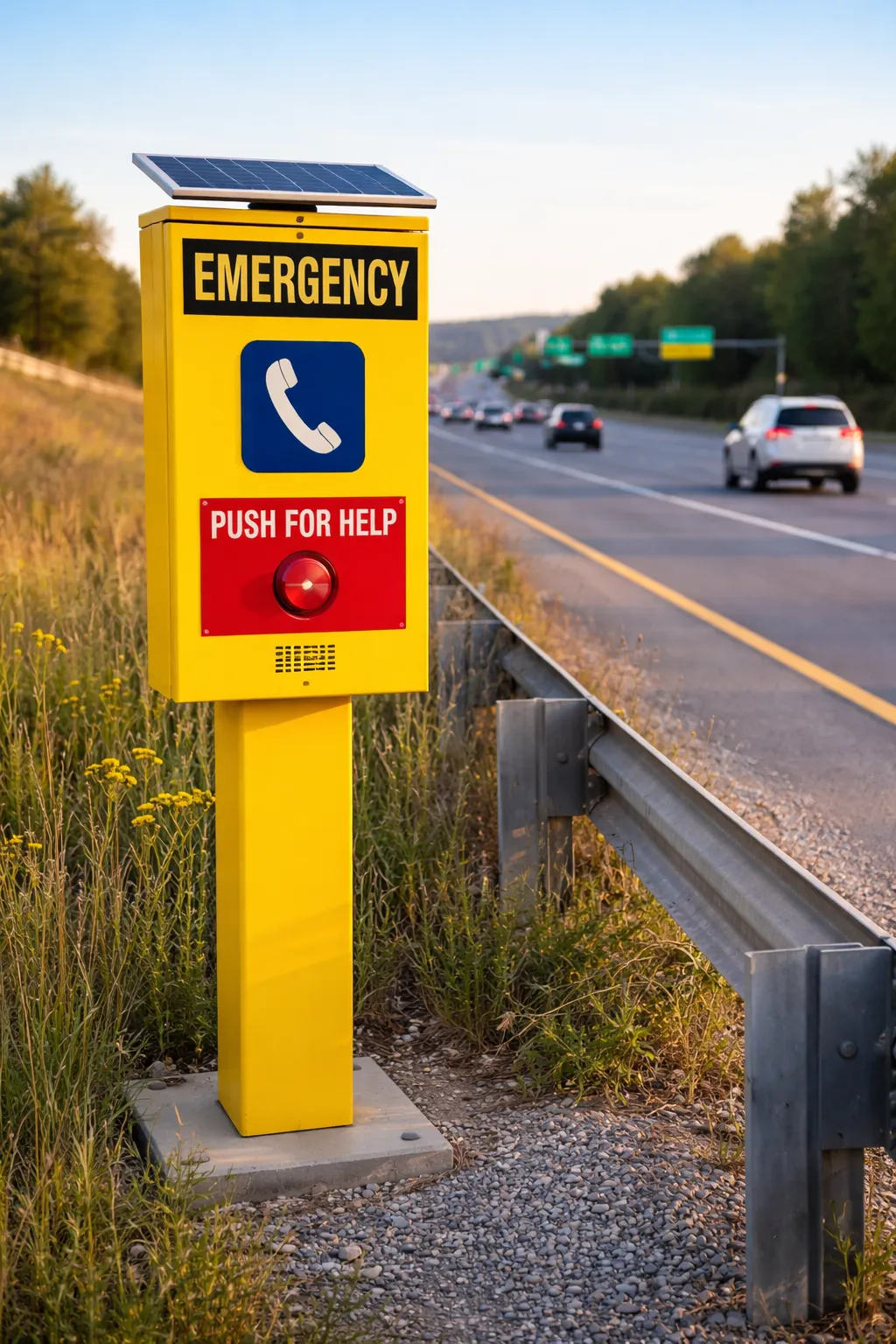
Highway call boxes became widely known in places like California, where they were introduced decades ago as part of roadside safety infrastructure. The first major installations appeared on the Harbor Freeway in Los Angeles in the 1960s, and the network later expanded across many highways. Even though smartphone use has reduced dependence on them, call boxes have not disappeared. Some counties still operate active systems, while others are retiring older networks and shifting to 511, mobile assistance, or other digital services.
Why Highway Call Boxes Still Matter
It is easy to think a call box is outdated. After all, most drivers now carry smartphones, and many vehicles include GPS, telematics, or built-in emergency calling features. But highways are still harsh operating environments. Cell coverage can drop in mountain roads, tunnels, remote corridors, and certain rural stretches. A dead battery, damaged phone, or crash can leave a driver without a reliable way to call for help. That is where a roadside call box remains valuable.
Official transportation agencies still describe call boxes as a practical safety tool. Orange County, for example, says its network includes more than 400 call boxes, many of them solar-powered and equipped for two-way voice as well as typed-message communication for speech- or hearing-impaired users. The California Highway Patrol also notes that the Freeway Service Patrol can be reached from a mobile phone or by using a freeway call box and dialing 511.
So, the simplest answer is this: a highway call box is not just an old roadside phone. It is a backup safety channel that remains useful when normal communications fail. In modern deployments, it can also be the front end of a fully networked emergency response system.
What A Traditional Highway Call Box Does
The traditional highway call box is built for speed, clarity, and location accuracy. A stranded driver pulls over safely, walks to the roadside box, opens it, and connects to an operator or dispatch center. The box is tied to a known route location, so responders can identify where the call came from even if the caller is confused, injured, or unfamiliar with the road. That location awareness is one of the main reasons call boxes have remained relevant for emergency use.
Historically, these boxes were used for breakdowns, crashes, medical distress, hazardous road conditions, and other urgent roadside situations. Their main purpose was never casual communication. They were designed to connect motorists with the right response resources as quickly as possible. In many systems, that means highway patrol, roadside assistance, towing coordination, or traffic management support.
From Roadside Phone To Intelligent Emergency Node
The uploaded highway solution deck points to the next evolution of the call box. In this model, the roadside help point is no longer an isolated device. It becomes part of a SIP-based highway audio, video, and IoT communication system that links intercom, telephony, broadcasting, dispatch, alarms, video, and mobile response into one platform.
That shift matters. A modern highway call box should not only let a driver speak to the control center. It should also allow the operator to see the scene, identify the exact location on a map, trigger emergency broadcasts, transfer the call if needed, invite other responders into a conference, and dispatch field teams using handheld devices or radio networks. The PPT specifically describes one-touch help, automatic map pop-up and nearby camera display, visual intercom, recording, zone broadcast, alarm plans, and integration with wireless patrol radios through a RoIP gateway.
In other words, the modern highway call box is best understood as a smart roadside emergency terminal.
How A Modern Highway Call Box System Works
In a contemporary highway deployment, the roadside terminal is usually installed at key risk points such as ramps, accident-prone sections, toll plazas, service areas, road shoulders, and tunnels. When a driver presses the emergency help button, the terminal immediately establishes a two-way voice session with the station monitoring room or central control center. In a video-capable installation, the operator can also view the live scene through the intercom terminal itself or linked CCTV feeds.
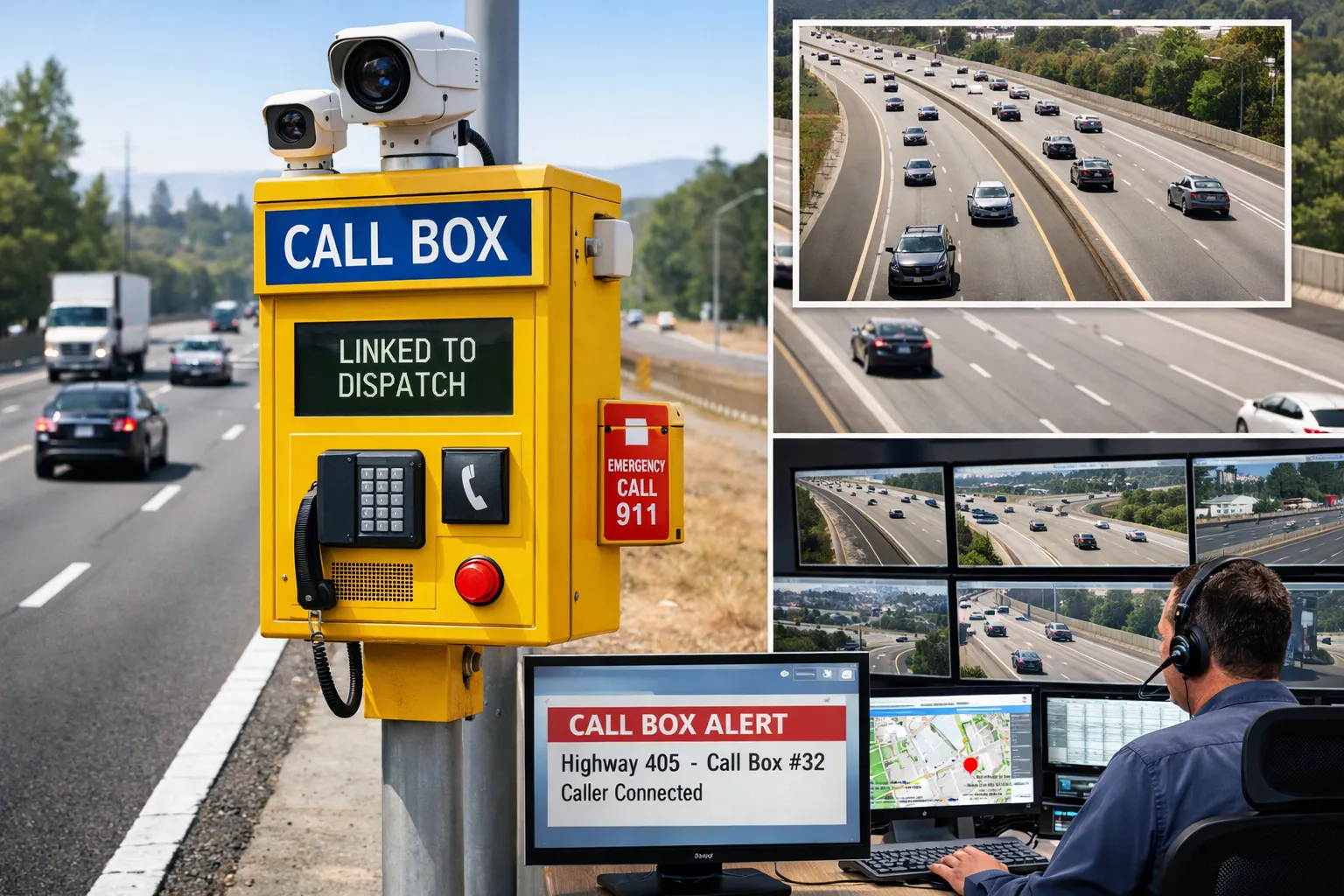
At the platform level, the system can automatically display the location of the incident on an electronic map and show nearby monitoring points to speed up assessment. This matters on long highway corridors where a verbal description such as “I am somewhere near the exit” is often not precise enough for a fast response. The source deck explicitly describes map-based positioning and the automatic display of nearby monitoring resources when a roadside help point is activated.
The control room can then escalate the event. The call may be transferred, handled by multiple operators, or expanded into an emergency conference. The same platform can issue zone-based broadcasts to tunnels, plazas, or service areas, interrupt routine audio when necessary, and push alerts according to predefined alarm workflows. That makes the system far more effective than a standalone emergency phone.
Core Functions Of A Highway Call Box System
A modern highway call box system should do far more than place a basic voice call. On today’s roads, operators need to identify the incident quickly, understand what is happening, notify the right people, and coordinate a response without delay. That is why modern highway emergency communication points are often connected to a broader dispatch, video, alarm, and broadcast platform rather than working as isolated roadside devices.
In practical terms, the best highway call box systems combine emergency communication, location awareness, visual verification, public warning, and response coordination into one workflow. This makes the roadside unit more useful for drivers and far more efficient for the control center.
One-Touch Emergency Calling
The first and most important function is one-touch help. A driver in distress should be able to press a clearly marked emergency button and connect immediately to the monitoring room or highway control center. There should be no complex menu, no extra dialing steps, and no dependence on the driver knowing exactly who to call.
This type of direct connection is especially important during roadside breakdowns, minor crashes, vehicle fires, medical issues, suspicious activity, or situations where the motorist feels unsafe remaining in the vehicle. In those moments, speed matters more than feature complexity. A highway call box should reduce action time and make assistance easy to request under stress.
Accurate Location Identification
A strong highway call box system should also provide reliable location awareness. Traditional roadside call boxes have always offered an advantage over ordinary phone calls because each box is installed at a known point along the route. That means responders do not have to depend entirely on the caller’s description of where they are.
In a modern system, that location function becomes even stronger. The dispatch platform can automatically associate the incoming call with a map point, highway segment, ramp, tunnel zone, toll area, or roadside marker. This helps operators confirm where the incident is happening and dispatch the nearest field team without wasting time on unclear directions.
Audio And Video Verification
Voice contact alone is often not enough to judge an incident correctly. A modern highway call box system can improve situational awareness by linking the roadside terminal with built-in video or nearby CCTV resources. That allows the control center to verify what is happening instead of relying only on the caller’s explanation.
This function is particularly valuable when the caller is injured, panicked, unfamiliar with the road, or unable to fully describe the hazard. Visual verification helps operators distinguish between a routine roadside assistance request and a larger emergency that may require police, fire, rescue, maintenance, or traffic control support.
Emergency Broadcast And Public Warning
A highway incident may affect more than one person. In tunnels, toll plazas, service areas, shoulders, and accident-prone stretches, operators may need to warn nearby drivers or staff immediately. For that reason, a highway call box system becomes much more valuable when it is connected to the broadcast layer of the highway communication network.
With this capability, the control center can issue live announcements, trigger emergency messages, or send zone-based warnings to selected areas. This helps reduce confusion, improves traffic safety, and supports faster incident isolation. It also turns the system from a single help point into an active public-safety communication tool.
Multi-Agency Dispatch Coordination
The final key function is coordination. Most highway incidents require more than a conversation between the driver and one operator. The control center may need to involve highway patrol, toll station staff, field maintenance teams, tunnel operators, tow services, first responders, or mobile patrol personnel carrying handheld devices or radio terminals.
A modern highway call box system should support call transfer, multi-party communication, event escalation, and integration with dispatch workflows. When connected to radio interoperability gateways, office phones, mobile endpoints, and control-room consoles, the system helps build a faster and more organized response chain. That is where the real value of a modern highway call box system appears: not just in making contact, but in helping the right people act together quickly.
What Products Typically Support This Architecture
The uploaded highway solution presents a practical product set for this kind of deployment. At the control-center side, the GP320I visual paging console supports broadcasting, call recording, HD intercom, and video linkage. For roadside endpoints, the BHP-SOS16V serves as a SIP video intercom, while the BHP-SOSA12V is positioned as a rugged voice intercom for emergency help and broadcast reception. The PA3 SIP broadcast gateway supports audio distribution and emergency announcements. For mobile teams, the W611W handheld terminal improves response mobility, and the FDMS platform supports batch deployment, remote management, and configuration updates.
That product logic reflects a broader truth: on today’s highways, the call box is not the entire solution. It is the visible field endpoint of a larger communication workflow.
Are Highway Call Boxes Still Relevant Today?
Yes, but their role is changing.
In some jurisdictions, call boxes are still maintained because they provide dependable roadside access where coverage gaps remain. Orange County continues to operate a live network, and the boxes connect to a 24-hour call center.
In other areas, agencies are retiring older systems. Ventura County announced that it would remove 427 call boxes after years of declining use, rising maintenance issues, and the difficulty of sustaining legacy technology. The agency is redirecting resources into alternatives such as Freeway Service Patrol and 511-based assistance.
That does not mean the concept is obsolete. It means the concept is evolving. The roadside emergency point is moving from a simple phone box toward an integrated highway help terminal that combines voice, video, location, dispatch, and broadcasting.
Conclusion
So, what is a call box on the highway?
At its most basic, it is a roadside emergency communication device that helps motorists report crashes, breakdowns, hazards, or distress when ordinary communications are unavailable. At its most advanced, it is a smart highway emergency endpoint connected to a SIP-based control platform that supports one-touch help, map positioning, video verification, emergency broadcasting, radio interoperability, call recording, and multi-agency dispatch.
For modern highway operators, that is the real opportunity: not just keeping a call box on the shoulder, but turning it into a faster, more visible, and more coordinated emergency response node across roads, tunnels, toll areas, and service corridors.







