


Video conferencing has become a mainstream tool for remote work, digital government, emergency coordination, and cross-regional collaboration. Platforms such as online meeting applications, enterprise video rooms, and traditional MCU systems make face-to-face communication easier than ever. However, the rise of video conferencing does not mean that audio conferencing has lost its value.
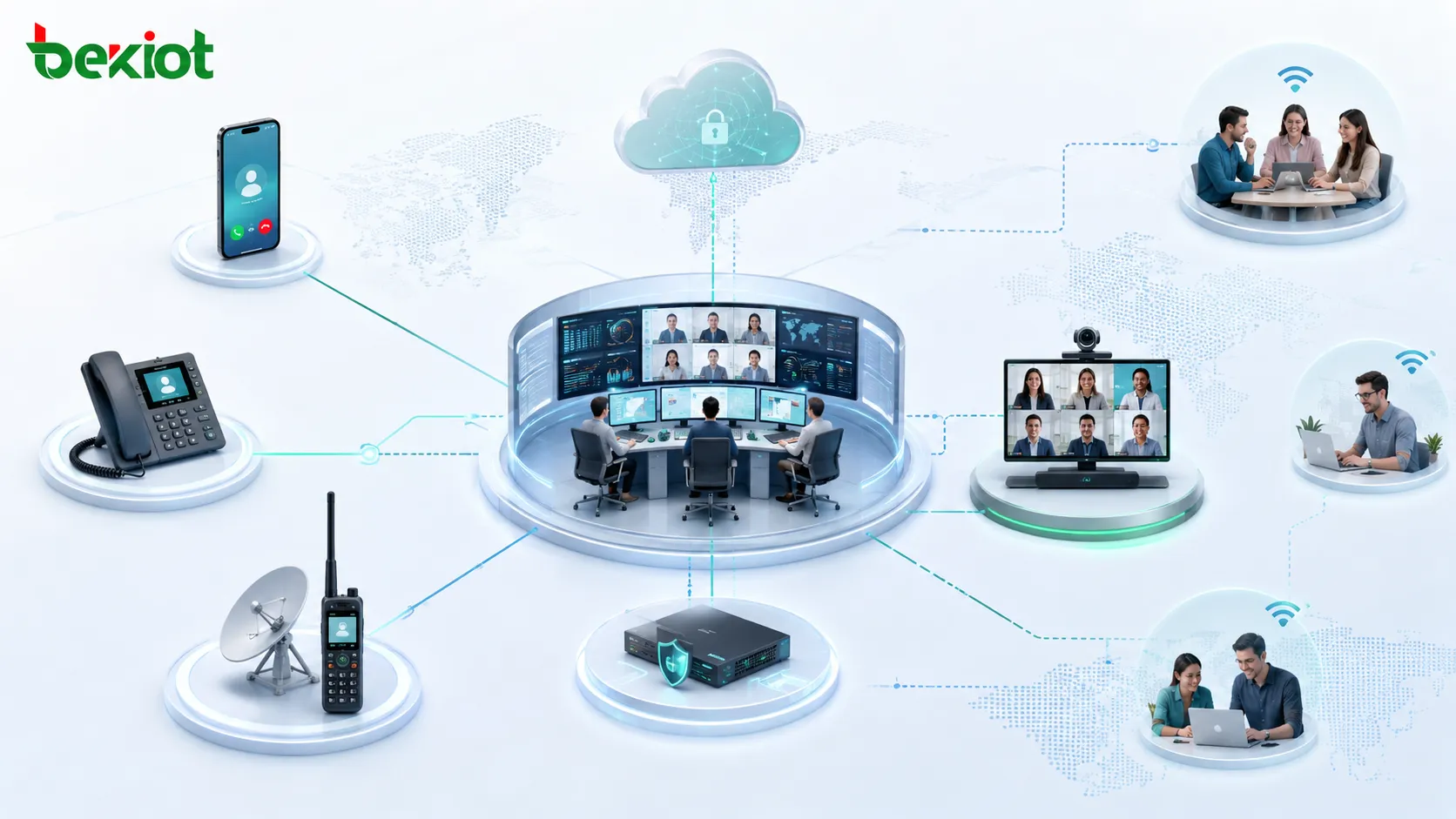
In many real-world environments, voice remains the fastest, simplest, and most reliable way to connect people. A practical enterprise or emergency communication solution should not choose between video and telephone conferencing. It should combine video, voice, mobile access, fixed phones, private networks, and dispatch platforms into one flexible communication architecture.
Why Voice Still Matters When Video Is Everywhere
Video meetings are powerful. They support visual reporting, document sharing, facial communication, screen presentation, and formal multi-party collaboration. For office meetings, training sessions, project reviews, and management discussions, video conferencing is often the preferred format.
But communication is not always conducted in a quiet office, a prepared meeting room, or a stable broadband environment. In public safety operations, medical areas, noisy factories, emergency rescue sites, outdoor maintenance work, and disaster response scenarios, video is not always the best choice. Sometimes it is inconvenient, unsafe, unnecessary, or technically unstable.
Audio conferencing fills this gap. It allows people to join by dialing a number, answering a call, or using a simple voice terminal. Participants do not need to prepare a camera, adjust lighting, install a meeting application, share video, or expose their surroundings. This makes audio conferencing highly suitable for fast communication and operational coordination.
Real Environments Do Not Always Support Video
Video conferencing requires stable bandwidth, low latency, reliable network quality, camera availability, and suitable working conditions. In many field environments, these requirements cannot always be guaranteed.
Mountain areas, outdoor rescue sites, construction zones, industrial plants, transportation corridors, remote substations, maritime operations, and cross-border calls may experience unstable networks or limited bandwidth. In these cases, a voice call often connects faster and remains more stable than a video session.
Audio conferencing also works better in privacy-sensitive or operationally restricted environments. Police enforcement, medical procedures, emergency rescue, production safety operations, and confidential coordination may not be suitable for video exposure. Voice communication allows teams to exchange instructions and decisions without creating additional visual or privacy risk.
Lower Access Barriers for Busy and Distributed Teams
Not every participant is willing or able to appear on camera. Senior managers may need a quick call while traveling. Field personnel may be wearing protective equipment. Night-duty staff may only need to listen and respond. External partners may not have access to the same video platform.
Audio conferencing has a much lower access threshold. Users can join from mobile phones, fixed phones, IP phones, satellite phones, softphones, or operator networks. For many government agencies, state-owned enterprises, airports, rail transit operators, utilities, and industrial organizations, this simplicity is an important operational advantage.
Compared with video platforms that may require account permissions, application installation, device learning, and meeting room scheduling, audio conferencing can support one-key access, quick dial-in, and immediate participation. This is especially useful for temporary meetings, urgent discussions, duty coordination, and incident response.

From Basic Calling to Modern Collaboration
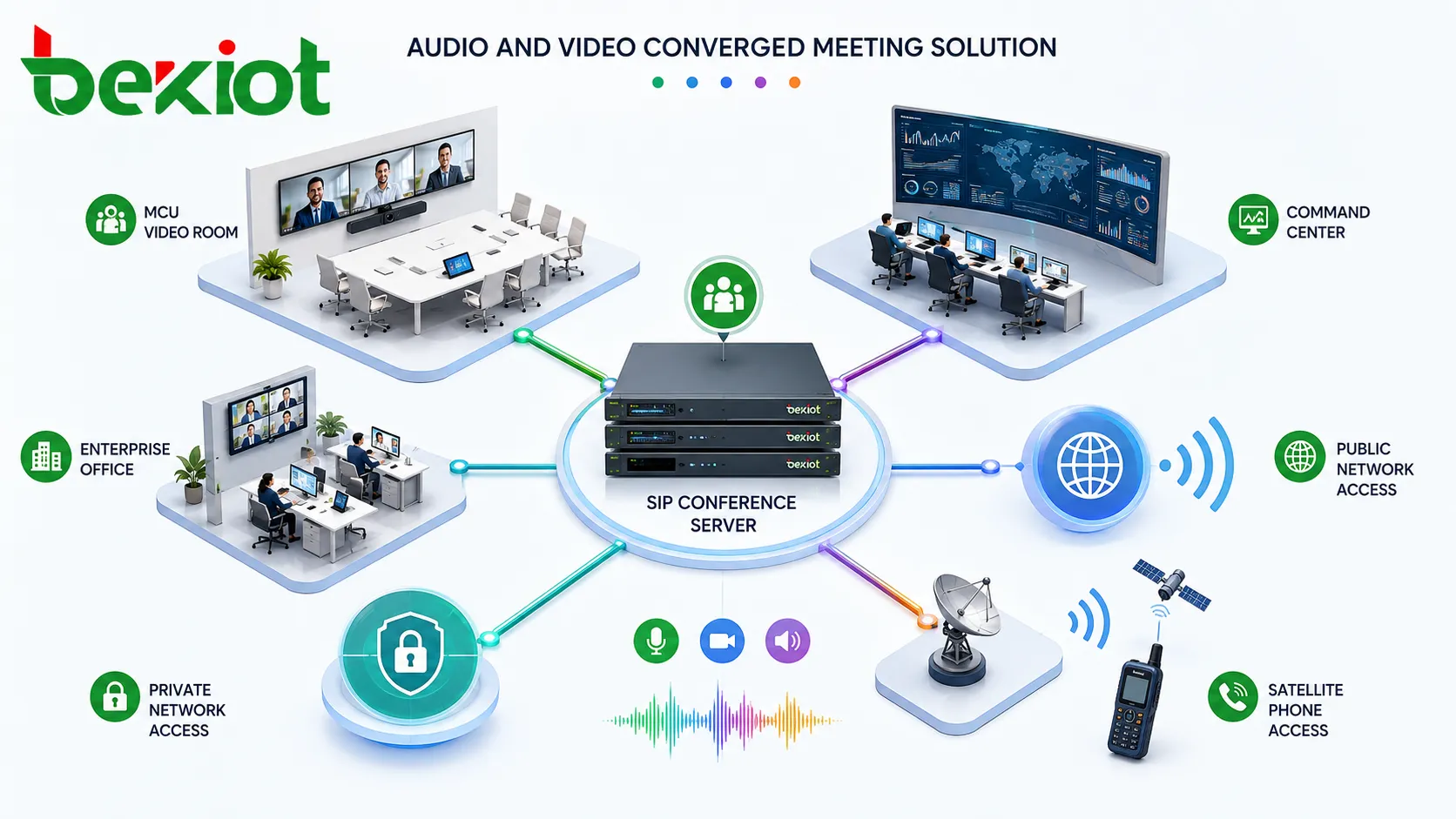
Modern audio conferencing is no longer just a simple telephone bridge. A well-designed system can support SIP protocol access, MCU video platform interconnection, local deployment, public network access, private network access, satellite phone access, automatic audio mixing, mute control, meeting lock, host permission management, identity verification, and recording.
This means audio conferencing can become part of a wider communication platform rather than a separate legacy tool. Telephone users can join video meetings when needed, video conference rooms can be bridged into audio meetings, and command centers can organize voice sessions across multiple networks.
In practical deployment, this creates a more inclusive meeting environment. People with video terminals can use video, while those in the field can join by phone. Users in private networks, public networks, satellite communication environments, and fixed-line telephone networks can be connected into one coordinated session.
Local Deployment for Sensitive Industries
For government, emergency services, energy, power, finance, transportation, and public-sector organizations, communication security is often as important as convenience. Public cloud conferencing tools may be easy to start, but they may not always meet internal security, data control, audit, and network isolation requirements.
A locally deployed audio conferencing system gives organizations stronger control over access, user identity, call records, meeting permissions, voice data, and system availability. It can be planned inside a private network, connected with existing SIP platforms, and integrated with video conferencing or dispatch systems according to project requirements.
This is especially important for emergency command, cross-department coordination, production scheduling, and sensitive operational meetings. The system can be managed under the organization’s own security policy instead of depending entirely on external public services.
Complementing Video Instead of Replacing It
The future of enterprise communication is not “video replaces voice.” A better direction is voice and video convergence. Video makes communication more visual, while audio makes communication more reachable and resilient.
When bandwidth is sufficient and participants are prepared, video meetings can provide rich interaction. When users are mobile, networks are unstable, privacy is sensitive, or response speed is more important than visual presentation, audio conferencing becomes the better option.
The two systems should support each other. Audio conferencing can reduce pressure on video meeting resources, provide backup when video fails, and allow phone users to join important video sessions. This creates a more complete communication environment for daily work and urgent response.
Recommended System Architecture
| Layer | Recommended Capability | Operational Value |
|---|---|---|
| Conference Core | Multi-party audio conferencing with automatic mixing and host control | Supports fast voice collaboration for daily meetings and urgent coordination |
| Network Access | SIP, PSTN, mobile phone, fixed phone, private network, public network, and satellite phone access | Allows participants to join from different terminals and network environments |
| Video Integration | Interconnection with MCU or video conferencing platforms | Enables phone users and video rooms to participate in the same collaboration workflow |
| Security Control | Local deployment, identity verification, meeting lock, permission control, and recording | Improves security and compliance for sensitive industries |
| Management | Mute control, meeting hosting, participant management, recording, and access policy | Helps operators manage large or urgent meetings more efficiently |
Deployment Scenarios That Benefit Most
Emergency Command and Rescue
Emergency teams often operate under pressure, with participants distributed across command centers, field sites, vehicles, mobile networks, and public telephone systems. Audio conferencing helps connect people quickly even when video access is not available.
Government and Public Service Coordination
Government departments may need fast communication across different agencies and locations. Audio conferencing supports simple access, strict permission control, local deployment, and integration with existing communication platforms.
Industrial and Utility Operations
Factories, power facilities, transportation systems, and energy sites may have noisy environments, restricted areas, or limited network conditions. Voice-based conferences allow staff to coordinate without requiring video equipment or application access.
Enterprise Headquarters and Cross-Region Teams
Large enterprises and multinational groups often need flexible communication across offices, mobile users, and external partners. Audio conferencing can act as a stable backup and a lightweight coordination tool alongside video meetings.
Suggested Implementation Path
Review Existing Meeting Resources
The project should begin by reviewing current video conferencing systems, SIP platforms, PBX resources, PSTN access, mobile user requirements, private network conditions, satellite phone needs, and existing command or office collaboration workflows.
Define User Groups and Access Methods
Different users may require different access modes. Office users may join through IP phones or softphones, managers may join through mobile phones, field teams may use fixed phones or satellite phones, and conference rooms may connect through video MCU or room audio systems.
Plan Security and Control Policies
For sensitive industries, the deployment should define host permissions, identity verification, meeting lock policies, recording rules, participant access restrictions, administrator roles, and log retention policies before the system goes live.
Test Hybrid Voice and Video Workflows
Testing should cover SIP access, mobile phone access, fixed-line access, satellite phone access, MCU interconnection, video room bridging, mute control, recording, meeting lock, public-private network access, and failure recovery.
Business Value for Modern Communication
A well-planned audio conferencing solution improves communication resilience. It helps organizations maintain voice coordination when video meetings are inconvenient, unavailable, or unnecessary. It also expands participation by allowing users to join through familiar and widely available phone networks.
For daily business, audio conferencing reduces scheduling pressure and simplifies quick communication. For emergency response, it provides a dependable voice layer. For sensitive industries, local deployment and controlled access improve security and operational confidence.
Becke Telcom can be considered for projects that require SIP endpoint adaptation, industrial communication access, emergency voice integration, or converged communication planning. The final design should be based on user scale, network conditions, security policy, and existing video conferencing resources.
FAQ
Can audio conferencing support users outside the organization?
Yes. External participants can join through mobile phones, fixed lines, or controlled dial-in access if the organization allows it. Permission rules and identity checks should be configured before use.
Is satellite phone access necessary for every project?
No. It is mainly useful for remote areas, disaster response, maritime operations, field rescue, and locations where mobile or broadband networks may be unavailable.
Should meeting recordings be enabled by default?
Not always. Recording policies should follow internal compliance rules, privacy requirements, and meeting sensitivity. Some emergency or command meetings may require recording, while routine discussions may not.
How can voice quality be improved in large audio conferences?
Good results depend on echo control, proper audio mixing, stable network access, suitable microphones, participant mute rules, and avoiding noisy endpoints. Host control is important in large meetings.
What should be prepared before linking audio conferencing with video platforms?
The project team should confirm protocol compatibility, MCU access method, dial plan, audio routing, participant identity handling, meeting control logic, and failover behavior before production deployment.







