


In refineries and petrochemical plants, communication equipment must do more than support daily calls. It must remain reliable in hazardous areas, deliver clear audio in high-noise environments, and help workers reach the control room quickly during abnormal events. That is why choosing the right explosion proof telephone is not just a hardware decision, but part of the site’s overall safety and communication strategy.
From process units and tank farms to loading areas and remote outdoor points, different locations place different demands on field communication devices. A model that works in one area may not be suitable in another. The right selection starts with understanding the operating environment, the hazardous-area requirement, and the communication workflow the telephone is expected to support.
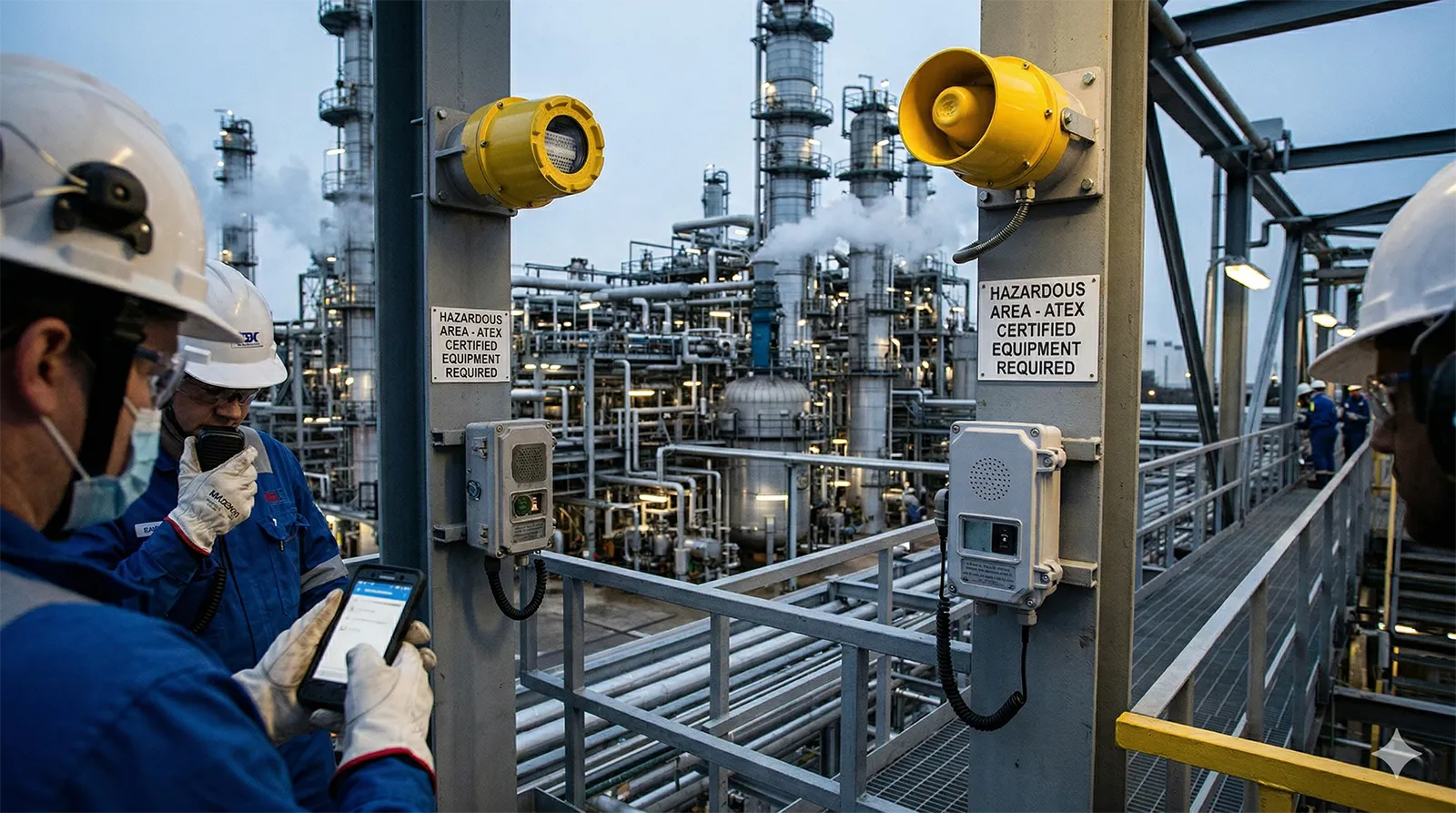
Why the Right Explosion Proof Telephone Matters
Refineries and petrochemical plants operate in environments where flammable gases, vapors, dust, noise, heat, humidity, and corrosive exposure may all be present. In these conditions, ordinary communication devices are often unsuitable. Even a rugged industrial phone is not necessarily designed for hazardous-area use.
A properly selected explosion proof telephone helps frontline workers report incidents quickly, request assistance during maintenance or inspection, and maintain direct contact with the control room. In emergency situations, that direct and dependable communication path can reduce response time and improve coordination across operations, maintenance, and safety teams.
What Makes Refinery and Petrochemical Applications Different
These facilities are not standard industrial sites. Hazardous-area classification often determines what equipment is permitted in each zone, and installation points may be exposed to severe weather, corrosive chemicals, washdown, or airborne contaminants. In many locations, background noise from pumps, compressors, turbines, or loading operations also makes clear voice communication difficult.
Another challenge is system connectivity. Some projects still use analog infrastructure, while others expect SIP-based endpoints that can integrate with IP PBX systems, dispatch platforms, plant paging, CCTV, or alarm workflows. For this reason, selection should never be based on enclosure strength alone. The communication architecture matters just as much as the certification label.
Key Factors to Consider When Choosing an Explosion Proof Telephone
1. Hazardous Area Certification Comes First
The first step is not choosing the brand or network type, but confirming the required hazardous-area rating. Buyers should verify the site classification and match the telephone to the specific installation requirement. This is especially important in refineries and petrochemical plants where different units may have different risk levels.
Procurement teams should also confirm whether the project requires standards or approvals such as ATEX, IECEx, or other relevant hazardous-area compliance. A device described as rugged, weatherproof, or industrial-grade is not automatically explosion proof. That distinction should always be checked before comparing other features.
2. Choose the Right Network Type: Analog or SIP
Analog explosion proof telephones are often chosen for legacy systems, direct replacement projects, or simple communication layouts where the plant already has analog infrastructure in place. They can be practical when the goal is dependable voice communication without a major network redesign.
SIP explosion proof telephones are a better fit when the site uses an IP-based communication architecture or plans to expand system integration. SIP models are usually easier to connect with IP PBX systems, dispatch consoles, centralized management tools, and broader plant communication platforms. For many modern refinery projects, SIP also supports easier scaling and remote maintenance.
3. Audio Performance Matters in High-Noise Areas
High-noise conditions are common in process units, loading areas, utilities, and outdoor plant zones. A telephone may meet certification requirements and still perform poorly if the handset volume, ringer loudness, speaker output, or acoustic design is not strong enough for the site.
Look for features that improve intelligibility rather than consumer-style audio marketing terms. In refinery communication, the real question is whether the user can hear clearly while wearing PPE and whether the control room can understand the caller during a noisy event.
4. Environmental Durability Should Match the Site
Outdoor and semi-outdoor installation is common in petrochemical and refinery applications. That means the enclosure must withstand rain, dust, temperature swings, and long-term exposure to harsh conditions. In coastal, chemical, or corrosive environments, material choice and surface protection become especially important.
A good selection process should consider not only ingress protection, but also corrosion resistance, UV exposure, mounting method, and long-term maintenance practicality. A telephone that performs well on paper but degrades quickly in the field can increase downtime and replacement cost.
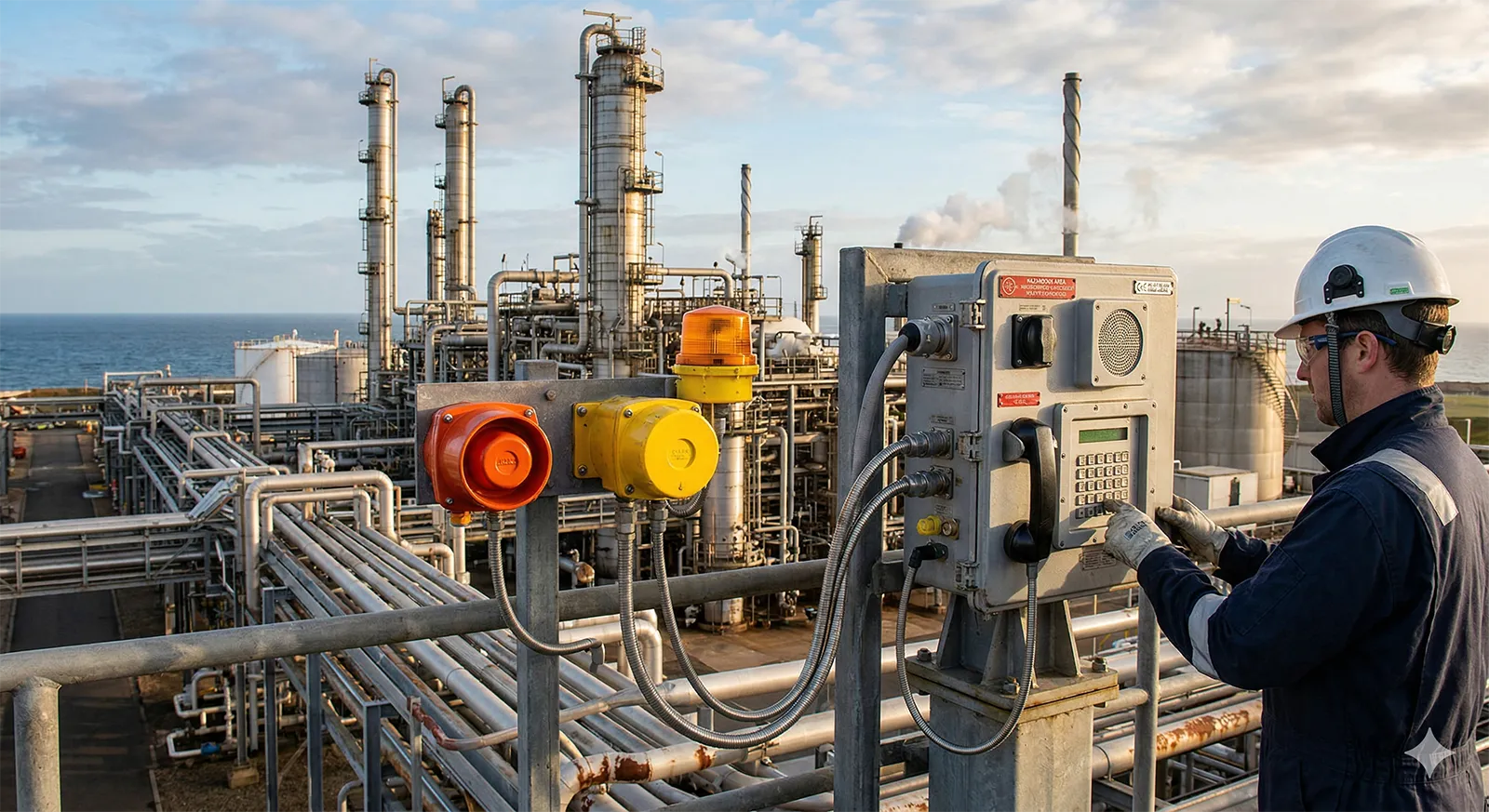
5. Emergency Calling Method Should Be Simple
In hazardous environments, the best design is often the simplest one. Workers may be wearing gloves, operating under pressure, or calling during an abnormal event. For that reason, many refinery projects prefer emergency hotline calling, one-touch dialing, or clearly labeled speed-dial functions that connect directly to the control room or a designated response point.
Depending on the location, buyers may also consider beacon indication, horn integration, hands-free operation, or large glove-friendly buttons. The right feature set depends on how the telephone will actually be used during both routine operations and emergency response.
6. Integration With the Wider Communication System
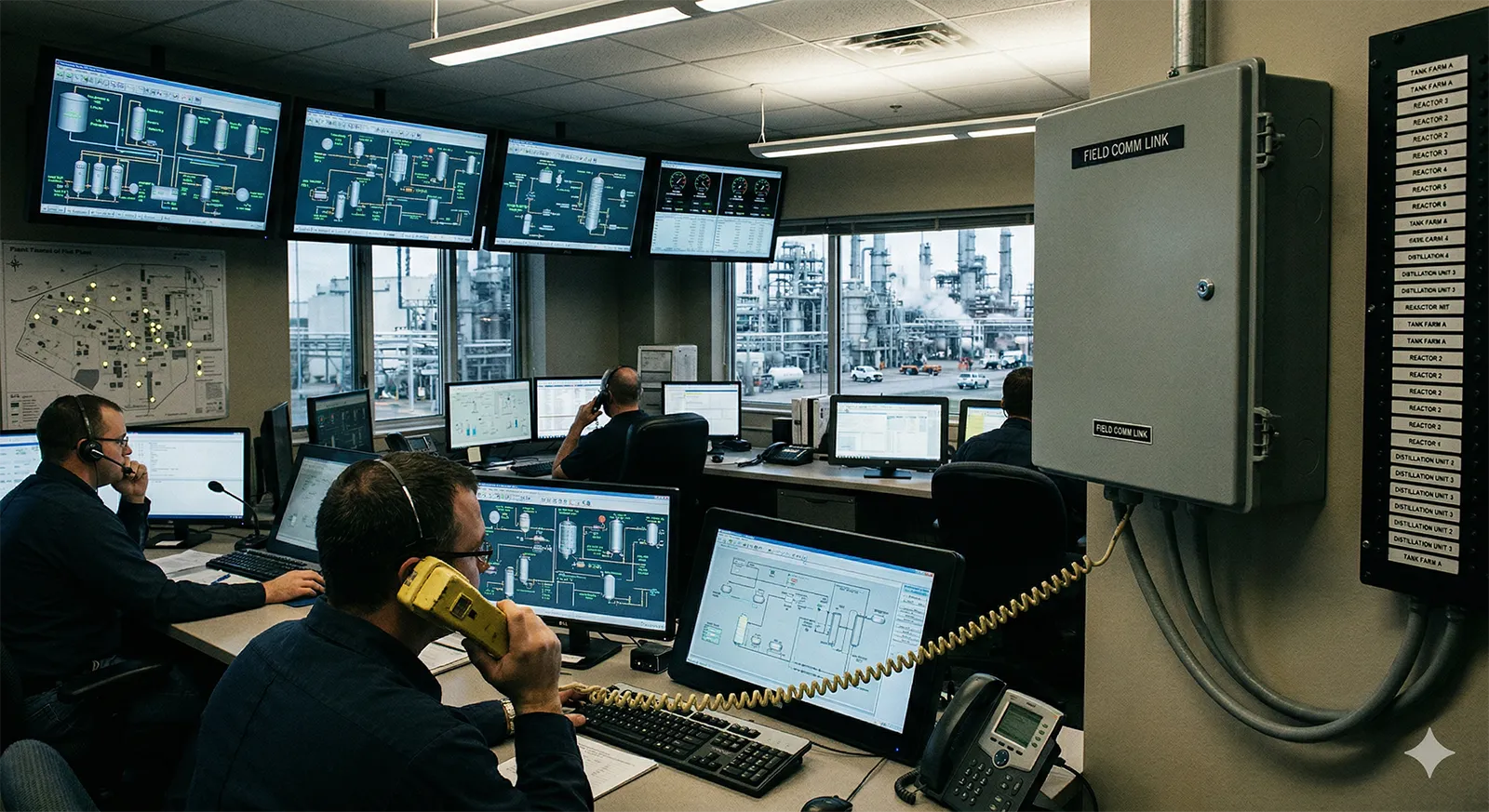
Explosion proof telephones are often more valuable when they are not treated as isolated devices. In refinery and petrochemical projects, they may need to work alongside plant paging, public address or general alarm systems, dispatch software, CCTV, access control, or alarm platforms.
System integration can improve event handling by allowing the control room to identify the calling point quickly, associate the endpoint with a location, and coordinate a faster response. It can also support centralized configuration, monitoring, and maintenance across multiple field devices.
Understanding Hazardous Area Classifications
This is the most crucial technical step in selecting an explosion-proof device. You must know the exact risk level of the environment where the phone will be installed. The International Electrotechnical Commission (IEC) classifies hazardous areas into specific risk zones based on the frequency and duration of the explosive hazard.
Gases and Vapors Zones
For environments where flammable gases or vapors are present, the classification is divided into three primary zones. Zone 0 represents an area where an explosive gas atmosphere is present continuously or for long periods. Telephones are rarely, if ever, installed directly in Zone 0 due to the extreme and continuous risk of ignition.
Zone 1 is an area where an explosive gas atmosphere is likely to occur in normal operation, meaning any equipment placed here needs stringent, fail-safe protection. Zone 2, conversely, is an area where an explosive gas atmosphere is not likely to occur, and if it does, it will only exist for a very short time. Most industrial communication devices are rated for Zone 1 or Zone 2.
The explosion-proof telephone you select must carry a certification equal to or higher than the requirements of the installation zone. A Zone 1 certified phone can be safely installed in Zone 2, but the reverse is strictly prohibited and highly dangerous.
Combustible Dust Zones
Industrial hazards are not limited to gases; combustible dust from grain, coal, or specific chemicals can be equally explosive when suspended in the air. These environments are classified similarly into Zone 20, Zone 21, and Zone 22, mirroring the frequency and duration of the hazard present in the gas zones.
When selecting a telephone for dust environments, the physical sealing of the unit becomes just as critical as its electrical safety. The enclosure must completely prevent fine particulate matter from entering and accumulating on internal circuits, where it could act as an insulator, cause overheating, and eventually ignite.
How to Match the Telephone to Different Installation Areas
Process Units and Hazardous Production Areas
These locations usually require strict attention to hazardous-area classification, stable voice performance, and straightforward emergency operation. Audio clarity and dependable hotline access are often more important than advanced user-facing features.
Tank Farms and Loading Areas
These points often require strong outdoor durability, high audibility, and resistance to weather and corrosion. If visibility is poor or the area is large, buyers may also consider models or system designs that support call indication or easier operator identification.
Utility Zones and Maintenance Areas
Maintenance teams often need practical communication that supports daily coordination as well as emergency escalation. Ease of operation, durability, and reliable connection to the control room usually matter more than decorative interface design.
Remote Outdoor Points and Perimeter Locations
For remote or unmanned points, stability and maintainability become critical. Buyers should consider how the telephone will be powered, monitored, and serviced over time, especially if the point is hard to access or exposed to severe environmental conditions.
Common Mistakes to Avoid
One common mistake is choosing a rugged industrial phone that is not actually certified for the target hazardous area. Another is focusing only on certification while overlooking audio performance in real plant noise conditions. In many projects, a technically compliant product still performs poorly because it is hard to hear, hard to operate, or hard to maintain.
Another mistake is buying as if the telephone were a standalone device. Refineries and petrochemical plants often benefit most when field communication equipment fits into a larger operational workflow. Selection should therefore account for system compatibility, maintenance support, spare parts, and future expansion rather than purchase price alone.
The right explosion proof telephone is not just about surviving the environment. It is about making communication dependable when the environment is most demanding.
A Practical Selection Checklist
Before finalizing a model, buyers should confirm the hazardous-area requirement, the preferred network type, the expected installation environment, and the required communication workflow. They should also verify whether the site needs hotline calling, loud audio output, hands-free operation, centralized management, or integration with other plant systems.
It is also useful to confirm where the device will be mounted, how it will be powered, what maintenance support is available, and whether the selected model can fit both current requirements and future system upgrades. A short technical checklist early in the project can prevent expensive changes later.
Conclusion
Choosing an explosion proof telephone for refineries and petrochemical plants means balancing safety compliance, communication performance, durability, and integration. The right model should match the hazardous-area requirement, withstand harsh site conditions, and support clear and reliable communication during both routine work and emergency events.
For operators planning new installations or upgrading existing field communication points, a well-matched solution can improve daily coordination, reduce response time, and support safer plant operations overall.
Becke Telcom provides industrial and hazardous-area communication solutions for demanding environments. If you are evaluating explosion proof telephones for refinery or petrochemical applications, Becke Telcom can help you compare deployment options and identify a solution that fits your site conditions and communication architecture.
FAQ
What is the difference between an industrial telephone and an explosion proof telephone?
An industrial telephone is generally designed for harsh environments, while an explosion proof telephone is specifically built and certified for use in hazardous areas where flammable gases, vapors, or dust may be present. Not all rugged industrial phones are suitable for refinery or petrochemical hazardous zones.
Should I choose an analog or SIP explosion proof telephone?
That depends on the plant communication architecture. Analog models may suit legacy systems or simple replacement projects, while SIP models are better for IP-based communication, centralized management, and integration with IP PBX, dispatch, or plant-wide communication platforms.
Can explosion proof telephones be used outdoors?
Yes, many models are designed for outdoor use, but outdoor suitability depends on more than hazardous-area protection. Buyers should also evaluate weather resistance, corrosion resistance, ingress protection, and temperature tolerance for the specific site.
What certifications should I check before buying?
You should verify the exact hazardous-area requirement of the installation point and confirm that the telephone matches that requirement. Depending on the project and region, buyers commonly review approvals or compliance related to ATEX, IECEx, or other applicable standards.
Do explosion proof telephones support emergency hotline calling?
Many do. In refinery and petrochemical applications, hotline or one-touch emergency dialing is often preferred because it helps workers reach the control room or response team quickly without complex call handling.
Can an explosion proof telephone be integrated with broader plant systems?
Yes. Depending on the model and network architecture, explosion proof telephones can be integrated with IP PBX systems, dispatch platforms, plant paging, CCTV, alarms, and other communication workflows to improve visibility and response efficiency.







