


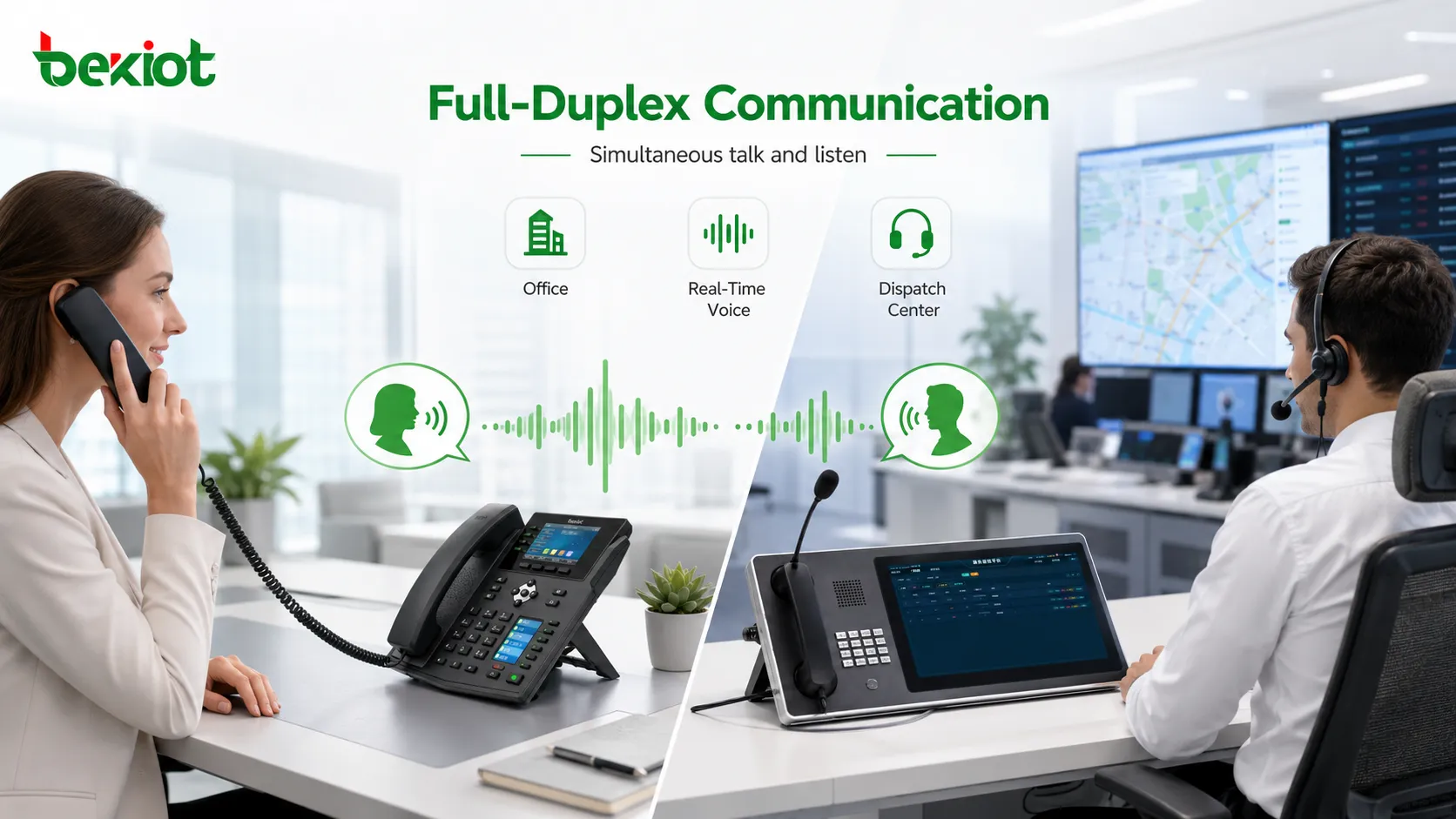
Full-duplex and half-duplex are two basic communication modes, but they are often misunderstood in enterprise communication, intercom, radio dispatch, command center, and converged communication projects. Full-duplex allows both sides to talk and listen at the same time, just like a normal telephone call. Half-duplex allows communication in both directions, but only one side can transmit at a time, just like a two-way radio using a push-to-talk button.
Neither mode is absolutely better. Full-duplex improves natural conversation and discussion efficiency. Half-duplex keeps communication orderly in shared radio groups, noisy field environments, and multi-user dispatch scenarios. The real challenge appears when a project needs to connect full-duplex telephone systems with half-duplex radio systems. In many modern command and dispatch projects, this is solved through a gateway-based architecture that converts audio, PTT control, and SIP communication logic into one coordinated workflow.
Two Communication Modes with Different Logic
Full-duplex communication means that data or voice can be transmitted in both directions at the same time. In voice communication, this allows two people to speak and listen simultaneously. A telephone call is the most familiar example. Both sides can respond naturally, interrupt when necessary, and discuss problems without waiting for a fixed transmission turn.
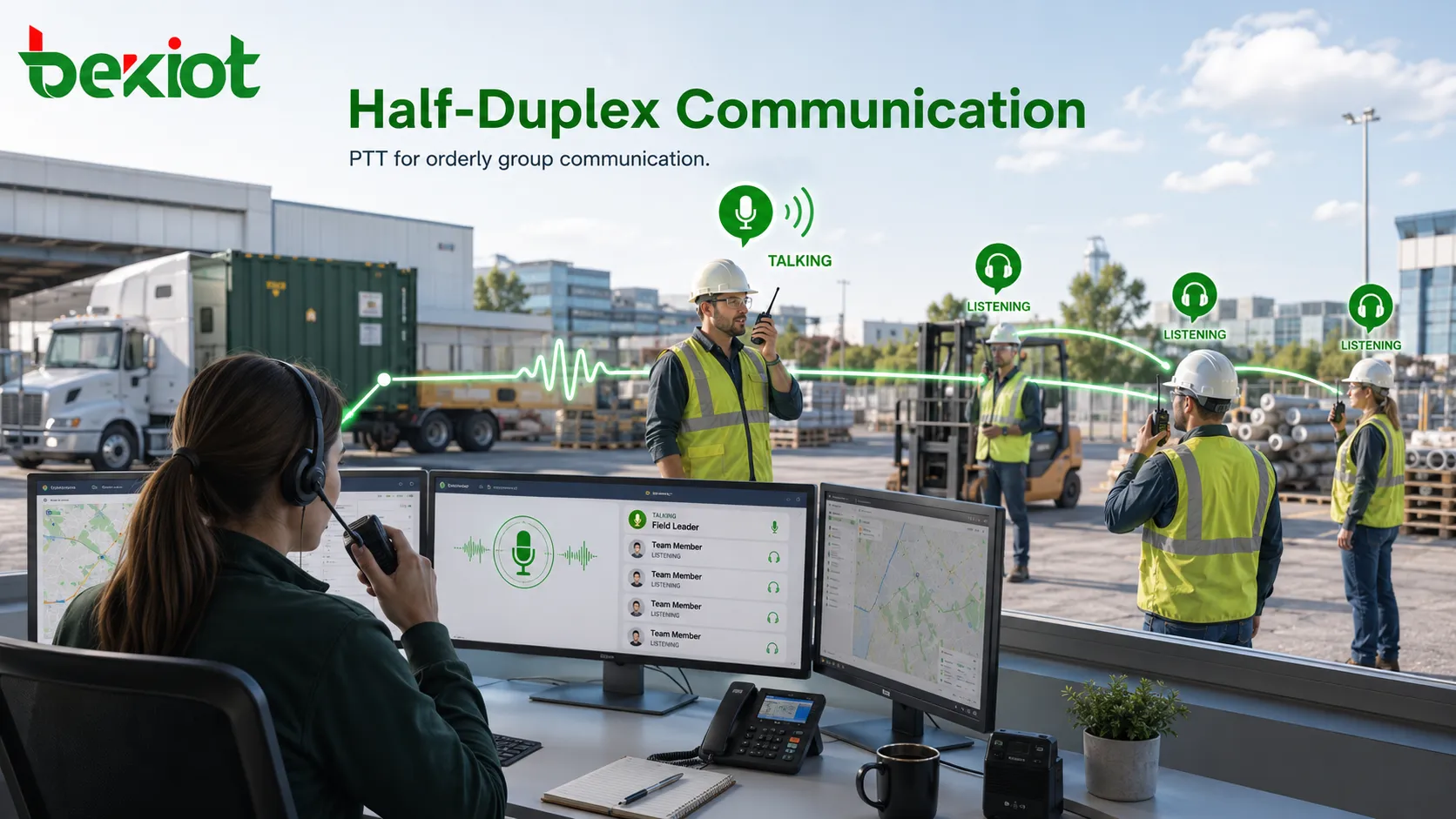
Half-duplex communication also supports two-way communication, but not at the same time. Only one side can transmit while the other side listens. When the transmitting side finishes, the other side can take the speaking right. A walkie-talkie or two-way radio is the typical example. The user presses the PTT button to talk, releases it to listen, and waits when another user is already speaking.
This difference affects not only user experience, but also system design. Full-duplex systems focus on natural conversation, echo control, audio mixing, and continuous two-way media. Half-duplex systems focus on speaking permission, PTT status, channel occupation, transmission timing, group discipline, and avoiding communication conflict.
Why Telephone Calls Usually Need Simultaneous Talk
Telephone communication is usually built around full-duplex operation because the goal is natural conversation. In office calls, customer service, technical support, dispatch coordination, remote consultation, and business meetings, users need to confirm information quickly. If one side had to finish speaking completely before the other could respond, many discussions would become slow and inefficient.
This is especially clear when people are solving problems together. A manager may need to interrupt to correct a direction. A technician may need to ask a question while listening. A dispatcher may need to confirm location, task status, or emergency details without waiting too long. Full-duplex communication supports this kind of interactive dialogue.
For this reason, IP phones, SIP terminals, softphones, conference systems, and most enterprise telephone systems are designed around full-duplex communication. The user experience feels natural because the system does not require manual control of speaking permission.
Why Radio Groups Often Use One-Way-at-a-Time Speech
Half-duplex is widely used in radio communication because many radio systems are group-based. In a factory, port, mine, railway station, construction site, forest area, logistics yard, or emergency response team, many users may share the same radio channel. If everyone could transmit at the same time, the channel would become chaotic and difficult to understand.
Push-to-talk operation solves this problem. Only the user who holds the speaking right transmits voice to the group. Other users listen and wait for the channel to become free. This keeps the communication process clear, especially when many people are working in noisy or complex environments.
Half-duplex also fits the working rhythm of many field tasks. A dispatcher gives an instruction, a field worker confirms, another team reports progress, and the group listens together. The communication may not be as conversational as a phone call, but it is highly practical for coordinated field operations.
Different Scenarios Require Different Choices
Full-duplex is suitable when users need natural conversation, quick feedback, and two-way discussion. Typical applications include office calls, customer service calls, phone meetings, help desk support, remote expert consultation, reception communication, video intercom, and management coordination.
Half-duplex is suitable when communication is shared by many users or when field discipline is more important than conversational freedom. Typical applications include walkie-talkie groups, industrial radio dispatch, patrol communication, security teams, emergency field response, transportation command, production line coordination, and public safety support.
Choosing the right mode should be based on the workflow. If the user group is small and interactive discussion is important, full-duplex is usually better. If many users share a channel and must avoid overlapping speech, half-duplex is usually more effective.
The Integration Challenge in Modern Projects
Many communication projects now require full-duplex and half-duplex systems to work together. A command center may use SIP phones, dispatch consoles, IPPBX systems, and softphones, while field workers may still use analog radios, digital radios, trunked radios, or other PTT devices. The command center side expects telephone-style operation, while the radio side still depends on PTT control.
This creates a technical mismatch. A phone user can speak at any time, but a radio channel can only transmit when the PTT function is activated and the channel is available. If this logic is not handled correctly, the first words may be clipped, the radio may not transmit, two sides may talk over each other, or the user experience may become confusing.
A practical solution needs to translate between the two communication modes. The telephone side should remain simple for the operator, while the radio side must still follow half-duplex transmission rules. This is why gateway-based integration is commonly used in converged communication and command dispatch systems.
Gateway-Based Interconnection Makes the Two Modes Work Together
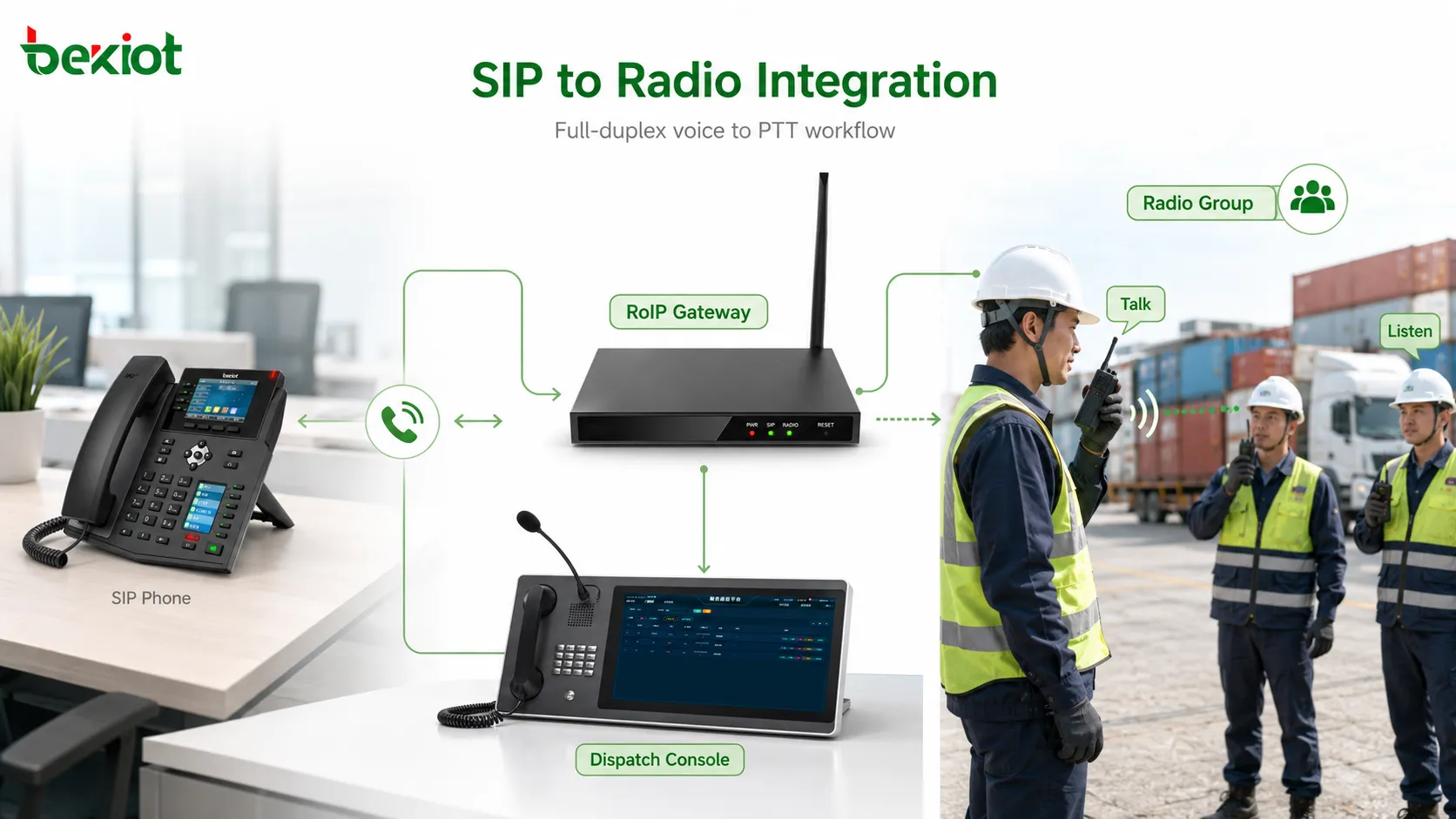
A radio or PTT gateway can connect a half-duplex radio system with a full-duplex telephone or dispatch system. On the radio side, the gateway connects to audio input, audio output, PTT control, carrier detect, squelch signal, or other required interfaces. On the IP communication side, the gateway connects to a SIP platform, IPPBX, dispatch system, or converged communication server.
After integration, a radio channel can be mapped to a SIP number or communication resource. A phone, dispatch console, or SIP terminal can call that number and communicate with the radio user group. The phone user does not need to press a physical PTT button. The gateway manages the half-duplex radio logic in the background.
This design keeps both sides familiar. Radio users continue to use their PTT devices. Dispatchers and phone users continue to use phones, headsets, software consoles, or command terminals. The gateway translates between the two worlds so that the system can operate as one connected communication network.
Automatic PTT Control Is the Key
The most important part of full-duplex and half-duplex interconnection is PTT control. When the telephone or dispatch side speaks, the gateway must recognize the voice activity, trigger the radio PTT, send the audio to the radio channel, and release PTT when speech ends. This process needs to happen quickly and reliably.
Voice detection and transmission timing are critical. If PTT is triggered too late, the first part of the speech may be cut off. If PTT is released too early, the last words may be lost. If detection is too sensitive, background noise may trigger false transmission. If detection is too slow, the conversation will feel delayed.
A well-configured gateway uses voice detection, PTT timing control, audio level adjustment, and communication logic to make the phone-side experience feel close to full-duplex while still respecting the half-duplex nature of the radio system. This is one of the most common ways to connect telephone-based dispatch systems with radio networks.
SIP Mapping Simplifies Dispatch Operation
SIP mapping is useful because it turns a radio channel into a callable resource. Instead of asking the dispatcher to operate a separate radio device, the system can assign a SIP extension or number to the radio gateway port. Users can call the mapped number from an IP phone, softphone, dispatch console, or communication platform.
This makes system operation easier. A dispatcher may dial a radio group, transfer a call to a radio channel, include a radio channel in a conference, or record the communication through the platform. In some projects, multiple radio channels can be mapped to different SIP numbers, allowing operators to choose the correct group from the dispatch interface.
SIP-based access also helps with integration. The radio channel can be connected with IPPBX systems, command platforms, emergency communication systems, intercom systems, and recording servers. This turns isolated radio communication into part of a wider enterprise or industry communication architecture.
Where This Integration Is Most Useful
Full-duplex and half-duplex integration is useful in environments where office users, command center operators, and field radio users must communicate together. Common scenarios include industrial parks, factories, ports, logistics centers, mining areas, power facilities, transportation systems, campuses, hospitals, public safety teams, emergency command centers, and large property management projects.
For example, a control room may need to talk to radio users in a workshop. A security office may need to communicate with patrol staff. A command center may need to connect phone users with emergency response teams. A maintenance manager may need to call a radio group from an office extension. These workflows become easier when the two communication modes are integrated through a gateway.
This approach also protects existing investment. Organizations can continue using their radio systems while adding IP dispatch, SIP calling, recording, centralized management, and cross-system communication. It supports gradual upgrade instead of forced replacement.
Planning the Right System Architecture
A practical architecture usually includes three layers. The field layer includes radios, intercom terminals, PTT devices, radio base stations, repeaters, or trunked radio systems. The gateway layer handles audio conversion, PTT control, channel detection, SIP registration, and media transmission. The platform layer includes the dispatch system, IPPBX, recording server, command console, user management, and integration interfaces.
The gateway should be installed where it can connect reliably to the radio equipment and network. In some projects, it is placed near the radio base station. In others, it may be installed in the equipment room or command center. The correct location depends on radio wiring, antenna layout, network availability, power supply, and maintenance access.
The platform should define how radio channels are named, called, recorded, grouped, and controlled. Without clear naming and workflow design, operators may not know which radio group they are calling. Good system planning makes the integration easy to use, not only technically connected.
Audio Quality and Timing Need Real Testing
Full-duplex and half-duplex integration should always be tested with actual equipment. Different radios may have different audio levels, connector definitions, PTT behavior, squelch signals, and response times. A configuration that works with one device may not work well with another.
Important tests include phone-to-radio speech, radio-to-phone speech, first-word clipping, last-word loss, background noise triggering, PTT release delay, echo, volume balance, recording quality, long-duration communication, and multi-user operation. If the system is used for emergency or industrial dispatch, acceptance testing should include real operators and field users.
Audio level matching is especially important. If the phone-side output is too low, radio users may not hear clearly. If it is too high, the radio transmission may sound distorted. If the radio-side audio is too noisy, the phone or dispatch console may become difficult to use. Proper tuning improves both clarity and user confidence.
Security and Control Should Not Be Ignored
When radio channels are connected to SIP systems or IP networks, access control becomes important. In an isolated radio system, only people with radios on the correct channel can transmit. After integration, phone users, dispatch console users, or remote SIP users may also reach the radio channel. This requires clear permission rules.
The system should define who can call a radio channel, who can monitor, who can transmit, who can record, and who can replay recordings. For emergency services, industrial safety, transportation, energy, and public facilities, unauthorized transmission may create operational risk.
Network security should also be considered. SIP registration, gateway management, remote access, recording storage, and dispatch user accounts should be protected. The goal is to improve communication reach without creating uncontrolled access to critical radio channels.
Deployment Checklist
Confirm the Communication Modes
List which systems are full-duplex and which systems are half-duplex. Identify telephones, SIP terminals, dispatch consoles, radios, PTT devices, intercom stations, and radio channels before designing the integration.
Check Radio Interface Requirements
Confirm audio input, audio output, PTT control, carrier detect, squelch signal, grounding, connector type, and cable definition. Customized cables may be required for different radio equipment.
Define SIP Number Mapping
Decide how each radio channel will be represented in the SIP system. Clear extension numbers and channel names help dispatchers operate the system correctly.
Tune Voice Detection and PTT Timing
Adjust voice detection sensitivity, PTT trigger delay, release delay, audio gain, and noise handling. These settings directly affect whether the conversation feels smooth.
Test with Real Users
Test real dispatch workflows, field radio use, background noise, long conversations, recording, emergency calls, and multi-user communication before final acceptance.
Final Review
Full-duplex and half-duplex communication serve different purposes. Full-duplex allows both sides to send and receive voice at the same time, making it suitable for phone calls, meetings, and interactive discussion. Half-duplex allows two-way communication but only one side can transmit at a time, making it suitable for walkie-talkies, radio groups, field dispatch, and multi-user work environments.
In modern communication projects, the two modes often need to work together. A telephone-based dispatch system may be full-duplex, while the radio system it needs to connect may be half-duplex. The practical solution is to use a gateway that controls PTT, detects voice, converts audio, maps radio channels to SIP numbers, and connects both sides through the command or communication platform.
This approach protects existing radio resources while adding IP-based dispatch, recording, remote access, centralized operation, and cross-system communication. A successful deployment should focus on real workflow, not only device connection. PTT timing, audio tuning, SIP mapping, user permissions, channel naming, and acceptance testing all determine whether the system works reliably in daily operation.
FAQ
Can full-duplex phones talk directly to half-duplex radios?
Not directly in most projects. A gateway is usually required to handle audio conversion, SIP access, and PTT control so that the phone side can communicate with the radio side correctly.
Why do radios normally use PTT instead of always-on voice?
PTT prevents multiple users from transmitting at the same time on a shared channel. This keeps group communication clearer and more disciplined in field environments.
What causes the first word to be cut off during phone-to-radio calls?
This is usually related to PTT trigger timing, voice detection delay, radio response time, or gateway configuration. Proper tuning and real equipment testing can reduce this problem.
Can radio communication be recorded after gateway integration?
Yes. Once the radio channel is connected to the communication platform, voice traffic can usually be recorded and stored according to the platform’s recording policy.
Is half-duplex outdated compared with full-duplex?
No. Half-duplex remains useful for radio groups, dispatch teams, and shared-channel communication. It is not less advanced; it is designed for a different communication workflow.







