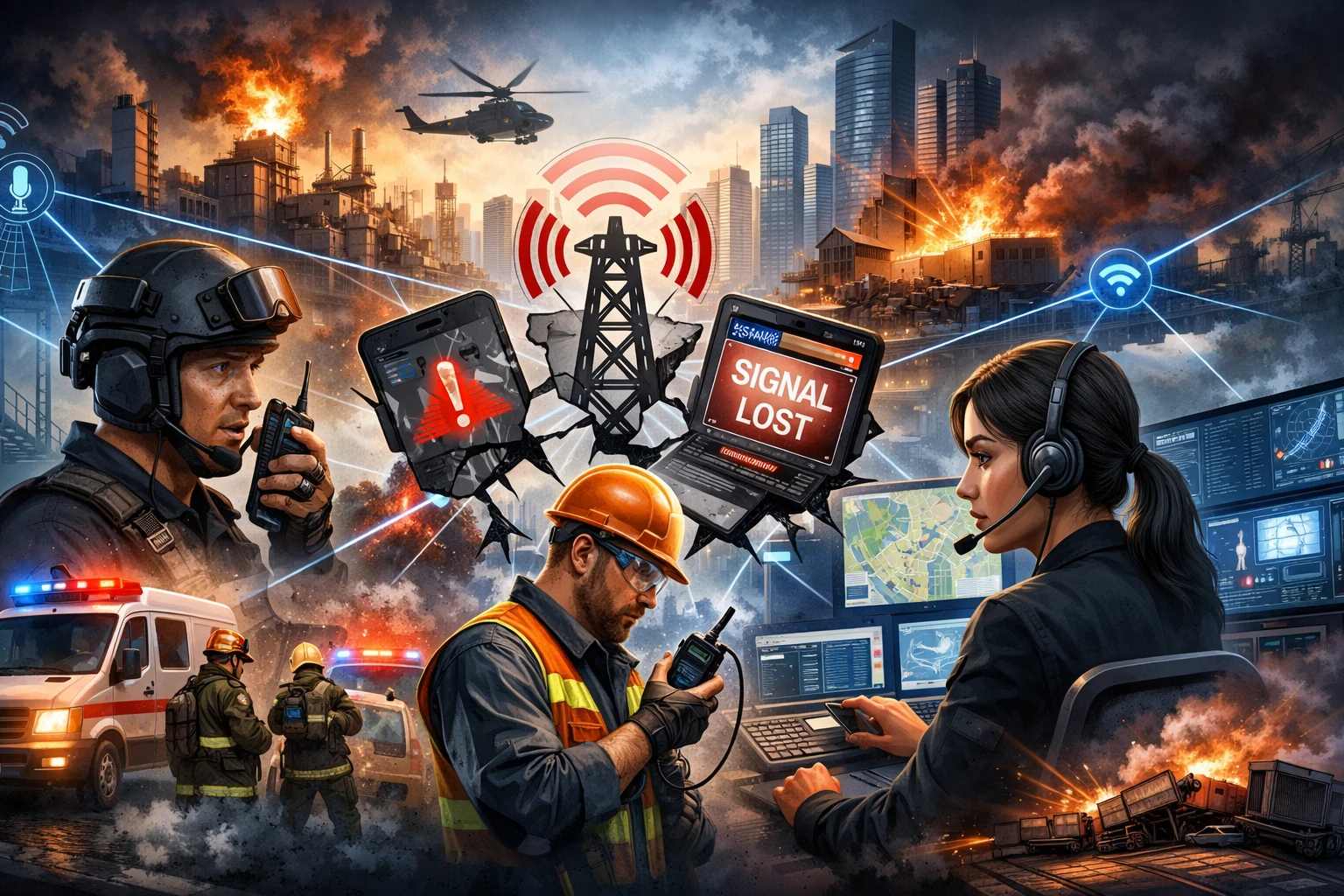
Natural disaster response often begins under extreme conditions. Roads may be blocked, power may be interrupted, and public communication networks may be unavailable. In these situations, a command communication system must help rescue teams quickly establish field communication, connect with the rear command center, and transmit disaster information, rescue progress, voice instructions, video images, and coordination messages in a timely manner.
A practical system for natural disaster emergency capability improvement should focus on three core goals: video consultation and dispatch, multi-level command networking, and interoperability between different communication systems. These capabilities allow emergency departments, fire rescue teams, medical teams, public security units, geological experts, transportation departments, and other responders to coordinate more effectively during complex rescue operations.
Communication Challenges in Disaster Sites
Natural disaster sites are often defined by three major disruptions: blocked transport, interrupted power, and damaged communication networks. These problems make rescue coordination far more difficult than normal field operations. Vehicles may not be able to reach the first response location, public mobile networks may be congested or unavailable, and fixed communication infrastructure may be damaged.
Under these conditions, the communication system must become an independent and reliable support layer for emergency command. It should help first responders build a temporary communication network near the incident area, keep contact with the rear command center, and provide enough communication capacity for voice, video, data, and multi-department coordination.
The purpose is not only to "make a call." The system must support decision-making. Field teams need to report the disaster situation, commanders need to understand rescue progress, experts may need to join remote consultation, and command centers must issue instructions based on the latest field information.
Video Consultation and Dispatch for Faster Decisions
Video consultation is a key capability in modern emergency response. When field teams can transmit live video to the rear command center, decision makers can see the disaster area instead of relying only on voice descriptions. This improves situational awareness and helps the command team understand terrain conditions, rescue routes, damaged buildings, blocked roads, flood areas, landslide zones, or affected populations.
Video dispatch also supports multi-party coordination. Field rescuers, command center operators, technical experts, medical staff, and government decision makers can join the same visual workflow. This allows the rear command center to guide field rescue work, evaluate risks, and adjust rescue plans based on real-time information.
In practical deployment, video should not be treated as a single function. It should be integrated with voice dispatch, emergency meetings, mobile terminals, field cameras, drones, portable command equipment, and large-screen command center display. This makes video a usable command resource rather than an isolated camera feed.
Multi-Level Command Networking Across Regions
A natural disaster response system often needs to connect different command levels, including provincial, municipal, county, and field command units. The field site needs rapid access to the rear command center, while higher-level authorities need timely information from the front line. A multi-level command network helps organize this communication structure.
This architecture allows information to flow from the disaster site to the command center and from the command center back to rescue teams. Field teams can upload live information, local command posts can coordinate nearby resources, and upper-level command centers can make cross-regional decisions based on a wider view.
For large-scale disasters, this multi-level connection is especially important. Rescue resources may come from different cities, departments, or professional teams. Without a clear command network, communication can become fragmented. A structured command communication system helps different levels share information and maintain coordinated command.
Portable Equipment for First-Arrival Response
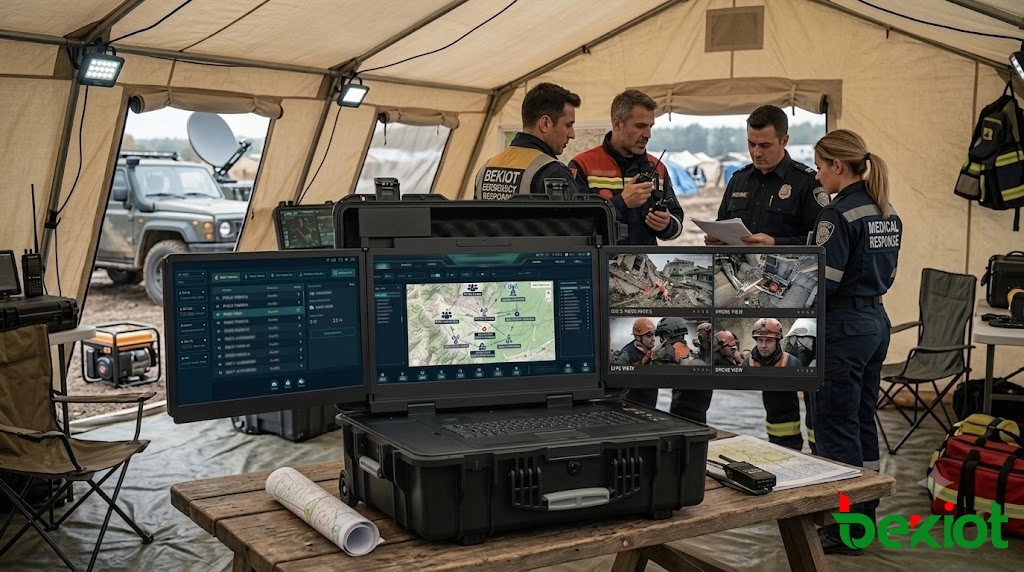
When rescue vehicles cannot reach the first disaster scene, communication equipment may need to be carried by individual responders. This makes portability an essential requirement. Equipment used in the first stage of response should be compact, easy to carry, simple to deploy, and suitable for rapid field use.
Ease of operation is just as important as portability. In disaster response, field conditions change quickly, and responders may not have time for complex configuration. A practical field communication device should support quick startup, simple connection, and fast service activation so that rescue teams can establish communication with minimal preparation.
This "deploy and use" capability saves valuable rescue time. The faster the field team can build a communication link, the faster the rear command center can receive field information and provide coordination support.
Power Endurance for Extended Field Operations
Power supply is often limited after a natural disaster. Field communication equipment may depend on batteries, portable power stations, vehicle power, or temporary energy support. Because responders must also carry medical supplies, rescue tools, protective equipment, and other mission items, communication devices should be energy-efficient and suitable for long-duration operation.
Battery endurance directly affects how far a response team can advance and how long the communication network can remain available. If communication equipment consumes too much power, teams may be forced to reduce operating time or carry more battery weight, which can limit mobility.
A reliable emergency communication design should therefore consider low-power operation, backup power access, charging flexibility, and energy management. The goal is to keep essential voice, video, and command links available throughout the rescue process.
Interoperability Between Different Departments
Natural disaster rescue is rarely handled by one department alone. Emergency management, fire rescue, medical service, public security, geological survey, transportation, power repair, water management, and communication operators may all participate. Each department may use its own communication tools, networks, terminals, and operating habits.
This creates a major challenge for command coordination. If different teams cannot communicate across systems, information must be relayed manually, which increases delay and misunderstanding. A command communication system should provide interoperability between different communication resources so that the emergency command department can coordinate all teams more efficiently.
Interoperability may include radio communication, satellite phones, mobile phones, SIP terminals, video systems, fiber links, wireless networks, self-organizing networks, and command center platforms. The purpose is to create a unified communication environment where different tools can work together instead of remaining isolated.
Multiple Communication Links for Greater Resilience
No single communication link can be trusted in every disaster scenario. Public mobile networks may fail, wired lines may be broken, wireless coverage may be blocked, and power interruption may affect local infrastructure. A resilient system should support multiple communication methods and switch or combine them according to field conditions.
Satellite communication is useful when terrestrial networks are unavailable. Radio communication supports fast field coordination. Mobile networks can be used when coverage exists. Fiber links may provide higher capacity in temporary command areas. Self-organizing networks can help build flexible local communication in places without fixed infrastructure.
Some deployments also use link aggregation or shared link access to improve available bandwidth and reliability. This allows different communication paths to work together, supporting voice, video, data, and dispatch services under unstable conditions.
Field Command as an Extension of the Rear Center
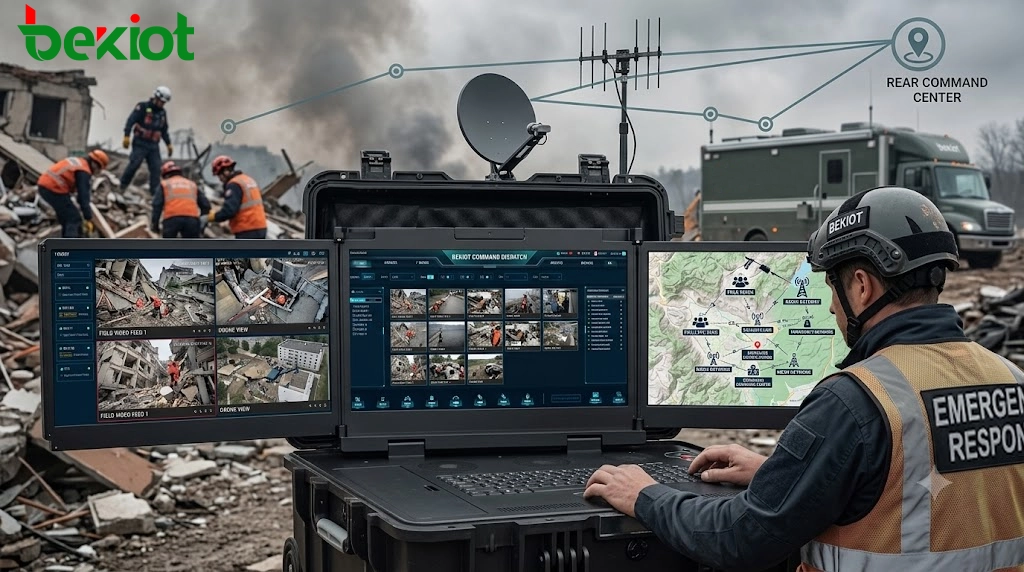
In emergency response, the field command unit should not be isolated from the rear command center. It should work as a forward extension of the command system. This means the field site can collect information, organize local teams, provide live video, support voice dispatch, and connect back to the command center for higher-level coordination.
This forward command capability is critical when the disaster site is far from the main command center or when the situation changes quickly. The field team becomes the eyes, ears, and communication bridge of the command organization. The rear center can then make decisions based on real-time field feedback instead of delayed reports.
With the right architecture, the command center can push instructions to the field, join video consultation, organize multi-party calls, connect experts, coordinate departments, and maintain communication records. This turns temporary field communication into part of a complete emergency command workflow.
System Architecture for Emergency Capability Improvement
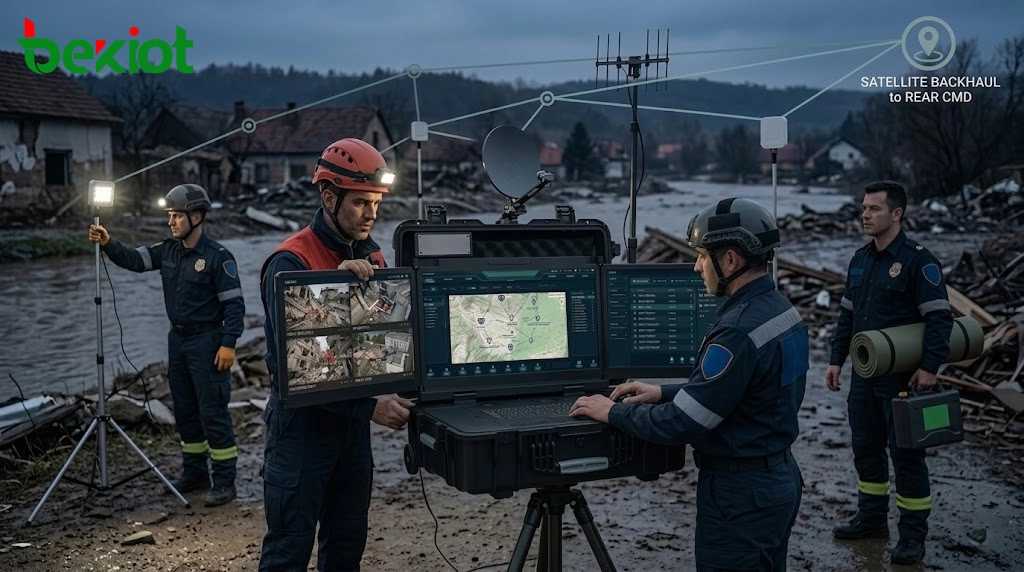
A complete command communication architecture may include portable command equipment, satellite communication links, radio gateways, mobile network access, fiber access, self-organizing network devices, video input resources, dispatch consoles, emergency meeting systems, and rear command platforms. The system should be designed around field availability, rapid deployment, and cross-system coordination.
The front-end equipment is responsible for establishing local communication, accessing field devices, collecting voice and video resources, and connecting to available backhaul links. The rear platform is responsible for command coordination, video consultation, dispatch management, resource organization, and decision support.
This layered structure makes the system more adaptable. A small emergency event may only require portable communication equipment and a basic backhaul link. A major disaster may require multiple field points, multi-level command centers, satellite access, self-organizing networks, video consultation, and coordinated dispatch across departments.
Deployment Value for Emergency Management
The first value is faster field visibility. Video, voice, and data from the disaster site can be transmitted to the command center, helping decision makers understand the latest situation and adjust rescue plans quickly.
The second value is stronger coordination. Different departments and communication tools can be connected into one command workflow, reducing information gaps between emergency teams, field commanders, and rear decision makers.
The third value is better resilience. By using multiple communication links and portable field equipment, the system can continue operating even when roads, power, and public networks are disrupted.
The fourth value is improved command continuity. The field command unit can serve as a forward node of the rear command center, keeping rescue communication online and supporting emergency coordination from the first arrival stage through extended operations.
Planning Considerations for Project Implementation
Before deployment, the project team should assess disaster response scenarios, local terrain, rescue workflow, existing communication systems, command hierarchy, department coordination needs, power availability, transport conditions, and backhaul options. These factors determine how the system should be configured.
Equipment selection should prioritize portability, simple operation, low power consumption, multi-link access, interoperability, video capability, and compatibility with existing command platforms. The system should also support fast deployment because the first response window is often the most critical period.
Testing should be carried out under realistic conditions. Project acceptance should verify field setup time, communication stability, video transmission, satellite or wireless access, radio interconnection, multi-party communication, battery performance, command center connectivity, and emergency workflow operation.
Long-Term Role in Disaster Response Modernization
Natural disaster emergency capability improvement is not only about buying more devices. It is about building a reliable command communication system that can work when normal infrastructure is damaged. The system must connect field rescue, rear command, multi-level coordination, and cross-department communication into one practical emergency workflow.
As disaster response becomes more visual, mobile, and coordinated, command communication systems will continue to evolve toward portable deployment, multi-network access, video-based consultation, and stronger interoperability. These capabilities help emergency organizations respond faster, coordinate better, and maintain communication under difficult conditions.
A well-designed command communication system becomes a basic guarantee for emergency rescue. It allows teams to restore communication quickly, transmit field information, support command decisions, and keep emergency coordination online when normal communication resources are no longer reliable.
FAQ
How should emergency teams choose between satellite, radio, and mobile network access?
The selection should depend on field conditions. Satellite access is useful when terrestrial networks fail, radio is effective for local team coordination, and mobile networks are suitable when coverage remains available. A resilient system should support more than one access method.
What should be prepared before field deployment?
Teams should prepare preconfigured equipment, charged batteries, backup power, antennas, cables, terminal accounts, contact groups, emergency procedures, and test plans. Pre-deployment preparation reduces setup time at the disaster site.
How can command communication support remote expert consultation?
Field video, voice, images, and data can be transmitted to the rear command center, where experts from different locations can join video consultation or multi-party meetings. This helps rescue teams receive technical guidance without waiting for experts to arrive on site.
What risks should be checked during acceptance testing?
Testing should include weak signal conditions, power interruption, equipment restart, backhaul switching, video delay, radio gateway compatibility, multi-party call stability, command center access, and operation by non-technical users.
Why is interoperability more important than a single high-performance device?
Disaster response involves many departments and communication tools. A high-performance device is useful, but if it cannot connect radios, phones, video systems, satellite links, field terminals, and command platforms, it cannot fully support coordinated emergency response.