


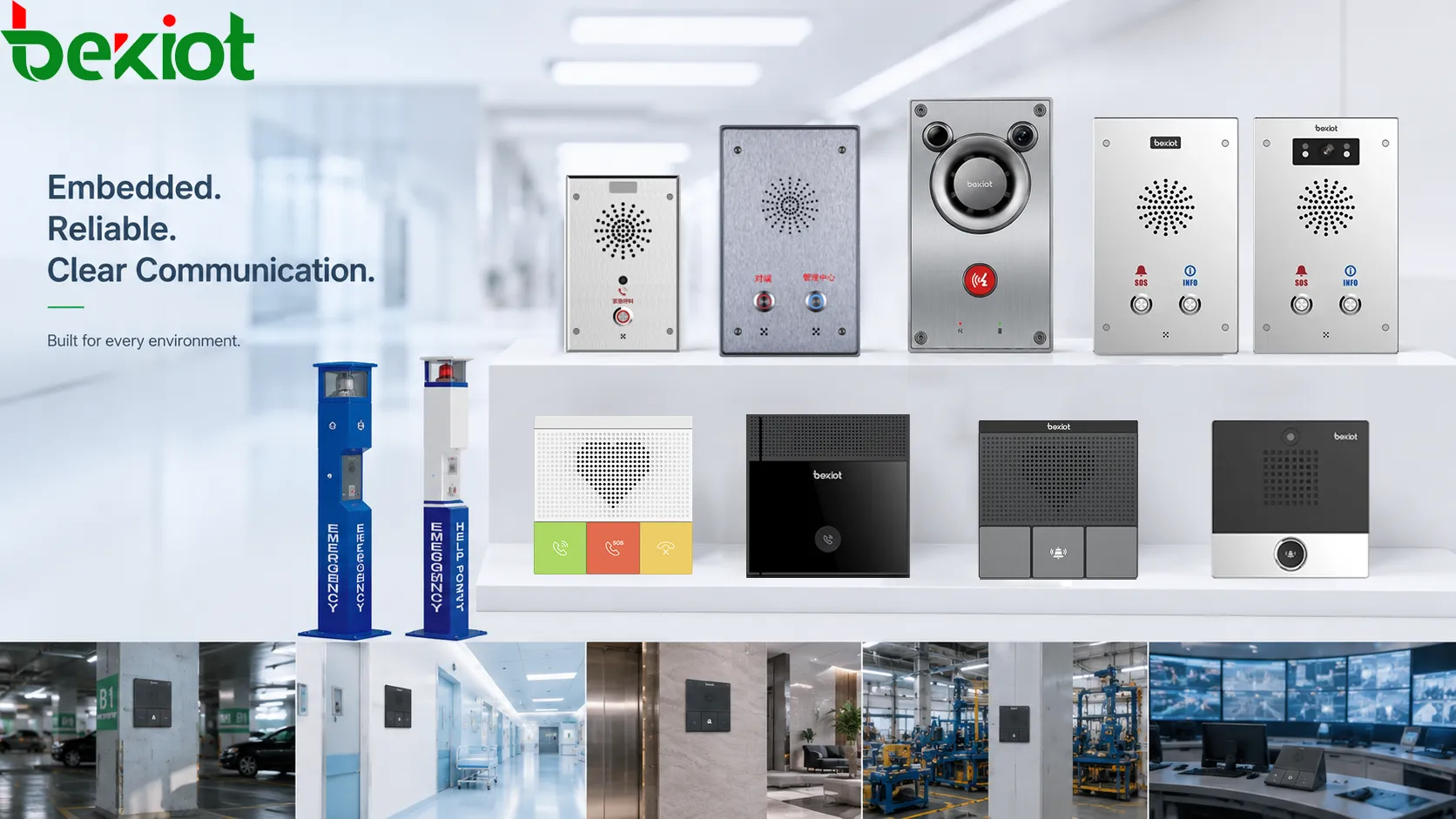
Embedded communication equipment is often installed into walls, panels, consoles, machinery, cabinets, cleanroom partitions, elevator systems, service desks, emergency points, industrial enclosures, or public facility structures. Unlike portable devices placed on a desk or carried by users, embedded equipment becomes part of the physical environment. Once installed, it must remain stable, accessible, reliable, and easy to operate for a long period.
What makes embedded communication equipment “good” is not only whether it can make a call or transmit audio. A good device should fit the installation space, withstand the working environment, provide clear voice, integrate with the communication platform, support safe operation, reduce maintenance difficulty, and remain usable during routine service or emergency conditions. The real quality appears after installation, when users depend on the equipment every day.
Clear role in the communication system
Good embedded communication equipment must have a clear system role. It may be used as an emergency call point, wall-mounted intercom, cleanroom telephone, elevator help terminal, industrial hotline phone, command desk panel, public assistance device, door communication terminal, control cabinet phone, or dispatch-side communication endpoint. Each role has different requirements.
An emergency call device must be simple and highly visible. A cleanroom communication terminal must be easy to disinfect and avoid dust accumulation. An industrial embedded phone must handle noise, vibration, and rough operation. A public assistance panel must guide ordinary users quickly. If the device is selected without defining its role, it may look suitable but fail in real operation.
The first mark of good equipment is therefore alignment between device design and use case. The housing, buttons, audio output, interface, installation depth, cable entry, protocol support, and operating logic should all match the location where the equipment will be used.
Reliable mechanical design
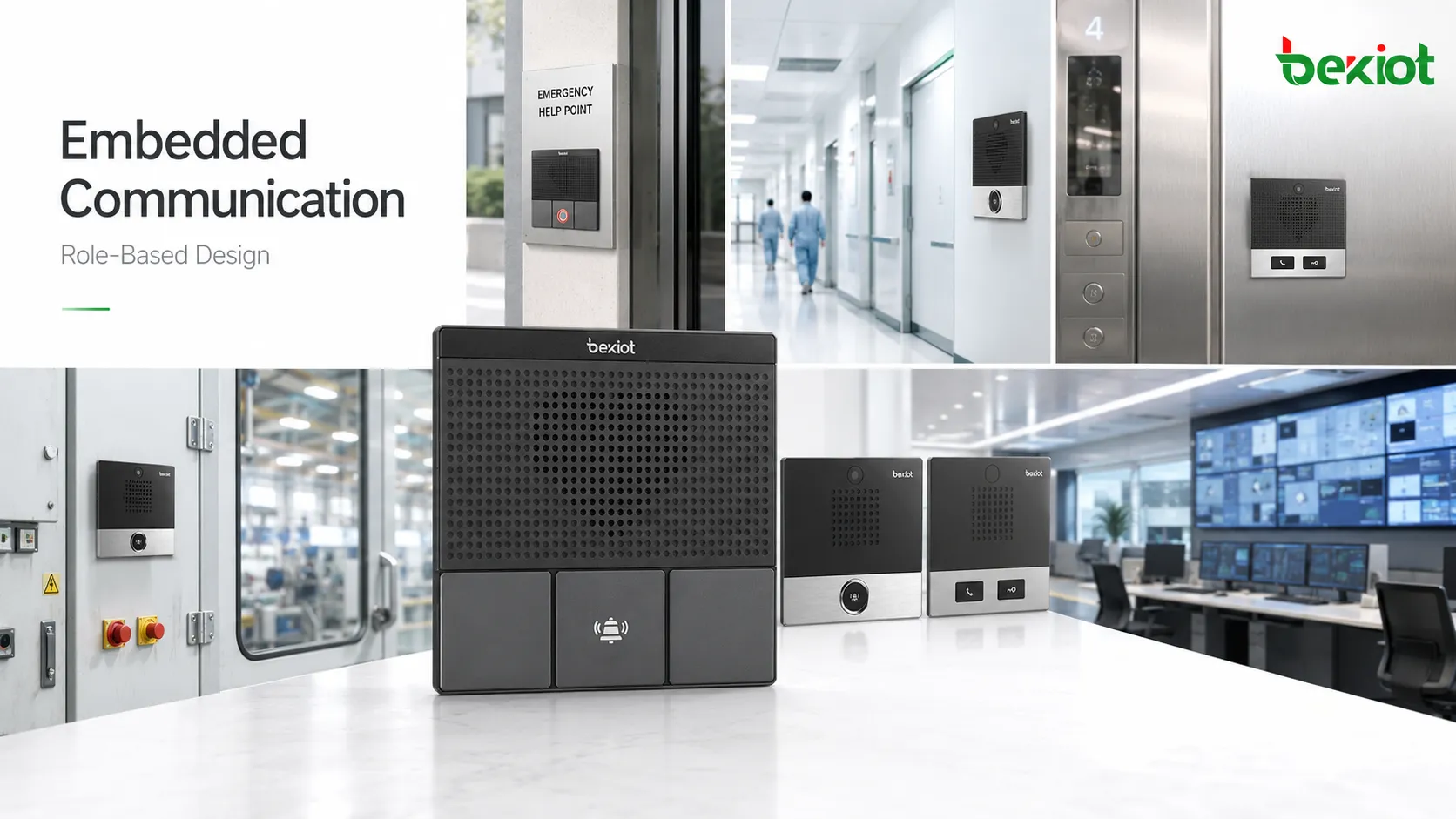
Embedded equipment is usually harder to replace than desktop equipment. Once it is fixed into a wall, cabinet, machine panel, or building structure, poor mechanical design can create long-term problems. A good device should have a strong front panel, stable mounting structure, proper installation depth, clean edge fit, and secure fastening method.
The housing should not loosen after frequent use. Buttons should not wobble easily. The handset, speaker, microphone, cable entry, terminal block, and internal board should be protected from physical stress. In public or industrial areas, impact resistance and anti-tamper design may be necessary. In clean or medical spaces, smooth surfaces and sealed gaps may be more important.
Good embedded design also considers maintenance access. A device that is too difficult to open, remove, inspect, or reconnect may increase repair time. The best structure balances secure installation with practical serviceability. It should stay firm during daily operation but allow authorized technicians to maintain it without damaging the wall or enclosure.
Environmental adaptability
Protection against dust, moisture, and cleaning
Embedded equipment may be installed in humid corridors, production areas, parking lots, tunnels, kitchens, laboratories, hospitals, washdown zones, or outdoor-facing panels. Dust, moisture, cleaning liquid, disinfectant, condensation, and air pollution can affect connectors, microphones, speakers, buttons, and circuit boards.
A good device should use suitable sealing, surface treatment, drainage design, gasket structure, and corrosion-resistant materials where required. The protection level should match the actual environment. Over-design increases cost, but under-design causes early failure.
Resistance to temperature, vibration, and impact
Some embedded devices are installed near machinery, transport equipment, power rooms, outdoor cabinets, industrial lines, or mobile structures. These locations may involve vibration, temperature variation, accidental impact, or long operating hours.
Good equipment should keep stable contact, clear audio, and reliable signaling under these conditions. Mounting screws, connectors, internal wiring, and electronic components should not fail because of repeated vibration or heat. The device should be tested or selected according to the environment, not only according to appearance.
Clear audio performance
Communication equipment exists to let people understand each other. For embedded devices, audio quality is especially important because installation location can affect sound. A recessed panel, metal cabinet, glass partition, sealed wall, noisy workshop, echoing corridor, or outdoor help point can all change how speech is heard.
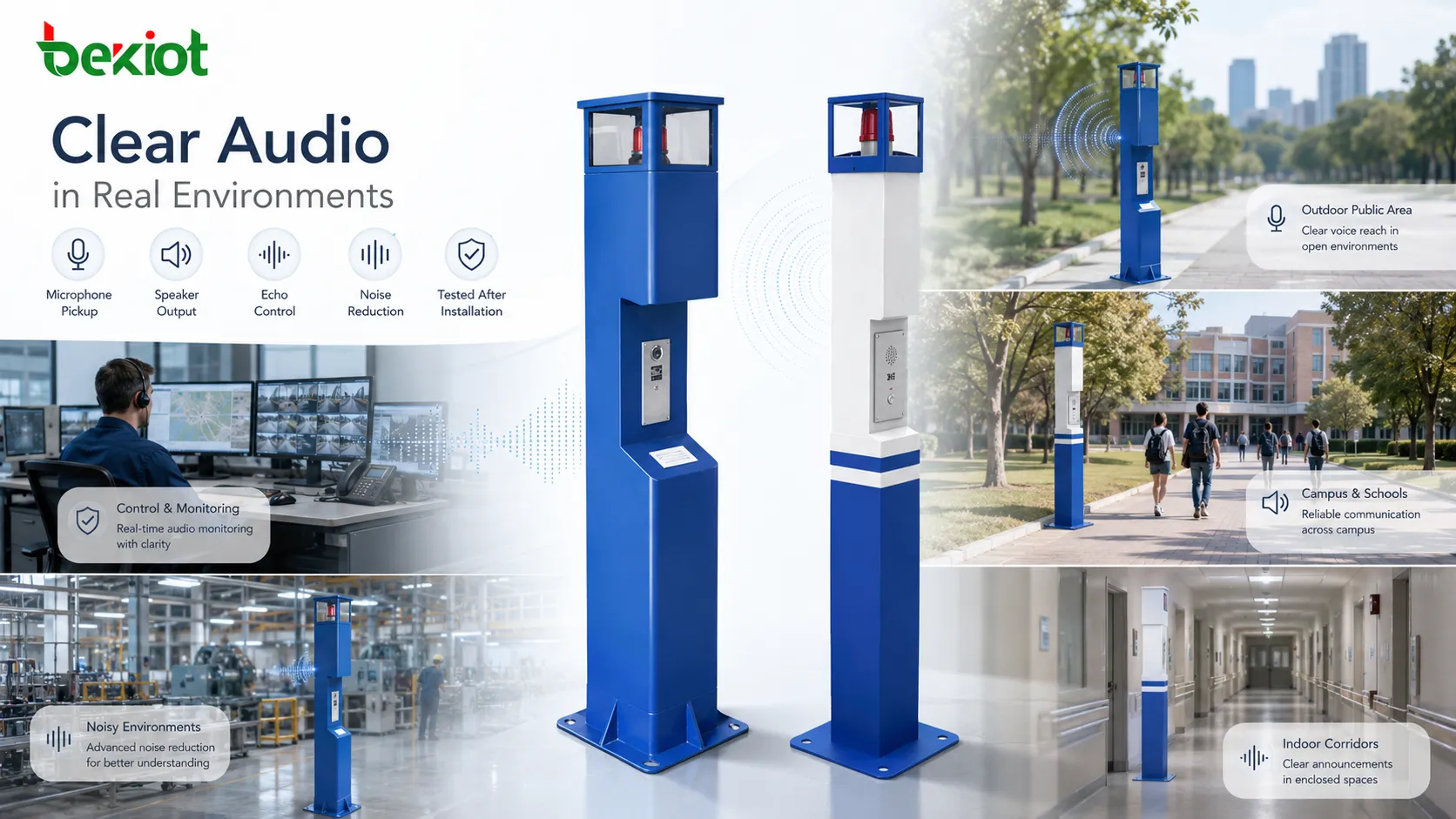
Good embedded equipment should provide suitable microphone sensitivity, speaker output, echo control, noise reduction, and acoustic opening design. The user should not need to shout. The remote operator should hear the caller clearly. The local user should understand the reply even in the expected background noise.
Audio should be tested after installation, not only before installation. A device may sound clear on a test bench but perform poorly after being embedded into a wall cavity or metal enclosure. Site testing should include real background noise, normal speaking distance, expected user position, and emergency operating conditions.
Stable electrical and network connection
A good embedded device must remain connected. Depending on the system, it may use analog telephone lines, SIP over Ethernet, PoE, DC power, relay input, dry contact output, RS-485, GPIO, Wi-Fi, or dedicated control wiring. The connection method should fit the site’s cabling and reliability requirements.
For IP-based embedded equipment, network stability is central. The device should support proper IP configuration, registration to the voice platform, VLAN or QoS where required, and reliable reconnection after network interruption. For analog equipment, line quality, ringing voltage, loop current, cable distance, and surge protection may be more important.
Power design is also part of quality. PoE can simplify wiring for IP devices. DC backup may be useful in emergency points. Cable terminals should be secure and clearly labeled. Outdoor or industrial cable entries should be protected. If the device loses power or network connection frequently, its communication function becomes unreliable no matter how strong the housing looks.
Protocol and platform compatibility
Embedded communication equipment often needs to connect with a larger system. This may include IP PBX, SIP server, dispatch platform, intercom system, access control, alarm system, video platform, public address system, building management system, or emergency notification platform. A good device should support the required protocol and behave predictably when integrated.
For SIP devices, compatibility should include registration, call setup, DTMF, caller ID, auto-answer, hotline dialing, codec negotiation, NAT handling, call status, and remote management where applicable. For devices linked to alarms or access systems, relay behavior, input logic, event reporting, and timing must be tested.
Compatibility should not be judged only by a product brochure. Real system testing is important. A device may register successfully but fail during transfer, intercom auto-answer, emergency dialing, DTMF door opening, or dispatch recording. Good equipment works reliably across the actual workflows required by the project.
User-friendly operation
Embedded devices are often used by people who are not communication specialists. A visitor may press a help button. A patient may call a nurse station. A worker may use a hotline phone during equipment failure. A security guard may answer a wall panel intercom. The device must be simple at the moment of use.
Good operation design uses clear buttons, readable labels, intuitive icons, visible status indicators, suitable handset or hands-free mode, and immediate feedback after pressing. If the user cannot tell whether the call has started, whether help has been requested, or whether the operator is speaking, the design is weak.
For emergency applications, simplicity is even more important. The user may be stressed, injured, wearing gloves, or unfamiliar with the site. One-button calling, automatic dialing, clear ringback, status light, and hands-free speech can make the device easier to use. A good embedded device reduces hesitation.
Safety and security features
Physical security
In public places, prisons, stations, schools, parking areas, industrial gates, and outdoor corridors, communication equipment may face misuse, vandalism, impact, pulling, or unauthorized opening. Good embedded equipment should use tamper-resistant screws, strong panels, protected cables, reinforced buttons, and secure mounting where needed.
Physical security does not mean every device must be extremely heavy. It means the structure should match the risk level. A clean laboratory phone and a public emergency call box do not need the same enclosure, but both should protect their critical communication function.
Network and access security
IP-based embedded equipment should also consider network security. Default passwords, open management ports, weak registration credentials, unprotected web interfaces, and uncontrolled remote access can create risks. Devices connected to voice or security systems should not be treated as ordinary unmanaged endpoints.
Good equipment should support secure configuration practices, access control, firmware management, and clear administrator settings. In larger systems, management networks, firewall rules, and platform permissions should also protect embedded devices from unauthorized use.
Maintainability and lifecycle value
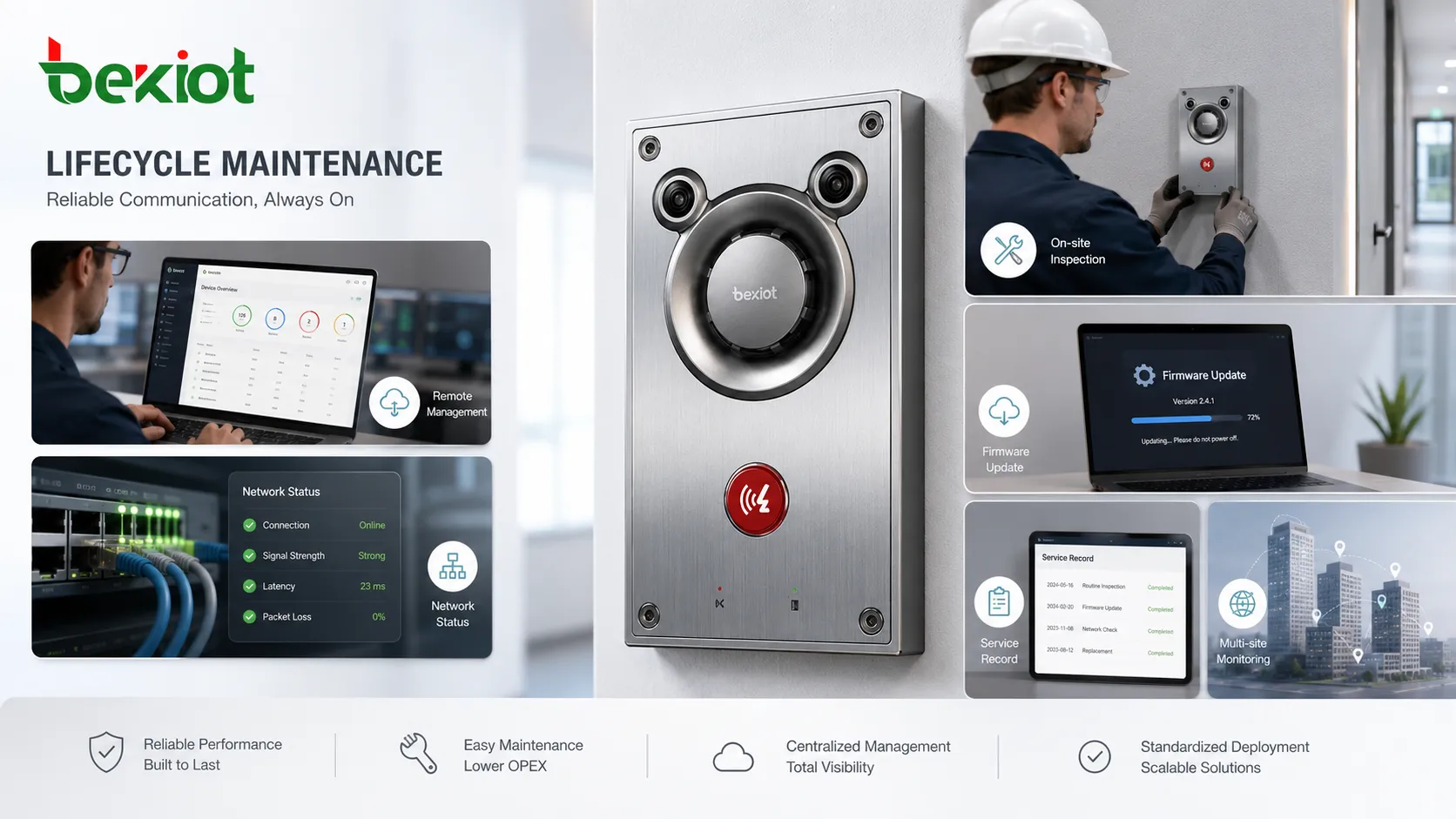
A good embedded device is easy to maintain throughout its lifecycle. Maintenance includes checking power, network status, call function, audio quality, button response, housing condition, sealing, cable terminals, logs, firmware, and integration status. If technicians cannot access or diagnose the device efficiently, maintenance cost increases.
Remote management can improve lifecycle value, especially when devices are spread across many buildings or remote points. Status monitoring, configuration backup, remote reboot, log access, firmware update, and fault alarms can reduce site visits. However, remote access should be protected by permission and network security.
Spare parts and consistency also matter. If a site uses many embedded devices, standardized models, mounting dimensions, wiring methods, and configuration templates make maintenance easier. A device is “good” not only when new, but also when it remains manageable after years of operation.
Application areas
Embedded communication equipment is used wherever communication must be fixed, visible, and available at a specific location. In industrial sites, it supports production lines, machine rooms, utility areas, warehouses, control cabinets, and safety points. In public facilities, it supports help points, corridors, gates, parking lots, elevators, service desks, and emergency stations.
Healthcare and clean environments may use embedded phones or intercoms in nurse stations, operating support areas, cleanrooms, laboratories, isolation zones, and pharmaceutical spaces. Transportation sites may install embedded terminals in metro stations, tunnels, platforms, ticket halls, and control rooms. Campuses and commercial buildings may use them for visitor assistance, access communication, security coordination, and facility service.
The common value across these scenarios is location-based communication. Users do not need to find a mobile device or remember a number. The communication point is fixed at the place where help, coordination, or instruction is needed.
Common problems in poor equipment selection
One common problem is choosing equipment only by appearance. A device may look clean and modern but lack suitable audio output, sealing, impact resistance, protocol support, or maintenance access. Embedded installation makes this mistake costly because replacement may require wall or panel modification.
Another problem is ignoring the actual environment. A normal office-grade panel may fail in a humid parking area. A low-volume device may be unusable in a workshop. A device without proper cleaning resistance may not suit medical or food processing environments. Selection should always start from the site, not from a generic product list.
Poor integration testing is also common. A device may make basic calls but fail in emergency auto-dialing, dispatch recording, alarm linkage, remote management, or DTMF control. Good project acceptance should test real scenarios rather than only checking whether the device powers on.
Evaluation standards
Installation suitability
The device should fit the panel, wall, cabinet, or structural opening without unstable mounting, exposed wiring, excessive gaps, or difficult service access. Installation drawings and dimensions should be reviewed before procurement.
Communication reliability
The equipment should complete calls or communication actions reliably under normal and abnormal conditions. Testing should include network recovery, power restart, platform registration, call setup, audio path, and emergency dialing where applicable.
Environmental durability
The selected model should match dust, moisture, cleaning, impact, vibration, temperature, and corrosion conditions. Durability should be evaluated according to the actual installation environment.
Operational clarity
Users should understand how to start communication, hear the other side clearly, know whether the call is active, and receive visible or audible feedback. The interface should match the user group.
Maintenance efficiency
Technicians should be able to inspect, test, configure, repair, and replace the device without excessive work. Remote monitoring and standardized configuration improve long-term efficiency.
Closing Notes
Good embedded communication equipment is defined by its real-world performance after installation. It should match its communication role, fit the physical structure, resist environmental stress, provide clear audio, maintain stable power and network connection, support required protocols, remain simple for users, and allow efficient maintenance.
Because embedded devices become part of the building, machine, control panel, or public facility, selection mistakes are harder to correct later. The best approach is to evaluate the site environment, user behavior, communication platform, installation method, safety risk, and maintenance plan before choosing the equipment.
A device is truly good when it can be trusted in daily operation and emergency use. It should not only look neat in the wall or panel; it should help people communicate clearly, quickly, and safely whenever the situation requires it.
FAQ
What is embedded communication equipment?
It is communication equipment installed into a wall, panel, cabinet, console, machine, cleanroom partition, elevator system, or fixed facility structure for location-based communication.
Is embedded equipment better than desktop equipment?
Not always. Embedded equipment is better when communication must be fixed, protected, and available at a specific location. Desktop equipment is more flexible when users need movable or office-based communication.
What is the most important quality factor?
The most important factor is suitability for the real site. Audio, structure, environment protection, protocol compatibility, usability, and maintenance should all match the application.
Why is audio testing important after installation?
Installation structure and background noise can change audio performance. A device that sounds good before installation may sound weak, echoing, or unclear after being embedded into a wall or cabinet.
How can maintenance be made easier?
Maintenance becomes easier through clear wiring, accessible mounting, standardized models, remote status monitoring, configuration backup, spare parts planning, and regular function testing.







