A SIP trunk is a voice service connection that uses the Session Initiation Protocol to link an IP PBX, unified communications platform, session border controller, or other SIP-capable voice system to an external telephony network or service provider. In practical business terms, a SIP trunk replaces or reduces dependence on traditional physical phone trunks such as analog lines or PRI circuits by carrying voice sessions over IP networks instead of dedicated legacy voice circuits.
This makes SIP trunking one of the most important building blocks in modern enterprise voice architecture. It allows businesses to place and receive external calls using IP-based connectivity while still reaching the public telephone network, carrier services, branch locations, cloud calling platforms, remote users, or other SIP-connected systems. Rather than thinking of a SIP trunk as a single wire or single port, it is better understood as a logical voice interconnection between one communication environment and another.
Its value has grown as more organizations move from traditional telephony toward IP PBX, hosted voice, cloud collaboration, contact center, and hybrid communications models. SIP trunking gives these systems a standard signaling framework for setting up, managing, and terminating voice sessions while also allowing more flexible scaling than legacy fixed-capacity trunk lines.
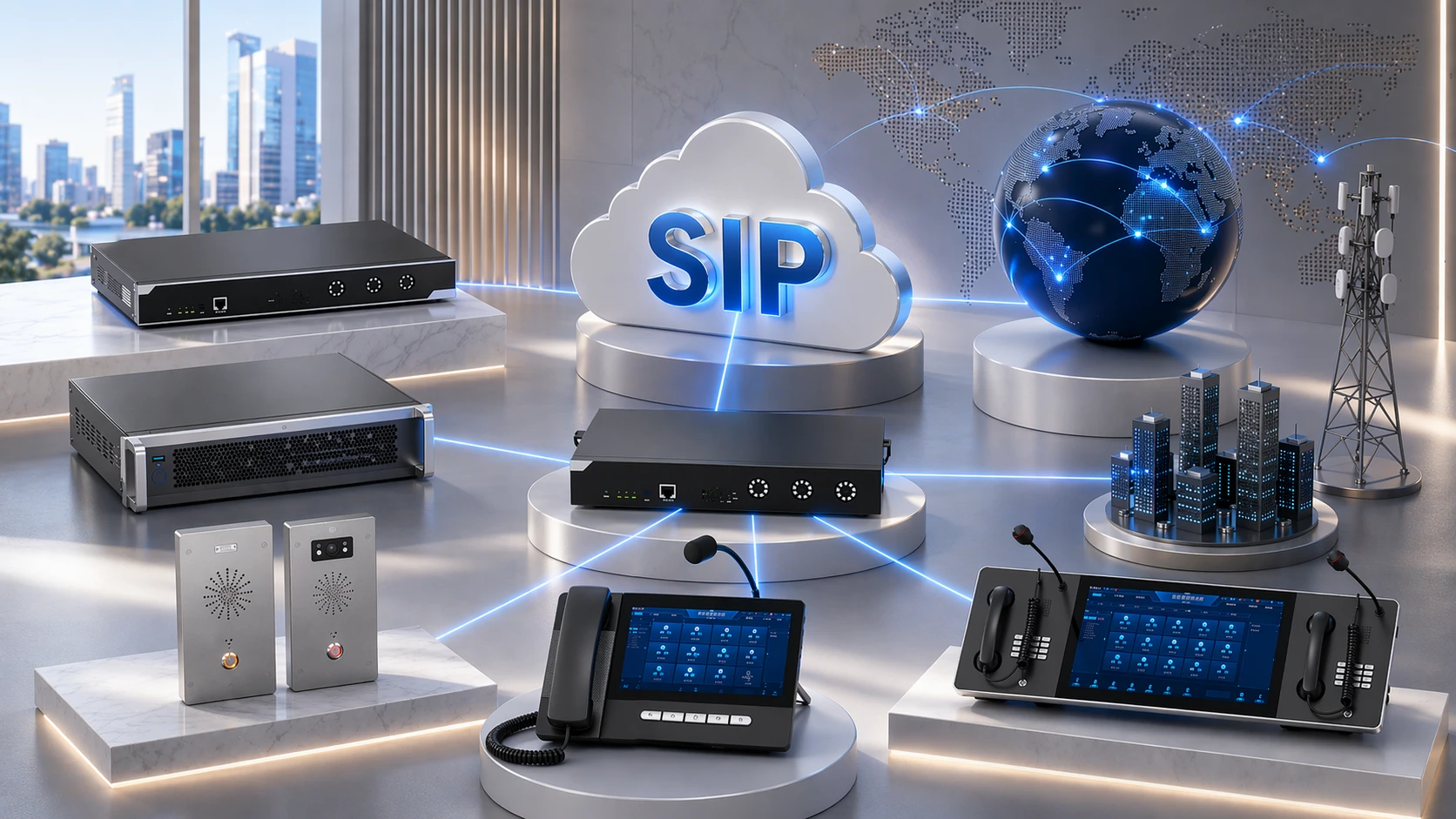
SIP trunking links enterprise voice systems to external telephony networks through IP-based session signaling.
What Is a SIP Trunk?
Basic definition
A SIP trunk is an IP-based telephony connection that uses SIP signaling to establish and manage external voice sessions between a business communication system and another network or service. The word “trunk” comes from traditional telephony, where a trunk represented a shared connection path used to carry calls between systems. In a SIP environment, that idea remains, but the transport is no longer limited to a physical bundle of voice circuits in the classic sense.
Instead, SIP trunking provides a shared IP-based call path that can support inbound and outbound sessions between an enterprise system and a provider network, cloud voice platform, carrier interconnect, or another SIP-enabled communications domain. This allows organizations to handle external voice traffic in a more software-defined and scalable way.
Why it is called a trunk
The term trunk has deep roots in telephony history. Older PBX and carrier systems used physical trunks to connect separate switching domains. SIP trunking keeps the same functional concept of a shared interconnection for call traffic, but implements it through IP signaling and associated media rather than through fixed legacy trunk circuits.
This is why a SIP trunk is not just another extension line. It is part of the system’s external call connectivity layer. It carries calls between the organization’s voice environment and the wider telephony or SIP service world.
A SIP trunk is best understood as the modern IP-based equivalent of an external voice trunk connection, used to connect a PBX or voice platform to outside networks and services.
What Does SIP Mean in SIP Trunk?
SIP stands for Session Initiation Protocol. It is an application-layer signaling protocol used to create, modify, and terminate real-time sessions such as voice calls, multimedia sessions, and conferencing. In enterprise telephony, SIP is widely used to control the signaling part of VoIP calls between phones, PBXs, gateways, SBCs, and service platforms.
That signaling role is important because a voice call has at least two major parts: the signaling logic that sets up and manages the call, and the media path that actually carries the audio. SIP trunking mainly refers to the signaling-based interconnection model used to manage those sessions between communication domains. The audio itself may then flow using RTP or related media handling methods once the call is established.
How SIP Trunk Works
Call signaling between systems
When a user places an outbound call from an IP phone, softphone, or unified communications client, the call first reaches the organization’s call control platform, such as an IP PBX, cloud voice controller, or communications server. That platform decides how to route the call. If the destination is outside the organization, the call can be sent through the SIP trunk toward the provider or connected network.
The SIP trunk carries the signaling needed to establish the session. The receiving side then determines how the call should continue, whether that means sending it toward the public switched telephone network, another SIP domain, a cloud platform, a remote office, or an application service.
Media flow after session setup
Once the SIP signaling has established the session, the actual audio media is exchanged using the media path negotiated for the call. In many deployments, this audio is transported using RTP streams associated with the call. This separation of signaling and media is one of the reasons SIP-based voice systems are flexible and scalable.
The signaling layer determines how the call is created and controlled, while the media layer carries the voice itself. Understanding that distinction helps explain why a SIP trunk is not simply “internet calling,” but a structured voice interconnection model based on established session signaling behavior.
Interworking with PSTN and carrier networks
In many real business deployments, a SIP trunk is used to reach the PSTN through a service provider or interconnected voice platform. The enterprise side may speak SIP, while the carrier or cloud side handles routing into broader telephony infrastructure, number assignment, public call delivery, emergency routing, and external reachability. RFC examples and deployment guides for SIP-to-PSTN interworking show how SIP systems, proxies, and gateways interact in these call flows.
This is what makes SIP trunking so commercially important. It allows organizations to keep an IP-centric voice architecture internally while still reaching ordinary external telephone numbers and voice destinations.
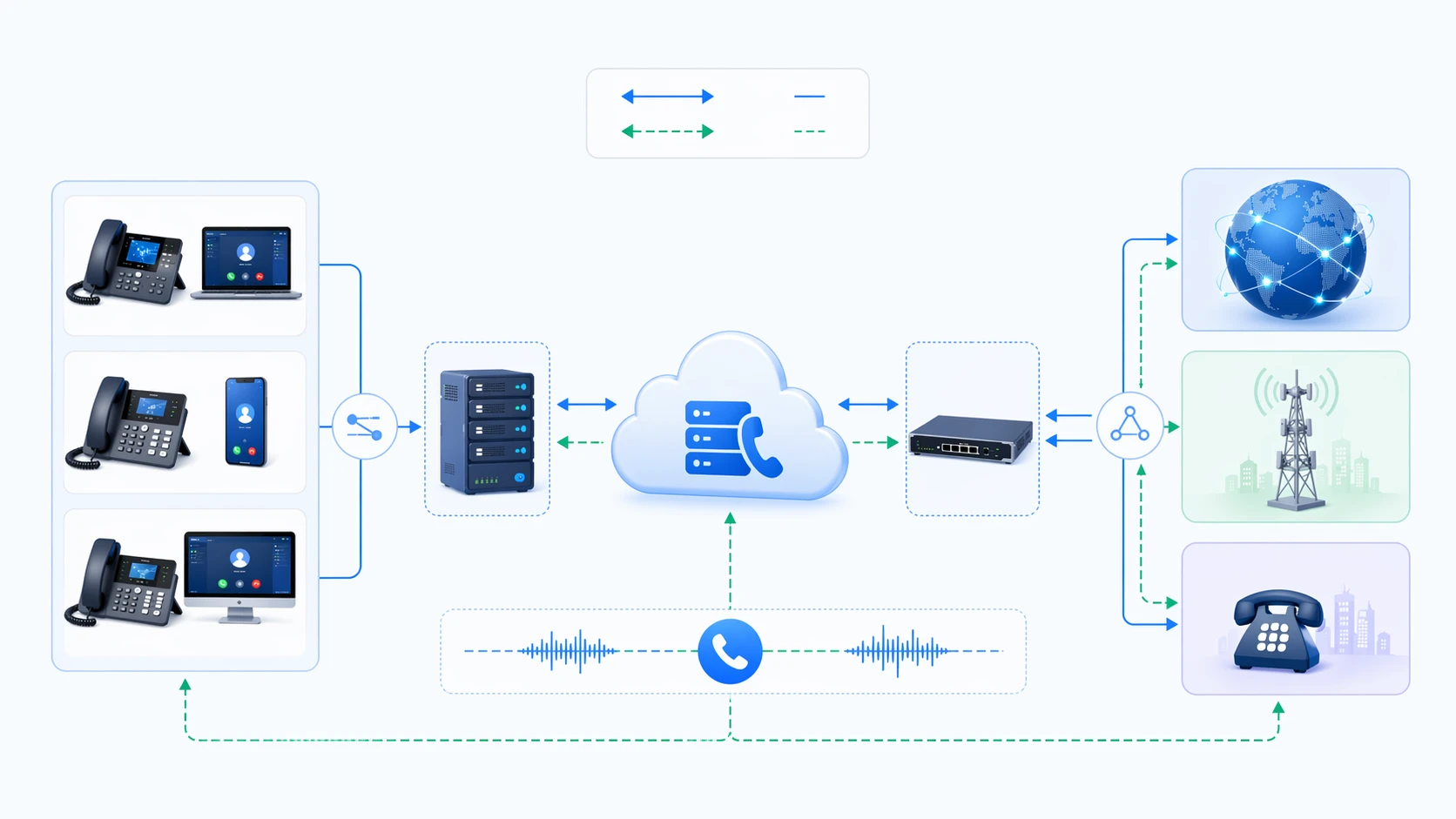
SIP trunking separates session signaling and media handling while linking business voice systems to external networks.
The role of the SBC
In many enterprise and cloud deployments, a session border controller sits between the internal voice system and the external SIP trunk. The SBC provides demarcation, security, normalization, routing control, interoperability handling, and policy enforcement. Modern enterprise trunking designs often use this component to manage the edge between private communications infrastructure and the provider or cloud environment. Microsoft Direct Routing documentation also assumes SBC-based interconnection for connecting enterprise voice environments to cloud calling services.
Because different vendors and providers may implement SIP slightly differently, the SBC often plays a critical role in making the connection stable and secure across multi-vendor environments.
Main Uses of SIP Trunk
Connecting an IP PBX to the outside world
One of the most common uses of a SIP trunk is connecting an enterprise IP PBX or unified communications server to external voice services. This allows the organization’s users to make and receive outside calls without relying on traditional PSTN line cards or PRI interfaces at the PBX. Instead, the external call capacity is provided through IP-based trunking.
This approach is especially attractive for businesses that have already migrated their internal voice environment to IP and want the external side of the system to follow the same architecture.
Supporting external calling in unified communications
Unified communications platforms often combine voice, messaging, conferencing, collaboration, and remote user access. SIP trunking provides the external calling layer that connects those platforms to public numbers, carrier services, or other voice networks. This makes it possible for internal collaboration tools to integrate with ordinary telephony.
In practical business use, this means a user can call external customers, vendors, branches, or mobile users directly from the same unified voice environment used for internal communication.
Replacing or reducing legacy trunks
Organizations often adopt SIP trunking to reduce their reliance on analog trunks, ISDN PRI, or other legacy voice circuits. Traditional trunks typically come with fixed channel models, specialized hardware, and less flexible scaling. SIP trunking shifts the voice interconnection model toward IP capacity and software-defined control, which can simplify modernization projects.
For many enterprises, the migration to SIP trunks is part of a larger move away from legacy telephony infrastructure toward more centralized and adaptable communications platforms.
Connecting branches and hybrid voice environments
SIP trunks can also be used in multi-site and hybrid communication designs. For example, a company may have a central voice core, cloud calling environment, or shared SBC layer that supports external calling for multiple branches. Instead of every site depending on separate legacy trunks, the organization can centralize or rationalize external call connectivity through SIP-based architecture.
This can improve operational consistency and simplify management across distributed business locations.
The most important use of SIP trunking is not merely cheaper calling. It is providing a flexible external voice interconnection model for modern IP-based communication systems.
SIP Trunk Architecture
Endpoint layer
At the user edge are IP phones, softphones, mobile clients, collaboration apps, analog devices behind gateways, or contact center agents. These endpoints are the user-facing part of the voice system, but they do not normally connect directly to the SIP trunk provider in a business deployment. Instead, they work through a call control platform.
This is important because the SIP trunk belongs to the system’s external interconnection layer, not to each user endpoint individually.
Call control layer
The next layer is the internal call control environment, such as an IP PBX, unified communications manager, cloud telephony service, or application server. This layer handles dial plans, routing logic, user registration, feature control, call policies, and session management for the enterprise side of the environment.
When an outside call is required, this layer routes the session toward the SIP trunk according to the organization’s dial plan and voice architecture.
Border and security layer
Between the enterprise and the outside world, the deployment often includes an SBC or similar edge control component. This layer helps with NAT traversal, security, topology hiding, signaling normalization, encryption policy, interoperability, admission control, and media anchoring where required. In many real enterprise designs, this border layer is essential for stable SIP trunk operation.
It is also one of the main reasons enterprise SIP trunking is more than just exposing a PBX directly to the internet. Proper edge control is part of professional deployment practice.
Provider or service layer
On the far side of the trunk is the provider, carrier, cloud platform, or interconnected SIP service. This side may deliver PSTN access, DIDs, number management, routing services, emergency call handling, failover logic, or cloud integration. Depending on the model, it may also connect the enterprise to contact center services, collaboration platforms, or geographically distributed voice networks.
This provider layer is where the organization’s internal IP voice world meets the broader telephony and carrier ecosystem.
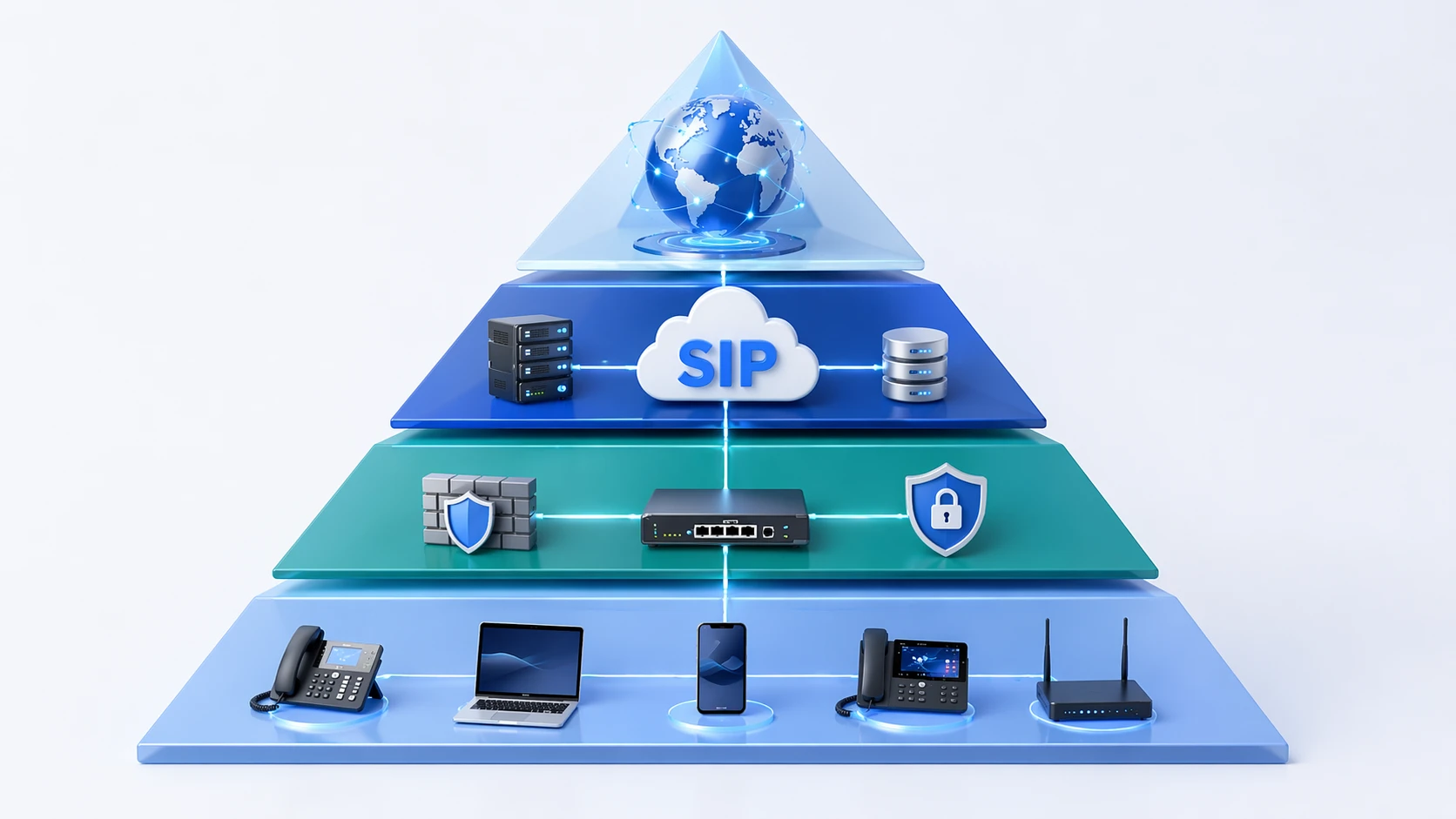
A typical SIP trunk architecture includes endpoints, call control, SBC protection, and provider-side voice interconnection.
SIP Trunk vs Traditional PRI or Analog Trunks
SIP trunking and traditional trunks serve the same broad purpose of connecting a business voice system to the outside world, but they do so in very different ways. PRI and analog trunks are associated with older circuit-based telephony models, while SIP trunks use IP-based session signaling and associated media transport. This difference affects capacity planning, flexibility, scalability, hardware dependence, and integration potential.
| Item | SIP Trunk | PRI or Analog Trunk |
|---|---|---|
| Transport model | IP-based session signaling and media | Legacy circuit-based telephony |
| Scalability | More flexible and software-oriented | Often tied to fixed physical channels or line counts |
| Integration potential | Strong fit with IP PBX, UC, cloud, and SBC environments | More limited in modern IP-centric designs |
| Deployment style | Often centralized or virtualized through IP architecture | Often dependent on dedicated legacy interfaces |
| Modern relevance | Core option for new enterprise voice deployments | Common mainly in legacy or transitional systems |
This does not mean legacy trunks disappeared overnight. Many businesses still operate hybrid environments. However, SIP trunking has become the preferred direction for many modernization projects because it aligns more naturally with IP-based enterprise communications.
Main Benefits of SIP Trunk
Scalability
One major benefit of SIP trunking is scalability. Legacy trunks often force businesses into fixed channel increments or hardware-dependent expansion. SIP trunking typically allows capacity to be increased, adjusted, or rationalized more flexibly based on business demand and provider architecture. This can make growth planning easier for both large enterprises and smaller organizations.
In a practical sense, that means the external calling layer can evolve more smoothly as the organization expands, consolidates, or changes communications strategy.
Better fit for IP communications
SIP trunks fit naturally with IP PBX, UC, cloud telephony, collaboration systems, softphones, and SBC-based voice architectures. Because SIP itself is already a core signaling method in many modern voice platforms, SIP trunking helps keep the external telephony side aligned with the rest of the communications environment.
This alignment often simplifies integration projects and supports more consistent system design.
Centralization opportunities
Businesses with multiple sites often use SIP trunking to centralize or consolidate external voice connectivity. Rather than maintaining separate legacy trunks at every branch, they can use a more centralized SIP architecture with distributed survivability or policy-based routing where needed. This can support more unified dial plans and more consistent management.
Centralization is especially attractive for organizations that want to standardize voice operations across branches, contact centers, and remote teams.
Support for hybrid and cloud migration
SIP trunking is also valuable during migration phases. A company may still have on-premises PBXs, analog devices, gateways, or branch systems while also adding cloud calling, remote users, and collaboration services. SIP trunks can help bridge these worlds and provide a flexible interconnection model during the transition.
This makes SIP trunking relevant not only for new deployments, but also for phased modernization strategies.
SIP trunking is often chosen because it fits the architecture of modern communications, not just because it replaces an older line type.
Typical Applications of SIP Trunk
Enterprise office telephony
One of the most common applications is standard enterprise external calling. Businesses use SIP trunks to let employees place and receive outside calls through IP PBX or unified communications systems. This includes headquarters, branch offices, campuses, and hybrid work environments where voice services must remain available across different user locations.
In these deployments, the SIP trunk acts as the external call gateway for the business voice platform.
Cloud voice and collaboration platforms
SIP trunking is also widely used in cloud and hybrid calling architectures. Platforms such as Microsoft Teams Direct Routing rely on SBC-based SIP interconnection to connect business voice services with telephony trunks and external calling infrastructure. This is a clear example of SIP trunking being used as part of a broader cloud voice design rather than only a traditional PBX replacement.
This application is increasingly important as businesses want cloud-based user experience while still controlling voice routing, numbering, and carrier integration.
Contact centers
Contact centers often depend on SIP trunks to connect their voice platform to public telephony and external customer traffic. Because contact centers may involve high call volumes, number routing, multi-site operations, and integration with CRM or customer service applications, SIP-based external connectivity fits well into their broader IP architecture.
The trunk becomes part of the service delivery path between customers and the contact center environment.
Branch and distributed business networks
Multi-site organizations often use SIP trunks in distributed voice designs that connect branch systems, shared call controllers, survivable gateways, or centralized SBCs. This can support regional offices, retail networks, warehouses, hospitals, campuses, and other distributed operational environments where a common voice strategy is needed across many locations.
Such deployments benefit from the logical rather than purely physical nature of SIP trunking.
Interconnection with gateways and legacy systems
SIP trunks are also useful in hybrid systems that still contain analog devices, TDM gateways, fax adaptation, or legacy PBX components. Gateways can provide interworking between older telephony resources and SIP-based external trunking so that modernization can happen gradually rather than all at once.
This makes SIP trunking relevant in transitional environments, not just in fully cloud-native designs.
Things to Consider When Deploying SIP Trunk
Provider compatibility
Not all SIP trunk services behave exactly the same way. Codec policies, DTMF expectations, authentication models, SIP normalization requirements, registration methods, emergency calling support, and failover behavior can vary between providers. Cisco configuration guides illustrate how SIP trunk settings and signaling behavior must be matched carefully to the connected environment.
For this reason, successful deployment usually depends on validating the provider’s technical profile against the organization’s PBX, SBC, and call-flow requirements.
Security and SBC design
Because SIP trunking connects internal voice systems to external networks, security design matters. Most professional deployments include an SBC or other protective edge layer rather than exposing the PBX directly. Security, interoperability, TLS policy, certificate handling, NAT traversal, and topology protection all deserve attention.
In modern enterprise architecture, trunk design is as much about secure interconnection as it is about voice routing.
Network quality
SIP trunking depends on IP network quality, so bandwidth planning, jitter control, latency, packet loss, QoS behavior, and resiliency planning are important. A SIP trunk may be logically flexible, but call quality still depends on the network carrying the signaling and media. This is especially important for businesses with multiple sites or hybrid cloud connectivity paths.
Good voice design therefore considers the transport network and the voice service together rather than as separate topics.
Business continuity
Organizations should also think about failover, redundancy, emergency routing, and survivability. If the primary WAN path, SBC, or provider interconnect fails, the business needs a voice continuity strategy. This can include backup routes, redundant SBCs, secondary providers, branch survivability, or hybrid cloud fallback depending on the criticality of the voice service.
Well-planned SIP trunking is not only about efficiency. It is also about resilience.
Conclusion
A SIP trunk is an IP-based external voice connection that uses Session Initiation Protocol to connect an enterprise voice platform to providers, cloud calling services, carrier interconnects, or other SIP-enabled networks. It serves the same broad role that traditional trunks once served, but does so in a way that fits modern IP communications architecture far better.
Its importance comes from the fact that businesses still need external calling, public number reachability, and voice interconnection even as their internal communications move toward IP PBX, unified communications, collaboration platforms, and cloud services. SIP trunking provides that bridge in a flexible, scalable, and standards-oriented way.
In short, SIP trunking is a core part of modern business telephony. It helps organizations connect their internal voice environment to the outside world while supporting the broader move toward IP, cloud, hybrid communications, and more centralized voice architecture.
FAQ
What is a SIP trunk used for?
A SIP trunk is used to connect an IP PBX, unified communications platform, or SBC-based voice environment to external voice services, providers, or telephone networks for inbound and outbound calling.
Is a SIP trunk the same as VoIP?
Not exactly. VoIP is the broader concept of carrying voice over IP networks, while a SIP trunk is a specific type of external voice interconnection that uses SIP signaling to connect communication systems.
Does a SIP trunk replace PRI?
In many deployments, yes. SIP trunking is commonly used as the modern IP-based replacement for PRI or other legacy trunk connections, although some organizations still operate hybrid environments.
Does a SIP trunk need an SBC?
Many enterprise deployments use an SBC for security, interoperability, edge control, and provider interconnection. While not every small scenario looks the same, an SBC is common in professional SIP trunk architecture.
Can SIP trunks be used with cloud calling platforms?
Yes. SIP trunks are widely used in cloud and hybrid voice architectures, including SBC-based direct routing and other provider interconnection models.
What is the main benefit of SIP trunking?
The main benefit is flexible IP-based external voice connectivity that fits modern PBX, unified communications, and cloud telephony systems better than legacy circuit-based trunks.
What should be checked before deploying a SIP trunk?
Key factors include provider compatibility, SBC design, security policy, codec support, DTMF behavior, numbering requirements, network quality, failover planning, and business continuity needs.