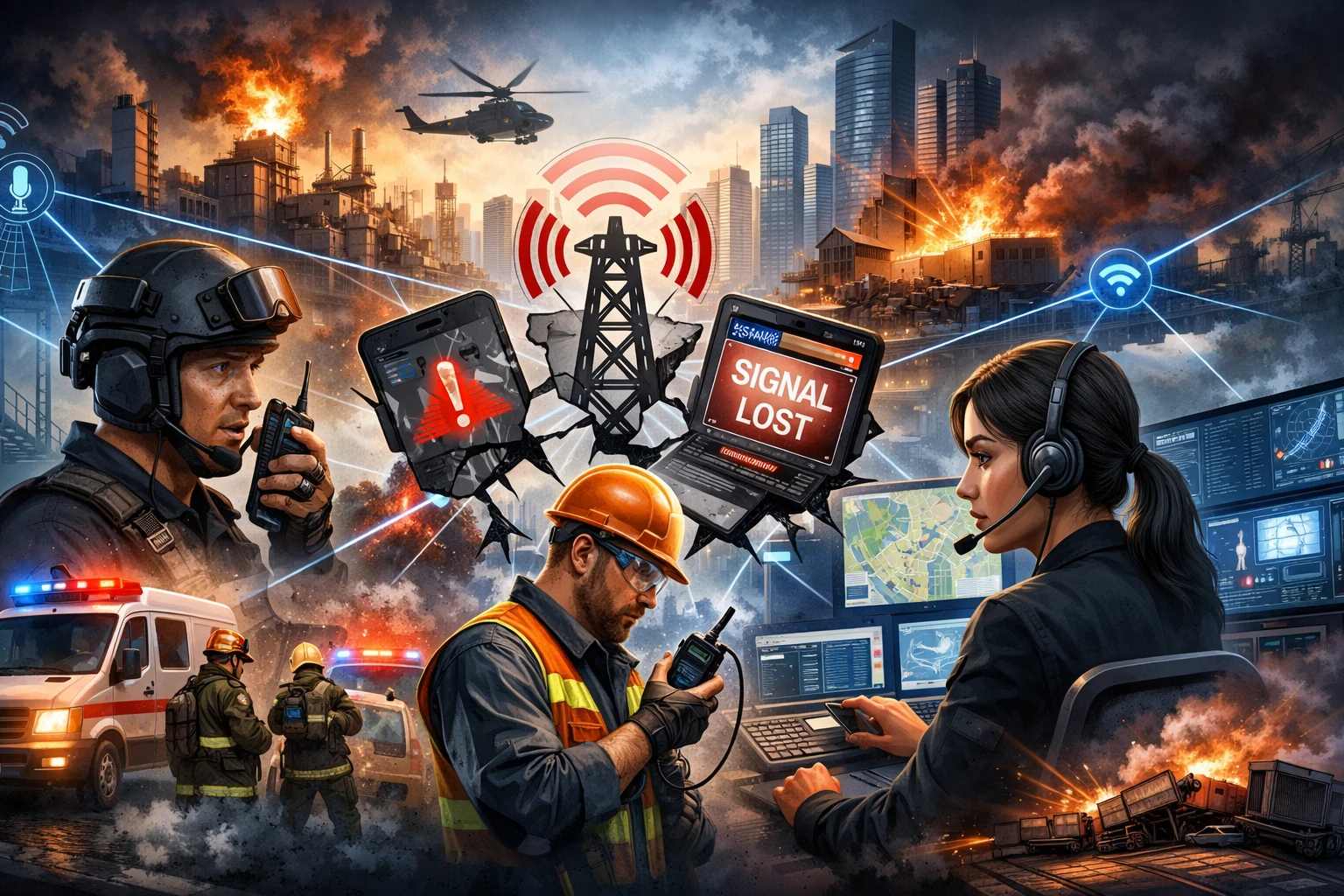
Building a professional command center used to mean a long system integration project. Display systems, audio equipment, video conferencing terminals, surveillance platforms, dispatch software, telephone access, recording systems, matrix controllers, and multiple network devices often had to be designed, purchased, installed, and maintained separately. For large emergency command centers, this approach may be necessary. For compact control rooms, mobile command sites, industrial operation rooms, campus security centers, and temporary emergency workspaces, it can be too complex, too expensive, and too slow.
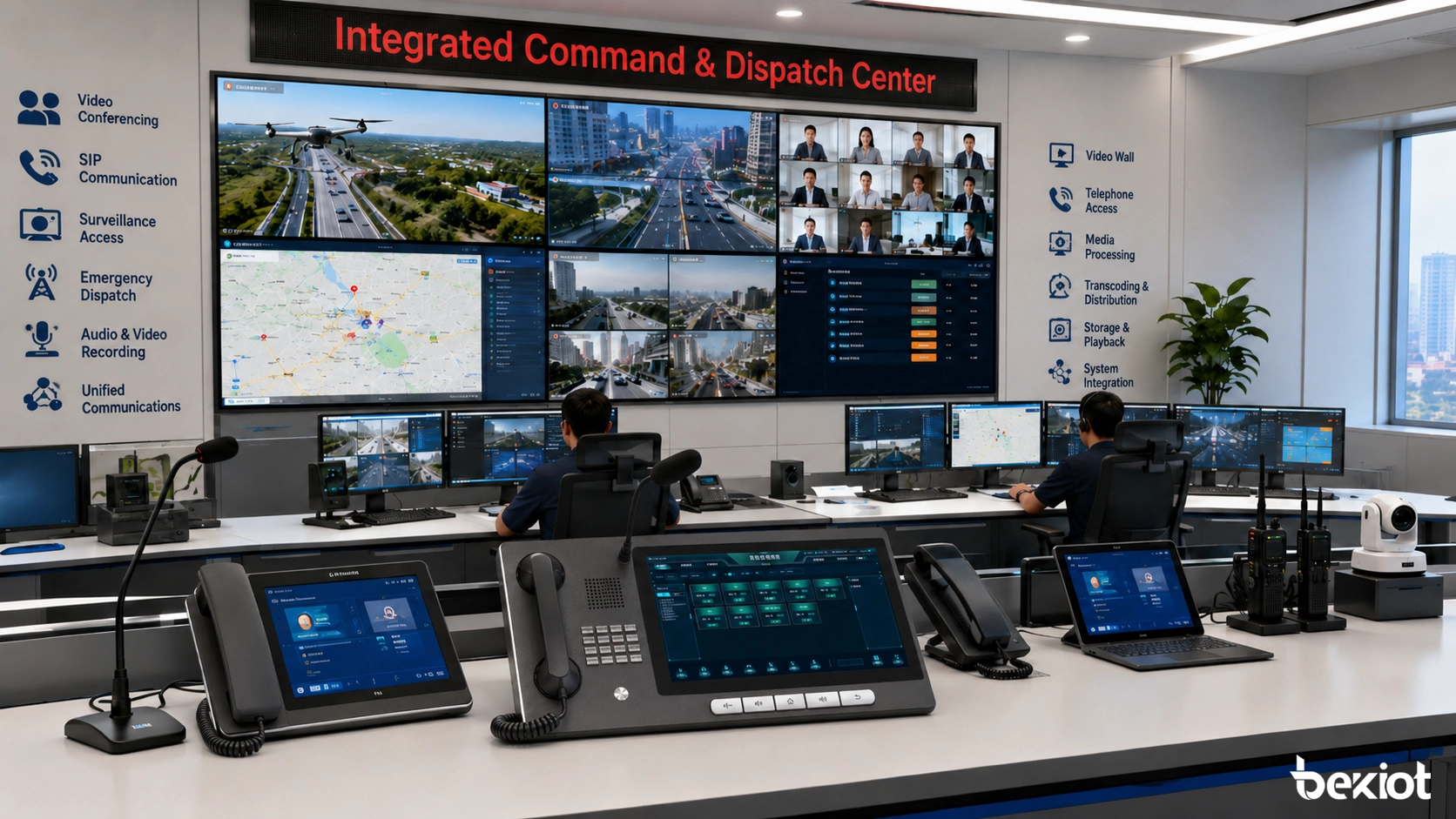
An integrated audio-video command device offers a more practical path. By combining video conferencing, SIP communication, surveillance access, streaming media processing, HDMI input and output, telephone connectivity, video wall display, dispatch control, recording, and transcoding into one unified platform, organizations can quickly build a smaller but highly capable command center without deploying many isolated subsystems.
Why Compact Control Rooms Need a Different Approach
Many organizations do not need a large-scale command hall at the beginning. They may only need to solve practical coordination problems, such as receiving emergency calls, viewing live cameras, connecting field teams, joining video meetings, displaying key images on a big screen, and recording important actions for later review. However, traditional command center architecture often pushes them toward multiple independent systems.
The result is a mismatch between real demand and system complexity. A single-function video conferencing system cannot handle surveillance cameras, SIP phones, drone video, or dispatch workflows. A conventional monitoring platform may display camera feeds but cannot organize voice communication, field collaboration, or mixed video meetings. A large integrated command platform may provide enough capability, but the cost, project cycle, and maintenance workload can exceed the needs of a small or medium-sized site.
A highly integrated platform is designed to close this gap. Instead of treating conferencing, monitoring, telephony, video wall control, media routing, and recording as separate projects, it brings these functions into one coordinated environment. This is especially useful for emergency response, industrial safety, transportation operation, campus security, municipal service, energy facilities, ports, tunnels, and temporary command posts.
A Unified Platform for Audio, Video, and Dispatch
The core value of integrated audio-video command equipment is not only hardware consolidation. Its real value is resource coordination. The platform should be able to receive different audio and video sources, convert them when necessary, route them to the right users, display them on command screens, connect them to meetings, and record key communication processes.
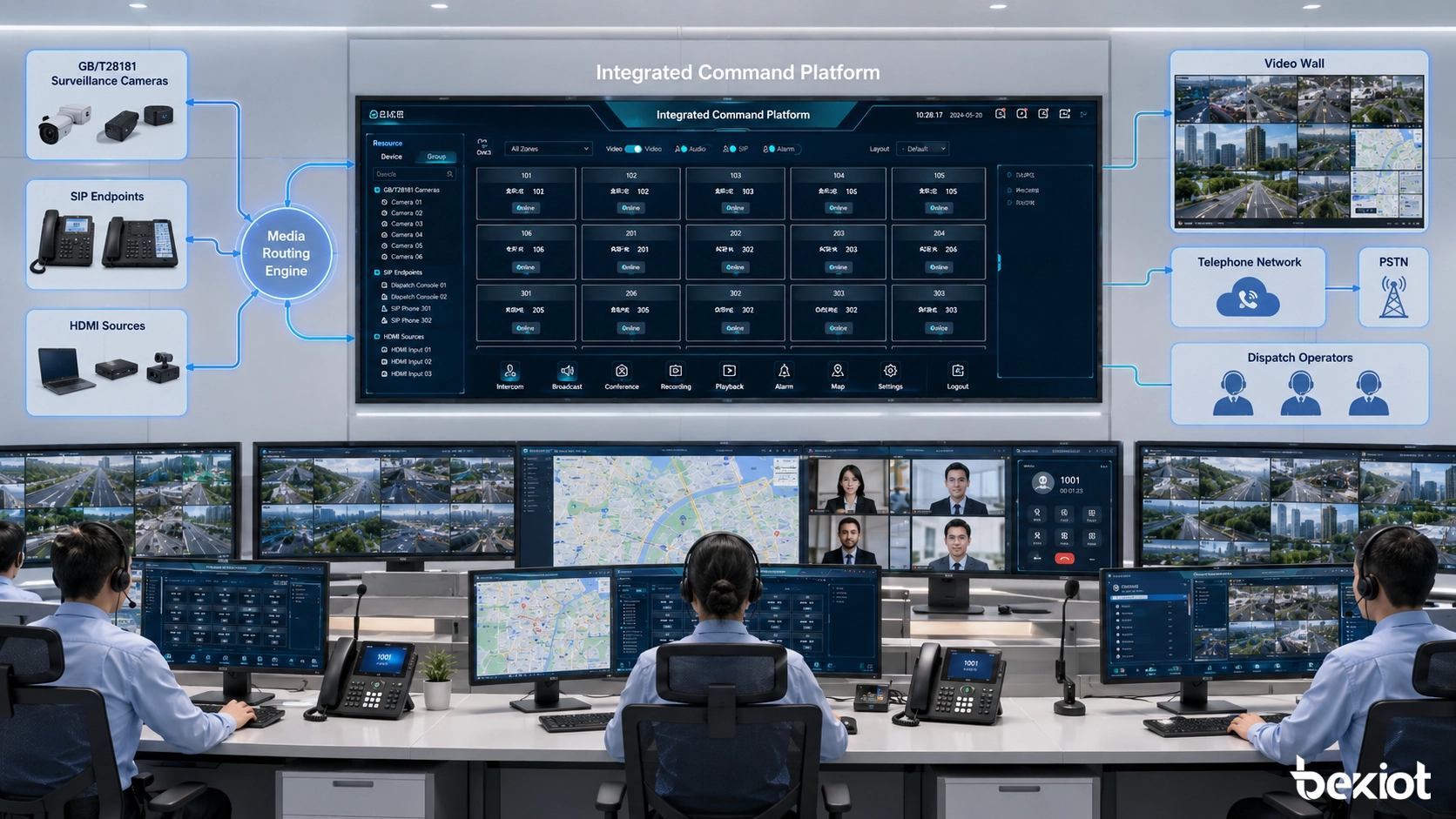
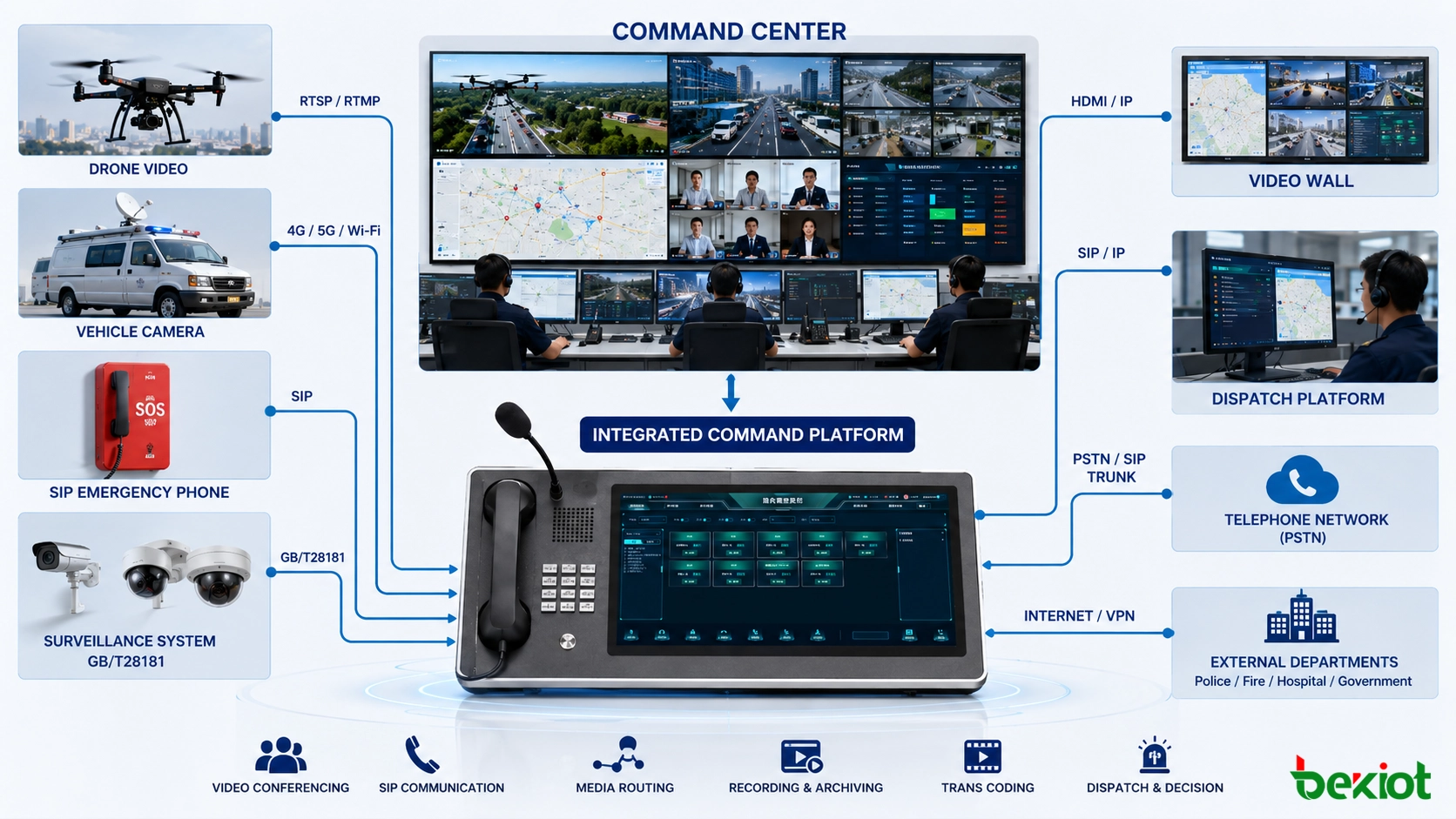
In a practical command scenario, the system may need to handle IP cameras, video conferencing cameras, SIP phones, dispatch terminals, public telephone lines, HDMI sources, laptops, drones, body-worn devices, vehicle-mounted video, encoders, emergency phones, and upper-level platforms. A unified device reduces the need for complex middleware and allows operators to manage more resources from one command interface.
For projects that already use SIP phones, industrial telephones, PA endpoints, VoIP gateways, or dispatch communication devices, Becke Telcom products can be considered as part of the endpoint and communication access layer. This allows the command platform to connect daily communication, emergency calls, paging, and field dispatch in a more practical way.
Key Capabilities That Matter in Real Projects
Built-In Video Conferencing for Operational Collaboration
Small command centers often need video meetings, but their meeting requirements are different from ordinary office conferencing. In a command environment, a meeting may need to include field video, surveillance feeds, drone images, vehicle cameras, remote experts, and dispatch operators at the same time.
A practical integrated command system may include a built-in video conferencing MCU. The referenced architecture highlights a 16-party 1080P video conferencing capability, allowing the command center to quickly organize high-definition meetings while bringing multiple video sources into the same collaborative session. This makes the meeting function part of the command workflow instead of a separate office tool.
SIP-Based Communication and Endpoint Integration
SIP support is essential for modern command communication. When the platform includes SIP server capability, standard SIP devices such as IP phones, video phones, SIP intercoms, gateways, servers, emergency phones, and dispatch terminals can be connected more easily. This gives the command center a flexible voice and video communication foundation.
The advantage of SIP is openness. It allows the command system to work with a wide range of communication endpoints rather than being limited to one closed product family. In industrial and public safety projects, this is important because existing sites may already have IP phones, analog gateways, radio gateways, emergency call stations, or PA systems that need to be reused or integrated.
Surveillance Access Through GB/T28181
Video surveillance is a basic resource in many command centers. In traditional small control rooms, cameras may be managed through separate NVRs or monitoring software, while video conferencing cameras are handled by another terminal. This creates a fragmented workflow for operators.
An integrated command device with GB/T28181 access capability can connect surveillance cameras and video conferencing cameras into the command platform. It may also support PTZ control, focus adjustment, video preview, and video distribution to upper-level platforms. This allows live video to become part of dispatch, meeting, recording, and display workflows.
Streaming Media Processing for Field Sources
Modern command centers must handle many kinds of streaming media. Field teams may send video from drones, robot dogs, mobile cameras, encoders, body-worn devices, vehicles, or remote monitoring systems. These sources may use different protocols, bitrates, resolutions, and network conditions.
Built-in streaming media processing helps the command center receive, convert, distribute, and manage these resources. Instead of forcing every source into a single rigid format, the platform can organize different video streams and make them available for display, recording, conferencing, or upper-level sharing.
HDMI Input and Output for On-Site Display
HDMI input and output remain important in physical command rooms. Operators may need to connect laptops, local workstations, drone control screens, decoder outputs, or other video sources directly to the command platform. HDMI output can also send selected images to large screens, monitors, or external display systems.
This capability is valuable for temporary and compact command spaces because it reduces the need for additional signal conversion devices. A laptop screen, live camera feed, remote video source, or command interface can be quickly displayed in the command area when needed.
Telephone Access for External Communication
Voice calling remains a necessary part of command operations. Emergency coordination may require contact with public telephone users, external departments, field workers, service providers, or legacy phone systems. Integrated audio-video command equipment can include telephone line access or connect to telephone resources through gateways.
By connecting telephone calls with SIP communication and command resources, the platform can help operators manage outside calls, internal dispatch, audio conferences, and emergency communication from a unified environment.
Video Wall Display Without Heavy Matrix Deployment
Traditional video wall systems often require dedicated matrix devices, cabling, controllers, and display management software. For many compact command centers, this can add unnecessary cost and complexity.
An integrated command platform can send selected video feeds directly to large screens and support common display workflows such as multi-screen layout, source switching, image preview, and screen splicing logic. In more complex environments, the platform can also output video to an external matrix system when required.
Recording, Archiving, and Review
Command work often needs evidence, traceability, and post-event review. Built-in recording and video archiving can simplify deployment by reducing the need for separate recording equipment. Audio calls, video meetings, surveillance feeds, field video, and dispatch sessions can be recorded according to project requirements.
This is important for emergency response, safety management, command training, incident investigation, operation review, and compliance documentation. Recording is not only a storage function; it helps organizations turn command activities into reviewable operational records.
Transcoding for Weak Network Environments
Video transcoding is often underestimated in command center design. In real projects, field video may be transmitted through weak networks, wireless links, satellite backhaul, temporary broadband, or unstable mobile connections. Without proper adaptation, video may freeze, drop frames, show black screens, or fail to reach the command room.
Built-in transcoding can re-encode video streams and improve their adaptability to different bandwidth and device conditions. For drone video, remote site monitoring, vehicle video, satellite communication, and emergency field return, this capability can make the difference between a usable command image and an unreliable feed.
System Architecture for Fast Deployment
A compact command center based on integrated audio-video equipment can be deployed with a simplified architecture. The center usually includes large displays, audio equipment, operator workstations, network access, communication endpoints, cameras, and one integrated command platform. Depending on the project, additional devices such as SIP phones, industrial telephones, PA speakers, VoIP gateways, RoIP gateways, and video access gateways can be added.
| Layer | Main Components | Purpose |
|---|---|---|
| Command Room | Large screens, speakers, operator consoles, microphones, local displays | Provides visual command, audio playback, and operator control |
| Integrated Platform | Video conferencing MCU, SIP server, media processing, recording, transcoding, display control | Coordinates communication, video, dispatch, storage, and display resources |
| Video Access | GB/T28181 cameras, PTZ cameras, encoders, HDMI sources, drone video, vehicle video | Brings fixed and mobile video sources into the command workflow |
| Communication Access | SIP phones, emergency phones, telephone gateways, IP intercoms, dispatch terminals | Supports internal calls, external calls, field communication, and emergency coordination |
| External Systems | Upper-level platforms, monitoring systems, PA systems, radio systems, IoT alarms | Expands the command center into a wider operational ecosystem |
Where This Type of Solution Fits Best
Integrated audio-video command equipment is especially suitable for organizations that need more than a meeting room but do not want to build a large and expensive command center from the beginning. It helps small and medium-sized projects gain practical dispatch, video, and communication capability in a shorter deployment cycle.
Typical use cases include industrial safety control rooms, emergency response stations, transportation operation rooms, tunnel management centers, park security centers, campus command rooms, municipal duty offices, energy facility control rooms, port operation centers, mobile command vehicles, and temporary emergency sites.
Selection Considerations for Buyers
When selecting an integrated command platform, buyers should focus on real operational workflows rather than only device specifications. The system should support the communication endpoints, video sources, network environment, and display requirements of the project. Open protocol support is especially important because command centers often need to connect equipment from different manufacturers.
A strong platform should support SIP-based communication, camera access, mixed video source management, HDMI input and output, recording, transcoding, screen display, user permission control, and integration with external systems. For sites with harsh environments or emergency communication requirements, rugged SIP endpoints, industrial phones, paging devices, gateways, and dispatch accessories should also be evaluated as part of the complete solution.
Becke Telcom can be naturally positioned in this layer by providing compatible SIP phones, industrial telephones, emergency call stations, paging endpoints, VoIP gateways, and dispatch communication products for command center projects. Instead of replacing the integrated platform, these devices can extend the communication reach of the command system into field areas, workshops, tunnels, campuses, and remote sites.
Operational Value for Modern Command Centers
The value of an integrated audio-video command solution is measured by deployment speed, system simplicity, resource visibility, response efficiency, and long-term scalability. By reducing the number of independent subsystems, the project can lower integration complexity and make daily operation easier for command staff.
More importantly, the command center becomes more practical. Operators can see live video, join meetings, call field teams, display key images, record actions, route media streams, and coordinate multiple departments from one platform. In emergency scenarios, this unified workflow helps reduce information delay and improves decision-making efficiency.
For compact command centers, the best solution is not always the largest system. A well-designed integrated platform can provide the right balance of video capability, voice communication, dispatch control, surveillance access, recording, and field connectivity. With the right endpoints and gateways, it can also grow into a broader command and communication network over time.
FAQ
What is integrated audio-video command equipment?
It is a unified command device or platform that combines video conferencing, SIP communication, surveillance access, streaming media processing, HDMI input and output, telephone access, video wall display, dispatch control, recording, and transcoding into one system.
Why is it useful for small command centers?
Small command centers often need practical dispatch and video communication capabilities without deploying many separate systems. Integrated equipment reduces complexity, shortens deployment time, and helps operators manage more resources from one interface.
Why is SIP support important?
SIP allows the command platform to connect with standard IP phones, video phones, SIP intercoms, gateways, emergency phones, and dispatch terminals. This improves openness and makes it easier to integrate existing communication devices.
What does GB/T28181 support mean in a command platform?
GB/T28181 support allows the platform to access compatible video surveillance cameras and related video resources. It helps bring monitoring images into command, meeting, recording, and display workflows.
When should transcoding be considered?
Transcoding should be considered when the system needs to receive video from drones, vehicles, mobile devices, satellite links, weak networks, or mixed video sources. It helps adapt video streams for more stable viewing and distribution.