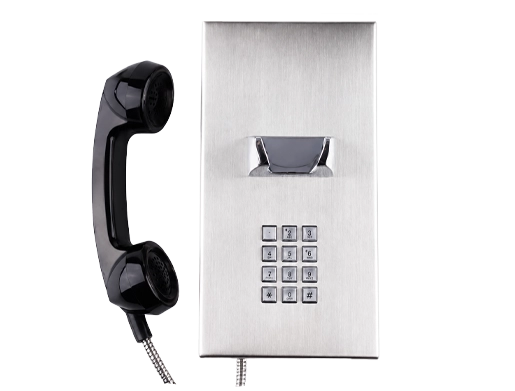
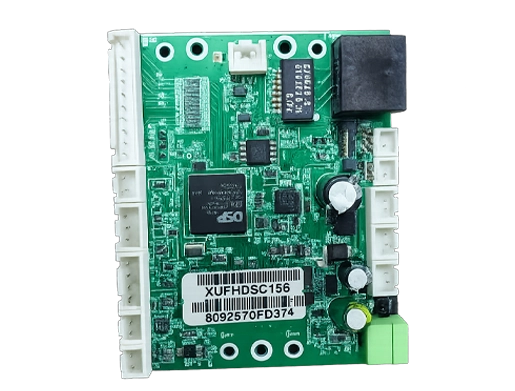
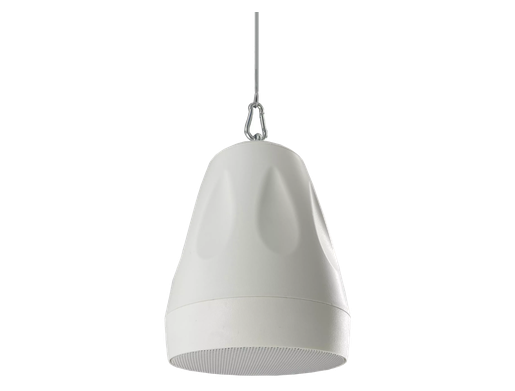
An FXS gateway is a voice gateway that connects analog endpoints such as telephones, fax machines, speakerphones, intercoms, modems, or legacy PBX extensions to an IP-based communication platform. In practical deployment, it acts as the bridge between traditional analog subscriber devices and modern SIP or VoIP networks, allowing those devices to operate as part of an IP PBX, hosted telephony platform, or unified communications environment.
The term FXS stands for Foreign Exchange Station. An FXS interface is the side that provides line power, dial tone, ringing voltage, and supervisory signaling to the connected analog device. Because of this role, an FXS gateway behaves like the line provider from the endpoint’s point of view. The analog phone or fax machine plugs into the gateway, and the gateway then translates analog signaling and audio into SIP signaling and RTP media on the IP network.
FXS gateways are widely used in migration projects where organizations want to preserve analog devices while modernizing their communication infrastructure. They are also useful in industrial and commercial environments that still rely on analog emergency phones, elevator phones, warehouse handsets, security phones, fax terminals, paging adapters, or legacy room phones. Instead of replacing every endpoint at once, businesses can use an FXS gateway to extend the life of existing equipment while moving the core call control platform to IP.
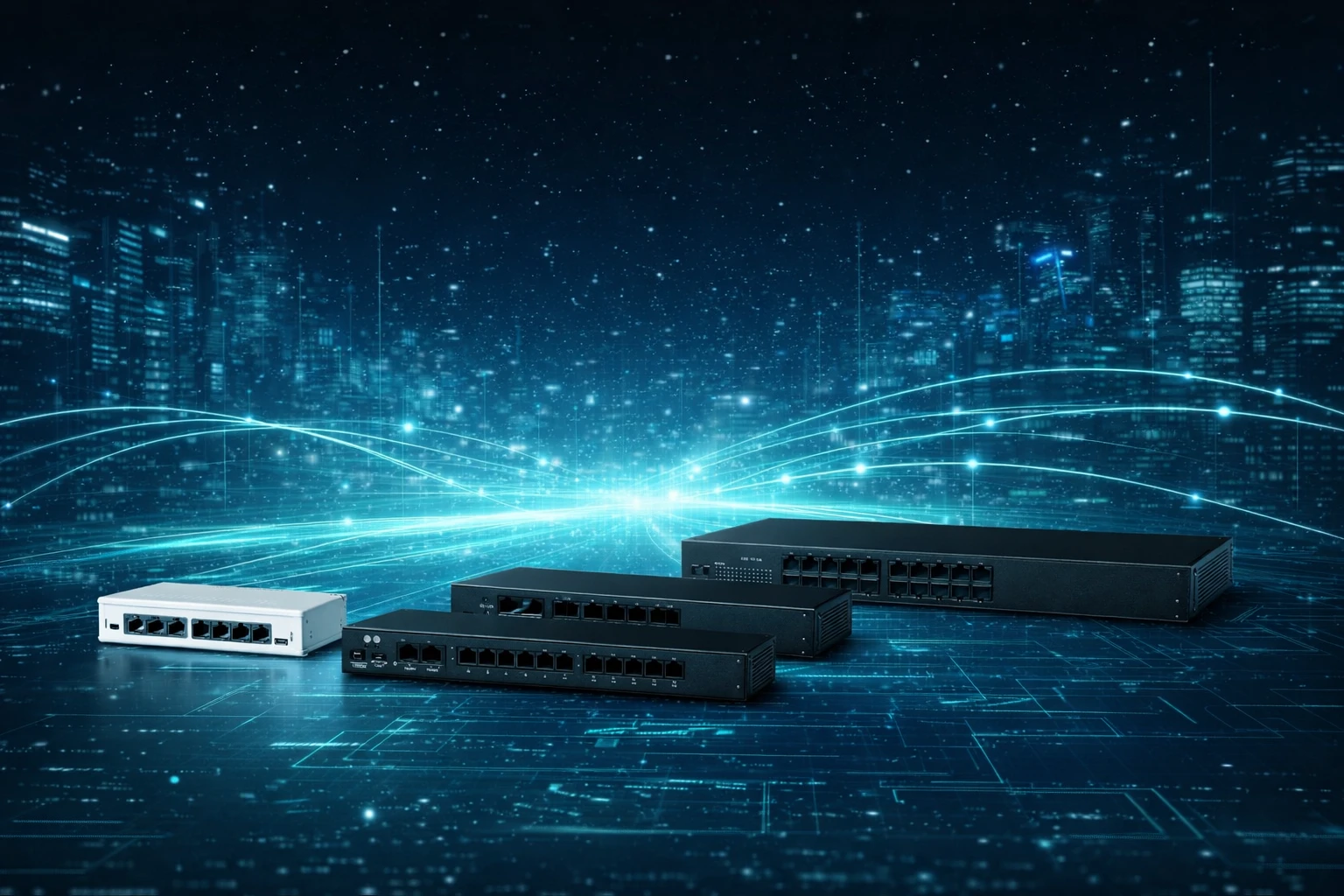
An FXS gateway allows analog subscriber devices to work within a SIP or IP PBX environment.
What Is an FXS Gateway?
An FXS gateway is a hardware gateway equipped with one or more FXS ports. Each FXS port is designed to connect directly to an analog endpoint through an RJ11 or equivalent analog interface. On the opposite side, the gateway connects to an IP network through Ethernet and communicates with a SIP server, IP PBX, softswitch, or cloud telephony platform.
Its job is not simply to pass audio from one side to the other. The gateway must create the analog electrical conditions that a traditional device expects, including battery feed, dial tone, ring current, and line supervision, while also translating call setup and call release into SIP messages on the IP side. In other words, it is both an analog access device and a signaling conversion platform.
In many low-density deployments, an FXS gateway is also called an ATA (analog telephone adapter). In medium- and high-density deployments, the same core idea appears in rack-mounted analog gateways with multiple FXS ports. Whether it is a compact ATA or a chassis-based gateway, the main purpose remains the same: connecting analog endpoint devices to an IP voice system.
How Does an FXS Gateway Work?
An FXS gateway operates between two different communication domains. On the analog side, it faces subscriber devices such as analog phones or fax machines. On the network side, it faces the SIP or VoIP infrastructure. The gateway must understand both environments and keep them synchronized throughout the call lifecycle.
When an analog user lifts the handset, the gateway detects the off-hook condition because loop current changes on the port. The FXS gateway then generates or relays a dial tone according to its configuration and starts collecting dialed digits. Based on the dial plan, it converts the destination number into a SIP call request and sends that request to the IP PBX, SIP trunking platform, or call server.
For an incoming call from the IP network, the process works in reverse. The call server sends a SIP INVITE to the gateway. The gateway applies ringing voltage to the analog port, delivers caller ID if supported by the device and region, and waits for the user to answer. Once the handset goes off-hook, the gateway establishes the speech path by converting analog voice into digital packets and digital voice packets back into analog audio.
Core Operating Sequence
The analog endpoint goes off-hook or receives an incoming ring.
The gateway detects line state and interprets the event.
The gateway applies dial tone, collects digits, or generates ringing based on the call direction.
On the IP side, it exchanges SIP signaling with the PBX, SIP server, or softswitch.
The DSP processes voice and converts the media between analog audio and RTP streams.
When the call ends, the gateway clears both the analog and IP call legs and restores the idle line state.
This sounds straightforward, but reliable analog integration depends on a number of practical details, including dial plan behavior, caller ID method, ring load, echo cancellation, impedance matching, disconnect supervision, and fax handling. That is why FXS gateway selection should always consider both the IP platform and the actual endpoint type in the field.
What the FXS Port Actually Provides
The defining characteristic of an FXS gateway is that the FXS interface behaves like the line-providing side. It supplies the battery feed needed by the analog terminal, presents dial tone when the line is seized, and sends ringing voltage during an inbound call. This is the opposite of an FXO interface, which expects to receive battery and ringing from another line source.
Because an FXS port is responsible for creating the subscriber-side telephony environment, port performance matters in real deployment. Ringing capability, loop current, caller ID format, ringing cadence, and compatibility with special devices such as elevator phones, analog intercoms, or fax terminals can all affect installation success.
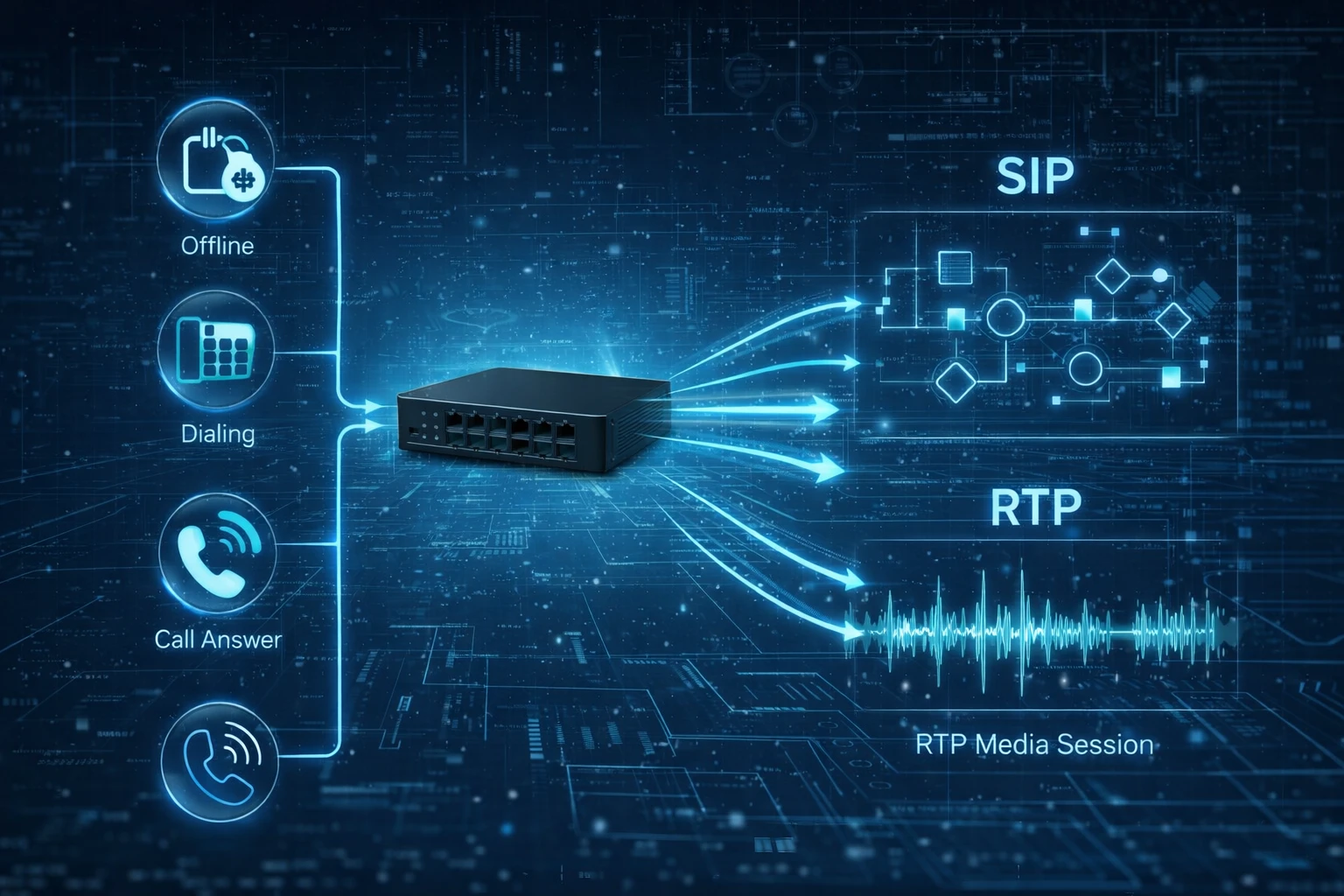
The gateway converts analog user actions such as off-hook, digit dialing, and answer events into SIP signaling and RTP media sessions.
FXS Gateway vs FXO Gateway
FXS and FXO are closely related terms, but they solve different integration problems. Understanding the distinction is essential when planning a hybrid telephony system.
An FXS gateway is used when you want to connect analog endpoint devices to an IP system. It provides battery, dial tone, and ringing to those endpoints. An FXO gateway, by contrast, is used when you want to connect analog PSTN lines or analog trunk interfaces into an IP system. The FXO side behaves like a telephone toward the external line, while the FXS side behaves like the line toward the endpoint.
In practical terms, choose an FXS gateway when the devices being preserved are analog handsets, fax machines, hotline phones, or analog station devices. Choose an FXO gateway when the thing being preserved is the analog line itself, such as a local PSTN trunk or a line-side interface from a legacy PBX.
| Item | FXS Gateway | FXO Gateway |
|---|---|---|
| Main purpose | Connect analog endpoint devices to an IP voice system | Connect analog telephone lines or trunks to an IP voice system |
| Port behavior | Provides battery, dial tone, and ringing | Receives battery and ringing from the far-end line |
| Typical connected device | Analog phone, fax machine, intercom, modem, speakerphone | PSTN line, PBX analog trunk, central office line |
| Common use case | Keep analog endpoints in a SIP or IP PBX deployment | Keep analog outside lines in a SIP or IP PBX deployment |
Key Features of an FXS Gateway
The exact feature set depends on the vendor and model, but modern FXS gateways usually combine analog subscriber functions with IP telephony integration, management, and survivability features.
1. Analog Endpoint Integration
The primary function of an FXS gateway is to connect analog subscriber devices to an IP voice platform. This can include desk phones, lobby phones, wall phones, fax machines, hotline units, paging interfaces, modems, and specialized analog devices used in industrial, hospitality, healthcare, education, and transportation environments.
2. SIP and IP PBX Interoperability
Most FXS gateways are designed for SIP-based environments. They may register directly to a SIP server, operate in peer mode, or integrate with an IP PBX, softswitch, hosted PBX, or unified communications platform. In real projects, this interoperability is one of the main reasons organizations choose FXS gateways during migration from legacy systems.
3. Traditional Telephony Features
Many gateways support features such as caller ID, call waiting, call transfer, call forward, hold, do-not-disturb, three-way conference, hotline dialing, flexible dial plans, and message waiting indication. These features help analog users access PBX-style services even though the endpoint itself remains analog.
4. Fax and Modem Support
Fax support is still important in many industries. A capable FXS gateway may support T.38 fax relay, fax pass-through, and configuration tuning for analog fax devices. Some deployments also require compatibility with modem traffic, alarm panels, or point-to-point analog signaling devices, although these use cases should always be validated against the specific platform and network conditions.
5. Voice Quality and DSP Functions
Because analog interfaces are sensitive to line conditions, FXS gateways commonly include DSP features such as echo cancellation, jitter management, gain adjustment, silence handling, tone generation, and impedance tuning. These functions help maintain stable call quality between analog endpoints and packet networks.
6. Security and Provisioning
Enterprise-grade devices often support secure provisioning and signaling features such as HTTPS provisioning, TR-069, SIP over TLS, and SRTP. These features matter in managed deployments, distributed sites, and service-provider environments where centralized administration and security policy enforcement are important.
7. Survivability and Continuity
Some analog gateway platforms support survivability features that help preserve telephony service during WAN failure or SIP server disruption. This can be especially important for branch offices, emergency phones, critical facility communication points, or deployments where analog endpoints must remain reachable even when the IP environment is degraded.
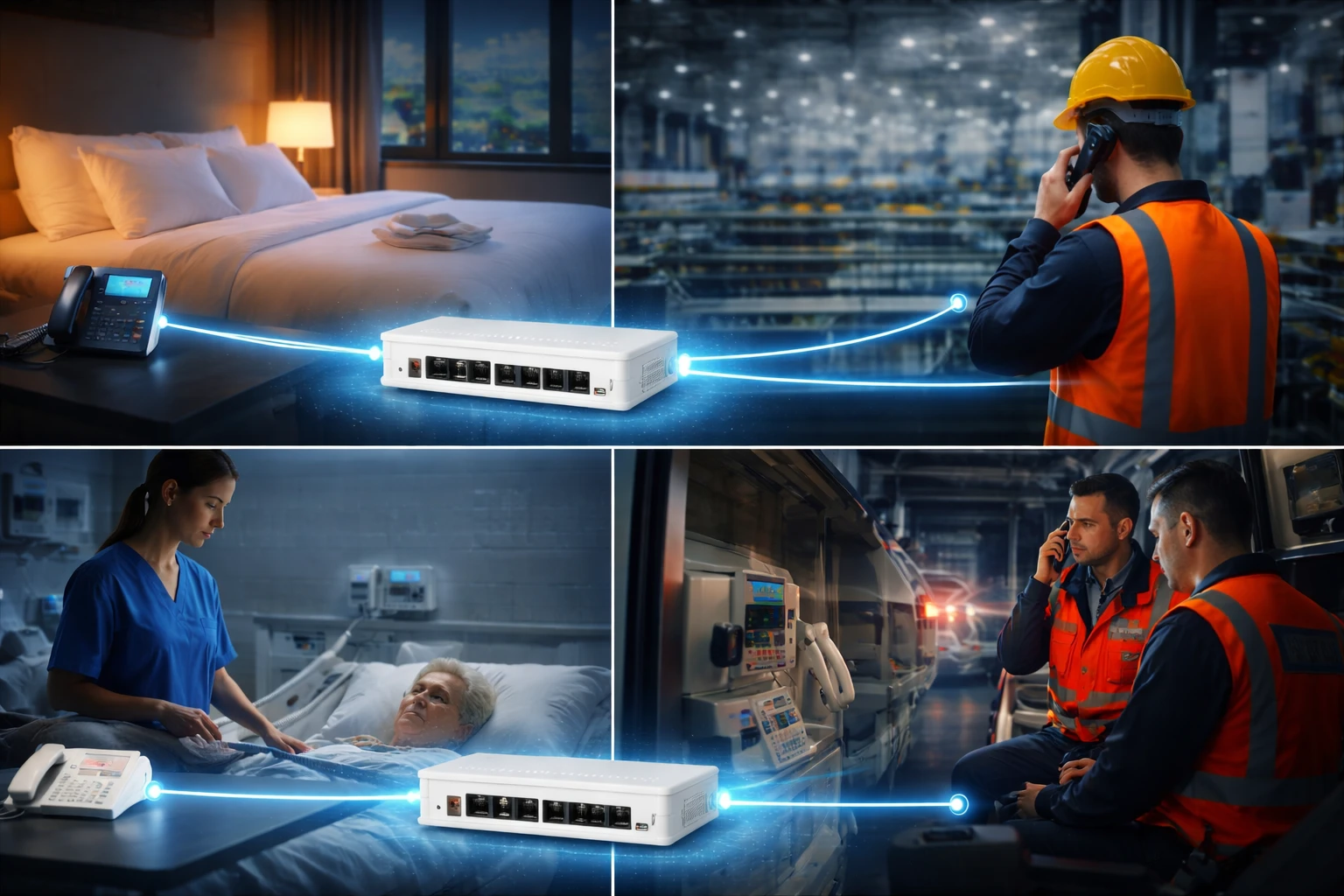
FXS gateways are often used to retain analog endpoints in hospitality, industrial, healthcare, branch office, and emergency communication scenarios.
Common Applications of an FXS Gateway
FXS gateways are valuable wherever analog endpoints still serve a functional role but the wider communications system is moving toward SIP or all-IP architecture. They are especially useful when replacement of every field device would be costly, slow, or operationally unnecessary.
Branch Office Analog Device Retention
Organizations with branch offices often still use analog fax machines, lobby phones, or low-cost analog handsets. An FXS gateway allows these devices to remain in service while the rest of the voice platform is centralized on an IP PBX or cloud telephony system.
Hotel, Campus, and Multi-Room Telephony
Hospitality and campus environments may have large numbers of room phones, corridor phones, or service phones. In some cases, analog endpoints remain attractive because of cost, simplicity, and familiarity. FXS gateways can connect these devices to a central SIP platform without requiring a full rip-and-replace endpoint upgrade.
Industrial and Special-Purpose Analog Terminals
Industrial sites, control rooms, warehouses, utility facilities, and transport environments may use analog handsets, help points, emergency phones, or rugged wall phones. An FXS gateway helps integrate those endpoints into a broader dispatch or PBX system while preserving the existing field device interface.
Fax Migration Projects
Many organizations still operate fax devices for compliance, procurement, healthcare workflow, logistics, or administrative processes. An FXS gateway can connect these devices to an IP-based platform and, when properly configured, support T.38 or pass-through methods for more reliable fax transport.
Paging and Door Entry Integration
Some paging amplifiers, legacy intercom stations, analog door phones, and entry systems still use subscriber-style analog interfaces. FXS gateways can be used to register these endpoints or interface modules into a SIP environment, making them part of the organization’s wider communications workflow.
Benefits of Using an FXS Gateway
One of the biggest advantages of an FXS gateway is that it reduces the cost and disruption of migration. Instead of replacing every analog device, organizations can move the call-control core to IP while keeping selected legacy endpoints in operation.
Another benefit is deployment flexibility. Different device types can coexist in the same voice environment: SIP desk phones, softphones, mobile clients, analog handsets, fax devices, and special-purpose terminals can all be integrated under one routing and management framework.
FXS gateways also support continuity planning. In many projects, analog devices are retained because they are familiar, physically robust, or tied to specific workflows. Preserving them through an FXS gateway can improve operational continuity while buying time for a phased modernization strategy.
Deployment Considerations
Although FXS gateways are straightforward in concept, real deployment still requires careful planning. The first consideration is the type of analog endpoint. A standard desk phone, a hotel room phone, an elevator phone, and a fax terminal may all impose different electrical and signaling requirements.
The second consideration is port density and topology. Small sites may only need one or two ports through an ATA-style device, while larger sites may need multiport rack-mounted gateways. The right choice depends on endpoint count, management preference, and future expansion plans.
The third consideration is network and platform interoperability. The gateway should be validated for the intended SIP server, codec policy, DTMF method, caller ID standard, fax method, QoS design, and security requirements. For larger projects, remote provisioning and monitoring capabilities are also important.
Check endpoint type: phone, fax, intercom, paging device, modem, or emergency terminal.
Confirm electrical compatibility: ring load, loop current, and caller ID format may matter.
Match the SIP platform: verify registration mode, codecs, DTMF, and dial plan behavior.
Plan for fax properly: use validated T.38 or pass-through settings where required.
Consider survivability: critical phones may need fallback behavior during IP failure.
Leave room for growth: select port density and management tools for future expansion.
How to Choose an FXS Gateway
Choosing an FXS gateway starts with counting the analog endpoints that actually need to remain in service. Once that list is clear, the next step is to classify them by function: ordinary phones, fax devices, hotline phones, paging interfaces, modems, and specialty terminals may all have different requirements.
Then evaluate the telephony platform and the branch architecture. Will the gateway register locally, backhaul to a central IP PBX, or connect to a cloud voice service? Will it need secure provisioning, VLAN support, redundant Ethernet, or compatibility with emergency devices?
Finally, assess operational needs rather than just port count. A low-cost adapter may be suitable for a simple analog handset, while a large enterprise or industrial deployment may require denser hardware, stronger management controls, survivability features, and broader analog tuning options.
Frequently Asked Questions
Is an FXS gateway the same as an ATA?
Not always, but the terms overlap. An ATA usually refers to a compact device with one or a few FXS ports for analog phones or fax machines. An FXS gateway is the broader category and can include both small adapters and larger multiport chassis.
What devices can connect to an FXS gateway?
Common devices include analog telephones, fax machines, speakerphones, intercom stations, analog room phones, hotline phones, paging interfaces, and some modem-based or specialty analog terminals. Compatibility should still be checked for each device type.
What is the difference between FXS and FXO?
FXS provides battery, dial tone, and ringing to the endpoint. FXO receives those conditions from the line side. As a result, FXS is used for analog endpoint devices, while FXO is used for analog lines or trunks.
Can an FXS gateway support fax?
Yes, many FXS gateways support fax, often through T.38 relay and G.711 pass-through options. Actual reliability depends on device compatibility, SIP platform support, codec policy, and network conditions.
Why use an FXS gateway instead of replacing analog phones with IP phones?
An FXS gateway is useful when analog devices still meet operational needs, when replacement would be expensive, or when certain workflows depend on legacy hardware. It supports phased migration rather than a full endpoint replacement at once.
Can FXS gateways be used in industrial or critical communication projects?
Yes. They are often used where analog emergency phones, hotline stations, paging devices, or rugged field terminals need to be integrated into a SIP or IP PBX environment. For critical sites, gateway reliability, survivability, and endpoint compatibility should be reviewed carefully.
Conclusion
An FXS gateway is a practical and important building block in hybrid voice networks. It connects analog subscriber devices to SIP and IP telephony systems by providing the line-side electrical environment those devices expect and translating their signaling and media into IP communications.
For organizations modernizing their phone systems, the FXS gateway offers a cost-effective way to preserve selected analog endpoints without giving up the advantages of IP call control, centralized management, and broader network integration. Whether the goal is to keep fax devices, room phones, emergency handsets, or specialized analog terminals in service, an FXS gateway can play a key role in a phased and reliable migration strategy.