


FCC certification is a common industry phrase used to describe compliance with the Federal Communications Commission equipment authorization framework in the United States. In formal regulatory language, however, FCC certification is only one of the authorization procedures inside the broader FCC program. Depending on the product, authorization may be obtained through Certification or through a Supplier’s Declaration of Conformity (SDoC). The correct route depends on the type of radio-frequency device, the FCC rule parts that apply to it, and the technical characteristics of the equipment.
In practical business use, many manufacturers, importers, and buyers still say a product “has FCC certification” even when the official approval route may actually be SDoC. That shorthand is widely understood, but it can blur important differences. FCC authorization is not a general product quality badge, and it is not an environmental durability rating. Instead, it is a U.S. regulatory compliance framework focused on radio frequency emissions, spectrum use, electromagnetic interference control, labeling, user information, and in some cases RF exposure evaluation.
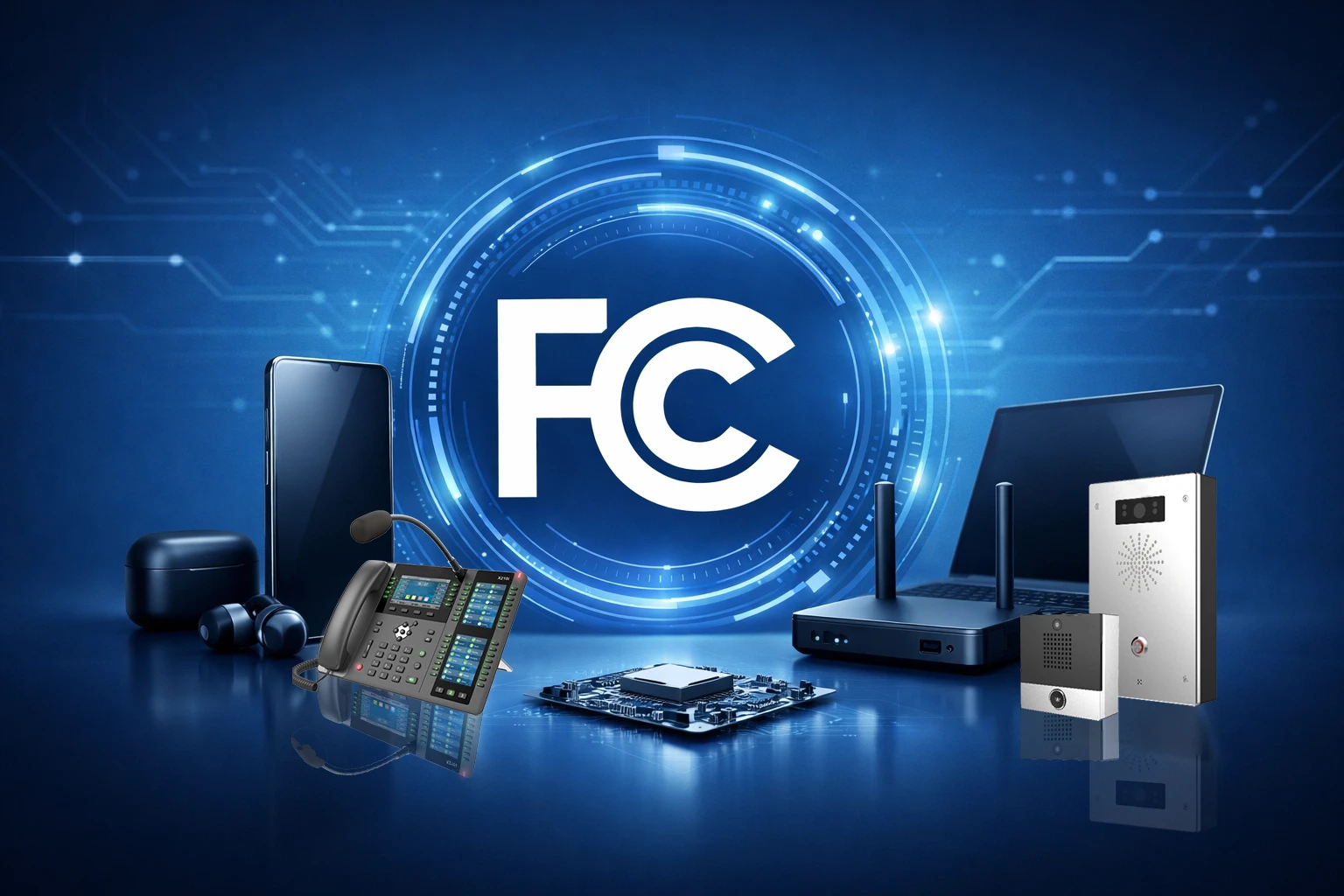
FCC authorization helps confirm that qualifying RF devices meet applicable U.S. technical and administrative requirements before marketing or importation.
What Does FCC Certification Mean?
At a practical level, FCC certification means a product subject to the FCC’s certification route has been evaluated against the applicable FCC technical rules and has received a grant of authorization through the Commission or a Telecommunication Certification Body. For products under the SDoC route, the responsible party declares compliance and provides the required compliance information without obtaining the same type of grant that certified products receive.
This distinction matters because not every electronic product follows the same approval path. Some devices are intentional radiators, meaning they deliberately generate and emit radiofrequency energy for communication or control, such as Wi-Fi modules, Bluetooth devices, cellular terminals, RFID systems, and remote-control transmitters. Other products are unintentional radiators, such as many digital devices that generate RF energy internally but do not intentionally transmit it for communications. The FCC treats these categories differently under its rules.
Why FCC Authorization Matters
FCC authorization matters because RF devices can interfere with licensed communications, other electronics, and critical services if they are not designed and tested correctly. The FCC framework is intended to reduce harmful interference, promote orderly use of the radio spectrum, and create a consistent legal basis for marketing and importing covered products into the United States.
For manufacturers and importers, FCC authorization is a market-access requirement. For distributors, system integrators, and procurement teams, it is an important compliance checkpoint that helps confirm whether a device can be lawfully marketed and deployed in the U.S. For engineering teams, it also influences antenna design, radio module integration, PCB layout, shielding, filtering, enclosure decisions, firmware settings, and user documentation.
Standards and Regulatory Framework Behind FCC Certification
The FCC authorization system is built on U.S. telecommunications law and the technical rules in Title 47 of the Code of Federal Regulations. The core authorization procedures are set out in 47 CFR Part 2, Subpart J. These rules define the authorization framework, responsible parties, application requirements, identification, labeling, and the two main approval routes: Certification and Supplier’s Declaration of Conformity.
For many everyday devices, the most commonly referenced technical rules are found in 47 CFR Part 15, which covers a broad range of radio frequency devices operating without an individual station license. Part 15 includes rules for both intentional and unintentional radiators. In addition, some products fall under 47 CFR Part 18, which regulates industrial, scientific, and medical equipment that emits RF energy for non-telecommunications purposes, such as certain heating, processing, or treatment applications. Other devices may also need to comply with service-specific FCC rule parts depending on their radio technology and spectrum usage.
In real projects, FCC compliance usually combines legal rule-part analysis with laboratory testing, product labeling review, technical documentation, and user information review. Depending on the device, the process may also involve antenna limitations, output power checks, occupied bandwidth review, emission measurements, modular approval considerations, or RF exposure assessment for mobile and portable equipment.
Two Main FCC Authorization Procedures
Certification: a formal equipment authorization issued by the FCC or a Telecommunication Certification Body based on submitted test data and application materials.
Supplier’s Declaration of Conformity (SDoC): a self-approval route in which the responsible party ensures the equipment complies with applicable FCC rules and supplies the required compliance information.
Common Rule Areas Often Reviewed
47 CFR Part 2 Subpart J for authorization procedures
47 CFR Part 15 for many intentional and unintentional radiators
47 CFR Part 18 for industrial, scientific, and medical RF equipment
FCC labeling and identification requirements
RF exposure requirements for certain mobile and portable devices
Measurement methods, KDB guidance, and supporting test procedures used during evaluation
The FCC pathway typically starts with device classification and rule selection, then moves through testing, documentation, authorization, and labeling before U.S. market entry.
How the FCC Authorization Process Works
The process starts with identifying whether the product is an RF device and determining which FCC rule parts apply. This is one of the most important steps because a wrong classification can lead to incomplete testing, incorrect labeling, or an invalid authorization strategy. For example, an embedded wireless module, a finished smart terminal, and a purely digital peripheral can fall under different combinations of rules and authorization procedures.
Once the applicable rules are identified, the manufacturer or responsible party arranges testing against the relevant technical limits. This may include radiated emissions, conducted emissions, output power, bandwidth, spurious emissions, frequency stability, occupied channel measurements, or other parameters required by the applicable rule part. Where RF exposure requirements apply, additional evaluation may be required for mobile or portable use conditions.
If the product follows the certification route, the applicant prepares the filing package, test reports, labeling details, internal and external photographs where required, user documentation, and other supporting materials. The application is then reviewed through the FCC authorization process, often via a Telecommunication Certification Body. If the product follows the SDoC route, the responsible party must still ensure compliance, maintain supporting records, and provide the required compliance information to the market.
Typical Compliance Steps
Confirm whether the device is subject to FCC equipment authorization.
Identify the applicable FCC rule parts and device classification.
Determine whether Certification or SDoC applies.
Test the device against the relevant emission, spectrum, and administrative requirements.
Evaluate RF exposure where required for the intended use configuration.
Prepare reports, product identification details, and user information.
File for certification or complete the SDoC compliance documentation process.
Label the equipment correctly and maintain records for market access and post-market review.
Protection Ratings Under FCC: What They Really Mean
The phrase protection ratings can be misleading in the FCC context because the FCC does not issue a single universal protection grade equivalent to an IP rating, NEMA enclosure type, or hazardous-area classification. FCC authorization is primarily concerned with radio compliance, meaning the control of emissions, lawful spectrum operation, and related technical and administrative requirements for RF devices.
In other words, FCC compliance does not by itself mean a product is waterproof, corrosion-resistant, explosion-proof, vibration-rated, or suitable for outdoor heavy industry. Those characteristics come from other standards and certifications. A product may be fully FCC compliant yet still be unsuitable for washdown, marine, mining, or hazardous-area deployment unless it also carries the necessary environmental and safety ratings for those conditions.
What FCC does cover, depending on the device type, includes emission control, interference prevention, authorized frequency use, transmitter behavior, device identification, and in some cases RF exposure evaluation. These are critical compliance characteristics, but they are not the same thing as enclosure durability or industrial safety classifications.
FCC-Related Technical Characteristics Often Reviewed
Radiated and conducted emissions to limit interference
Frequency stability and occupied bandwidth for transmitters
Spurious and out-of-band emissions control
Output power and antenna compliance where applicable
RF exposure evaluation for qualifying mobile or portable devices
FCC ID or other required identification depending on the approval route
User information and compliance statements required for market placement
Because of this, engineers and buyers should review FCC authorization together with other product requirements such as IP ratings, EMC immunity performance, electrical safety approvals, ATEX or IECEx ratings, temperature range, vibration tolerance, and application-specific standards. FCC compliance is one layer of market and technical suitability, not the entire suitability picture.
Applications of FCC-Compliant Products
FCC-compliant equipment appears across consumer, commercial, industrial, and infrastructure markets because a large number of modern devices either intentionally transmit RF signals or generate RF energy as part of their normal operation. The practical application depends on the product type, the frequencies used, and whether the equipment communicates wirelessly or simply needs emission control as a digital device.
Wireless Consumer Electronics
Smartphones, tablets, wearables, earbuds, Wi-Fi routers, smart home hubs, Bluetooth accessories, drones, and connected appliances are among the most familiar examples of products requiring FCC authorization. Their compliance usually focuses on wireless transmission behavior, spurious emissions, labeling, and, where applicable, RF exposure evaluation.
Telecom and Networking Equipment
Access points, gateways, fixed wireless terminals, cellular routers, repeaters, radio modules, and other communication devices often need FCC approval before entering the U.S. market. In networking products, compliance interacts closely with antenna design, radio module integration strategy, and firmware controls that affect operating bands and power levels.
Industrial and IoT Devices
Industrial sensors, wireless controllers, handheld terminals, telemetry units, RFID readers, machine interfaces, remote monitoring devices, and smart infrastructure nodes commonly require FCC compliance when they include radio features or digital circuitry that falls under the applicable rules. In industrial projects, FCC approval is frequently reviewed together with IP ratings, industrial EMC, environmental sealing, and system-level integration constraints.
Computing and Digital Equipment
Personal computers, peripherals, embedded controllers, monitors, and many other electronic products can fall under unintentional radiator rules even when they do not function as radio transmitters. This is why wired digital equipment may still need FCC-related compliance work for emissions control before it can be marketed in the United States.
Industrial, Scientific, and Medical RF Equipment
Some equipment designed to generate RF energy for industrial, scientific, medical, domestic, or similar purposes may fall under Part 18 rather than the more familiar Part 15 framework. Typical examples can include RF heating, processing, treatment, or similar non-telecommunication applications. These products still require careful classification because the FCC’s technical focus and administrative treatment differ from communication transmitters.
FCC Certification vs Other Certifications and Approvals
FCC authorization is often mentioned together with CE, UL, IC, UKCA, ATEX, RoHS, or IECEx, but these frameworks serve different purposes. FCC authorization is a U.S. regulatory framework for RF devices and related emissions control. CE marking is tied to EU legislation. UL often relates to product safety evaluation. ATEX and IECEx focus on equipment for explosive atmospheres. RoHS addresses hazardous substance restrictions. A single product may need several of these approvals depending on the target market and use environment.
This is especially important for industrial communication products. A wireless industrial terminal intended for the U.S. market may need FCC approval for radio compliance, a separate electrical safety listing for installation requirements, and additional environmental or hazardous-area approvals if it will be used outdoors, in corrosive spaces, or in explosive atmospheres. None of these can be replaced by the others.
Common Mistakes and Misunderstandings
One common misunderstanding is assuming that every electronic product requires the same kind of FCC certificate. In reality, the correct route depends on whether the product is an intentional radiator, an unintentional radiator, Part 18 ISM equipment, or another type of covered device. Another frequent mistake is assuming that FCC automatically proves overall product safety, waterproofing, or industrial ruggedness. It does not.
Another problem arises when companies evaluate only the radio module and ignore the final host product configuration. Antenna changes, enclosure changes, firmware settings, cable arrangements, power supply differences, and co-location of multiple radios can all affect the compliance picture. In multi-region projects, teams may also confuse FCC requirements with CE, ISED Canada, or other market frameworks, which can lead to incomplete documentation and delayed launches.
FAQ
Is FCC certification the same as FCC equipment authorization?
Not exactly. FCC certification is one equipment authorization route, but the broader FCC system also includes Supplier’s Declaration of Conformity. In daily business language, people often use “FCC certification” as shorthand for the entire FCC approval framework.
Do all electronic products need FCC certification?
No. The requirement depends on whether the product is an RF device under the FCC rules and which rule parts apply. Some products require Certification, some require SDoC, and some may be exempt or regulated differently.
Does FCC approval mean a product is waterproof or explosion-proof?
No. FCC approval focuses on RF emissions, spectrum compliance, interference control, labeling, and related requirements. Waterproofing, explosion protection, and industrial durability must be verified through other ratings or certifications.
What is an FCC ID?
An FCC ID is the identifier associated with equipment authorized under the certification process. It is used for product identification in the FCC framework and is commonly shown on the product label, e-label, or related compliance information where allowed.
What is the difference between Certification and SDoC?
Certification involves a formal authorization grant based on submitted data and review by the FCC or a Telecommunication Certification Body. SDoC is a responsible-party declaration route in which the product must still comply with the applicable rules and documentation requirements.
Can a device with a pre-approved radio module still need additional FCC review?
Yes. Modular approvals do not automatically remove every compliance obligation for the final product. Host integration conditions, antenna choices, enclosure design, software controls, and multi-radio configurations may still affect the final compliance strategy.
Conclusion
FCC certification, more accurately understood as part of the FCC equipment authorization framework, is a key compliance requirement for many RF and electronic devices entering the U.S. market. It is designed to control radio interference, regulate spectrum-related behavior, support lawful importation and marketing, and establish a consistent compliance path for manufacturers and responsible parties.
At the same time, FCC authorization should not be mistaken for a universal environmental or safety rating. It is best understood as one essential layer of compliance that must be reviewed together with safety, environmental, ingress protection, and application-specific standards. For manufacturers, integrators, and buyers, that broader view is what ensures a product is not only legally marketable, but also technically suitable for its real deployment environment.







