
Explosion-proof Safety: Equipment must hold explosion-proof certifications (ATEX/IECEx, etc.) to avoid sparks or overheating that could trigger accidents in explosive gas or dust environments.
High Reliability: Stable operation in harsh conditions—high/low temperature, humidity, corrosive gases, dust—with redundancy and fault recovery mechanisms to prevent communication outages and safety risks.
High Noise Resistance: Industrial sites feature high-decibel mechanical noise; communication equipment must include noise reduction and loudspeaker functions to ensure clear voice intelligibility.
Real-time Response: Support one-touch calling, zone broadcasting, and other functions to ensure rapid command delivery and timely personnel communication during emergencies.
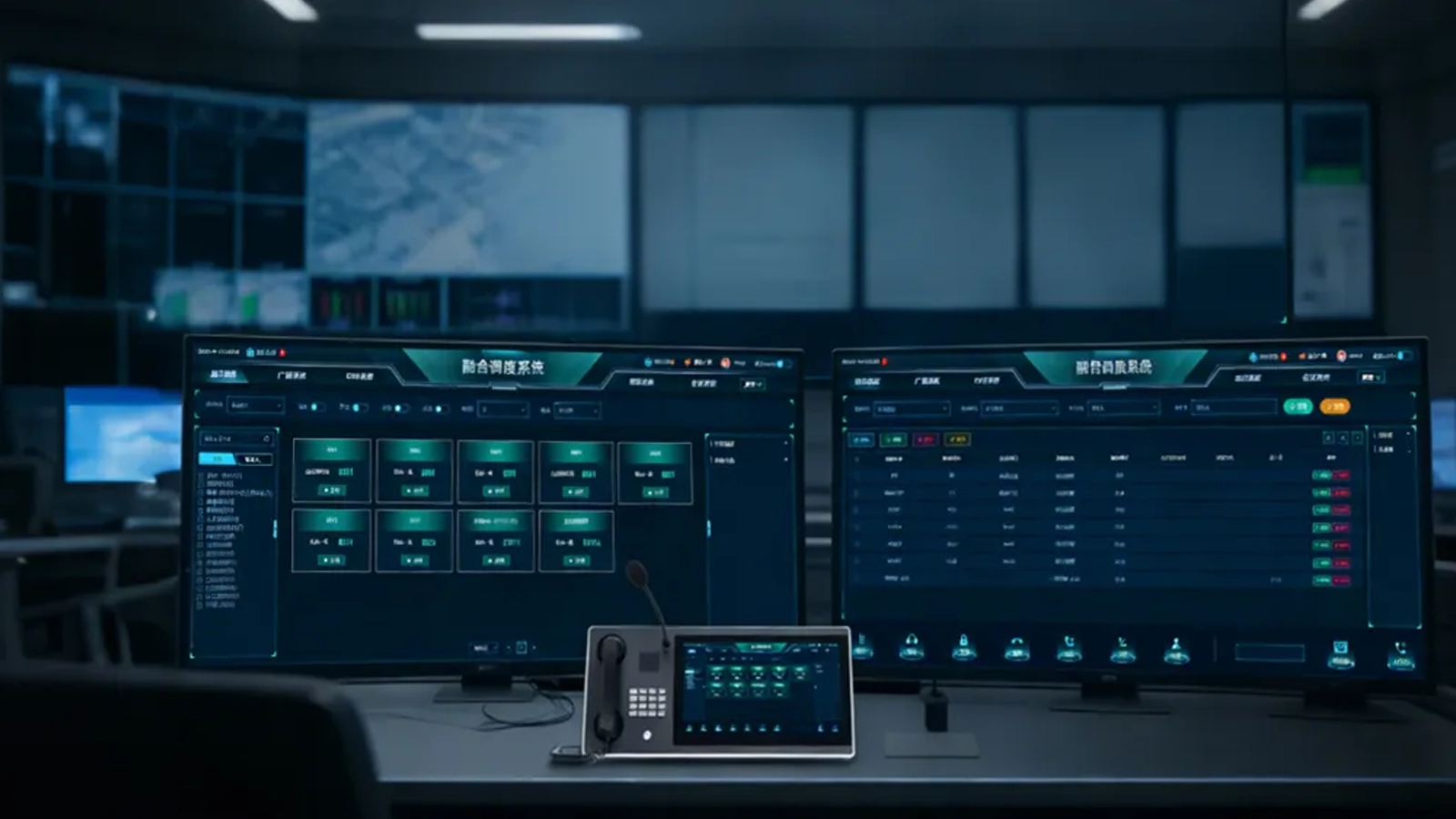
System Integration: Interoperate with other plant systems (fire alarm, industrial CCTV, dispatch telephones, etc.) for unified command and dispatch.
Regulatory Compliance: Meet national and industrial standards (ATEX 2014/34/EU, IEC 60079 series, GB 3836, etc.) and safety specifications to ensure full legal compliance.
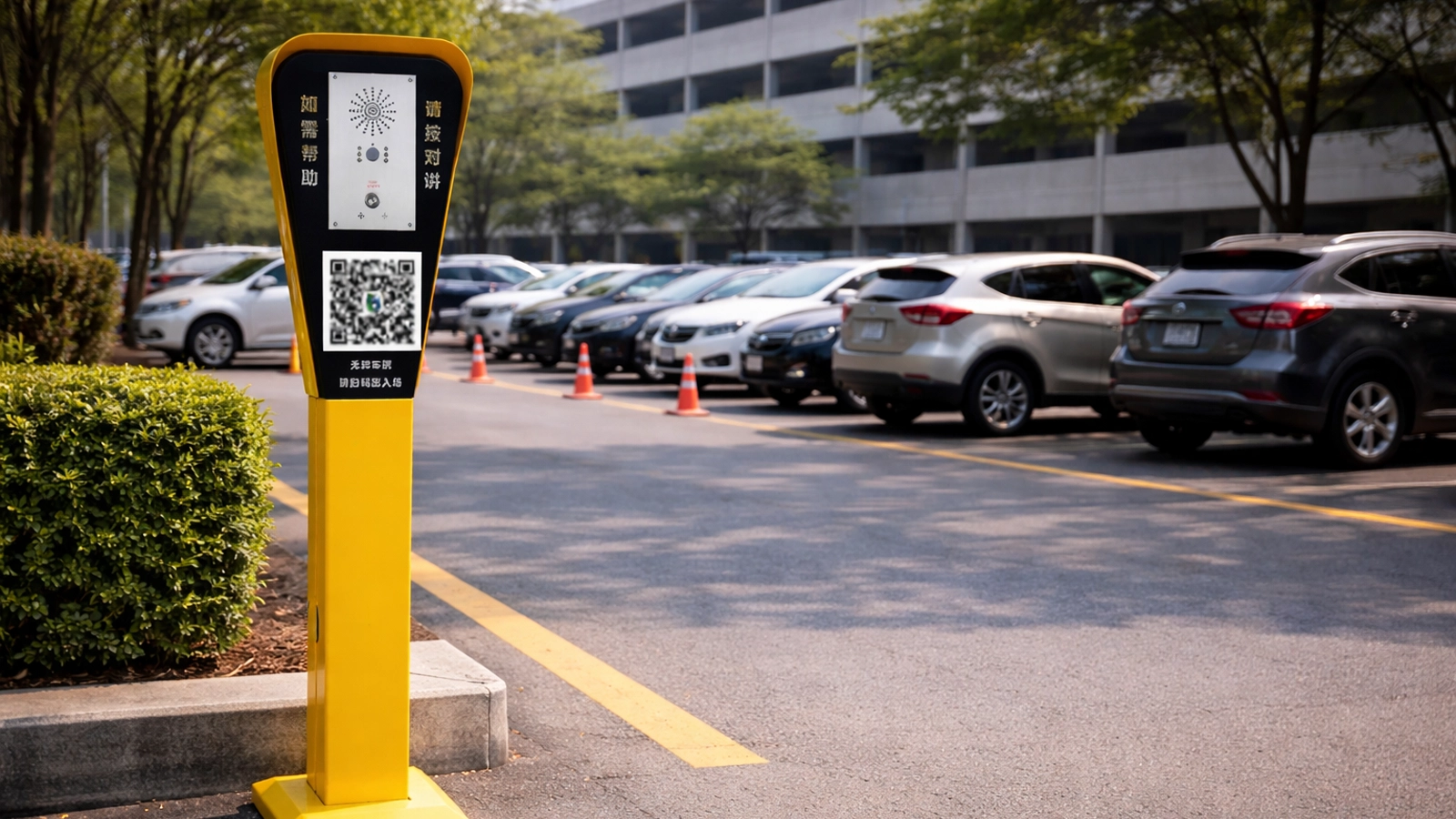
Explosion-proof Intercom Telephones: Fixed on-site stations, mostly hands-free with speaker and microphone, supporting one-touch calls to the control room or other extensions. Housed in a flameproof enclosure (cast aluminum or stainless steel), they reach IP65/IP66 ingress protection, are dustproof & waterproof, and certified ATEX/IECEx for use in Hazardous Zone 1/2. Some models integrate sirens or alarm interfaces for audible & visual alerts during emergencies.
Explosion-proof Loudspeakers: Installed in process zones or open areas for public address and alarms. High-power, directional design ensures clear voice and alarm signals in noisy environments. They also comply with explosion-proof and ingress protection standards and can link with intercom telephones for zoned broadcasting.
Wireless Intercom Access: The system connects digital radios (TETRA, DMR trunking) via a trunking gateway. Field staff with explosion-proof radios can communicate with fixed intercom stations, realizing wired-wireless convergence. The trunking gateway connects to the control host, allowing dispatchers to call any wireless user/group and vice versa.
Wired Network: Intercom terminals and the control host are connected via industrial Ethernet or dedicated intercom bus. IP intercom systems transmit voice packets over Ethernet, using existing plant industrial networks for long-distance and flexible networking. Fiber optic links are used for remote process zones to ensure bandwidth and anti-interference performance. Traditional systems may use 2-wire audio buses, but offer lower scalability and noise immunity compared to IP solutions.
Wireless Access: Supplemental wireless communication is used in large plants or mobile operations, such as wireless Mesh networks or 4G/5G industrial private networks for explosion-proof mobile phones and wireless intercoms. Mesh supports self-organizing and redundant coverage for wide areas; 5G private networks provide high speed, low latency, and massive connections for HD video calls. Satellite communication links connect remote well stations or offshore platforms to the control room for reliable long-distance communication.
Link with fire alarm systems to automatically trigger broadcast notifications upon fire detection;
Integrate with video surveillance to auto-popup camera feeds when an alarm occurs.
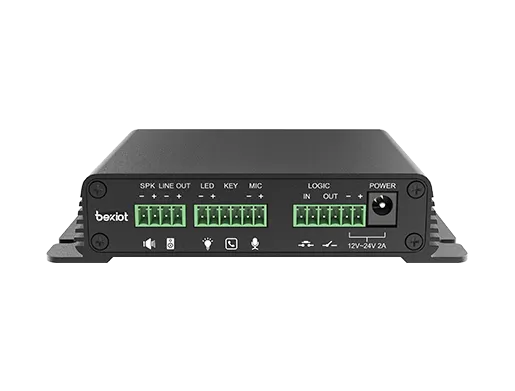
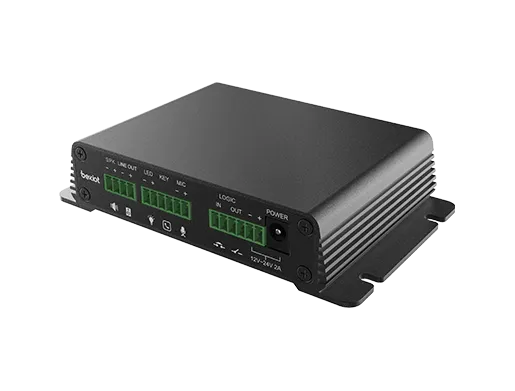
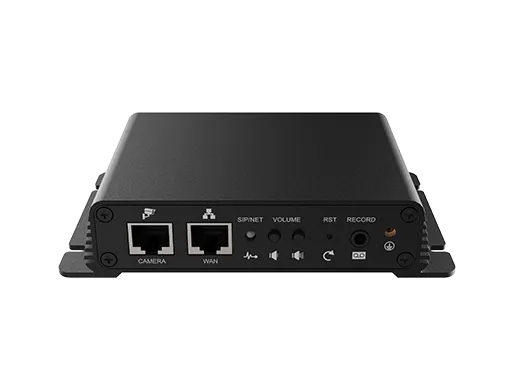
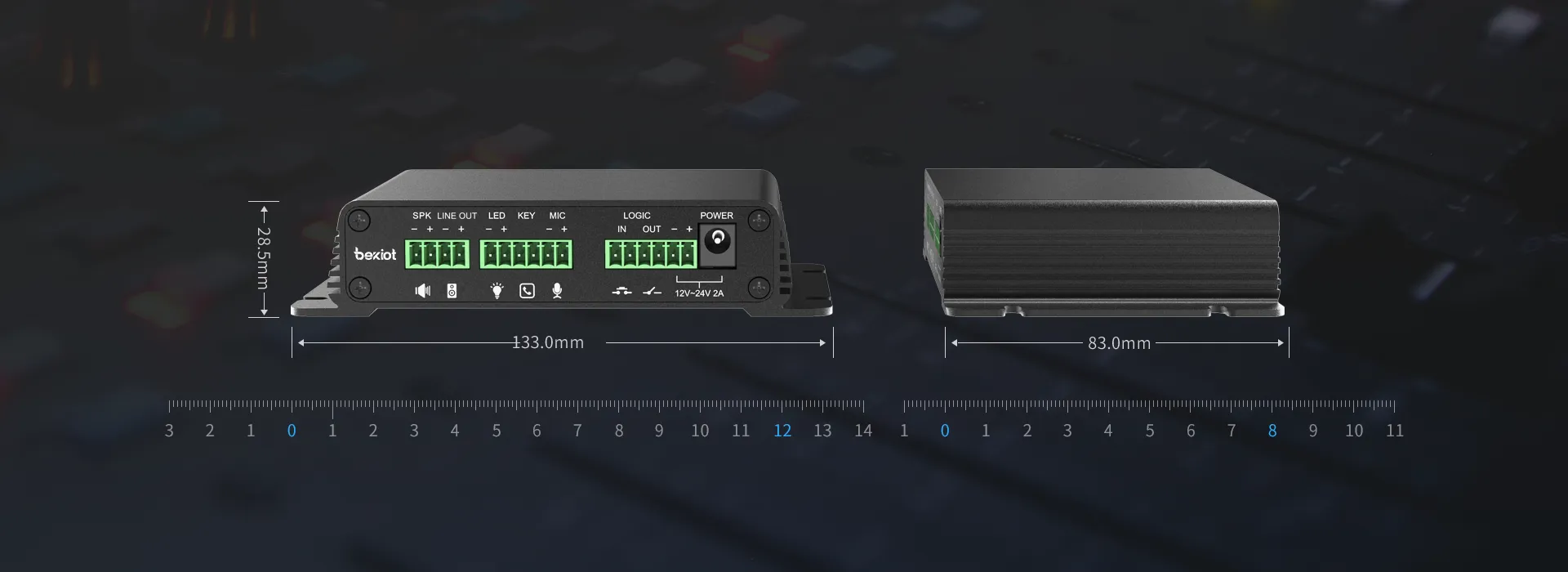
The BK-DAB-PA2S features an industrial aesthetic design philosophy of compactness, refinement, calmness and restraint. It offers simple and flexible installation, can be embedded into other industrial equipment, and is suitable for DIY integration in various customized solutions.
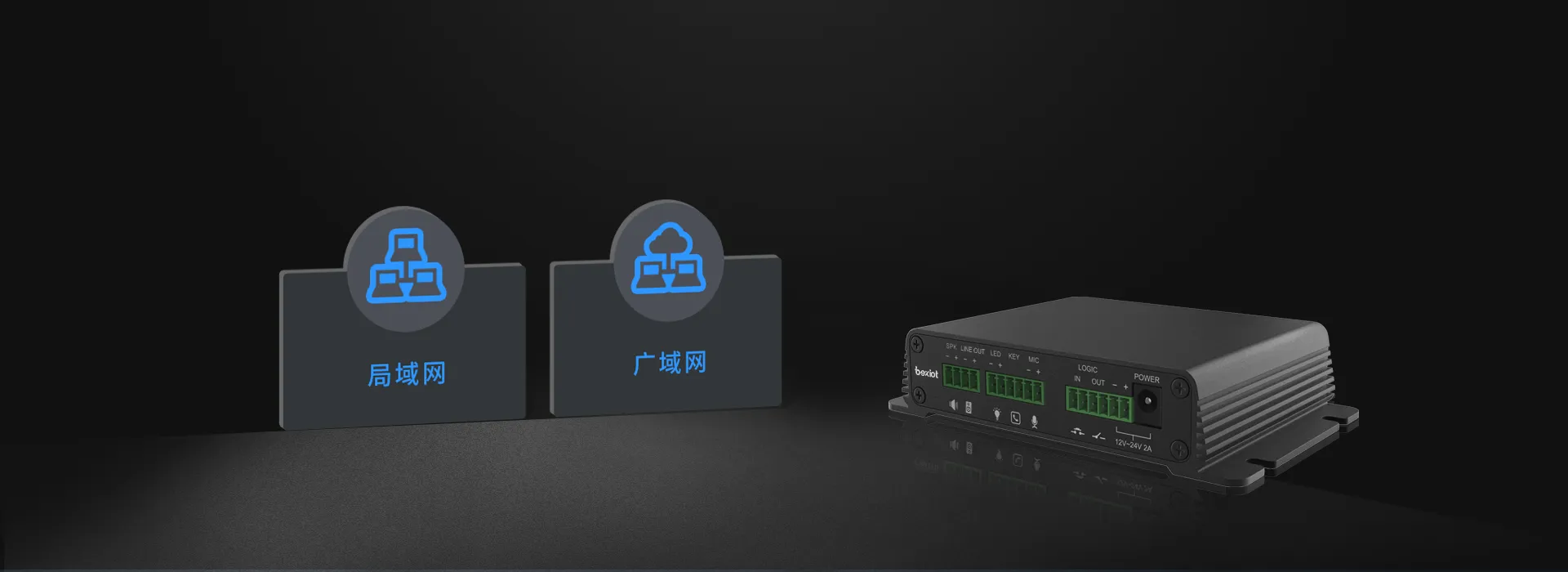
The BECKE BK-DAB-PA2S is based on the standard SIP communication protocol. It can be deployed in both local area networks (LAN) and wide area networks (WAN), enabling a smooth migration from LAN deployment to WAN applications and ensuring the preservation of equipment investment value.
It supports wideband audio decoding including G.722 and Opus, delivering users a superior, crystal-clear carrier-grade audio experience. Sound travels farther and more distinctly, ensuring broadcasts are clearly intelligible even in large public areas.
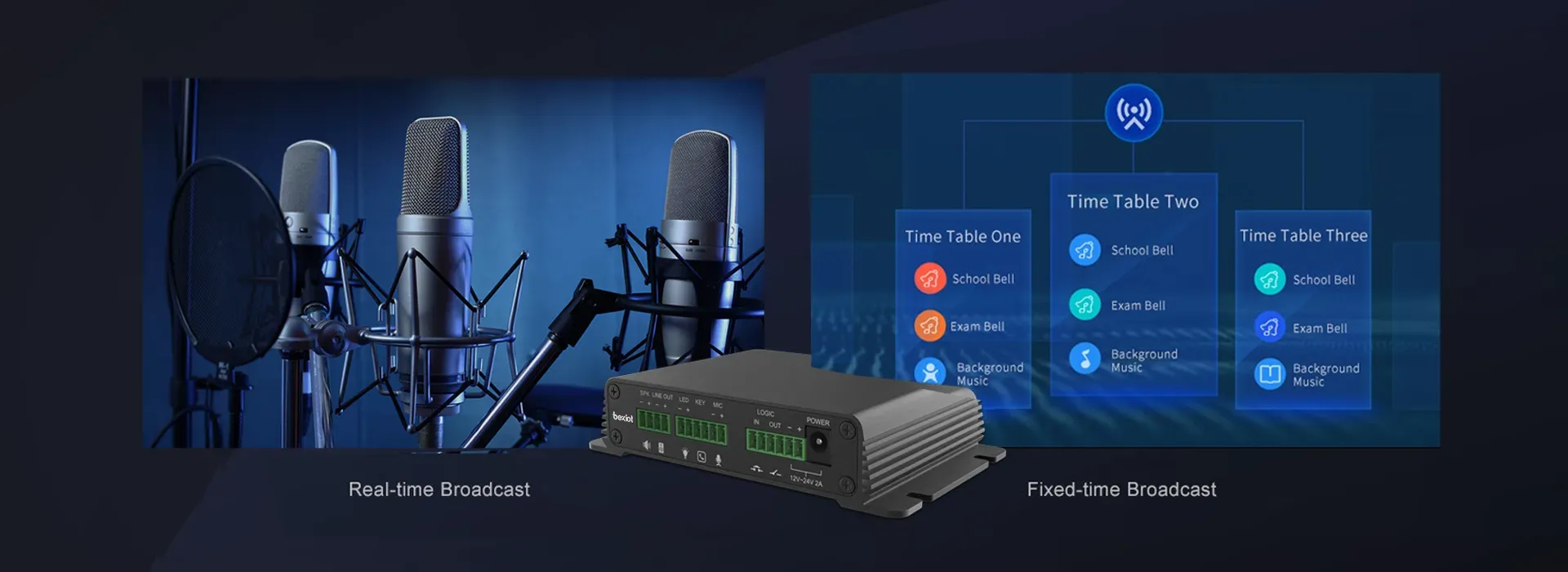
It supports a wide selection of audio input and output interfaces, allowing connection to external devices such as microphones, mobile phones, FM radios, passive/active speakers to realize real-time broadcasting, or MP3 scheduled broadcasting. It is suitable for various broadcasting scenarios including schools, hospitals, industrial parks, airports and other public places.
It supports input and output trigger functions. The BECKE BK-DAB-PA2S can be connected with trigger switches or other peripherals with dry contact signal input to realize signal input and transmission. The signals are then transmitted via the output interfaces to trigger devices such as alarm lights and barrier gates, realizing automatic alarm, gate control and other operations.
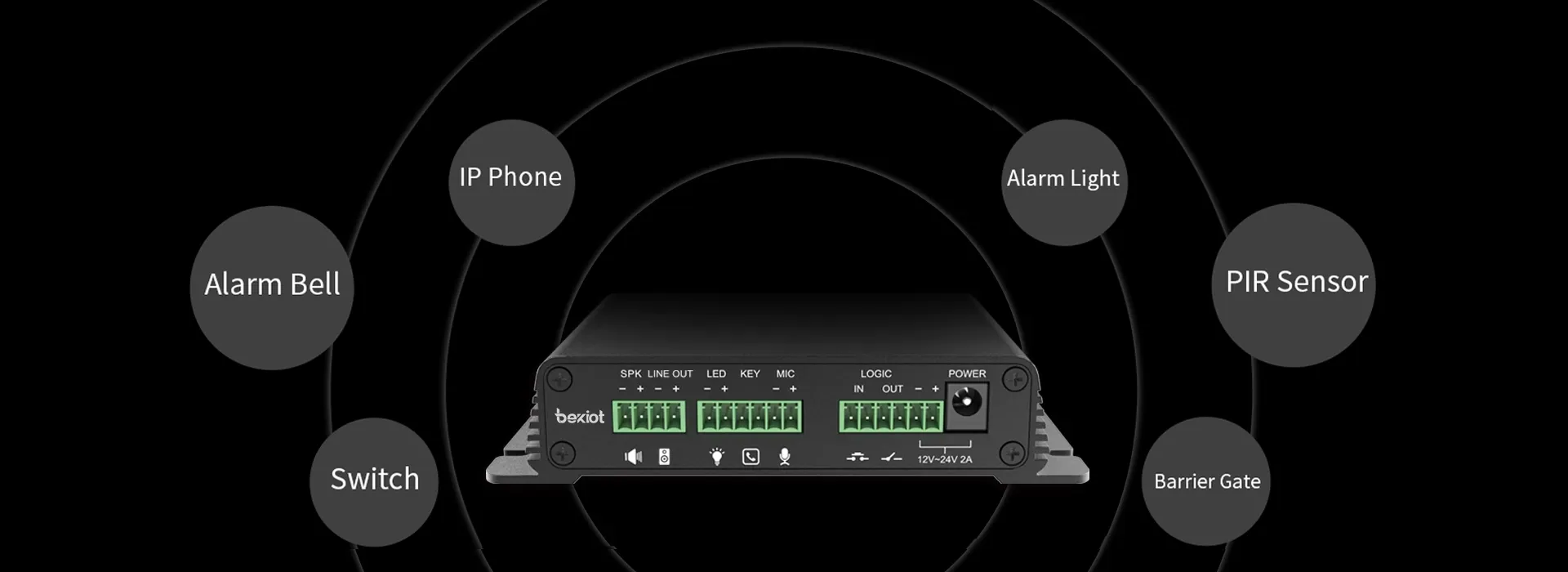
The BECKE BK-DAB-PA2S can be bound to IP cameras via URL, enabling audio and video calls with video phones. It allows viewing of high-definition video streams from cameras and real-time monitoring of the surrounding environment, ensuring the safety of personnel in public areas.
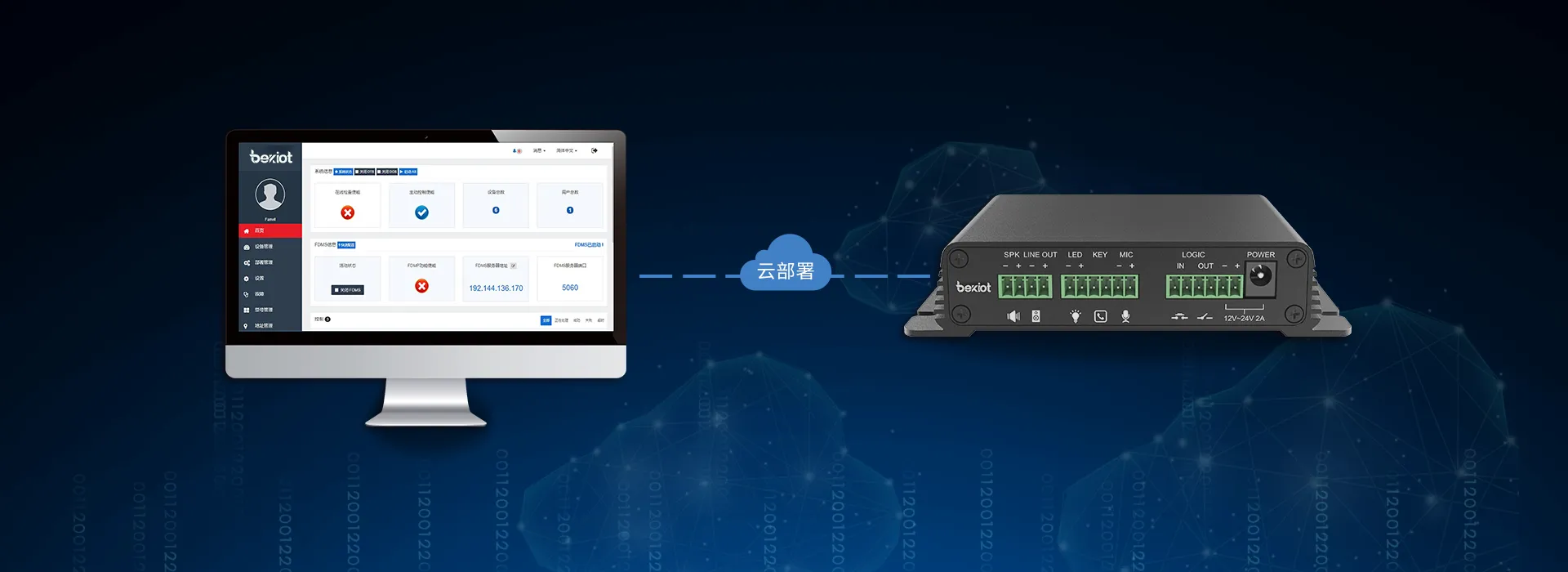
Remote cloud deployment and maintenance can be performed via the BECKE Management Platform, which is simple and reliable, reducing management costs and improving management efficiency.
• Emergency call button interface• Camera NVR recording, standard RJ45 interface• Supports input & output trigger functions• Audio recording output, 3.5 mm standard audio interface, plug-and-play• Line out audio output interface, expandable for external active speakers• Output power adapts according to input voltage• Auto-sensing 10/100 Mbps Ethernet port for high-speed transmission; supports PoE