Howling suppression is an audio control function designed to reduce or prevent the sharp whistling, ringing, or squealing sound that occurs when a microphone and loudspeaker feed sound back into each other. This unwanted sound is commonly called howling, acoustic feedback, or feedback squeal. It often happens in public address systems, intercom systems, conference rooms, paging networks, broadcast terminals, and industrial communication environments where microphones and speakers operate in the same acoustic space.
In simple terms, howling suppression helps keep a sound system stable when voice is amplified. When a microphone captures sound from a nearby speaker and sends it back through the amplifier again, the loop can build rapidly until a loud, uncomfortable tone appears. This can interrupt speech, disturb listeners, damage the user experience, and sometimes force operators to reduce volume below a useful level. Howling suppression detects or controls this feedback behavior so that communication remains clearer and more usable.
For business and industrial communication systems, this function is more than an audio convenience. Clear voice delivery is essential in paging, emergency announcement, dispatch communication, help-point intercoms, control rooms, and site-wide broadcast systems. If feedback appears during a critical announcement or operator call, the message may become difficult to understand. That is why howling suppression is often considered an important feature in professional voice communication design.
What Is Howling Suppression?
Definition and Core Meaning
Howling suppression refers to the use of audio processing, system design, and acoustic control methods to prevent the feedback loop that produces loud howling noise. The system may monitor audio signals, identify frequencies that are becoming unstable, reduce the gain at those frequencies, or adjust the overall audio behavior so that the loop cannot keep growing.
The core meaning is feedback control. In a sound system, amplification is useful only when the voice remains intelligible and stable. If the system amplifies its own output repeatedly, the result is no longer communication but acoustic instability. Howling suppression protects the communication purpose of the system by keeping amplification under control.
In practical projects, this function may be implemented through digital signal processing, automatic gain control, adaptive filters, notch filters, echo control logic, microphone placement, speaker direction, and proper system tuning. The best result usually comes from combining good hardware design with suitable acoustic planning.
Howling suppression is not simply about making sound quieter. It is about keeping amplified voice stable enough to remain useful.
Howling, Feedback, and Why They Happen
Howling occurs when sound from a loudspeaker re-enters a microphone and is amplified again through the same system. If the loop gain is high enough at certain frequencies, those frequencies become stronger each time they circulate. The result is the familiar high-pitched whistle or ringing sound that can suddenly appear during microphone use.
This problem is more likely when microphones are placed too close to speakers, when speaker volume is too high, when reflective surfaces create strong echoes, or when the system is installed in a reverberant environment such as a tunnel, hall, station, workshop, corridor, or large industrial building. Directional behavior also matters. A microphone facing a speaker directly is more likely to pick up amplified sound.
Understanding the cause is important because howling suppression is not only a software feature. It also depends on deployment conditions. A well-tuned system with good equipment placement is usually easier to stabilize than a poorly planned system that asks processing algorithms to solve every acoustic problem alone.
How Howling Suppression Works
Detecting Unstable Feedback Frequencies
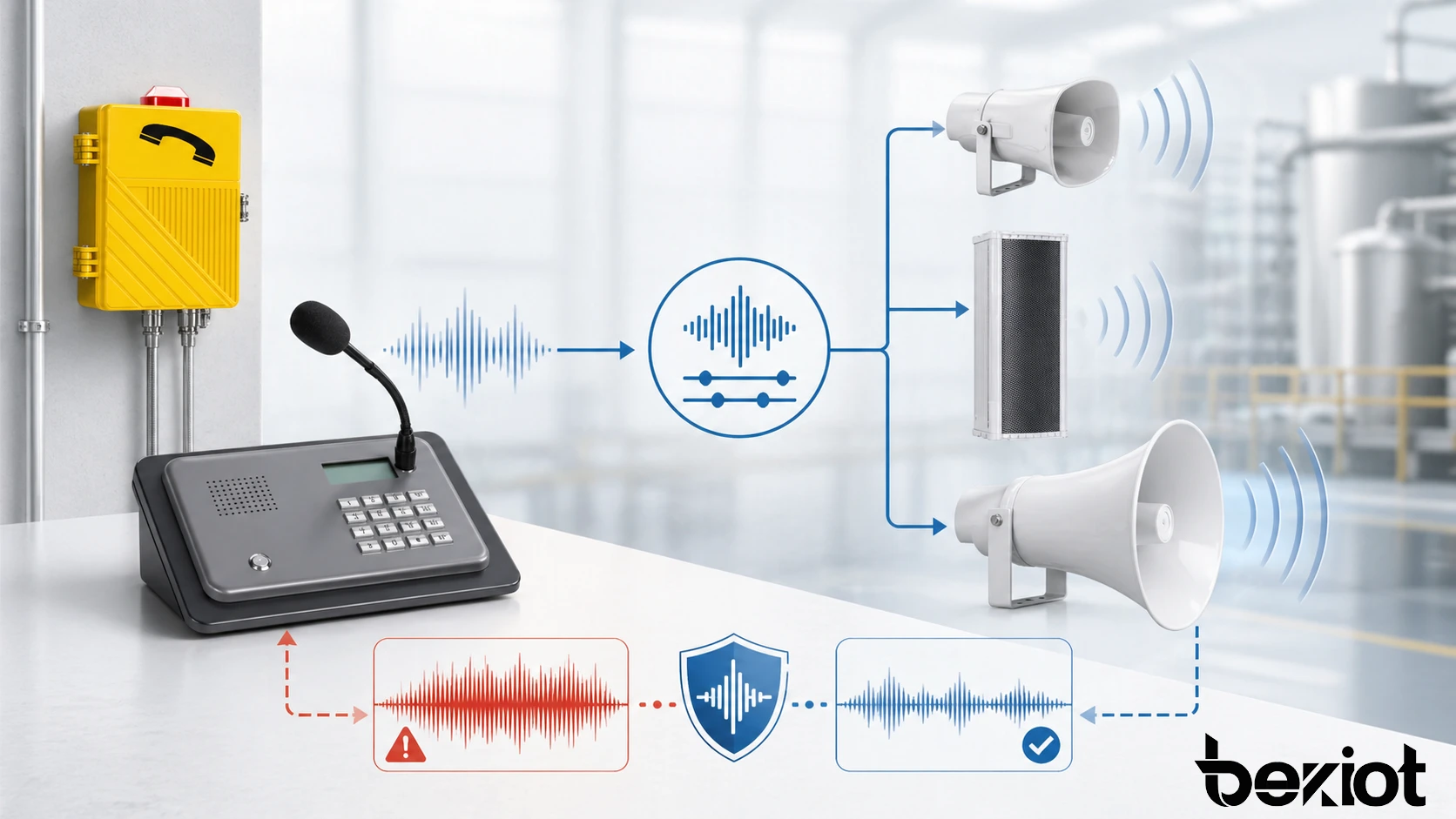
A common approach is to detect frequencies that are rising abnormally and likely to become feedback. In many feedback events, one or several narrow frequency bands begin to grow much faster than the rest of the audio signal. A digital audio processor can monitor the signal and identify these unstable areas before the sound becomes seriously disruptive.
Once the system identifies a problem frequency, it may apply targeted reduction. This can be done with a notch filter that reduces only a narrow band, or with adaptive filtering that changes as the acoustic condition changes. The goal is to reduce feedback without making the whole voice signal weak or unnatural.
This is why good howling suppression is usually selective. It should not simply cut all volume every time the microphone becomes active. It should control the feedback risk while preserving as much speech clarity as possible.
Controlling Gain, Echo, and Acoustic Loop Behavior
Another important part of howling suppression is gain control. If the microphone input, amplifier output, or speaker volume is too high for the acoustic environment, feedback becomes easier to trigger. Automatic gain control can help keep levels within a safer operating range, especially when different users speak at different distances from the microphone.
Echo and reverberation control may also help. In public address and intercom systems, reflected sound can return to the microphone later and strengthen the feedback loop. Acoustic echo cancellation and careful signal processing can reduce this effect, although the exact method depends on the device and system architecture.
In practice, howling suppression works best when the system manages the full loop: microphone pickup, processing gain, speaker output, room acoustics, and the feedback path between them.
Effective howling suppression treats feedback as a loop problem, not just as a loudness problem.
Main Features of Howling Suppression
Automatic Feedback Detection
One of the most important features is automatic feedback detection. The system continuously monitors the audio path and identifies conditions that may produce howling. This is especially useful in systems where operators cannot manually adjust every microphone and speaker in real time.
In a live paging or intercom environment, feedback can appear suddenly. A user may stand closer to a speaker than expected, a door may open and change reflections, or the background sound level may cause the operator to raise the volume. Automatic detection helps the system react faster than manual adjustment alone.
This feature improves usability because non-specialist users can operate the communication system with less risk of causing sudden feedback noise.
Selective Suppression With Speech Preservation
Another key feature is selective suppression. A good system should reduce unstable feedback components while keeping the spoken message clear. If the suppression is too aggressive, the voice may sound thin, dull, or unnatural. If it is too weak, the howling may remain noticeable and disruptive.
The best balance is especially important in voice communication systems because intelligibility is the primary goal. The listener must understand the announcement, call, or instruction. Therefore, howling suppression should protect speech content rather than simply silence the system whenever feedback begins.
In professional deployment, this speech-preserving behavior is what separates practical feedback control from crude volume reduction.
Technical Characteristics in Communication Systems
Adaptive Audio Processing
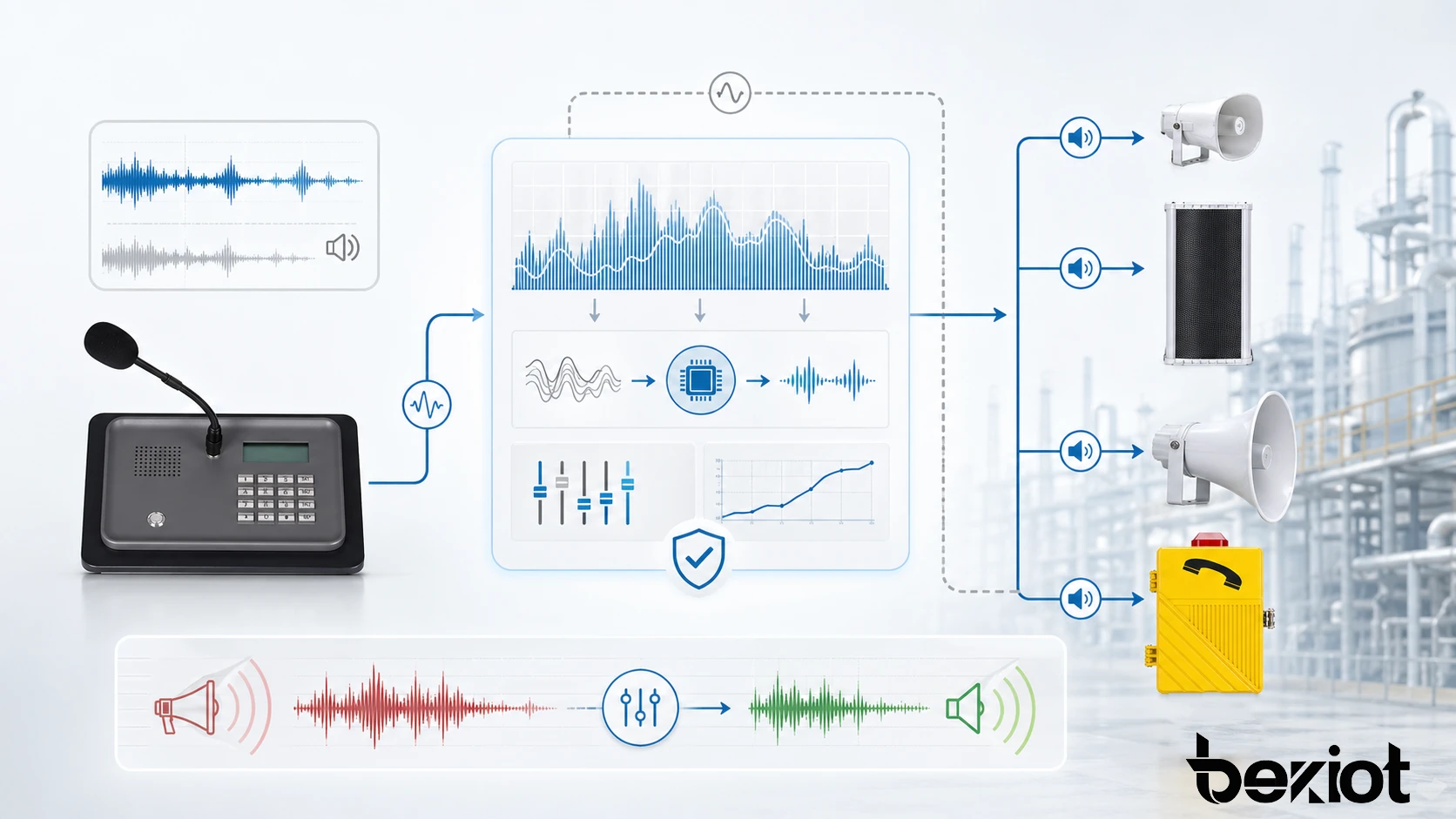
Many modern systems use adaptive audio processing to respond to changing acoustic conditions. This is important because real environments are not fixed. People move, doors open, background noise changes, and microphones may be used at different distances. A fixed filter may solve one feedback point but fail when conditions change.
Adaptive processing allows the system to respond more dynamically. It can adjust suppression behavior based on the current signal rather than relying only on static configuration. This is especially useful in multipurpose halls, control rooms, workshops, transport areas, and outdoor communication points where acoustic conditions may vary throughout the day.
In practical terms, adaptive behavior helps the system remain stable across more real-world situations.
Compatibility With Paging, Intercom, and Dispatch Audio
Howling suppression is particularly valuable when a communication system combines microphones, speakers, paging zones, intercom terminals, and control-room operation. These systems often require live voice amplification and two-way communication, which creates more opportunities for feedback than simple one-way playback.
In SIP-based paging or IP intercom environments, feedback control may be built into endpoints, audio gateways, dispatch consoles, or amplifier systems depending on the architecture. It may also interact with echo cancellation, noise reduction, priority paging, and voice activity detection.
This compatibility matters because howling suppression should support the communication workflow rather than interfere with it. The system must still allow quick announcements, emergency calls, intercom response, and dispatcher voice control.
Benefits of Howling Suppression
Clearer Voice Communication
The most direct benefit is clearer voice communication. When feedback is controlled, announcements, intercom calls, and operator instructions are easier to understand. This is especially important in environments where listeners may already face background noise, distance, protective equipment, or difficult acoustics.
Clearer communication improves daily operations and emergency response. A paging message that is interrupted by feedback may require repetition or may be misunderstood. A help-point intercom call affected by howling may make it harder for the operator to understand the user. Suppression reduces these risks.
In practical terms, the function improves not only sound comfort but also message reliability.
Higher System Stability at Useful Volume Levels
Another major benefit is that the system can often operate at more useful volume levels without becoming unstable. Without suppression, installers or operators may lower volume too much to avoid feedback. This can solve the howling problem but create a new problem: the message becomes too quiet to be heard clearly.
Howling suppression helps maintain a better balance between loudness and stability. The system can deliver speech across the intended area while reducing the chance of sudden squeal or ringing. This is especially valuable in paging, broadcast, and industrial communication systems where volume must be high enough to overcome distance or ambient noise.
In this sense, howling suppression helps preserve practical coverage, not just pleasant audio.
The real advantage of howling suppression is that it helps a system stay loud enough to be useful without becoming loud in the wrong way.
Applications of Howling Suppression
Public Address and Paging Systems
Public address and paging systems are among the most common applications. These systems often use microphones to broadcast speech through multiple speakers or zones. If a microphone is used near a speaker, or if the room has strong reflections, feedback can occur quickly.
Howling suppression helps keep announcements stable in schools, offices, transport stations, shopping areas, factories, warehouses, parking facilities, and public buildings. It is especially useful when announcements are made by different users who may not understand microphone technique or acoustic limitations.
In these environments, the function helps protect both clarity and confidence. Users are more willing to make announcements when the system does not suddenly produce embarrassing or painful feedback noise.
Intercom, Help Point, and Emergency Communication Systems
Intercom and help point systems also benefit strongly from howling suppression because they often combine speaker output and microphone pickup in one compact terminal. When a person speaks close to the device and the operator’s voice is played back through the terminal speaker, acoustic feedback can become a risk if the design is not controlled.
In emergency communication systems, feedback is especially harmful because the user may be stressed and the operator needs clear voice information. A stable audio path helps both sides communicate more effectively. The same applies to gate intercoms, elevator emergency phones, roadside help points, tunnel call stations, and campus assistance terminals.
In practical deployment, howling suppression can therefore improve the quality of both routine service calls and urgent voice interactions.
Howling Suppression in Industrial and SIP Communication Projects
Why It Matters in Harsh and Noisy Sites
Industrial and infrastructure sites often create difficult acoustic conditions. Workshops, tunnels, substations, warehouses, transport platforms, utility corridors, and plant areas may include strong background noise, reflective walls, long reverberation, and wide coverage needs. These conditions can increase the risk of feedback while also requiring higher output volume.
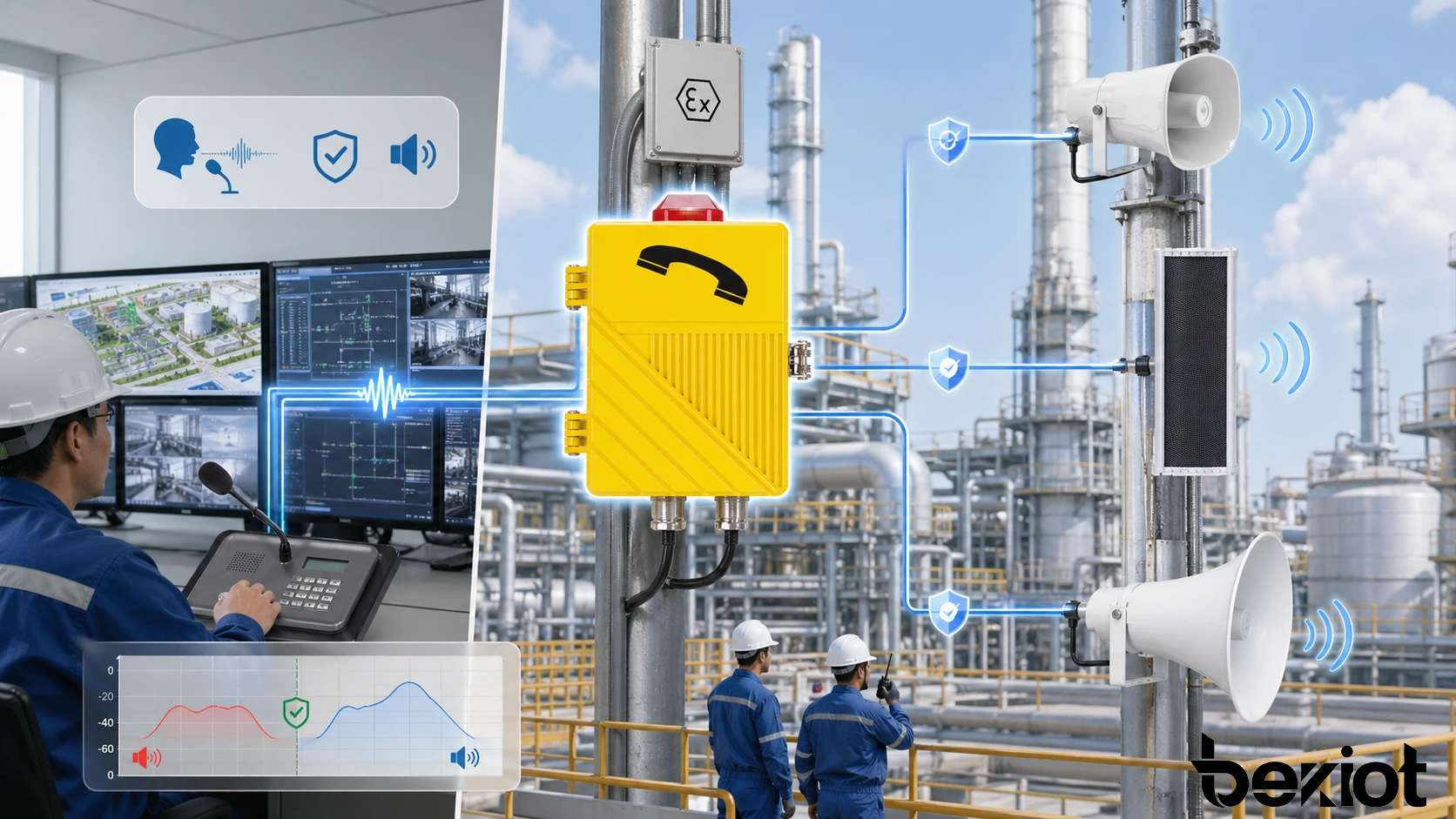
In such environments, howling suppression becomes an important part of the audio design. Operators may need to broadcast instructions from a control room, workers may use intercom terminals near loudspeakers, and emergency messages may need to remain intelligible across a noisy area. Feedback control helps the system remain usable when acoustic conditions are not ideal.
This is where the feature becomes closely connected to communication reliability. The goal is not studio-quality audio. The goal is stable and understandable voice under real site pressure.
Industry classic
In the Becke Telcom Industrial Communication System project, howling suppression becomes relevant whenever field voice terminals, SIP intercoms, paging microphones, horn speakers, dispatch consoles, or emergency communication points are used together in the same operational environment. These deployments often combine two-way speaking and amplified output, which is exactly where feedback control matters most.
For example, a tunnel help point may need clear two-way voice with the control room while nearby speakers deliver broadcast messages. A factory paging system may allow operators to speak from a dispatch console to multiple zones. A campus or transport help station may place microphones and speakers in compact outdoor terminals. In these cases, Becke Telcom solutions can benefit from careful acoustic design and howling suppression logic that protects the clarity of the communication chain.
The value is not simply that a product has an audio-processing feature. The value is that the feature supports the real deployment goal: keeping the message intelligible when voice, speakers, microphones, and site acoustics meet in the field.
Deployment Tips for Better Howling Suppression
Plan Microphone and Speaker Placement Carefully
One of the most important deployment practices is proper microphone and speaker placement. Even the best suppression algorithm works better when the physical layout is reasonable. Microphones should not point directly at loudspeakers, speakers should be aimed toward the listening area rather than back toward microphones, and devices should be placed with acoustic reflections in mind.
In control rooms, intercom stations, paging desks, and outdoor terminals, small placement differences can change feedback behavior significantly. Installation teams should test the system at realistic volume levels, not only at low test volume. They should also consider how users will stand near the device during real operation.
Good placement reduces the burden on signal processing and improves the natural stability of the system.
Tune Gain, Zones, and Audio Priorities
Gain tuning is another essential practice. If microphone gain and speaker output are set too high, howling becomes more likely. If they are too low, speech may become difficult to hear. The goal is to find the practical operating range where speech remains clear without pushing the acoustic loop toward instability.
Paging zones and audio priorities also matter. If a microphone in one area activates speakers too close to that same microphone, feedback risk increases. In some systems, zone design can prevent the microphone location from being included in the same high-volume output group. Priority logic can also help control which audio source is active at a given time.
These tuning practices help howling suppression work as part of the full audio architecture rather than as a last-minute corrective feature.
The best feedback control combines smart processing with smart deployment. Software alone should not be forced to compensate for poor acoustic planning.
Maintenance and Testing Recommendations
Test Under Real Operating Conditions
Howling suppression should be tested under real operating conditions. A system may seem stable during quiet installation testing, but feedback may appear later when background noise rises, users speak differently, doors are open, or multiple audio zones are active. Realistic testing helps reveal these practical risks earlier.
Testing should include common use cases such as live paging, intercom calls, emergency broadcast, microphone handover, operator announcements, and high-volume zone activation. It is also useful to test different user positions and speaking distances because feedback behavior can change when the microphone is moved or used incorrectly.
In professional communication systems, the goal is not merely to pass a basic sound check. The goal is to confirm that the system remains stable in the way people will actually use it.
Review Feedback Events and User Reports
Maintenance teams should pay attention to user reports of ringing, whistling, sudden squeal, low speech clarity, or operators lowering volume to avoid feedback. These signs may indicate that howling suppression settings, gain structure, speaker direction, or room acoustics need review.
In larger deployments, repeated feedback events may occur only in certain zones or specific device locations. Identifying these patterns helps teams correct the root cause rather than applying broad changes that may reduce quality everywhere.
Regular review keeps the system stable as site conditions, equipment positions, and usage patterns change over time.
Conclusion
Howling suppression is a voice communication feature that reduces acoustic feedback between microphones and loudspeakers. It helps prevent the sharp howling or whistling noise that can interrupt paging, intercom, dispatch, emergency broadcast, and public address systems. Its main value is maintaining clear and stable voice at practical operating volumes.
Its key features include automatic feedback detection, selective suppression, adaptive audio processing, gain control, and compatibility with paging and intercom workflows. Its applications include public address systems, SIP intercoms, emergency help points, industrial paging, control-room dispatch, transport facilities, and large public or industrial sites.
In Becke Telcom-style communication deployments, the feature fits naturally where field terminals, microphones, speakers, and dispatch platforms need to work together in demanding acoustic environments. When combined with good placement, proper tuning, and real-condition testing, howling suppression helps ensure that amplified voice remains understandable when communication matters most.
FAQ
What is howling suppression in simple terms?
In simple terms, howling suppression is a function that reduces the loud whistling or ringing sound caused when a microphone picks up sound from a speaker and sends it back through the system again.
It helps keep amplified voice clear and stable.
Where is howling suppression commonly used?
It is commonly used in public address systems, paging systems, intercom terminals, conference rooms, emergency help points, dispatch consoles, horn speaker systems, and industrial communication deployments.
It is especially useful where microphones and loudspeakers operate close to each other.
Can howling suppression replace good installation design?
No. Howling suppression helps control feedback, but it should not replace proper microphone placement, speaker direction, gain tuning, and acoustic planning.
The best results usually come from combining good system design with suitable feedback suppression technology.