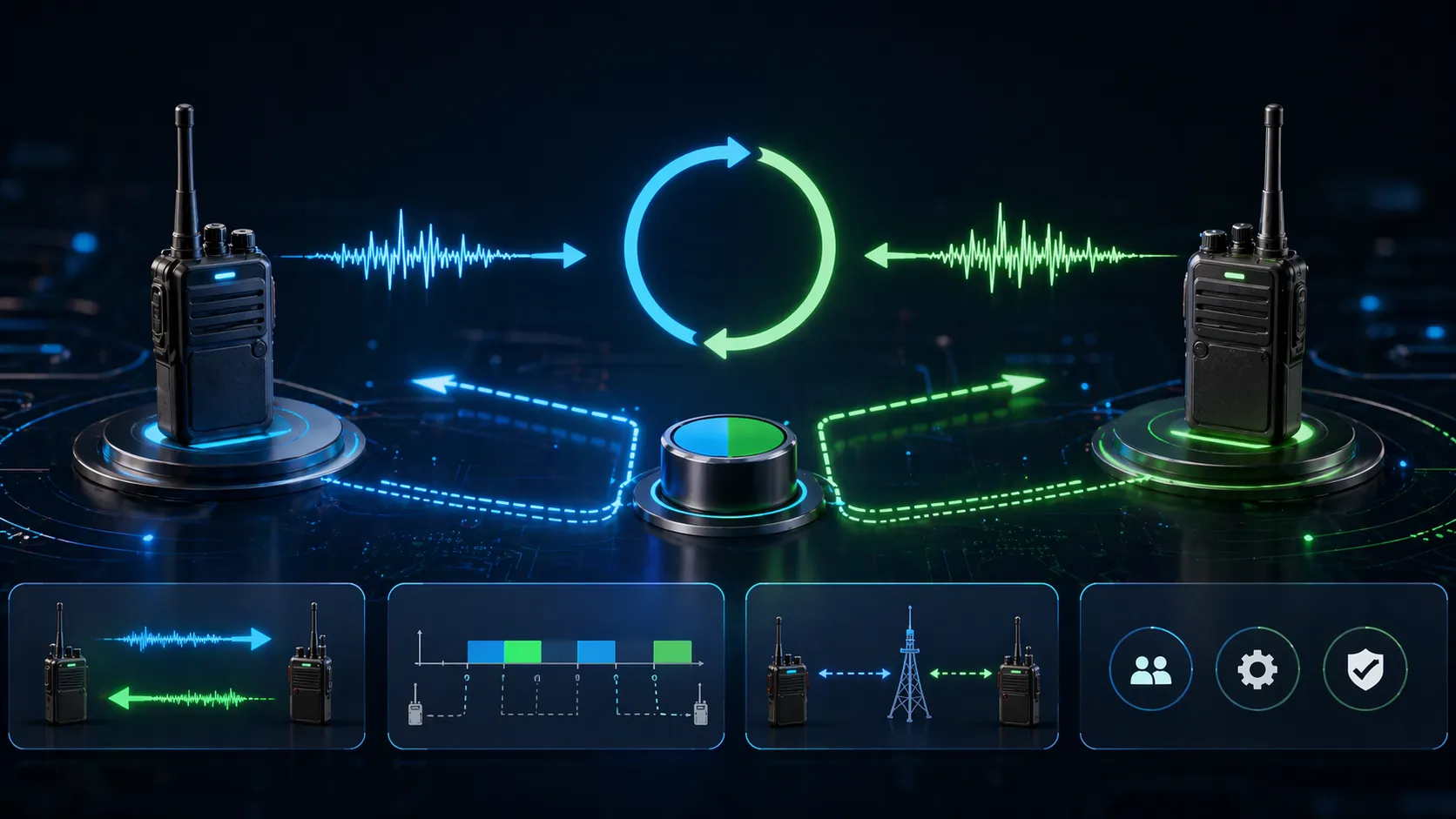
Duplex mode switching is the process by which a communication system changes from one duplex operating state to another in order to match channel conditions, device capabilities, service requirements, or workflow needs. In communication engineering, the term is commonly understood in two closely related ways. In one sense, it refers to switching between full-duplex and half-duplex operation. In another sense, especially in shared or time-based communication systems, it refers to switching the active communication direction between transmit and receive states on a channel that cannot support simultaneous transmission both ways.
This makes duplex mode switching an important concept in radio communications, intercom systems, push-to-talk networks, industrial control links, wireless systems, and certain digital interface or link-layer environments. Some systems operate permanently in one duplex mode, but others perform better when they can adapt. A platform may use half duplex for controlled field communication, full duplex for natural conversation, or time-based switching for shared-medium efficiency. The ability to change modes allows the system to align communication behavior with real operating needs instead of remaining locked to a single pattern.
In practical terms, duplex mode switching is about flexibility. It helps communication systems decide how traffic should move, when transmission rights should change, and whether simultaneous talk paths are necessary or efficient. For engineers, operators, and integrators, understanding this concept helps explain why some communication systems feel like push-to-talk radios, others feel like ordinary phone calls, and some can move between those behaviors depending on the design.
What Is Duplex Mode Switching?
Definition and Core Meaning
Duplex mode switching means changing the operating mode of a communication link or communication device so that the direction or simultaneity of transmission matches current requirements. The switch may happen between full-duplex and half-duplex operation, or between active transmit and active receive periods in systems that share one communication path over time. In all cases, the central idea is the same: the system does not remain fixed in one communication behavior if another mode offers better suitability for the moment.
The core meaning of the concept is adaptive direction control. Communication channels and devices often support more than one way of handling bidirectional traffic. Some situations benefit from simultaneous speech and listening. Others benefit from controlled turn-taking. Some digital interfaces use switching logic to change how lanes or paths are used depending on performance or design conditions. Duplex mode switching describes that transition from one valid communication mode to another.
This is why the term should not be treated as only one narrow feature. It can describe user-visible communication behavior in voice systems, and it can also describe lower-level channel or link behavior inside technical communication platforms.
Duplex mode switching is not just a technical toggle. It is a way for a communication system to use the most suitable transmission behavior for the task at hand.
Why the Concept Matters
The concept matters because communication systems do not all face the same constraints. Some are built for natural real-time conversation. Others are built for shared spectrum, controlled talk paths, rugged field operation, or channel efficiency. In those environments, one fixed duplex model may not always be the best choice.
A system that can switch modes can adapt to real operating demands more effectively. It may use full duplex when clear simultaneous conversation is needed, then move to half duplex when priority control, spectrum sharing, or structured field messaging becomes more important. In time-based communication paths, it may alternate transmit and receive behavior according to slot logic or link control rules rather than maintaining simultaneous bidirectional activity.
This flexibility is what makes duplex mode switching relevant across so many communication domains, from radios and intercoms to digital interfaces and integrated IP communication platforms.
How Duplex Mode Switching Works
Mode Detection, Control Logic, and Transition
Duplex mode switching begins with control logic that determines whether the current operating mode is still appropriate. That logic may rely on device configuration, user action, service policy, link capability, channel condition, or time-based scheduling rules. Once the system decides that a different duplex behavior is needed, it applies a transition so the link or device operates according to the new mode.
In some systems, the switch is explicit and visible. A push-to-talk platform may behave in a half-duplex style because users take turns controlling the channel. A communication endpoint may also support a more conversational full-duplex mode in other scenarios. In other systems, the switching happens inside the link itself. The user may not notice the change directly, but the underlying channel changes how it handles transmission direction or simultaneity.
The transition must be managed carefully because communication quality depends on timing, coordination, and state awareness. If the switch is poorly controlled, the result may be clipped audio, lost packets, delay, or unstable interaction. Good duplex mode switching therefore depends on precise state control.
Manual Switching and Automatic Switching
Duplex mode switching can be manual or automatic. Manual switching happens when a user or administrator actively chooses how the system should behave. For example, a device or application may be configured for half-duplex field operation in one deployment and full-duplex calling in another. In user-driven environments, pressing a talk key can also be seen as an operational trigger for directional control in a shared half-duplex path.
Automatic switching happens when the system decides on its own. It may change modes based on time slots, protocol rules, traffic direction, device negotiation, or the need to reuse a channel differently at different moments. This is common in environments where communication behavior must respond quickly and consistently without waiting for manual intervention.
In well-designed systems, automatic switching reduces user burden while still preserving communication reliability. The user focuses on the task, while the system handles the mode transition needed to support it.
The value of duplex mode switching depends not only on switching itself, but on switching at the right time and for the right reason.
Main Types of Duplex Mode Switching
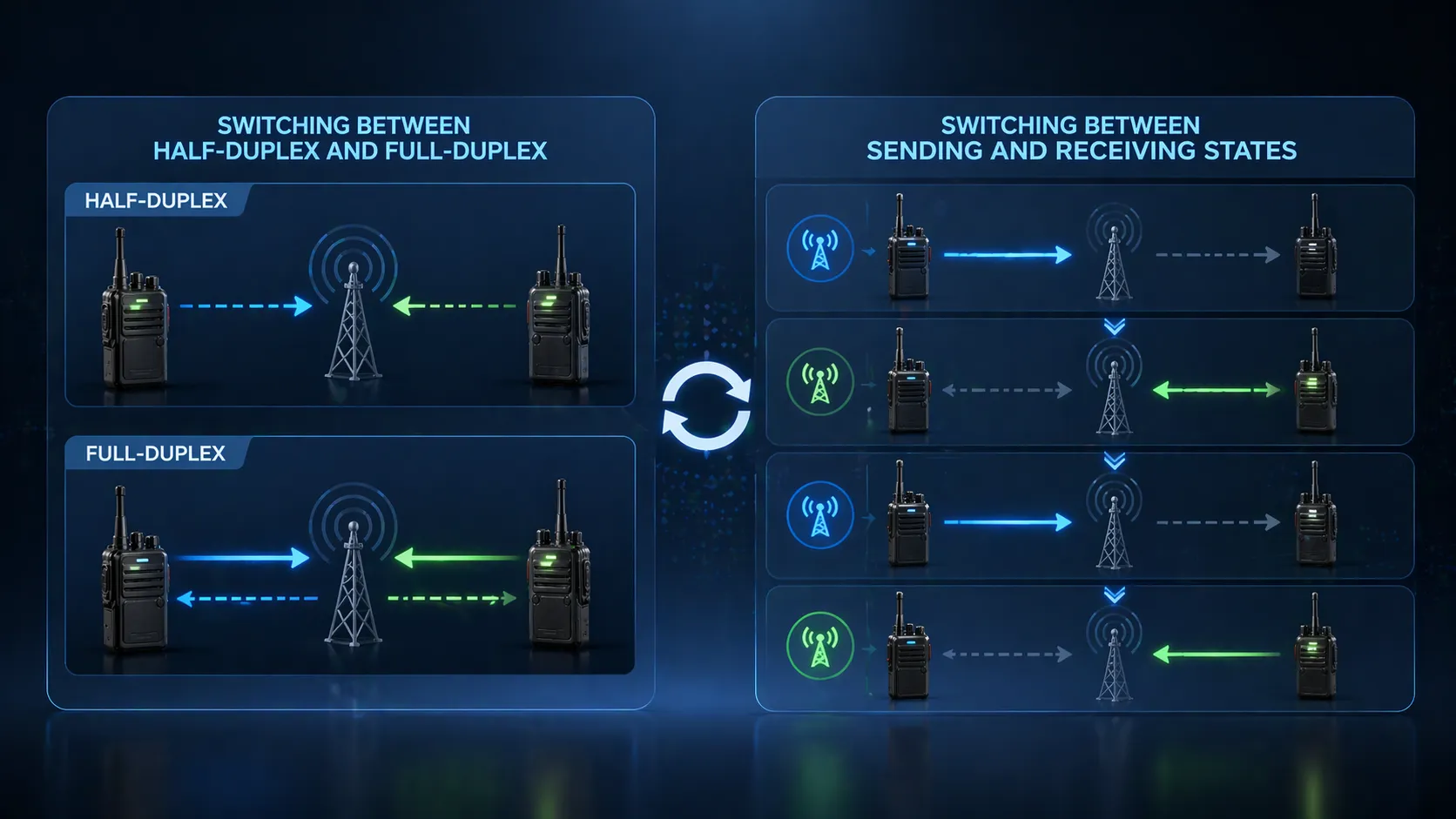
Switching Between Half Duplex and Full Duplex
One major form of duplex mode switching is the ability to move between half-duplex and full-duplex operation. Half duplex allows communication in both directions, but not simultaneously. Full duplex allows both sides to transmit and receive at the same time. A system that supports switching between these modes can adapt to different communication tasks or infrastructure constraints.
In practical environments, this may happen in hybrid voice systems, intercom platforms, specialized communication terminals, or digital interface designs where performance and direction control can be adjusted. Full duplex may be preferred when users need natural conversation and immediate interruption capability. Half duplex may be preferred when the channel is shared, when structured turn-taking is more useful, or when transmission control needs to be simpler and more disciplined.
This form of switching is especially important in systems that bridge different operational styles, such as dispatch-driven communication on one side and conversational communication on the other.
Switching Between Transmit and Receive States
Another major form of duplex mode switching is directional switching between transmit and receive states on a shared channel. This is especially common in time-based or shared-medium systems where the same communication resource is used alternately rather than simultaneously. In such systems, the channel or endpoint changes state according to slot timing, protocol control, or scheduling logic.
Here, the emphasis is less on choosing between half duplex and full duplex as overall categories, and more on managing the moments when the device or channel becomes a transmitter or a receiver. This kind of switching is still a duplex-related behavior because it controls how bidirectional communication occurs over a shared path.
The practical importance is high because the quality of the entire link can depend on how accurately and efficiently those transmit-receive transitions are handled.
Main Features of Duplex Mode Switching
Adaptive Communication Behavior
One of the strongest features of duplex mode switching is adaptability. Instead of locking a system into one communication pattern, switching logic allows the platform to respond to different operational needs. This is useful where the same infrastructure may support more than one workflow, such as conversation, dispatch, command delivery, intercom response, or shared-channel data exchange.
Adaptive behavior is especially valuable in mixed environments. A communication system may need to support a control room, field teams, gate stations, help points, and mobile staff, all of whom may use the channel differently. Duplex mode switching helps the system align channel behavior with the communication task rather than forcing every use case into one rigid pattern.
This feature is part of what makes duplex mode switching relevant in modern integrated communication platforms instead of only in traditional radio or interface engineering.
Channel Efficiency and Operational Control
Another important feature is channel efficiency. In some systems, especially wireless or shared-medium systems, keeping both directions active simultaneously is not always the best use of the available resource. Switching between directional states or duplex modes can help use the channel more deliberately and reduce unnecessary complexity.
Operational control is closely related. In field and mission-oriented environments, controlled turn-taking can improve message discipline and prevent confusion. In technical link environments, precise switching can help match device capabilities and transmission timing. In both cases, duplex mode switching supports a more intentional use of the communication path.
This combination of efficiency and control is one reason the concept appears across both voice-oriented and data-oriented communication systems.
Benefits of Duplex Mode Switching
Better Fit for Mixed Communication Scenarios
One major benefit of duplex mode switching is that it lets one system support different communication scenarios more effectively. A platform may need to serve both conversational and operational messaging roles, or it may need to work across devices that do not all behave the same way. Switching helps the communication model adjust instead of forcing a poor fit.
This is important in practical deployments where offices, industrial zones, control rooms, outdoor staff, and field help points may all connect into a broader communication environment. Some interactions need natural back-and-forth speech. Others need one-speaker-at-a-time control. A system with duplex mode switching can better support both.
The result is not just technical flexibility, but better operational usability across varied communication contexts.
Improved Resource Use and Response Discipline
Duplex mode switching can also improve how communication resources are used. Shared channels, time-based paths, and multi-role endpoints often need controlled direction handling so that the medium is not wasted or overloaded. Switching allows the system to apply the appropriate behavior rather than using one method inefficiently everywhere.
Response discipline can improve as well. In operational systems, the ability to enforce or support structured message exchange can reduce overlap and confusion. In technical link environments, accurate mode switching can improve link stability and functional behavior.
This benefit is especially strong where communication is part of a larger workflow rather than a casual conversation tool.
Duplex mode switching helps communication systems act less like fixed hardware and more like adaptable operational tools.
Limitations and Design Challenges
Transition Timing and Complexity
Duplex mode switching adds flexibility, but it also adds complexity. A system that can change modes must know when to switch, how to switch cleanly, and how to avoid disrupting the user or the link. Poor transition timing can cause clipped audio, delay, packet loss, or unstable channel behavior.
This is especially important in systems where switching happens frequently or where timing windows are tight. The control logic must be accurate enough to prevent overlap, dead time, or confusion between endpoints. In some environments, that requires careful protocol design or strict implementation control.
The challenge is not merely technical. It is operational as well. If users do not understand when a system behaves in one mode versus another, communication can become inconsistent or frustrating.
Not Every Environment Needs It
Another limitation is that not every deployment benefits from duplex mode switching. Some communication systems work best when they stay in a fixed and predictable mode. A standard office telephone system may simply need full duplex at all times. A basic two-way radio network may operate effectively in half duplex without any reason to change.
Adding switching where it is not needed can increase design complexity without providing meaningful user benefit. This is why system design should begin with workflow requirements rather than with features alone. The presence of duplex mode switching is only valuable when it solves a real operational or technical problem.
In other words, the best communication design is not always the most flexible one. It is the one that matches the environment most effectively.
Applications of Duplex Mode Switching
Radios, Push-to-Talk, and Dispatch Communications
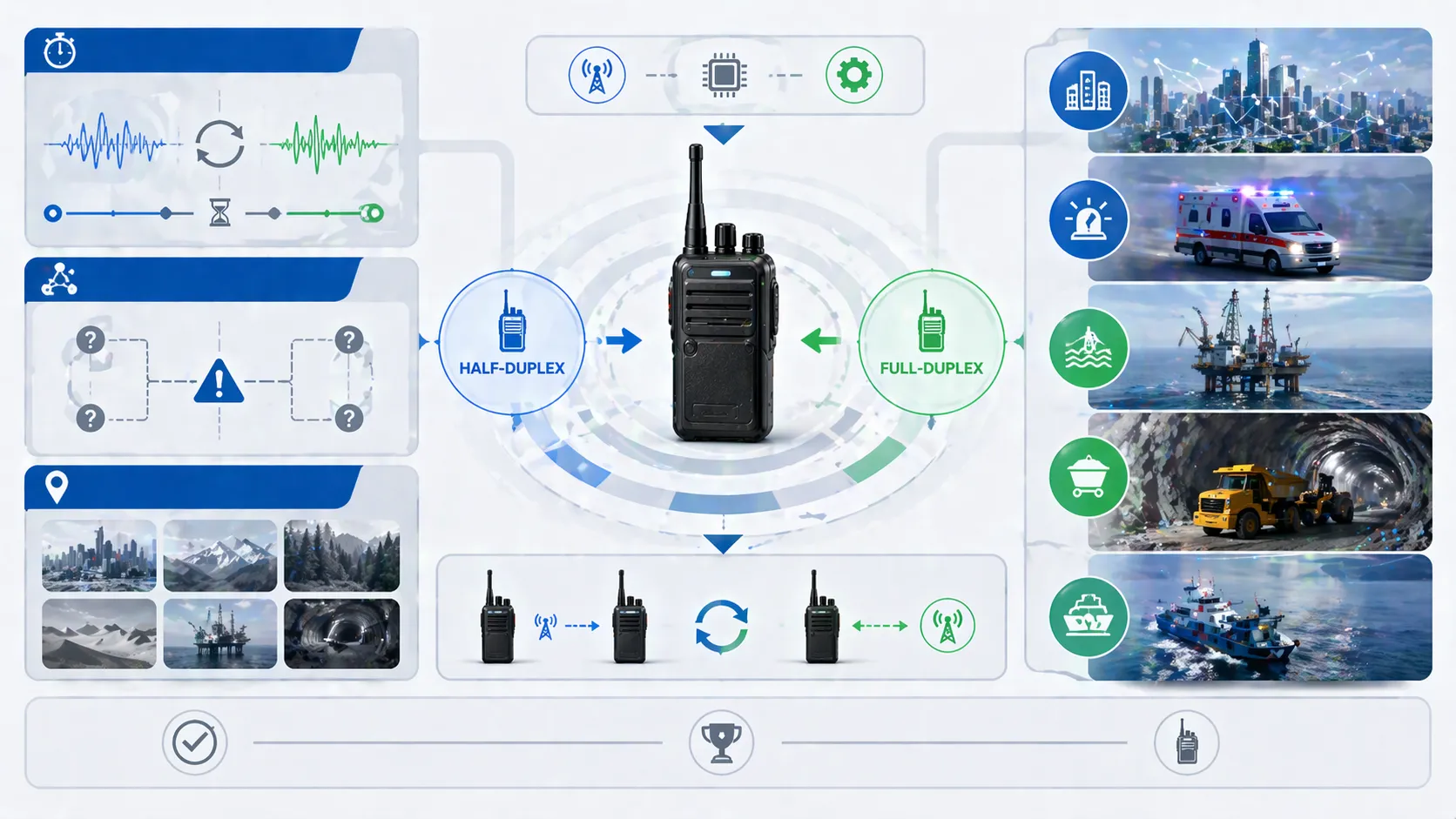
One of the clearest application areas for duplex mode switching is radio and push-to-talk communication. These environments often depend on half-duplex behavior because users share a channel and communicate in turns. However, hybrid systems may also need to interact with equipment or networks that operate differently, which makes switching or directional control an important design consideration.
Dispatch platforms are especially relevant because they often connect field users, supervisors, gateways, and control-room systems in a layered communication environment. Some parts of the workflow are highly structured and one-speaker-at-a-time, while other parts may need richer voice interaction. Duplex mode switching helps align these communication styles more effectively.
This is why the term remains meaningful in both radio-style systems and newer IP-connected dispatch architectures.
Intercoms, Industrial Systems, and Integrated Voice Platforms
Duplex mode switching is also relevant in intercom systems, industrial communication terminals, help points, and integrated voice platforms where the communication style may vary by scenario. A help point may require controlled response handling, while an internal voice link may benefit from more conversational behavior. In hybrid environments, switching logic can help those uses coexist more cleanly.
In industrial and infrastructure settings, communication systems often support field coordination, alarm response, equipment areas, access points, and operator stations. These locations do not always require the same communication behavior. Duplex mode switching can help a wider platform accommodate that variation.
In projects involving SIP intercoms, dispatch terminals, radio gateways, or operational communication networks, vendors such as Becke Telcom can be relevant where system designers need communication behavior that fits multiple response styles rather than only one fixed duplex model.
Duplex Mode Switching in Modern Communication Design
Role in Hybrid and IP-Based Systems
Modern communication design increasingly brings together IP voice, intercom, push-to-talk, radio integration, and operational alerting on shared platforms. In these environments, duplex mode switching becomes more relevant because the system may need to support different communication behaviors across different devices, roles, or service paths.
A purely fixed duplex design may not always handle this variety efficiently. Some endpoints may need structured turn-taking, while others need open two-way audio. Some links may rely on time-based direction switching internally, even if the user only notices the resulting communication experience. Duplex mode switching helps bridge these differences.
This makes the concept useful not only in traditional engineering documentation, but also in practical system integration and communication architecture design.
Value in Mission-Oriented and Multi-Role Environments
Duplex mode switching is especially valuable where one communication platform supports many kinds of operational roles. Transport sites, campuses, utilities, industrial plants, healthcare support environments, and security networks often mix intercom, dispatch, help point, radio, and desk communication within one broader system.
In these environments, communication style should follow operational need rather than device limitation alone. A system that can manage duplex behavior more intelligently can improve usability, channel discipline, and service fit across those different roles.
That is why duplex mode switching is best understood as an enabling capability in flexible communication design rather than as an isolated technical feature.
In modern systems, duplex mode switching helps one communication platform support more than one communication style.
How to Choose When Duplex Mode Switching Is Needed
When It Makes Sense
Duplex mode switching makes sense when a communication system must support mixed workflows, shared channels, hybrid device environments, or operational contexts that do not all need the same bidirectional behavior. It is especially useful where a platform combines intercom, dispatch, radio, field communications, and IP-based coordination.
It also makes sense when the underlying communication path benefits from controlled directional handling, such as time-based or shared-medium operation. In those cases, switching is not merely optional. It can be central to how the system functions correctly.
The strongest reason to use duplex mode switching is that the environment genuinely requires different communication behaviors at different moments or on different paths.
When a Fixed Duplex Mode Is Better
A fixed duplex mode is usually better when the workflow is consistent and the communication requirement does not vary. If users always need natural simultaneous conversation, a permanent full-duplex design is usually simpler and clearer. If the entire system is built around push-to-talk operation, permanent half duplex may also be the better choice.
In these cases, switching may add configuration burden or user uncertainty without creating real value. The goal should always be suitability, not unnecessary feature depth.
This is why duplex mode switching should be chosen as a workflow tool, not simply as a specification checkbox.
Conclusion
Duplex mode switching is the process of changing how a communication system handles bidirectional transmission so that it better matches device capability, channel design, or operational need. It may describe switching between half duplex and full duplex, or switching between transmit and receive states in shared or time-based communication environments.
Its importance lies in adaptability. By allowing communication behavior to change instead of remaining fixed, duplex mode switching helps radios, intercoms, dispatch platforms, industrial communication systems, and hybrid IP environments support a broader range of tasks more effectively.
For designers and operators, the concept is valuable because it connects communication technology with real workflow needs. A well-designed system uses the right duplex behavior at the right moment, and duplex mode switching is one of the mechanisms that makes that possible.
FAQ
What does duplex mode switching mean?
Duplex mode switching means changing the operating mode of a communication system so that it uses a different duplex behavior. This may mean switching between half duplex and full duplex, or changing between transmit and receive states on a shared channel.
The exact meaning depends on the communication technology and system design.
Is duplex mode switching only about half duplex and full duplex?
Not always. In many systems, the term does refer to switching between half-duplex and full-duplex operation. In other systems, especially shared-channel or time-based links, it can also refer to directional switching between transmit and receive periods.
Both uses are related because they describe how bidirectional communication is controlled.
Where is duplex mode switching commonly used?
Duplex mode switching is commonly used in radios, push-to-talk systems, dispatch communications, intercom platforms, industrial communication systems, and certain digital or link-layer communication environments where direction control or duplex flexibility matters.
It is most useful where one communication platform needs to support more than one operational style.