

The IPGA-4O FXO Gateway is positioned as a practical connectivity device for organizations that want dependable analog trunk access while building around SIP-based communications. With 4 FXO interfaces, it is well suited for connecting PSTN lines into modern business voice environments, helping users extend existing telephony resources into IP PBX, paging, and integrated communication systems without adding unnecessary complexity. For many businesses, analog trunk lines still remain valuable in daily operations because they support local carrier access, existing numbering resources, fallback communication paths, and continuity in environments where not every part of the voice system has moved fully to IP.
In real deployment scenarios, organizations often need a gateway that does more than simply connect old lines to a new platform. They need a device that helps traditional PSTN resources coexist with modern SIP-based call control, branch communication strategies, and feature-rich voice applications. The IPGA-4O is designed around this hybrid requirement. It allows enterprises to retain usable analog trunk infrastructure while introducing more centralized and flexible IP voice management, making it especially suitable for staged modernization and long-term communications planning.
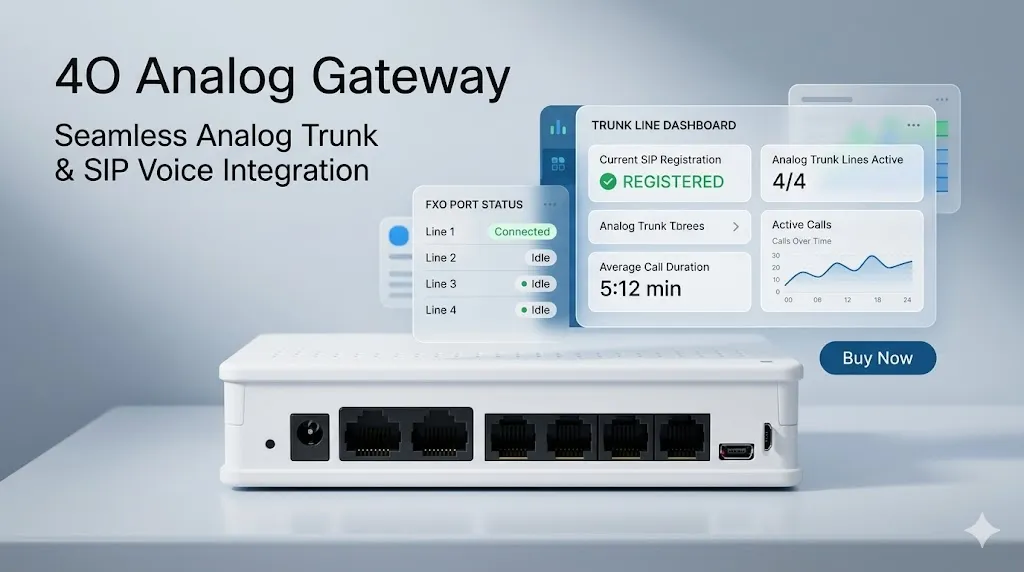
The IPGA-4O FXO Gateway is designed for sites that need four analog trunk ports in a compact form factor. This makes it suitable for small and medium-sized businesses, branch offices, retail stores, service counters, and distributed sites that still depend on local PSTN resources while shifting control and services into IP communications. A 4-port structure is often a practical choice because it provides enough analog trunk capacity for real operating environments without introducing the cost and deployment scale of a larger gateway platform.
For many installations, this balance is important. A site may require more than one or two trunks for inbound and outbound calling, but it may not justify a higher-density chassis. In such cases, the IPGA-4O offers a clean and efficient fit. It supports daily calling requirements while keeping installation straightforward and manageable for integrators, IT teams, and business users.
Its biggest strength is not just analog access, but how naturally it fits into hybrid voice architectures. It can support organizations that are keeping analog trunks for continuity, local calling, or phased migration while expanding SIP-based calling, conferencing, paging, and dispatch-related communications on the IP side. This makes the gateway relevant in practical business environments where communication systems evolve step by step rather than through immediate full replacement.
In these hybrid environments, the value of the gateway comes from interoperability and deployment flexibility. It helps bridge the gap between established PSTN connectivity and newer communications platforms, allowing both sides to work together inside one broader business voice framework. That makes the IPGA-4O more useful than a simple line adapter because it contributes to the structure of the overall communications design.
For many customers, full replacement of analog infrastructure is not the best short-term decision. A 4O gateway gives them a cleaner migration path by preserving working trunk resources, reducing disruption, and allowing the broader communication platform to evolve step by step. This is especially valuable for organizations that need to control project cost, reduce operational risk, or maintain service continuity during transition.
Instead of forcing every site to abandon PSTN access immediately, the IPGA-4O supports a more realistic modernization approach. Businesses can continue using analog trunk services where they still make sense, while moving call logic, internal extension strategy, and advanced communication features toward SIP-based systems. This staged model often leads to a more stable and practical migration process.
A good 4O gateway should do more than provide line conversion. It should support real deployment needs such as continuity, flexibility, and easier integration with modern business communications.
The IPGA-4O FXO Gateway is best positioned in environments where analog access needs to work alongside SIP telephony systems. It supports the kind of deployment logic required for IP PBX integration, centralized voice control, branch communications, and mixed analog-IP networking strategies. This makes it suitable for organizations that want PSTN line access to remain available while the wider communication platform becomes increasingly IP-based.
In practical terms, this allows analog trunk resources to remain connected to a system that can offer more flexible call distribution, easier administration, and stronger feature scalability. Rather than leaving PSTN lines isolated, the gateway helps bring them into the broader service model of the SIP platform.
Its application value increases when paired with a communications platform that supports features such as IVR, call queue, conference calling, call transfer, call waiting, voicemail, recording, blacklist, DISA, paging, intercom, and time-based call rules. This makes the gateway more than a connectivity accessory; it becomes part of a complete business telephony workflow. In enterprise and service-oriented environments, this kind of feature alignment is essential because trunk access is only useful when it works smoothly with the overall call-handling logic of the organization.
As a result, the IPGA-4O can play an important role in customer-facing communication, internal coordination, and business continuity. It supports the connection between traditional line resources and feature-rich voice processing, which is often exactly what businesses need during migration or mixed deployment phases.
The 4O gateway is also a strong fit in broader operational environments where voice may connect with paging, intercom, hotel systems, proxy services, billing platforms, or browser-based extensions. That helps organizations unify analog access with day-to-day communication workflows instead of running isolated systems. In modern business environments, telephony increasingly interacts with operational applications rather than functioning as a standalone service.
This broader applicability strengthens the gateway’s long-term value. It can support analog trunk integration not only for basic voice access, but also for the wider communication ecosystem that may include announcements, on-site coordination, service operations, and workflow-linked telephony applications.
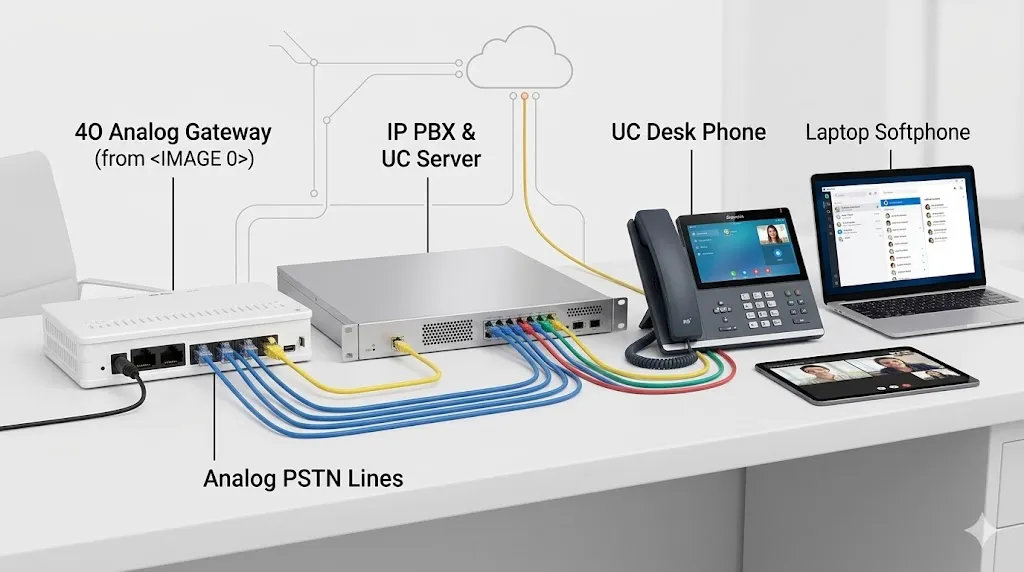
This model is especially suitable for SMB users that want to retain analog trunks while improving internal communications with SIP extensions, business call features, and more centralized management. It offers a practical balance between cost, compatibility, and deployment flexibility. Many small and medium-sized businesses still rely on local PSTN lines because they are familiar, operationally stable, and useful for external calling continuity.
The IPGA-4O allows these businesses to keep that connectivity while modernizing the rest of the voice environment. This creates a more realistic path toward IP communications without placing unnecessary pressure on budgets or daily operations.
For branch offices, the IPGA-4O FXO Gateway can provide localized analog trunk connectivity while supporting wider enterprise communication strategies. It helps remote sites stay connected to central systems without requiring a full voice replacement project at every location. This is particularly useful in organizations where different branches modernize at different speeds or still depend on local carrier access for practical reasons.
By acting as the analog trunk bridge at the site edge, the gateway supports both local continuity and broader enterprise integration. That makes it suitable for distributed businesses that want centralized voice management without forcing uniform infrastructure conditions across every office.
In operational settings such as hotels, front desks, retail stores, and customer-facing service spaces, the gateway can help integrate analog line resources into feature-rich voice environments where call handling, internal coordination, and business continuity matter every day. These environments often require reliable external line connectivity together with flexible internal call features.
The IPGA-4O is well aligned with this requirement because it allows PSTN trunks to participate in a broader business communications system. This helps organizations combine familiar external access methods with a more professional internal voice workflow.
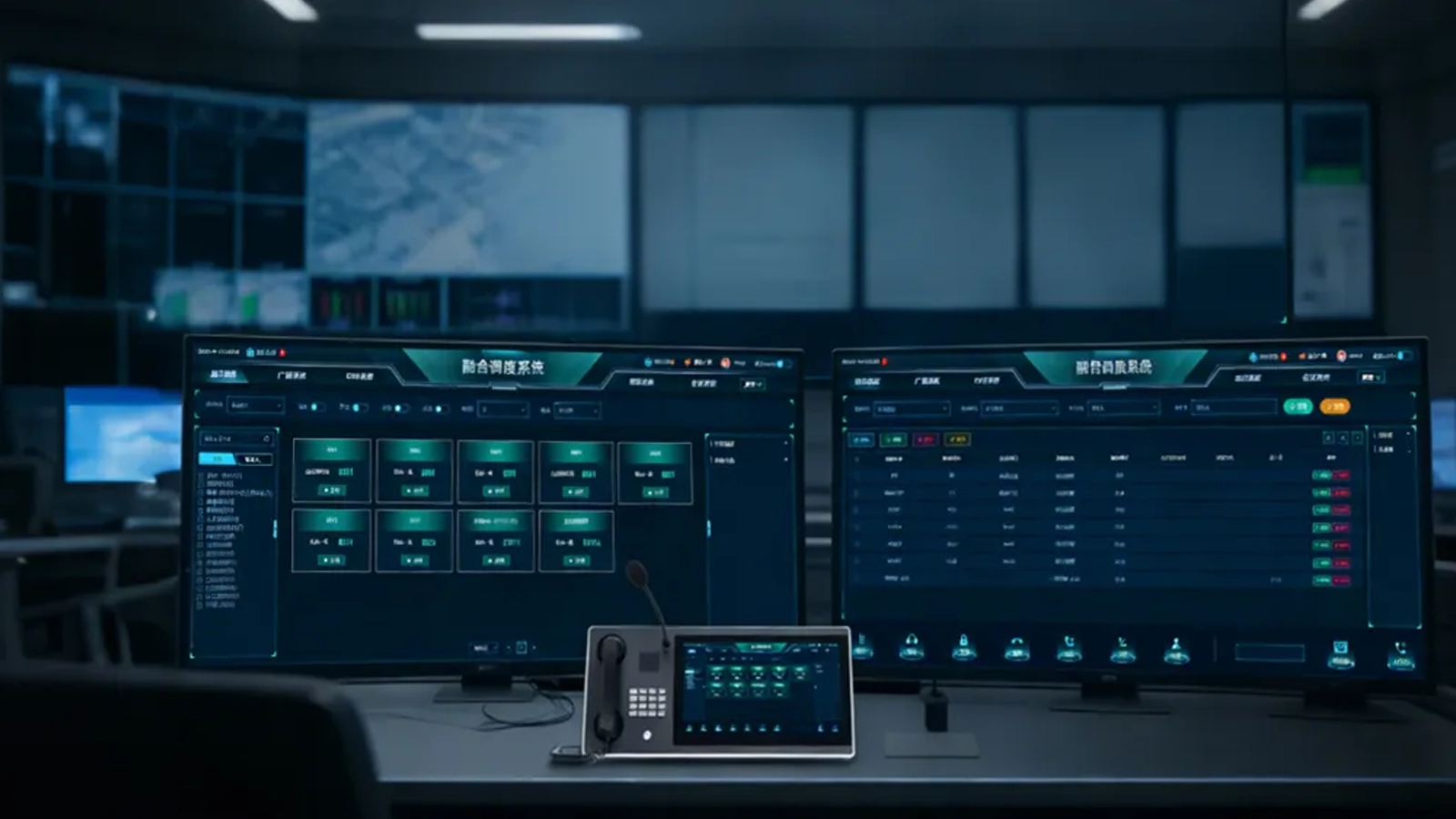
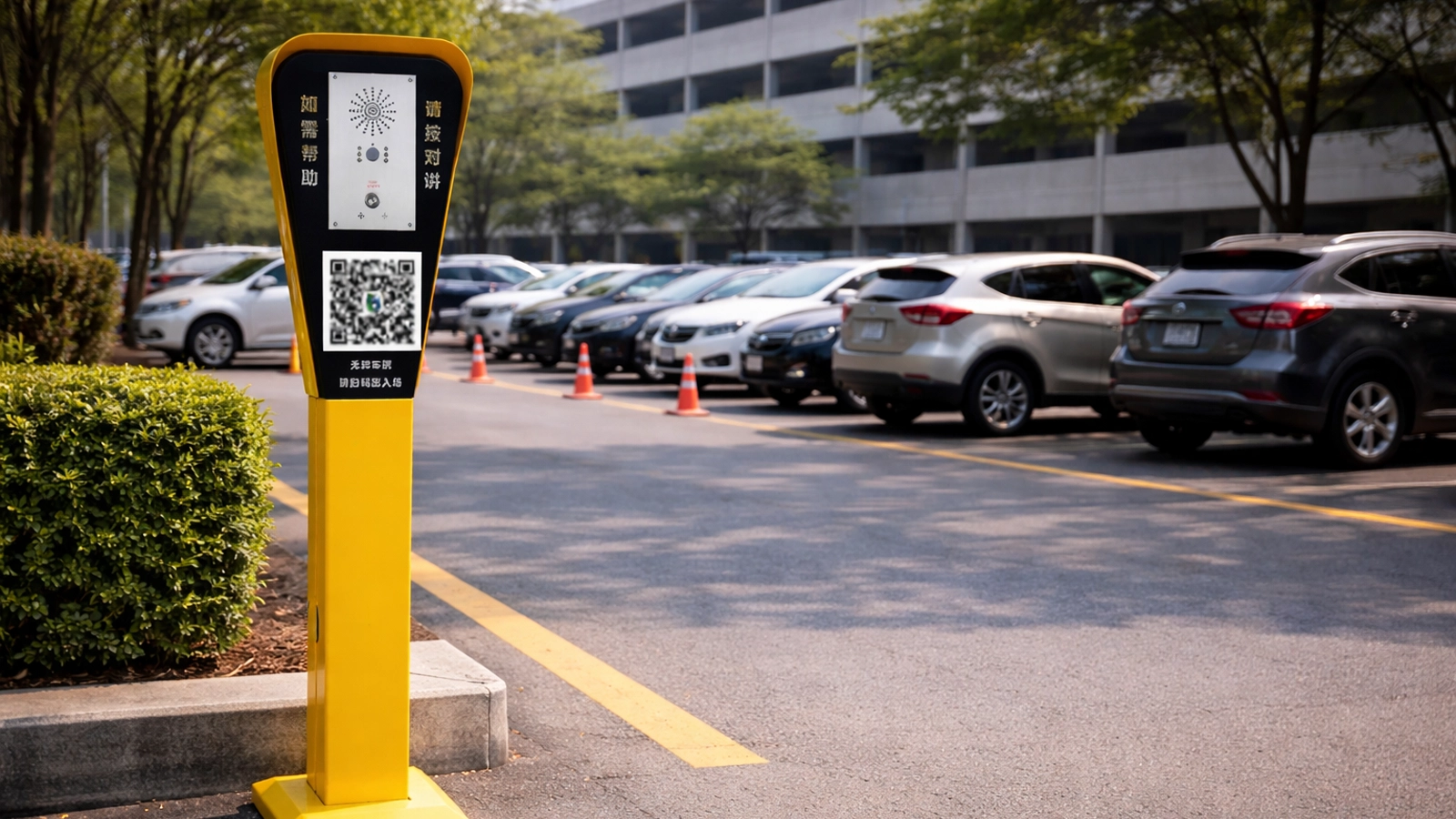
Because many business communication environments now combine telephony with paging and intercom, the 4O model is also well positioned where analog trunk access must coexist with on-site voice notification, internal communication, and incident response workflows. In these scenarios, PSTN connectivity may still be required for external access or fallback calling, while the IP side supports announcements, coordination, and broader communication features.
This combination makes the gateway relevant in environments where communication is operational rather than purely office-based. It supports a more unified approach in which trunk access, intercom interaction, and site communication functions can work within a shared voice framework.
The gateway allows organizations to continue using available analog trunk lines instead of abandoning them prematurely. This is useful where local carrier access, fallback voice routes, or legacy wiring still provide practical business value. In many projects, preserving what already works is a more sensible choice than forcing full infrastructure replacement.
By keeping these line resources active, the IPGA-4O helps reduce waste and makes communication upgrades more practical. It supports a modernization path that respects operational realities instead of assuming every site is ready for complete change.
By linking analog connectivity with a more capable communication platform, the device helps extend the useful life of installed telephony resources while unlocking access to more advanced voice services and operational tools. This improves the return on existing infrastructure and allows organizations to gain more value from prior telecom investment.
For enterprises and integrators, this is one of the gateway’s most practical strengths. It turns legacy line resources into part of a more modern communications design rather than leaving them outside the upgrade path.
The long-term value of the IPGA-4O FXO Gateway comes from its role inside a broader communications design. It supports a more connected environment where analog trunks, IP voice, extensions, conference tools, intercom, paging, and application integrations can work together as one system. This makes the gateway useful not only during migration, but also as a lasting component of hybrid business telephony architecture.
For organizations planning gradual evolution rather than immediate replacement, that long-term role matters. The gateway helps create continuity between existing resources and future voice strategy, which is often essential in practical enterprise deployment.
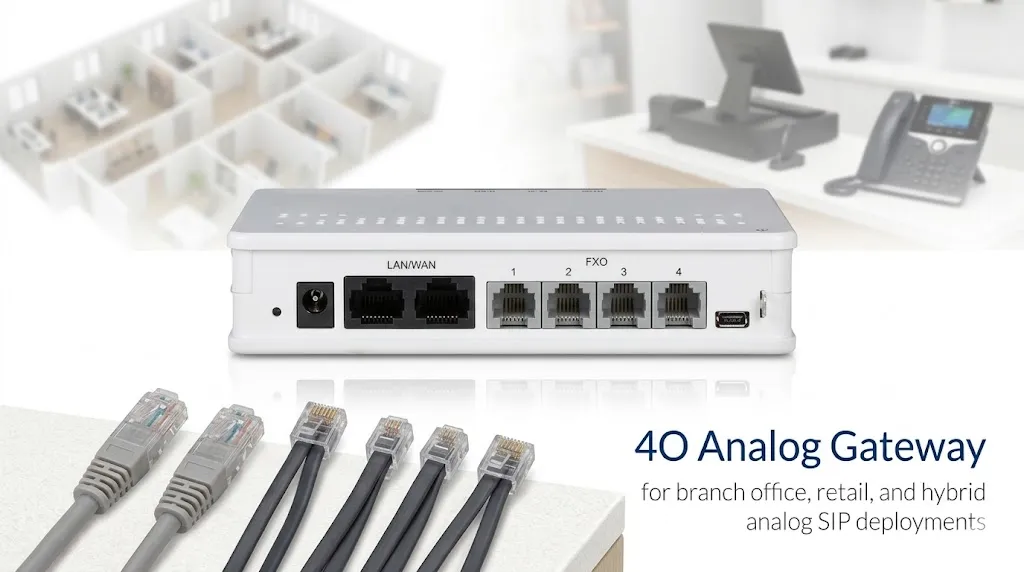
The Becke IPGA-4O FXO Gateway is a strong choice for buyers who want four analog trunk interfaces in a deployment-friendly format, with clear positioning for hybrid business telephony, branch communications, and SIP-centered system design. Its value comes from practical connectivity, flexible application fit, and the ability to support long-term communication modernization without forcing an all-at-once infrastructure replacement.
It is especially suitable for organizations that still depend on PSTN trunks but want those resources to function inside a more modern, flexible, and integrated communications environment. Whether the goal is to support branch operations, preserve local carrier access, strengthen business continuity, or enable a smoother path toward SIP-based telephony, the IPGA-4O provides a deployment-oriented solution with clear operational relevance.
The main advantage is that it provides 4 FXO analog trunk connections while fitting into a more modern SIP-based communication environment. This makes it useful for organizations that want to keep analog line resources but expand IP voice capabilities.
It is best suited for SMBs, branch offices, retail sites, hospitality environments, and other distributed organizations that still use PSTN lines and want a smoother path into IP communications.
Because many organizations still need analog trunks for business continuity, local carrier access, or phased migration. A 4O gateway lets them preserve those resources while modernizing the rest of the communication system.
Yes. Its application positioning is strongest in IP PBX and unified communication environments where analog trunk connectivity needs to work alongside SIP extensions, call control, and broader voice features.
No. In the right deployment, it can also support broader communication workflows where telephony interacts with paging, intercom, conferencing, and other business communication functions.
Yes. It is a practical choice for branch offices that need local analog trunk access while remaining connected to wider enterprise communication strategies.
Its value becomes stronger when deployed in environments that use features such as IVR, call queue, conference calling, call transfer, voicemail, recording, paging, intercom, DISA, and time-based rules.
It helps organizations protect existing analog resources, reduce migration pressure, and build a more integrated voice environment where analog and IP systems work together more efficiently over time.
| Item | Specification |
|---|---|
| Product Model | IPGA-4O FXO Gateway |
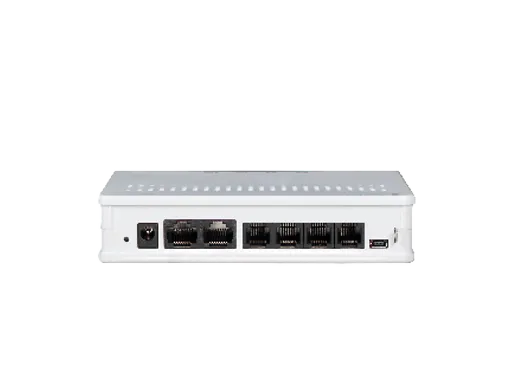
| Voice Interface | 4×FXO Ports (RJ11×4) |
| Ethernet Interface | 2×10/100Mbps RJ45 Ports |
| USB Interface | 1×Mini USB Port |
| Concurrent Calls | 4 Channels |
| Supported Protocols | SIP/IMS, DHCP, TCP/UDP, HTTP/HTTPS, TLS, ARP/RARP, DNS, NTP, TFTP, SRTP, TELNET, STUN, TR-069, SNMP |
| Audio Codecs | G.711a/u, G.723, G.729A/B, iLBC, AMR |
| DTMF Modes | In-band, RFC2833, SIP INFO |
| Echo Cancellation | Hardware AEC |
| IP Mode | IPv4/IPv6 |
| VPN | VPN Client Supported |
| Lightning Protection | Class 4 |
| Reset Button | Press and hold for 8 seconds to restore factory settings |
| Status Indicators | PWR, RUN, ALM, Network, FXO Channel Status |
| Product Dimensions | 140×30×100 mm |
| Net Weight | 0.2 kg |
| Operating Temperature | 0°C ~ 45°C |
| Storage Temperature | -20°C ~ 85°C |
| Operating Humidity | 8% ~ 90% Non-condensing |
| Storage Humidity | 8% ~ 90% Non-condensing |