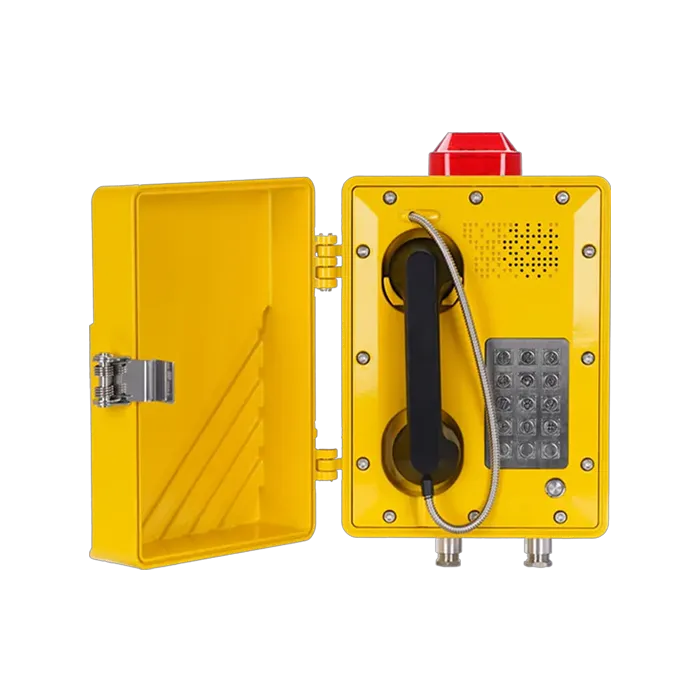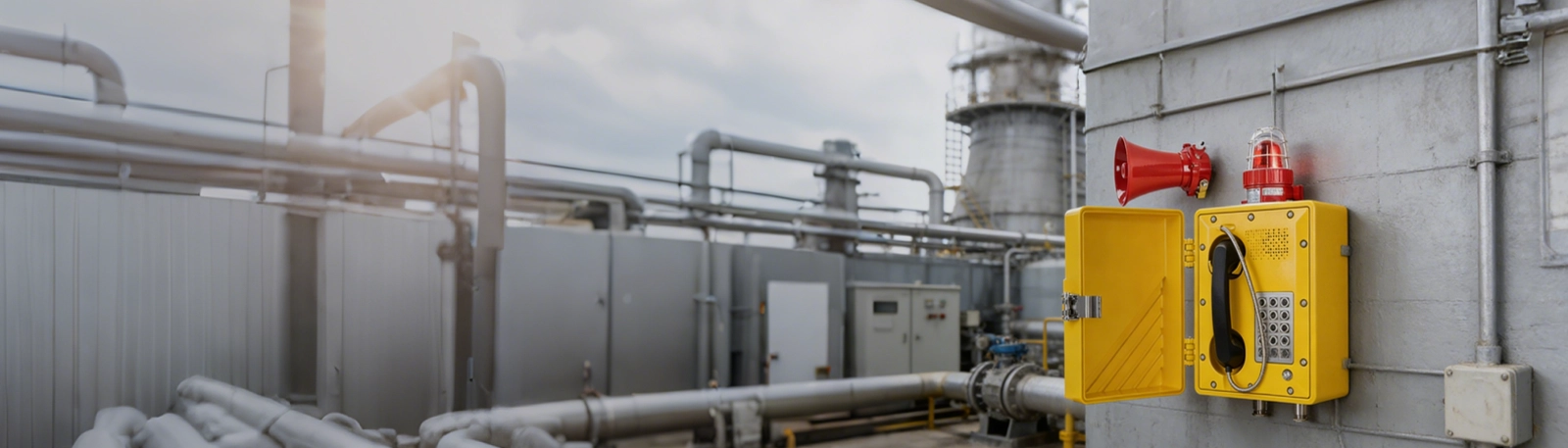
Petrochemical production sites operate in some of the most demanding industrial environments for voice communication. Process units, tank farms, loading and unloading areas, pipe racks, utility corridors, pump stations, workshops, substations, and control-related zones often face high noise, corrosive atmospheres, heat, humidity, vibration, and hazardous gas exposure at the same time. In these conditions, communication is not a supporting convenience. It is an operational requirement tied directly to personnel safety, incident response, process coordination, and evacuation efficiency.
During normal operation, managers, operators, maintenance teams, contractors, and field staff need instructions to be delivered clearly across a large and segmented site. During abnormal events, alarm information and emergency guidance must reach the right area immediately and remain intelligible under pressure. A delayed or unclear message can slow response, weaken coordination, and increase the risk of confusion in the field. For this reason, petrochemical plants require a dedicated PAGA platform rather than an ordinary paging or commercial broadcast system.
Becke Telcom provides industrial communication solutions for harsh and safety-critical environments. Its petrochemical PAGA solution is designed as a unified public address and general alarm platform that supports routine broadcasting, zone paging, plant-wide warnings, emergency evacuation communication, and incident-time voice command. By combining industrial-grade architecture, integration flexibility, redundancy design, and operational supervision, Becke Telcom helps petrochemical enterprises build a more dependable safety communication system across the production site.
Petrochemical sites differ greatly from office buildings, campuses, or light industrial environments. Sound coverage is affected by mechanical equipment, steel structures, process installations, open-air spaces, long-distance corridors, and localized high-noise areas. Compressors, pumps, turbines, blowers, transfer systems, and loading equipment can create a continuous background noise layer that makes ordinary voice delivery ineffective. In these conditions, the real question is not whether a message is broadcast, but whether people can understand it in time to act correctly.
The environment adds another level of complexity. Equipment may need to operate in corrosive atmospheres, humid outdoor areas, hot process sections, or zones with physical vibration and operational dust. In hazardous locations, the communication system must also align with the site’s safety requirements and deployment conditions. A petrochemical PAGA platform therefore needs to deliver more than sound pressure. It must deliver controlled, supervised, and dependable communication under demanding industrial conditions.
Becke Telcom approaches these conditions from an industrial communication perspective. The solution is built around the need for intelligible audio, structured zone management, event-based control logic, and fault-aware operation, helping petrochemical operators maintain dependable communication in everyday work and during emergency response.
In petrochemical environments, communication performance is defined by message clarity, delivery speed, and operational reliability under pressure, not by basic audio coverage alone.
A petrochemical facility is not one uniform operating area. It is a combination of production zones, storage sections, transfer paths, service blocks, and command spaces, each with different communication needs. A tank farm may require wide-area warning and evacuation control. A loading area may require targeted voice instructions for vehicle movement or restricted access. A process unit may need localized alarm guidance without unnecessarily interrupting the rest of the plant. This complexity makes structured zone control essential.
Becke Telcom’s petrochemical PAGA solution is designed to support this operational reality through zoning, priority management, selective paging, alarm scenario logic, and centralized supervision. Instead of using a single undifferentiated audio path across the whole site, the system helps operators direct the correct message to the correct area with the correct urgency. This reduces communication overload, improves incident response quality, and supports more disciplined plant operation.
In practice, this structured approach helps petrochemical enterprises solve several common communication problems:
Routine announcements reaching too many unrelated areas
Emergency warnings being delayed by lower-priority paging
Inconsistent manual announcements during stressful situations
Limited coordination between the control room and distributed field zones
Insufficient visibility into communication system status and faults
Becke Telcom positions its petrochemical PAGA solution as a unified communication platform for hazardous production environments. The system is built to support routine public address, zone-based paging, plant-wide general alarm, prerecorded warning release, emergency evacuation messaging, and live command broadcasting during incidents. This positioning is important because it reflects the real role of the system in petrochemical operations: it is both an everyday operational tool and a safety-critical emergency communication resource.
Routine usage is more valuable than it may first appear. When staff hear clear operational messages through the same platform that later delivers emergency instructions, they become familiar with its voice behavior, area coverage, and authority structure. This familiarity helps reduce hesitation during abnormal events. For petrochemical sites, that means the platform contributes to communication discipline not only when something goes wrong, but also throughout daily production activity.
At the same time, emergency functions remain protected by priority logic. The system can be configured so that urgent warnings, evacuation instructions, and critical alarm broadcasts override lower-level communication sources. This balance between daily usability and emergency control is one of the defining strengths of a mature PAGA solution.
The Becke Telcom petrochemical PAGA solution is designed to support site-wide coordination across the full cycle of plant operation. Under normal conditions, it helps link the control room, field operators, maintenance personnel, logistics teams, and safety staff. Under abnormal conditions, it becomes the structured voice layer that supports alarm release, incident escalation, evacuation communication, and coordinated field instruction.
This system positioning matters because communication in petrochemical operations is tightly connected to broader plant management. A PAGA platform should not exist as a disconnected audio island. It should support operational continuity, emergency preparedness, and cross-department coordination through one controlled infrastructure. That requires far more than loudspeakers and a paging microphone. It requires logic, permissions, message resources, fault supervision, and integration capability.
Becke Telcom combines these elements into one solution framework, allowing petrochemical enterprises to view PAGA not as a simple broadcast layer, but as part of their safety communication and incident response architecture.
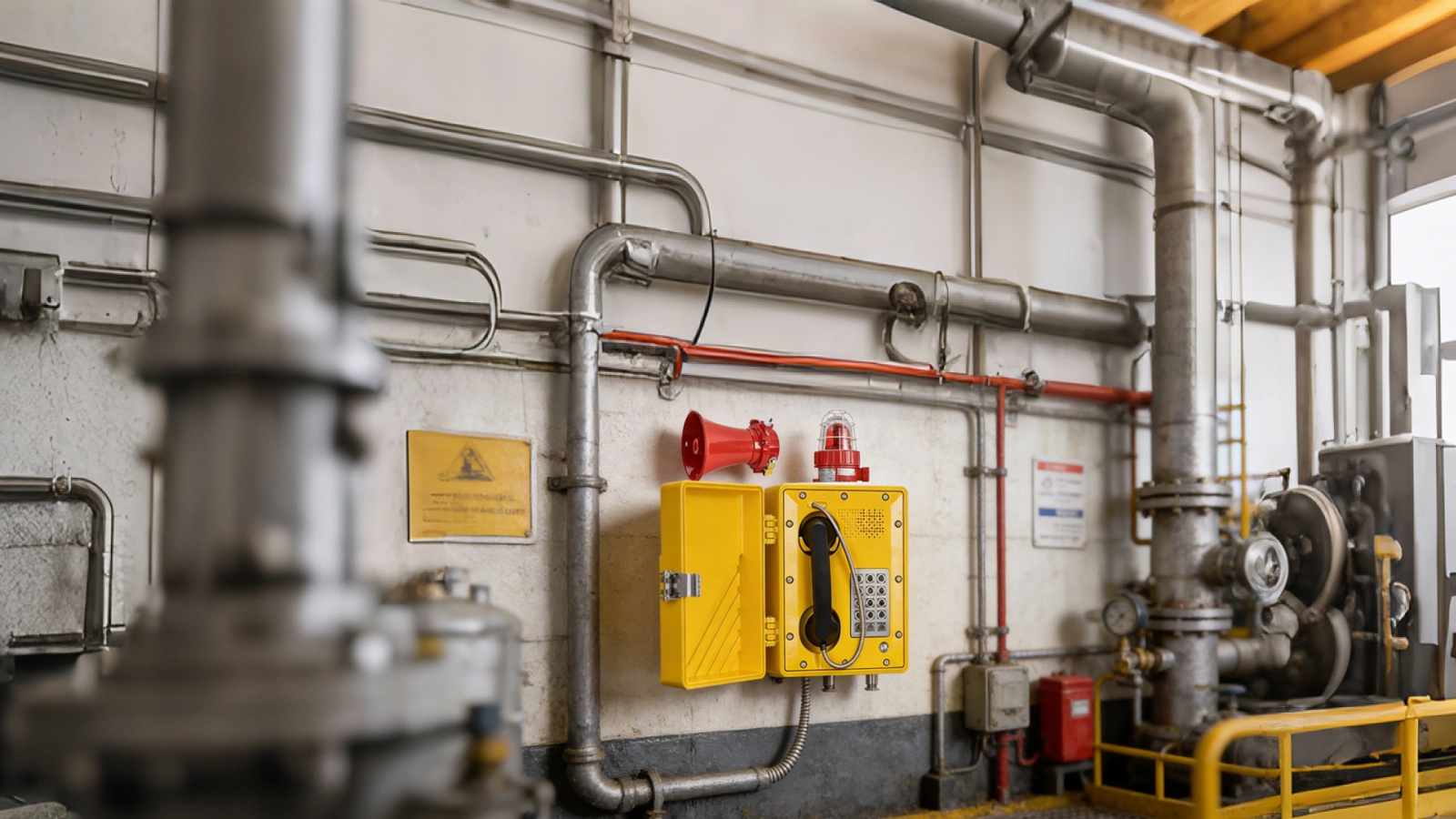
In petrochemical projects, PAGA deployment usually starts from the core process and storage areas. These include process units, reactor sections, utility blocks, pump stations, storage tank farms, blending areas, and related field operating locations. These zones combine large physical coverage requirements with elevated communication importance. Messages may involve process coordination, maintenance warnings, local hazard notification, or emergency evacuation instructions.
Tank farms are particularly important because they often require broad-area coverage, clear warning distribution, and flexible zone grouping. Depending on the event, operators may need to release local hazard alerts, access restrictions, traffic instructions, or evacuation messages affecting more than one adjacent storage area. PAGA zoning therefore needs to reflect not only physical geography, but also operational relationships between plant sections.
Becke Telcom’s solution supports this requirement by allowing practical zone planning across production and storage environments. Rather than forcing all areas into a single communication model, the system can align broadcast behavior with field risk, operational importance, and emergency response needs.
Loading and unloading stations, truck transfer points, rail interfaces, pipe racks, utility corridors, access routes, and distributed support sections introduce a different communication challenge. These locations are often elongated, partially open, and exposed to variable background noise. Voice delivery must remain clear without creating unnecessary overlap or confusion between neighboring areas.
Control-related spaces are equally important in overall system design. Central control rooms, local operator stations, emergency response rooms, maintenance offices, and security centers are often the places where messages are initiated, monitored, escalated, or verified. A mature PAGA platform treats these spaces as command nodes connected directly to the field communication network, not as isolated office endpoints.
Typical petrochemical deployment areas for a Becke Telcom PAGA solution include:
Process units and operating blocks
Tank farms and storage terminals
Loading and unloading zones
Pipe racks, corridors, and utility routes
Control rooms and emergency management spaces
Workshops, substations, and support facilities
By covering both field areas and command spaces, the platform supports a complete communication chain from message origin to field execution.
Routine public address is one of the foundation functions of the Becke Telcom petrochemical PAGA solution. This includes general announcements, shift-change information, production notices, work coordination, local operating reminders, maintenance scheduling, and access instructions. In large petrochemical plants, such messages occur regularly across multiple departments and plant sections, making a dependable public address layer important for everyday operational efficiency.
Routine broadcasting supports more than convenience. It helps reduce manual relay errors, shortens coordination time between supervisors and field personnel, and improves overall communication consistency. Instead of relying only on direct calls, ad hoc relay chains, or scattered local devices, operators can use a structured plant-wide voice platform that supports both selective and wide-area communication depending on the situation.
Becke Telcom’s approach ensures that routine public address remains organized while preserving the priority of emergency communication. This allows the same system to serve everyday operations without weakening alarm authority.
Zone paging is one of the most practical and valuable functions in petrochemical communication. Many messages are relevant only to a specific production block, loading area, maintenance section, or field zone. Broadcasting every message plant-wide would create noise, reduce attention, and weaken communication discipline. A PAGA system should therefore allow authorized users to target voice announcements precisely.
Becke Telcom supports structured zone paging so that live or prerecorded messages can be sent to individual areas, combined zone groups, or the whole facility when required. This makes communication more relevant and easier to manage. A maintenance instruction can stay local. A restricted-area warning can affect only the correct section. A cross-zone coordination message can be directed to all involved units without disturbing unrelated operations.
Selective communication is equally important during abnormal events. Different areas may require different warning language, staged evacuation guidance, or operational restrictions. Zone-based control helps reduce confusion and supports more organized incident response.
Single-zone voice paging for local operations
Multi-zone broadcasting for linked plant sections
Area grouping for emergency coordination
Plant-wide paging for broad operational or safety events
General alarm is the core emergency function of a petrochemical PAGA solution. When a major event occurs, the system must release alarm tones, emergency voice instructions, and evacuation guidance with immediate priority and reliable delivery. This may be required in scenarios involving fire, flammable gas release, toxic gas leakage, process upsets, utility failure, or broader site emergency coordination.
Becke Telcom’s petrochemical PAGA solution supports both zone-based and plant-wide alarm broadcasting, allowing the facility to respond according to the severity and spread of the event. Alarm audio can be followed by clear voice messages that instruct staff where to go, what to avoid, whether to evacuate, or how to maintain safe movement during incident handling. The value of the system lies not only in warning personnel, but in helping direct action.
Emergency alarm communication usually follows a more structured process than routine paging. A typical response workflow may include:
Event detection from field input or integrated safety system
Triggering of the corresponding alarm tone or warning state
Automatic or operator-confirmed release of prerecorded voice guidance
Live paging by authorized personnel when additional instruction is needed
Follow-up zone communication for evacuation, restriction, or recovery actions
Because these functions are safety-critical, the system is designed to ensure that emergency communication can override routine audio sources without delay.
In a petrochemical emergency, alarm audio must do more than indicate danger. It must deliver understandable guidance that helps people move, respond, and coordinate correctly.
Prerecorded voice messaging is a key feature in industrial PAGA design because it improves speed and consistency. During stressful or fast-changing events, manual announcements may vary in wording, tone, or timing. Standardized prerecorded messages help avoid this inconsistency by ensuring that important warnings and instructions are delivered in a clear and repeatable way.
Becke Telcom’s petrochemical PAGA solution can support a message library tailored to plant operating needs. These messages may cover fire warnings, gas release alerts, restricted access notices, muster instructions, evacuation guidance, local hazard notifications, and other important plant scenarios. Messages can be mapped to individual zones, grouped sections, or wider plant areas according to the communication strategy.
From an operational perspective, prerecorded messaging offers several benefits:
Faster release of standard warning content
More consistent wording across shifts and operators
Better alignment with plant procedures and safety training
Reduced communication hesitation during stressful situations
This function works especially well when combined with live paging, giving the plant both procedural consistency and real-time flexibility.
Although prerecorded messages improve consistency, many incidents require direct human intervention. Live paging allows authorized supervisors, control-room personnel, or emergency managers to issue real-time instructions based on current conditions. This is essential when a situation evolves quickly or when field teams need clarification beyond the predefined message library.
Becke Telcom supports live paging to specific zones, grouped operational areas, or the entire site depending on configuration and authority level. This function can be used for response team coordination, evacuation updates, access control instructions, emergency command escalation, or operational stabilization after the first alarm release.
Live paging is particularly valuable because it supports situational leadership. A plant may begin with a standard alarm scenario, but then require precise follow-up voice direction. The solution allows this without disrupting system structure or emergency control hierarchy.
Modern petrochemical projects often expect a communication system to provide more than real-time voice delivery. Recording can preserve operator paging activity, emergency message release, and communication sequences for later review. This supports incident investigation, response analysis, training improvement, and internal audit. A PAGA system with traceability helps the plant move from isolated message broadcasting to managed communication accountability.
Becke Telcom’s petrochemical PAGA solution can also be described as supporting video-related linkage. This means voice events or alarm zones can be associated operationally with video observation resources, giving the control room more context while decisions are being made. The PAGA platform remains a voice communication system, but its coordination with video improves situational awareness and helps operators respond with better field understanding.
Together, these functions support a more complete communication framework. Voice messages are delivered clearly, important actions can be recorded, and incident areas can be coordinated with visual resources when needed.
Integration capability is one of the strongest advantages of a professional petrochemical PAGA platform. Becke Telcom’s solution can be connected with fire alarm systems, gas detection platforms, ESD logic, SIS frameworks, and DCS/SCADA systems so that communication becomes part of the plant’s broader safety and operational response structure.
When a configured event is triggered, the system can support corresponding audio release logic such as alarm tones, warning messages, or selective zone instructions. A fire event in one area may activate local evacuation communication and control-room notification. A gas detection event may call for restricted movement instructions or expanded zone warning. A shutdown-related event may require operational guidance for multiple connected units. Integration helps these responses happen faster and more consistently.
Instead of functioning as a separate announcement layer, the Becke Telcom PAGA platform becomes the voice execution component of plant safety communication. This improves response speed, strengthens message consistency, and supports more coordinated action across the facility.
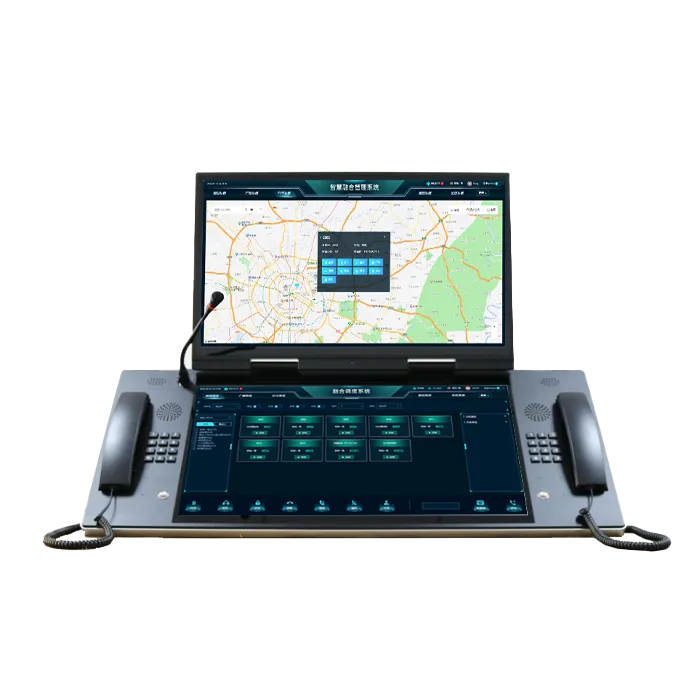
Petrochemical plants usually rely on several communication channels at the same time. Industrial telephones, SIP intercom endpoints, control-room operator stations, and dispatch platforms all support different parts of plant operations. A mature PAGA platform should work with these resources rather than exist separately from them.
Because Becke Telcom focuses on industrial communication solutions, its petrochemical PAGA system can be positioned within a wider communication ecosystem. By integrating public address and alarm capability with industrial telephones, SIP intercom systems, and dispatch functions, the plant gains more flexible paths for routine coordination and incident handling. Operators can combine broad public warning with targeted calls, intercom interactions, and response-team coordination from one connected framework.
This integration model is especially useful when plant leadership needs both wide-area voice delivery and point-to-point communication at the same time.
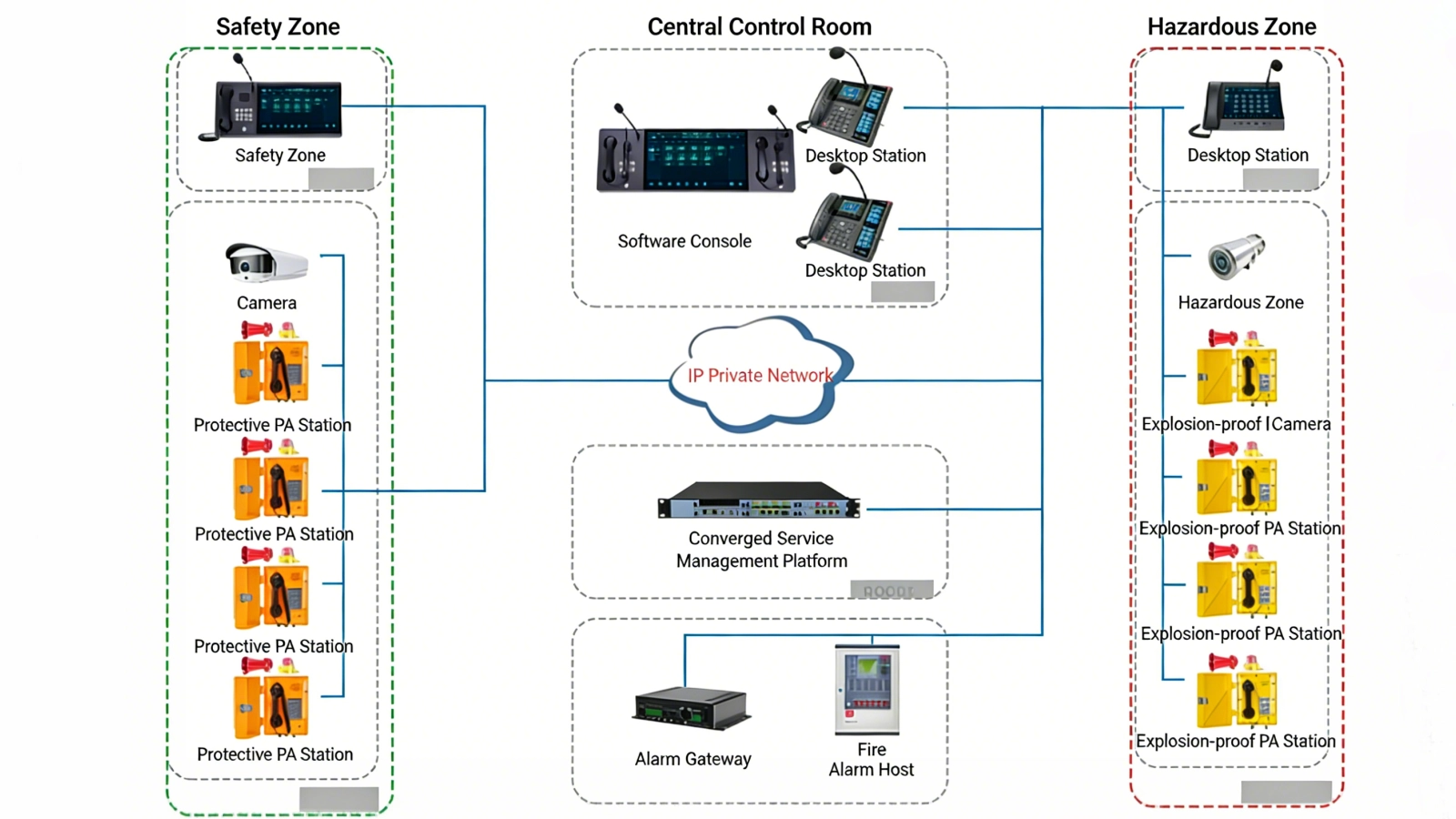
Reliability design is central to petrochemical PAGA engineering because the system is often needed most when plant conditions are least stable. Becke Telcom’s solution supports amplifier backup and main controller redundancy to reduce the risk that a single equipment failure will interrupt critical communication functions. This approach strengthens the communication backbone and improves confidence in alarm delivery during abnormal conditions.
Amplifier backup helps maintain audio output if a primary amplifier channel becomes unavailable. Controller redundancy reduces dependence on one central control point and improves platform resilience. For petrochemical operators, these features mean that communication continuity is not left to chance. Essential alarm and voice functions remain better protected when technical failures occur.
These measures are particularly valuable in large sites where certain zones cannot tolerate communication silence during alarms, shutdown coordination, or evacuation management.
A mature PAGA system should actively supervise its own operating health. Automatic monitoring and fault supervision help identify communication issues such as line abnormalities, device faults, or status changes before they become serious operational failures. In a petrochemical plant with large coverage and multiple field nodes, this is essential. Manual inspection alone cannot provide the speed or visibility needed to manage communication readiness effectively.
Becke Telcom’s petrochemical PAGA solution can be structured around this operational requirement. With automatic supervision and remote visibility, maintenance teams and operating personnel can detect issues earlier, isolate faults more accurately, and maintain higher communication availability across the site. This improves maintenance efficiency and reduces the risk of hidden failures affecting emergency performance.
The practical benefits of supervision and remote monitoring include:
Earlier identification of abnormal communication status
Improved troubleshooting speed and maintenance planning
Better lifecycle management for distributed field resources
Greater confidence in emergency communication readiness
Petrochemical facilities often expand across multiple production, storage, logistics, and utility sections. A fully centralized communication structure may not always provide the best operational fit. Distributed architecture can improve alignment between system resources and plant geography, allowing communication equipment and control logic to serve different sections more efficiently.
Becke Telcom’s petrochemical PAGA solution can be described as using a distributed architecture approach to support scalable deployment, improved fault isolation, and better adaptation to wide-area plant layouts. Instead of concentrating all communication dependence in one location, distributed design supports more flexible expansion and more resilient field service across the site.
The benefits of distributed architecture are easier to see when compared directly:
| Design Aspect | Operational Value in Petrochemical PAGA |
|---|---|
| Distributed deployment | Improves coverage alignment across large and segmented plant areas |
| Local fault isolation | Helps reduce the impact of localized communication problems |
| Scalable architecture | Supports future plant expansion and additional communication zones |
| Remote supervision | Enhances maintenance visibility and system status awareness |
| Redundant control strategy | Strengthens continuity during equipment-level failures |
The most direct value of the Becke Telcom petrochemical PAGA solution is its ability to improve response speed and communication reliability during abnormal conditions. When an incident occurs, the system helps ensure that alarm tones, warning messages, and voice instructions reach the right areas quickly and clearly. This shortens decision time in the field and supports more coordinated action between the control center and on-site personnel.
Evacuation management is one of the clearest examples of this value. Personnel do not only need to know that something is wrong. They need understandable instructions on where to move, what to avoid, and how to respond as the situation develops. A PAGA platform that combines area warning, prerecorded guidance, live command, and plant-wide coordination helps create a more orderly and safer evacuation process.
Becke Telcom supports this by turning the PAGA system into more than an alarm source. It becomes a practical voice framework for organized action under pressure.
Beyond emergencies, the solution improves routine communication governance across the facility. Maintenance announcements, local area instructions, access notices, production coordination, and operating guidance can all be delivered in a more controlled and efficient way through one structured platform. This reduces dependence on fragmented communication practices and strengthens plant-wide consistency.
Features such as priority control, zone management, prerecorded scenarios, recording, supervision, and integration help enterprises manage communication as a formal operational resource rather than just a collection of audio devices. This matters for organizations that focus on risk control, emergency preparedness, and disciplined industrial operation.
For petrochemical enterprises, the combined value can be summarized in several practical areas:
Improved speed of warning release and incident communication
Better coordination between field teams and control-room personnel
Higher communication reliability in harsh and distributed environments
Safer and more organized evacuation management
Stronger supervision, maintenance efficiency, and communication governance
A strong petrochemical PAGA platform improves more than alarm delivery. It strengthens the plant’s entire communication discipline across routine operation, abnormal events, and emergency response.
Becke Telcom’s petrochemical PAGA solution is designed for hazardous process environments where communication clarity, alarm integrity, and coordinated response are essential. By addressing the realities of high noise, corrosive conditions, humidity, heat, wide-area deployment, and operational complexity, the solution supports a practical and safety-oriented voice communication framework for petrochemical plants.
The platform combines routine public address, zone paging, plant-wide general alarm, emergency evacuation messaging, prerecorded voice release, live paging, recording, video linkage, amplifier backup, main controller redundancy, automatic monitoring, distributed architecture, and remote visibility. It can also integrate with fire alarm systems, gas detection, ESD, SIS, DCS/SCADA, industrial telephones, SIP intercom systems, and dispatch platforms to support more unified plant communication and incident response.
For petrochemical enterprises, this means faster abnormal-event response, clearer field coordination, stronger evacuation safety, and more dependable communication continuity. With its industrial communication background and harsh-environment focus, Becke Telcom can position petrochemical PAGA as an important part of plant safety communication and emergency command infrastructure.
Q1: What does Becke Telcom’s petrochemical PAGA solution mainly provide?
A: It mainly provides routine public address, zone paging, general alarm, emergency evacuation communication, prerecorded messages, live paging, recording, video-related linkage, and integration with plant safety and industrial communication systems.
Q2: Why is a dedicated PAGA system important in petrochemical facilities?
A: Petrochemical facilities operate in harsh acoustic and environmental conditions, often with hazardous materials and large distributed areas. A dedicated PAGA system helps ensure that critical warnings and instructions are delivered clearly, quickly, and reliably across these demanding environments.
Q3: Which systems can Becke Telcom’s PAGA solution integrate with?
A: It can integrate with fire alarm systems, gas detection, ESD, SIS, DCS/SCADA, industrial telephones, SIP intercom platforms, and dispatch systems to support coordinated plant-wide communication and faster response workflows.
Q4: What reliability features are especially valuable in this solution?
A: Important reliability features include amplifier backup, main controller redundancy, automatic fault supervision, remote monitoring visibility, and distributed architecture for large and complex petrochemical deployments.
Q5: How does this solution improve emergency response?
A: It improves emergency response by combining fast alarm release, area-specific warning, plant-wide broadcasting, live voice command, and system integration so that personnel receive clearer instructions and response teams can coordinate more effectively during incidents.