Wind farm substations are critical nodes in the renewable energy chain. They collect power from multiple turbines, step up voltage, coordinate protection and control, and connect the wind farm to the wider grid. Although these sites are smaller than many conventional power plants, their communication requirements are highly specialized. Operators must maintain clear voice communication across transformer yards, switchgear rooms, control buildings, cable basements, relay protection rooms, and outdoor service areas while also supporting remote operation, safety management, and emergency response.
A professional PAGA system combines public address, paging, and general alarm into one unified communication platform. In wind farm substations, this system helps operators issue routine notices, work coordination messages, area-specific instructions, emergency warnings, and evacuation guidance through a structured and centralized voice architecture. Instead of depending on disconnected speakers, telephones, or local warning devices, the site gains one coordinated platform for daily operation and abnormal event handling.
Becke Telcom provides industrial communication solutions for demanding and mission-critical environments. For wind farm substations, the solution can integrate PAGA, industrial telephones, SIP communication, emergency intercom, dispatch coordination, and third-party system linkage into a scalable substation-wide communication network that supports both local personnel and remote control teams.
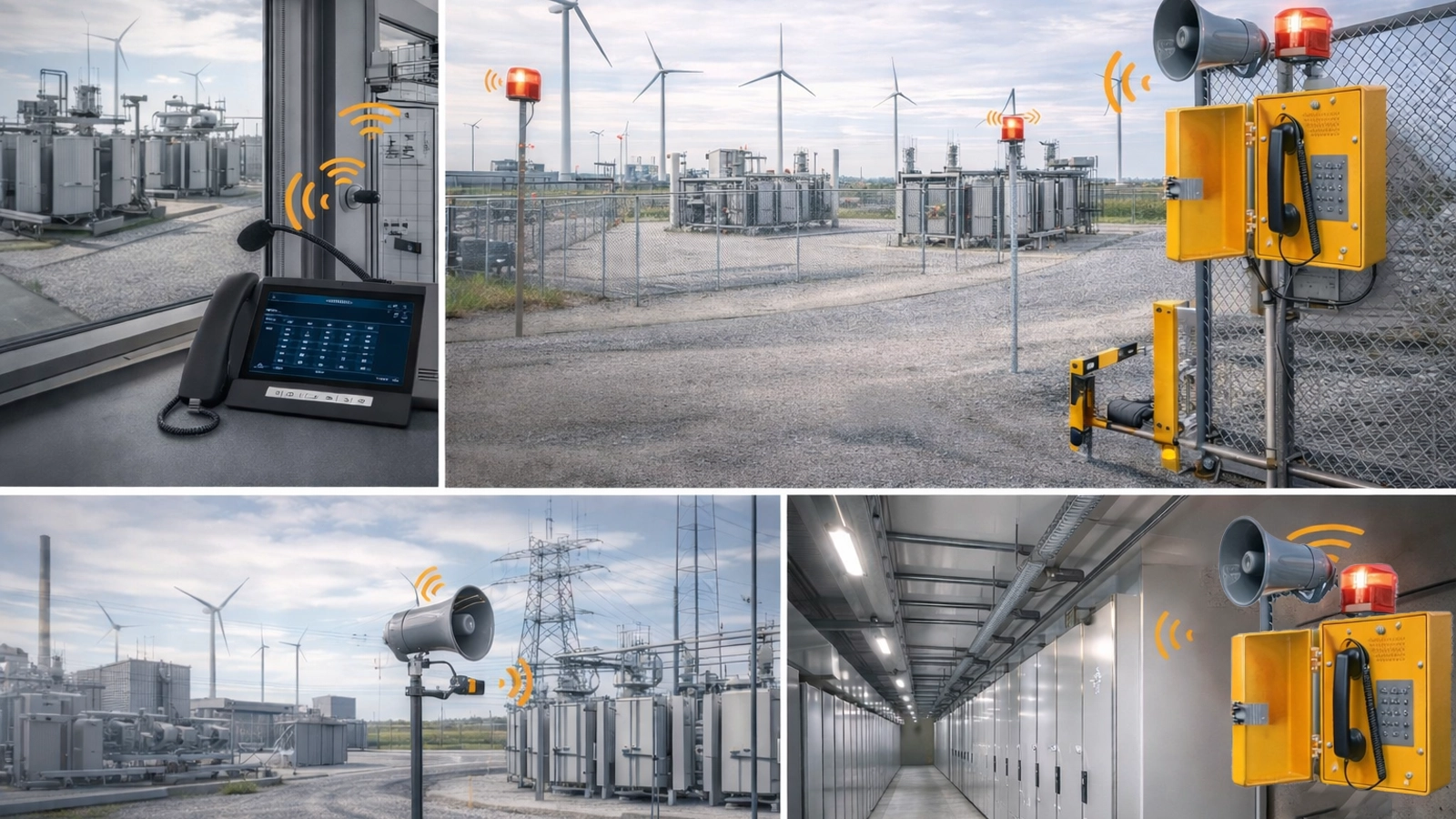
Wind farm substations operate under a different communication model from many traditional industrial sites. They are often located in remote or semi-remote environments, are increasingly managed through centralized SCADA and substation automation platforms, and may have limited on-site staffing during normal operation. At the same time, they contain high-value electrical equipment and require structured safety communication for switching operations, maintenance coordination, restricted-area control, and abnormal event response.
Routine communication is still important even at low-staff sites. Operators may need to announce maintenance schedules, authorize work entry, warn about switching activities, coordinate inspection tasks, or notify personnel about temporary access restrictions. During emergencies, the communication platform must quickly support general alarm, equipment fault warning, evacuation instruction, and live voice guidance from the local control room or a remote operations center. These demands make a basic speaker system insufficient. A wind farm substation needs a more organized and integrated solution.
Remote or lightly staffed operating environments
Critical electrical assets concentrated in a limited site footprint
Need for both local control and remote operation support
Indoor and outdoor communication zones with different acoustic conditions
Requirement for routine announcements and emergency alarm on one platform
Need to integrate with SCADA, substation automation, CCTV, telephony, and fire alarm systems
In wind farm substations, the value of communication lies in clear, controlled, and timely voice delivery that supports both day-to-day maintenance work and fast emergency response.
The PAGA system serves as a centralized voice communication backbone for routine substation operation and emergency response. It supports routine public address, zoned paging, general alarm activation, pre-recorded emergency messages, and live operator announcements across the full site. In practical use, it helps ensure that the right instruction reaches the right location with the right priority.
For modern wind power projects, the PAGA platform is most effective when treated as part of the broader substation communication and control environment. It can work alongside industrial telephones, SIP terminals, CCTV, fire alarm systems, access control, substation automation, and wind farm SCADA platforms. This integrated design helps local field teams and remote operators respond more efficiently to both routine work and abnormal events.
The central control platform manages zone definitions, audio routing, announcement schedules, alarm logic, event handling, and system supervision. It is typically installed in the control building, local operator room, or site communication cabinet. For projects that require higher availability, the control layer can be designed with redundancy to improve service continuity.
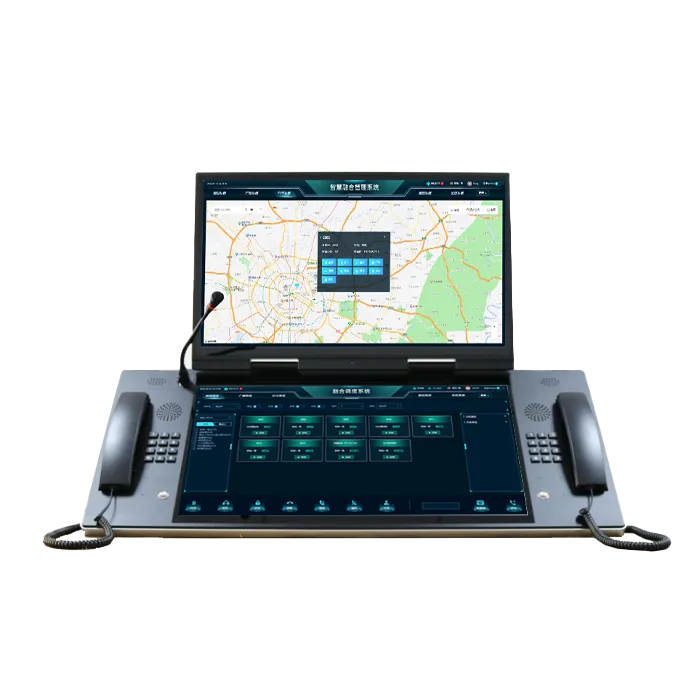
Paging consoles allow authorized personnel to make live announcements to one zone, multiple zones, or the entire substation. Operator workstations may also support event review, alarm handling, call supervision, and communication management. These terminals are useful for both routine coordination and emergency voice command.
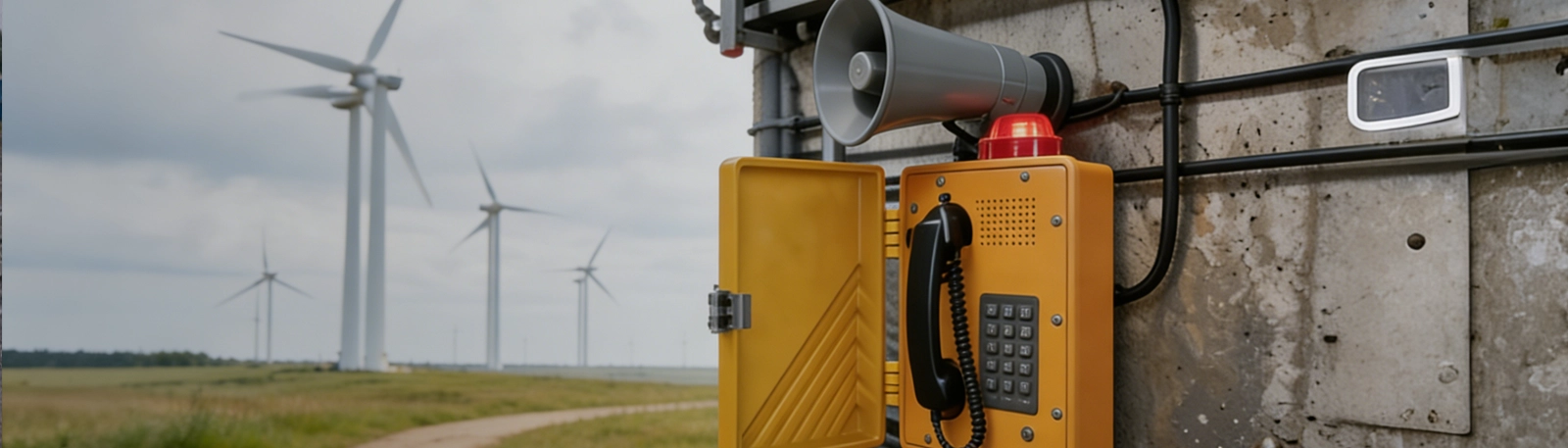
The audio output layer includes industrial amplifiers and distributed loudspeakers. Outdoor horn speakers are typically suitable for transformer yards, switchyard access routes, and service roads, while indoor speakers may be used in control buildings, GIS rooms, corridors, and technical rooms. Proper zone planning improves audibility and limits unnecessary disturbance between unrelated areas.
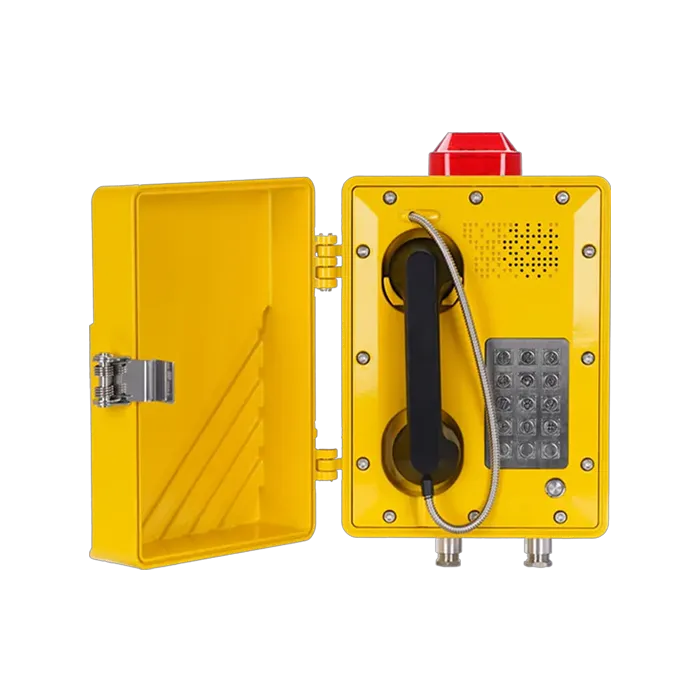
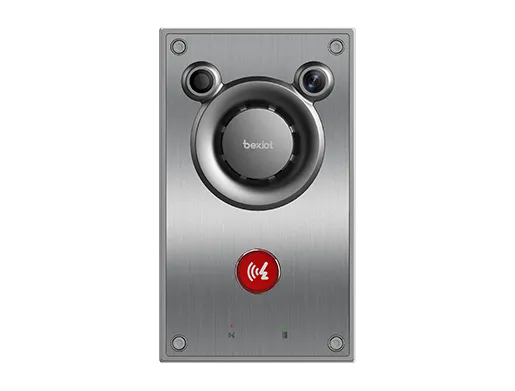
Emergency communication endpoints such as industrial telephones, SIP phones, or intercom terminals can be installed in control buildings, electrical rooms, maintenance zones, cable basements, and selected outdoor positions. These devices support direct voice communication between field personnel and the local or remote control center.
The system can record live announcements, paging sessions, alarm activations, and selected operator actions. These records help support operational review, maintenance analysis, training, and communication traceability.
Interface modules allow the PAGA platform to connect with SCADA, substation automation, fire alarm systems, CCTV, access control, industrial telephony, SIP communication platforms, and dispatch tools. This helps the communication system respond to real site events instead of operating as an isolated audio layer.
| Component | Main Role | Typical Deployment |
|---|---|---|
| Central Control Platform | Zone management, audio routing, priority control, system supervision | Control building, operator room, communication cabinet |
| Paging Console | Live announcements, zoned paging, emergency voice command | Control desk, local workstation, remote operation position |
| Industrial Amplifier and Speaker Network | Routine broadcasting, warning output, general alarm messaging | Transformer yard, GIS room, service corridor, outdoor access area |
| Emergency Communication Terminal | Direct voice communication and incident reporting | Control building, technical room, cable basement, service point |
| Interface Module | Integration with SCADA, automation, CCTV, fire alarm, and telephony | System layer, equipment room, control platform |
The system supports everyday voice communication for normal operation and maintenance. Typical applications include work notices, safety reminders, switching activity announcements, inspection coordination, contractor guidance, and general substation information. Even at lightly staffed sites, this function helps improve communication discipline and operational clarity.
Wind farm substations need targeted communication rather than unnecessary site-wide broadcasting. The solution supports area-based paging so that operators can send the right message only to the relevant location. This improves efficiency and reduces disruption across unrelated work areas.
Typical broadcast and paging zones may include:
Main control room
Local operator room
Transformer yard
GIS or switchgear room
Relay protection room
Cable basement or trench
Auxiliary power room
Outdoor access and service area
Emergency assembly point
When a serious event occurs, the system can trigger a site-wide or area-specific general alarm. This may be used for fire, equipment abnormality, access restriction, emergency instruction, or organized evacuation. General alarm capability is especially important in substations because it helps operators move quickly from normal operation into a controlled response mode.
The solution supports both pre-recorded emergency messages and live announcements. Pre-recorded content provides fast and consistent communication, while live paging allows operators to issue situation-specific instructions. Common emergency voice messages may include evacuation instruction, area isolation notice, equipment fault warning, restricted-area notification, and emergency response guidance.
Authorized personnel can issue live messages from the local control building or from a remote operations center, depending on system architecture and project needs. This is a major advantage for wind power projects, where centralized monitoring and remote operation are increasingly important. Live paging helps local technicians and remote operators coordinate more effectively during maintenance, switching work, and abnormal events.
The system can assign different priorities to routine announcements, live paging, emergency communication, and alarm messages. High-priority alarm content automatically overrides lower-priority routine audio, helping ensure that urgent instructions are delivered without delay.
Announcement records and alarm logs can be stored for audit, training, and event review. Playback functions help operators confirm communication actions, evaluate incident response quality, and improve future procedures.
The solution can supervise amplifiers, speaker lines, key terminals, network links, and important broadcast zones. Centralized status monitoring improves maintenance efficiency and supports stronger communication readiness across the substation.
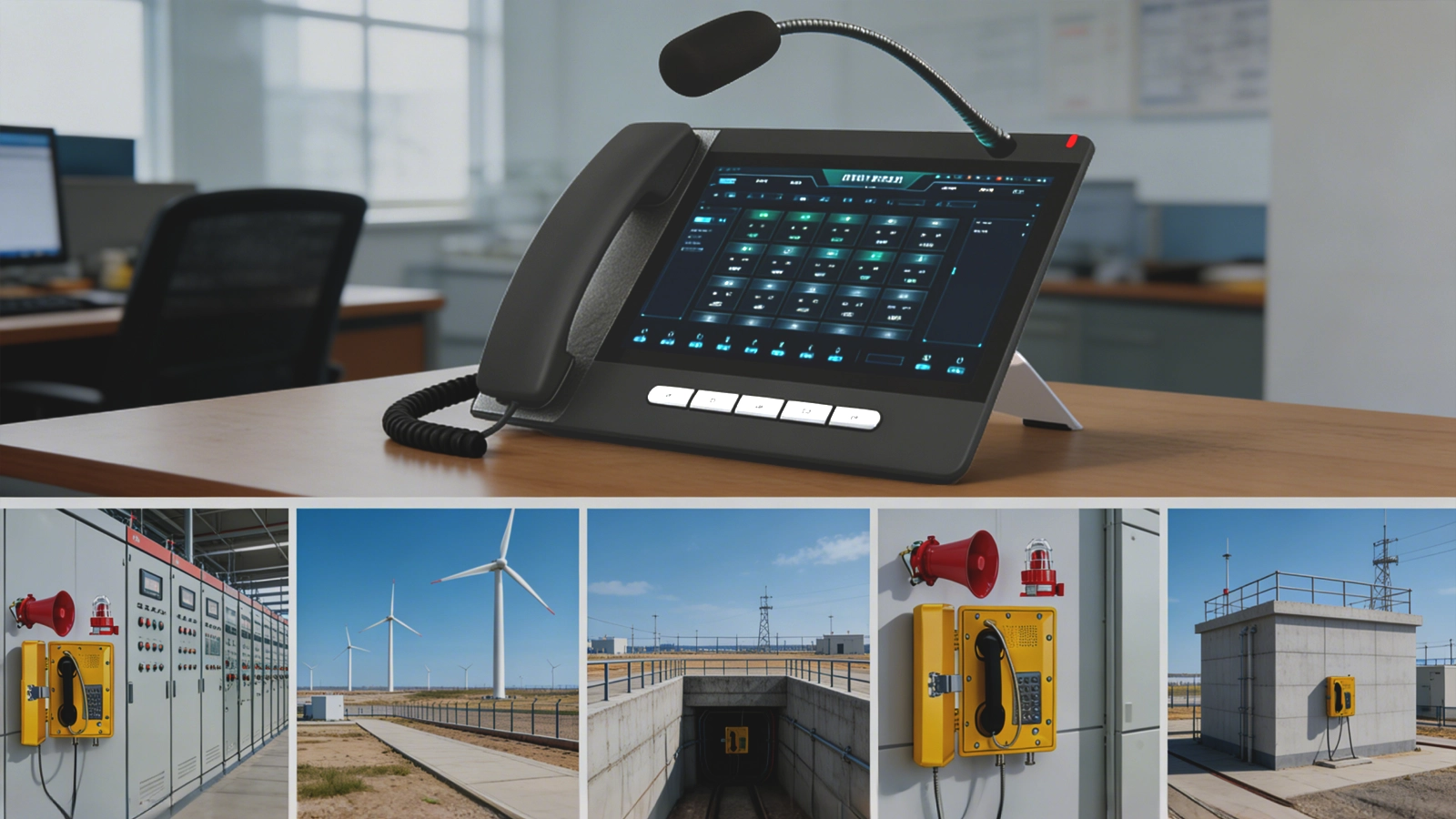
Deployment planning should follow substation layout, equipment importance, access control, maintenance workflow, and emergency route design. In wind farm substations, communication coverage should focus on the areas where people work, where electrical risk is concentrated, and where emergency instruction may need to be delivered immediately.
Typical indoor deployment includes the main control room, local operator room, relay protection room, communication room, service corridor, and other technical spaces. These areas require both routine operational communication and alarm messaging.
Outdoor deployment often includes the transformer yard, outdoor switchgear area, equipment access routes, and service paths. These areas benefit from robust speaker coverage that supports both work coordination and emergency warning.
Cable basements, trenches, auxiliary power rooms, maintenance zones, and controlled access sections also benefit from structured communication support. These are areas where targeted instructions and direct communication may be especially valuable during maintenance or incident handling.
| Deployment Area | Main Communication Need | Recommended System Role |
|---|---|---|
| Control Building / Operator Room | Centralized supervision, routine coordination, emergency voice command | Paging console, monitoring, event handling |
| Transformer Yard | Work instruction, warning notice, emergency guidance | Outdoor broadcast coverage and priority alarm delivery |
| GIS / Switchgear Room | Targeted operational messaging and emergency communication | Zoned public address and live paging |
| Relay Protection / Technical Room | Maintenance coordination, restricted-area notification | Area paging and communication support |
| Cable Basement / Auxiliary Room | Inspection support, local warning, emergency instruction | Distributed voice coverage and linked alarm messaging |
| Emergency Assembly Point | Personnel guidance and organized evacuation messaging | Priority voice broadcast and alarm output |
One of the most important characteristics of a wind farm substation PAGA solution is its ability to integrate with digital control and monitoring systems. Wind farm substations increasingly operate within a unified environment that includes SCADA, substation automation, remote monitoring, video surveillance, and plant communication tools. The PAGA platform should fit naturally into this architecture.
SCADA integration: communication actions can follow operational events, alarms, and remote supervision workflows
Substation automation integration: site alarms and status conditions can trigger structured voice communication actions
Fire alarm integration: emergency messages can be activated automatically in affected zones
CCTV integration: operators can verify site conditions visually while issuing announcements
Access control integration: area-based messages can support restricted entry and temporary isolation procedures
SIP telephony integration: voice communication can extend into a wider local or remote operations network
For example, if a fire or equipment alarm is triggered in a designated electrical area, the system can activate a zone-specific warning, notify the control room, and allow local or remote operators to issue live follow-up instructions. This creates a more coordinated communication flow across monitoring, control, and response functions.
The communication platform should work well in sites that combine local maintenance access with remote monitoring or remote control. This requires a design that supports both local operator interaction and central coordination.
Substation environments require accurate area control. The solution should support clearly defined broadcast zones so operators can communicate precisely without unnecessary disturbance.
Because wind farm substations often combine control buildings and outdoor electrical yards, the system should support dependable communication across different environmental and acoustic conditions.
For critical sites, redundant design for control hosts, network paths, power supply, and amplifier resources can improve availability and reduce the impact of single-point failures.
The system should support quick alarm activation, immediate playback of emergency messages, and live operator takeover when conditions change. This improves response speed during abnormal events.
Recorded announcements, alarm logs, and communication events help support review, training, and operational traceability, which is especially valuable in remote or low-staff sites.
A strong PAGA solution for wind farm substations is not just a broadcast tool. It is a structured voice communication framework that supports safer maintenance, clearer control, and faster emergency response.
Becke Telcom focuses on industrial communication solutions for demanding and high-reliability environments. In wind farm substations, its PAGA solution is designed to support both routine site communication and emergency response through a unified and scalable architecture.
The solution can integrate public address, general alarm, industrial telephony, emergency intercom, SIP communication, distributed speaker systems, and control-center coordination into one manageable platform. This helps wind power operators improve communication efficiency, maintain stronger area control, and support safer and more organized substation operation.
Unified architecture for public address, alarm, telephony, intercom, and coordination
Flexible zone-based communication for transformer yards, GIS rooms, and control buildings
Integration support for SCADA, automation, fire alarm, CCTV, and SIP systems
Reliable communication design for remote and critical electrical sites
Scalable deployment for onshore or offshore wind substation environments
For wind power developers, EPC contractors, operators, and system integrators, a professional PAGA solution provides value in both operational efficiency and safety management.
Improves substation-wide voice communication efficiency
Supports unified management of routine broadcasting and emergency alarm
Enhances response speed during equipment faults and evacuation scenarios
Strengthens coordination between field teams and remote operators
Reduces delay, confusion, and missed instructions in critical site areas
Supports safer and more manageable wind power substation operation
A PAGA Solution for Wind Farm Substations is an important part of modern substation communication and safety support. In environments where remote operation, critical electrical assets, controlled access, and emergency readiness all affect communication requirements, a unified platform for public address, paging, and general alarm provides a more dependable way to support both routine work and abnormal event response.
By combining routine broadcasting, zoned paging, general alarm, live voice command, and integration with SCADA and substation automation into one coordinated architecture, wind farm operators can improve communication efficiency, strengthen site safety, and build a substation-wide voice framework better suited to modern wind power projects.
It is an integrated communication system that combines public address, paging, and general alarm to support routine broadcasting, area-based voice communication, and emergency warning across the substation.
Zoned paging allows operators to send the right message to the right area, such as the transformer yard, GIS room, or control building, without disturbing unrelated work zones.
Yes. The solution can be designed to support local operation and remote coordination, which is especially useful for modern wind power projects with centralized monitoring.
Yes. It can integrate with SCADA, substation automation, fire alarm, CCTV, SIP telephony, and other communication or monitoring platforms for more coordinated site operation.