Airports and transport hubs depend on fast, clear, and reliable voice communication. From terminal halls and check-in counters to security checkpoints, boarding gates, baggage claim areas, transfer corridors, parking structures, and operation rooms, thousands of passengers and staff move through different zones with different communication needs. Daily operations require continuous service announcements, passenger guidance, queue management, and area-based paging. At the same time, these large public environments must also be ready to deliver immediate emergency warnings, evacuation instructions, and control center commands when abnormal events occur.
An Airport and Transport Hub PAGA Solution combines public address, paging, and general alarm into one unified communication platform. It helps operators broadcast the right message to the right zone at the right time, while also supporting emergency response, staff coordination, and system linkage with security and operational platforms. Instead of treating routine announcements and emergency communication as separate layers, the solution creates one coordinated framework for daily service and incident response.
Becke Telcom provides professional communication solutions for large and complex environments. In airport and transport hub projects, the solution can integrate public address, general alarm, help point intercom, SIP telephony, dispatch coordination, and third-party system linkage into a scalable communication network that improves passenger guidance, operational efficiency, and safety response.
Airport terminals and transport hubs are complex communication environments. They combine open halls, enclosed corridors, high passenger density, continuous movement, and frequent service updates. Unlike smaller facilities, these sites cannot rely on a single broadcast pattern. Messages often need to be delivered by terminal, by floor, by gate cluster, by waiting area, or by operational zone. A boarding reminder should reach the correct gate area without disturbing unrelated zones, while an emergency evacuation instruction may need to override all routine announcements immediately.
These environments also place high demands on speech intelligibility. Noise from crowds, rolling luggage, public activity, escalators, trains, buses, and mechanical systems can reduce announcement clarity if the system is not properly designed. In addition, airports and transport hubs must maintain smooth communication between control centers, service counters, security teams, and technical departments. This means the solution must support not only one-way broadcasting, but also coordinated operation through paging control, help point communication, and integration with existing systems.
In airports and transport hubs, communication quality directly affects passenger experience, operational order, emergency response speed, and overall site safety.
The PAGA system serves as the voice communication backbone for airport terminals and transport hubs. It supports routine public announcements, zoned paging, live voice broadcasting, emergency alarm activation, and evacuation messaging across public and operational spaces. In daily operation, it helps guide passengers and reduce confusion. In abnormal conditions, it becomes a critical tool for rapid warning and centralized command.
In practical projects, the PAGA platform is not isolated. It usually works with fire alarm systems, CCTV, passenger information systems, access control systems, emergency help points, SIP telephony, and dispatch platforms. This makes the solution more than a broadcast system. It becomes part of a broader transportation communication framework where voice guidance, alarm response, and operational control can work together.
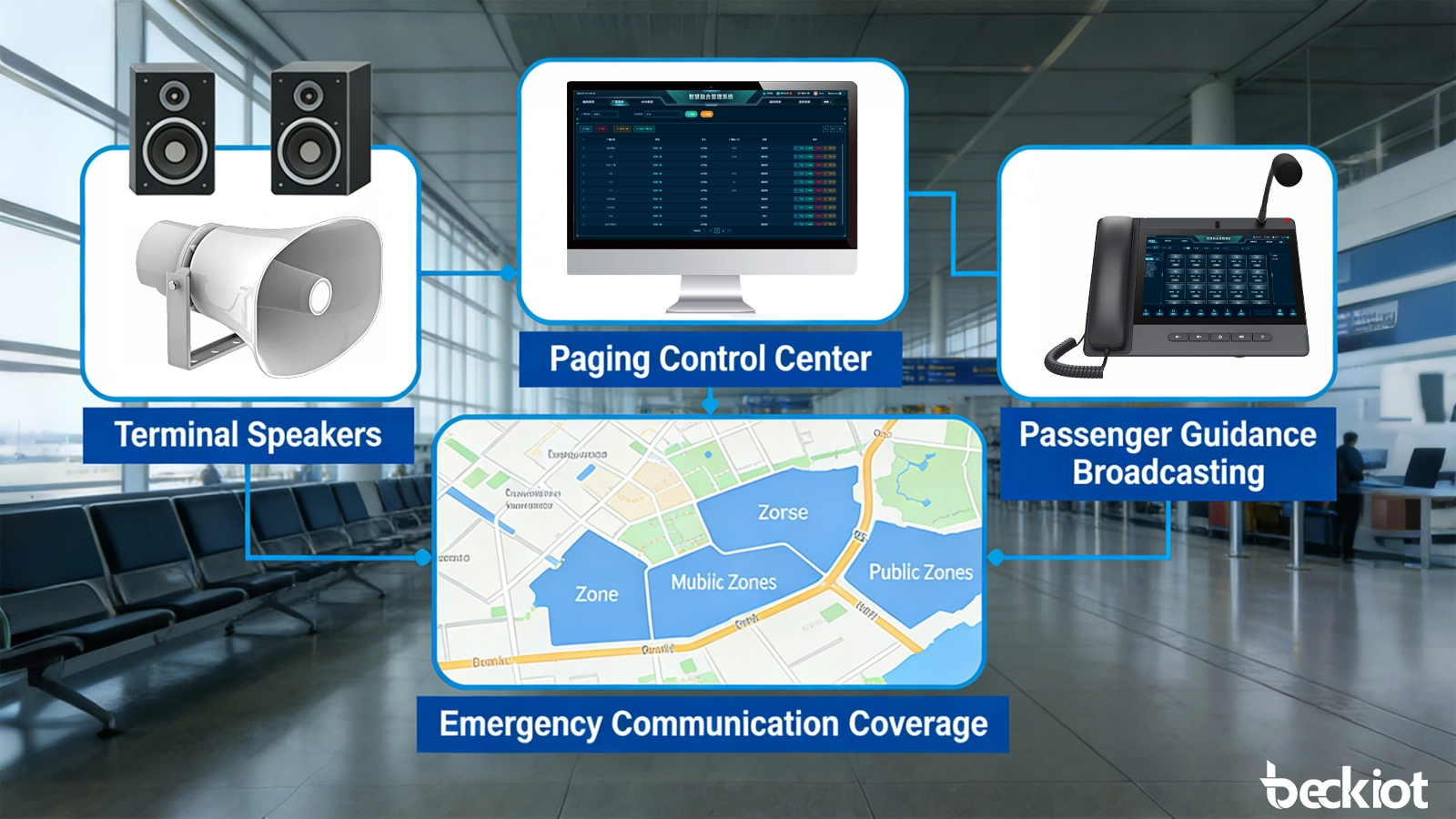
The central control platform manages zone logic, audio routing, announcement scheduling, alarm priority, event handling, and system monitoring. It is usually deployed in the airport operation center, security center, or transport hub control room, and may support redundant architecture for higher availability.
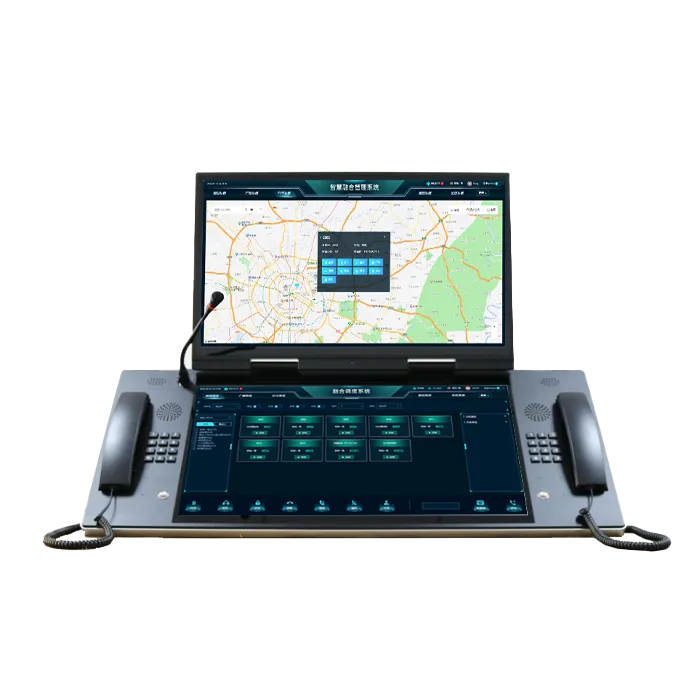
Paging consoles allow authorized operators to make live announcements to selected zones or to the whole site. Workstations can be installed in operation rooms, terminal management offices, security control rooms, dispatch centers, and other key locations. These terminals are important for both routine supervision and emergency handling.
The speaker network forms the voice output layer of the system. Ceiling speakers, wall-mounted speakers, column speakers, or horn speakers can be selected according to the acoustic conditions of terminal halls, concourses, covered passages, outdoor transfer areas, and parking structures. Amplifiers provide stable audio output for these distributed zones.
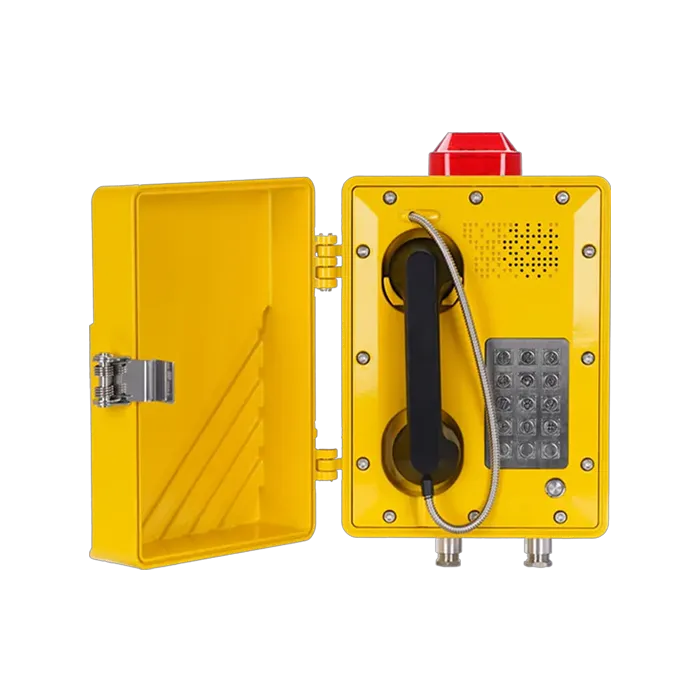
Depending on the project, the solution can include emergency help points, intercom stations, SIP terminals, or industrial telephones in operational areas, service corridors, parking zones, restricted access points, and staff-only areas. These terminals provide direct communication access when assistance or coordination is needed.
The system can record live announcements, paging events, alarm activations, and selected communication actions for later review. This supports incident tracing, service quality evaluation, training, and operational improvement.
Interface modules connect the PAGA system with fire alarm systems, CCTV, FIDS or transport information platforms, access control, SIP communication systems, and dispatch software. This integration improves the speed and quality of coordinated response.
| Component | Main Role | Typical Deployment |
|---|---|---|
| Central Control Platform | Zone control, scheduling, priority management, system supervision | Operation center, control room, security center |
| Paging Console | Live announcements, area paging, emergency voice command | Terminal office, dispatch desk, operation workstation |
| Amplifier and Speaker Network | Routine broadcasting, passenger guidance, alarm output | Terminal halls, waiting zones, corridors, parking areas |
| Emergency Communication Terminal | Help request and direct staff communication | Service areas, back-of-house rooms, restricted zones |
| Interface Module | Integration with fire alarm, CCTV, telephony, and information systems | Equipment room or platform integration layer |
The system supports daily voice communication across public transportation environments. Typical announcements include passenger guidance, service notices, queue instructions, boarding reminders, transfer directions, baggage-related notifications, and public service messages. This helps create a more organized and efficient passenger flow.
Operators can broadcast by zone, by floor, by hall, by gate cluster, by terminal section, or by the full site. Zoned paging reduces unnecessary interruption and allows more precise communication. For example, a gate-related boarding announcement should be limited to the relevant waiting area, while a baggage claim update should be heard only in the arrival zone.
Typical zones include:
When fire, security incidents, abnormal crowd conditions, equipment failures, or evacuation scenarios occur, the system can trigger a general alarm for the entire site or for selected zones. Emergency alarm content can override routine announcements automatically to ensure that urgent instructions are delivered first.
Pre-recorded emergency messages can be triggered quickly to ensure fast and consistent response. These messages may include evacuation instructions, temporary closure notices, area restriction warnings, emergency route guidance, and service suspension announcements. Live operator broadcasting can also be used when the situation requires real-time decision-based communication.
Authorized operators can issue live messages from the control center, terminal office, or dispatch room. This is especially valuable in dynamic situations such as security incidents, severe delays, sudden crowd buildup, weather-related disruption, or gate reassignment. Live paging allows the operation team to respond in a controlled and flexible way.
The solution supports priority rules for routine announcements, operational paging, help point communication, and emergency broadcasts. Emergency alarms and evacuation messages always take priority over standard service content, reducing delay and confusion during abnormal events.
Key broadcast and paging events can be recorded for auditing and review. This helps operators analyze service quality, verify communication actions, and improve incident response procedures over time.
The system can supervise amplifiers, speaker lines, terminals, network links, and important broadcast zones. Centralized monitoring improves maintenance efficiency and helps detect problems before they affect public communication readiness.
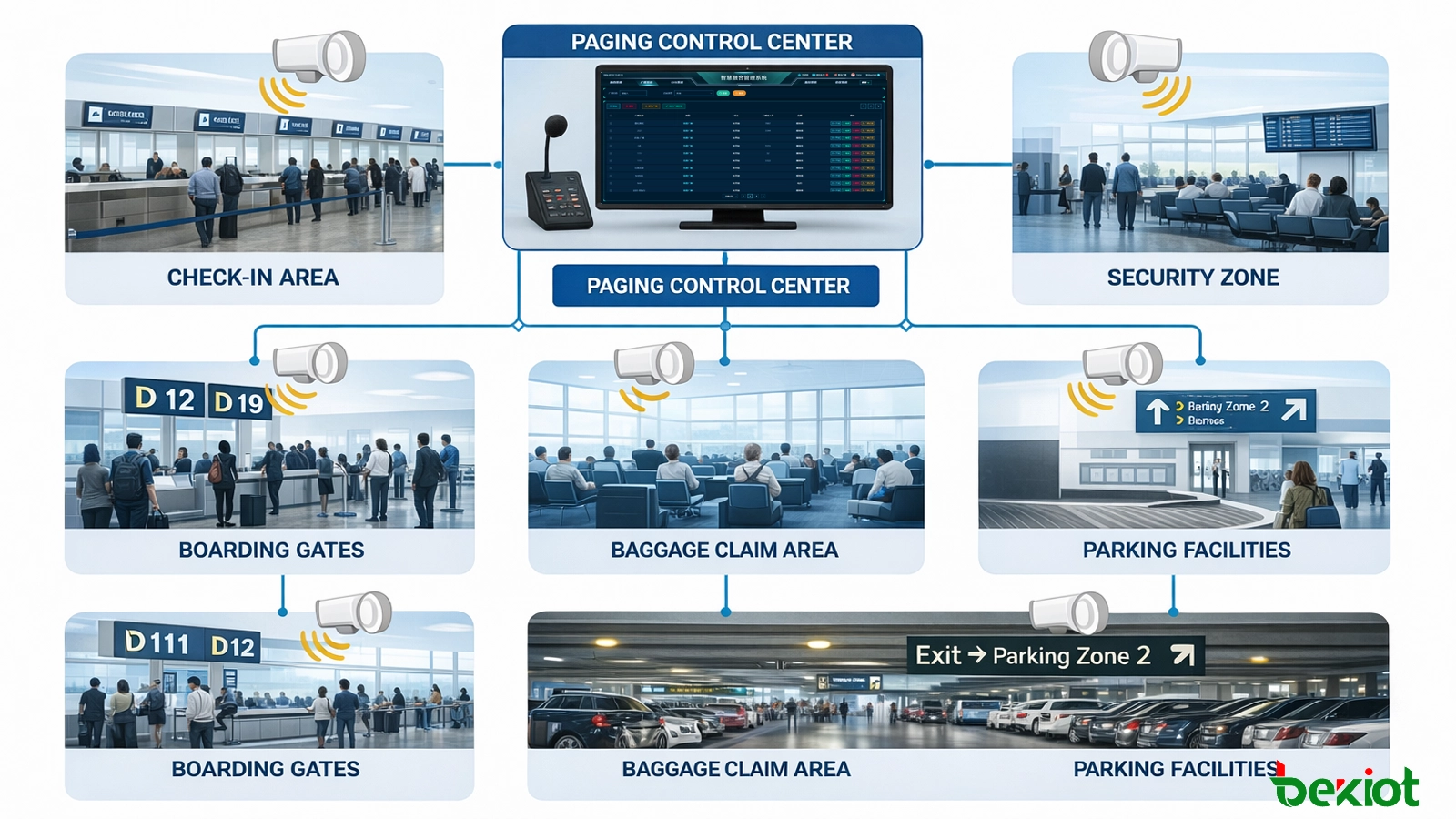
Coverage planning should reflect real passenger movement, service logic, and emergency response routes. In airports and transport hubs, communication design is not only about installing speakers. It is about matching system behavior to the operational structure of the site.
Terminal halls, waiting halls, ticketing areas, check-in counters, security screening zones, departure lounges, boarding gates, arrival halls, and baggage claim spaces are core passenger-facing areas. These zones require frequent routine broadcasting and clear emergency guidance.
Transfer corridors, escalator halls, passageways, underground links, shuttle waiting areas, and intermodal connection points require clear and timely information because they influence movement between different transport services.
Back-of-house rooms, equipment spaces, service corridors, operation offices, maintenance rooms, and restricted technical zones need communication support for staff coordination, incident handling, and technical operation.
Parking structures, pickup and drop-off zones, bus bays, covered walkways, and external access routes may also require voice guidance, especially in large transport hubs with multi-layer traffic flow.
| Deployment Area | Main Communication Need | Recommended System Role |
|---|---|---|
| Check-In and Ticketing Area | Passenger guidance, queue instruction, service notices | Routine public address and zoned paging |
| Security Screening Zone | Orderly processing, service updates, controlled messaging | Zoned announcements and operator paging |
| Boarding Gate / Waiting Area | Boarding reminders, delay notices, gate changes | Precise area-based public address |
| Arrival / Baggage Claim Area | Arrival notices, baggage information, crowd guidance | Zoned passenger information broadcasting |
| Transfer Corridor / Hub Concourse | Wayfinding, transfer direction, crowd control | Continuous area guidance and emergency messaging |
| Parking and External Access | Traffic guidance, emergency warning, directional support | Distributed broadcast coverage |
| Control Center / Operation Room | Centralized command and monitoring | Paging console, system supervision, emergency control |
A strong airport or transport hub PAGA solution works best when it is linked with other operational and safety platforms. This turns the communication system into part of a wider response framework rather than a standalone announcement tool.
For example, if a fire alarm is triggered in one terminal section, the system can automatically activate zone-specific evacuation messages, notify the operation team, and allow authorized staff to issue live guidance to the affected area. In a transport hub, the same approach can be used for crowd control, area closure, transfer rerouting, or abnormal service recovery.
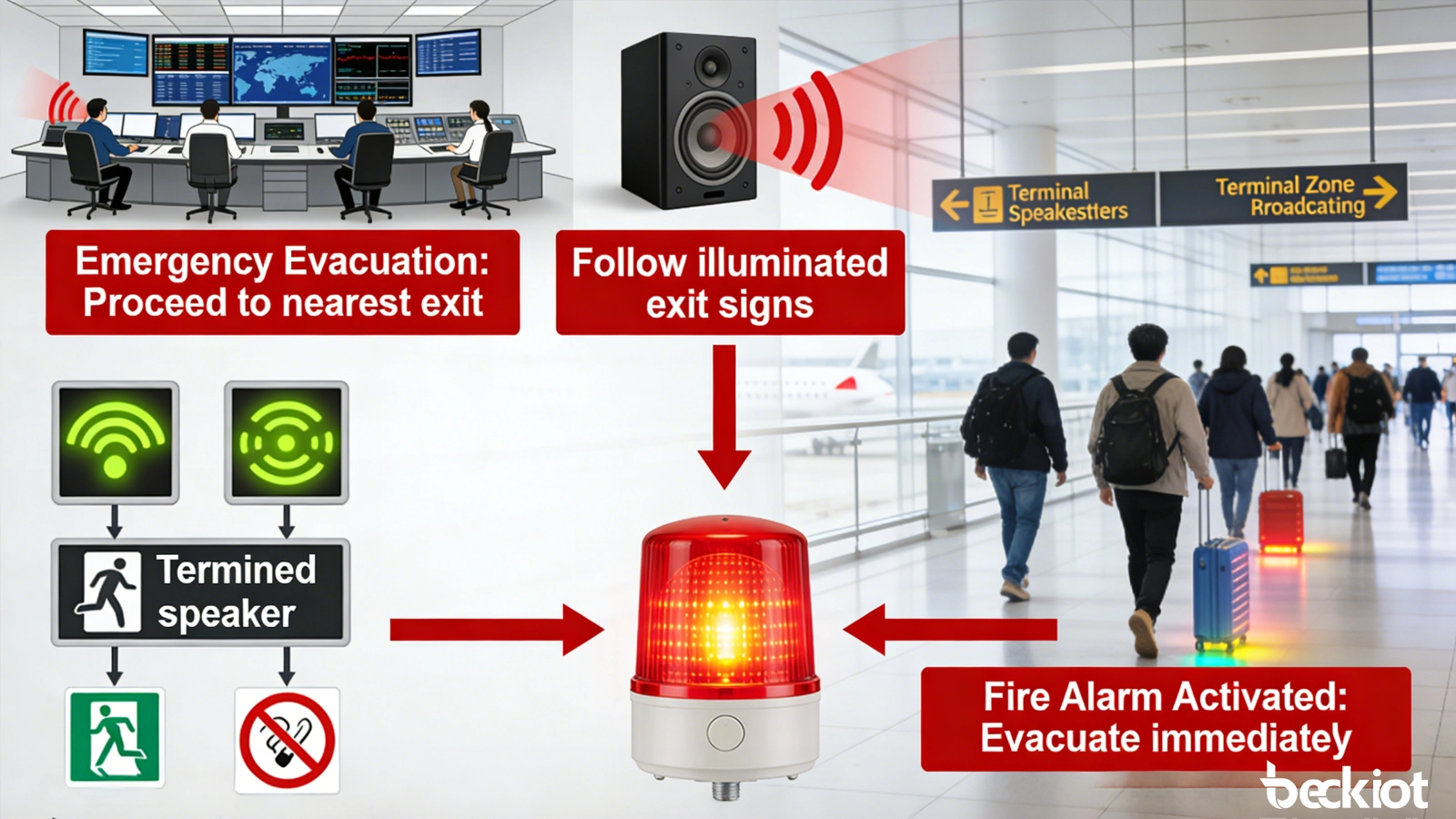
Large terminal halls and crowded waiting areas require more than basic sound pressure. The system must deliver announcements that passengers can actually understand, even in noisy and reflective environments.
Communication needs vary by hall, gate, floor, operational zone, and intermodal area. Flexible zoning is essential for precise and efficient communication.
Airports and transport hubs operate continuously and cannot tolerate long communication downtime. Redundant hosts, protected power design, and reliable network architecture are therefore important design principles.
When an incident occurs, the system should be able to trigger alarm messages quickly, allow live override, and support coordinated response without delay.
Large sites often benefit from a management model that combines central supervision with local area authority. This keeps system behavior consistent while allowing fast operational action at the site level.
The solution should integrate smoothly with existing airport or transport hub platforms so that communication workflows remain connected rather than fragmented.
A strong PAGA system does more than speak to the public. It helps airports and transport hubs guide movement, maintain order, and respond to changing conditions with speed and clarity.
Becke Telcom focuses on communication solutions for demanding and high-traffic environments. In airport and transport hub projects, its PAGA solution is designed to support both routine passenger communication and emergency voice response through a unified and open architecture.
The solution can integrate public address, general alarm, help point communication, SIP telephony, distributed speaker networks, and platform linkage into one manageable system. This helps operators reduce communication fragmentation, improve service quality, and build a more responsive safety communication framework across terminals and hub facilities.
For airport operators, transport hub managers, EPC contractors, and system integrators, a professional PAGA solution provides both operational and safety value.
An Airport and Transport Hub PAGA Solution is a critical part of modern transportation communication infrastructure. In large, busy, and operationally demanding public environments, routine announcements and emergency messaging must work together through one reliable system. A well-designed PAGA platform helps operators communicate more clearly, manage passenger movement more effectively, and respond more quickly when conditions change.
By combining public address, zoned paging, general alarm, control-room broadcasting, and platform integration into one coordinated architecture, airport and transport hub operators can improve both service delivery and emergency readiness. This creates a stronger foundation for safe, efficient, and professionally managed transport environments.
It is an integrated communication system that combines public address, paging, and general alarm to support routine passenger communication, area-based announcements, and emergency voice response.
Zoned paging allows operators to send specific messages to specific areas such as gates, baggage zones, or transfer halls without disturbing the whole site.
Yes. The solution can broadcast emergency warnings and evacuation instructions automatically or through live operator control, depending on the incident.
Yes. It can connect with fire alarm systems, CCTV, passenger information platforms, SIP telephony, access control systems, and dispatch software for more coordinated operation.