Hubbell is a long-established American manufacturer of electrical and utility solutions for power, industrial, commercial, and infrastructure markets. For engineers, contractors, utility buyers, and project planners, the Hubbell name is often connected with electrical connectors, wiring devices, enclosures, utility transmission and distribution products, substation components, grounding products, smart metering, and grid-related technologies.
Unlike consumer electronics brands, Hubbell is mainly associated with the hidden infrastructure that helps power systems and facilities operate safely. Its products are used behind the scenes in electrical grids, substations, factories, commercial buildings, data centers, transportation facilities, and public infrastructure projects. In 2025, Hubbell reported approximately $5.8 billion in net sales, showing its scale in the electrical and utility infrastructure market.
What Is Hubbell?
A Manufacturer for Electrical and Utility Infrastructure
Hubbell Incorporated is a manufacturer focused on utility and electrical solutions. Its products support the movement, connection, protection, and control of electrical power in many types of infrastructure environments. These environments include power utilities, industrial plants, commercial properties, data centers, transportation systems, and public facilities.
For buyers and engineers, Hubbell is best understood as an infrastructure-focused company rather than a simple component supplier. A project may use Hubbell-related products in the power distribution layer, facility electrical layer, grid automation layer, or utility communication layer. This broad product coverage is one reason the company is often mentioned in discussions about electrical reliability and grid modernization.
Why Hubbell Matters
Electrical infrastructure needs to be safe, durable, and reliable. In a power utility, a weak connection or failed protection component may affect grid stability. In an industrial plant, poor electrical infrastructure may lead to downtime, maintenance risk, or safety issues. In a data center, electrical reliability directly supports continuous digital services.
Hubbell matters because its products are designed for these practical infrastructure needs. The company serves markets where performance is measured not only by initial installation, but also by long-term operation, safety, maintainability, and compatibility with demanding field conditions.
In critical infrastructure, electrical products are not just accessories. They are part of the reliability chain that keeps power, safety, control, and communication systems working together.
A Brief History of Hubbell
From Early Electrical Innovation to Modern Infrastructure
Hubbell traces its history back to 1888, when Harvey Hubbell II founded the company. Its early development was connected with practical electrical inventions that improved safety and usability in everyday power applications. Over more than a century, Hubbell expanded from early electrical products into a larger manufacturer serving utility, electrical, industrial, and infrastructure markets.
This long history is important because many infrastructure customers value continuity. Utilities, industrial operators, contractors, and public infrastructure owners often need suppliers with proven products, engineering knowledge, documentation support, and long-term product availability.
How Hubbell Has Evolved
As electrical systems became more complex, Hubbell’s role also expanded. Modern infrastructure is no longer limited to basic power delivery. Utilities need stronger transmission and distribution networks. Industrial sites need rugged electrical products. Commercial buildings need safer and more efficient electrical systems. Data centers need high-capacity, reliable power infrastructure.
Hubbell’s evolution reflects these changes. Today, the company is connected with grid modernization, electrification, utility reliability, data center power demand, smart metering, and electrical infrastructure upgrades. This makes Hubbell relevant not only to traditional electrical projects, but also to newer markets driven by digitalization and energy transition.
Hubbell’s Main Business Segments
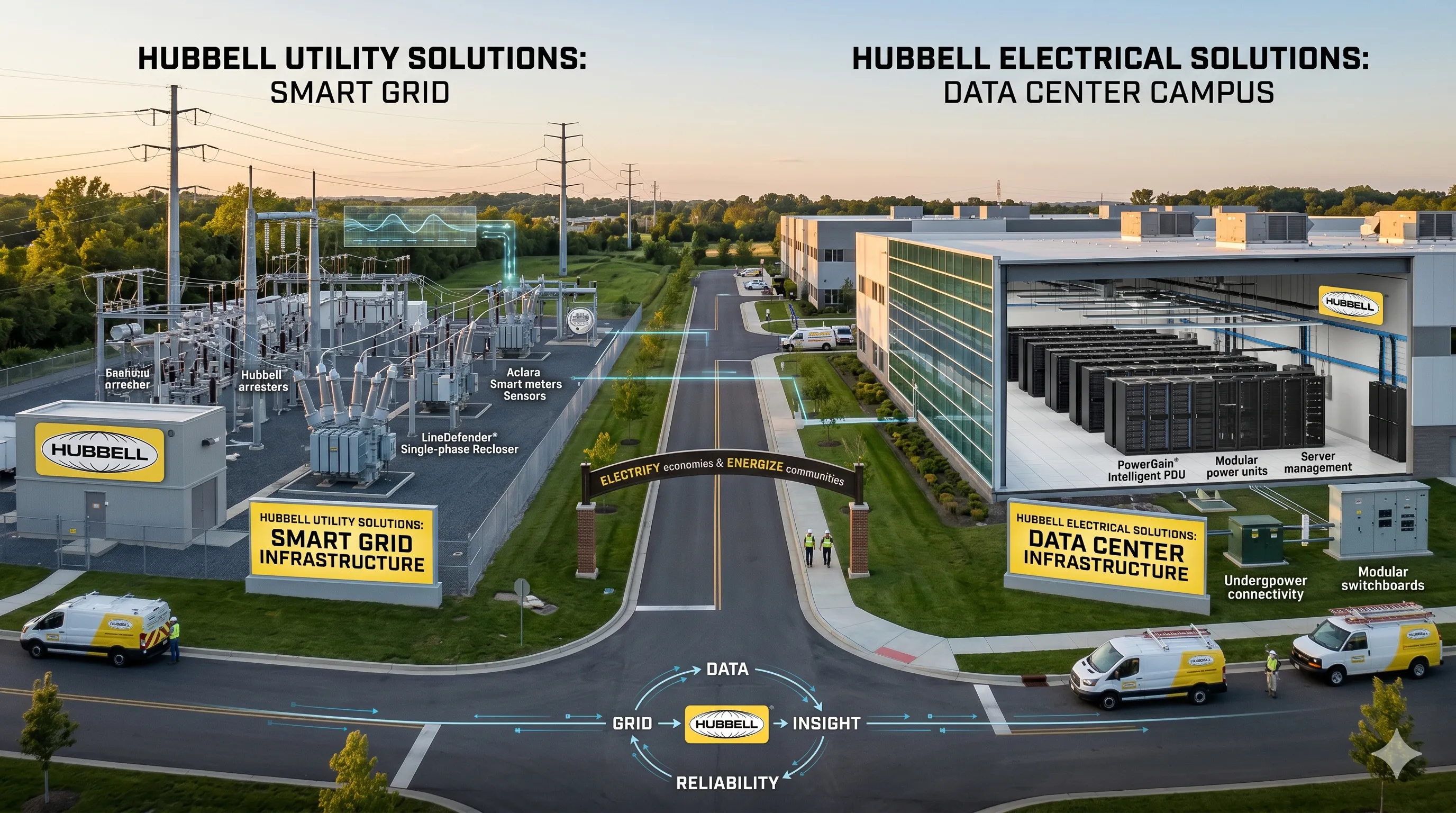
Utility Solutions
The Utility Solutions segment focuses on products and technologies used by power utilities and grid infrastructure operators. This area is related to transmission, distribution, substations, grid infrastructure, grid automation, metering, protection, and utility communication needs.
Utility projects usually require products that can withstand outdoor exposure, high electrical loads, mechanical stress, long service cycles, and strict safety requirements. Hubbell’s Utility Solutions segment is important because power grids are being upgraded to handle aging infrastructure, electrification, renewable energy integration, and rising demand from data centers and industrial loads.
Electrical Solutions
The Electrical Solutions segment is more closely related to commercial, industrial, and facility electrical applications. This can include wiring devices, electrical connectors, fittings, enclosures, grounding products, protection products, and installation components used in buildings and industrial environments.
For contractors and facility owners, this segment supports practical electrical installation and operation needs. A factory, campus, warehouse, hospital, transport hub, or data center may depend on many electrical products that are not visible to end users but are essential for safety and reliability.
What Products Does Hubbell Make?
Electrical Components for Facilities and Industrial Sites
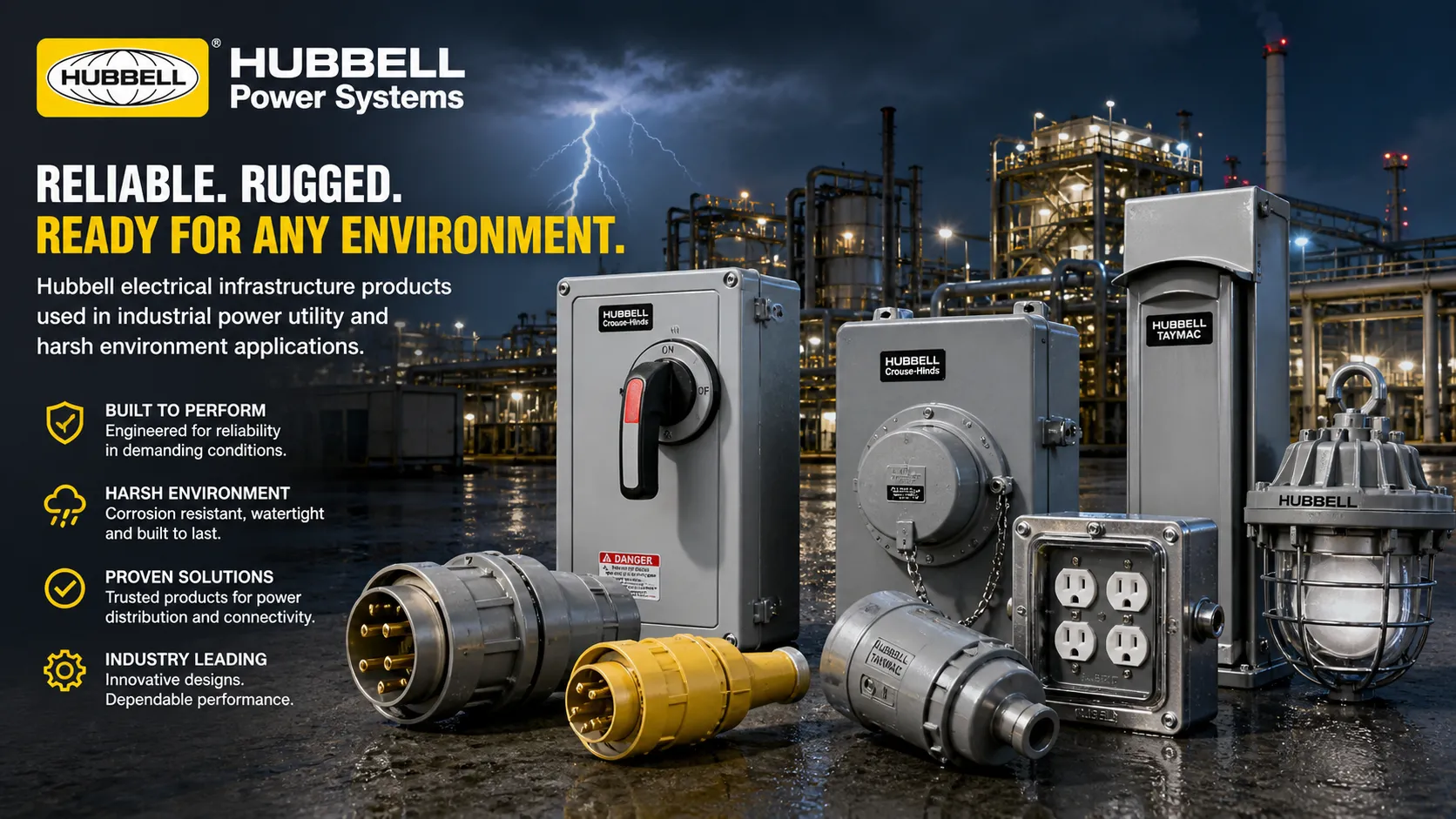
Hubbell manufactures a wide range of electrical products used in commercial, industrial, and infrastructure projects. These can include wiring devices, connectors, fittings, boxes, enclosures, grounding products, and related installation hardware. These products help electrical systems connect, protect, distribute, and support power safely.
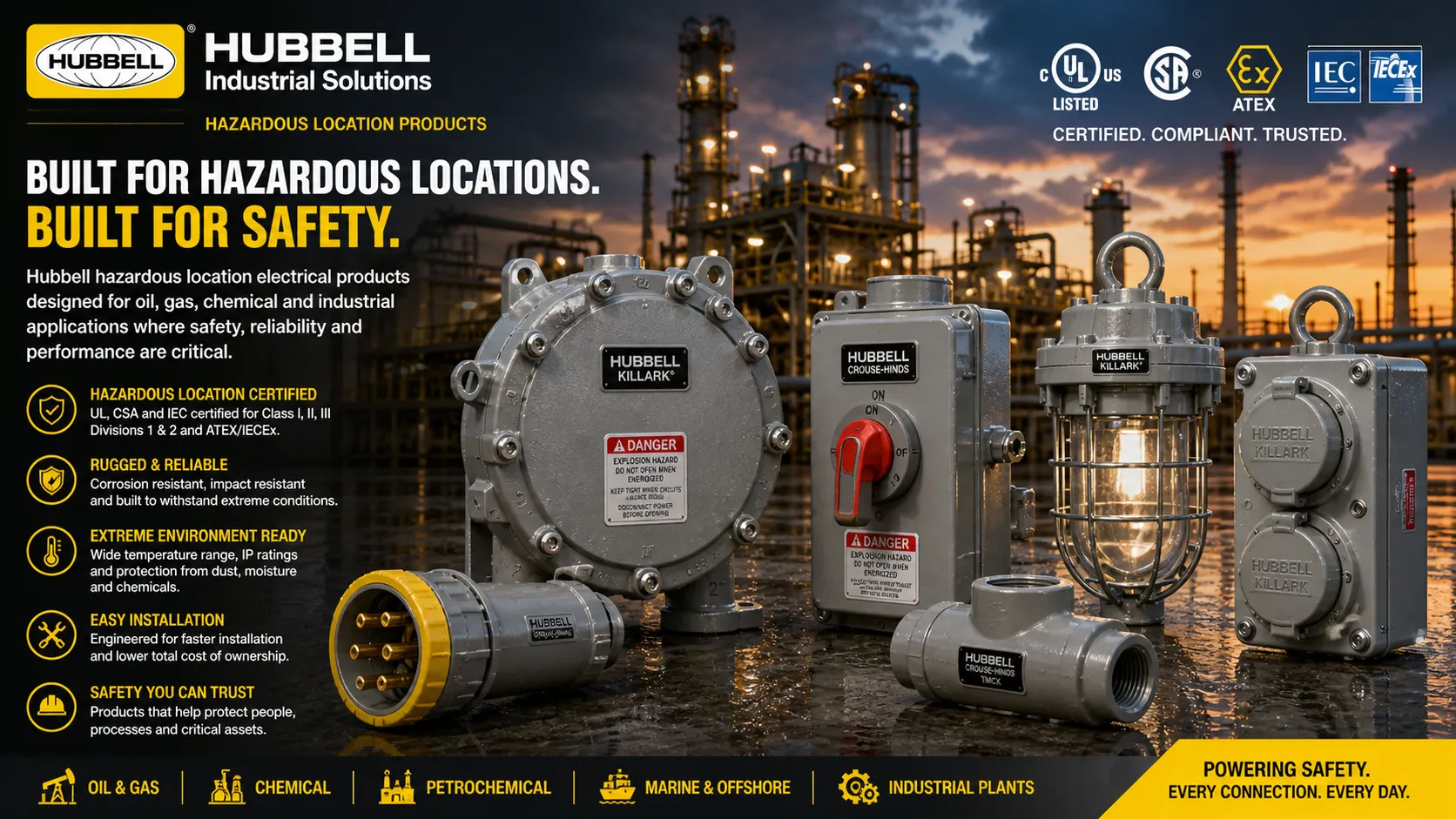
In industrial environments, product selection is especially important. Electrical components may need to resist dust, moisture, vibration, corrosion, heat, or other field challenges. This is why contractors and engineers often look beyond price and consider durability, certification, installation quality, and lifecycle performance.
Utility Transmission, Distribution, and Substation Products
Hubbell Power Systems manufactures products for transmission, distribution, substation, OEM, and telecommunications applications used by utilities. These products are part of the physical infrastructure that helps power move from generation and transmission networks to distribution systems and end users.
Utility products must perform under demanding conditions. They may be installed outdoors, exposed to weather, used in high-voltage environments, or required to support long maintenance intervals. In these settings, reliability directly affects grid performance and service continuity.
Smart Metering and Grid Automation Technologies
Hubbell is also connected with smart grid and utility automation through Aclara. Smart meters, communication networks, and grid-edge software help utilities collect data, improve visibility, diagnose issues, and manage distribution networks more efficiently.
In January 2026, Hubbell announced Aclara360, a modular software platform designed to improve utility operations by using data from meters and grid-edge devices. This shows how Hubbell’s role is expanding from traditional electrical hardware toward data-enabled infrastructure.
Hubbell Power Systems Explained
The Utility-Focused Side of Hubbell
Hubbell Power Systems, often known as HPS, is one of the most recognized areas under Hubbell. It is mainly associated with power utilities and infrastructure markets. For people searching for Hubbell in relation to grids, substations, transmission lines, distribution networks, and telecommunications infrastructure, Hubbell Power Systems is often the most relevant business area.
Hubbell Power Systems products can be used in utility transmission and distribution networks, substations, civil construction, telecommunications infrastructure, and outdoor power systems. These are applications where safety, long-term performance, and field reliability are essential.
Why Hubbell Power Systems Is Important
Power infrastructure is under pressure from several long-term trends. Aging electrical grids need modernization. Renewable energy requires stronger interconnection and distribution systems. Data centers and electrification increase load demand. Utilities also need better monitoring, automation, and resilience against outages.
Hubbell Power Systems is important because it serves many of these grid-side needs. Its products and technologies help utilities strengthen physical infrastructure, improve field reliability, and prepare for more connected and data-driven power networks.
Why Hubbell Is Relevant to Today’s Infrastructure Market
Grid Modernization
Grid modernization is one of the biggest drivers behind demand for utility infrastructure products. Utilities need to upgrade transmission and distribution networks, improve outage response, integrate renewable energy, and build more resilient systems. Hubbell’s Utility Solutions segment is positioned in this market because it provides products and technologies for grid-side infrastructure.
The company’s 2025 annual report highlighted grid modernization and electrification as major long-term trends. These trends are not only financial topics; they also reflect real engineering needs in power utilities, industrial facilities, and public infrastructure.
Data Centers and Rising Power Demand
The growth of cloud computing, AI, and digital services is increasing the power requirements of data centers. Data centers need high-quality electrical infrastructure, reliable connections, backup power integration, grounding, protection, and safe installation systems.
This makes electrical infrastructure companies more important to the digital economy. Hubbell is relevant because many of its products support the facility-side and grid-side systems that help deliver reliable power to high-demand environments such as data centers and large industrial sites.
Smart Metering and Utility Data
Smart metering and grid-edge data are changing how utilities operate. Instead of relying only on manual inspection and reactive maintenance, utilities can use meters, sensors, communication networks, and software platforms to improve visibility across the distribution network.
For example, Hubbell’s Aclara business has been connected with smart meter and advanced metering infrastructure projects, including a supply agreement with Meralco in the Philippines for the initial phase of a larger smart meter deployment. These types of projects show how utility infrastructure is becoming more digital and data-driven.
Where Are Hubbell Products Used?
Power Utilities and Substations
Power utilities use infrastructure products for transmission, distribution, substations, protection, metering, and grid operation. These environments require high reliability because failures can affect large numbers of users and critical services.
In substations and grid networks, products must support electrical safety, mechanical strength, environmental durability, and long-term maintenance. Hubbell’s role in utility infrastructure makes it relevant to these high-reliability applications.
Industrial Plants and Harsh Environments
Industrial facilities such as factories, petrochemical plants, power plants, mines, ports, and heavy-duty production sites also require dependable electrical infrastructure. These sites may face dust, moisture, vibration, high noise, electromagnetic interference, corrosive environments, or continuous operation demands.
Reliable electrical products help protect equipment and reduce downtime. At the same time, these sites also need reliable communication tools for maintenance, emergency response, production coordination, and safety management.
Commercial Buildings, Campuses, and Public Facilities
Hubbell products are also relevant in commercial buildings, campuses, hospitals, transportation hubs, public facilities, warehouses, and data centers. These spaces rely on electrical infrastructure for daily operation, user safety, building systems, and maintenance efficiency.
Although these environments may appear less demanding than utility substations or heavy industrial plants, electrical reliability still matters. A well-designed electrical infrastructure supports safe operation, easier maintenance, and better long-term performance.
Hubbell and Industrial Communication Infrastructure
Why Electrical Systems Need Communication Support
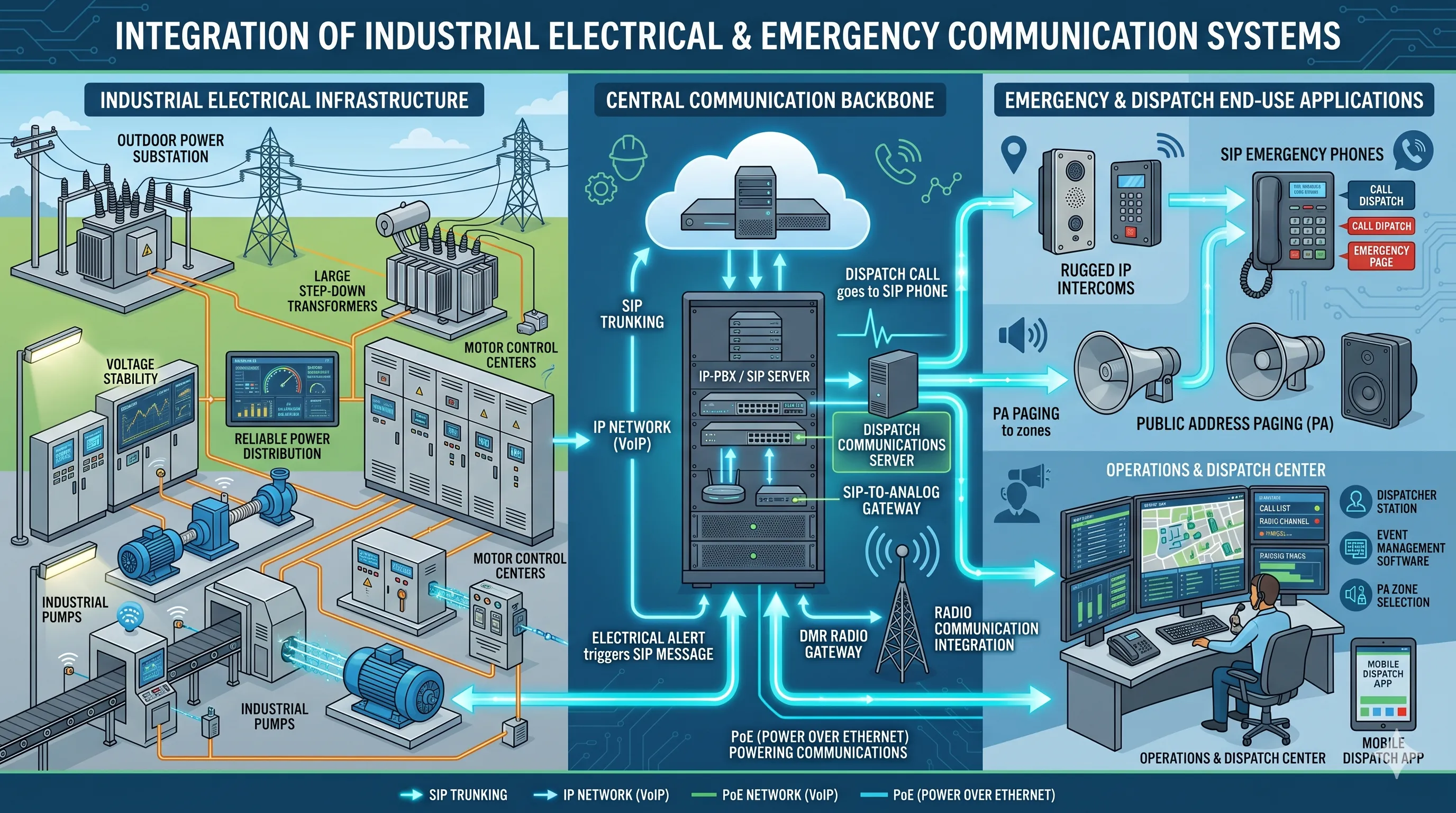
Modern infrastructure projects do not depend on electrical systems alone. They also need communication systems that help people coordinate, report incidents, respond to emergencies, and manage operations. In power plants, substations, tunnels, transportation facilities, factories, campuses, and industrial parks, communication systems are often deployed together with electrical infrastructure.
Typical communication systems may include SIP industrial telephones, emergency call stations, intercom terminals, paging speakers, dispatch consoles, RoIP gateways, CCTV linkage, alarm integration, and public address systems. These systems help turn electrical infrastructure into a safer and more manageable operating environment.
A Natural Connection with Becke Telcom Solutions
Hubbell is mainly known for electrical and utility infrastructure, while Becke Telcom focuses on rugged industrial communication systems. For projects that require both reliable electrical infrastructure and reliable site communication, the two solution layers can appear in the same project environment.
Becke Telcom provides SIP-based industrial telephones, emergency phones, paging terminals, RoIP gateways, and dispatch communication solutions for harsh and safety-critical applications. These solutions are suitable for power plants, substations, tunnels, factories, utility corridors, mines, ports, transportation facilities, and other industrial sites where emergency communication and daily operation coordination are required.
Electrical infrastructure keeps the system powered. Industrial communication keeps people connected, informed, and able to respond when safety or operational issues occur.
How to Evaluate Hubbell for a Project
Match the Product to the Application
The first step is to identify the project environment. A utility substation, data center, commercial building, industrial plant, telecommunications site, and transportation facility may all require different electrical products. Buyers should consider voltage level, installation location, environmental exposure, safety requirements, maintenance needs, and compatibility with the wider system.
Choosing the right product category is more important than simply choosing a known brand name. A product that works well in a commercial building may not be suitable for outdoor utility infrastructure, and a product designed for grid infrastructure may not match the needs of an indoor facility system.
Consider Lifecycle and System Integration
Infrastructure products should be evaluated across their full lifecycle. This includes installation quality, durability, supplier documentation, maintenance access, spare parts, compliance requirements, and future expansion. For large projects, long-term reliability is often more important than the lowest initial cost.
System integration should also be considered. Electrical infrastructure may need to support communication equipment, monitoring devices, alarms, emergency phones, paging systems, and control platforms. A complete project design should consider how power, safety, communication, and maintenance systems work together.
Conclusion
Hubbell is a major manufacturer in the electrical and utility infrastructure market. Its products and technologies support power utilities, substations, transmission and distribution networks, industrial facilities, data centers, commercial buildings, and public infrastructure. The company is especially relevant today because grid modernization, electrification, smart metering, data center growth, and infrastructure reliability are becoming more important across many industries.
For engineers, contractors, and buyers, understanding Hubbell helps clarify the role of electrical infrastructure suppliers in modern projects. At the same time, electrical infrastructure is only one part of a complete industrial system. In harsh and safety-critical environments, reliable communication is also essential. That is why Becke Telcom’s SIP industrial phones, emergency call stations, paging systems, RoIP gateways, and dispatch platforms can complement electrical infrastructure by supporting voice communication, emergency response, and operational coordination.
FAQ
What is Hubbell?
Hubbell is an American manufacturer of electrical and utility solutions used in power utilities, industrial facilities, commercial buildings, data centers, and infrastructure projects.
What does Hubbell make?
Hubbell makes electrical and utility infrastructure products such as wiring devices, connectors, fittings, enclosures, grounding products, transmission and distribution products, substation-related products, smart metering technologies, and grid infrastructure solutions.
What is Hubbell Power Systems?
Hubbell Power Systems is the utility-focused side of Hubbell. It manufactures products for transmission, distribution, substations, OEM, and telecommunications applications used by utilities and infrastructure operators.
Where are Hubbell products commonly used?
Hubbell products are commonly used in power utilities, substations, transmission and distribution networks, industrial plants, commercial buildings, data centers, telecommunications infrastructure, transportation facilities, and public projects.
Is Hubbell related to industrial communication systems?
Hubbell is mainly focused on electrical and utility infrastructure. However, many industrial and utility projects also need communication systems. In these cases, Becke Telcom can provide SIP industrial phones, emergency phones, paging systems, RoIP gateways, and dispatch communication solutions for harsh and safety-critical environments.