Emergency phone service is an essential part of public safety, industrial operations, transportation management, and critical facility communication. When an accident, security incident, equipment failure, medical emergency, or safety risk occurs, people need a direct and reliable way to reach a control room, security center, dispatch desk, or emergency response team.
Unlike ordinary telephone service, an emergency phone service is designed for fast access, clear voice communication, 24/7 availability, and dependable operation in demanding environments. It may include SOS call stations, industrial emergency telephones, vandal-resistant phones, SIP emergency phones, paging systems, CCTV linkage, dispatch consoles, and alarm integration. The goal is not only to make a call, but to help operators identify the situation, locate the caller, coordinate a response, and protect people in time-critical scenarios.

What Is an Emergency Phone Service?
A Dedicated Communication Channel for Urgent Situations
Emergency phone service refers to a dedicated communication solution that allows people to quickly request help during critical events. It is commonly used in public areas, industrial sites, transportation facilities, campuses, hospitals, parking areas, tunnels, ports, and other locations where immediate voice access is required.
A typical emergency phone service allows a user to press an SOS button, lift a handset, or activate a call station. The call is then routed to a predefined destination, such as a security office, control room, emergency dispatch center, maintenance team, or central monitoring platform. In many systems, the device location and call status can also be displayed automatically, helping operators understand where the incident is happening.
More Than a Basic Telephone Line
Modern emergency phone service is more than a simple voice line. It can be integrated with IP PBX systems, SIP servers, paging systems, public address equipment, video surveillance platforms, alarm panels, access control systems, and command center software. This makes emergency communication faster, more visible, and easier to manage.
For example, when a user presses an SOS button at a tunnel emergency phone, the system can automatically call the control room, display the device location, trigger a nearby CCTV camera, and allow the operator to make a zone paging announcement. This type of integration turns emergency phone service into a coordinated safety communication system.
Why 24/7 Availability Matters
Emergencies Do Not Follow Business Hours
Critical situations can happen at any time. A medical incident may occur late at night in a parking facility. A worker may need urgent help during a maintenance shift in an industrial plant. A passenger may require assistance in a transportation hub outside normal office hours. Because of this, emergency phone service must remain available 24 hours a day, seven days a week.
Reliable emergency communication helps reduce response delays. When people know where to find an emergency phone and can reach help immediately, the site becomes safer and easier to manage. This is especially important in locations where mobile phone signals may be weak, where visitors may not know who to contact, or where noise, distance, weather, or safety restrictions make ordinary communication difficult.
Reliable Operation in Harsh Environments
Many emergency phone systems are installed in places where ordinary communication devices may fail. Outdoor public areas may face rain, dust, heat, cold, and vandalism. Industrial sites may have high noise, moisture, corrosive air, vibration, or hazardous working conditions. Tunnels and underground areas may require stable communication even when cellular coverage is limited.
For these environments, emergency phones should be built with rugged housings, weatherproof protection, impact-resistant structures, loud audio, clear microphone pickup, and stable network connectivity. In more demanding projects, backup power, surge protection, device health monitoring, and redundant communication paths may also be required.
Key Components of an Emergency Phone Service
Emergency Phones and SOS Call Stations
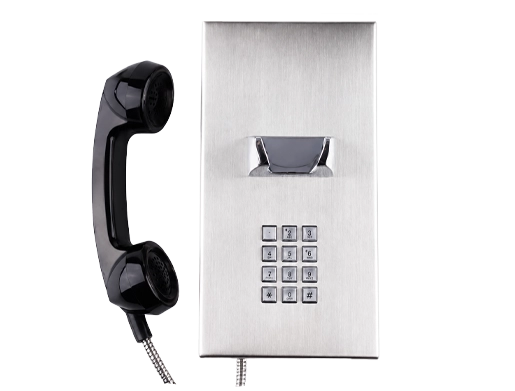
Emergency phones and SOS call stations are the visible access points for users. They may be installed on walls, poles, roadside cabinets, tunnel niches, platforms, gates, elevators, parking areas, industrial corridors, or public help points. Depending on the site, these devices may use a handset, hands-free speakerphone, one-button SOS call, metal keypad, status indicator, beacon light, or integrated camera.
The device design should match the environment. Public areas may require vandal-resistant emergency phones with stainless steel panels and tamper-resistant screws. Outdoor sites may require weatherproof SOS phones. Industrial facilities may require rugged telephones with high-volume audio, dust protection, and stable performance in harsh working conditions.
IP PBX, SIP Server, and Call Routing
The IP PBX or SIP server is responsible for call routing and communication control. It determines where emergency calls should go, whether to ring a control room, security desk, maintenance team, or multiple destinations at the same time. It can also support call queues, call forwarding, recording, priority routing, and multi-site communication.
For modern emergency phone service, SIP compatibility is highly valuable. SIP emergency phones can connect over IP networks, integrate with existing VoIP infrastructure, and support centralized management across multiple locations. This is useful for campuses, transport networks, industrial parks, and organizations that need scalable emergency communication.
Dispatch Console and Control Room Platform
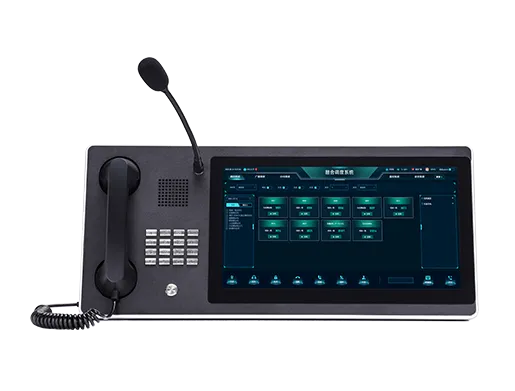
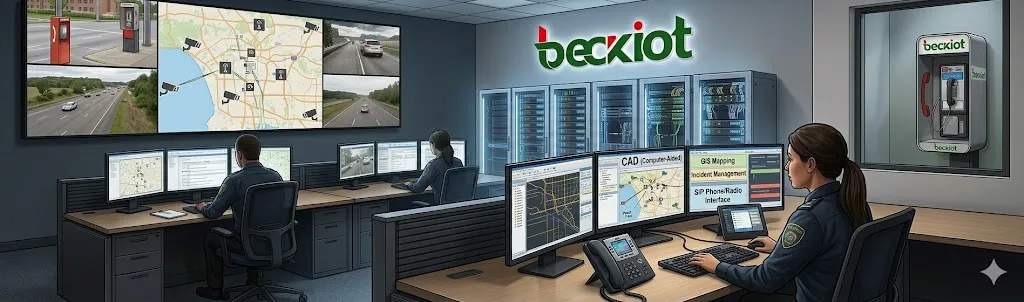
The dispatch console is where operators receive, manage, and coordinate emergency calls. A well-designed dispatch interface can show the caller location, device name, call status, related camera feed, nearby paging zones, and response options. This helps the operator make quicker decisions instead of relying only on voice information.
In critical facilities, the dispatch console may also connect with alarm systems, GIS maps, radio gateways, paging speakers, and incident records. This allows operators to communicate with the caller, notify nearby personnel, coordinate security teams, and document the event for later review.
Paging, CCTV, and Alarm Linkage
Emergency phone service becomes more powerful when it is connected with other safety systems. Paging integration allows operators to broadcast instructions to a specific zone or the entire facility. CCTV linkage helps operators verify what is happening near the emergency call point. Alarm integration can trigger notifications, visual indicators, or escalation workflows.
For example, a public safety call station in a campus can call the security center, activate a nearby camera, and allow the operator to make a live announcement through IP speakers. In an industrial site, an emergency phone can be linked with paging horns, control room software, and maintenance dispatch procedures.
How Emergency Phone Service Works
Step 1: The User Activates the Emergency Phone
The process usually starts when a person presses an emergency button, lifts a handset, or uses a call station. The device may automatically dial a preset number without requiring the user to remember an extension or phone number. This is important during stressful situations, when simple operation can save time.
Some emergency phones also provide visual and audio feedback, such as a call status light, ringing tone, or voice prompt. This reassures the user that the call has been placed and that help is being contacted.
Step 2: The Call Reaches the Right Response Team
Once activated, the call is routed through the communication system to the correct destination. This may be a local control room, security office, reception desk, operations center, or remote monitoring team. In larger systems, calls can be routed based on location, priority, time schedule, or backup rules.
If the first operator does not answer, the call can be forwarded to another extension, mobile device, or emergency response group. This helps maintain service availability and reduces the chance of missed calls.
Step 3: Operators Identify, Verify, and Respond
After receiving the call, the operator can speak with the caller, identify the emergency location, check linked camera views, and decide how to respond. The response may include giving voice instructions, dispatching staff, contacting emergency services, making a paging announcement, or escalating the incident to supervisors.
Call records, device status, timestamps, and response notes can also support later analysis. This helps organizations improve safety procedures, maintain equipment, and review how emergencies were handled.
Where Emergency Phone Service Is Needed
Transportation Facilities
Airports, railway stations, metro platforms, bus terminals, highways, tunnels, and parking areas often require emergency phone service. These locations serve large numbers of people, including visitors who may not know local emergency contacts. A visible emergency phone provides a direct connection to help when accidents, lost-person incidents, security problems, or medical needs occur.
In tunnels and transport corridors, emergency phones are especially important because mobile signals may be unreliable and evacuation routes may be complex. Integrated emergency phone systems can help operators communicate with drivers, passengers, maintenance teams, and emergency responders.
Industrial and Energy Sites
Factories, refineries, chemical plants, power stations, substations, mines, ports, and utility corridors need reliable emergency communication for safety-critical operations. Workers may face high noise, hazardous materials, equipment faults, or remote working areas where fast communication is essential.
Industrial emergency phone service can support incident reporting, maintenance coordination, evacuation instructions, and command center communication. In harsh or hazardous areas, devices must be selected according to environmental conditions, safety requirements, installation location, and system integration needs.
Campuses, Hospitals, and Public Areas
Schools, universities, hospitals, public parks, commercial buildings, and community spaces use emergency phones to improve safety and visitor assistance. Emergency call stations can help people contact security, report suspicious behavior, request medical help, or receive guidance in unfamiliar locations.
For public areas, visibility and ease of use are important. Devices should be clearly marked, easy to reach, and simple to operate. In many projects, emergency phones are installed together with lighting, signage, cameras, and public address speakers to improve both deterrence and response.
Important Features to Consider
Clear Voice and Simple Operation
Emergency phone service must be easy to use under pressure. One-button calling, automatic dialing, loudspeaker audio, noise-resistant microphone design, and clear call status indicators can improve usability. In noisy industrial areas, high-volume audio and handset options may be necessary.
The system should also provide reliable two-way communication. Operators need to hear the caller clearly, and the caller needs to receive instructions without confusion. Audio quality is not just a comfort feature; it directly affects emergency response.
Rugged Housing and Environmental Protection
The device enclosure should match the installation environment. Outdoor and industrial emergency phones often require water resistance, dust protection, corrosion resistance, UV resistance, impact protection, and secure mounting. Public installations may also need anti-vandal design to prevent damage or misuse.
Choosing the right housing helps reduce maintenance costs and service interruptions. A device that fails during rain, dust exposure, impact, or temperature changes can weaken the entire emergency communication system.
SIP Integration and Remote Management
SIP emergency phones allow organizations to connect emergency communication with modern IP voice systems. This enables flexible routing, centralized extension management, multi-site deployment, call recording, and integration with dispatch platforms. For large projects, remote configuration and status monitoring are also valuable.
Remote management allows maintenance teams to check device availability, network status, registration status, and fault alerts. This helps ensure that emergency phones are not only installed, but actually ready when needed.
System Linkage and Response Workflow
A strong emergency phone service should support more than call connection. It should fit into the site’s safety workflow. This may include CCTV pop-up, paging zone control, alarm notification, call logging, GIS location display, dispatch coordination, and escalation rules.
The best system design starts with real operational questions: Who answers the call? What happens if nobody answers? How is the location identified? Which camera or paging zone should be linked? Who is dispatched? How is the incident recorded? Answering these questions helps build a practical and reliable emergency communication process.
Emergency Phone Service for Industrial and Public Safety Projects
Adapting the System to the Site
Different sites require different emergency phone service designs. A campus may focus on public help points and security response. A tunnel may require call stations, CCTV linkage, paging horns, and control room integration. A chemical plant may need rugged or explosion-proof communication terminals, dispatch control, and clear emergency broadcasting.
Because of these differences, project planning should consider the communication environment, risk level, installation conditions, network infrastructure, operator workflow, and future expansion. A scalable SIP-based system can make it easier to add more emergency phones, paging zones, dispatch consoles, or remote sites later.
Becke Telcom Emergency Communication Solutions
For industrial and public safety communication projects, Becke Telcom provides rugged emergency phones, industrial telephones, SIP help points, paging terminals, dispatch consoles, and integrated communication solutions. These products can be connected with IP PBX, SIP servers, public address systems, CCTV platforms, and control room applications.
Relevant Solution Introduction:Emergency Communication System
Becke Telcom solutions are suitable for sites that require stable emergency voice communication in harsh, outdoor, public-area, or industrial environments. Instead of treating emergency phones as isolated devices, the system can be designed as part of a broader safety communication network that supports daily operations and critical incident response.
How to Choose the Right Emergency Phone Service
Match the Device to the Environment
The first step is to understand where the emergency phone will be installed. Outdoor public areas may need weatherproof and vandal-resistant devices. Industrial sites may need rugged telephones with loud audio and stable operation. Hazardous areas may require certified explosion-proof communication equipment. Transportation sites may need clear signage, location identification, and control room linkage.
Choosing a device only by appearance or price can create long-term problems. The correct selection should consider protection rating, mounting method, call method, audio performance, network compatibility, maintenance access, and integration requirements.
Plan the Complete Communication Workflow
An emergency phone is only one part of the service. The complete workflow should include call routing, answering rules, backup contacts, response escalation, paging linkage, camera verification, device monitoring, and maintenance procedures. This ensures that every emergency call leads to a practical response.
Organizations should also test the system regularly. Routine testing helps verify call quality, network registration, device status, operator response, and system linkage. A 24/7 emergency phone service should be maintained as a live safety system, not just installed and forgotten.
Conclusion
Emergency phone service provides a reliable communication lifeline for critical situations. It helps people request help quickly, allows operators to identify the incident location, and supports faster coordination through dispatch, paging, CCTV, and alarm linkage. For public areas, transportation facilities, industrial plants, campuses, hospitals, and harsh environments, it can significantly strengthen safety response and operational control.
A well-designed emergency phone service is not simply about placing phones on a wall. It is about building a dependable 24/7 communication process that connects people, devices, control rooms, and response teams. With the right emergency phones, SIP infrastructure, dispatch tools, and system integration, organizations can improve safety, reduce response delays, and maintain reliable communication when it matters most.
FAQ
What is emergency phone service?
Emergency phone service is a dedicated communication solution that allows people to quickly contact a control room, security center, dispatch desk, or emergency response team during urgent situations. It is commonly used in public areas, industrial sites, transportation facilities, campuses, hospitals, and outdoor safety locations.
How is emergency phone service different from normal telephone service?
Normal telephone service is mainly designed for daily communication. Emergency phone service is designed for fast response, simple operation, high reliability, location identification, and integration with safety systems such as dispatch consoles, paging systems, CCTV, and alarms.
Where should emergency phones be installed?
Emergency phones should be installed in areas where people may need immediate help, such as tunnels, platforms, parking lots, campuses, hospitals, industrial plants, utility corridors, ports, public buildings, highways, and remote work areas. The installation location should be visible, accessible, and easy to identify.
Can emergency phone service work with SIP and IP PBX systems?
Yes. Many modern emergency phones support SIP and can connect to IP PBX systems or SIP servers. This allows flexible call routing, centralized management, multi-site deployment, call recording, and integration with dispatch platforms or public address systems.
What features are important for an industrial emergency phone?
An industrial emergency phone should provide rugged construction, clear voice quality, loud audio, simple emergency calling, weatherproof or dustproof protection, stable network connection, remote monitoring, and compatibility with the site’s communication system. In hazardous areas, certified explosion-proof models may be required.