Underground coal mines operate in one of the most demanding communication environments in industry. Production teams work across long entries, sections, belt roads, shaft areas, pump stations, substations, and refuge-related locations that are physically separated and operationally different from one another. In daily production, this creates a constant need for fast voice dispatch, reliable field coordination, and clear visibility of personnel and conditions underground. In an emergency, the communication requirement becomes even more critical, because the command team must quickly understand where people are, what conditions are changing, and how to direct evacuation, isolation, or rescue actions without delay.
That is why an underground coal mine dispatch and command solution should not be written as a simple mine telephone project. In practical operation, it is a broader command system that connects underground voice communication, mobile radio coordination, personnel tracking, atmospheric monitoring, mine maps, event visualization, and emergency conferencing into one coordinated operating framework. The goal is not only to let people talk. The goal is to help the mine dispatch room make better decisions during routine production, abnormal conditions, and post-accident response.
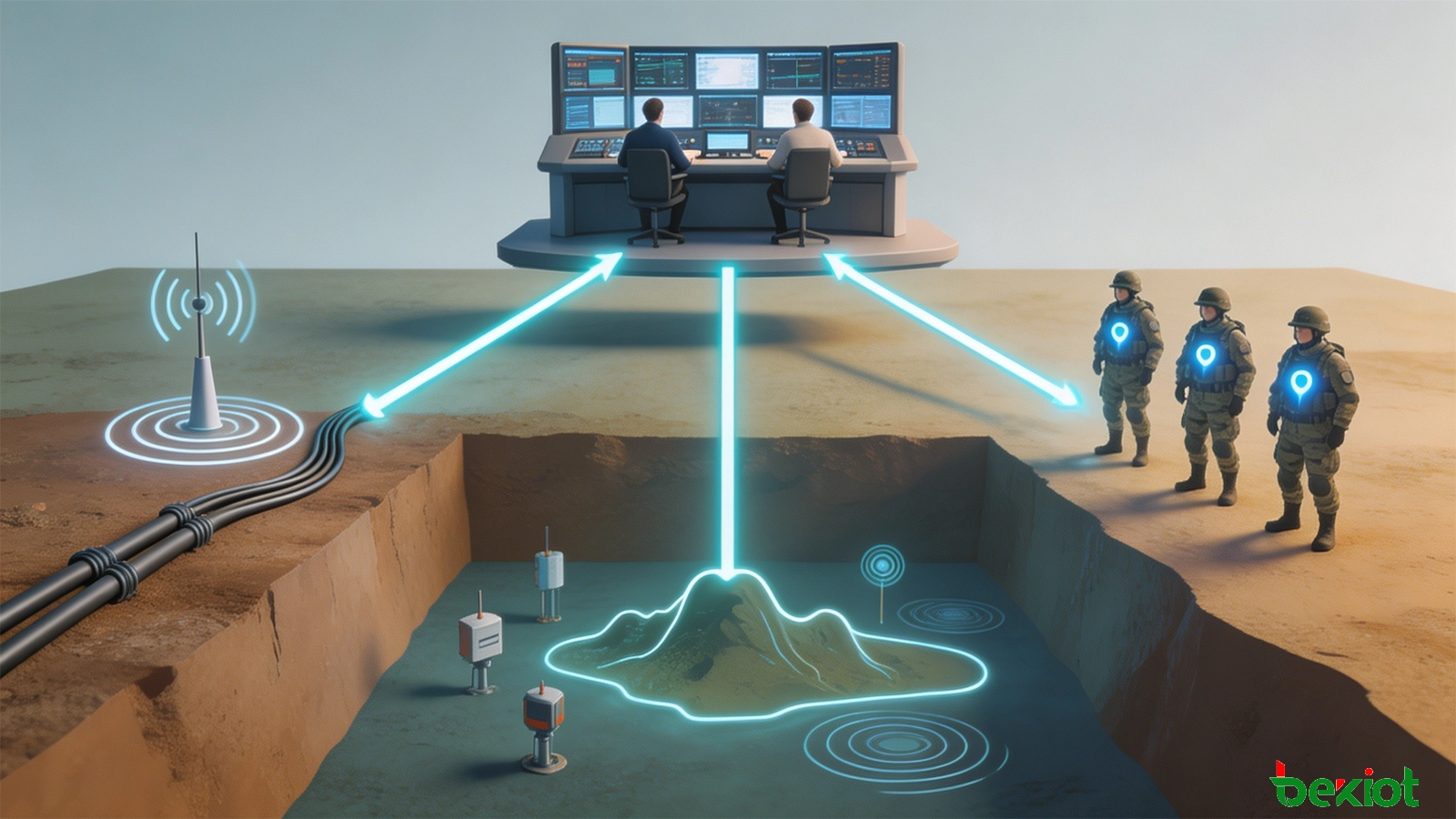
A modern solution combines underground telephones, section communication points, dispatch consoles, leaky feeder radio systems, personnel tracking, methane and fire-related monitoring, ventilation awareness, command center conferencing, and post-accident communication support into one integrated platform. Instead of managing these functions as separate systems, the mine can connect them through a unified dispatch and emergency command workflow that supports both daily efficiency and life-critical response readiness.
Coal mines do not communicate for a single purpose. In normal operation, teams need dispatch instructions, maintenance coordination, section reporting, equipment status updates, and production communication between underground crews and the surface. Supervisors need to coordinate movement between headings, belt entries, shaft bottoms, and service areas. Safety teams need to maintain awareness of personnel locations and underground conditions. This means the communication system has to function as a production tool every day, not only as an emergency backup.
At the same time, underground coal mines face hazards that can change conditions very quickly. Methane accumulation, conveyor-related fire risk, smoke migration, ventilation changes, power problems, roof-related incidents, and post-accident access limitations all place heavy demands on communication and command. A dispatch system that works well in daily operations but cannot support emergency coordination, personnel accountability, and resilient communication after an incident is no longer enough.
In an underground mine, the dispatch room needs more than a voice report. It needs context. If a crew member reports an abnormal condition, the surface team must know which section or entry is involved, who is in the affected area, what recent gas or fire indications look like, how ventilation is configured, and whether there are reliable communication paths to the people underground. Without that integrated visibility, response becomes slower and more uncertain.
That is why modern mine command solutions increasingly connect communication with tracking, monitoring, and command workflows. The dispatch room does not only answer calls. It supervises the broader operating picture of the mine and helps transform field information into organized action.
In underground coal mining, communication is not just about contact. It is about command awareness, personnel accountability, and decision support under conditions where time and clarity matter most.
An underground coal mine dispatch and command solution is an integrated communication and operational control system designed to support routine mine dispatch, mobile crew coordination, personnel tracking, atmospheric awareness, emergency conferencing, and post-accident response. It typically includes underground voice endpoints, dispatch consoles, radio coverage for mobile teams, personnel tracking points, surface monitoring interfaces, event logs, and a central command environment that gives operators a clearer view of the mine’s communication and safety status.
The solution is suitable for underground coal mines that need to coordinate production sections, belt entries, shaft areas, service chambers, refuge-related zones, and surface response functions through one structured operating model. Its purpose is not limited to voice calling. It helps the mine connect production dispatch, safety response, and emergency command through one continuously managed communication framework.
During routine operation, the dispatch room communicates with underground crews through mine telephones, section call points, and radio-connected mobile personnel. Supervisors can issue instructions, receive field reports, coordinate maintenance, and monitor communication status across active areas. At the same time, the system can visualize personnel presence by zone and receive atmospheric or status signals from connected monitoring layers.
If an abnormal event occurs, such as a methane alert, fire-related signal, communication loss, or emergency report from underground, the command workflow becomes more structured. The dispatch room can identify the affected section, review who is likely in that area, verify communication paths, contact field teams, initiate internal conferencing, notify response personnel, and use the integrated map and monitoring view to guide next actions. This helps surface command move faster from alarm to organized response.
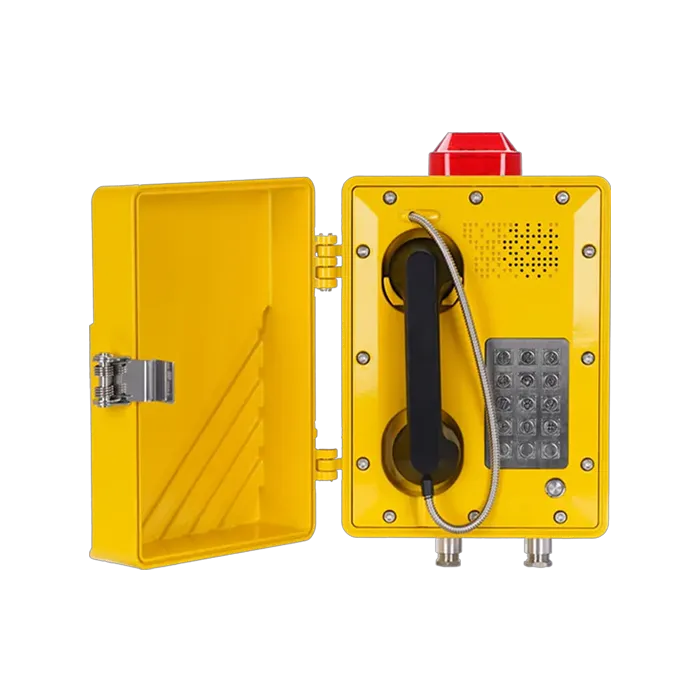
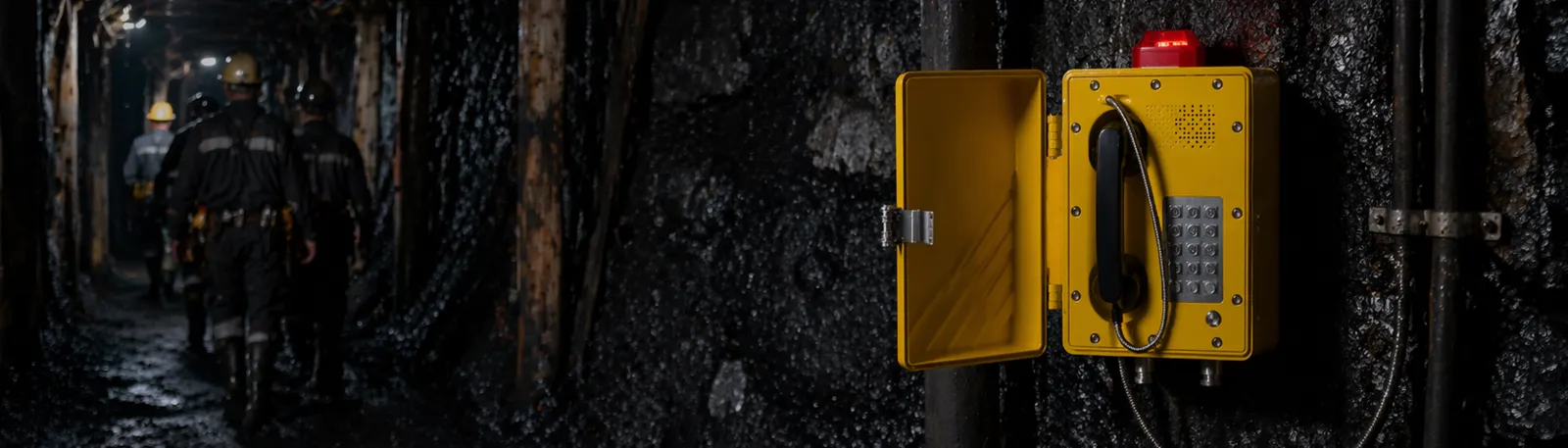
The foundation of the solution is underground voice communication. This includes mine telephones, section communication points, shaft and junction phones, and dispatcher operator consoles on the surface. These endpoints support direct communication between underground crews and the dispatch room during production, maintenance, inspection, and safety operations.
Voice dispatch remains essential because it provides the fastest path for direct clarification. A dispatch operator can confirm where a report originated, understand whether a condition is operational or urgent, and route the call to the appropriate supervisor or support team without delay. In a mine environment, where conditions can change quickly and visibility is limited, that direct voice layer is still one of the most important parts of daily control.
Not all mine communication can rely on fixed phones. Supervisors, section foremen, maintenance personnel, and response teams move through the workings, and they need mobile communication that remains practical underground. A leaky feeder radio system is particularly valuable here because it supports continuous radio coverage along entries and allows handsets to remain connected with the surface dispatch position and other authorized users across the mine.
For the dispatch room, this radio layer creates faster coordination with moving teams. The operator can communicate with patrol or supervisory staff, relay instructions to underground sections, and maintain field awareness during both production and emergency situations. In a command-oriented solution, radio is not an isolated subsystem. It is the mobile extension of the mine dispatch workflow.
Mine command becomes much stronger when communication is combined with personnel visibility. A tracking layer helps the dispatch room understand which people are associated with which sections, travel routes, strategic areas, or refuge-related zones. In daily operation, this supports accountability and movement awareness. During an emergency, it helps the command team narrow the response focus, identify likely affected crews, and understand which areas may need communication, evacuation, or rescue support first.
Location visualization becomes even more useful when presented against mine maps, section references, or zone-based displays rather than as a simple device list. This makes the information more meaningful to dispatchers, supervisors, and emergency decision-makers.
Underground dispatch systems are stronger when they are aware of environmental conditions, not just voice traffic. Methane monitoring, carbon monoxide or fire-related signals, airflow status, and other atmospheric information help the command team understand whether a condition is stable, escalating, or affecting multiple areas. This is particularly important in coal mining, where communication and safety decisions are closely tied to gas, smoke, and ventilation realities underground.
When monitoring is integrated into the dispatch and command platform, the surface team can evaluate field reports against live or recent condition data instead of relying on voice description alone. This improves both response speed and decision quality.
Underground telephones and section call points for routine and emergency voice dispatch
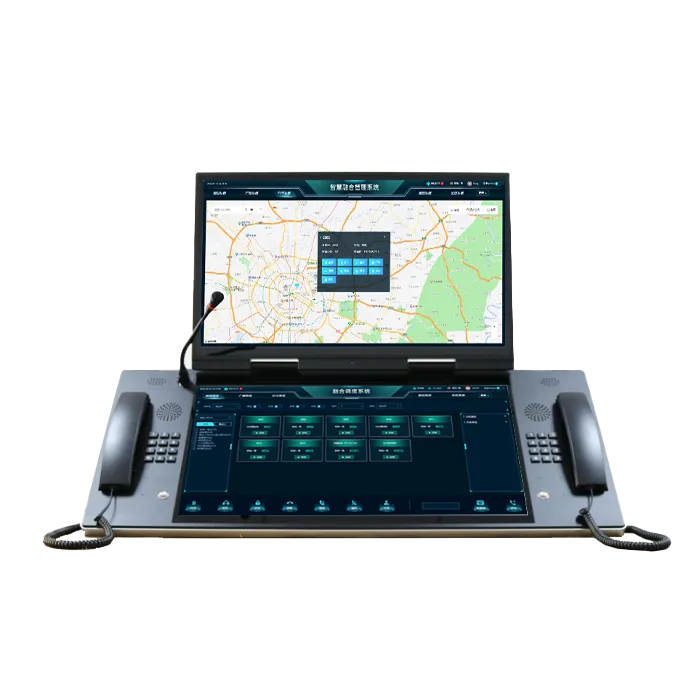
Dispatch consoles for surface communication control and event handling
Leaky feeder radio coverage for mobile supervisors, patrol teams, and responders
Personnel tracking for zone-based worker visibility and accountability
Atmospheric and fire-related monitoring integration for command awareness
Mine map and operational view interfaces for location-based supervision
Event recording and status supervision for system resilience
Emergency command tools for conferencing, escalation, and rescue coordination
The first role of the system is to support organized voice dispatch between the surface and the workings. Production communication, maintenance requests, shift coordination, safety reporting, and supervisor instruction all depend on reliable voice channels. A mine that dispatches efficiently during normal production also tends to respond more effectively during abnormal conditions because communication discipline is already part of daily practice.
Voice dispatch also reduces ambiguity. Instead of relying on incomplete messages or delayed relay, the dispatch room can speak directly with underground personnel, confirm conditions, and assign tasks with greater precision.
Mobile communication is essential underground because many of the people who need information most urgently are not standing beside a fixed endpoint. Leaky feeder radio provides the practical mobility layer that lets supervisors, response teams, and mobile workers stay connected as they move through entries and active sections. This makes it easier to direct inspections, confirm status, and coordinate field response without waiting for someone to return to a phone location.
In emergencies, this becomes even more valuable. The command room can direct underground movement, receive updates from multiple crews, and keep mobile teams aligned with the evolving response plan.
A mine dispatch center should not have to ask from the beginning who might be in the affected area every time an abnormal event occurs. Integrated personnel tracking helps answer that question faster. It supports awareness of section occupancy, travel movement, and likely personnel distribution across the mine. This strengthens both routine management and emergency accountability.
From a command perspective, tracking is not just about knowing who entered the mine. It is about giving decision-makers a clearer operational picture when they need to evaluate evacuation, rescue staging, or underground communication priorities.
Atmospheric information has a direct impact on dispatch decisions underground. Methane levels, fire-related indications, smoke or gas signals, and ventilation changes all influence whether crews should continue working, reposition, evacuate, or remain clear of certain entries. A command solution that integrates these signals allows the dispatch room to connect communication with real underground conditions.
This is especially important when abnormal events develop quickly. The operator can compare voice reports with environmental signals, understand whether multiple areas may be affected, and provide better information to decision-makers and response teams.
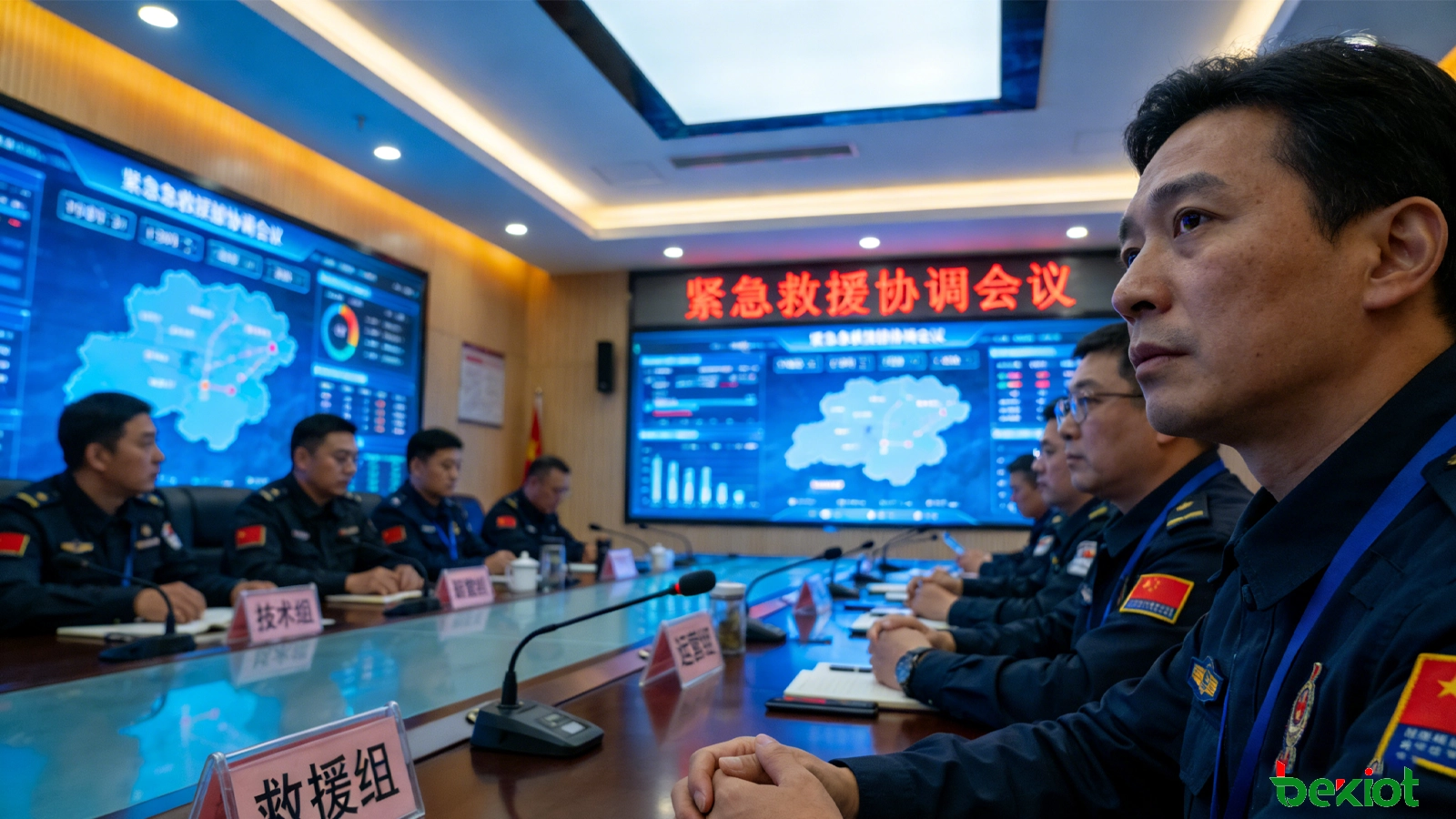
Once an event reaches a serious level, mine response depends on more than one dispatcher. Operations managers, safety leaders, ventilation specialists, engineers, rescue coordinators, and other responsible personnel may all need to review the situation together. Emergency conferencing supports that process by creating a structured command discussion environment without depending on fragmented one-to-one calling.
In practical use, this helps the mine align decisions more quickly. The command team can review reports, mine maps, ventilation considerations, personnel information, and next-step options in a shared communication session. This is where the solution moves from dispatch to true command support.
In coal mining, communication planning must also consider the possibility that normal infrastructure may be damaged or partially unavailable after an accident. A stronger solution therefore includes post-accident communication support, backup power logic, redundant communication paths, and rescue-related interfaces that help sustain contact and command continuity under degraded conditions.
This layer is not only about survival communication. It is also about helping the surface command center continue directing response, assessing conditions, and coordinating rescue strategy when normal operations are no longer possible.
An underground crew reports a routine issue or abnormal condition through a fixed phone or radio channel.
The dispatch room identifies the section, route, or operational area involved.
The system presents communication, personnel, and monitoring context to the operator.
If the event escalates, command staff can open an emergency conference and review the situation together.
Mobile crews receive instructions through the radio layer while fixed teams remain reachable through underground voice endpoints.
The platform records events, status changes, and communications for command continuity and later review.
If conditions worsen, post-accident communication and rescue support functions help maintain response coordination.
The most effective underground mine command systems are the ones that connect production dispatch, environmental awareness, personnel visibility, and emergency coordination into one clear operating picture.
The command center is where information becomes direction. During a serious event, surface leadership needs more than incoming calls. It needs a structured place to review mine maps, ventilation paths, personnel positions, communication availability, atmospheric status, and operational updates in one coordinated decision environment. The dispatch and command solution should therefore support a command center workflow rather than only a dispatcher answering function.
When the platform is designed correctly, the command center can see which underground areas are affected, which teams are connected, what monitoring signals are active, and what response actions are being discussed or assigned. This improves speed, but more importantly, it improves control.
Mine emergencies rarely belong to one department. Ventilation specialists may need to advise on air movement. Safety leaders may need to assess withdrawal zones. Operations management may need to coordinate production stoppage or access restrictions. Rescue teams may need status updates before deployment. Emergency conferencing allows these roles to communicate in a structured way without losing time to fragmented contact attempts.
Because the conferencing function is part of the same broader command system, it can be supported by the same event data, maps, and dispatch visibility that the operator is already using. This makes the consultation more informed and more practical.
These are the most active communication areas in daily mining and often the first locations where abnormal conditions are reported. Voice dispatch, radio coordination, and personnel awareness are especially important here because production changes quickly and section decisions often need immediate confirmation from the surface.
These areas connect multiple parts of the mine and are important not only for movement but also for fire-related monitoring, dispatch traffic, and emergency routing. Communication coverage and monitoring visibility in these zones help the command room understand how a local problem may affect a wider underground area.
Infrastructure areas often require reliable communication because they support essential mine functions and may become important during abnormal conditions. Integrating these locations into the same dispatch framework improves both routine maintenance communication and emergency responsiveness.
These are critical from an emergency perspective because they may influence evacuation decisions, accountability checks, and rescue planning. Communication, tracking, and environmental awareness in these areas help strengthen the mine’s readiness for more serious incidents.
Working faces and production districts
Main and secondary entries
Belt roads and haulage routes
Shaft bottom and main transfer points
Substations, pumps, and service chambers
Refuge-related and strategic areas
Fresh air and rescue interface locations
Surface dispatch and emergency command rooms
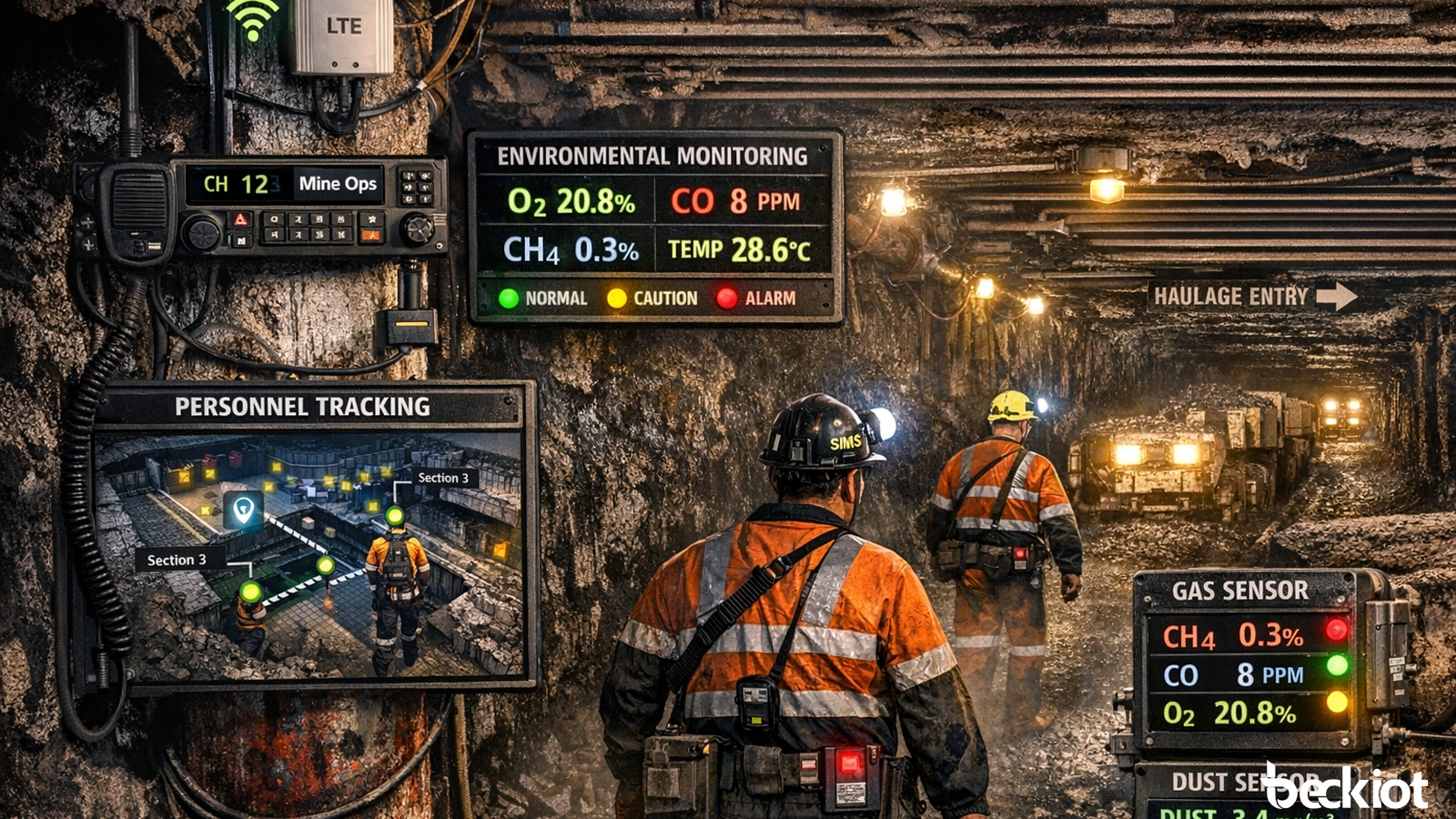
The most immediate benefit is that one system supports both production and safety. The mine does not have to separate everyday communication from emergency communication completely. Instead, dispatch practices, radio coordination, and personnel visibility become part of a common operating model that is already in use before an incident occurs.
This makes the command response more natural when something serious happens, because teams are not switching to unfamiliar tools or disconnected workflows under stress.
When voice dispatch, personnel tracking, mine maps, and atmospheric information are visible together, the dispatch room can make better decisions faster. That does not eliminate risk, but it reduces uncertainty. In underground mining, reducing uncertainty is one of the most important ways to improve operational and emergency performance.
By combining fixed underground communication, leaky feeder radio, conferencing, and command visibility, the solution helps surface leadership stay connected with moving underground teams. This improves the quality of instructions, response updates, and field accountability across both routine operations and incident management.
More reliable underground voice dispatch for production and safety communication
Better mobile coordination through leaky feeder radio coverage
Improved personnel accountability with location-based tracking visibility
Stronger command awareness through gas, fire, and ventilation integration
Faster multi-role decision-making through emergency conferencing
Better resilience through post-accident communication support
More structured rescue planning and command continuity
Clearer event records for review, training, and system improvement
No two underground coal mines share the same entry layout, production method, communications history, or emergency response model. Some sites need stronger section dispatch. Others need broader radio mobility, deeper monitoring integration, or more robust post-accident communication planning. That is why a practical solution should be designed around the actual mine layout, staffing structure, operating risks, and command workflow rather than treated as a fixed equipment package.
A stronger architecture connects voice dispatch, radio coordination, tracking, monitoring, and command consultation into one understandable operating environment. For mines seeking to improve both production communication and emergency readiness, this integrated approach provides a more resilient foundation than a collection of disconnected subsystems.
An underground coal mine dispatch and command solution should be understood as a full communication and command framework rather than a simple mine telephone installation. Its purpose is to support day-to-day dispatch, improve underground coordination, strengthen personnel accountability, connect environmental awareness to command decisions, and maintain organized response capability during emergencies and post-accident conditions.
By bringing together underground voice dispatch, leaky feeder radio, personnel tracking, gas and fire-related monitoring, emergency conferencing, and command center coordination, the mine gains a clearer and more resilient operating model. The result is better production support, better emergency readiness, and stronger control over one of the most demanding communication environments in industry.
Its main purpose is to connect underground crews, surface dispatchers, monitoring systems, and command personnel through one coordinated communication and control framework for both routine production and emergency response.
Leaky feeder radio supports mobile communication for supervisors, patrol teams, and responders moving through the mine, making it easier to coordinate field activity beyond fixed phone locations.
Personnel tracking helps the dispatch room understand who is associated with different underground areas, which strengthens accountability, evacuation planning, and rescue decision-making.
Because underground decisions depend on conditions as well as communication. When methane, fire-related, or ventilation information is visible in the command workflow, surface teams can respond more accurately and with greater confidence.
Emergency conferencing helps operations, safety, ventilation, engineering, and rescue-related personnel align decisions quickly during a serious event, reducing delay and improving command coordination.
Yes. A stronger mine command architecture can include resilient communication paths, backup logic, and emergency coordination functions that help maintain contact and response continuity after an incident.