Anonymous Call Rejection, often abbreviated as ACR, is a telephony feature that automatically blocks incoming calls when the caller intentionally hides or withholds the caller ID. Instead of allowing the call to ring through to the destination user, the system rejects it based on the absence of visible caller identification. In practical terms, this means that callers who choose to appear as anonymous, private, unknown, or unavailable may not be able to complete the call unless they reveal their number.
This feature is widely used in both residential and business telephony environments because it gives users more control over who can reach them. In a time when robocalls, nuisance calls, spoofed traffic, and intrusive sales calls remain common, Anonymous Call Rejection provides a simple but effective screening layer. It does not solve every unwanted call problem, but it helps reduce a specific category of calls that often create frustration, uncertainty, or security concern.
In enterprise and IP communication systems, Anonymous Call Rejection can also be part of a broader call management strategy. It may be used alongside call routing, blacklist policies, caller ID rules, extension permissions, and security-oriented voice policies to improve how inbound communication is handled. For that reason, ACR remains a practical feature in both basic telephone service and more advanced business telephony platforms.
What Is Anonymous Call Rejection?
Definition and Basic Purpose
Anonymous Call Rejection is a call-blocking function that prevents calls from being completed if the caller's number is intentionally hidden from the recipient. In traditional telephony, the caller may suppress caller ID by using a privacy setting or a temporary dialing code. In IP telephony or carrier networks, the same effect can occur when the caller information is marked as private, withheld, or unavailable. ACR examines that incoming identity status and rejects the call before it is presented to the user.
The basic purpose of the feature is to help people avoid calls from unidentified sources. Many users are willing to answer calls when they can see who is calling, but feel less comfortable when the caller deliberately conceals identity. Anonymous calls are often associated with spam, harassment, nuisance traffic, or low-trust communication attempts, so the ability to block them automatically can improve user confidence and reduce interruption.
In this sense, ACR is a filtering feature rather than a general call-blocking system. It is not designed to stop every unwanted call. Instead, it focuses specifically on calls where caller identity is intentionally hidden or cannot be properly presented to the receiving side.
Anonymous Call Rejection is a simple rule with a clear idea behind it: if the caller chooses not to identify themselves, the call does not go through.
How It Differs From General Call Blocking
It is useful to distinguish Anonymous Call Rejection from broader call-blocking tools. General call blocking may rely on blacklists, fraud analytics, spam scoring, geographic rules, time-of-day policies, or user-defined number blocks. Anonymous Call Rejection is much narrower. It does not ask whether the specific number has called before or whether the call looks suspicious based on traffic intelligence. It asks only whether the caller ID is being withheld or unavailable in a way that matches the ACR rule.
This narrower focus is actually one of its advantages. Because the rule is simple, it is easy to enable and easy to understand. Users do not need to maintain a long list of blocked numbers. They only decide whether they are willing to accept calls from sources that do not identify themselves. For many individuals and organizations, that single control provides a useful first layer of inbound call screening.
Anonymous Call Rejection is therefore best understood as one component within a broader call control approach. It is highly practical on its own, but even more effective when combined with other inbound call management features.
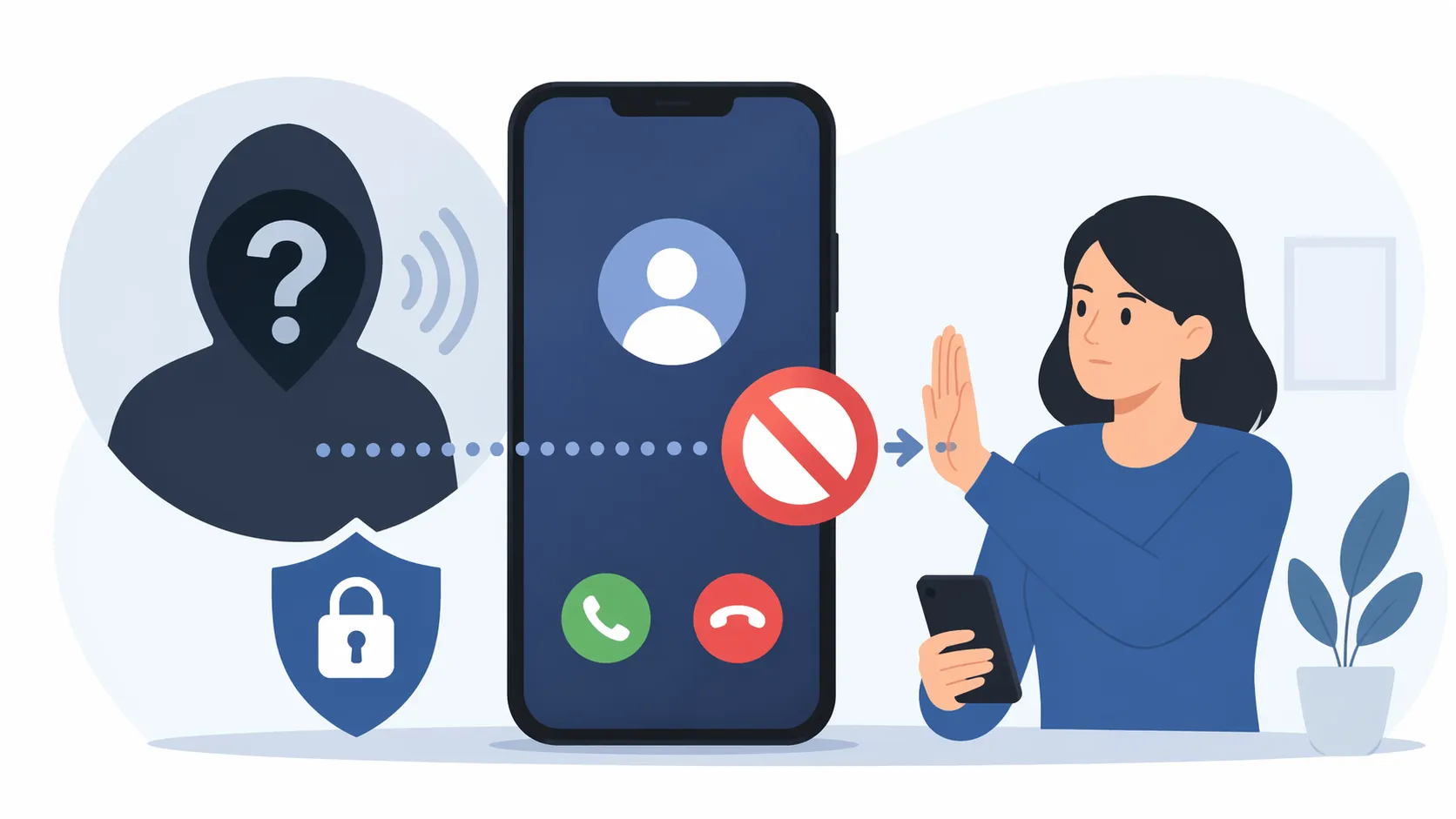
How Anonymous Call Rejection Works
Caller ID Detection and Decision Logic
Anonymous Call Rejection works by checking the caller identity information presented during call setup. If the incoming call is marked as private, blocked, anonymous, unavailable, or otherwise not eligible for normal caller ID display, the system applies a rejection rule instead of forwarding the call to the user. Depending on the network and platform, the caller may hear an announcement explaining that anonymous calls are not accepted, or the call may simply fail without reaching the target extension.
In traditional carrier services, this logic may be handled at the network level before the call reaches the subscriber line. In IP PBX, hosted PBX, or SIP-based environments, the logic may be enforced by the PBX, SIP server, gateway, SBC, or a call-routing application. The implementation details vary, but the principle is the same: the receiving system checks whether caller identity is presented in an acceptable way and blocks the call if it is not.
This makes ACR a relatively lightweight control. It does not require detailed content inspection or complex behavioral analysis. It simply relies on identity presentation status as the basis for acceptance or rejection.
What Happens to the Rejected Call
When Anonymous Call Rejection is active, the rejected call usually does not ring the target phone at all. Instead, the network or phone system handles it before the user experiences an interruption. In some services, the anonymous caller hears a recorded message telling them to unblock their caller ID and call again. In others, the call may be disconnected or routed to a default treatment without reaching the intended destination.
The exact behavior depends on the carrier, PBX feature set, or IP communication platform in use. Some systems allow administrators to customize the call treatment, while others apply a standard rejection response. In business environments, calls may also be logged for reporting or troubleshooting so administrators can review how many anonymous calls were blocked over time.
From the user's perspective, the benefit is straightforward. The phone does not ring for calls from unidentified sources, which reduces annoyance and makes inbound communication feel more manageable.
ACR is most valuable when it prevents interruption before the user has to make a decision.
Main Features of Anonymous Call Rejection
Automatic Screening of Hidden Caller ID
The primary feature of Anonymous Call Rejection is automatic screening. Users do not need to manually inspect each call and decide whether to answer. If the caller identity is withheld, the system applies the rule consistently and blocks the call. This is especially helpful for users who receive repeated nuisance calls from sources that prefer not to reveal their number.
Automation matters because unwanted calls often depend on persistence and repetition. A user who is forced to evaluate every anonymous call manually still experiences interruption, distraction, and uncertainty. By turning hidden caller ID into an automatic rejection condition, ACR reduces the decision burden and creates a cleaner inbound call experience.
This feature is particularly useful in environments where staff need fewer interruptions, such as offices, reception desks, service teams, clinical work areas, and support departments that already handle a high volume of legitimate calls.
Simple User Control and Easy Activation
Another important feature is simplicity. Anonymous Call Rejection is often easy to enable through carrier feature codes, PBX settings, phone system administration panels, or user-level call policy options. Compared with more advanced spam filtering tools, it usually requires little configuration and is easy for nontechnical users to understand.
This simplicity makes the feature practical for both individuals and organizations. A user can decide that they only want to accept calls from sources willing to display a number. An administrator can apply the same logic to selected extensions, departments, or user groups without needing a complicated fraud engine or analytics layer.
Because the rule is transparent, it also reduces confusion. Users know why certain calls do not reach them, and callers who genuinely need to connect can often do so by disabling caller ID blocking and calling again.
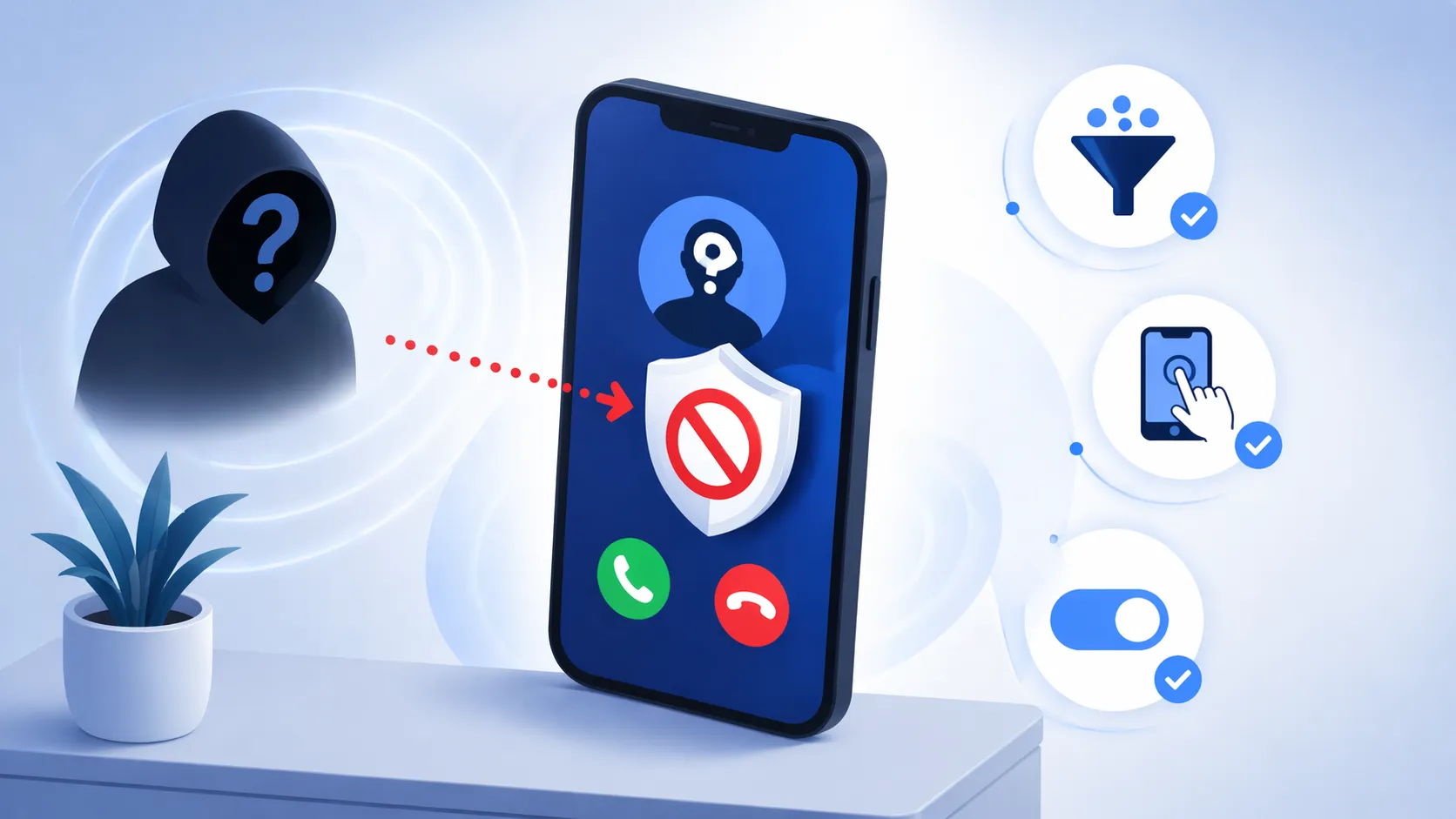
Benefits of Anonymous Call Rejection
Reduced Nuisance Calls and Fewer Interruptions
One of the most obvious benefits of Anonymous Call Rejection is that it reduces nuisance calls. Many spam callers, prank callers, and low-trust inbound callers prefer to hide their number. Blocking those calls automatically can lower the number of interruptions users experience during the day.
This matters in both personal and professional settings. At home, it can reduce annoyance and improve confidence in answering the phone. In business environments, it can protect staff time, reduce distraction, and support more orderly communication workflows. If employees are constantly interrupted by anonymous callers, even a simple filter can improve focus.
Although some unwanted calls still arrive with visible or spoofed caller ID, ACR remains useful because it removes a specific class of calls that many users do not want to receive under any circumstance.
Better Privacy, Confidence, and Call Control
Anonymous Call Rejection also improves the feeling of control. Many users are more comfortable answering calls when they can see some form of identification. When that visibility is missing, the call may feel intrusive or suspicious. By rejecting those calls in advance, the feature supports a more trusted communication environment.
In workplaces, this can be especially helpful for staff who deal with high exposure to inbound traffic, such as front desks, support teams, healthcare service points, or administrative offices. The feature does not merely save time. It also helps create a more predictable interaction model, where legitimate callers identify themselves and the receiving side can respond more confidently.
Privacy concerns also play a role. Repeated anonymous calls can feel harassing even when they are not directly dangerous. ACR helps reduce that kind of unwanted contact by setting a clear acceptance standard for inbound communication.
Applications of Anonymous Call Rejection
Residential and Personal Phone Use
In residential telephony, Anonymous Call Rejection is commonly used by people who do not want to answer private-number calls at all. For many households, there is little reason to accept a call from a source that refuses to identify itself. Family, friends, service providers, schools, and trusted contacts normally present some kind of caller ID, so anonymous calls are often treated with suspicion.
This makes ACR a practical feature for reducing unwanted interruptions without requiring advanced technical knowledge. A homeowner or individual user can enable the feature and immediately create a clearer boundary around inbound calling. If a legitimate caller has hidden caller ID by mistake, they can usually retry with caller ID visible.
In this sense, ACR acts as a simple trust filter. It does not make the phone system complex. It simply raises the standard for which calls are allowed through.
Business Extensions, Reception Desks, and Service Teams
Anonymous Call Rejection is also useful in business environments, especially on extensions where staff need to minimize unnecessary interruptions. Reception desks, department lines, finance offices, HR teams, support counters, and executive assistants may all benefit from not being interrupted by callers who refuse to present identity.
In IP PBX and hosted communications platforms, administrators can often enable the feature for selected users or groups rather than for the whole company. This makes deployment more flexible. Public-facing departments might choose to allow more inbound traffic, while sensitive departments use stricter caller ID acceptance rules.
In enterprise deployments, ACR can also be combined with other features such as blacklist filtering, time-based call rules, IVR routing, and call logging. This helps make inbound communication more structured and less disruptive across the organization.
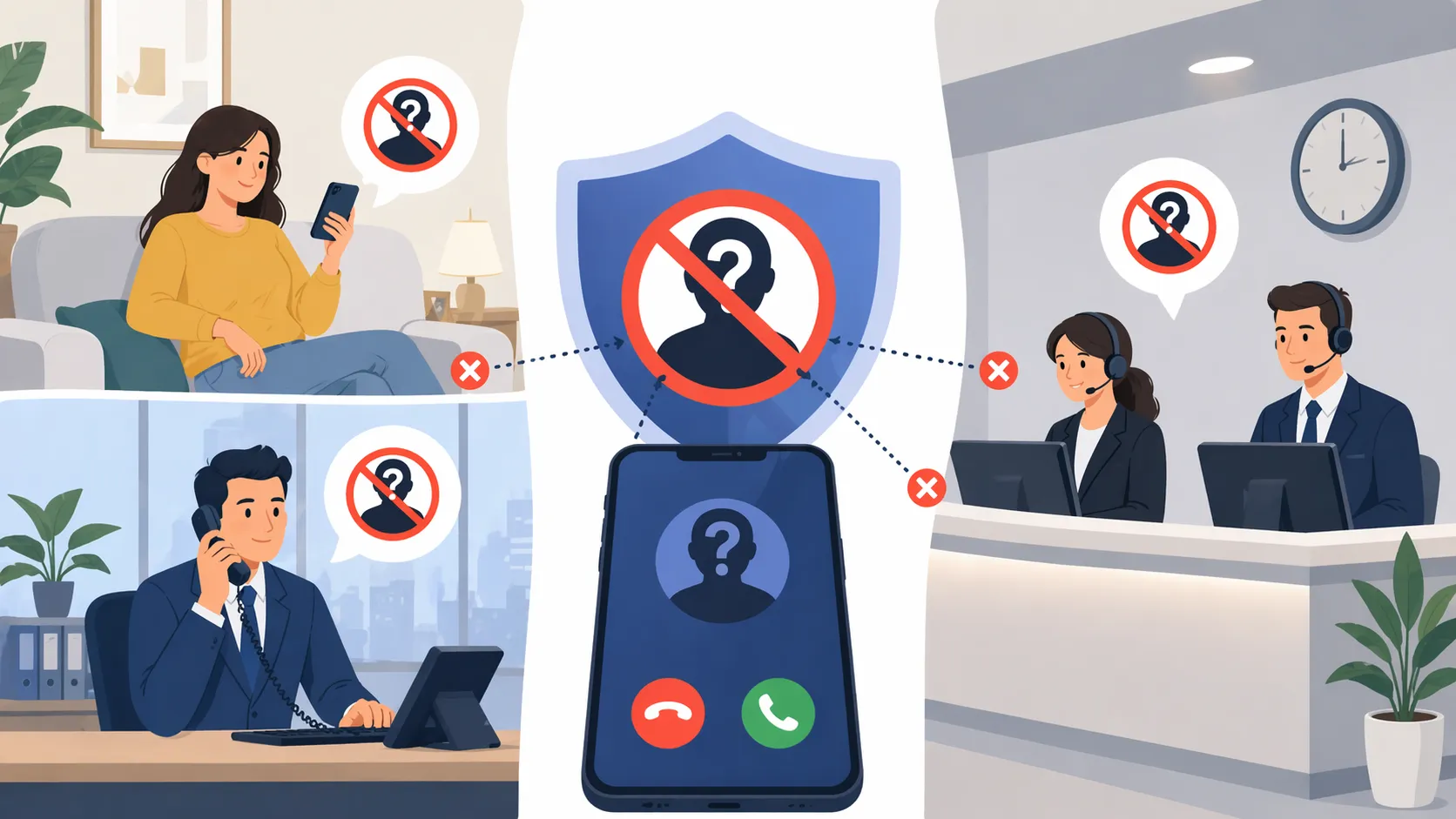
Anonymous Call Rejection in Business and IP Telephony Systems
Role in PBX, SIP, and Hosted Voice Platforms
In modern business telephony, Anonymous Call Rejection is often implemented as part of a PBX or hosted voice service rather than only as a carrier-side feature. This means the policy can be managed alongside other user permissions, call treatment rules, security settings, and inbound routing logic. In SIP environments, the system may check identity presentation indicators during session setup and then apply the rejection rule at the server or PBX level.
This is useful because it brings ACR into the broader world of enterprise call management. Instead of being a standalone network service, it becomes one control among many that administrators can use to shape call handling behavior. That is especially relevant in organizations using IP phones, SIP trunks, soft clients, intercom endpoints, or distributed communications platforms.
For example, a business communications system can apply ACR to specific users while still allowing anonymous inbound traffic to selected public lines if needed. That kind of flexible policy is one reason the feature remains valuable in modern IP telephony.
Use Alongside Security and Call Policy Controls
ACR is often most effective when combined with other controls. Anonymous callers are only one category of unwanted traffic. Businesses may also need to manage spoofed caller ID, repeated nuisance numbers, fraudulent toll attempts, aggressive spam traffic, or after-hours call handling. Anonymous Call Rejection can act as one layer in that wider security and call policy structure.
In systems built around business SIP servers, IP PBX platforms, or session control policies, administrators can combine ACR with blacklist rules, caller screening, time conditions, extension permissions, or gateway logic. This layered approach helps create a more robust inbound call strategy than relying on one feature alone.
That is why ACR is best viewed not as a complete defense, but as a practical and easy-to-understand part of a larger communications policy.
In business telephony, Anonymous Call Rejection works best as one clear rule inside a wider inbound call management strategy.
Limitations and Practical Considerations
It Does Not Stop All Unwanted Calls
Anonymous Call Rejection is useful, but it has limits. Not all nuisance calls are anonymous. Many spam or fraudulent callers display a visible number, even if that number is spoofed or misleading. Because ACR focuses specifically on hidden or withheld identity, it cannot block every kind of unwanted inbound traffic.
This is important when setting expectations. Enabling ACR may significantly reduce some annoying calls, but it does not eliminate robocalling, spoofing, or general call abuse. Organizations and users who need broader protection may still require additional screening tools or service-provider filtering features.
Even so, the fact that ACR is limited does not make it unhelpful. It still blocks a common and distinct category of calls that many users prefer not to receive at all.
Possible Impact on Legitimate Callers
Another practical consideration is that some legitimate callers may also hide their number. Medical offices, legal professionals, field staff, private individuals, or outbound service teams sometimes suppress caller ID for privacy or policy reasons. If the receiving party uses Anonymous Call Rejection, those calls may be blocked even though they are not malicious.
For this reason, organizations should think about how strictly they want to apply the feature. A public-facing department may decide to allow private callers, while internal administrative lines may prefer stricter controls. In residential use, some people are comfortable blocking all anonymous calls, while others prefer to review them manually.
The right choice depends on communication priorities. ACR is most effective when its use matches the user’s tolerance for unidentified calls and the operational needs of the environment.
Conclusion
Anonymous Call Rejection is a focused telephony feature that blocks incoming calls when the caller hides or withholds caller ID. Its purpose is straightforward: reduce interruptions from unidentified sources and give users more control over inbound communication. Because the rule is simple and easy to understand, it remains useful in both personal and business phone environments.
The feature works by checking caller identity presentation during call setup and rejecting calls that do not meet the visibility requirement. This helps users avoid a category of calls often associated with nuisance traffic, harassment, or low-trust contact attempts. In modern business communications, ACR can also be used alongside broader inbound call policies within PBX, SIP, and hosted voice platforms.
Although Anonymous Call Rejection does not stop every unwanted call, it remains a practical first layer of screening. For users and organizations that want clearer communication control, fewer interruptions, and a more predictable calling experience, it continues to be a valuable and easy-to-deploy feature.
FAQ
What does Anonymous Call Rejection do?
Anonymous Call Rejection blocks incoming calls when the caller ID is hidden, private, anonymous, or otherwise unavailable according to the system’s call acceptance rule. Instead of allowing the call to ring through, the network or phone system rejects it automatically.
This helps users avoid calls from sources that choose not to identify themselves.
Is Anonymous Call Rejection the same as blocking spam calls?
No. Anonymous Call Rejection is more specific than general spam blocking. It only targets calls with hidden or withheld caller identity. Spam blocking may use broader analytics, blacklists, or fraud-detection logic to block unwanted calls whether the number is visible or not.
ACR is therefore one useful filter, but not a complete solution for all nuisance call problems.
Can Anonymous Call Rejection be used in business phone systems?
Yes. Anonymous Call Rejection can be used in business phone systems, including PBX, hosted voice, and SIP-based environments. Administrators may enable it for selected users, departments, or extension groups as part of a larger inbound call policy.
This is especially helpful where staff want fewer interruptions from unidentified callers and clearer control over incoming communication.